
Irreechaa: Unveiling the Multidimensional Significance of a Cultural Phenomenon
Irreechaa, the annual festival celebrated by the Oromo people, extends beyond being a mere celebration of Oromo culture. This multidimensional cultural phenomenon encompasses diverse aspects of religious, social, historical, and political significance within the Oromo people. Through its rich symbolism, communal gathering, and cultural expressions, Irreechaa serves as a powerful embodiment of Oromo identity, resilience, and collective memory. This commentary explores the multifaceted dimensions of Irreechaa, shedding light on its broader implications and its role in shaping Oromo cultural heritage under some ten points.
Introduction
Irreechaa, the annual festival celebrated by the Oromo people, extends beyond being a mere celebration of Oromo culture. This multidimensional cultural phenomenon encompasses diverse aspects of religious, social, historical, and political significance within the Oromo people. Through its rich symbolism, communal gathering, and cultural expressions, Irreechaa serves as a powerful embodiment of Oromo identity, resilience, and collective memory. This commentary explores the multifaceted dimensions of Irreechaa, shedding light on its broader implications and its role in shaping Oromo cultural heritage under some ten points.
Religious Significance
At its core, Irreechaa is a religious festival deeply rooted in the traditional Oromo belief system. It is a time when the Oromo people express gratitude to Waaqaa (God) for the blessings of life, harvest, and natural resources. The festival involves prayers, blessings, and offerings, reflecting the Oromo spiritual connection with the natural environment and the divine. It serves as a platform for religious reaffirmation, spiritual renewal, and the preservation of traditional Oromo cosmology.
Irrecha serves as a religious and cultural bridge for the Oromo people, connecting them to their spiritual beliefs, cultural heritage, and the natural world. It is a time of deep devotion, communal celebration, and reaffirmation of the Oromo people’s spiritual and cultural identity.
Essay Article
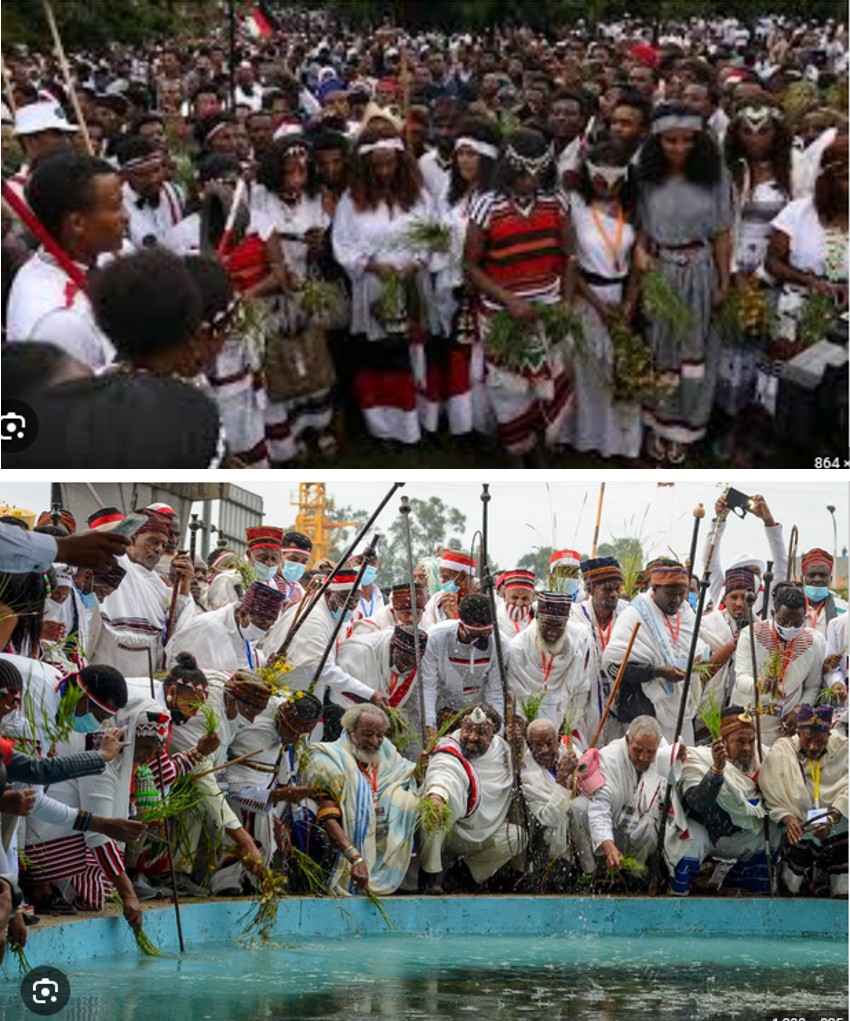
The act of offering prayers and thanks to Waaqaa during Irrecha holds immense spiritual significance for the Oromo people. It is a time for individuals to connect with their spirituality, seek blessings, and find solace in expressing their gratitude. The festival provides a space for introspection, renewal of faith, and the nourishment of the spiritual well- being of the community.
Cultural Expressions
Irreechaa showcases vibrant cultural expressions through music, dance, poetry, and traditional attire. These artistic forms not only entertain but also serve as vehicles for cultural transmission and the preservation of Oromo heritage. The festival provides a space for Oromo artists to showcase their talents, reinforcing cultural pride and fostering intergenerational connections. Through these expressions, Irreechaa becomes a living testament to the richness and diversity of Oromo cultural traditions.
Communal Gathering
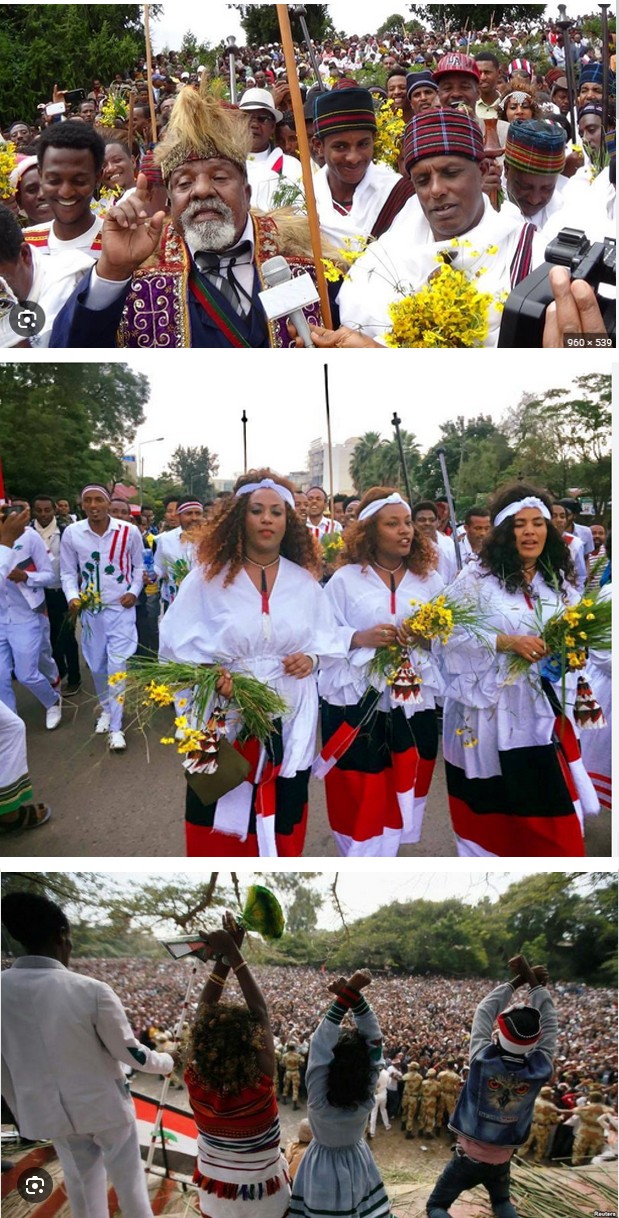
Irreechaa brings together thousands of Oromo people from various regions, creating a sense of unity and solidarity. It serves as a platform for social interaction, fostering community bonds and collective identity. The festival provides an opportunity for Oromo individuals, families, and communities to come together, share experiences, and strengthen social networks. It reinforces a sense of belonging and shared values among the Oromo people.
Irrecha holds immense significance for the Oromo people as a day of celebration and deep connection to their roots, Oromo identity, and homeland. It serves as a time for reflection, commemoration, and a celebration of their rich heritage and cultural values, encapsulated by the concept of Oromummaa.
Irrecha is a cherished day for the Oromo people, encompassing reflection, celebration, and a deep connection to their Oromo identity and country. It serves as a time to honor their ancestors, express cultural pride, strengthen communal bonds, and reaffirm their commitment to preserving their rich heritage. Through Irrecha, the Oromo people celebrate and nurture their Oromummaa, fostering a strong sense of identity and unity within their community.
Historical and Political Dimensions
Irreechaa carries historical and political significance as well. Throughout history, the festival has served as a platform for the expression of Oromo resistance, resilience, and cultural assertion. During times of political oppression and marginalization, Irreechaa has been a space for Oromo people to assert their identity and demand recognition of their rights. It has played a role in Oromo political mobilization and the broader struggle for social justice and equality. The photo captures the courageous defiance of young Oromo individuals, known as Qeerroo and Qarree, as they bravely confront and resist the TPLF (Tigray People’s Liberation Front) by raising their hands, symbolizing their unwavering determination and resilience in 2016.
Natural Setting
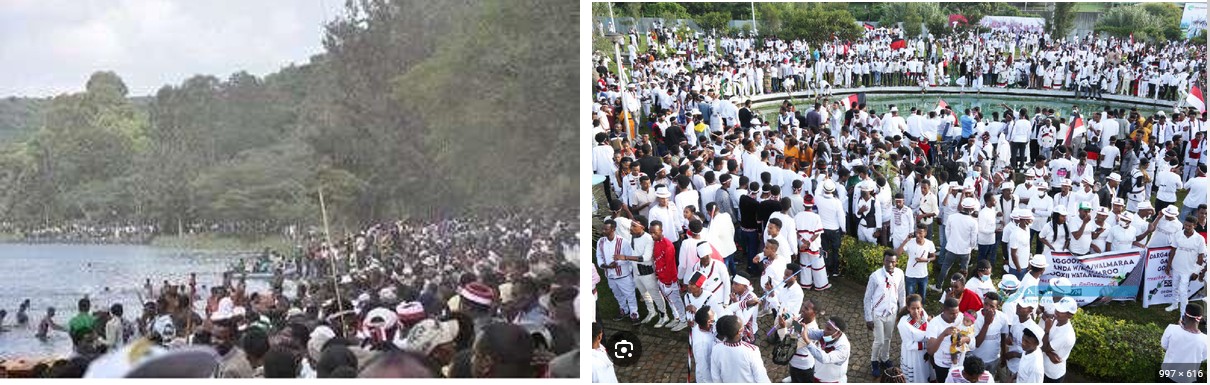
The festival takes place in open-air locations, typically near natural landmarks such as rivers, lakes, or mountains. These locations hold spiritual significance for the Oromo people, as they are believed to be the dwelling places of spirits and deities. Celebrating the festival in such settings allows participants to connect with nature and experience a sense of harmony and unity with the environment. The
Oromo people hold deep reverence for Waaqaa, whom they perceive as the creator of all things. This belief has profound implications for their cultural and spiritual practices, as well as their worldview.
Firstly, the celebration of Waaqaa in all endeavors highlights the Oromo’s belief in the interconnectedness of the divine and the natural world. They perceive Waaqaa’s presence and influence in every aspect of life, including daily activities, social interactions, and natural phenomena. This recognition fosters a sense of unity and harmony with the divine, encouraging the Oromo to approach all endeavors with a sense of reverence and gratitude.
Secondly, the acknowledgment of Waaqaa as the creator underscores the Oromo’s deep connection to their environment. They attribute the existence of greenery, water, and other natural resources to Waaqaa’s benevolence. Consequently, the Oromo view themselves as custodians of the environment, with a responsibility to protect and preserve it. This perspective promotes sustainable practices and a harmonious relationship with nature.
Furthermore, the celebration of Waaqaa influences Oromo rituals and ceremonies. Irrecha, for example, is a significant religious event where the Oromo gather near bodies of water to express their gratitude and seek blessings from Waaqaa. These ceremonies reinforce communal bonds, cultural identity, and spiritual connection, as the Oromo come together to honor and glorify their creator.
Colorful Attire
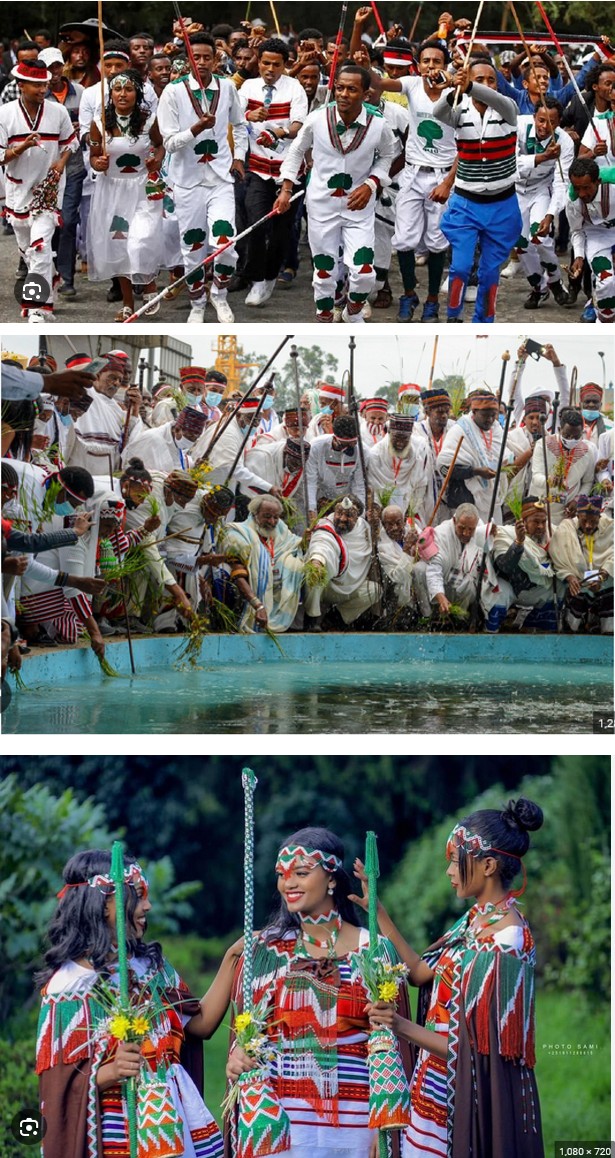
Oromo people wear vibrant traditional clothing during the Irrecha festival. The attire includes various elements such as cultural ornaments, jewelry, hairstyles, and body paint. The colorful outfits not only enhance the visual appeal of the festival but also serve as a means of expressing cultural pride and identity.
During Irrecha, participants adorn themselves in traditional Oromo attire, which is known for its vibrant colors, intricate patterns, and symbolic meanings. The clothing typically includes garments such as the Shaamaa, a woven cotton wrap, and the Wandaboo, a decorative sash. These garments are often adorned with embroidery, beadwork, and other embellishments, representing the creativity, artistry, and cultural pride of the Oromo people.
The colorful attire worn during Irrecha not only serves as a visual expression of cultural identity but also carries deeper meanings. The colors and patterns often reflect aspects of nature, such as the lush greenery, vibrant flowers, and flowing rivers, which are significant to the Oromo people’s connection with the land and environment. The use of bright colors and intricate designs also symbolizes joy, celebration, and a sense of communal unity.
Moreover, the colorful attire worn during Irrecha becomes a form of cultural resistance and assertion of Oromo identity. Historically, the Oromo people have faced marginalization and suppression of their culture and traditions. By proudly showcasing their vibrant clothing during Irrecha, the Oromo community asserts their cultural resilience and challenges attempts to erase or diminish their unique identity. It becomes a visual representation of cultural pride, unity, and a reclaiming of their heritage.
The vibrant attire worn during Irrecha also creates a visually stunning spectacle during the celebrations. It adds to the festive atmosphere and attracts the attention of onlookers, whether they are fellow Oromo community members or individuals from different backgrounds who attend the event. Through the colorful attire, Irrecha becomes a platform for cultural exchange and appreciation, as it allows others to witness and engage with the beauty and diversity of Oromo culture.
Rituals and Ceremonies
The Irrecha festival involves a series of rituals and ceremonies that hold deep spiritual significance for the Oromo people. These rituals include offering prayers, blessings, and sacrifices to honor ancestors and seek blessings for the upcoming year. Traditional leaders and spiritual guides play key roles in conducting these ceremonies and guiding participants through the rituals. The image depicts the Oromo people participating in a ceremony known as Irrecha, which is a religious observance held near a lake or body of water to honor and praise the divine entity believed to have created the lush greenery and water resources.
Music, Dance, and Poetry
Irrecha is a vibrant celebration that encompasses various forms of artistic expression, including music, dance, and poetry. These creative elements play a central role in the festivities, adding to the joyous and festive atmosphere of the event.
Music, dance, and poetry are integral components of the Irrecha festival. Participants engage in traditional Oromo music and dance forms, creating a lively and festive atmosphere. The songs and poems often carry messages of unity, harmony, and social justice, reflecting the Oromo community’s aspirations and struggles.
Dance is another essential aspect of Irrecha. Oromo traditional dances are characterized by lively movements, rhythmic footwork, and graceful gestures. The dances often depict narratives from Oromo folklore, history, and daily life. They serve as a means of cultural transmission, strengthening community bonds, and expressing joy and celebration. The synchronized movements of the dancers, accompanied by the rhythmic music, contribute to the overall festive ambiance of Irrecha.
Seasonal Significance
The timing of the Irrecha festival is closely tied to the agricultural calendar of the Oromo people. It typically takes place at the end of the rainy season, marking the transition from the dark and rainy winter season to the bright and abundant harvest season. As such, the festival serves as a joyful occasion to welcome the new season of plentiful harvests, symbolizing hope, renewal, and the promise of sustenance for the community. The following women carry a green and flowered grass on their hand that indicates the seasonal significance of Irrecha festival.
Agricultural and Economic Implications
The celebration of Irrecha goes beyond religious and cultural aspects; it also carries significant agricultural and economic implications for the Oromo society. The festival serves as an opportunity to acknowledge the hard work of farmers and the importance of agriculture in sustaining the community’s livelihood. It is a time to recognize the bountiful harvests and to express gratitude for the abundance of food and resources provided by the land.
In summary, the study explores the multidimensional significance of Irreechaa, a cultural festival celebrated by the Oromo people in Ethiopia. It highlights the religious aspect, where the festival is a time to express gratitude to the supreme deity and seek blessings. Irreechaa also serves as a unifying event, strengthening social bonds and promoting cultural identity. Historically, it has been a platform for political expression and advocacy for Oromo rights. Additionally, the festival emphasizes the connection to nature and promotes ecological consciousness.
Conclusion
Irreechaa transcends being a simple celebration of Oromo culture. It represents a multifaceted phenomenon with deep religious, social, historical, and political dimensions. The festival serves as a powerful symbol of Oromo identity, cultural resilience, and collective memory. Irreechaa embodies the intricate interplay between spirituality, art, community, and sociopolitical dynamics within the Oromo society. Understanding the multidimensional significance of Irreechaa is crucial for appreciating the richness and complexity of Oromo cultural heritage.
Moreover, Irreechaa symbolizes the intricate interplay between spirituality, art, community, and sociopolitical dynamics within the Oromo society. It represents the resilience, cultural identity, and collective memory of the Oromo people. Celebrated in natural settings, the festival underscores the harmonious relationship between humans and the environment, promoting ecological consciousness and sustainable practices.
It serves as a powerful symbol of Oromo identity, cultural resilience, and the intricate interweaving of spirituality, social cohesion, historical struggles, and environmental consciousness. Understanding the multidimensional significance of Irreechaa is crucial for appreciating the depth and complexity of Oromo cultural heritage.
- The Indispensable Role of Informal Caregivers in Supporting the Aging Population
- Socio-Religious Significance of Kamakhya Temple in Guwahati, Assam
- Is Anthropology Possible?
- A Contribution to the History and Paleobiology of Harput/Elazığ Türkiye and Its Surroundings
- A Study on the Cowrie Shells of the Dimasas in Assam
- The Significance of International Organizations Cooperation in the Efficient Resolution of Global Conflict