
Impact of Nutrition on Covid-19 Susceptibility
COVID-19 pandemic era had shown a notable threat to humans. Initially, in Wuhan COVID-19 arise and promptly extent throughout China to world-wide. The ability effect of COVID-19 inversely the effect of nutrients at the epidemiology is worth of have a look at thinking about the positive and terrible institutions of nutrients with morbidity and mortality. A healthy nutritional diet is important for the recovery of COVID-19 patient such as pulmonary distress, cardiac distress, or critically ill. Excessive quantities of HFD, subtle CHO, sugars, little ranges of fiber, fat and also antioxidants. HFD intake inhibits B and T lymphocyte feature probably in the adaptive immune system through enhancing a oxidative stress. A systemic research analysis was conducted that took place between 26 August and 11 September 2021. About 88.1% were aware of the potential relation between nutritional status and immune functions. 90.6% of them believed that healthy eating is considered important during Covid-19 pandemic. Proper diet along with physical activity is necessary to keep yourself healthy during Covid-19 pandemic. 33.8% accepted the fact that their daily diet fulfills their basic nutritional requirements, while 27.5% of them denied. There are many evidence that healthy dietary intake will either prevent disease or speed up treatment.
Introduction
In December 2019 coronavirus era, shows excessive critical respiration condition (SARS-CoV-2), arise in Wuhan & unexpectedly unfold all through China. COVID-19 turned into much most probable to arise in elder’s who have comorbidities and immunocompromised [1]. The immune reaction is probable to be exceedingly concerned with inside the pathological method of coronavirus disorder 2019 (COVID-19) has reached pandemic status. Several research discover danger-attributable burden for person hazard the global, regional, or country wide level [2].
All internationally has had a major health and economic effect that the world has not noticeable for as a minimum a century. This is predicted to hold properly into 2021 and in all possibility 2022 as properly [3]. The ability effect of COVID-19 on dietary conduct and, inversely, the effect of nutrients at the epidemiology of the COVID-19 pandemic is worth of have a look at thinking about the positive and terrible institutions of nutrients with morbidity and mortality [4]. The cause of this evaluation is to assess dietary studies nutrients because it pertains to the COVID-19 pandemic.
While COVID-19 influences all assemblies which has more pathological and mortality rate is maximized in elders along with comorbidities and also in Americans, African & Latinos [5]. Distinguishing hazardous factors of Coivd-19 in obesity & type-2 diabetes. The excessive occurrence of those hazard factors, worldwide, however particularly with inside the united states & different advanced countries conceivably pushed through extended intake of the standard Western diet (WD) such as excessive quantities of HFD, subtle CHO, sugars, little ranges of fiber, fat and also antioxidants [6].
As recognized in 2016 the study of global burden of disease, nutritional conduct to determining the mortality rate & also disability to represents second extreme important hazard aspect across the world [7]. Any disruption in nutrients, therefore, could have a great instantaneously and long-time period effect on health. Conversely, upgrades in dietary behavior could have a useful healing impact in populations both with and without medical symptoms [8].
In the innate immunity, the intake of WD or HFD inhibiting T & B lymphocyte features in adaptive immune system by enhancing oxidative stress. Precisely HFD associated oxidative stress damaging B & T cell maturation and proliferation then increasing B cell apoptosis which cause depressing in B-cells. It has important implication to protect hosts against viruses. Earlier mice was fed HFD which confirms that the pathology of lung become larger or expand due to contamination of influenza and behind adaptive immune reaction schedule of excessive intake or consumption of SFA which leads to lip toxicity and activates innate immune system by activating the toll like receptor that are expressed in macrophages, dendritic cell and also neutrophils. They are activating the signaling pathway of canonical inflammation that produces inflammatory mediator & different effectors of immune system [9].
A huge quantity of human beings in an effort to get over COVID-19 might also additionally cause a spike in chronic clinical situations that would be similarly exacerbated through bad diets or in susceptible populations. Therefore our advice to those people chorus from consuming meals excessive in saturated fat and sugar and rather eat excessive quantities of grains, fats, antioxidant and fibers to reinforce immunized features [10].
Material and Method
We incorporated a survey study based on the idea of impact of nutrition on Covid-19 susceptibility. The fact influences the potential relation between nutritional status and immune functions. Poor and unhealthy diets can significantly weaken the immune system and increase susceptibility to infections, including SARS-CoV-2. Host nutritional status is believed to be an important factor in the outcome of various infectious diseases. A systemic research analysis was conducted that took place between 26 August 2021 and 11 Jan 2022.
Survey Strategy
A survey form was generated containing questions related to relation between nutrition and Covid-19 susceptibility. A total number of 15 questions were added. The survey form was circulated among students including undergraduates as well as postgraduates related to medical and other fields, which aged between above 18 and below 40. It was circulated among 200 people out of whom 160 responses were recorded.
Result
The result of questionnaire summarized the idea that majority people i.e., about 88.1% was aware of the potential relation between nutritional status and immune functions. 90.6% of them believed that healthy eating is considered important during Covid-19 pandemic because it is essential for supporting the immune system. Despite of facing disturbances in daily routine, people were still being able to manage intake healthy food during the pandemic. Majority of them have been strictly following intake of nutritional supplements regularly containing Vitamin C, B, folic acid, iron, zinc and omega-3.They believe that proper diet along with physical activity is necessary to keep yourself healthy during Covid-19 pandemic. 33.8% accepted the fact that their daily diet fulfills their basic nutritional requirements, whereas 27.5% of them denied. Some of them usually follow social media diet myths to eradicate Covid-19 symptoms like black tea, sana makki, black cumin, cabbage juice, herbal teas including green tea and Sauerkraut.
Discussion
The pandemic has caused alter in food supply. To induced food availability and safety special programs have been implementing in many countries. Nevertheless, due to the pandemic change in food availability has occurred world- wide. Due to less availability of food during pandemic will induce nutritional inadequacy across the globe that will have a long-lasting harmful effect on human health. COVID-19 has had a significant effect in some populations through changed eating behaviors. Poor nutritional diet will have induced lasting the recovery process of COVID-19 while a healthy nutritional balanced is vital in the recovery process for all patients with COVID-19. In this report, There are many evidence that healthy dietary intake will either prevent disease or speed up treatment.
Conclusion
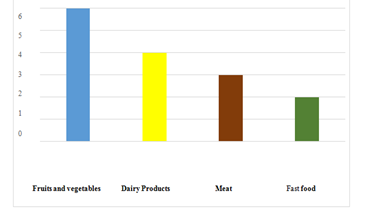
The COVID-19 pandemic is a significant threat to humans. Until effective vaccines, long-term prevention measures, and effective treatment become widely available. Reduced infection incidence or severity may be an important preventive and therapeutic strategy. This will necessitate a strong and healthy immune system. The nutritional status of an individual has a significant impact on susceptibility to COVID-19, response to therapy, and the long-term effect of infection. As a result, it is difficult to consider the impact of healthy diet and lifestyle consumption during the pandemic. A healthy nutritional balance is critical in the recovery process for all COVID-19 patients, especially those who have experienced pulmonary distress, cardiac distress, or have been critically ill due to frailty, weight loss, sarcopenia, or other disease associated with these conditions. There is a lot of evidence in this report that a healthy diet can either prevent disease or speed up treatment. Nonetheless, we believe that the emphasis should be on ways to improve a healthy balanced diet and reduce the infective burden. Those who have poor nutrition should also have access to healthy fresh food, and nutritional education should be provided to these at-risk subjects Figure 1.
References
-
Wong CK, Lam CW, Wu AK, Ip WK, S Lee NL, et al. (2004) Plasma inflammatory cytokines and chemokines in severe acute respiratory syndrome. Clin Exp Immunol 136(1): 95-103.
-
GBD 2016 Risk Factors Collaborators (2017) Global, regional, and national comparative risk assessment of 84 behavioural, environmental and occupational, and metabolic risks or clusters of risks, 1990–2016: a systematic analysis for the Global Burden of Disease Study 2016. Global Health Metrics 390(10100): 1345- 1422.
-
Qin C, Zhou L, Hu Z. Zhang S, Yang S, et al. (2020) Dysregulation of immune response in patients with COVID-19 in Wuhan, China. Clinical Infectious Diseases. 71(15): 762-768.
-
Rodriguez-Leyva D, Pierce GN (2021) The Impact of Nutrition on the COVID-19 Pandemic and the Impact of the COVID-19 Pandemic on Nutrition. Nutrients 13(6): 1752.
-
Butler MJ, Barrientos RM (2020) The impact of nutrition on COVID-19 susceptibility and long-term consequences. Brain Behavior and Immunity 87: 53-54.
-
GBD 2016 Risk Factors Collaborators (2017) Global, regional, and national comparative risk assessment of 84 behavioural, environmental and occupational, and metabolic risks or clusters of risks, 1990–2016: a systematic analysis for the Global Burden of Disease Study 2016. The Lancet 390(10100): 1345-1422.
-
Bukhari MH (2020) Outbreak of novel coronavirus disease (COVID-19) in Pakistan. Biomedica 36(1): 1-4.
-
WHO (2020) Rolling updates on coronavirus disease (COVID-19).
-
Chen N, Zhou M, Dong X, Qu J, Gong F, et al. (2020) Epidemiological and clinical characteristics of 99 cases of 2019 novel coronavirus pneumonia in Wuhan, China: a descriptive study. Lancet 395(10223): 507-513.
-
Esmaeil M, Gillina B, Alipoor SD, Varahram M, Mumby S, et al. (2021) Nutritional Impact and Its Potential Consequences on COVID-19 Severity. Frontiers in Nutrition 8: 328.
- Effects of 5-HTP and Melatonin on the Sleep Cycle of Medical Students
- Adsorption of Bisphenol A on NH4OH- Modified Rice Husk and Sugar Cane Bagasse Biochar
- Comparative Assessment of the Reinforcement Efficiency of Palm Fruit Fibre and Coconut Fibre in High Density Polyethylene (HDPE) Matrix Composite
- Importance of Bio Compounds Naturally Present in Food with Functionality in Animal Metabolism
- Sub-Acute Study on the Cardiotoxic Effects of Monosodium Glutamate Ingestion in Albino Rat
- Weight Management and Its Natural Solutions: A Review