
Ambient Air Ionic Species (F-, Cl-, NO3-, SO42-) Compositions Study at a Semi-Open/Outdoor Concrete Processing Factory in Changhua County, Taiwan
This study was to collect ambient air TSP, dry depositions, PM10, PM2.5 compositions and analyze the ionic species (F-, Cl-, NO3-, SO42-) compositions which attached in TSP, dry depositions, PM10, PM2.5 for these semi-open/outdoor environments at a concrete processing factory in ChangHua Coastal Park. And the comparisons of ambient air ionic species (F-, Cl-, NO3-, SO42-) in TSP, dry depositions, PM10, PM2.5 compositions for these semi-open/outdoor environments were also discussed during the year of 2017-half year observations. And the results indicated that the average ionic species SO42-Â was ranked highest average compositions in dry depositions, PM10, PM2.5 when compared with those of the other ionic species (F-, Cl-, NO3-) while the ionic species for Cl- was ranked highest average compositions in TSP when compared with those of the other ionic species (F-, NO3-, SO42-) at this semi-open/outdoor environments sampling site at a concrete processing factory in Changhua Coastal Park. In addition, the average ionic SO42-Â compositions in semi-open environment were higher than that of outdoor environment. In addition, ionic species SO42-Â occupied were than 60% of the compositions percentages when compared with all the ionic species at both PM10 and PM2.5. And ionic species SO42-Â compositions in TSP was occupied more than 50% of than concentrations percentages when compared with all the ionic species. Finally, ionic species SO42- compositions in dry depositions was occupied more than 40% of compositions percentages when compared with all the other ionic species in this study.
Introduction
Ambient aerosol particles consist of carbonaceous species, ionic species, elemental species, and water [1]. They have attracted much attention due to their influence on air quality, visibility, human health effects and radioactive climate forcing. And fine with aerodynamic diameters under 2.5µm (termed PM2.5) have drawn much attention due to their effect on human health and the environment. Exposure to PM2.5 has been associated with increases in mortality and hospital admissions due to respiratory and cardiovascular disease [2, 3, 4, 5]. Submicron aerosol particles are considered to be hazardous due to their small size, high number concentration and ability to penetrate deeply into the alveoli, and the amounts of ultrafine particles deposited on alveolar surface area can be as high as 89.2μm2/cm3 during typical weekday in urban area [6, 7, 8, 9, 10]. Many recent studies demonstrated that the toxicological effects of the inhaled particles mainly depend on the particle size, and ultrafine aerosol particles may cause more severe health effect than fine particles [6]. Recent measurements in Fort, Meade, MD, USA show a strong correlation between elemental carbon (EC, often defined as black carbon) and carbon monoxide (CO), implying that there is a possibility that CO can be used as surrogate for estimating emission inventory of EC [11]. The ability to estimate EC from ambient CO measurement is highly promising because of the ease of measuring CO compared to EC. According to the Korea Ministry of the Environment (MOE, 2001) [12], the emission inventories of air pollutants (TSP, CO, NOx, SO2, and HC) by traffic exhausts constitute 40-85% of the total emission inventories in urban areas depending on site conditions. The urban areas in which industrial facilities are populated are reported to have less emission inventory of the vehicles, ∼40% of the total emission inventory [13]. The coastal atmosphere adjacent to large urban and industrial centers can be strongly impacted by the emissions of air pollutants [14, 15, 16, 17, 18, 19]. The airborne pollutants include the ionic species, such as sulfate, nitrate, and ammonium, etc. associated with suspended particulates from various pollution sources. High concentrations of certain ionic species in the airborne particles of coastal air could not only enhance the air-to- sea ionic deposition fluxes to coastal waters, consequently affect the coastal ecosystem, but could also be transported over the open ocean and affect the compositions of Fang GC, et al. Ambient Air Ionic Species (F-, Cl-, NO3-, SO42-) Compositions Study at a Semi-Open/Outdoor Concrete Processing Factory in Changhua County, Taiwan. Ergonomics Int J 2018, 2(1): 000138.
remote marine atmosphere [20]. In addition, high concentrations of airborne ionic species seriously influence the air quality and human health. Fine particles produced predominantly from high-temperature sources or gas-to-particle conversion processes within the atmosphere. The major components of PM2.5 were sulfate (SO42−), nitrate (NO3−), ammonia (NH4+) [21, 22]. This ChangHua Coastal Park was just located along the coast area of ChangHua County. Therefore, the main goals of this study were to 1). Measure ionic species (F-, Cl-, NO3-, SO42-) which attached on total suspended particulates, PM10, PM2.5, dry depositions compositions. 2). Comparisons of ambient air ionic species (F-, Cl-, NO3-, SO42-) compositions on total suspended particulates, PM10, PM2.5, dry depositions for this semi-open/outdoor environment. 3). Calculate the individual ionic species (F-, Cl-, NO3-, SO42-) compositions percentages in the different particulates sizes modes (TSP, dry depositions, PM10, PM2.5) at this semi-open/outdoor sampling site.
Methodology
Sampling Sites
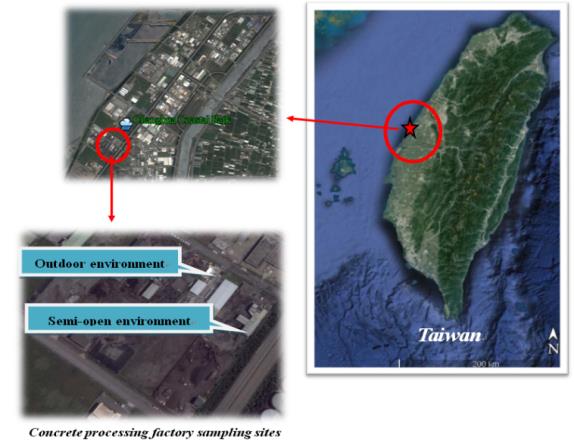
Figure 1 displayed the characteristics sampling site at a concrete processing factory in Changhua Coastal Park. And this sampling site was located in the ChangHua Coastal Park, ChangHua County and west coast of central Taiwan. Agriculture and small scale of fishery were the main living characters for Xianxi Township. It was also belong to remote area of Xianxi Township, ChangHua County. The total area were about 3,643 acre and there were about 321 factories which included food, glass, textile, plastic, chemical, metal, electricity, steel, machinery, hardware, wood, gas enterprises. This study selected a concrete processing factory as the sampling site. This factory was mainly recover slag as the elements and combined with cement to serve as the building materials.
Sampling Device
PS-1 Sampler: PS-1 is a device for sampling ambient air particulates and was used to collect suspended airborne particles (GMW High-Volume Air Sampler; Grase by- Andersen, USA). The largest particles that can be collected using this device have a diameter of about 100μm. The PS- 1 sampler was calibrated about 24 hr before each sampling and its flow rate was set up at 200L/min. A quartz filter with a diameter 10.2cm and a pore size 25μm was used as the sampling medium. All of the samples were stored at a temperature of 25±5°C and a humidity of 35±5%. The PS-1 and a dry deposition plate were placed on the highest building (about 15m) in the area. The site is located in a wide, open space without any nearby shelters [23]. Dry Deposition Plates (DDP): The dry deposition plate that was used herein is similar to those used in wind tunnel studies, but with a slight modification; it was made from polyvinyl chloride (PVC), was 21.5cm long, 7.6cm wide and 0.65cm thick with a sharp leading edge (with an angle of less than 10 degree), which was pointed into the wind using a wind vane. The top and bottom of each plate were covered with a thick projection film on which was coated about 20mg of silicone grease to collect the particles upon impact. Each thick projection film was 8cm long, 5.5cm wide and 8 mm thick, and held onto the plate at its edges using a thick plastic template, which was secured at each end using acrylic slats that were screwed into the plate. The plates were cut to slide between two rods with a diameter of 0.7cm, and two screws fastened the plate to a wind vane, allowing it to swing freely into the wind. The wind vane was made of aluminum, and was 21.5cm long and 17.5cm wide. The height of the stand was adjusted to between 130cm and 200cm. This sampling device has been used in a previous study [24].
Wilbur Sampler
The Wilbur sampler is a new high-volume air sampling system that is designed to collect fine particulates. This ambient air sampler device can be used to collect ambient air particulates with diameters of under 2.5 and 10μm. The maximum pressure drop of a clean filter with at 16.67Lmin-1 clean air flow is 30cm of a water column. The allowed working temperature range was -25℃~50℃. Automatic sampling was performed for 24 working hours. Sampling conditions were all kept well air ambient and there were use shelters nearby. Quartz filters were used at the medium the collect the ambient air PM2.5 and PM10 all the samples were placed on the equilibrium box for 24 hrs after sampled [25].
Fang GC, et al. Ambient Air Ionic Species (F-, Cl-, NO3-, SO42-) Compositions Study at a Semi-Open/Outdoor Concrete Processing Factory in Changhua County, Taiwan. Ergonomics Int J 2018, 2(1): 000138.
Versatile Air Pollutant Sampler: The Versatile air pollutant sampler (VAPs, URG-3000K, URG, Chapel Hill, NC) was used to collect the PM2.5 (fine, mass concentration of particles with aerodynamic diameter ≤2.5 μm) and PM2.5–10 (coarse, mass concentration of particles with aerodynamic diameter from 2.5 to 10μm) particulates simultaneously. Sampling conditions were described as followed: Quartz filter was cored to collect ambient air particulates with 32L/min (water-soluble ionic with 15 L/min, coarse with 2 L/min, fine with 15L/min) flow rate. The sample filter was kept at humidity with 45±5% for 48 hrs. And weighing precedence was processed at temperature 25±5°C and humidity 45±5% with 0.001 mg as the minimum balance recorded number. Field blank was also placed in the sample site to ensure sample quality when sample program was conducted. The detail of the VAP sampler was described in previous study [26].
Chemical Analysis
All filters were put into 50mL bottles and immersed in distilled-deionized water. And the bottles were sent to ultrasonic process for about 99 min. Ion Chromatography (DIONEX-100) was used to analyze the water-soluble ions (F-, Cl-, SO42- and NO3-) in the samples.
Quality Control
The method detection limit (MDL) was determined from 3×S, where S is the standard deviation (S) estimated from repeating the concentration slightly higher than the lowest concentration of standard line for 7 times. The detection limit was used to determine the lowest concentration level that can be detected to be statistically different from a blank.
Results and Discussion
Atmospheric Meteorological Conditions in Changhua Coastal Park
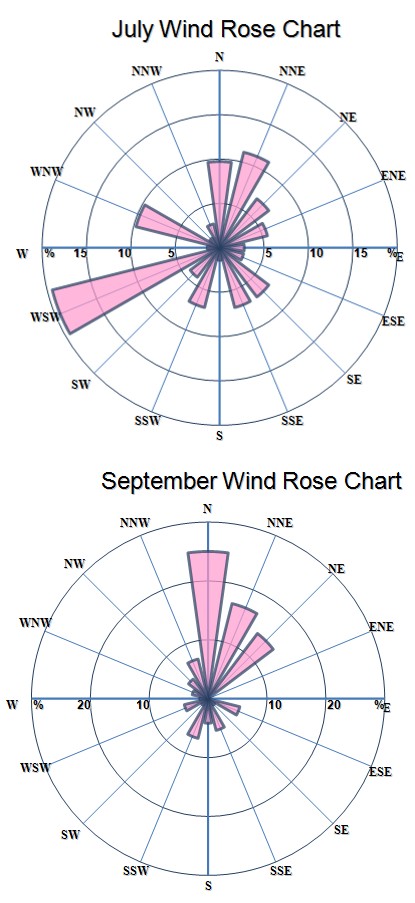
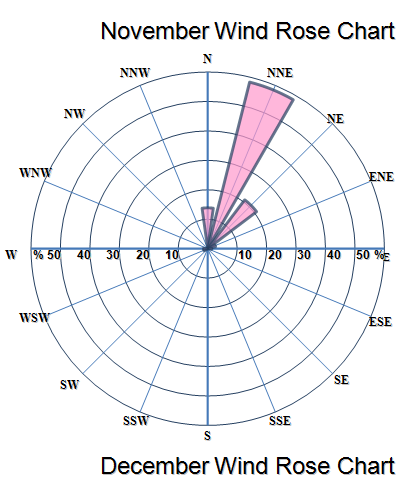
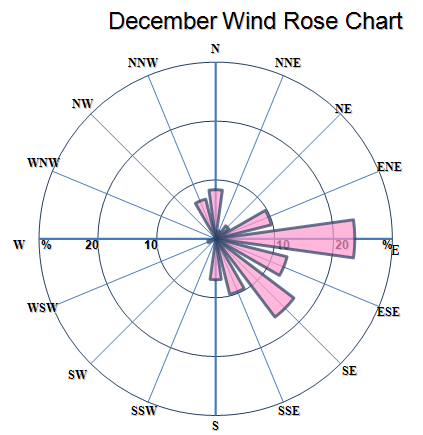
Figure 2 displayed the Wind-rose chart at Changhua Coastal Park sampling site during the year of 2017-half year observations. The results indicated that the Wind direction in July, August, September, October, November and December were came from southwest, north, northeast, northeast and east during the year of 2017-half year observations, respectively. And the average wind direction was come from northeast.
Fang GC, et al. Ambient Air Ionic Species (F-, Cl-, NO3-, SO42-) Compositions Study at a Semi-Open/Outdoor Concrete Processing Factory in Changhua County, Taiwan. Ergonomics Int J 2018, 2(1): 000138.
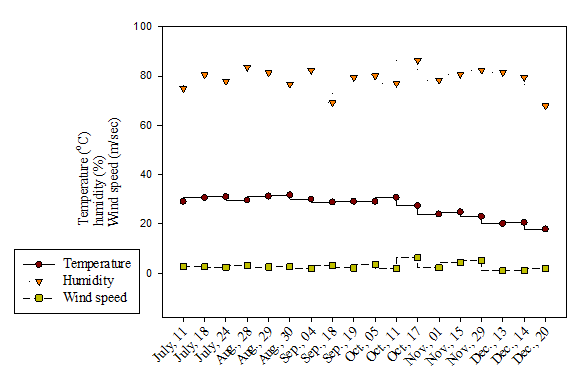
In addition, the figure 3 displayed the atmospheric temperature, humidity, wind speed at this concrete processing factory in Changhua Coastal Park sampling site during the year of 2017-half year observations. The results also indicated that the highest temperature, humidity, wind speed were occurred in August, October, October, and the value were 31.7ºC, 86.4%, 6.2m/sec, respectively. Moreover, the lowest temperature, humidity, wind speed were occurred in December and the value were 17.8ºC, 67.9 %, 1.0 m/sec, respectively.
Fang GC, et al. Ambient Air Ionic Species (F-, Cl-, NO3-, SO42-) Compositions Study at a Semi-Open/Outdoor Concrete Processing Factory in Changhua County, Taiwan. Ergonomics Int J 2018, 2(1): 000138.
Ionic Species (F-, Cl-, NO3-, SO42-) Compositions at a Concrete Processing Factory in Changhua Coastal Park during the Year of 2017
Table 1 displayed the average comparisons for ionic species (F-, Cl-, NO3-, SO42-) compositions in dry depositions, TSP, PM10, PM2.5 with semi-open environment at a concrete processing factory in Changhua Coastal Park during the year of 2017-half year observations. And the results also indicated that the highest average ionic F-, Cl-, NO3-, SO42- compositions for TSP were occurred in August and the values were 2.593, 70.956, 76.711, 52.456 mg/g, respectively. In addition, the highest average ionic F-, Cl-, NO3-, SO42-compositions for dry deposition were occurred in December and the values of F-, Cl-, NO3-, SO42- were 17.11, 30.10, 119.49, 69.74 mg/g, respectively. Moreover, the highest average ionic F-, SO42- compositions for PM10were occurred in November while the highest average ionic Cl-, NO3- were occurred in August and the F-, Cl-, NO3-, SO42- value were 0.157, 0.17, 0.306, 1.476 mg/g, respectively. Finally, the highest average ionic F-, Cl-, NO3-, SO42- compositions for PM2.5 were occurred in September, October and the value were 1.101, 0.248, 0.427, 1.02 mg/g for semi-open environment sampling site at a concrete processing factory in Changhua Coastal Park.
| Semi-Open Sampling Site | ||||||||||||||||
|---|---|---|---|---|---|---|---|---|---|---|---|---|---|---|---|---|
| TSP | Dry depositions | PM 10 | PM 2.5 | |||||||||||||
| Data | ||||||||||||||||
| F- | Cl- | NO - 3 | SO 2- 4 | F- | Cl- | NO - 3 | SO 2- 4 | F- | Cl- | NO - 3 | SO 2- 4 | F- | Cl- | NO - 3 | SO 2- 4 | |
| 07.11.17 | 0.385 | 16.954 | 3.944 | 11.827 | 14.042 | 3.389 | 3.949 | 29.887 | 0.051 | 0.045 | 0.169 | 0.312 | 0.038 | 0.043 | 0.150 | 0.276 |
| 07.18.17 | 1.229 | 6.310 | 22.898 | 33.260 | 4.486 | 1.264 | 1.779 | 9.601 | 0.035 | 0.112 | 0.245 | 0.459 | 0.028 | 0.095 | 0.184 | 0.357 |
| 07.24.17 | 0.537 | 1.189 | 3.056 | 8.197 | 4.283 | 1.197 | 1.349 | 10.119 | 0.034 | 0.074 | 0.284 | 0.484 | 0.024 | 0.061 | 0.213 | 0.376 |
| Average | 0.717 | 8.151 | 9.966 | 17.761 | 7.604 | 1.950 | 2.359 | 16.536 | 0.040 | 0.077 | 0.232 | 0.418 | 0.030 | 0.066 | 0.182 | 0.336 |
| 08.28.17 | 1.612 | 16.139 | 31.689 | 52.957 | 8.830 | 0.837 | 6.362 | 6.331 | 0.172 | 0.360 | 0.519 | 0.851 | 0.165 | 0.348 | 0.490 | 0.815 |
| 08.29.17 | 1.046 | 41.709 | 30.868 | 33.216 | 2.890 | 1.476 | 1.522 | 6.886 | 0.062 | 0.058 | 0.113 | 0.385 | 0.057 | 0.037 | 0.088 | 0.357 |
| 08.30.17 | 5.120 | 155.020 | 167.575 | 71.195 | 17.621 | 6.791 | 9.453 | 47.051 | 0.145 | 0.092 | 0.285 | 0.410 | 0.141 | 0.063 | 0.243 | 0.375 |
| Average | 2.593 | 70.956 | 76.711 | 52.456 | 9.780 | 3.035 | 5.779 | 20.089 | 0.126 | 0.170 | 0.306 | 0.549 | 0.121 | 0.149 | 0.274 | 0.516 |
| 09.04.17 | 3.302 | 12.618 | 47.404 | 61.581 | 2.079 | 1.256 | 1.441 | 5.667 | 0.150 | 0.072 | 0.253 | 1.222 | 0.807 | 0.498 | 0.783 | 0.496 |
| 09.18.17 | 0.851 | 5.616 | 7.204 | 12.185 | 3.694 | 1.139 | 1.685 | 11.303 | 0.106 | 0.014 | 0.117 | 1.218 | 2.357 | 0.102 | 0.011 | 0.094 |
| 09.19.17 | 3.213 | 16.362 | 12.915 | 36.231 | 24.652 | 8.015 | 15.642 | 4.367 | 0.145 | 0.177 | 0.530 | 1.140 | 0.138 | 0.145 | 0.488 | 1.069 |
| Average | 2.455 | 11.532 | 22.508 | 36.666 | 10.141 | 3.470 | 6.256 | 7.112 | 0.134 | 0.088 | 0.300 | 1.193 | 1.101 | 0.248 | 0.427 | 0.553 |
| 10.05.17 | 2.340 | 10.250 | 39.540 | 65.210 | 9.130 | 2.210 | 2.080 | 6.150 | 0.216 | 0.015 | 0.113 | 1.036 | 0.984 | 0.246 | 0.641 | 0.954 |
| 10.11.17 | 1.310 | 5.510 | 9.210 | 10.240 | 10.280 | 3.460 | 2.970 | 4.250 | 0.103 | 0.054 | 0.521 | 1.602 | 0.325 | 0.254 | 0.421 | 0.854 |
| 10.17.17 | 1.370 | 16.610 | 10.080 | 20.890 | 5.490 | 3.150 | 3.090 | 3.090 | 0.109 | 0.031 | 0.231 | 0.901 | 0.821 | 0.132 | 0.120 | 1.254 |
| Average | 1.673 | 10.790 | 19.610 | 32.113 | 8.300 | 2.940 | 2.713 | 4.497 | 0.143 | 0.033 | 0.288 | 1.180 | 0.710 | 0.211 | 0.394 | 1.021 |
| 11.1.17 | 3.124 | 9.215 | 37.210 | 40.360 | 8.240 | 2.120 | 3.950 | 5.210 | 0.236 | 0.035 | 0.201 | 1.123 | 0.413 | 0.521 | 0.091 | 0.954 |
| 11.15.17 | 2.013 | 8.452 | 20.160 | 11.260 | 11.020 | 3.190 | 3.060 | 5.620 | 0.125 | 0.095 | 0.352 | 1.354 | 0.958 | 0.953 | 0.521 | 0.857 |
| 11.29.17 | 1.245 | 5.120 | 19.970 | 20.350 | 7.320 | 6.540 | 3.520 | 4.970 | 0.110 | 0.054 | 0.132 | 1.952 | 0.365 | 0.258 | 0.621 | 0.452 |
| Average | 2.127 | 7.596 | 25.780 | 23.990 | 8.860 | 3.950 | 3.510 | 5.267 | 0.157 | 0.061 | 0.228 | 1.476 | 0.579 | 0.577 | 0.411 | 0.754 |
| 12.13.17 | 0.630 | 29.580 | 3.820 | 13.040 | 13.280 | 28.880 | 249.750 | 23.780 | 0.060 | 0.168 | 0.238 | 0.470 | 0.056 | 0.132 | 0.226 | 0.436 |
| 12.14.17 | 0.420 | 19.800 | 5.370 | 13.540 | 7.980 | 13.590 | 20.890 | 25.060 | 0.051 | 0.131 | 0.181 | 0.235 | 0.046 | 0.103 | 0.170 | 0.207 |
| 12.20.17 | 1.380 | 0.030 | 0.890 | 58.320 | 32.060 | 47.840 | 87.820 | 160.370 | 0.046 | 0.167 | 0.191 | 0.412 | 0.042 | 0.132 | 0.174 | 0.380 |
| Average | 0.81 | 16.47 | 3.36 | 28.30 | 17.77 | 30.10 | 119.49 | 69.74 | 0.05 | 0.16 | 0.20 | 0.37 | 0.05 | 0.12 | 0.19 | 0.34 |
Table 1: Average comparisons for ionic species (F-, Cl-, NO3-, SO42-) compositions in dry depositions, TSP, PM10, PM2.5 (mg/g) fo
Table 1: Average comparisons for ionic species (F-, Cl-, NO3-, SO42-) compositions in dry depositions, TSP, PM10, PM2.5 (mg/g) for semi-open environment at a concrete processing factory in Changhua Coastal Park during the year of 2017- half year observations. Furthermore, Figure 4 displayed the average ionic species (F-, Cl-, NO3-, SO42-) compositions in dry depositions, TSP, PM10, PM2.5 for semi-open environment at a concrete processing factory in Changhua Coastal Park during the year of 2017-half year observations. And the Fang GC, et al. Ambient Air Ionic Species (F-, Cl-, NO3-, SO42-) Compositions Study at a Semi-Open/Outdoor Concrete Processing Factory in Changhua County, Taiwan. Ergonomics Int J 2018, 2(1): 000138.
results indicated that the ionic species SO42- was ranked highest average compositions in TSP, PM10, PM2.5 when compared with those of the other ionic species (F-, Cl-, NO3-) and the value were 31.88, 0.86, 0.587mg/g, respectively while the ionic species for NO3-was ranked highest average compositions in dry depositions when compared with those of the other ionic species (F-, Cl- ,SO42-) and the value was 23.35 mg/g at this semi-open environment sampling site at a concrete processing factory in Changhua Coastal Park.
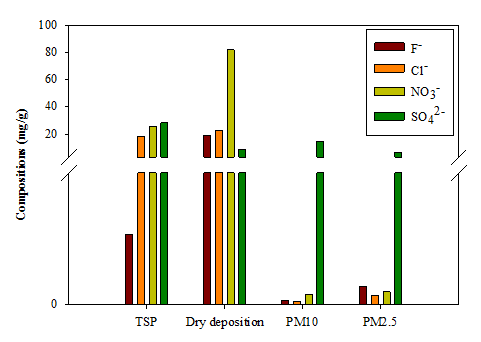
Table 2 displayed the average comparisons for ionic species (F-, Cl-, NO3-, SO42-) compositions in dry depositions, TSP, PM10, PM2.5 with outdoor environment at a concrete processing factory in Changhua Coastal Park during the year of 2017-half year observations. And the results also indicated that the highest average ionic F-, Cl-, SO42-compositions for TSP were occurred in December while the highest average ionic NO3-compositions for TSP were occurred in September and the values of F-, Cl-, NO3-, SO42- were 1.84,187.22, 64.04, 73.74 mg/g, respectively. In addition, the highest average ionic F-, SO42- compositions for dry deposition were occurred in July while the highest average ionic Cl-, NO3- compositions for dry deposition were occurred in December and the values of F-, Cl-, NO3-, SO42- were 17.415, 19.50, 13.84, 41.17 mg/g, respectively. Moreover, the highest average ionic F-, Cl-, NO3-, SO42- compositions for PM10 was occurred in December while the highest ionic Cl- compositions for PM10 were occurred in December and the values were 0.083, 0.277, 0.527, 0.894 mg/g, respectively. Finally, the highest average ionic F-, Cl-, NO3-, SO42- compositions for PM2.5 were occurred in September, December, October, December and the values were 0.136, 0.196, 0.424, 58.536 mg/g for outdoor environment sampling site at a concrete processing factory in Changhua Coastal Park.
| Outdoor Sampling Site | ||||||||||||||||
|---|---|---|---|---|---|---|---|---|---|---|---|---|---|---|---|---|
| Data | TSP | Dry depositions | PM 10 | PM 2.5 | ||||||||||||
| F- | Cl- | NO - 3 | SO 2- 4 | F- | Cl- | NO - 3 | SO 2- 4 | F- | Cl- | NO - 3 | SO 2- 4 | F- | Cl- | NO - 3 | SO 2- 4 | |
| 07.11.17 | 0.571 | 10.428 | 24.491 | 23.210 | 47.550 | 25.532 | 4.919 | 113.722 | 0.060 | 0.092 | 0.391 | 0.678 | 0.046 | 0.086 | 0.357 | 0.618 |
| 07.18.17 | 0.455 | 23.529 | 21.093 | 21.149 | 2.126 | 4.054 | 1.102 | 4.607 | 0.129 | 0.153 | 0.627 | 1.054 | 0.112 | 0.122 | 0.420 | 0.736 |
| 07.24.17 | 0.589 | 23.944 | 26.351 | 12.580 | 2.569 | 0.303 | 1.278 | 5.197 | 0.059 | 0.140 | 0.564 | 0.950 | 0.030 | 0.087 | 0.310 | 0.546 |
| Average | 0.538 | 19.300 | 23.978 | 18.980 | 17.415 | 9.963 | 2.433 | 41.175 | 0.083 | 0.128 | 0.527 | 0.894 | 0.063 | 0.098 | 0.362 | 0.633 |
| 08.28.17 | 0.290 | 5.250 | 12.320 | 11.680 | 2.385 | 2.492 | 1.469 | 4.121 | 0.019 | 0.032 | 0.084 | 0.122 | 0.222 | 0.037 | 0.114 | 0.722 |
| 08.29.17 | 0.320 | 16.390 | 14.690 | 14.730 | 3.978 | 3.907 | 4.113 | 7.603 | 0.020 | 0.056 | 0.081 | 0.083 | 0.088 | 0.023 | 0.026 | 0.421 |
| 08.30.17 | 0.310 | 12.500 | 13.760 | 6.570 | 0.765 | 0.600 | 0.791 | 1.852 | 0.028 | 0.080 | 0.131 | 0.176 | 0.097 | 0.021 | 0.128 | 0.336 |
| Average | 0.307 | 11.380 | 13.590 | 10.993 | 2.376 | 2.333 | 2.124 | 4.526 | 0.022 | 0.056 | 0.099 | 0.127 | 0.136 | 0.027 | 0.089 | 0.493 |
| 09.04.17 | 0.588 | 6.816 | 21.327 | 25.937 | 1.947 | 1.314 | 1.984 | 7.554 | 0.016 | 0.035 | 0.117 | 0.211 | 0.073 | 0.079 | 0.236 | 1.105 |
| 09.18.17 | 0.951 | 40.541 | 69.970 | 54.504 | 2.711 | 4.131 | 3.082 | 10.717 | 0.010 | 0.080 | 0.190 | 0.203 | 0.042 | 0.053 | 0.219 | 0.755 |
| 09.19.17 | 1.266 | 29.854 | 100.822 | 79.438 | 0.799 | 0.491 | 0.757 | 0.459 | 0.017 | 0.048 | 0.191 | 0.272 | 0.139 | 0.040 | 0.114 | 0.296 |
| Average | 0.935 | 25.737 | 64.040 | 53.293 | 1.819 | 1.979 | 1.941 | 6.243 | 0.014 | 0.054 | 0.166 | 0.229 | 0.084 | 0.057 | 0.190 | 0.719 |
| 10.05.17 | 0.580 | 4.560 | 19.250 | 20.250 | 1.360 | 4.260 | 1.970 | 5.620 | 0.021 | 0.029 | 0.125 | 0.352 | 0.039 | 0.015 | 0.361 | 0.975 |
| 10.11.17 | 0.360 | 20.150 | 15.300 | 17.350 | 3.210 | 3.150 | 0.960 | 9.120 | 0.053 | 0.025 | 0.136 | 0.359 | 0.085 | 0.032 | 0.258 | 1.354 |
| 10.17.17 | 0.520 | 11.360 | 9.280 | 25.130 | 0.950 | 0.810 | 0.860 | 4.260 | 0.034 | 0.024 | 0.185 | 0.397 | 0.048 | 0.059 | 0.654 | 1.952 |
| Average | 0.487 | 12.023 | 14.610 | 20.910 | 1.840 | 2.740 | 1.263 | 6.333 | 0.036 | 0.026 | 0.149 | 0.369 | 0.057 | 0.035 | 0.424 | 1.427 |
| 11.1.17 | 1.210 | 5.210 | 15.390 | 17.520 | 5.690 | 4.230 | 0.930 | 7.650 | 0.062 | 0.052 | 0.159 | 0.516 | 0.065 | 0.015 | 0.054 | 1.985 |
| 11.15.17 | 1.920 | 10.260 | 10.540 | 15.290 | 4.650 | 4.690 | 0.820 | 5.190 | 0.036 | 0.036 | 0.365 | 0.621 | 0.039 | 0.021 | 0.123 | 1.152 |
| 11.29.17 | 1.140 | 20.310 | 5.120 | 10.350 | 8.260 | 5.610 | 1.920 | 4.890 | 0.052 | 0.045 | 0.212 | 0.851 | 0.052 | 0.063 | 0.092 | 0.751 |
| Average | 1.423 | 11.927 | 10.350 | 14.387 | 6.200 | 4.843 | 1.223 | 5.910 | 0.050 | 0.044 | 0.245 | 0.663 | 0.052 | 0.033 | 0.090 | 1.296 |
| 12.13.17 | 1.170 | 118.340 | 18.700 | 45.180 | 2.110 | 3.700 | 5.870 | 12.470 | 0.018 | 0.176 | 0.071 | 0.122 | 0.013 | 0.111 | 0.054 | 0.113 |
| 12.14.17 | 0.140 | 24.420 | 7.360 | 0.360 | 5.050 | 16.960 | 11.180 | 29.420 | 0.007 | 0.089 | 0.051 | 0.095 | 0.016 | 0.067 | 0.098 | 175.000 |
| 12.20.17 | 0.700 | 63.880 | 14.220 | 37.150 | 2.570 | 26.740 | 6.880 | 16.920 | 0.003 | 0.037 | 0.023 | 0.043 | 0.014 | 0.076 | 0.078 | 0.156 |
| Average | 1.840 | 187.220 | 32.127 | 72.743 | 5.353 | 19.500 | 13.847 | 32.073 | 0.027 | 0.277 | 0.119 | 0.209 | 0.027 | 0.196 | 0.131 | 58.536 |
Table 2: Average comparisons for ionic species (F-, Cl-, NO3-and SO42-) compositions (mg/g) in dry depositions, TSP, PM10, PM2.5
Fang GC, et al. Ambient Air Ionic Species (F-, Cl-, NO3-, SO42-) Compositions Study at a Semi-Open/Outdoor Concrete Processing Factory in Changhua County, Taiwan. Ergonomics Int J 2018, 2(1): 000138.
Table 2: Average comparisons for ionic species (F-, Cl-, NO3-and SO42-) compositions (mg/g) in dry depositions, TSP, PM10, PM2.5 for outdoor environment at a concrete processing factory in Changhua Coastal Park during the year of 2017-half year observations. Furthermore, Figure 5 displayed the average ionic species (F-, Cl-, NO3-, SO42-) compositions in dry depositions, TSP, PM10, PM2.5 for outdoor environment at a concrete processing factory in Changhua Coastal Park during the year of 2017-half year observations. And the results indicated that the ionic species SO42- was ranked highest average compositions in dry deposition, PM10, PM2.5 when compared with those of other ionic species (F-, Cl-, NO3-) and the value were 16.043, 0.415, 10.517 mg/g, respectively while the ionic species was Cl- was ranked highest average compositions in TSP when compared with those of other ionic species (F-, Cl-, SO42-) and the value was 44.59 mg/g at this outdoor environment sampling site at a concrete processing factory in Changhua Coastal Park.
Fang GC, et al. Ambient Air Ionic Species (F-, Cl-, NO3-, SO42-) Compositions Study at a Semi-Open/Outdoor Concrete Processing Factory in Changhua County, Taiwan. Ergonomics Int J 2018, 2(1): 000138.
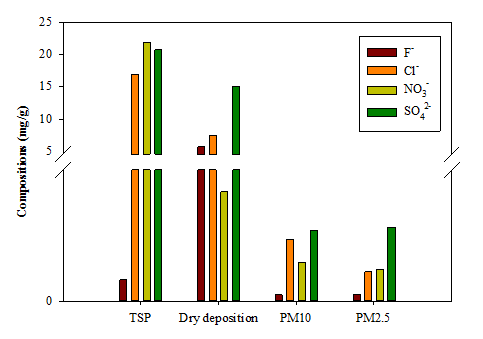
To sum up, the highest average ionic species compositions was SO42- for dry deposition, PM10, PM2.5 at this concrete processing factory in Changhua Coastal Park. In addition, the highest average ionic species composition was Cl- for TSP at this concrete processing factory in Changhua Coastal Park in this study.
Ambient Air Particles Compositions and Dry Depositions Average Percentages of Water- Soluble Ionic (F-, Cl-, NO3- and SO42-) with Semi- Open and Outdoor Environments.
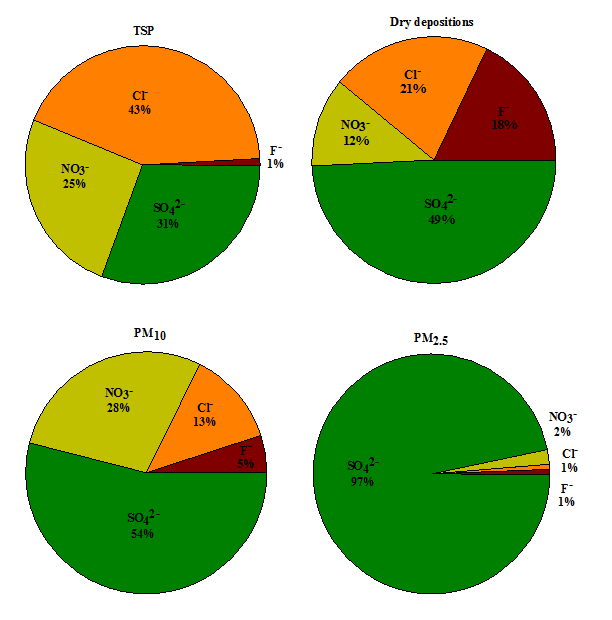
Figure 6 displayed the average compositions percentages of ionic species (F-, Cl-, NO3-, SO42-) in TSP, dry depositions, PM10, PM2.5 for semi-open environment at a concrete processing factory in Changhua Coastal Park during the year of 2017-half year observations. The results indicated that the average compositions percentages for ionic (F-, Cl-, NO3-and SO42-) proportion in TSP were 2.02, 20.98, 17.59 and 58.07%, respectively. In addition, the average compositions percentages for ionic (F-, Cl-, NO3-and SO42-) proportion in dry deposition 15.46, 10.45, 24.06 and 49.50% respectively. Moreover, the average compositions percentages for (F-, Cl-, NO3-and SO42-) proportion in PM10were 7.29, 10.35, 13.84 and 63.22%, respectively. Finally, the average compositions percentages for ionic (F-,Cl-, NO3-and SO42-) proportion PM2.5 proportion were 8.12, 8.44 , 15.63 and 62.10%, respectively at this concrete processing factory environments.
Fang GC, et al. Ambient Air Ionic Species (F-, Cl-, NO3-, SO42-) Compositions Study at a Semi-Open/Outdoor Concrete Processing Factory in Changhua County, Taiwan. Ergonomics Int J 2018, 2(1): 000138.
Figure 7 displayed the average compositions percentages of ionic (F-, Cl-, NO3-and SO42-) in TSP, dry depositions, PM10, PM2.5 for outdoor environment at a concrete processing factory in Changhua Coastal Park during the year of 2017-half year observations. The results indicated that the average compositions percentages for compositions ionic (F-, Cl-, NO3-and SO42-) proportion in TSP were 0.78, 19.70, 25.46 and 52.56%, respectively. In addition, the average compositions percentages for ionic (F-, Cl-, NO3-and SO42-) proportion in dry deposition 9.23, 19.71, 29.58 and 40.94%, respectively. Moreover, the average compositions percentages for ionic (F-, Cl-, NO3-and SO42-) proportion in PM10 were 5.12, 13.42, 17.11 and 61.06%, respectively. Finally, the average compositions percentages for ionic (F-, Cl-, NO3-and SO42-) proportion PM2.5 proportion were 0.91, 8.48, 11.23 and 61.13%, respectively at this concrete processing factory environments.
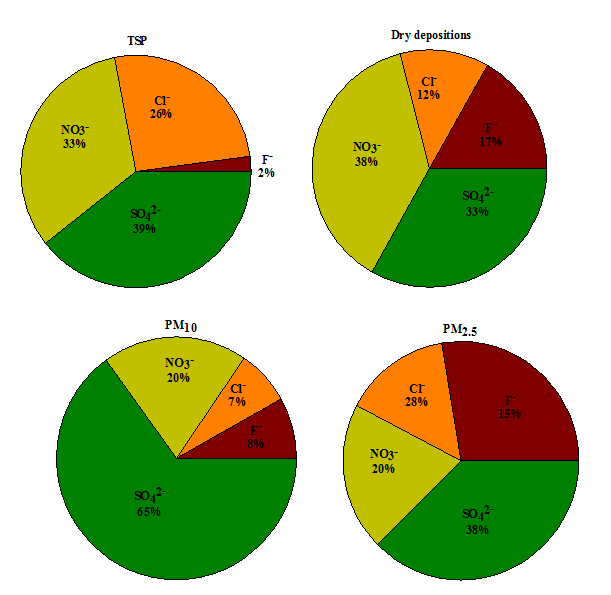
To sum up, the main average compositions percentages for ionic species was SO42- followed by Cl-and NO3-for TSP, PM10, PM2.5 and dry depositions at semi-open and outdoor environments. Note worthy, ionic species SO42-occupied were than 60%of the compositions percentages when compared with all the ionic species at both PM10 and PM2.5. And ionic species SO42- compositions in TSP was occupied more than 50% of than concentrations percentages when compared with all the ionic species. Finally, ionic species SO42- compositions in dry depositions was occupied more than 40% of than compositions percentages when compared with all the ionic species.
Conclusions
The main conclusions were shown as followed:
- The average ionic species compositions ratios for SO42- in TSP to that of the F-, Cl-, NO3- were 18.43, 1.53, 1.211 at this semi-open environment sampling site. In addition, the average ionic species NO3-compositions ratios for in TSP to that of the F-, Cl-, SO42- were 48.38, 1.68, 1.39 at this outdoor environment sampling site at this concrete processing factory in Changhua Coastal Park.
- The average ionic species compositions ratios for SO42- in PM10 to that of the F-, Cl-, NO3- were 7.95, 8.87, 3.33 at this semi-open environment sampling site. In addition, the average ionic species compositions ratios for SO42- in PM10 to that of the F-, Cl-, NO3- were 10.72, 4.25, 1.90 at this outdoor environment sampling site at this concrete processing factory in Changhua Coastal Park.
- The average ionic species compositions ratios for SO42- in PM2.5 to that of the F-, Cl-, NO3- were 1.36, 2.56, 1.87 at this semi-open environment sampling site. In addition, the average ionic species compositions ratios for SO42- in PM2.5 to that of the F-, Cl-, NO3- were 150.48, 141.59, 49.08 at this outdoor environment sampling site at this concrete processing factory in Changhua Coastal Park.
- The average ionic species compositions ratios for NO3- in dry depositions to that of the F-, Cl-, SO42- were 2.24, 3.08, 1.13 at this semi-open environment sampling site. In addition, the average ionic species compositions ratios for SO42- in dry deposition to that of the F-, Cl-, NO3- were 2.75, 2.32, 4.21 at this outdoor environment sampling sit at a concrete processing factory in Changhua Coastal Park.
Acknowledgement
The authors gratefully acknowledge the National Science Council of the ROC (Taiwan) for financially supporting this work under project no. HK 105-191.
References
-
Seinfeld JH, Pandis SN (2006) Atmospheric Chemistry and Physics: From Air Pollution to Climate Change. 2nd (Edn.), John Wiley & Sons, Inc., Hoboken, New Jersey. Fang GC, et al. Ambient Air Ionic Species (F-, Cl-, NO3-, SO42-) Compositions Study at a Semi-Open/Outdoor Concrete Processing Factory in Changhua County, Taiwan. Ergonomics Int J 2018, 2(1): 000138.
-
Pope CA, Burnett RT, Thun MJ, Calle EE, Krewski D, et al. (2002) Lung cancer, cardiopulmonary mortality, and long-term exposure to fine particulate air pollution. JAMA 287(9): 1132-1141.
-
Brunekreef B, Holgate ST (2002) Air pollution and health. Lancet 360 (9341): 1233-1242.
-
Avise J, Chen J, Lamb B, Wiedinmyer C, Guenther A, et al. (2009) Attribution of projected changes in summertime US ozone and PM 2.5 concentrations to global changes. Atmos Chem Phys 9(4): 1111-1124.
-
Guo Y, Zhao Y, Wang S, Jiang C, Zhang J (2018) Relationship between the zeta potential and the chemical agglomeration efficiency of fine particles in flue gas during coal combustion. Fuel 215(1): 756- 765.
-
Nel A, Xia T, Mädler L, Li N (2006) Toxic potential of materials at the nano level. Science 311(5761): 622- 627.
-
Karlsson HL, Gustafsson J, Cronholm P, Möller L (2009) Size-dependent toxicity of metal oxide particles-a comparison between nano- and micrometer size. Toxicol Lett 188(2): 112-118.
-
Mills NL, Donaldson K, Hadoke PW, Boon NA, MacNee W, et al. (2009) Adverse cardiovascular effects of air pollution. Nat Clin Pract Cardiovasc Med 6(1): 36-44.
-
Oberdorster G (2010) Safety assessment for nanotechnology and nano medicine: concepts of nanotoxicology. J Intern Med 267(1): 89-105.
-
Gomes JFP, Bordado JCM, Albuquerque PCS (2012) On the assessment of exposure to airborne ultrafine particles in urban environments. J Toxicol Environ Health A 75(22-23): 1316-1329.
-
Chen LWA, Doggridge BG, Dickerson RR, Chow JC, Muller PK, et al. (2001) Seasonal variations in elemental carbon aerosol, carbon monoxide, and sulfur dioxide: implications for sources. Geophysical Research Letters 28(9): 1711-1714.
-
Ministry of Environment (MOE) (2001) Air pollution emission rate in Korea. In: Ministry of Environment (MOE), Korea (Eds.), Environmental White Paper, Seoul, Korea, pp: 101-105.
-
Park SS, Kim YJ (2004) PM2.5 particles and size- segregated ionic species measured during fall season in three urban sites in Korea. Atmos Environ 38(10): 1459-1471.
-
Chester R, Bradshaw GF, Corcoran PA (1994) Trace metal chemistry of the North Sea particulate aerosol: concentrations, sources and sea water fates. Atmos Environ 28(17): 2873-2883.
-
Gao Y, Arimoto R, Duce RA, Chen LQ, Zhou MY, et al. (1996) Atmospheric non-sea-salt, sulfate, nitrate and methane sulfonate over the China Sea. J Geophys Res 101(D7): 12601-12611.
-
Baker JE, Poster DL, Clark CA, Church TM, Scudlark JR, et al. (1997) Loading of atmospheric trace elements and organic contaminants to the Chesapeake Bay. In: Baker JE (Ed.), Atmospheric Deposition of Contaminants to the Great Lakes and Coastal Waters, SETAC Press, Pensacola, Florida, pp: 171-194.
-
Eisenreich SJ, Hornbuckle CK, Achman DR (1997) Air- water exchange of semivolatile organic chemicals in the Great Lakes. In: Baker JE (Ed.), Atmospheric Deposition of Contaminants to the Great Lakes and Coastal Waters, SETAC Press, Pensacola, Florida, pp: 109-136.
-
Holsen TM, Zhu X, Khalili NR, Lin JJ, Lestari P, et al. (1997) Atmospheric particle size distributions and dry deposition measured around Lake Michigan. In: Baker JE (Ed.), Atmospheric Deposition of Contaminants to the Great Lakes and Coastal Waters, SETAC Press, Pensacola, Florida, pp: 35-50.
-
Ondov JM, Quinn TL, Battel GF (1997) Influence of temporal changes in relative humidity on size and dry depositional fluxes of aerosol particles bearing trace elements. In: Baker JE (Ed.), Atmospheric Deposition Fang GC, et al. Ambient Air Ionic Species (F-, Cl-, NO3-, SO42-) Compositions Study at a Semi-Open/Outdoor Concrete Processing Factory in Changhua County, Taiwan. Ergonomics Int J 2018, 2(1): 000138. of Contaminants to the Great Lakes and Coastal Waters, SETAC Press, Pensacola, Florida, pp: 17-34.
-
Yang X, Miller DR, Xu X, Yang LH, Chen HM, et al. (1996) Spatial and temporal variations of atmospheric deposition in interior and coastal Connecticut. Atmos Environ 30(22): 3801-3810.
-
Turnbull AB, Harrison RM (2000) Major component contributions to PM10 composition in the UK atmosphere. Atmos Environ 34(19): 3129-3137.
-
Lee JH, Kim YP, Moon KC, Kim HK, Lee CB (2001) Fine particle measurements at two background sites in Korea between 1996 and 1997. Atmos Environ 35(4): 635-643.
-
Fang GC, Lo CT, Cho MH, Zhuang YJ, Tsai KH, et al. (2016) Annual ambient atmospheric mercury speciation measurement from Longjing, a rural site in Taiwan. Environmental Geochemistry and Health. 39(4): 901-911.
-
Fang GC, Huang WJ, Wu YS, Huang YL (2010) Atmospheric particulate and metallic elements at five characteristic sampling sites in Taiwan. Environmental Forensics 11(4): 293-299.
-
Fang GC, Lo CT, Huang CY, Zhuang YJ, Cho MH, et al. (2017) PM2.5 particulates and particulate-bound mercury Hg(p) concentrations in a mixed urban, residential, traffic-heavy, and industrial site. Environmental Forensics 18(3): 178-187.
-
Fang GC, Wu YS, Fu PPC, Chang CN, Chen MH, et al. (2005) Metallic elements study of fine and coarse particulates using a versatile air pollutant system at a traffic sampling site. Atmospheric Research 75(1-2): 1-14.
- The Expanding Landscape of Road Rage: A Systematic Review of Conflicts Involving Drivers, Pedestrians, and Micromobility
- Validating Cognitive Models of Royal Navy Performance on Control Systems
- Comparing Standard and State-of-the-art Firefighter Coats on Postural Balance and Gait in a Live Burn Environment
- Investigating the Integration of Telemedicine into Clinicians Workflow: A Review of Methods
- Risk Assessment of Ergonomic Factors in a Textile Firm by RULA, REBA and Fine Kinney Methods
- Impact of Self-Esteem Training on Individuals with Disabilities Aged 17-30