
Comparing Standard and State-of-the-art Firefighter Coats on Postural Balance and Gait in a Live Burn Environment
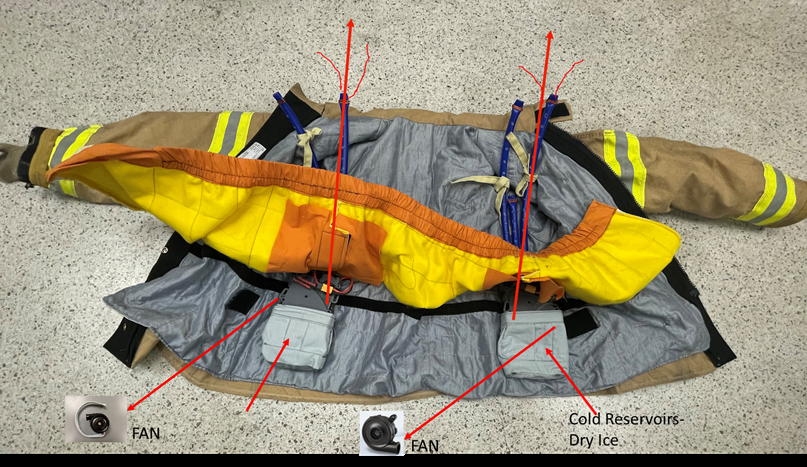
More than one million firefighters work in the United States. The standard fire (SF) coat, used by the firefighters, had been in place for many years. Our research team was entrusted with the job of designing a new coat radically different from the SF coat. In the first year of the project, we designed a cooling system (CS) coat with carbon nanotube-based fabric, two pouches inside the coat, accommodating coolants and fans. We spent one year on the new coat making sure that fans run, and coolants remain unspent while firefighters work inside a live burn facility for a specified length of time. We christened the state-of-theart coat that eventually involved as Lion’s cooling system (LC) coat. The main objective of our research was to compare SF and LC coats on gait and postural balance of firefighters. Underlying our research mission was the goal to show that the LC coat is not inferior to the SF coat on gait and postural balance. The mission was successful.
Introduction
As per the National Fire Department Registry 2023 [1], 34% were career firefighters, 53% volunteer firefighters, and 12% paid-for-call firefighters. The primary coat used in all their firefighting activities comes under the acronym PPE (personal protective equipment), which consists of a coat, pants, boots, helmet, mask, gloves, and oxygen tank. In
2022, ninety-four firefighters had a fatal injury of medical nature [2]. The design of the coat has not changed for many years. A need arises to develop a new coat, which is more protective. Our research team designed a coat with novel features. It has two pouches inside the coat with room for coolants, fans, a switch, and is made up of a new fabric, which is carbon nanotube based [3, 4]. Over a span of a year, our research team worked on the new coat and made it functional the way it was planned. The new coat is labeled as Lion’s cooling (LC) coat. A standard firefighter (SF) coat is selected for comparison with an LC coat. An experiment is conducted to assess gait and balance in a live burn facility. A special protocol is designed for the firefighters to follow. A sample of firefighters on SF coat and another sample on LC coat have gone through the protocol. The overall conclusion is that the coats are not significantly different on several metrics comprising balance and gait.
A specimen of the LC coat is presented in Figure 1 (Patent pending) [5].
Data Collection
Participants and Protocol
Ten firefighters were recruited in the first year to experiment with SF coat (mean ± SD: age 38.2 ± 8.7 years; weight 116.9 ± 8.8 kg; height 184.0 ± 9.1 cm) and nineteen in the second year with LC coat (mean ± SD: age 38.1 ± 8.8 years; weight 93.2 ± 20.8 kg; height 180.9 ± 9.5 cm) in a live burn facility. Firefighters were recruited from the surrounding areas of the city through fire station chiefs by informal invitations. The only stipulations were their ages between 20 and 60 and being male. The reason that only males were selected because we had a very limited number of LC coats at our disposal for testing, and they do not fit females. The live burn facility is a three-storey building located in a suburb of the city where research has been carried out. Before a firefighter with PPE steps into the live burn facility, fire is started deliberately inside. The firefighter is given instructions on activities he should pursue once he is inside. Every firefighter follows the protocol depicted in Figure 2.

The protocol consists of two stages. In Stage 1, firefighters were instructed to work inside the live burn facility for at least ten minutes (Scenario 1). After exiting from Scenario 1, the firefighter takes rest for about thirty minutes (Rest Period 1). He then re-enters the live burn facility and spends at least ten minutes working inside (Scenario 2) followed by about thirty minutes of rest (Rest Period 2). Finally, the firefighter re-enters the live burn facility and works for at least ten minutes (Scenario 3).
After exiting the live burn facility, the firefighter is tested on balance and gait in a separate building away from the fire building (Stage 2). In Table 1, time spent in the live burn facility along with rest period times are recorded.
| SF coat | |||||
|---|---|---|---|---|---|
| FF ID | Scenario1 | Rest1 | Scenario2 | Rest2 | Scenario3 |
| 1 | 15 | 29 | 26 | 33 | 25 |
| 2 | 15 | 18 | 15 | 21 | 15 |
| 3 | 15 | 29 | 26 | 33 | 25 |
| 4 | 11 | 30 | 12 | 39 | 12 |
| 5 | 15 | 18 | 15 | 21 | 15 |
| 6 | 17 | 20 | 16 | 19 | 17 |
| 7 | 3 | 20 | 9 | 15 | 9 |
| 8 | 6 | 19 | 1 | 19 | 3 |
| 9 | 6 | 19 | 1 | 19 | 3 |
| 10 | 3 | 20 | 9 | 15 | 9 |
| LC Coat | |||||
| FF ID | Scenario1 | Rest1 | Scenario2 | Rest2 | Scenario3 |
| 1 | 27 | 35 | 16 | 37 | 14 |
| 2 | 24 | 28 | 9 | 26 | 8 |
| 3 | 22 | 33 | 17 | 26 | 12 |
| 4 | 22 | 32 | 8 | 23 | 10 |
| 5 | 21 | 20 | 9 | 20 | 11 |
| 6 | 24 | 28 | 9 | 26 | 8 |
| 7 | 14 | 33 | 17 | 26 | 12 |
| 8 | 8 | 34 | 19 | 24 | 11 |
| 9 | 16 | 32 | 8 | 23 | 10 |
| 10 | 21 | 20 | 9 | 20 | 11 |
| 11 | 21 | 20 | 9 | 20 | 11 |
| 12 | 14 | 33 | 17 | 26 | 12 |
| 13 | 8 | 34 | 19 | 24 | 11 |
| 14 | 27 | 35 | 16 | 37 | 14 |
| 15 | 8 | 23 | 19 | 24 | 11 |
| 16 | 22 | 33 | 17 | 26 | 12 |
| 17 | 22 | 33 | 17 | 26 | 12 |
| 18 | 24 | 28 | 9 | 26 | 8 |
| 19 | 8 | 23 | 19 | 24 | 11 |
Table 1: Time spent in the live burn facility along with rest period times.
Force Plate and Stabilogram data
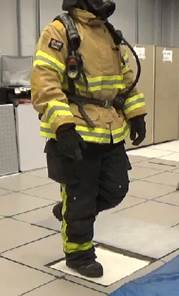
A firefighter steps on a ‘force plate’ (AMTI, Advanced Mechanical Technology, Inc, MA). It is a lightweight platform with sensors, which can measure the extent of postural sway by the firefighter who steps on it. A force plate with a firefighter on it is pictured in Figure 3.
Static balance is quantified under four postures by the firefighters on a force plate and described below:
A: Standing on two legs with eyes open. B: Standing on two legs with eyes closed. L: Standing on one leg with eyes open. M: Standing on one leg with eyes closed.
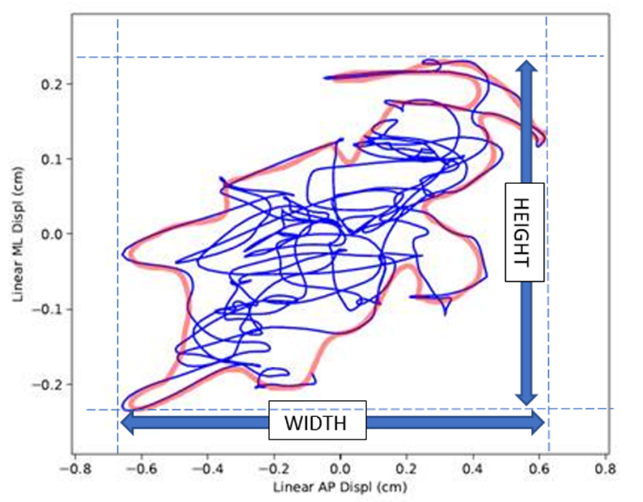
Each posture lasts 30 seconds. Measurements on a firefighter are taken from the Stabilogram (Figure 4) produced by the force plate while standing on it. At each posture, the following four measurements (metrics) on postural sway are taken.
Width = maximum width of postural sway. Height = maximum height of postural sway.
Area = area within the perimeter of postural sway. Length = length of the path of postural sway.
These measurements describe the extent to which the firefighter is swaying under each posture. The Width in the graph measures to what extent the firefighter is swaying from left to right (medio-lateral). The Height in the graph measures to what extent the firefighter is swaying from front to back (anterior-posterior). The red outline in the stabilogram indicates the extent to which the firefighter is swaying all around, and the Sway Length of the outline is measured. The Sway Area within the red outline is also measured. The postural balance was performed in A-B-L-M order. These tasks were intended to assess the impact of the afferents, visual, vestibular and proprioceptors on their postural balance [6].
Legsys and Gait Measurement
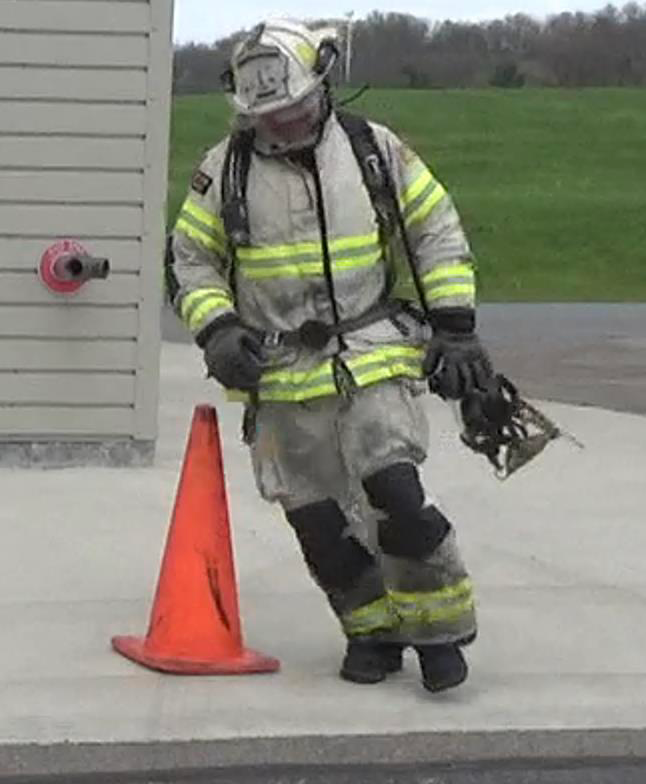
Dynamic balance was assessed using wearable LegSys sensors (BioSensics, MA) over the course of two trials (Single and Dual Tasks). A subject begins sitting with arms resting atop his legs. Then he rises from the chair, walks 7 meters at normal pace, turns around a cone, and returns to his initial sitting position (Single Task). The firefighter performs the same task again while subtracting 3 from a three-digit number continually until he reaches the end of the set path (Dual Task) [7]. The purpose of the Dual Task is to better understand how cognitive demand may impact firefighters’ dynamic balance [8]. One of the maneuvers of Dynamic Balance assessment is reported in Figure 5. Ten measurements on their walks (total walk duration, total step count, cadence mean, single stance mean, double stance mean, turn duration mean, turn 1 anterior posterior peak, turn 1 medio-lateral peak, turn 1 vertical peak, and stride mean) are taken under each trial.
Methods
Static Balance
For comparing performance of coats on four metrics, we used several multiple regression models. The response variable in each is Width, Height, Area, or Length. The predictors are postures (ternary, A, B, and L), coats (Sf and LC), and duration of total time spent inside the fire building.
Posture M is discarded in the analysis as most of the firefighters fell while standing on one leg with eyes closed. All firefighters provided data on all the metrics at each of the Postures A and B. Most of them provided data on Posture L.
Dynamic Balance
The dynamic assessment involves each firefighter walking around a set path. Multiple regression model was fitted to the data for each of the ten measurements (responses) with predictors coats (SF or LC), tasks (single or dual), and duration of stay in the fire building.
Results
Static Balance
On each metric of sway, a bar plot of the average value of the metric by coat is presented. A bar plot is also drawn comparing the postures. A scatter plot of the metric versus duration is also presented in the same frame (Figures 6-9). If the coats are not significantly different on the metric, it is indicated by the symbol ‘NS.’ The postures are compared pairwise. If two levels are significantly different, the strength of significance is indicated by ‘*’ (0.01 < p ≤ 0.05), ‘’ (0.001 < p ≤ 0.01), or ‘*’ (p ≤ 0.001). Pearson correlation between the metric of interest and duration is recorded on the scatter plot.
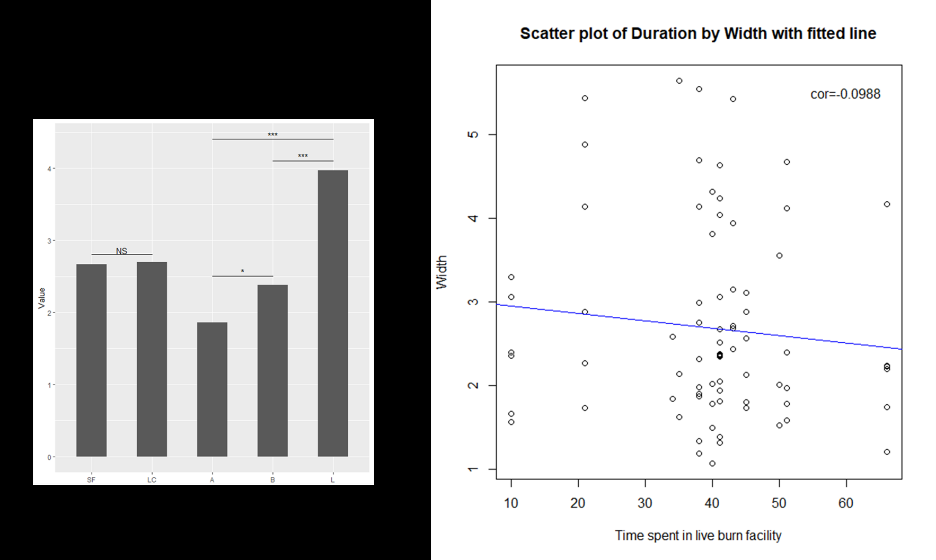
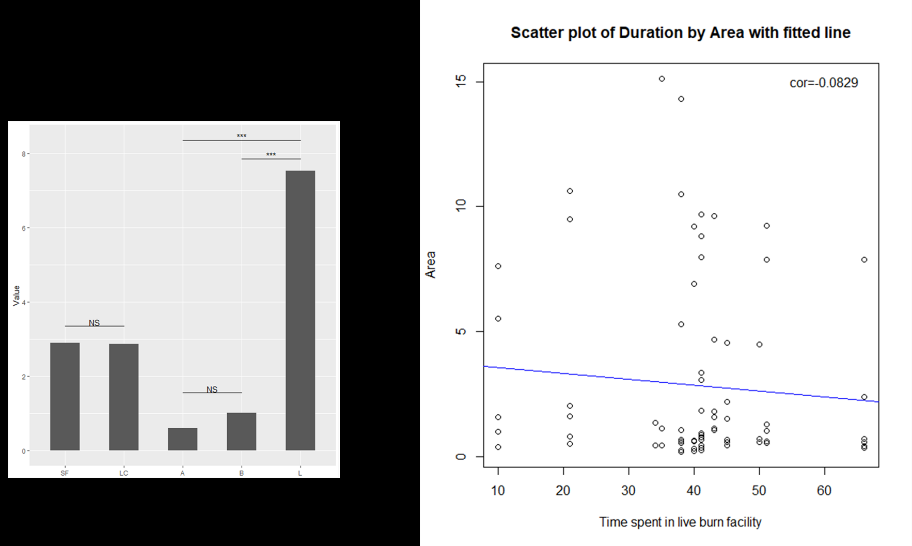
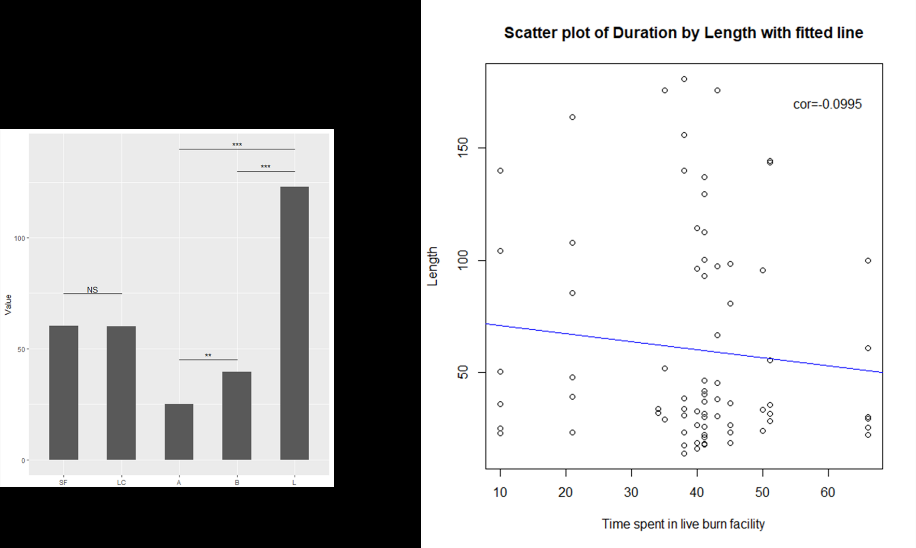
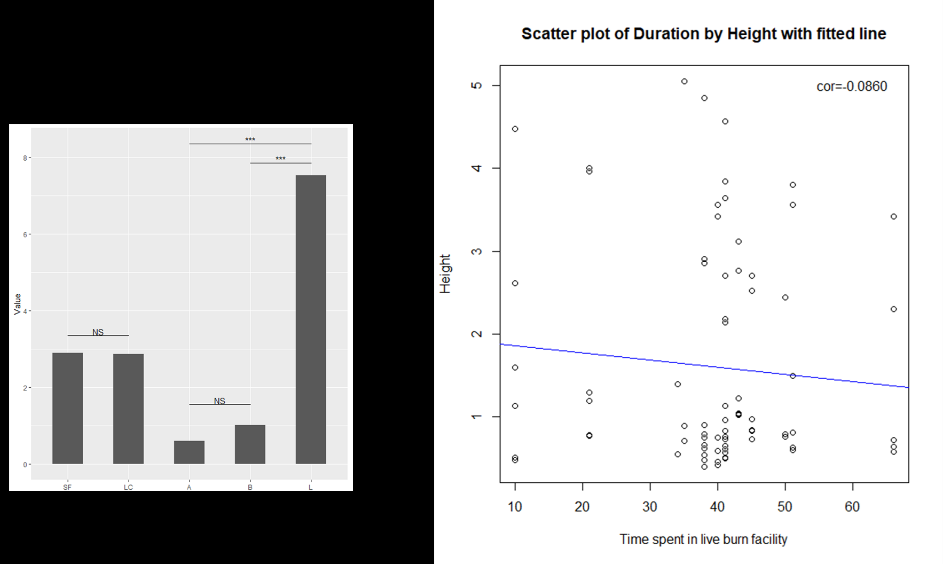
The coats are not significantly different on all four metrics (p = 0.4191 for width, p = 0.7748 for height, p = 0.4128 for area, and p = 0.2406 for length). The posture L (standing on one leg with eyes open) stands out significantly in comparison with postures A and B on all metrics. The predictor ‘Duration’ is significant on Height (p = 0.0409)
- and Length (p = 0.0179). In view of multiple testing, the significant differences that emerged disappear after multiple testing adjustment.
- Dynamic Balance
- As mentioned in the methods section, the dynamic assessment involves each firefighter walking around a set
- Metric
- SF Coat
- LC Coat p-value
- Mean
- SD
- Mean
- SD
- Total Walk Duration
- 9.11
- 1.54
- 10.18
- 1.61
- 0.0355 *
- Total Step Count
- 16.35
- 2.06
- 16.93
- 2.26
- 0.7032
- Cadence Mean
- 108.52
- 11.23
- 100.32
- 9.80
- 0.0024 **
- Single Stance Mean
- 0.4281
- 0.0377
- 0.4136
- 0.0391
- 0.3807
- Double Stance Mean
- 0.2596
- 0.0737
- 0.3768
- 0.0829
- <0.0001 ***
- Turn Duration Mean
- 2.14
- 0.3065
- 2.49
- 0.5099
- 0.0169 *
- Turn1 Medio Lateral Peak
- -0.0995
- 0.4948
- -0.1815
- 0.3228
- 0.441
- Turn1 Anterio Posterior Peak
- 0.1595
- 0.4420
- 0.1468
- 0.3875
- 0.729
- Turn1 Vertical Peak
- -1.18
- 1.09
- -1.47
- 0.10
- 0.1691
- Stride Mean
- 57.30
- 5.94
- 55.75
- 8.40
- 0.8067
Table 2: Mean and standard deviation of metrics by coat.
- Metric
- Single Task
- Dual Task p-value
- Mean
- SD
- Mean
- SD
- Total Walk Duration
- 8.97
- 1.14
- 10.42
- 1.75
- 0.0014 **
- Total Step Count
- 15.96
- 1.89
- 17.33
- 2.24
- 0.0194 *
- Cadence Mean
- 106.83
- 10.43
- 100.84
- 11.00
- 0.0559
- Single Stance Mean
- 0.4157
- 0.0302
- 0.4226
- 0.0452
- 0.4761
- Double Stance Mean
- 0.3008
- 0.0936
- 0.3547
- 0.06958
- 0.0403 *
- Turn Duration Mean
- 2.25
- 0.4467
- 2.44
- 0.4789
- 0.1746
- Turn1 Medio Lateral Peak
- -0.1284
- 0.4559
- -0.1660
- 0.3490
- 0.789
- Turn1 Anterio Posterior Peak
- 0.1069
- 0.4506
- 0.1901
- 0.3678
- 0.463
- Turn1 Vertical Peak
- -1.37
- 0.7418
- -1.34
- 0.6714
- 0.8091
- Stride Mean
- 58.29
- 7.50
- 54.74
- 7.22
- 0.0894
Table 3: Mean and standard deviation of metrics by task.
| Metric | Duration coefficient | p-value |
|---|---|---|
| Total Walk Duration | 0.0134 | 0.3922 |
| Total Step Count | 0.0539 | 0.0170 * |
| Cadence Mean | 0.2556 | 0.0192 * |
| Single Stance Mean | -0.0011 | 0.0070 ** |
| Double Stance Mean | -0.0004 | 0.6528 |
Table 4: Effect of duration on each metric with p-values.
| Turn Duration Mean | 0.0042 | 0.3818 |
|---|---|---|
| Turn1 Medio Lateral Peak | 0.0026 | 0.560 |
| Turn1 Anterio Posterior Peak | 0.0048 | 0.294 |
| Turn1 Vertical Peak | -0.0008 | 0.9221 |
| Stride Mean | -0.1603 | 0.0464 * |
Table 5: Effect of duration on each metric with p-values.
In view of multiple testing, the significant differences that emerged disappear after multiple testing adjustment.
Discussion
The overarching goal of the project is to compare the performance of the SF coat and the newly designed novel cooling system, LC coat, on several metrics of balance and gait after the firefighters went through a grueling live burn testing protocol, which lasted more than two hours. Comparisons between the coats were also done under different segments of the protocol. It is common knowledge that static and dynamic balances, after such training, are affected adversely and well documented [9, 10, 11, 12, 13, 14]. Roger Kollock and associates [15] examined the effect of firefighter equipment and gear on postural stability. Participants performed 3 single-leg landings with and without equipment and gear. They also completed 2 static balance tasks with and without equipment and gear. The conclusion from the experiment was that the equipment significantly affects postural stability. In our research, both groups of firefighters went through a grueling regimen and performed some tasks measuring their balance and gait. On many metrics, no significant differences were detected. Firefighting equipment is typically heavy, accounting for as much as 20% of the body weight. Both coats weigh almost the same. Both groups went through the same routine. We were expecting similar performance on gait and balance. The results corroborated with expectations.
Brown and associates [16] looked at four configurations of protective clothing, Type 1: athletic clothing (control); Type 2: PPE; Type 3: PPE + self-contained breathing apparatus (SCBA); Type 4: PPE + SCBA + mask, and examined their impact on balance and stability in a lab setting. There is considerable difference in the weight of the clothing. Their main conclusion is that additional weights from Type 2 clothing to Type 3 or Type 4 clothing reduce balance and stability significantly. In our research, the equipment (SF or LC coats) weighs the same, but our setting was a live burn facility. The coats did not exhibit significant differences in balance and gait. Sobeih and associates [17] studied the impact of long work shifts and turnout gear on firefighters’ postural stability under several tasks. It was concluded that prolonged work shifts may be an important contributor to the high prevalence of slips and falls among firefighters.
Games and associates [18] compared the results of balance tasks under two scenarios, one with station attire and the other with PPE. It was concluded that personal protective equipment negatively affects dynamic balances. The settings of these studies were not as realistic as ours.
Under static balance, four measurements (width, height, area, and length) were made on each coat and under each test condition (A, B, L - postures). As hypothesized, we did not find significant differences between the coats. However, the test conditions differed significantly. As anticipated, the posture on one leg with eyes open (L) significantly differed from the other postures. It is surprising that the longer one stays inside the live burn facility (duration), the shorter is the length (of the postural sway). This effect is significant with p = 0.0179. Another surprise is that the longer one stays inside the live burn facility (duration), the shorter is the height (swaying to-and-fro). This effect is significant with p = 0.0409.
Each firefighter walked along a set path. Ten measurements were made at single and dual tasks. No significant difference was observed between the coats with respect to the measurements made overall. One of the ten metrics, namely, double stance mean, stands out. The coats are significantly different on this metric, even after multiple testing adjustment.
There was a big difference in the outdoor temperatures when trials were conducted in the live burn facility. The testing on SF coat was done in winter with temperatures hovering between 15o-19oC. The temperatures were not freezing. On the other hand, testing on LC coat was done in late spring next year with temperatures ranging between 19o-27oC.
Data on physiological measurements and perceptions on the coats were obtained while the firefighters were inside the live burn facility. Research findings on these measurements were reported elsewhere [19]. We found that the LC coat was significantly better than SF coat with respect to core body temperature, heart rate, heat storage, aerobic capacity, Borg scale, and Respiratory Distress, in the sense with lower means. Wearing LC coat inside the live burn facility matters, whereas it does not matter what coat one wears outside!
Balance testing was done inside an enclosure, protecting the firefighters, to some extent, from outdoor temperatures. However, testing on gait was done outdoors. Our perception is that temperatures played a minimal role on the measurements. Overall, we would conclude that there are no significant differences between the coats on all metrics of balance and gait. The project comes under the ‘proof-of- concept’ regime. The SF coats are created and sold by many vendors with little variation in the design for a long time. Including coolants inside the coats is a bold idea. Spreading air through the coolants by using a built-in fan inside the pouches is another novel idea. The improvement focused on what type of coolants should be used and how much amount.
Limitations
The sample size of this study was not that small. The study population was composed of all white males, with an averages age in their thirties and therefore did not represent firefighters that do not fall under these demographics. There were not many males working in the surrounding areas to choose from. There were no LC coats available to us that fit females. This is the main reason females were not selected. One can argue the focus of this study is white male firefighters, a specific demographic. Finally, the live burn scenarios were only simulations rather than actual fires.
Future Direction
In the future, it should be ensured that scenarios and rest times are kept uniform among the live burn visits in all phases of the study. This will allow us for a more accurate comparison of the effects of the coats. Increasing the sample size and diversity in the demographics of the study will also help to identify significant differences in the two coats, if any.
Conclusion
There are no significant differences between the SF and LC coats with respect to static balance metrics and dynamic balance measurements.
Funding
This project was sponsored by the Ohio Workforce Safety Innovation Grant #WSIC24-230331033 of the Ohio Bureau of Workers’ Compensation agency.
CRediT Author Statement
Sofia Villaveces: Data curation, Investigation, Formal analysis, Writing – original draft. Zhaochong Yu: Software, Formal analysis, Visualization, Writing- original draft. Mohana Priya: Formal analysis. Lorenna Altman: Data curation, Project administration, IRB approval. Qichen Fang: Resources. Dickson Rungere: Resources. Prakash Giri: Resources. Ryan Bellacov: Writing - review & editing. Rosie Davis: Formal analysis. Kermit Davis: Writing - review & editing. Ashley Kubley: Conceptualization, Supervision, Funding acquisition. Myoung Ok Kim: Conceptualization. Mark Schulz: Resources. Vesselin Shanov: Resources. Williams Jetter: Supervision. W. Jon Williams: Supervision. M Minhaj: Data curation. Md Zahid Hasan: Data curation. Marepalli Rao: Methodology, Writing – original draft, Writing - review & editing. Amit Bhattacharya: Supervision, Conceptualization, Resources, Funding acquisition, Writing – original draft, Writing - review & editing.
References
-
U.S.F. Administration (2023) National Fire Department Registry Summary.
-
U.F. Administration (2022) Firefighter Fatalities in the United States in 2022.
-
Alvarez NT, Miller P, Haase M, Kienzle N, Zhang L, et al. (2015) Carbon nanotube assembly at near-industrial natural-fiber spinning rates. Carbon 86: 350-357.
-
Pöhls J, Johnson MB, White MA, Malik R, Ruff B, et al. (2012) Physical properties of carbon nanotube sheets drawn from nanotube arrays. Carbon 50(11): 4175- 4183.
-
Yu Z, Altman L, Fang Q, Bellacov R, Davis R, et al. (2025) Assessing the Impact of Advanced Cooling Technology in Firefighting Gear during Live Burn Scenario. Journal of Occupational & Environmental Medicine.
-
Kuo W, Bhattacharya A, Succop P, Linz D (1996) Postural Stability Assessment in Sewer Workers. Journal of Occupational & Environmental Medicine 38(1): 27-34.
-
Zhou J, Cattaneo G, Yu W, Lo O, Gouskova NA, et al. (2023) The age-related contribution of cognitive function to dual-task gait in middle-aged adults in Spain: observations from a population-based study. The Lancet Healthy Longevity 4(3): e98-e106.
-
Mani A, Musolin K, James K, Kincer G, Alexander B, et al. (2013) Risk factors associated with live fire training: Buildup of heat stress and fatigue, recovery and role of micro-breaks. Occupational Ergonomics 11(2-3): 109- 121.
-
Morris CE, Chander H (2018) The Impact of Firefighter Physical Fitness on Job Performance: A Review of the Factors That Influence Fire Suppression Safety and Success. Safety 4(4): 60.
-
Bhattacharya A (2019) Effects of Heat Exposure from Live-Burn Fire Training on Postural Stability of Firefighters. Ergonomics International Journal 3(4):.
-
Aljaroudi AM, Bhattacharya A, Kadis DS, Strauch AL, Quinn T, et al. (2017) The Effect of Industrial Hyperthermia on Firefighters’ Cognitive Function in Warm Humid Environment. Medicine & Science in Sports & Exercise 49(5S): 219.
-
Aljaroudi AM, Bhattacharya A, Strauch A, Quinn TD, Jon Williams W (2023) Effect of cooling on static postural balance while wearing firefighter’s protective clothing in a hot environment. International Journal of Occupational Safety and Ergonomics 29(4): 1460-1466.
-
O’Sullivan S (1984) Perceived Exertion A Review. Physical Therapy 64(3): 343-346.
-
Hausdorff JM, Schweiger A, Herman T, Yogev-Seligmann G, Giladi N (2008) Dual-Task Decrements in Gait: Contributing Factors Among Healthy Older Adults. The Journals of Gerontology Series A: Biological Sciences and Medical Sciences 63(12): 1335-1343.
-
Kollock R, Thomas J, Hale D, Sanders G, Long A, et al. (2021) The Effects of Firefighter Equipment and Gear on the Static and Dynamic Postural Stability of Fire Cadets. Gait & Posture 88: 292-296.
-
Brown MN, Char RMML, Henry SO, Tanigawa J, Yasui S (2019) The effect of firefighter personal protective equipment on static and dynamic balance. Ergonomics 62(9): 1193-1201.
-
Sobeih TM, Davis KG, Succop PA, Jetter WA, Bhattacharya A (2006) Postural Balance Changes in On- Duty Firefighters: Effect of Gear and Long Work Shifts. Journal of Occupational and Environmental Medicine 48(1): 68-75.
-
Games KE, Csiernik AJ, Winkelmann ZK, True JR, Eberman LE (2019) Personal protective ensembles’ effect on dynamic balance in firefighters. Work 62(3): 507-514.
-
Villavece S, Yu Z, Priya M, Altman L, Fang Q, et al. (2025) Effectiveness of a state-of-the-art coat with fans and coolants over standard coats. Under review.
- The Expanding Landscape of Road Rage: A Systematic Review of Conflicts Involving Drivers, Pedestrians, and Micromobility
- Validating Cognitive Models of Royal Navy Performance on Control Systems
- Investigating the Integration of Telemedicine into Clinicians Workflow: A Review of Methods
- Risk Assessment of Ergonomic Factors in a Textile Firm by RULA, REBA and Fine Kinney Methods
- Impact of Self-Esteem Training on Individuals with Disabilities Aged 17-30
- Effects of a Psychotherapeutic Pathway Based on Mindfulness, Acceptance and Commitment Therapy and Creative Contact with Nature in People with Mild Intellectual Disability