
Crime Scene Examination of Children Abuse Case
A children abuse case was reported in the Crime Scene Management Division, Forensic Science Laboratory, Delhi, regarding committing of heinous crime against one male and one female child. The male child aged 8 years and female aged 5 years. The Investigating Officer (IO) informed that the crime took place in the area jurisdiction under police station located at North East Delhi. A team of expert has been constituted and visited the scene of crime (SOC). The scene of crime was thoroughly examined and finds various clues to establish link of suspect. The clue material collected from the scene of crime was sufficient to establish the crime was committed by the suspect. The suspect was interrogated and accepted the act against children.
Subhash Chandra*, Santosh Kumar Jatav, Savita Sharma, Gupta SK and Sri Narain
Forensic Science Laboratory, Govt of NCT, Sector-14, Rohini, Delhi, India *Corresponding author: Dr. Subhash Chandra, Forensic Science Laboratory, Govt of NCT, Sector-14, Rohini, Delhi, 110085-India, Email: dr.chandra37@gmail.com
Case History
One case was registered in North East District Delhi regarding missing of two children aged 8 year male, 5 year female. A call was received at crime scene control room, Forensic Science Laboratory, Rohini, Delhi, for examination of scene of crime. As reported by the concerned investigation officer the suspect admitted that rape and sodomy crime with female and male child in two different room at scene of crime.
Introduction
Every year, millions of children face sexual exploitation worldwide. In India, 109 children (National Crime Records Bureau 2018) were sexually abused everyday (22% jump from the previous year). Even with advanced DNA techniques, the conviction rate remains low. The methods used for forensic DNA evidence analysis vary around the world, but the primary step of biological evidence collection plays the most vital role. Proper and timely evidence collection from the victim by a trained medical professional is important [1].
According to UNICEF violence against children can be ‘physical and mental abuse and injury, neglect or negligent treatment exploitation and sexual abuse. Violence may take place in homes, schools, orphanages, residential care facilities, on the street, in the workplace, in prisons and in places of detention”. Such violence can affect the normal development of a child impairing their mental, physical and social being. In extreme cases abuse of child can result in death.
A case of sexual assault of 16-year-old minor girl was reported by the HK Pratihari, et al. [2] in this case study the minor girl regularly used to attend private coaching class near her village. One day, after coaching class was over, as usual the girl did not return home and search was made till late night. The forensic team and investigating officer jointly visited the undisturbed crime scene to collect various incriminating physical evidence for forensic analysis found this case rape and sodomy followed with strangulation of the rape victim girl is the rarest of such rare cases and criminal profile.
Child Sexual Abuse
Child sexual abuse (CSA) is defined as inappropriate adolescent or adult sexual behavior or contact with a child. Sexual abuse may be committed by any person including those under the age of 18 years when that person is either significantly older than the victim or is in a position of power or control over the child [3].
The role of a comprehensive forensic medical examination is of major importance in the full investigation of such cases and the building of an effective prosecution in the court. The protection of the sexually abused child from any additional emotional trauma during the physical examination is of great importance. A brief assessment of the developmental, behavioral, mental and emotional status should also be obtained. The physical examination includes inspection of the whole body with special attention to the mouth, breasts, genitals, perineal region, buttocks and anus. The next concern for the doctor is the collection of biologic evidence, provided that the alleged sexual abuse has occurred within the last 72 hours. Cultures and serologic tests for sexually transmitted diseases are decided by the doctor according to the special circumstances of each case. Pregnancy test should also be performed in each case of a girl in reproductive age [4].
Sexual Assault
A term defining offenses in which an adult touches a minor for the purpose of sexual gratification; for example rapes (including sodomy) and sexual penetration with an object. Most US states includes, in their definitions of sexual assault, any penetrative contact of a minor’s body, however slight, if the contact is performed for the purpose of sexual gratification.
Sexual Exploitation
A term defining offenses in which an adult victimizes a minor for advancement, sexual gratification, or profit, e.g. prostituting a child and creating or trafficking in child pornography.
Sexual Grooming
It defines the social conduct of a potential child sex offender who seeks to make a minor more accepting of their advances, e.g. online chat room.
Victims of POCSO
The study carried out by KSCF on Awareness and Perceptions about Child Sexual Abuse among Young Adults in India shows that 25% of males experienced sexual abuse during their childhood. Accordingly, approximately 5.8 Cr male children every year are sexually abused. Despite this, the number of cases registered is negligible, reflecting a huge disparity. The main reasons behind the non-reporting of sexual crimes committed against male children were shame and fear resulting from social stigma [5].
Sodomy
The another sexual abuse is done by unnatural ways, which is called as Sodomy, which comes under the section 377 of I.P.C. It is the anal intercourse between two males, or between a male and female. It is called gerontophilia when the passive agent is an adult, and pederasty, when the passive agent is a child, who is known as catamite. Sodomy is a sexual activity which is found to be strong activity which is found as strong attack, which are social as well as a religious crime. It is led by the failure of teeming the disciple of all sorts of sexual desires.
Examination of Scene of Crime
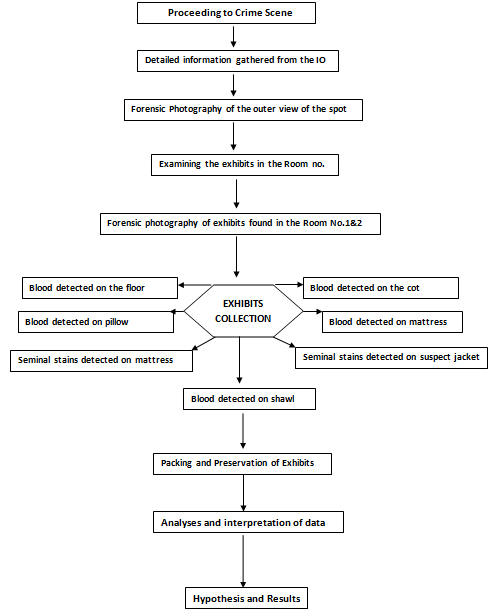
The scene of crime was a house located in an isolated place, where suspect living. There was two room house, clue material collected from the both rooms.
Examination of Room No.1
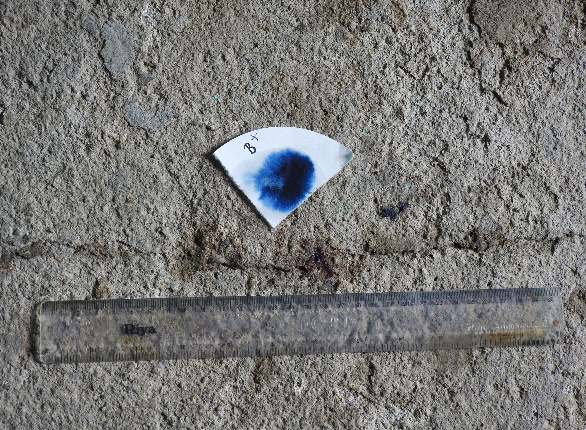
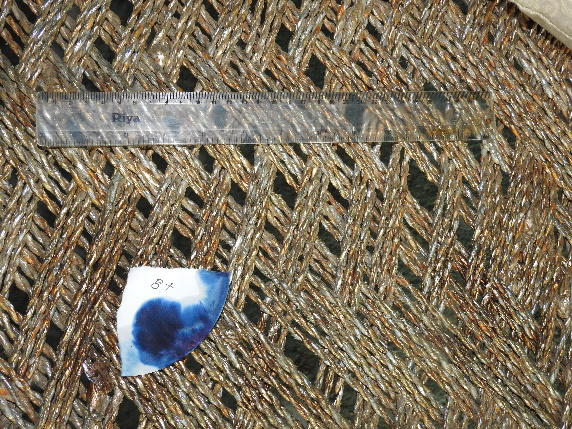
Reddish brown stains were observed on the floor of the room no. 1 and preliminary test shows test of blood positive (Figure 1). The stains were lifted on cotton gauze with control sample. Brownish Suspected stains were observed on the cot lying in the room no. 1 (Figure 2) and preliminary test shows test of blood positive. Cutting of the cot blood stained rope was collected.
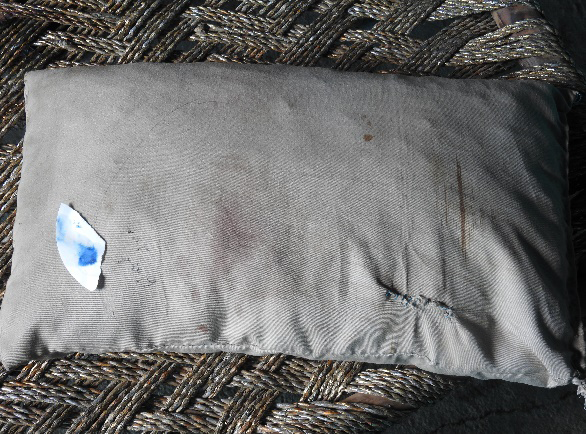
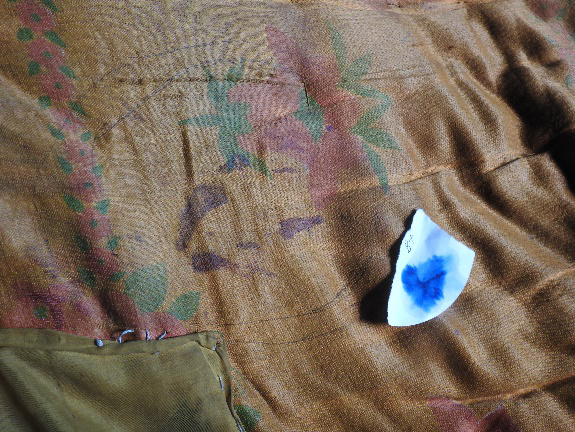
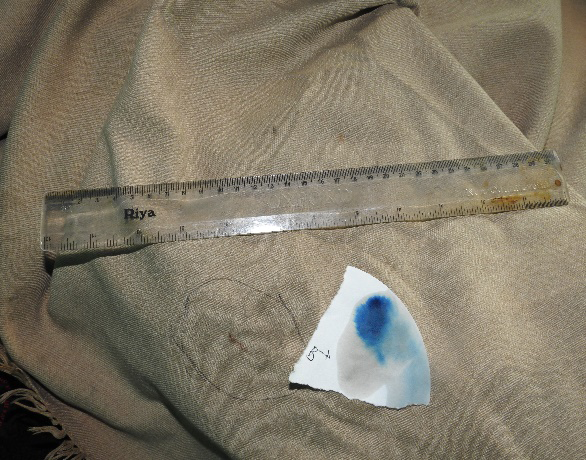
Brownish Suspected stains were observed on the pillow lying in the room no. 1. and preliminary test shows test of blood positive (Figure 3). The blood stained pillow collected. Brownish Suspected stains were observed on the mattress lying in the room no. 1 and preliminary test shows test of blood positive (Figure 4). The cutting of the blood stained cloth of the mattress was collected.
Examination of Room No.2
Brownish Suspected stains were observed on the shawl lying on the cot in the room no. 2 and preliminary test shows test of blood positive (Figure 5). The blood stained pillow shawl collected. Off white sticky fluorescent stains were observed under UV light on the mattress lying in the room no.2 (Figure 6). The cutting of the suspected semen stains on the mattress was collected.
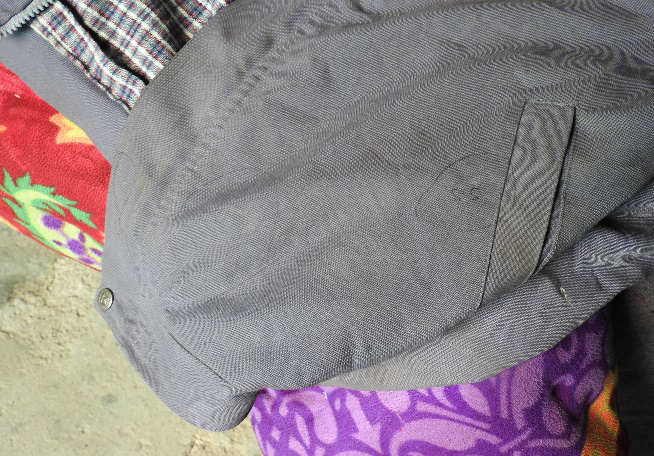
Off white sticky fluorescent stains were observed under UV light on the jacket lying in the room no.2 (Figure 7). The cutting of the suspected semen stains on the jacket was collected.
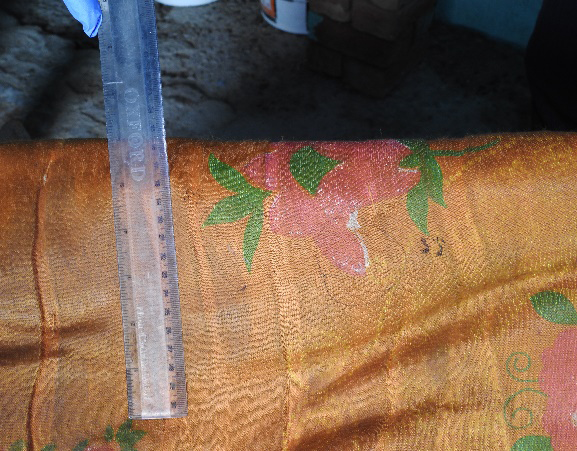
Figure 7: Suspected semen stains detected on jacket lying in room No.2. Collection of Evidence The exhibits material found in the room no. 1 and room no. 2, were collcted. It was also instructed to Investigating Officer to dry the stains on the exhibits. in the air and kept biological evidences in the paper envelopes and forward the exhibits to the Forensic Science Laboratory of further examination.
Conclusion
The preservation and collection of biological evidences from scene of crime play vital role in criminal justice system. The purpose for collection of biological evidences in the of sexual assault, the exhibits blood examined for blood grouping and DNA examination and seminal fluid examined for DNA examination to confirm the origin of biological evidences. Since the biological material degraded in short period, hence it is need to visit the scene of crime immediately to preserve the exhibits. The team of expert was visited immediately after reporting the case in the control room and collected the exhibits which were very important to establish the link between victims and suspect.
The rising public consciousness and media attention, along with the pro-active measures taken by the judiciary in the last few years is proof that the right of children to live with dignity is finally getting the attention it requires to investigating agencies and forensic fraternity to act proactively to strengthen judicial system, so that culprit should be punished in a short span of time. The crime against children can be reduced if the culprits punished in a short period [6, 7].
Authors Contribution
Santosh Kumar Jatav and Dr Savita Sharma: Crime Scene Investigation, Spot Analysis and Interpretation, Dr Subhash Chandra –Case Study conception and design, presentation & Interpretation of Data, critical review of draft, Shri S.K. Gupta and Shri Sri Narain – Interpretation and Presentation of Data. Adherence to National and International Regulations: Not applicable. Consent for publication: Not applicable. Availability of Data and Material: Crime Scene Management Division, Forensic Science Laboratory, Delhi, India. Funding: None. Competing Interests: The authors declare that they have No Competing Interests.
Acknowledgment
The authors thankful to Mrs Deepa Verma, Director, Forensic Science Laboratory, Delhi for continuous guidance, motivation, support and encouragement during the entire study.
References
-
Kaur S, Kaur S, Rawat B (2021) Medico-legal evidence collection in child sexual assault cases: a forensic significance. Egyptian Journal of Forensic Sciences 11(41): 1-6.
-
Pratihari HK, Chakraborty SK, Sabyasachi N (2019) Forensic Investigation of a Rape, Sodomy and Murder Case. Journal Forensic Science & Criminal Investigation 12(2).
-
Murali P, Prabhakar M (2018) Mantle of forensics in child sexual abuse. J Forensic Dent Sci 10(2): 71-74.
-
Sakelliadis EI, Spiliopoulou CA, Papadodima SA (2009) Forensic Investigation of Child Victim with Sexual Abuse. Indian Pediatrics 46: 144-151.
-
(2021) Status of POCSO cases in India. Kailash Satyarthi.
-
Marbudlang Mylliempdah. Crime Against Children. Meghlaya State Legal Forum.
-
Nopanitaya W, Aghajanian JG, Gray LD (1979) An Improved Plastic Mixture for Corrosion Casting of the Gastrointestinal Microvascular System. Scan Electron Microsc 3: 751-755.
- Forensic Implications of Adverse Drug Reactions in Schizophrenia A Case Series
- Narcotics and Digital Forensics: Bridging Crimes in the Digital Age
- Ethics in Forensic Psychiatry: Principles, Dilemmas, and Human Rights
- Impact of Acute Stress on Attentional Orienting to Social Cues
- Head Injury and Intracranial Hemorrhage in Western Region of Libya
- A Forensic Study on Handedness: Examination of Handwriting Features in Right and Left Handed Writers