
A Study on “Idealogical Model for Integrated Fish Farming” at Siddipet, Telangana State
Azolla is used as feed for fish, poultry, piggery, and used as manure in paddy. The spirulina is used as feed for fish, which has high protein value. Products from poultry and duckery manure gets utilized in fish production and also used as fertilizer in paddy. Meat, eggs and feathers gets exported for the preparation of cocks. Eggs from poultry and duckery get utilized in minute value as a feed. Pig manure is used as a fish feed and as a fertilizer in paddy. Antibiotics such as “INSULIN” can be obtained from pancreas of pig. Products from paddy such as rice bran are used as a feed for fish. The contaminated water from the pond gets utilized for paddy production so that we can produce pest free rice (organic rice) . All the crops are integrated with each other. The feed is prepared with the products in the farm
TJ Chari*, D Ramkumar, PA Reddy and B Saikumar
Precautions to Be Taken
- Maintain bird trapping around the lake.
- Dig snake trapping pit all around the cultured area(2 x 3 feet) width x depth.
Integrated Fish Farming: Culturing of fishes along with agriculture or animal husbandry or salt industry is called integrated fish farming. Animal Husbandary cum Fish Culture: Rearing of fish along with cattle, pig, duck & poultry is called animal husbandry cum fish culture.
Poultry Culture
Culturing fishes in association with poultry culture. The main source is the production of eggs, meat, manure and feathers. The droppings of birds form a good fertilizer for the fish pond. Each bird producers about 40 gms of manure per day. Poultry manure contains both organic and inorganic contents. 17% inorganic matter Nitrogen-2% Phosphoric acid-1.25% Potash-0.75% Magnesium-0.5-0.73% Calcium-4.52-8.15%, 83.72% of water Cu, Zn, Fe, Mn etc. Contents are present.
Advantages of fish cum poultry farming
- Pollution free environment.
- Fertilizer need not be applied to fish ponds.
- Soil fertilizer is increased.
Increase fish production.
Disadvantages
Chicks should be examined for time to time and diseased one should be isolated, otherwise they will destroy the entire stock.
Pig Farming
The pigsty has a system of channels for discharging the faces and urine of pig into a tank.
In the tank, the waste is allowed to undergo sedimentation and fermentation.
Pork is also a good source of vitamins and minerals like phosphorous, selenium and thiamine.
Good source of protein, niacin, vitamin B6, B12, iron etc.
The average production of manure is around 8 tons / pig/annum.
The pig manure contains organic and inorganic matter.
The pig urine contains most of the nitrogen and potassium. While, phosphorous is mainly found in solid manure.
NITROGEN - 0.5 -0.85%
PHOSPHORIC ACID - 0.2 -0.3%
POTASSIUM - 0.4-0.5%
Sc, Cr, Co etc., are present.
Advantages of Pig Farming
The pig dung and urine form manure for the fish pond.
Some fishes eat away the excreta as food.
Supplementary feeding is not required.
Pond water is used for bathing the fishes.
The water plants collected from the fish pond can be used as fodder for the pig.
Disadvantages
Integrated fish farming with pigs and poultry may be cause if "Influenza-pandemic".
Pigs would be act as mixing vessels for avian and human influenza viruses.
Duck Farming
Culturing fish in association with duck is called fish cum duck farming.
The ducklings are fed two in a day-morning & evening.
The ducks must be given "plague vaccine" they must be de-warmed by piperazine adipate solution once in six months, the also collect natural feed from the pond. These include insects, insects larvae, snails, frogs, tadpoles, aquatic weeds etc.
Duck meat is an excellent source of protein and iron, providing 50% of the iron we need in a day.
While roaming in the pond the duck release manure in to the water, each duck produces about 70KG of manure in a year.
The duck manure contains:
57%water
26% organic matter
17% Inorganic matter
100 Kg of Duck Manure Contains:
10 Kg of carbon
1.4 Kg of phosphoric acid.
0.1 kg of potash
1.08 kg of calcium
2.8 kg of other minerals
83.72 kg of water
Advantages
Duck manure fertilizes the pond.
No need for artificial fertilization of pond.
Duck feed wasted in the pond is used as feed by the fish.
Duck controls aquatic weeds, insects, leeches etc.
Spirulina
Spirulina is a biomass of Cyanobacteria {blue green algae}. Belongs to photo synthetic bacteria.
Spirulina is extremely high in many nutrients.
A single table spoon (7 gms) of dried spirulina powder contains:
4 gms protein
B1 thiamine
B2 riboflavin
B3 niacin
Copper, iron, magnesium, potassium and manganese.
It provides a small amount of fat around 1 gms including both omega-3 and omega-6 fatty acids in an approximately 1.0:1.5 ratio.
Spirulina may reduce B.P (blood pressure), and it has anti-cancer properties.
Advantages
It can be produced locally and so has social as well as economic benefits.
Cheap to produced and uses simple technology and locally available material.
Requires much less water to grow than vegetables, very easy to digest.
Can be combined with other product (eg: Rice) to made in to locally acceptable food product all around world.
• Very safe, it is resistant to most contamination due to highly alkaline environment.
Disadvantages
- Initially more expensive cumber some to implement than for food fortification programs.
- Cooking destroys vitamins and nutrients, spirulina does not combat iodine or folic acid deficiency.
Azolla
- Azolla is a highly productive plant.
- Azolla floats on surface of water by means of numerous small, closely over lapping scale-like leaves, with their roots hanging in the water.
- Azolla form a symbiotic relationship with the cyanobacterium anabaena azollae, which fixes atmospheric nitrogen.
- The plant can readily colonise areas of fresh water.
- The fern appears as a green mat over water.
Azolla Constituents
Nitrogen, phosphorous, calcium, potassium, Iron
Advantages
- It can fix atmospheric carbon-di-oxide and nitrogen to form carbohydrates and NH3 respectively.
- After decomposition it adds available nitrogen for crop uptake and organic carbon content to soil.
- It solubilizes Zn, Fe, Mn and make them available to the rice.
• It releases plant growth regulators and vitamins; it can be grown under controlled conditions.
Disadvantages
- Temperature more than 35 degrees is not suitable.
- Initial cost of cultivation is high.
Paddy Culture
Rearing of fishes along with paddy fields is called paddy cum fish culture. It is an example for agriculture cum fish culture.
Organic rice-helpful in protecting the body from cancer, dysentery and heart diseases (Tables 1 & 2). Types:
- Synchronous Paddy Cum Fish Culture
- Alternate Paddy Cum Fish Culture
- Relay Paddy Cum Fish Culture
Synchronous Paddy cum Fish Culture
In this culture fishes are cultured along paddy. It is an extensive culture.
Advantages
- Single labor double income.
- No need for artificial feeding.
- Recycling of wastes.
- No additional cost.
- Weeds are controlled by fishes.
| Type of farm | vitamin | N nitrogen | H3PO4 phosphoric acid | K potassium | Mg magnesium | Ca calcium | others |
|---|---|---|---|---|---|---|---|
| Poultry | Vit.A, D,E,K, biotin, niacin. | 4.5-5.4% | 2.4-2.8% | 2.02-2.32% | 0.5-0.7% | 4.52- 8.15% | Cu, zn Fe mn etc,. |
| Piggery | Vit.A ,D,E,K Pantothenic acid | 0.5-0.8% | 0.2-0.3% | 0.4-0.5% | 0.12-0.15% | 0.66- 0.68% | Sc, cr, co etc,. |
| Duckery | Vit.A, B(complex) C,D,E | 0.60% | 1.40% | 0.50% | 1.54% | 1.55-7.0% | Co, sc. |
| Spirullina | Vit.E, K,B(complex). | 20% | 8% | 4% | 10% | 7% | Carbohydrates, glutamic acid, protein. |
| Azolla | Vit.A, B12. | 33.80% | 0.26% | ---- | 0.5-0.65% | 2.58% | Fe, mg, cu. |
Table 1: Constituents of Organic and Inorganic Contents.
Requirements that are Suitable for Fish Feed: Protein;-18-50% Lipid;-10-25%
Carbohydrates;-15-20% Ash :< 8.5%
| Poultry | Pig | Duck | Spirulina | Azolla | |
|---|---|---|---|---|---|
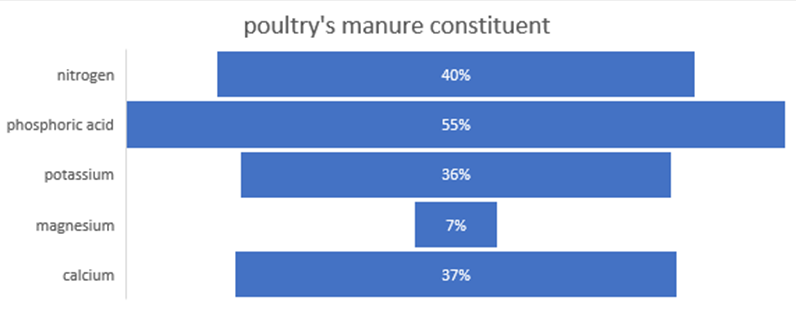
| Nitrogen | 40% | 10% | 1% | 30% | 9% |
| Phosphoric Acid | 55% | 15% | 2.50% | 22.50% | 5% |
| Potassium | 36% | 12% | 8% | 44% | 0 |
| Magnesium | 7% | 21% | 17% | 49% | 6% |
| Calcium | 37% | 0.50% | 3.55 | 45% | 14% |
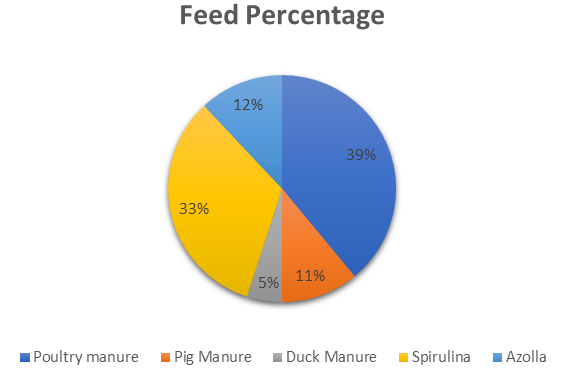
Table 2: For Every 1 Kg Feed.
Procedure
- The azolla is used as feed for fish, poultry, piggery, and used as manure in paddy.
- The spirulina is used as feed for fish, which has high protein value.
- Products from poultry and duckery manure gets utilized in fish production and also used as fertilizer in paddy.
- Meat, eggs and feathers gets exported for the preparation of cocks.
- Eggs from poultry and duckery get utilized in minute value as a feed.
- Pig manure is used as a fish feed and as a fertilizer in paddy.
- Antibiotics such as INSULIN can be obtained from pancreas of pig.
- Products from paddy such as rice bran are used as a feed for fish.
- The contaminated water from the pond gets utilized for paddy production so that we can produce pest free rice (organic rice) (Figures 1 & 2).
Benefits by This Project No need for artificial feeding Recycling of wastes Rice production is increased Pesticides use can be reduced Soil fertility is increased Pollution free environment
References
-
Encyclopédie Méthodique, Botanique (2010) “Name - Azolla Lam”. Tropicos. Saint Louis, Missouri: Missouri Botanical Garden. Annotation: a sp. nov. reference for Azolla filiculoides Type Specimens HT: Azolla filiculoides 1(1): 343. 1783.
-
Li FW, Brouwer P, Carretero-Paulet L, Cheng S, de Vries J, et al. (2018) Fern genomes elucidate land plant evolution and cyanobacterial symbioses. Nature Plants 4(7): 460- 472.
-
(2021) Blue-green algae. Medline Plus, National Library of Medicine, US National Institutes of Health.
-
Vonshak A (1997) Spirulina platensis (Arthrospira): Physiology, Cell-biology and Biotechnology. London: Taylor & Francis.
-
Gershwin ME, Belay A (2007) Spirulina in human nutrition and health. CRC Press, USA.
-
(2017) Hobby Farms.
-
(2008) Fowl. How Stuff Works.
-
Poultry (2009) The American Heritage: Dictionary of the English Language. 4th (Edn.), Houghton Mifflin Company.
-
Hathaway Jay (2017) What’s a Milkshake Duck, and why is everyone talking about it?. The Daily Dot.
-
Tait Amelia (2017) The internet dictionary: what is a Milkshake Duck?. New Statesman.
-
(2019) Farrowing and Gestation Crates. osborne.
-
Werblow Steve (2014) Gestation crates: News from the front lines. Pork Network.
-
Pig welfare. ciwf.org.uk.
-
Sang Anisia Jati, Tay Kai Meng, Lim Chee Peng, Saeid Nahavandi (2018) Application of a Genetic-Fuzzy FMEA to Rainfed Lowland Rice Production in Sarawak: Environmental, Health, and Safety Perspectives. IEEE Access 6: 74628-74647.
-
(2013) Camargue rice, Tourtoulen silo, Camargue white rice, Camargue rice and cereals. Riz-camargue.com.
-
(2007) paddy. Merriam Webster.
-
Major John S, Cook Constance A (2016) Ancient China: A History. Taylor & Francis.
-
(2022) Pontederia crassipes. Kew Royal Botanic Gardens Plants of the World Online 1: 9.
-
de Candolle ALP, de Candolle ACP (2022) Eichhornia crassipes. Kew Royal Botanic Gardens Plants of the World Online.
-
(2016) Kochuripana, Water hyacinth, Eichhornia crassipes. Flora of Bangaladesh.
-
Pellegrini MOO, Horn CN, Alemida RF (2018) Total evidence phylogeny of Pontederiaceae (Commelinales) sheds light on the necessity of its recircumscription and synopsis of Pontederia L. PhytoKeys 108: 25-83.
-
Limnobium spongia. UF / IFAS Center for Aquatic and Invasive Plants.
- Genetic Improvement of Nile Tilapia (Oreochromis niloticus): Advances in Selective Breeding and Genomic Approaches for Sustainable Aquaculture
- Microplastics, Contaminants, and Waste Hotspots: Divergences and Faults in Prioritizing Control Efforts
- Creating a Healthier, More Vibrant Open and Closed Aquatic Environment. A Submersible, Centrifugal Magnetically Affixed Current Changing Aquarium Pump
- An Attempt to Assess Alpha Diversity and Sample Size: Using the Ostracod Assemblages off Kumamoto Port, Japan
- Assessment of the Efficiency of Common Fishing Gears and Crafts Used at Mohananda River of Chapai Nawabganj, Bangladesh
- Fish Productivity and Biodiversity Status of Sundarban Mangrove in Bangladesh