
The Saint Loup of the Col Du Fam, A Smilodon Caught in a Lava Bubble
Opinion
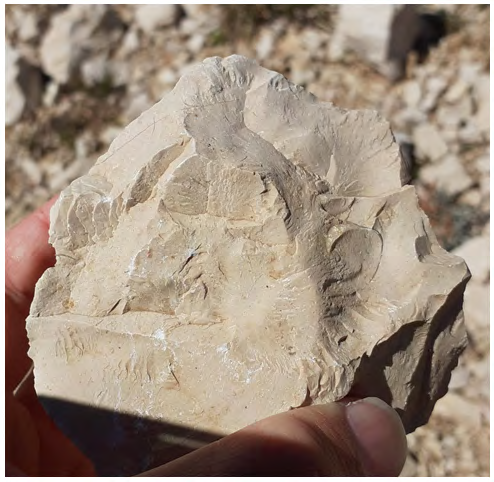
The observation of the deserted flanks of the hills above a dusty road after the Col du Fam show the remains of a smilodon caught in magma. The animal’s remains were noticed by locals long afterward and the skull’s hollow mark on the soil led to the baptism by Christians of a chapel under the name of Saint Loup. The main hollow mark indeed presents some appearance of a wild wolf, of a ghosty nature. Yet a closer observation shows it was in fact a smilodon. This is confirmed by findings of a magmatized skull and of a teeth remain (very light and canny) nearby.
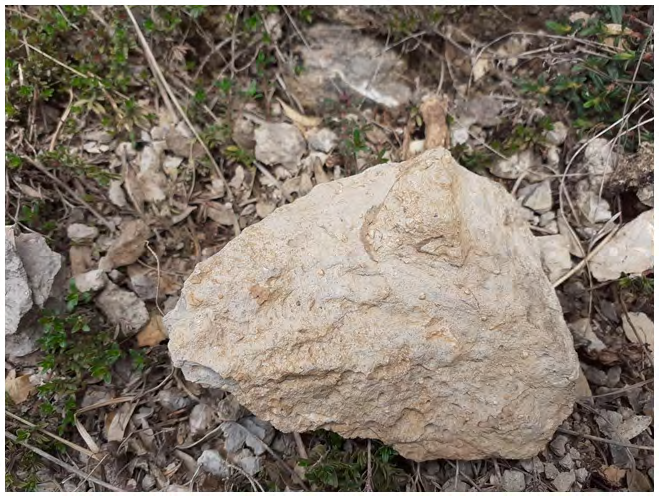
The main explanation involves a fireball (Cm247) impacting a cave in which the smilodon was living and had accumulated its prey. The animal was entirely molten and Opinion conflated with the actinides in a 85%-subterraneous fireball which created a bed of magma and the descent of the cave’s content in the lava flow. Remains of its prey have remained altogether with it : a large number of small skulls altogether with small bones. One significant example with several small bones and a small skull in the middle is shown below. Many predator-type teeths are also noticed among the small bones. The main « wolf ghost » from the fireball impact is found above the smaller teeths and bone remains. The first cast presented was found even below along the dusty road.
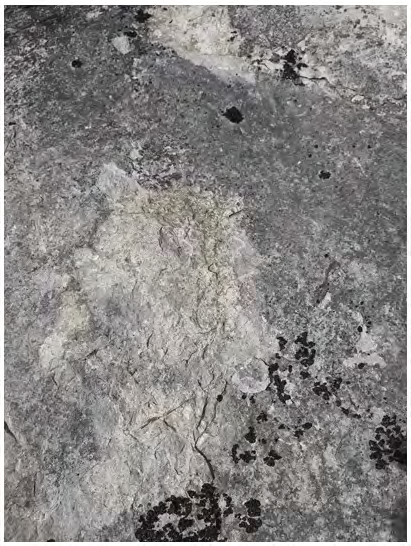
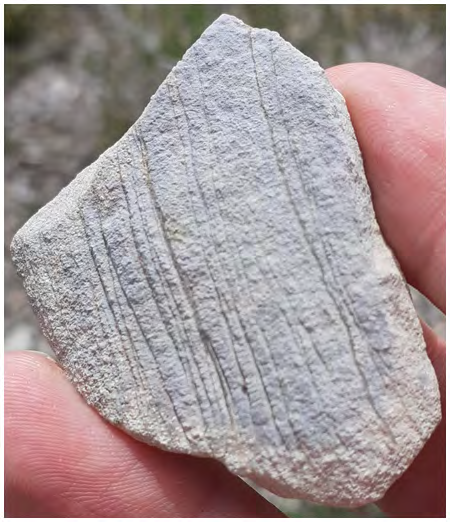
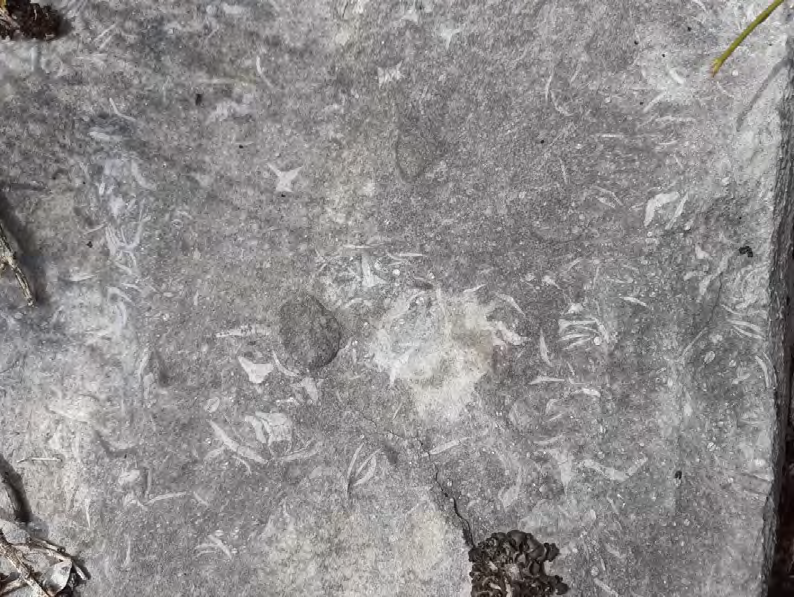
Another magmatized imprint was seen down under in l’Audibergue, one sabertooth clearly proeminent. The area of l’Audibergue presents some dinosaur casts that are much older. For instance a nothosaurus skull (below) and a styracosaurus (also below) that could have been killed by an eruption triggered by the sub-Chixculub event identificated in [1].
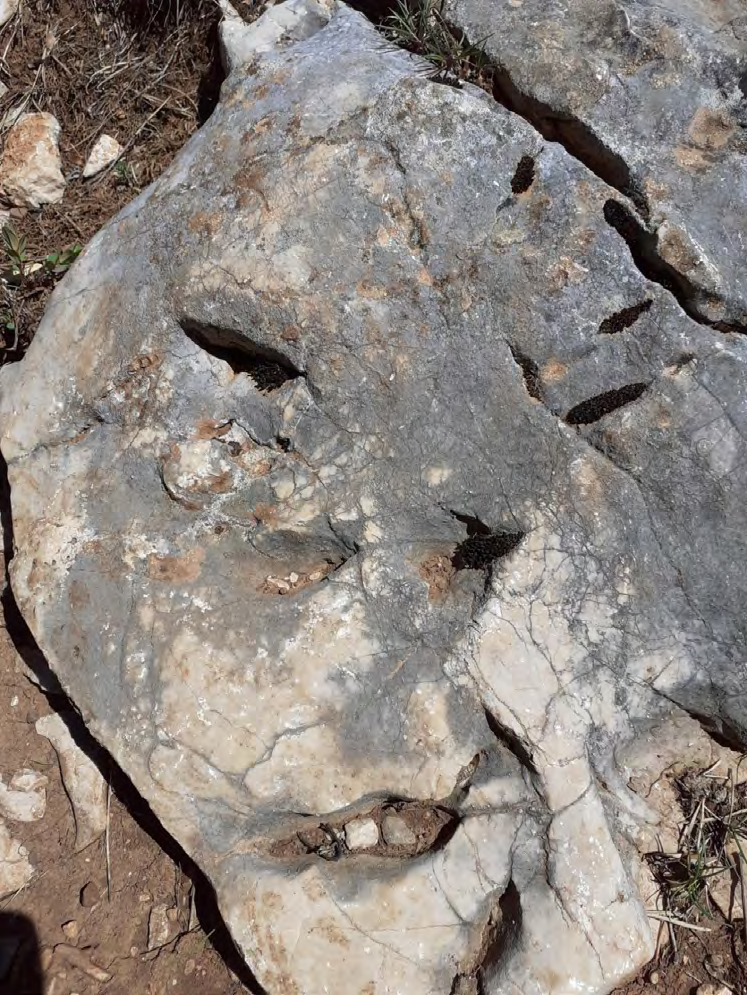
Echo forces transmitted through tunnel effects the shape underground leading to magmatic reemergence dozens of kilometers away. The rock is much more ductile and uneroded than the dinosaur imprints also found nearby.
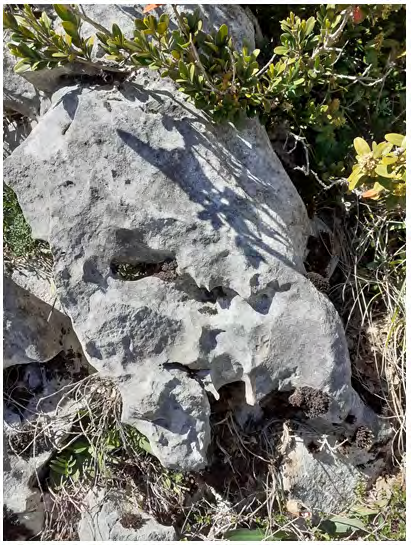
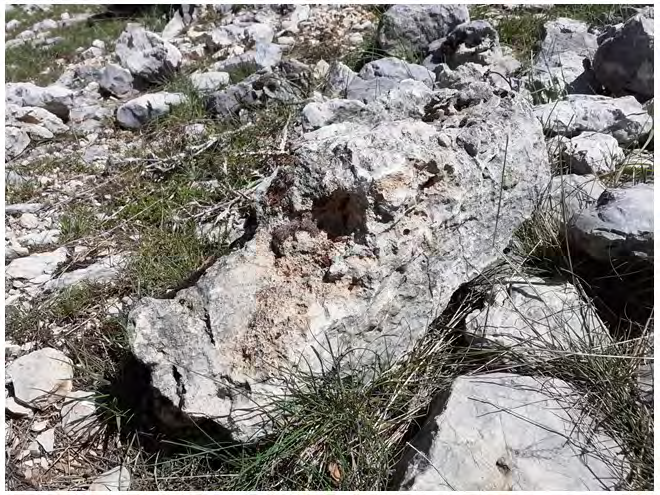
The datation of the nothosaurus (end of the Triassic) and of the styracosaurus (end of the Cretaceous) allow a relative comparison of the smilodon imprints. The andesitic lava is almost uneroded and very ductile. Less than 30 000 years (perhaps 8 000 years ago) is a definitive answer. The village of Allos north of the Col de Fam has kept in its heraldry the custom of the bone with wings for the obvious reasons of many fireballs seen (with usually the U236 shape, more likely there because of the position along the Alps). Long ago before the development of civilization the high and dense hills and mountains were the main beacons of attraction for fireballs (because large cities were not competing). See also [2] for the general theorem. As in [1] the smilodon was obviously eating too much and had accumulated a large trove of bones and this attracted a fireball that vitrificated the predator in a blast.
It's actually likely that the smilodon benefitted from its dominating position on the edge of the mountain and was able to kill quite easily the passing prey. This is explained by the more rapidly descending character of the edge with the volcaneous shape. It was a semi monopolous position, dangerous for nature.
It may also be argued that the small skulls found below the site of the smilodon (in the crystallized lava) are human heads that were in the smilodon's cave and were reducted by Fermionic condensation under the energetic impact of the fireball and its very high radioactivity.
The behaviour of Panthera uncia may be used to compare with the Smilodon nectes, as obvious close ancestor thereof.
It is sure that the presence of the Catholic dedication to St Loup with an oratoire helped to preserve the paleontological remains of the smilodon nectes in their entirety due to fears of a spiritual presence therein.
References
-
Pirot F (2021) An image of death in dinosaur faces caught in a pyroclastic flow from a local sub-event of the Chicxulub impact. International Research Journal of Physics 4: 7.
-
Pirot F (2019) A Rule of Natural Disasters Coming to Rebalance Unjust Development and Irresponsibility- Laws of Physics Explain the Trope of “Divine Retribution” against the “Nouveaux Riches”. International Journal of Physics 7(4): 135-140.
- Evolution and Extinction of Dinosaurs
- Ferromanganese Crust: Is a Type of Cenozoic Black Stromatolite in Seabed? The Case of the Rio Grande Rise, South Atlantic Ocean
- Planktic Foraminiferal Biostratigraphy of the Cretaceous Oceanic Red Beds in Gyangze, Tibet
- Proving that Dinosaurs are Distant Ancestors of Humans – The East Asian Locus of Evolution that disproves definitively the “Out of Africa" Theory
- The Current State of Foraminiferal Research and Future Goals
- The Importance of Benthic Macroinvertebrates to Unravel Biotic Responses to Climate Change in Deep-Time