
Clinical Efficacy of Virechana Karma in Hypothyroidism- A Single Case Study
Hypothyroidism (underactive,low thyroid). It is one of the most prevalent disorders affecting 2-5% of global population which is more prevalent among females. Thyroid gland produces two hormones Thyroxin(T4) and Triiodothyronine(T3) playing an important role in metabolism, growth and development of the body. In Ayurveda hypothyroidism can be co- releated with Agnimandhya Avastha especially Dhatuagnimandhya which has specific symptoms according to different stages, very similar with the symptoms of Hypothyroidism. Samshodhana is the principle therapy as hypothyroidism is a Bahudosh Awastha so here Virechana Karma is opted for the management of Hypothyroidism. Here, a traditional Ayurvedic regimen was attempted to treat a 25year old female with known case of hypothyroidism for last 5 years. This study shows significant improvement in sign, symptoms of Hypothyroidism and Thyroid function Test.
Introduction
Thyroid disorder is one of the most prevalent endocrine disorders worldwide.It affects upto 5% of general population with a further estimated 5% being undiagnosed [1]. Endocrine system consist of ductless glands which by releasing chemical signals (hormones) in the blood stream, regulate functions in distant organs. Thyroid is one of the largest endocrine gland in human body. And all the metabolic activities of the body are under control of thyroid hormone.
Hypothyroidism is a disorder of absolute or relative deficiency of thyroid hormone due to dysfunction of thyroid gland or pituitary gland. As per modern medicine the treatment is carried out by Thyroxine hormone therapy for Book Review lifetime which consist of its own multiple side effects.
However in recent times hypothyroidism can be well managed by Ayurvedic line of management. In Ayurveda all the metabolic functions of body are controlled by Agni (Jatharagni,Bhutagni,Dhatvagni) there is no direct co relation of hypothyroidism in Ayurveda but its clinical presentation can be co related with Dhatvagnimandya
Patient Profile
- Name: xxxx
- Age: 25 year old
- OPD No: 7111
- Occupation: Student
- Religion: Hindu
- Address: Saharanpur
- Marital status: Unmarried
Case Report
A 25year old female patient was consulted in OPD of Panchakarma (OPD Reg. No. 7111) Rishikul Ayurvedic medical college and hospital with chief complaints of dry and coarse skin, menstrual irregularities, cold intolerance, hair loss, irritability and Constipation since 3-4 years. Fatigue and generalised body weakness from past 6 months. There was no significant history of any other chronic illness.
No history of any kind of allergy or addiction. Family history her mother and sister was suffering from Thyroid disorder and are on allopathic treatment for the same. The patient was on allopathic medication for 1 year and after discontinuation she was on Ayurvedic medication (Kanchnar guggle) since last 6months on and off. On her routine examination her rest of the reports were found to be normal.
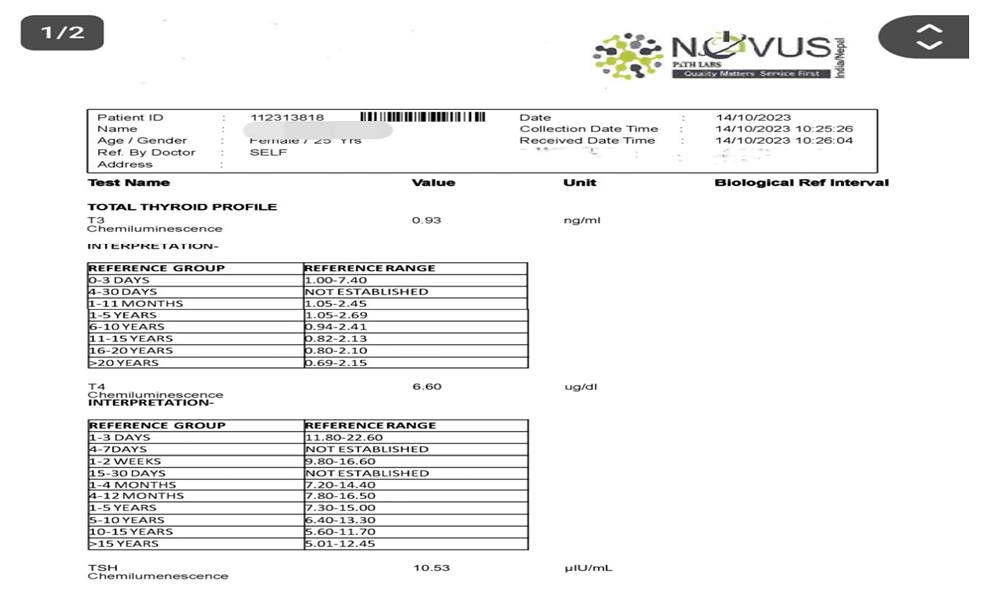
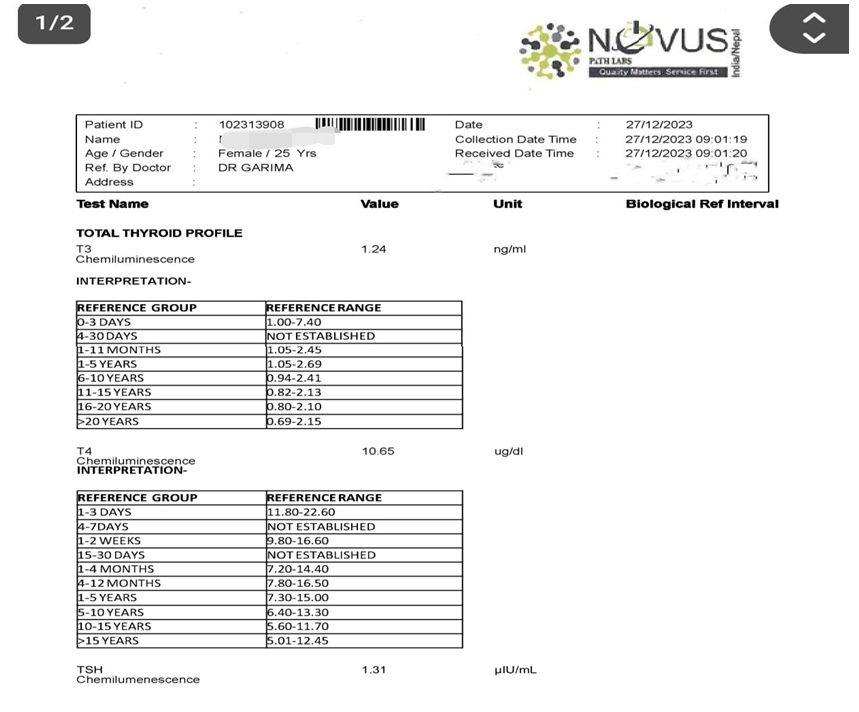
But her TSH level were fairly raised and T3 and T4 were in within normal range. Due to clinical presentation of her abnormal symptoms she was opted for this Ayurvedic line of management (i,e Virechana Karma)
Personal History
- General condition: Fair
- Appetite: Normal
- Thirst: Normal
- Bowel: Irregular
- Micturition: Normal
- Sleep: Sound
- Diet: Veg General Examination
- Pallor: Absent
- Icterus: Absent
- Clubbing: Absent
- Cyanosis: Absent
- Lymphadenopathy: Absent
- Edema: Absent Vital Examination
- B.P:124/82mmHg
- PR: 84/min
- RR: 16/min
- Weight: 50kg
Systemic Examination
- CNS- Conscious, well oriented with time and place.
- CVS- S1 and S2 heard normal
- R/S-Bilateral chest clear
- G.I- soft, Non-tender
Dosha-Dushya Analysis
- Dosha: Tridosha VK dominant
- Manodosha: Tama
- Dushya: Rasa, Meda
- Agnimandya: At Dhatu level
Astavidh Pariksha
- Nadi(Pulse): Manda (Slow and sluggish)
- Mala(Stool): Malavarodh(Constipation) (on &off)
- Mutra(Urine): Samanya(4-5 times a day, no burning sensation)
- Jivha(Tongue): Saam (white coated
- Shabd(Voice): Gambhir(Deep)
- Sparsha(Touch): Ruksha(Dry)
Nidan Panchaka
Hetu: Having stale food, bakery products, packed food, left over meals that are stored in refrigators, fermented food items, spicy, extra added sugar Divaswapan, Ratrijagran stress.
Purvaroopa: Fatigue, disturbed sleep, bodyache. Roopa: Generalised weakness, fatigue, weight gain, bodyache, hairfall, depression, irritation, lack of interest.
Different Dhatuvagni Mandya Lakshanas seen in this Respective Patient
- Rasa Dhatuvagnimandya: Guruta,Bodyache,Generalised weakness
- Rakta Dhatuvagnimandya: Dry rough skin, Irritation
- Mamsa Dhatuvagnimandy: Galaganda
- Meda Dhatuvagnimandya : Stholya Weight gain
- Aasthi Dhatuvagnimandya: Khalitya (Hairfall)
- Majja Dhatuvagnimandya :Forgetfullness, irritability
Treatment Schedule
Shodhana (Virechana Karma)
Poorva Karma-Deepana Pachana with Chitrakaadi Vati 2BD for 5 days.
| 02-11-2023 | 03-11-2023 | 04-11-2023 | 05-11-2023 | 06-11-2023 | 07-11-2023 | |
|---|---|---|---|---|---|---|
| Time | 7:00am | 7:00am | 7:00am | 7:00am | 7:00am | 7:00am |
| Time taken for Digestion | 3hours | 8 hours | 9 hours | 10 hours | 11 hours | 12 hours |
| Dose | 30ml | 60ml | 90ml | 120ml | 150ml | 180ml |
Table 1: Showing Snehapana Dose Schedule.
Sarvang Abhyanga with Murchitha Tila Taila Followed by Sarvang Swedana for 3 days.
Pradhana Karma Virechana Karma Yoga: Trivith Avleha - (60gm) Anupana: Triphala Phanta (100ml) No. of Vegas: 28 Antiki Shudhi: Kaphanata Shudhi: Pravara Peyadi Sansarjana: Followed after Virechana for 7 days
| S.No | Lakshana | BT | AT |
|---|---|---|---|
| 1 | Dry and Coarse Skin | +++ | + |
| 2 | Cold Intolerance | + | - |
| 3 | Hair Loss | +++ | + |
| 4 | Irritability | ++ | + |
| 5 | Constipation | ++ | - |
| 6 | Menstrual Irregularities | ++ | ++ |
Table 2: Showing Assesment. Note: (+++): Severe presentation of symptoms (++): Moderate presentation of symptoms (+): Mild presen
Lifestyle Modification
- Wake up early morning
- Nitya Abhyanga
- Nitya Vyayama- Suryanamaskar, Yoga Asanas (Sarvangasana, Matsyasana, Halasana, Dhanurasan), Pranayama especially Brahmari and Ujjayi (Works on throat area Relaxing and stimulating effect).
- Breakfast- 8 am to 9 am
- Lunch- 12:30 pm to 1:30 pm
- Dinner- just after Sunset (6-7pm)
Pathaya Ahara
- Kaphahara Ahara like Yava, Mung, Shashtik Shali, kulthi, Sarshapa
- Spices - Shunti, Jeeraka , Trikatu
- Ushna jala , Madhu , Takra
- Food high in iodine like Shellfish
- High Selenium foods such as Brazil nut, sunflower seeds, mushroom, whole grain & milk is also beneficial.
Pathaya Vihara
Regular exercises, Yogaasanas, Pranayama, kapalbhati
Apathya Ahara
- Kshira Vikruti, Ikshu Vikruti, Pishtannam , Dadhi.
- Fast food & fried preparation, refined foods
- Fermented & bakery items
Apathya Vihara
- Diwa Swapana
- Sedentary life style
Discussion
Thyroid is an endocrine gland responsible for maintenance of normal basal metabolic rate of the body. The thyroid gland is a butterfly shaped gland located in the lower front of the neck, and is normally controlled by Pituitary gland. When the pituitary releases thyroid stimulating hormone (TSH), the thyroid secretes two kinds of hormones – tri-iodothyronine (T3) and thyroxine (T4) – into the blood stream. The principal function of thyroid gland is to act as a ‘CATALYST’ for the maintenance of oxidative metabolism. Due to sedentary lifestyle, modernization of society, stressful lifestyles leading to many metabolic disorders. In Ayurveda functions of Agni can be co related with metabolism. The balanced state of Agni(enzymatic activities) ,Tridoshas(bodily humors) Dhatu and Mala together helps in orderly functioning and Samavastha of human body. In hypothyroidism there is dysfunctioning of Jatharagni and Dhatwagni along with dysfunctioning of Kapha and Vata Doshas. As in case of Hypothyroidism it is a Bhaudoshaja condition, so Shodhana Karma was opted for this condition of Doshas. Shodhana is to be performed in Niraam Avastha. So before Shodhana, Deepana and Pachana is necessary. These are the preliminary therapies that have been used to rectify incorrect metabolism prior to beginning the primary treatment. Before starting the Pradhana Karma Chitrakaadi Vati was given orally to patient for a period of 5 days, which stimulates Jatharagni which in turn by turn stimulates all other Agnis.And hence brings Samavastha state to Niraam Avastha.
After that Go Ghrita was given as Snehapana in Arohana Karma for 6 days upto Samyaka Snigdha Lakshana were appeared. Gradual dose of Sneha is important for loosening the bond between Dosha and Dushya, thereby helping in breaking the pathogenesis of Dhatwagnimandya.Go Ghrita helps in eradication of Doshas from entire body and brought them into Koshtha. Moreover it also helps in reduction of symptom like dryness due of aggravated Vata and Kapha Doshas.After completion of Abhyantara Snehapana. Sarvanga Abhyanga along with Sarvanga Swedana for three days. These are referred as Vishrama Kala. It helps to remove obstruction in Srotas and bring vitiated Doshas from Shakha to Kostha.
Then on the day of Virechana Karma firstly Sarvanga Abhyanga and Sarvanga Swedana.Then Trivrita Avaleha(60 gm) and Triphala Phanta (100ml) is given .Patient was given hot water and advised to take sip by sip repeatedly when needed. Trivrita is Sukha Virechana. Probable mode of action of Virechana Karma is removal of morbid and increased Pitta, and it is more useful in eradicating the disease originated from the vitiated Pitta and Pitta associated with Kapha Doshas from the body. As there is no direct correlation of hypothyroidism in Ayurvedic classics, based on the Lakshanas it can be considered under the Bahudoshavastha. Samshodhana is indicated in Bahudoshavastha [2].
Virechana is the best treatment for Pitta and Pitta associated with Kapha or Vata, and eliminates Pitta from Pittasthana and Kaphasthana [3]. Production of Ama is the result of Avarana of Pittasthana by Kledakakapha, thus hampering the digestive activity of the Pachaka Pitta. In this case Virechana is preceded by Deepana-Pachana, after Doshas attain Niramavastha and may require elimination from the body by Shodhana. Virechana Karma is a method of biopurification which cleanses the Kostha and brings down the morbid Doshas from the body and helps to maintain the Dosha and Dhatu Satmaya or keep up the homeostasis leading to rejuvenation of the body tissues also boost the immunity and cleanses the Srotas.
Conclusion
Thyroid hormones controls body’s metabolism, the process in which body transform the food into energy. Purification The Chiktisa Siddhanta of Hypothyroidism revolves around Chiktisa of Ama Dosha i.e Pachana, Deepana and Shodhana after Sneha and Sweda Karma [4]. (Shodhana) followed by palliative therapy was found as a suitable treatment plan to manage hypothyroidism. Virechana procedure is the common adopted purificatory process with maximum efficacy.
- TSH level decreased from 10.53 to 1.31 uIU/Ml Appetite was increased
- Generalized weakness of the patient was significantly decreased.
- Reduced skin dryness.
- Significant relief in constipation.
After Shodhana (Virechana Karma) patient shows much improvement in her general health status.
Informed Consent
An appropriate patient consent form was obtained before starting the treatment.
Conflict of Interest
None
References
-
Vagbhata Astanga Sangraha. In: Rama Rao B(ED.), Sutrasthana chapter, Shadhilekha Sanskrit commentary of Indu Chaukhamba Vishwabharathi, Varanasi, India, 27/5 pp: 384.
-
(2020) Lancet Diabetes Endocrinal: Hypothyroidim in India: more to be done.
-
Kashinath P, Gorakhnath C, Charak Samhita Svimarsha Vidhyotni Hindivyakhyaupeta, chapter 16, Sutra Sthana, Shlok (13-16) Chaukambha Sanskrit publications, Varanasi, India, pp: 320-321.
-
Vidyotini Hindi Commentary, Astanga Hridayam, Sutrasthana13/29, Chaukhambha Sanskrit Sansthana, Varanasi, India, pp: 133.
- Management of Ear Keloid with Ksharsutra: A Case Study
- Yoga and Global Sustainability: A Holistic Path to One Earth, One Health
- Autoimmune Diseases in Ayurveda: A Narrative Review with Classical and Modern Perspectives
- Management of Cluster Headache Associated with Pituitary Apophysitis by CERT (Chakrasiddh Energy Release Technique): A Case Report on Energy Rebalancing
- Zygophyllum Geslini Coss : Biochemicals and Antioxidant Activity
- Observations of a Beginner Vaidya