
Spiritual Care in Hong Kong Home Care Nursing
Florence Nightingale Home Health & Nursing (FNHHN) was founded by a group of experienced nurses in Hong Kong in the year of 2020 with a strong intention to provide holistic nursing care to the elderly at home apart from assisted care required with the following identified values: • F for Family First • N for Need Focused • H for Holistic Approach • H for Health the Destiny • N for Nursing Led
Key Findings
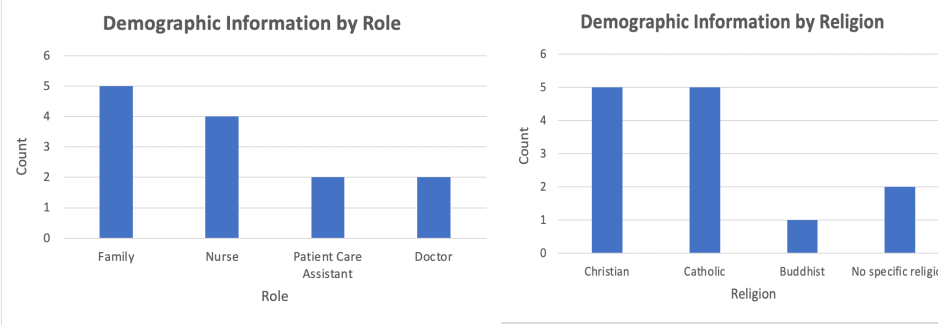
Topic 1: Understanding of spiritual care
Spirituality is not equivalent to religions, “I think spiritual care is more than emotionally support or bible story. It explains the reason of living and dying, existence of human, and facilitates the acceptance on disease.” Spiritual care is an individualized need. Participants held that each person’s spirituality and spiritual need were unique to them, and were influenced by their culture, state of health, feelings, thoughts, and relationships. They also agreed that a person’s spiritual awareness grew as they physically impaired and neared death.
Topic 2: Importance of spiritual care in healthcare
Mentioned benefits from the respondents are being classified as follows using Gordon’s Functional Health Patterns, they include: Facilitating Health Management, Cognitive-Perceptual, Sleep-rest, Role Relationship, Coping/ Stress Tolerance, Value-belief Facilitating Acceptance of Death.
Topic 3: Current practices in spiritual care
Some experienced nurses provide spiritual care by incorporating the patient’s beliefs and values into their nursing care plan and some will refer the case to chaplain for formal spiritual care.
Topic 4: Barriers on providing spiritual care
Different religious beliefs among patients and caregivers make appropriate spiritual care delivery difficult.
Lack of knowledge on patient’s religious belief has always been neglected in nurses’ health assessment. Difficult conversation with family members and critically sick patients on the intimate topic about life and death.
Topic 5: Training and education on spiritual care
One Palliative Doctor commented that “I do think our medical team need training on spiritual care, but it is not feasible because firstly, there are too much knowledge for medical students to learn. We are already out of teaching hours. Secondly, it is hard to quantify the value of spiritual care. Without evidence based learning, students are hard to be convinced of its importance. Thirdly, we are lack of passionate teachers who can influence students and demonstrate the value of humanity rather than science.” In general, most respondents agreed that “Training and education on spirituality are essential to equip healthcare providers with the skills and knowledge necessary to provide holistic care, Especially in community. It is suggested to focus on the importance of spiritual care, the different approaches to spiritual care, the difference and similarities between spirituality and religions, and how to incorporate spiritual care into patient care plans.”
Topic 6: Insight on spiritual care in the community
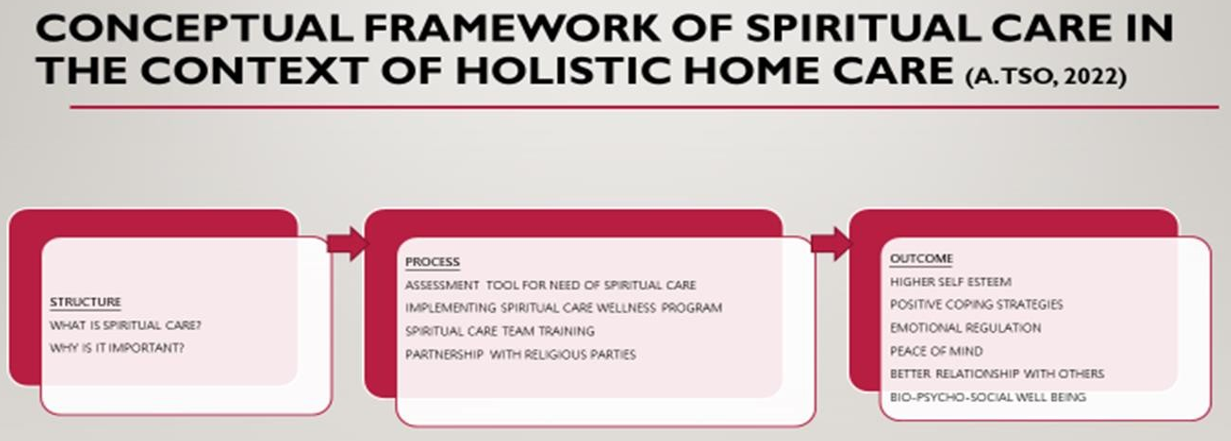
The findings reveal valuable insights to the importance of spiritual care and the obstacles that prevent its provision. Recognition to the spiritual care itself is not enough for a comprehensive delivery of spiritual care, but the need for ongoing training to the home carers and a clear guidance on promoting spiritual health in the context of holistic care are of prime importance in homecare nursing (Figure 2).
- Teaching Cognitive Behavioral Therapy to Graduate Psychiatric Mental Health Nurse Practitioner Students: Utilizing A Mixed Methods Course Evaluation
- The Role of Pharmacogenetic Testing in Clinical Practice: A Path toward more Effective, Personalized and Cost-effective Care
- Implementing Screening with the GAD-7 in an Outpatient Mental Health Setting: A Quality Improvement Project
- Social Media and Health Promotion
- Impact of Covid-19 Pandemic on the Academic Performance and Attitude of Nursing Students towards E-Learning
- A Study to Assess the Knowledge Regarding Ill Effects of Tobacco Consumption on Health among Adolescents in Selected Higher Secondary School in Nadiad City