
Consciousness Energy Healing Treatment and Its Effect on the Structural Properties and Isotopic Abundance Ratio of Tetrahydrocurcumin
Tetrahydrocurcumin (THC) is being studied for the prevention and treatment of various diseases. The aim of this study was to investigate the effect of the Trivedi Effect®-Biofield Energy Healing Treatment on the structural properties and isotopic abundance ratio of THC using sophisticated spectroscopy methods. THC sample was divided into two parts. One part of THC did not receive the Biofield Treatment called control sample. The second part of the THC was treated with the Biofield Energy Treatment remotely by a renowned Biofield Energy Healer, Mr. Mahendra Kumar Trivedi is known as treated sample. The spectroscopy studies confirmed the structure of tetrahydrocurcuminoids, and the sample majorly contains THC. The gas chromatography-mass spectrometry spectra of the control and treated THC showed with the molecular ion at m/z 372.2 (C21H24O6) + and the isotopic abundance ratio of PM+1/PM in the treated sample was increased by 2.12% compared with the control sample. Thus, the contributions of 13C, 2H, and 17O from (C21H24O6) + to m/z 373.2 in the treated sample were increased compared with the control sample. The liquid chromatography-mass spectrometry of both the sample exhibited three major peaks at Rt of 16.1, 17.3, and 17.48 minutes confirmed the presence of one diketo form and two enol form of THC, respectively. The peak area% of the treated THC at Rt of 16.1 and 17.5 minutes were increased by 1.62% and 0.68% respectively, whereas, at Rt of 17.30 minutes, it was decreased by 8.10% compared with the control sample. Similarly, the relative mass peak intensities of the treated THC at Rt of 16.1 and 17.3 minutes were significantly increased by 17.79% and 80.81% respectively, but at Rt of 17.5 minutes, it was decreased by 8.10% compared with the control sample. It can be assumed that the relative concentration of the treated THC was altered compared with the control sample. Thus, the Trivedi Effect®-Consciousness Energy Healing Treated THC with altered isotopic abundance ratio and relative concentration might have altered the physicochemical properties compared to the untreated THC. The treated THC would be very useful to design better nutraceutical/pharmaceutical formulations which might offer better therapeutic response against cancer, arthritis, dementia, diabetes, hepatotoxicity, etc.
Introduction
Tetrahydrocurcumin (THC) is a major metabolite of curcumin, which is colourless/white polyphenolic compound with similar biochemical and physiological actions of curcumin [1, 2]. THC is being studied for the treatment of cancer, dementia, and shown to have protective effects against diabetes and vascular dysfunction. It has strong antioxidant and anti- inflammatory properties to those of other naturally occurring curcuminoids, including curcumin, demethoxycurcumin, and bisdemethoxycurcumin [2, 3, 4, 5]. In comparison to the curcumin, THC has different molecular targets, signalling pathways, cellular responses, and clinically more advantageous [2, 3, 4, 5]. Many studies also reported that THC has significant results in preventing hepatotoxicity, nephrotoxicity, rheumatoid arthritis, the ageing process, atherosclerotic lesions, etc. [2, 3, 4, 5, 6, 7]. It has a remarkable role in angiogenesis and also improves the accumulation of extracellular matrix components through the remodeling of the wound repair [5]. However, THC did not show any associated toxicity even at higher doses Diketo form O O H3CO H H HO H O O H3CO H3CO OCH3 H and can be used against tumors of the skin, colon, pancreas, breast, psoriasis, and scleroderma [5, 7].
The chemical structure of the THC so far characterized are available in three different forms such as one diketo form, and two enol tautomeric form (Figure 1) [8]. THC is poorly soluble even in hot water and soluble in the organic solvents like alcohol, acetone, and glacial acetic acid. Thus, the pharmacological effect of THC is limited due to its poor aqueous solubility. In addition, due to relatively short gastric emptying time results in an incomplete release of THC from the dosage form at the site of absorption and lead to a lower efficacy of the administered dose [9]. The half-lives of THC found to be 813 minutes in cell culture medium and 232 minutes in plasma [2]. However, many studies conducted on the bioavailability of THC and was found better bioavailable in the intestine, brain, hepatic cytosol, etc. compared to the curcumin but neither THC nor curcumin was detected in the plasma of mice [10].
Mahendra KT and Snehasis J. Consciousness Energy Healing Treatment and Its Effect on the Structural Properties and Isotopic Abundance Ratio of Tetrahydrocurcumin. Nanomed Nanotechnol 2019, 4(4): 000171.
Copyright© Mahendra KT and Snehasis J.
Better solubility and bioavailability in the physiological fluid system are the major issue for THC. The Biofield Energy Treatment (the Trivedi Effect®- Consciousness Energy Healing Treatment) could be an economical approach for the improvement of the solubility and bioavailability by reducing the crystallite size, particle size, and improvement of the surface area of THC [11, 12]. The human body can discharge the electromagnetic waves in the form of bio-photons that surrounds the body. This electromagnetic energy is generated by the continuous movement of electrically charged particles (ions, cells, etc.) inside the body collectively known as “Biofield Energy”. Biofield Energy Healers have the ability to harness the energy from the environment or “Universal Energy Field” and can transmit into any living or non-living object(s). The process by which objects receive the Biofield Energy and respond into a useful way is called Biofield Energy Healing Treatment/ Consciousness Energy Healing Treatment [13, 14, 15]. Biofield based Energy Therapies are used worldwide to promote health and healing. National Center of Complementary and Integrative Health (NCCIH) has recognized and accepted Biofield Energy Healing as a Complementary and Alternative Medicine (CAM) health care approach in addition to other therapies, medicines and practices such as natural products, Ayurvedic medicine, Chinese herbs and medicines, aromatherapy, essential oils, homeopathy, yoga, meditation, deep breathing, Qi Gong, Tai Chi, chiropractic and osteopathic manipulation, special diets, massage, progressive relaxation, guided imagery, acupressure, acupuncture, relaxation techniques, Reiki, healing touch, hypnotherapy, movement therapy, rolfing structural integration, pilates, mindfulness, naturopathy, traditional cranial sacral therapy and applied prayer (as is common in all religions, like Christianity, Hinduism, Buddhism, Judaism, etc.) [16]. The Biofield Energy Healing Treatment had been expansively reported with significant results in different scientific fields like agricultural science [17, 18, 19], microbiology [20, 21, 22, 23], genetics [24, 25], cancer research [26, 27], materials science [11, 12, 28, 29, 30], pharmaceutical science [31, 32, 33], etc. Some of the scientific studies indicated that the Trivedi Effect®-Consciousness Energy Healing Treatment altered the natural isotopic abundance ratio of the substances [34, 35]. Such alteration of the atom/ion may be due to the Trivedi Effect®- Consciousness Energy Healing Treatment through the possible mediation of neutrinos [36]. The stable isotope ratio analysis has various applications in different scientific fields for understanding the isotope effects resulting from the variation of the isotopic composition of Mahendra KT and Snehasis J. Consciousness Energy Healing Treatment and Its Effect on the Structural Properties and Isotopic Abundance Ratio of Tetrahydrocurcumin. Nanomed Nanotechnol 2019, 4(4): 000171.
the molecule [37, 38]. Conventional mass spectrometry (MS) techniques such as gas chromatography - mass spectrometry (GC-MS) and liquid chromatography - mass spectrometry (LC-MS), are widely used for isotope ratio analysis in low micromolar concentration with sufficient precision [35, 37]. Hence, GC-MS, LC-MS, and NMR (Nuclear Magnetic Resonance) were used in this study to characterize the structural properties of the Biofield Energy Treated and untreated THC. Consequently, GC-MS based isotopic abundance ratio analysis of PM+1/PM (2H/1H or 13C/12C or 17O/16O) in both of the treated and untreated samples were aimed to investigate the impact of the Trivedi Effect® - Consciousness Energy Healing Treatment on the isotopic abundance ratio in THC.
Materials and Methods
Chemicals and Reagents
The test sample tetrahydrocurcumin was purchased from Novel Nutrient. Pvt. Ltd., India. The HPLC grade acetonitrile, methanol, formic acid were purchased from Merck, India. Milli Q® water was procured from Evoqua, India.
Consciousness Energy Healing Treatment Strategies
The test sample of THC was divided into two parts. One part of THC did not receive the Biofield Energy Treatment known as a control sample. The second part of THC was received the Trivedi Effect®-Consciousness Energy Healing Treatment remotely under standard laboratory conditions for 3 minutes by a famous Biofield Energy Healer, Mr. Mahendra Kumar Trivedi (USA) and known as the Biofield Energy Treated THC. Further, the control group was treated with a “sham” healer who did not have any knowledge about the Biofield Energy Treatment. After that, both the samples were kept in sealed conditions and characterized using GC-MS, LC-MS, and NMR analytical techniques.
Characterization
Gas Chromatography-Mass Spectrometry (GC-MS) Analysis and Calculation of Isotopic Abundance Ratio The GC-MS of the control and Biofield Energy Treated sample were analyzed with the help of Agilent 7890B Gas chromatograph equipped with a 30 m x 0.25 mm i.d., silica capillary column (HP-5 MS) and coupled to a quadrupole detector with pre-filter (5977B, USA) was Copyright© Mahendra KT and Snehasis J.
operated with electron impact (EI) ionization in positive mode at 70 eV. Oven temperature was programmed from 50 °C (1 min hold) to 150 °C @ 20 °C /min to 200 °C (6 min hold) @ 25 °C /min (12 min hold). The identification of analyte was made by GC retention times and by a comparison of the mass spectra of samples.
The natural abundance of each isotope (C, O, and H) can be predicted from the comparison of the height of the isotope peak with respect to the base peak. The values of the natural isotopic abundance of the common elements are obtained from several kinds of literature [38, 39, 40, 41, 42]. The change in isotopic abundance ratio (PM+1/PM) of the Biofield Energy Treated THC was calculated compared with the control sample using equation 1. % change in isotopic abundance ratio = [(Treated – Control)/ Control] x 100 (1) Liquid Chromatography-Mass Spectrometry (LC-MS) Analysis The LC-MS analysis of the control and Biofield Energy Treated THC was carried out with the help of LC-Dionex Ultimate 3000, MS-TSQ Endura, USA equipped with a photo-diode array (PDA) detector connected with a triple- stage quadrupole mass spectrometer (Thermo Scientific TSQ Endura, USA) with a Thermo Scientific Ion Max NG source and heated electrospray ionization (ESI) probe. The column used here was a reversed phase Zorbax SB- C18 100X4.6mm, 3.5µm, maintained at 40˚C. 10 µL of THC solution in methanol was injected and the analyte was eluted using 2 mM ammonium formate in water with 0.5% formic acid (mobile phase A) and acetonitrile (mobile phase B) pumped at a constant flow rate of 0.6 mL/min. Chromatographic separation was achieved using gradient condition as follow: 0.1 min-5%B, 5.0 min-5%B, 15.0 min-75%, 20.0 min-75%B, 25.0 min-95%B, 30.0 min- 95%B, 35.0 min-5%B and 40.0 min-5% B and the total run time was 40 min. Peaks were monitored at 280 nm using the PDA detector. The mass spectrometric analysis was performed under positive ESI mode. The total ion chromatogram, peak area% and mass spectrum of the individual peak, which was appeared in LC along with the full scan were recorded.
The percent change in LC peak area% (P) and mass peak intensity (I) was calculated using the following equation 1.
Mahendra KT and Snehasis J. Consciousness Energy Healing Treatment and Its Effect on the Structural Properties and Isotopic Abundance Ratio of Tetrahydrocurcumin. Nanomed Nanotechnol 2019, 4(4): 000171.
Nuclear Magnetic Resonance (NMR) Analysis
1H and 13C NMR analysis of the control and Biofield Energy Treated THC were conducted at 400 MHz and 100 MHz, respectively on an Agilent-MRDD2 FT-NMR spectrometer at room temperature using TMS as an internal standard. Chemical shifts (δ) were in parts per million (ppm) relative to the solvent’s residual proton chemical shift (DMSO-d6, δ = 2.50 ppm) and solvent’s residual carbon chemical shift (DMSO-d6, δ = 39.52 ppm).
Results and Discussion
Gas Chromatography-Mass Spectrometry (GC- MS) Analysis and Calculation of Isotopic Abundance Ratio
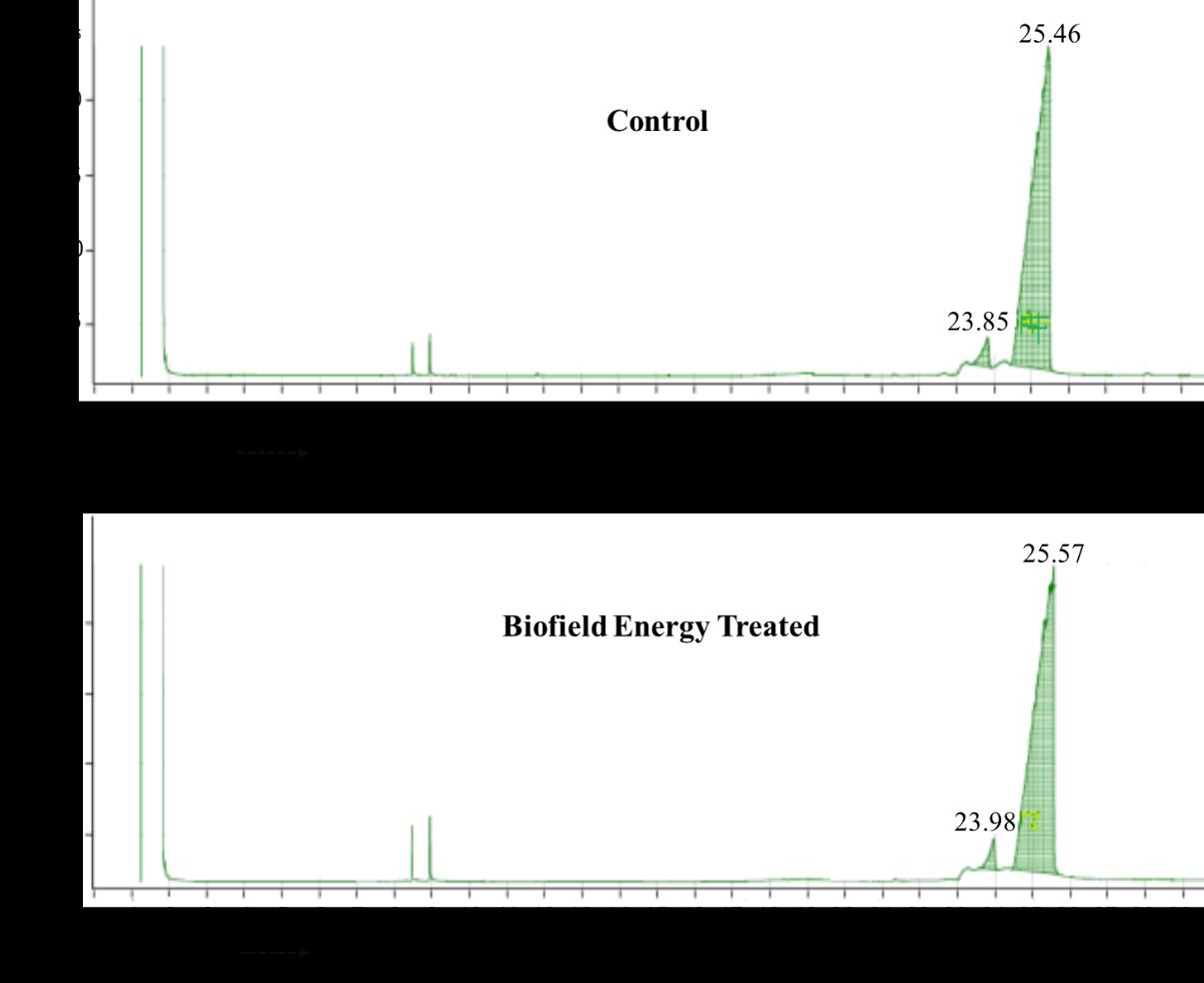
The GC chromatograms and mass spectra of both the samples of THC are shown in Figures 2 and 3, respectively. The GC chromatogram of the control THC revealed the presence of two peaks at the retention time (Rt) 23.85 and 25.46 min with the peak percentage (%) area of 3.32 and 96.68%, respectively (Figure 2). Consequently, these two peaks were observed in the GC chromatogram of the Biofield Energy Treated THC at the retention time 23.98 and 25.57 min with the peak percentage (%) area of 2.93 and 97.07%, respectively (Figure 2). This finding indicated that the polarity of the Biofield Energy Treated THC was remained unaltered compared to the control sample.
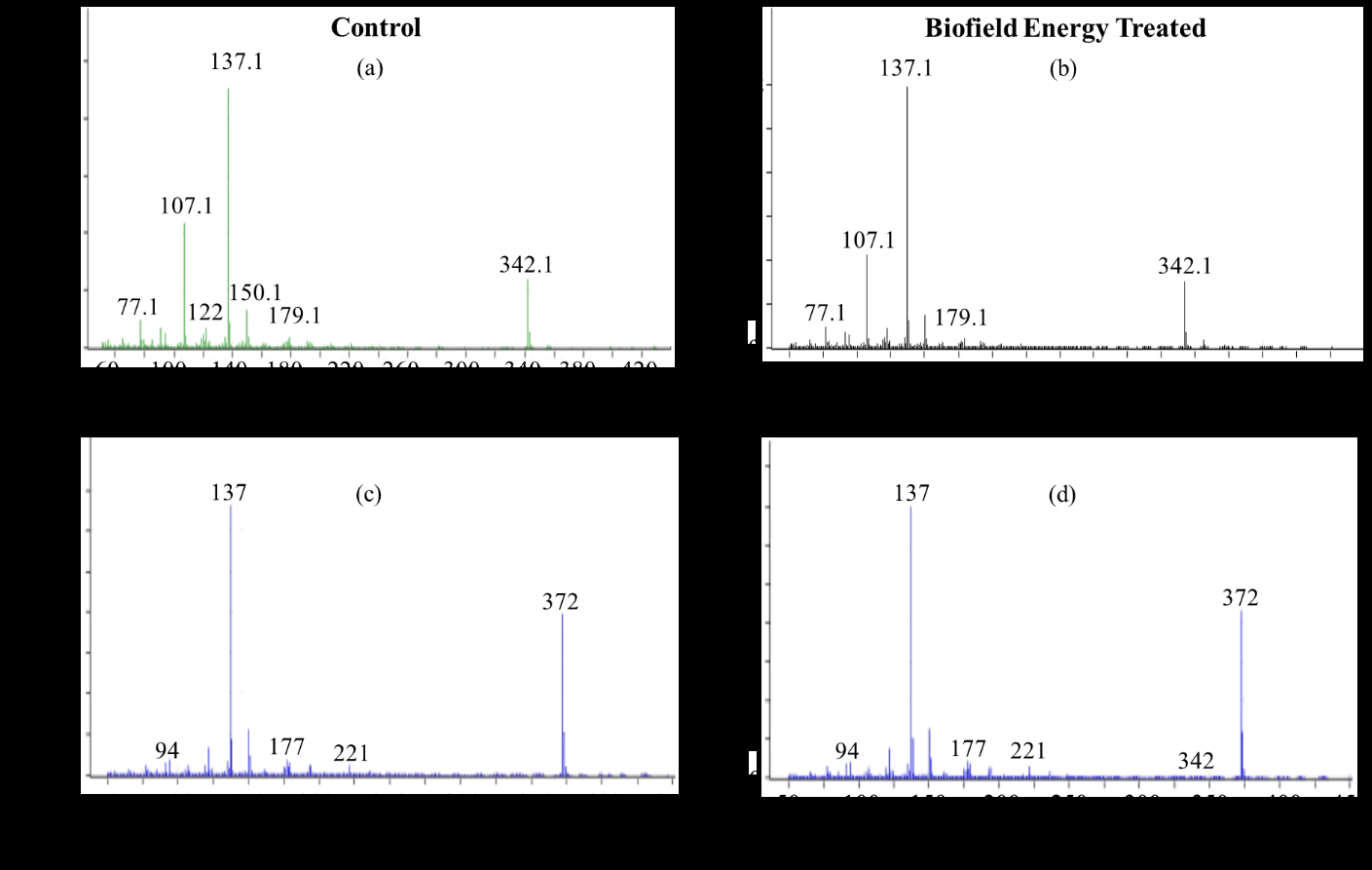
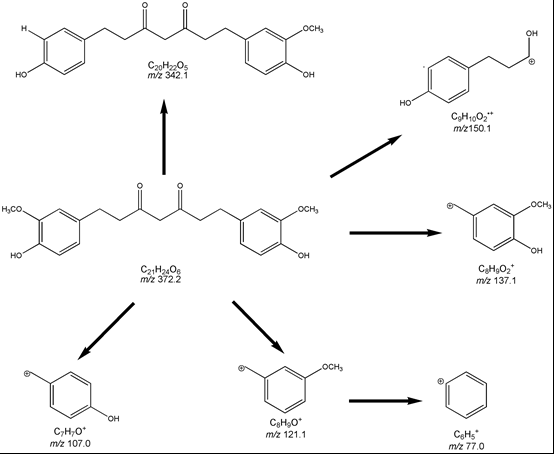
The mass spectra of the control and Biofield Energy Treated samples (Figures 3a and b) at the retention time 23.85 and 23.98 min, respectively displayed the mass for demethoxy THC at m/z 342.1 [M]+ (calcd for C20H22O5+, 342.1) along with the fragment ion peaks at m/z 150.1, 137.1, 122.0, 107.1 and 77.1 which were corresponded to the molecular formula C9H10O2+•, C8H9O2+, C8H8O+, C7H7O+, and C6H5+, respectively (Figure 4). The mass spectra of the control and Biofield Energy Treated samples of THC (Figures 3c and d) at the retention time 25.46 and 25.57 min, respectively exhibited the molecular mass for THC at m/z 372.2 [M]+ (calcd for C21H24O6+, 372.2) along with the fragment ion peak at m/z 137.1 corresponded to the molecular formula C8H9O2+ that showed 100% relative peak intensity (Figure 4).
Copyright© Mahendra KT and Snehasis J.
Mahendra KT and Snehasis J. Consciousness Energy Healing Treatment and Its Effect on the Structural Properties and Isotopic Abundance Ratio of Tetrahydrocurcumin. Nanomed Nanotechnol 2019, 4(4): 000171.
Copyright© Mahendra KT and Snehasis J.
The isotopic abundance ratio analysis of THC in control and Biofield Energy Treated samples were calculated for its molecular mass at m/z 372.2. PM and PM+1 for THC at m/z 372.2 and 373.2, respectively of the control and Biofield Energy Treated samples were obtained from the observed relative mass peak intensities of [M+] and [(M+1)+] peaks, respectively in the ESI-MS spectra and are presented in Table 1.
17O have major contribution to m/z 373.2. The experimental PM+1 data of THC showed the close value to the calculated value.
| Parameter | Control | Biofield Energy Treated | ||||||
|---|---|---|---|---|---|---|---|---|
| P at m/z 372.2 (%) M | 59.55 | 61.77 | ||||||
| P at m/z 373.2 (%) M+1 | 15.68 | 16.61 | ||||||
| P /P M+1 M | 0.2633 | 0.2689 | ||||||
| % Change of isotopic abundance ratio (P /P ) with respect to the control sample M+1 M | 2.12 |
Table 1: Isotopic abundance analysis results of tetrahydrocurcumin in control and Biofield Energy Treated samples. PM: the relati
Mahendra KT and Snehasis J. Consciousness Energy Healing Treatment and Its Effect on the Structural Properties and Isotopic Abundance Ratio of Tetrahydrocurcumin. Nanomed Nanotechnol 2019, 4(4): 000171.
Copyright© Mahendra KT and Snehasis J.
The percentage change of the isotopic abundance ratios (PM+1/PM) in the Biofield Energy Treated sample compared with the control sample is shown in Table 1. The isotopic abundance ratio of PM+1/PM in the Biofield Energy Treated sample was increased by 2.12% compared with the control sample (Table 1). So, 13C, 2H, and 17O, contributions from (C21H24O6)+ to m/z 373.2 in the Biofield Energy Treated sample were increased compared with the control sample.
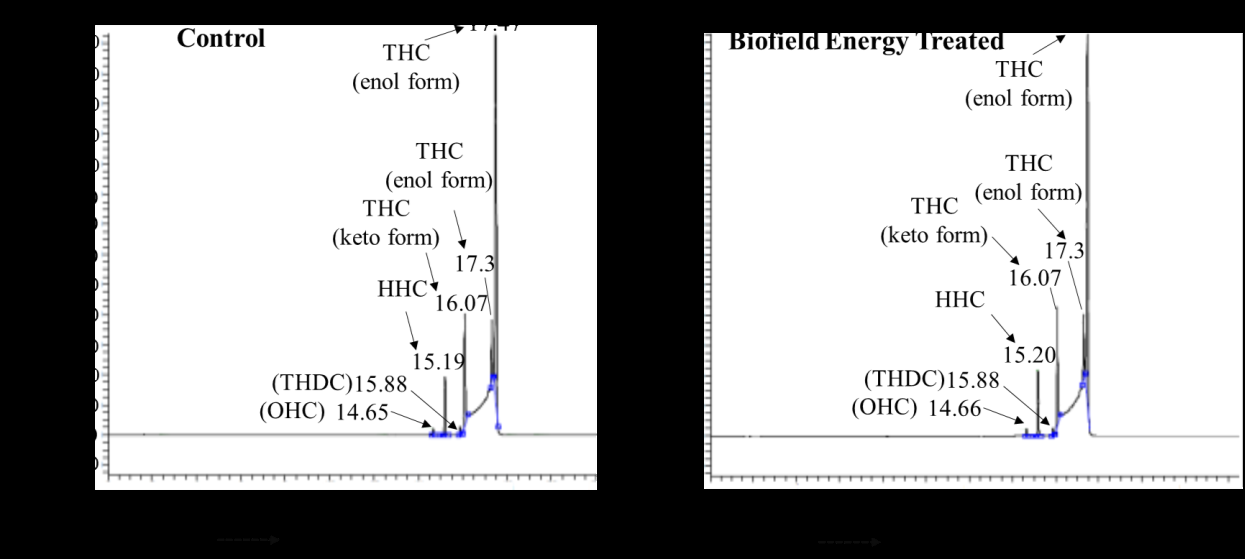
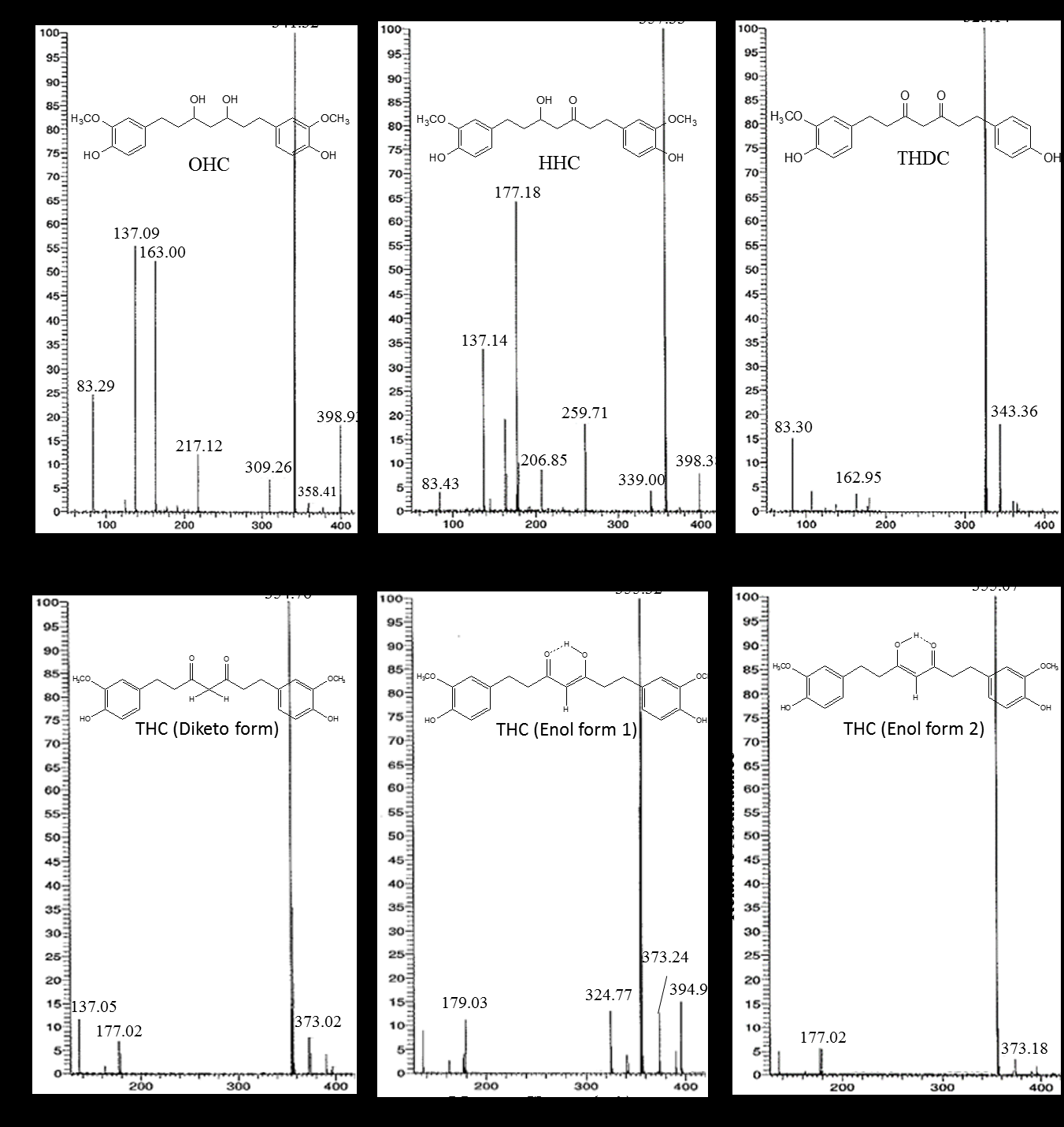
Energy Treated samples, respectively supported the structure of OHC. The chromatographic peak area% of OHC was decreased by 8.05%, whereas the mass peak intensity was significantly increased by 152.29% (Table 2). The mass spectrum of the control and Biofield Energy Treated THC shown the presence of the molecular mass of hexahydrocurcumin (HHC) at m/z 398.38 [M + Na + H]+ (calculated for C21H27O6Na+, 398.17) and at m/z 397.32 [M + Na]+ (calculated for C21H26O6Na+, 397.16), respectively the at Rt of 15.2 minutes (Figure 6). The fragment ion peak at m/z 357.33 and 357.02 (base peak) in control and Biofield Energy Treated samples, respectively correspond to the molecular formula C21H24O42+ supported the structure of HHC. The chromatographic peak area% of HHC was decreased by 0.71%, whereas the mass peak intensity was significantly increased by 368.83% (Table 2). Similarly, tetrahydrodemethoxycurcumin (THDC) was proposed at the retention time of 15.9 minutes showed the protonated mass at m/z 343.36 [M + H]+ (calculated for C20H23O5+, 343.15) in the control sample and at m/z 343.06 [M + H]+ in the Biofield Energy Treated sample. The major fragment ion peak at m/z 325.14 and 325.74 (base peak) in control and Biofield Energy Treated sample, respectively were corresponding to the molecular formula C20H21O4+ supported the structure of THDC (Figure 6). The chromatographic peak area% and the mass peak intensity of THDC were increased by 5.38% and 17.79% (Table 2).
Liquid Chromatography-Mass Spectrometry (LC-MS) Analysis
The LC chromatograms of the control and Biofield Energy Treated samples of tetrahydrocurcumin showed the presence of six peaks near the retention time (Rt) of 14.7, 15.2, 15.9, 16.1, 17.3, and 17.5 minutes (Figures 5). These six peaks indicated the presence of tetrahydrocurcuminoids and were proposed with the help of ESI mass spectra of THC (Figure 6). Octahydrocurcumin (OHC) was proposed from the chromatographic peak at Rt of 14.7 minutes, which exhibited the mass of the molecular ion adduct with sodium at m/z 398.93 [M + Na]+ (calculated for C21H32O6Na+, 399.18) in the control sample and at m/z 399.37 [M + Na]+ in the Biofield Energy Treated sample. The fragment ion peaks at m/z 341.32 and 341.23 (base peak) corresponded to the molecular formula C21H26O42+ (Figure 6) in control and Biofield
Mahendra KT and Snehasis J. Consciousness Energy Healing Treatment and Its Effect on the Structural Properties and Isotopic Abundance Ratio of Tetrahydrocurcumin. Nanomed Nanotechnol 2019, 4(4): 000171.
Copyright© Mahendra KT and Snehasis J.
Mahendra KT and Snehasis J. Consciousness Energy Healing Treatment and Its Effect on the Structural Properties and Isotopic Abundance Ratio of Tetrahydrocurcumin. Nanomed Nanotechnol 2019, 4(4): 000171.
Copyright© Mahendra KT and Snehasis J.
- Peak Area%
- Peak Intensity
- Peak
- Rt (min) m/z
- % Change*
- % Change*
- Control
- Biofield
- Treated
- Control
- Biofield
- Treated
- 1
- 14.7
- 399
- 0.87
- 0.80
- -8.05
- 219341
- 553367
- 152.29
- 2
- 15.2
- 398
- 8.46
- 8.40
- -0.71
- 147388
- 690997
- 368.83
- 3
- 15.9
- 343
- 0.93
- 0.98
- 5.38
- 356587
- 335265
- -5.98
- 4
- 16.1
- 373
- 17.28
- 17.56
- 1.62
- 1349539
- 1589661
- 17.79
- 5
- 17.3
- 373
- 7.90
- 7.26
- -8.10
- 768568
- 1389643
- 80.81
- 6
- 17.5
- 373
- 64.30
- 64.74
- 0.68
- 976638
- 897169
- -8.14
Table 2: The LC retention time (Rt), peak area% and mass peak intensity values for both the control and Biofield Energy
Mahendra KT and Snehasis J. Consciousness Energy Healing Treatment and Its Effect on the Structural Properties and Isotopic Abundance Ratio of Tetrahydrocurcumin. Nanomed Nanotechnol 2019, 4(4): 000171.
The liquid chromatograms revealed that the polarity of the Biofield Energy Treated sample did not change, but the peak area% and mass peak intensities were altered significantly compared with the control sample. The peak area is directly proportional to the relative concentration of the sample [44]. From the results, it can be assumed that the relative concentration of the Biofield Energy Treated THC was increased compared with the control sample (Table 2). The mass fragmentation pattern of both the control and Biofield Energy Treated samples showed a similar pattern. But, the mass peak intensity values (relative abundance) of the Biofield Energy Treated sample were significantly increased in most of the case compared with the control sample (Table 2). The altered relative abundance might affect the isotopic abundance ratio of Biofield Energy Treated THC. The relative abundances of an isotopic peak are the contributions of several different isotopes and its composition to the same peak [40]. The increased isotopic abundance ratio was supported by the GC-MS.
Nuclear Magnetic Resonance Spectroscopy (1H & 13C NMR)
The 1H and 13C NMR of the control and Biofield Energy Treated THC results are reports in Table 3. The characteristic proton signals for aromatic protons, -CH2, - OCH3 and -OH groups of THC in the 1H NMR of spectra of both the control and Biofield Energy Treated samples were described (Table 3). Similarly, the characteristic carbon signals for –C=O, quaternary carbon (aromatic), - CH (aromatic), -CH2, -OCH3 groups of THC in the 13C NMR of spectra of both the control and Biofield Energy Treated samples were described in Table 3. The results indicated that there was no such significant alternation in the Copyright© Mahendra KT and Snehasis J.
characteristic proton and carbon signals for THC in the 1H and 13C NMR spectrum of the Biofield Energy Treated sample as compared to the control sample.
| 1H NMR (ppm) | 13C NMR (ppm) | |||||||||||||
|---|---|---|---|---|---|---|---|---|---|---|---|---|---|---|
| Position | Untreated | Treated | Untreated | Treated | ||||||||||
| -OH (8,8’) | 8.67 (d, J = 8.8 Hz, 2H) | 8.67 (d, J = 8.8 Hz, 2H) | -- | -- | ||||||||||
| -OCH (9,9’) 3 | 3.73 (s, 6H) | 3.73 (s, 6H) | 55.57 | 55.51 | ||||||||||
| 1 | 5.74 (1H, s)a, 3.68 (2H, s)b | 5.74 (1H, s)a, 3.68 (2H, s)b | 44.69, 44.77 | 44.71 | ||||||||||
| 2,2’ | -- | -- | 193.48, 204.78 | 193.39, 204.66 | ||||||||||
| 3,3’ | 2.74 (dd, J = 6.8, 14.4 Hz, 4H) | 2.74 (dd, J = 6.4, 14.8 Hz, 4H) | 30.52 | 30.46 | ||||||||||
| 4,4’ | 2.56 (t, J = 7.2, 8.4 Hz, 2H), 2.56 (t, 2H, dd, J = 15.6)b | 2.56 (t, J = 7.2, 8 Hz, 2H)a, 2.56 (t, 2H, dd, J = 15.2)b | 28.45 | 28.39 | ||||||||||
| 5,5’ | -- | -- | 131.47, 131.69 | 131.36,131.59 | ||||||||||
| 6,6’ | 6.65 (dd, J = 3.2, 7.6 Hz, 2H) | 6.65 (dd, J = 2.4, 8 Hz, 2H) | 120.29, 120.35 | 120.21,120.27 | ||||||||||
| 7,7’ | 6.54-6.59 (m, 2H) | 6.54-6.59 (m, 2H) | 115.35 | 115.28 | ||||||||||
| 8,8’ | -- | -- | 147.46 | 144.60, 144.72 | ||||||||||
| 9,9’ | -- | -- | 144.64, 144.75 | 147.39 | ||||||||||
| 10,10’ | 6.76 (dd, J = 2, 13.6 Hz, 2H) | 6.76 (dd, J = 1.6, 13.6 Hz, 2H) | 112.47, 112.50 | 112.42, 112.46 |
Table 3: NMR assignments of the control and Biofield Energy Treated Tetrahydrocurcumin. s: singlet, d: doublet, dd: doublet of do
Conclusions
The experimental results revealed that the Trivedi Effect®-Consciousness Energy Healing Treatment showed a significant impact on the characteristic properties and isotopic abundance ratio of tetrahydrocurcumin. The spectroscopy study confirmed the structure of tetrahydrocurcuminoids (THC, octahydrocurcumin, Mahendra KT and Snehasis J. Consciousness Energy Healing Treatment and Its Effect on the Structural Properties and Isotopic Abundance Ratio of Tetrahydrocurcumin. Nanomed Nanotechnol 2019, 4(4): 000171.
Copyright© Mahendra KT and Snehasis J.
with the control sample. Therefore, the Trivedi Effect®- Consciousness Energy Healing Treated THC with improved isotopic abundance ratio and relative concentration might have altered the solubility, bioavailability, and thermal stability compared to the untreated THC. The Biofield Energy Treated THC would be very useful to design better nutraceutical and pharmaceutical formulations which might offer better therapeutic response against various inflammatory diseases, dementia, arthritis, cancer, diabetes, nephrotoxicity, hepatotoxicity, ageing process, psoriasis, scleroderma, atherosclerotic lesions treatment, tumors of skin, colon, pancreas, and breast.
Acknowledgements
The authors are grateful to GVK Biosciences Pvt. Ltd., Trivedi Science, Trivedi Global, Inc., Trivedi Testimonials, and Trivedi Master Wellness for their assistance and support during this work.
References
-
GM Holder, JL Plummer, AJ Ryan (1978) Metabolism and excretion of curcumin (1,7-bis-(4-hydroxy-3- methoxyphenyl)-1,6-heptadiene-3,5-dione) in the rat. Xenobiotica 8(12): 761-768.
-
Aggarwal BB, Deb L, Prasad S (2014) Curcumin differs from tetrahydrocurcumin for molecular targets, signaling pathways and cellular responses. Molecules 20(1): 185-205.
-
Lai CS, Wu JC, Yu SF, Badmaev V, Nagabhushanam K, et al. (2011) Tetrahydrocurcumin is more effective than curcumin in preventing azoxymethane-induced colon carcinogenesis. Mol Nutr Food Res 55(12): 1819-1828.
-
Yoysungnoen P, Wirachwong P, Changtam C, Suksamrarn A, Patumraj S (2008) Anti-cancer and anti-angiogenic effects of curcumin and tetrahydrocurcumin on implanted hepatocellular carcinoma in nude mice. World J Gastroenterol 14(13): 2003-2009.
-
Park S, Lee LR, Seo JH, Kang S (2016) Curcumin and tetrahydrocurcumin both prevent osteoarthritis symptoms and decrease the expressions of pro- inflammatory cytokines in estrogen-deficient rats. Genes Nutr 11: 2. Mahendra KT and Snehasis J. Consciousness Energy Healing Treatment and Its Effect on the Structural Properties and Isotopic Abundance Ratio of Tetrahydrocurcumin. Nanomed Nanotechnol 2019, 4(4): 000171.
-
Naito M, Wu X, Normura H, Kodama M, Kato Y, et al. (2002) The protective effect of tetrahydrocurcumin on oxidative stress in cholesterol-fed rabbits. J Atheroscler Thromb 9(5): 243-250.
-
Wu JC, Tsai ML, Lai CS, Wang YJ, Ho CT, et al. (2014) Chemopreventative effects of tetrahydrocurcumin on human diseases. Food Funct 5(1): 12-27.
-
Girija CR, Begum NS, Syed AA, Thiruvenkatam V (2004) Hydro-gen-bonding and C-H...[π] interactions in 1,7-bis(4-hydroxy-3-methoxy-phenyl)-heptane- 3,5-dione (tetra-hydro-curcumin). Acta Crystallographica Section C: Crystal Structure Communications 60(pt8): o611-o613.
-
Setthacheewakul S, Kedjinda W, Maneenuan D, Wiwattanapatapee R (2011) Controlled release of oral tetrahydrocurcumin from a novel self- emulsifying floating drug delivery system (SEFDDS). AAPS PharmSciTech 12(1): 152–164.
-
Neyrinck AM, Alligier M, Memvanga PB, Nevraumont E, Larondelle Y, et al. (2013) _Curcuma longa_ extract associated with white pepper lessens high fat diet- induced inflammation in subcutaneous adipose tissue. PLoS One 8(11): e81252.
-
Trivedi MK, Tallapragada RM, Branton A, Trivedi D, Nayak G, et al. (2015) Potential impact of biofield treatment on atomic and physical characteristics of magnesium. Vitam Miner 3: 129.
-
Trivedi MK, Tallapragada RM, Branton A, Trivedi D, Nayak G, et al. (2015) Physicochemical characterization of biofield energy treated calcium carbonate powder. American Journal of Health Research 3(6): 368-375.
-
Rubik B (2002) The biofield hypothesis: Its biophysical basis and role in medicine. J Altern Complement Med 8(6): 703-717.
-
Nemeth L (2008) Energy and biofield therapies in practice. Beginnings 28(3): 4-5.
-
Rivera-Ruiz M, Cajavilca C, Varon J (2008) Einthoven's string galvanometer: The first electrocardiograph. Tex Heart Inst J 35(2): 174-178.
-
Koithan M (2009) Introducing complementary and alternative therapies. J Nurse Pract 5(1): 18-20.
-
Trivedi MK, Branton A, Trivedi D, Nayak G, Mondal SC, et al. (2015) Morphological characterization, quality, Copyright© Mahendra KT and Snehasis J. yield and DNA fingerprinting of biofield energy treated alphonso mango (_Mangifera indica_ L.). Journal of Food and Nutrition Sciences 3(6): 245-250.
-
Trivedi MK, Branton A, Trivedi D, Nayak G, Mondal SC, et al. (2015) Evaluation of plant growth, yield and yield attributes of biofield energy treated mustard (_Brassica juncea_) and chick pea (_Cicer arietinum_) seeds. Agriculture, Forestry and Fisheries 4(6): 291- 295.
-
Trivedi MK, Branton A, Trivedi D, Nayak G, Mondal SC, et al. (2015) Evaluation of plant growth regulator, immunity and DNA fingerprinting of biofield energy treated mustard seeds (_Brassica juncea_). Agriculture, Forestry and Fisheries 4(6): 269-274.
-
Trivedi MK, Patil S, Shettigar H, Mondal SC, Jana S (2015) _In vitro_ evaluation of biofield treatment on _Enterobacter cloacae_: Impact on antimicrobial susceptibility and biotype. J Bacteriol Parasitol 6(5): 241.
-
Trivedi MK, Patil S, Shettigar H, Mondal SC, Jana S (2015) Evaluation of biofield modality on viral load of Hepatitis B and C Viruses. J Antivir Antiretrovir 7(3): 083-088.
-
Trivedi MK, Patil S, Shettigar H, Mondal SC, Jana S (2015) An impact of biofield treatment: Antimycobacterial susceptibility potential using BACTEC 460/MGIT-TB System. Mycobact Dis 5(4): 189.
-
Trivedi MK, Branton A, Trivedi D, Nayak G, Mondal SC, et al. (2015) Antimicrobial sensitivity, biochemical characteristics and biotyping of _Staphylococcus_ _saprophyticus_: An impact of biofield energy treatment. J Women’s Health Care 4(6): 271.
-
Trivedi MK, Branton A, Trivedi D, Nayak G, Mondal SC, et al. (2015) Evaluation of antibiogram, genotype and phylogenetic analysis of biofield treated _Nocardia_ _otitidis_. Biol Syst Open Access 4(2): 143.
-
Trivedi MK, Branton A, Trivedi D, Nayak G, Charan S, et al. (2015) Phenotyping and 16S rDNA analysis after biofield treatment on _Citrobacter braakii_: A urinary pathogen. J Clin Med Genom 3: 129.
-
Trivedi MK, Patil S, Shettigar H, Mondal SC, Jana S (2015) The potential impact of biofield treatment on human brain tumor cells: A time-lapse video microscopy. J Integr Oncol 4(3): 141. Mahendra KT and Snehasis J. Consciousness Energy Healing Treatment and Its Effect on the Structural Properties and Isotopic Abundance Ratio of Tetrahydrocurcumin. Nanomed Nanotechnol 2019, 4(4): 000171.
-
Trivedi MK, Patil S, Shettigar H, Gangwar M, Jana S (2015) _In vitro_ evaluation of biofield treatment on cancer biomarkers involved in endometrial and prostate cancer cell lines. J Cancer Sci Ther 7: 253- 257.
-
Trivedi MK, Nayak G, Patil S, Tallapragada RM, Latiyal O, et al. (2015) Impact of biofield treatment on atomic and structural characteristics of barium titanate powder. Ind Eng Manage 4: 166.
-
Trivedi MK, Patil S, Nayak G, Jana S, Latiyal O (2015) Influence of biofield treatment on physical, structural and spectral properties of boron nitride. J Material Sci Eng 4: 181.
-
Trivedi MK, Nayak G, Patil S, Tallapragada RM, Latiyal O, et al. (2015) Characterization of physical and structural properties of brass powder after biofield treatment. J Powder Metall Min 4: 134.
-
Trivedi MK, Branton A, Trivedi D, Nayak G, Nykvist CD, et al. (2017) Evaluation of the Trivedi Effect®- Energy of Consciousness Energy Healing Treatment on the physical, spectral, and thermal properties of zinc chloride. American Journal of Life Sciences. 5(1): 11-20.
-
Trivedi MK, Branton A, Trivedi D, Nayak G, Lee AC, et al. (2017) investigation of physicochemical, spectral, and thermal properties of sodium selenate treated with the Energy of Consciousness (the Trivedi Effect®). American Journal of Life Sciences 5(1): 27- 37.
-
Trivedi MK, Branton A, Trivedi D, Nayak G, Wellborn BD, et al. (2017) Characterization of physicochemical, thermal, structural, and behavioral properties of magnesium gluconate after treatment with the Energy of Consciousness. International Journal of Pharmacy and Chemistry 3(1): 1-12.
-
Trivedi MK, Branton A, Trivedi D, Nayak G, Panda P, et al. (2016) Isotopic abundance ratio analysis of 1,2,3- trimethoxybenzene (TMB) after biofield energy treatment (the Trivedi Effect®) using gas chromatography-mass spectrometry. American Journal of Applied Chemistry 4(4): 132-140.
-
Trivedi MK, Branton A, Trivedi D, Nayak G, Sethi KK, et al. (2016) Gas chromatography-mass spectrometry based isotopic abundance ratio analysis of biofield energy treated methyl-2-napthylether (Nerolin). American Journal of Physical Chemistry 5(4): 80-86. Copyright© Mahendra KT and Snehasis J.
-
Trivedi MK, Mohan TRR (2016) Biofield energy signals, energy transmission and neutrinos. American Journal of Modern Physics 5(6): 172-176.
-
Schellekens RC, Stellaard F, Woerdenbag HJ, Frijlink HW, Kosterink JG (2011) Applications of stable isotopes in clinical pharmacology. Br J Clin Pharmacol 72(6): 879-897.
-
Weisel CP, Park S, Pyo H, Mohan K, Witz G (2003) Use of stable isotopically labeled benzene to evaluate environmental exposures. J Expo Anal Environ Epidemiol 13(5): 393-402.
-
Rosman KJR, Taylor PDP (1998) Isotopic compositions of the elements 1997 (Technical Report). Pure Appl Chem 70(1): 217-235.
-
Smith RM (2004) Understanding Mass Spectra: A Basic Approach, 2nd (Edn.), John Wiley & Sons.
-
Jürgen H (2004) Gross Mass Spectrometry: A Textbook (2nd Edn) Springer: Berlin. Mahendra KT and Snehasis J. Consciousness Energy Healing Treatment and Its Effect on the Structural Properties and Isotopic Abundance Ratio of Tetrahydrocurcumin. Nanomed Nanotechnol 2019, 4(4): 000171.
-
Trivedi MK, Branton A, Trivedi D, Nayak G, Sethi KK, et al. (2016) Evaluation of isotopic abundance ratio in biofield energy treated nitrophenol derivatives using gas chromatography-mass spectrometry. American Journal of Chemical Engineering 4(3): 68-77.
-
Kawano SI, Inohana Y, Hashi Y, Lin JM (2013) Analysis of keto-enol tautomers of curcumin by liquid chromatography/mass spectrometry. Chin Chem Lett 24(8): 685–687.
-
Andrew Berry, Theory-of-HPLC-Quantitative-and- Qualitative-HPLC.
-
www.nobelprize.org/nobel_prizes/physics/laureates /2015/advanced-physicsprize2015. pdf.
-
Balantekin AB (2013) Neutrinos and rare isotopes. Journal of Physics: Conference Series 445: 012022. Copyright© Mahendra KT and Snehasis J.
- Solution-Processed Chiral Perovskites for Biomedical Applications
- Nanotechnology in Health Chemistry and Medicine: Current Challenges and Future Directions
- Human Exposure to Micro- and Nanoplastics: Pathways, Toxicity, and Intervention Strategies
- Exosome Nanomedicine for Cancer Therapy
- Micro and Nanoplastics–Plastisphere, Biotoxicity, Impact on Human Health, and Mitigation Strategies
- Process Validation of Cefixime Powder for Suspension Dosage Form, 50 mL