
Pandemic of Coronavirus 19: A Comprehensive Literature Review, Therapeutic Options and Possible Lessons from SARS-COV Therapy
There are new public health emergencies debilitating world with the spread of the coronavirus disease 2019. This presents an inventive challenge to identify useful drugs for therapy. A new coronavirus was found in China, Wuhan city, in December 2019. A causative agent earlier termed COVID-19 by WHO. It affects lower respiratory tract and explicit as pneumonia in human. The disease transferred by inhalation or in contact with infected, surfaces. The evaluation and exposure to pathogenic organism period of virus in between 2 to 14 days. The common symptoms observed usually are cough, fever, fatigue and sore throat among others. Number of people is asymptomatic. The present review includes in detail information of virus, its epidemiology, symptoms, diagnostic tests, prevention, some useful therapies and drugs which may effective in treatment.
Introduction
Today’s rapid outbreak is due to coronavirus disease 2019 which is a major health issue. First case in human was found in China, Wuhan city. It is spreading with epidemic features across the globe. WHO (World Health Organization) was initially named this virus as “Novel Corona Virus 2019” (2019-nCoV). Later on, it was renamed by International Committee of Coronavirus Study Group (CSG) as SARS CoV-2. COVID-19 is abbreviation of disease caused by SARS CoV-2 (where Co: corona, VI: virus, D: disease and 19:2019year). It is supposed to be developed from bat because this virus has shown 86.9% similarity to bats virus [1].
It is driving pathogen which firstly target respiratory framework, contaminated from mild upper respiratory track sickness to extreme interstitial pneumonia. Compare d to other respiratory viral disease COVID-19 has higher infection rate, hence identification of infection is necessary step [2].
Many of drugs are under clinical trial but still there is not a single drug that has received approval for treatment. So, the only way to control this outbreak of disease will be the application of preventive measures which are necessary to take and using contemporary available drugs until initiating novel treatment. In this review article we have discussed the recent development of drugs that is related to treatment of COVID-19 epidemic.
Symptoms
When virus enters to host body, it does not show any symptoms immediately. After 7-10 days some symptoms occur. Primarily most common symptoms occurred as dry cough, difficulty in breath, tachypnea and fever (especially more than 100). Recent study shows chest pain, vomiting, nausea and confusion as COVID-19 symptoms. Some cases includes as sore throat, sneezing, nasal congestion, sputum production and rashes on skin. Current examination appeared that hoisted levels of different biomarkers and proteins as lactate dehydrogenase (LDH), aspartate aminotransferase (AST), alanine transaminase (ALT), creatinekinase (CK), erythrocyte sedimentation rate (ESR), white blood cells (WBCs), urea, creatinine. And number of hemoglobin, lymphocytes, eosinophil, diminished in patient [3].
Epidemology
SARS-CoV-2 Virus was first found in bats and human in Wuhan in December 2019.Up to 5thMarch2020 there was 3300 deaths and 96000 patients are reported due to Covid-19. This virus can be affected to any age. Anyone can get infection by inhaling droplets by coughing, sneezing. These symptoms remain longtime and even upto clinical recovery [4]. In worldwide there are 5,491,678 SARS CoV-2 cases are reported and 349,190 deaths occurred upto May 28th 2020.
Pathogenesis
The COVID-19 is new type of Beta-genera virus. This
genetic sequence was similarity (96.2%) with Bat CoV strain (Bat –SL-CoV ZC45 and Bat-SLCoVZXC21). This COVID-19 has 79.5% homology with SARS-CoV and 50% homology with MERS-CoV. Covid-19 is positive sense RNA infection which is single stranded up to 26-32kb.There are four genera (α, β, γ, δ) from which human coronavirus found in a β genera. S protein from coronavirus could be a key pathway to enter infection into human body. Genome of infection is released and interpreted into two distinctive polyproteins and basic proteins. And at that point viral RNA begins to replicate [5]. Coronavirus has 79.5% and 50% grouping closeness with SARS CoV and MERS CoV concurring to its genome wide phylogenetic examination.
SARS and MERS: The SARS and MERS belong to the Beta CoVs which produce Severe Respiratory Syndrom. SARS- CoV was first outbreak in Southern China in April 2003. It infected more than 3,000 people and killed 774 cases by 2004. MERS-CoV was first identified in Jorden and it spread throughout the United Arab Emirates, was infected 2,465 people and killed 850 people by 2019. Both these viruses have an incubation period of 5 days. Then diseases develop within 13 days after virus enter. The mortality rate for SARS- CoV is 10% while MERSCoV is 36%.
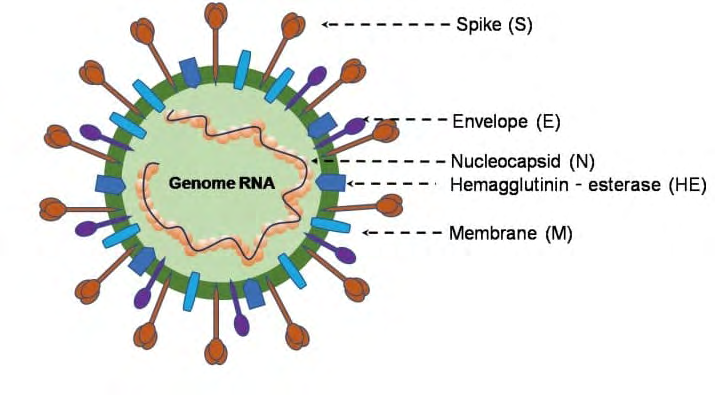
As shown in figure, Nucleocapsid formed by combination of genomic RNA and nucleocapsid protein(N). Genomic RNA is protected by two different types of spike proteins like spike glycoprotein trimmer(S) found in all CoV-2 and other hem agglutinin-esterase spike protein(HE) found in some cases. Among the S protein membrane (M) and envelop (E) protein is located. Genome has 5’ (265nt) and 3’ (229nt) terminal sequences as similar to β-CoVs. Virus is round or oval in shape with diameter 60-100nm.Some physicochemical properties are similar to SARS-CoV and MERS-CoV [6].
Angiotensin converting enzyme (ACE2) is most focused on receptor for CoV-2 cell entry. S protein straightforwardly binds to ACE-2. It is type1 membrane protein found in lungs, kidney, heart, and intestine. Two types of peptidase are known which degrades peptides. Endopeptidase by cutting peptide chain and other exopeptidase like ACE-2 which split peptide into C- or N-terminal amino acids [7]. Host immune system also plays important role in pathogenesis and recovery from disease. As soon as virus enters in body within some days innate immunity response is activated. Type 1 interferon has intrinsic antiviral activity and stimulating activation of immune cells leads to production of chemokine’s and cytokines [8].
COVID-19 Life Cycle: The life cycle of corona virus consists of five stages, they are attachment, penetration, biosynthesis, maturation, and release. SARS-CoV-2 is get into bind human cells angiotensin- converting enzyme 2 (ACE2). After binding of ACE2, the COVID-19 virus is entered into cell through endocytosis. This process is mediated by membrane bound protease. It is known as transmembrane serine protease 2 (TMPRSS2), which involved in cleaves the S protein for membrane fusion. Then the COVID-19 viral RNA genome is entering into the intracellular compartment. The viral RNA translated into the encoded structural and nonstructural proteins. The translation of the nonstructural proteins (Nsp1- 16), replicas lead to in massive polypeptide chain, In which the 16 Nsp are cleaved. That process is regulated by host cell proteases, COVID-19 main protease and papain-like protease. On the other hand, the RNA-dependent RNA polymerase (RdRp) involved in the replicate the viral genome. End of this process many structural and nonstructural proteins (Nsp1- 16) are generated. This are accumulated to endoplasmic reticulum membrane. These are packed in Golgi apparatus for viral budding. Finally, by exocytois process it target to another host cell [9].
Diagnosis
Several protocols have published by WHO for identification of an illness of CoVID-19 virus. rRT-PCR test is standard method for detection of virus. This test is performed on respiratory tests gotten by a nasopharyngeal swab, nasal swab or sputum test. Inside two too few days comes about are accessible. Blood tests are moreover be utilized but requires two blood tests which taken two weeks separated. Chest X-rays are of small esteem in early stages and CT scan of chest are valuable indeed some time recently indications happen.
Nucleic acid amplification test (NAAT) is research facility test performed on respiratory test. Unique sequence of virus by NAAT or r RT-PCR is detected and confirms the presence of virus [10, 11, 12].
Treatment
Due to nonattendance of particular drug for treatment of disease, it ought to be fundamental to control spread of infection, techniques utilized as early determination, opportune detailing, confinement and supportive medicines are imperative to treat CoVID-19 disease. At present previously experience with other viral infections distinctive medications connected that are based on symptomatic conditions to control CoVID-19 infection. In regimens treatment antiviral, anti-inflammatory and anti-microbial are frequently to be used.
Both having similar activity, one hydroxyl group of hydroxychloroquine which make it less toxic as compare to chloroquine. In mechanism of action both drugs act on lysosome, significantly changing the pH thus affecting activity of protease in lysosome carried out degradation of proteins and glycosaminoglycan. Entry of virus prevented by chloroquine. It moreover avoids infection cell combination by interferometer with glycosylation of ACE2 receptor and avoids binding of spike protein. Chloroquine most viable in early stage of treatment. In recent study it is found that death of CoVID-19 patients related to targeting of cystokinestrom which provided acute respiratory distress, and chloroquine, hydroxychloroquine reduces cystokinestrom. In cell culture zinc ionophores inhibit the replication of virus. There is some measure evidence that related to chloroquine intracellular uptake enhances the zinc so that zinc utilized in combination with these drugs.
In recent study it has been reported that negative conversion rate did not overcome by chloroquine but through the anti-inflammatory properties and recovery of lymphopenia had minimize the clinical symptoms. Higher dose of this drug should not recommend because of significant cardiac risk. It must be avoiding prescribing those drugs having cardiac history.
Remdesivir
OH HO
H2N
O O O
N
N N
O
P
N H
O
N
O
Remdesvir
For the treatment of Ebola infection disease in 2017 Gilead Sciences create the remdesvir. In later consider it watched that remdesvir is viable for treatment of COVID-19 infection. Active metabolic form of remdesvir is GS441524. Lag chain cessation of nascent viral RNA is antiviral action of remdesvir. It has high selectivity index at low range of concentration actively inhibits SARS-CoV-2 infection.
Supporting Drug: Numerous adjunctive treatments are utilized as strong care for COVID-19 patient. In adjunctive includes ascorbic acid, tocilizumab, sarilumab, corticosteroids, mycin, epoprostenol, sirolimus, and drugs. Key target of this therapy is blocking the activity of this pro-inflammatory mediator and overcome elevated serum concentration of IL-6.
Azithromycin
OH
O
O
O
O
O
OH
HO
O
OH
N O
N HO
Azithromycin
Different types of infections due to susceptible bacteria, skin infections; sexually transmitted disease was prevented by azithromycin, although it is active invitro against Zika and Ebola viruses. Its action is interfering with protein synthesis in bacteria, by attaching to 50S subunit of bacterial ribosomes. Recent study has been proved that adjunctive therapy of azithromycin with hydroxychloroquine effective in CoVID-19 patients because of antibacterial coverage and potential immunomodulatory, anti-inflammatory effects. But furthermore, it must be considered both these drugs drag out the QT interval time and may potentiate risk for cardiac events. So, it has been not used in patients with BP problem [13].
Favipiravir
O
NH O
H2N
N
F
Favipiravir
It is prodrug of purine nucleotide ribofuranosyl 5’-triphosphate also known as T-705.It prevents viral replication by inhibiting RNA polymerase. High dose is recommended for CoVID-19 infection.2400-3000mg is loading dose and 1200-1800mg every 12hrs is maintenance dose. Approximately 5hrs is half-life of drug. It is currently used by Japan for treatment. It is now used for treatment of mild to moderate CoVID-19 infection. Glenmark is first Indian company receive approval for oral antiviral favipiravir from DCGI. Each tablet costing 103Rs and prescribe as name FabiFlu. 1800mg twice a daily for day 1 and 800mg 2 times daily for next 14 days is recommended dose [14].
Monoclonal Antibody Therapy: It is alternative treatment in which antibodies from recovered patients are used. In2015 systemic review by Mair-Jenkins and colleagues carried out 8 observational studies on 714 patients having SARS or influenza. Treatment with convalescent plasma and immunoglobulin shows reduction in mortality rate. On March 24, 2020, FDA released guidance for plasma therapy. Monoclonal antibodies block the interaction between receptor binding area and ACE2 receptor. They identify S1 fragment and its subunit. For novel coronavirus B38, H4, 47D11 are few antibodies which are effective in treatment [15, 16].
Medicines from Unani system: They used plant materials which are free from toxic effects. Different parts of plant contain essential chemical constituents which are effective in disease treatment. Some plant are having antiviral activity such as Allium Cepa, Allium Sativum, Curcuma Long, Cinnamomumverum, Dacusmartimus, Glycyrrhizaglabra, Piper nigrum etc. are used to prepare aqueous extract. Some honey and lemon juice also added which is effective in cold and flu virus infection (table 1).
| Name | Biological Name | Chemical Constituent | Structure | Use |
|---|---|---|---|---|
| Giloy [17] | Tinosporacordifolia | Berberine, Cholin, Palmetine, Octacosanol. | O O + N O O Berberine OH Octacosanol | Antimalarial, antidiabetic, antiarthritic, antineoplastic and immunomodulatory activity. |
| Black pepper [18] (Kalimirch) | Piper nigrum | piperine | O O N O piperine | Increases immune system, increase digestive tract function, anti-inflammatory Andantioxidant. |
| Garlic [19] (Lahasun) | Allium sativum | Alliin, Allicin, E-Ajoene, Z-Ajoene, 2-Vinyl- 4H-1,3-dithiin | O S S Allicin O S S S E-Ajoene | As antiviral, antioxidant, antiseptic, antidiabetic and lower the B.P. |
| Ginger [20] (Adarak) | Zingiberofficinale | 6-paradol, 6-shogaol, and gingerol. | HO O O OH gingerol HO O O 6-paradol | Increases immune system, in rheumatoid arthritis and hyperuricemia,antiviral effect, in cancer like prostrate,skin, breast, ovarian. |
| Tulsi [21] (Basil) | Ocimumtenuiflorum | Eugenol, Apigenin, Cirsilineol, Andvicenin and orientin | HO O Eugenol OH HO OH O OH HO HO O OH OHO orientin | Immunomodulation, antioxidant, used in cough, asthma, wounds, headache,skin disease, peptic disorder. |
| Green tea [22] | Camellia sinensis | Theophylline, caffeine, theobromine and theanine | O N N N O N caffeine O O N OH H NH 2 theanine | Antipyretic, Antiviral, anticancer, antimicrobial, antioxidant, antidiabetic, cardio protective. |
| Lemon [23] | Citrus limon | Limonene, β-Pinene, Farnesol, Nerolidol | Limonene Pinene | Reduce flu and cough. Boosting immune system, pneumonia. Used for lower respiratory infection and increase B.P. |
Table 1: Medicinal plants with their active constituents and uses.
Medicine from Homeopathy Arsenic album-30 which is propylitic medicine to avoid CoVID-19 infection issued on 30 January 2020 as per Directorate Board of AYUSH, India. On empty stomach 4 pills once a daily for 3 days recommended. But after number of reviews and observations it proven that this medicine is not very much effective. It is pseudoscience which is not very useful in treatment.
Immune system enhancers: Most of old people death occurs as per observations due to their weak immune system. It is necessary to keep health system updated and well maintain through proper diet. It was suggested to take supplements which provides high immunity. Citrus fruits, vitamins, some dry fruits like dates, almonds and walnuts are useful to boost immune system. Avoiding narcotic products and taking adequate sleep without any stress is must to live healthy life [24].
Possibilities of transmission of virus: Person to Person transmission occurs through air droplets who are in near contact within 3 feet. Also, droplet infection has been reported by implication through surfaces of physical objects. Special situations as surgical procedures air-borne transmission may occur. It is important to know the transmission dynamics of infection for future plan and alertness against spread of the infection.
Quarantine and avoid migration: To controlling communicable disease episodes, the most seasoned and most viable tool is quarantine. The 14 days separation of peoples who are not sick but who may been exposed to an infectious agent or disease, with the objective of observing their signs and injuring the early detection of cases. Separation of diagnosed persons from others to anticipate the spreading of infection is an isolation, it is not same as quarantine [25].
Face mask and Respirators
> 5-10mm in diameter the infective respiratory droplets potentially stick to the mucous of mouth and nose and later on enter into the epithelial layer of the respiratory and gastrointestinal tract. The spread ability of droplets mediated viral infection may reduce by a physical barrier at entry point, barriers as face mask and respirators. In global market different masks are available such as dust mask, paper mask, face mask, respirator, laser mask, surgical mask, etc. The mask must be having perfect properties which play vital part in choice of mask like breath ability and protection against infection and contaminated partials. Furthermore, scientific variables such as submicron particulate filtration effectiveness (%), bacterial filtration effectiveness (%), differential pressure or breathing resistance. Against CoVID-19 infection, USA center for disease monitoring and WHO recommends N95/P100 respirators as they filter out 99.9% of 0.3-micron particles. The alphabets N and P indicates ‘not resistant to oil’ and ‘considerably resistant to oil’ respectively whereas numeric characters 95 and 100 filters minimum filtration capability with 95 and 99.97% respectively. Antiviral mask made up of different layers. Outer layer restricts the penetration of macromolecules of size >0.5 micron. Zinc and copper granules present in antiviral layer that will kill trapped virus. Non active layer filters out the particles <0.3 microns size and fluid resistance layer is inner layer [26].
Hand wash
It is essential measure to stop the transmission of virus. Hand should be washed with soap and water for minimum 40-60 second. 62-71% alcohol-based hand disinfectant can also be used if soap and water is not available. wash your hand in every activity such as before starting work, after contact with contaminated objects hands must be washed.
Cleaning and disinfecting environmental surface
CoVID-19 virus can withstand in environment for several hours and days. So cleaning and disinfecting environmental surfaces is necessary for preventing spread of disease? Frequent hand contact “High touch surfaces” disinfect agents from table 2 [27].
| Agents | Area of disinfection |
|---|---|
| Alcohol | Cutaneous antisepsis, disinfection of small surfaces |
| Chlorine compounds (chloramine, hypochlorite) | Cutaneous and wound antisepsis, water treatment surface disinfection |
| Glutaraldehyde | Cleansing of inanimate objects |
| Hydrogen peroxide | Cutaneous antisepsis |
| Acetic acid | cleansing of inanimate objects |
Table 2: Application area of disinfection agents.
Institutional Safeguard
In pandemic attack institutional safeguard on CoVID-19 infection is important. By keeping 3 feet distance while working in group, frequently cleaning doors, telephones computer key pads, prohibiting crowd by using video conference are some ways to maintain safety. Person who suddenly feels sick keep in isolated room during work period and encourage employee to get self-quarantine when having mild signs of CoVID-19 infection [28].
Present Vaccine Development Status
Sputnik V Vaccine (Russia)
The Russian Gamaleya National Center of Epidemiology and Microbiology develop vaccine Sputnik V is also called Gam- Covid-Vac which is act on human adenovirus vectors rAd5 and rAd26. Full length spike glycoprotein of SARS CoV-2 is carrying by both rAd5-S and rAd26-S. This initial positive news was adequate to ensure that the vaccine was accepted by the government on 11 August2020, making Russia the first country to register a vaccine for COVID-19 [29, 30].
CanSino and Sinovac Vaccines (China)
Currently two vaccines are conducting trials in China. The CanSino Biologics and Beijing Institute of Biotechnology developed Ad5-nCOV vaccine is associated with the human adenovirus Ad5. In Ad5 vector occurs E1 and E3 early genes deletions so that full length of glycoprotein expresses and plasminogen activator signal peptide gene also carries. Sinovac Biotech’s Corona Vac vaccine in China is coV-2 SARS inactivated and aluminum hydroxide used as an adjuvant. The vaccine is given intramuscularly to 13,060 patients in two doses at intervals of 14 days [31].
BCG Vaccine (Australia)
Royal Children’s Hospital and Murdoch’s Childrens Research Institute developed BCG vaccine in Australia, is contain live attenuated Mycobacterium Bovis and named after Bacille Calmette-Guerin. The theory of use of BCG against COVID-19 has been suggested for its efficacy towards tuberculosis. Although the process by which BCG defends humans against a variety of infectious diseases remains widely unclear, Epigenetic changes leading to a qualified immune was suggested as one option, with IL-1β becoming a main player. Recently retroactive cohort study reveals that BCG could be successful on COVID-19 [32, 33].
Post-acute COVID 19
Those who are recovering from serious COVID infection shown Post-acute syndrom. There are two acute and chronic syndromes. It was observed that, post-acute COVID extend more than 3 weeks from the onset of first symptoms and the chronic COVID will extend more than 12 weeks. According to the survey, only 65% of US population had returned to their healthy state in 14-21 days after a positive test. Cough, fever, shortness of breath, chest pain, headaches, muscle pain, gastrointestinal upset, rashes and depression and other mental disorders are symptoms shown by patients in post-acute COVID-19 syndrome. Patients who had recovered from COVID also shown bad impact on their body as shown in table 3 [34, 35].
| Sr.NO. | Body Organ System | Post-acute COVID-19 Effect |
|---|---|---|
| 1 | Nervous system | Anxiety, depression, trauma, seizures, encephalitis |
| 2 | Excretory system | Kidney damage, proteinuria |
| 3 | Respiratory system | Long term impairment of lungs, alveolar fibrosis. |
| 4 | Cardiovascular system | Myocardial infraction, pericarditis, heart failure |
Table 3: Post-acute COVID-19 effect on organ system of body.
Conclusion
This review prepared based on suddenly published information on COVID-19 infection. SARS-CoV-2 was a new and profoundly infectious virus, and there’s no particular treatment for coronavirus disease up to present. By that time COVID-19 might have affected 90% of the world population and kill over 40 million people. In this manner, it is astute to proceed preventive strategies and public health measures until a suitable vaccine and successful drugs are found. Combination treatments with a few above-mentioned drugs or supplements. Furthermore, a suitable immune-modulatory diet, proper mental bolster and adherence to guidelines will in the long run be effective against coronavirus disease.
References
-
Cao QD, Guo YR, Hong ZS (2020) The Origin, Transmission and Clinical Therapies on Coronavirus Disease 2019 (COVID-19) Outbreak- A n Update on the Status. Mil Med Res 7(1).
-
Baranenko D (2019) “Na l P Re Of.” Carbohydr Polym: 115849.
-
Hamblin MR, Lotfi M, Rezaei N (2020) COVID-19: Transmission, Prevention, and Potential Therapeutic Opportunities. Clin Chim Acta 508: 254-266.
-
Singhal Tanu (2020) A Review of Coronavirus Disease-2019 (COVID-19). Indian Journal Pediatrics 87(4): 281-286.
-
Geng M (2020) Molecular Immune Pathogenesis and Diagnosis of COVID-19. J Pharm Anal 10(2): 102-108.
-
Yuefei J (2020) Virology, Epidemiology, Pathogenesis, and Control of COVID-19. Viruses 12(4): 372.
-
Alexandre J, Jean-Luc C, Vincent R, Béatrice B (2020) Drugs Acting On Renin Angiotensin System And Use In Ill Patients With COVID-19. Therapies 75(4): 319-325.
-
De Luca, Carmen D (2020) Covid-19 In Children: A Brief Overview After Three Months Experience. Paediatric Respiratory Reviews 35: 9-14.
-
Deepak A (2020) COVID-19 For The Cardiologist. JACC: Basic to Translational Science 5(5): 518-536.
-
WHO Coronavirus Disease (COVID-19) Dashboard (2020) Bangladesh Physiotherapy Journal 10(1).
-
Junxiong P (2020) Potential Rapid Diagnostics, Vaccine And Therapeutics For 2019 Novel Coronavirus (2019- Ncov): A Systematic Review. Journal of Clinical Medicine 9(3): 623.
-
Tang YW, Jonathan ES, David HP, Charles WS (2020) Laboratory Diagnosis of COVID-19: Current Issues And Challenges. Journal of Clinical Microbiology 58(6): 512- 520.
-
Renyi W (2020) An Update On Current Therapeutic Drugs Treating COVID-19. Current Pharmacology Reports 6(3): 56-70.
-
Umang A, Raju R, Zarir FU (2020) Favipiravir: A New And Emerging Antiviral Option In COVID-19. Medical Journal Armed Forces India 76(4): 370-376.
-
James SM, Monogue ML, Jodlowski TZ, Cutrell JB (2020) Pharmacologic Treatments for Coronavirus Disease 2019 (COVID-19). JAMA 323(18): 1824-1836.
-
Leila J, Rezaei N (2020) Monoclonal Antibody as a Potential Anti-COVID-19. Biomedicine & Pharmacotherapy 129: 110337.
-
Sharma P (2019) The Chemical Constituents And Diverse Pharmacological Importance Of Tinospora Cordifolia. Heliyon 5(9): e02437.
-
Singh G, Marimuthu P, Catalan C, de Lampasona MP (2004) Chemical, Antioxidant And Antifungal Activities Of Volatile Oil Of Black Pepper And Its Acetone Extract. Journal of the Science of Food and Agriculture 84(14): 1878-1884.
-
Donma MM, Orkide D (2020) The Effects of Allium Sativum On Immunity Within The Scope of COVID-19 Infection. Medical Hypotheses 144: 109934.
-
Stoilova I, Krastanov A, Stoyanova A, Denev P, Gargova S (2007) Antioxidant activity of a ginger extract (Zingiber officinale). Food Chemistry 102(3): 764-770.
-
Prakash J, Gupta S (2000) Chemopreventive activity of Ocimum sanctum seed oil. Journal of Ethnopharmacology 72(1-2): 29-34.
-
Mhatre S, Srivastava T, Naik S, Patravale V (2020) Antiviral activity of green tea and black tea polyphenols in prophylaxis and treatment of COVID-19: A review. Phytomedicine 153286.
-
Senthil KK, Gokila VM, Wang C, Chen C, Chen Y, et al. (2020) Geranium and Lemon Essential Oils and Their Active Compounds Downregulate Angiotensin-Converting Enzyme 2 (ACE2), a SARS-CoV-2 Spike Receptor-Binding Domain, in Epithelial Cells. Plants 9(6): 770.
-
Ali I, Alharbi O (2020) COVID-19: Disease, management, treatment, and social impact. Science of the Total Environment 728: 138861.
-
Güner R, Hasanoğlu İ, Aktaş F (2020) COVID-19: Prevention and control measures in community. Turkish Journal of Medical Sciences 50(3): 571-577.
-
Pradhan D, Biswasroy P, Kumar NP, Ghosh G, Rath G (2020) A Review of Current Interventions for COVID-19 Prevention. Archives of Medical Research 51(5): 363- 374.
-
Cirrincione L, Plescia F, Ledda C, Rapisarda V, Martorana D, et al. (2020) COVID-19 Pandemic: Prevention and Protection Measures to Be Adopted at the Workplace. Sustainability 12(9): 3603.
-
Khan T (2020) Preventive and Control Measures of COVID-19 Patients: A Review. Bangladesh Journal of Infectious Diseases 7: 41-44.
-
Lu S (2009) Heterologous prime–boost vaccination. Current Opinion in Immunology 21(3): 346-351.
-
Burki T (2020) The Russian vaccine for COVID-19. The Lancet Respiratory Medicine 8(11): 85-86.
-
Zhu F, Li Y, Guan X, Hou L, Wang W, et al. (2020) Safety, tolerability, and immunogenicity of a recombinant adenovirus type-5 vectored COVID-19 vaccine: a dose- escalation, open-label, non-randomised, first-in-human trial. The Lancet 395(10240): 1845-1854.
-
Arts R, Moorlag S, Novakovic B, Li Y, Wang S, et al. (2018) BCG Vaccination Protects against Experimental Viral Infection in Humans through the Induction of Cytokines Associated with Trained Immunity. Cell Host & Microbe 23(1): 89-100.
-
Moorlag S, van Deuren R, van Werkhoven C, Jaeger M, Debisarun P, et al. (2020) Safety and COVID-19 Symptoms in Individuals Recently Vaccinated with BCG: a Retrospective Cohort Study. Cell Reports Medicine 1(5): 100073.
-
Tenforde M, Kim S, Lindsell C, Billig RE, Shapiro N, et al. (2020) Symptom Duration and Risk Factors for Delayed Return to Usual Health Among Outpatients with COVID-19 in a Multistate Health Care Systems Network — United States, March–June 2020. MMWR. Morbidity and Mortality Weekly Report 69(30): 993-998.
-
Greenhalgh T (2020) Management of Post-Acute Covid-19 in Primary Care. The BMJ: 370.
- Acido Labile or Gastro Irritant Apis and Enteric Release in Galenic Practice: An Overview
- A Study on Knowledge, Attitude and Practice of Hand Hygiene among Healthcare Professionals at a Tertiary Care Hospital, India
- Influence of Inoculum Concentration on In Vivo Incubation Period of Emmia lacerata, Pathogenesis and Management of Wilt in Pepper (Capsicum annuum L.)
- Vanilla’s Chemistry
- Marine Anti-Cancer Compounds and Adverse Effects of Global Warming on Oceans: An Overview
- Serological Investigation of Chikungunya Virus Antibody among Malaria-Suspected Febrile Patients in Some Healthcare Facilities in Rivers State