
Anthelmintic Resistance to Commonly Used Drugs in Naturally Infected Sheep in and Around Bekoji, Arsi Zone, Oromia, Ethiopia
A study aimed at assessing parasites control practices in use and to determine existence of gastro intestinal nematodes resistance for Albendazole, Tetraclozash and Ivermectin, in naturally infected sheep under field conditions in and around Bekoji Town. Sheep of both sexes were randomly selected from small holder farmers from different peasant associations were used for this study. Before administering of the drugs, screening was done to identify infected sheep with gastro intestinal nematodes and eggs per grams (EPG) greater than 200 were eligible for inclusion in the field experiment following guidelines by Coles and his colleagues (1). Accordingly a total of 48 animals grouped into four treatment groups’ of Albendazole, Tetraclozash, Ivermectin and Control (i.e. left untreated). Albendazole, Tetramisole and Ivermectin were found 90.53%, 98.1% and 96.59 % respectively. The percentage reduction of fecal egg counts (FECs) with 95% confidence intervals (CI), for Albendazole, Tetraclozash and Ivermectin were 95.83 %( 95.1 - 84.4CI), 98.1 % (99 - 90.99CI) and 96.59 % (97.01 - 91.3CI) respectively. Based on this findings Albendazole is resistant to the parasites in the area and it was concluded that development of anthelmintic resistance could be prevented by avoid frequent and unnecessary treatments of this anthelmintic, optioning instead for strategic deworming
Introduction
The control of parasitic helment in domestic animals relies largely on the use of few antihelmentic clases of drugs as a consequence antihelmentic resistance becoming a world-wide problem for both small- and large-scale farmers, Sheep and goats are mainly found in arid and semi- arid areas of sub-Saharan Africa. They play a vital role in rural economies through the provision of meat, milk, household income, manure and skin. In sub Saharan Small ruminants have also been reported to survive better under drought conditions than cattle due to their low body mass and low metabolic requirements [1]. Ethiopia lies within the tropical latitudes of Africa, and has an extremely diverse topography, a wide range of climatic features and a multitude of agro- ecological zones, which makes the country suitable for different agricultural production systems. This in turn has contributed to the existence of a large diversity of farm animal genetic resources in the country. Ethiopian livestock production systems are broadly characterized as low input, mixed crop-livestock, agro-pastoral and pastoral systems; as well as medium input, peri-urban and urban enterprises [2]. In Ethiopia, parasitological investigations of small ruminants in the humid central highland regions of the country have demonstrated that nematodes of the genera Haemonchus, Trichostrongylus, Oesophagostomum, Bunostomum, Strongyloides, Cooperia, Nematodirus and Trichuris are the most common [3, 4, 5].
The liver flukes of the genus Fasciola (F. hepatica and F. gigantica) are also of particular importance in ruminant livestock found in these regions [2, 6, 7]. Another study by Debela also reported that H. contortus, Strongloides papillosus and Trichostrongylus spp [8]. were the most prevalent gastro- intestinal (GI) nematode species infecting goats in the Rift Valley of southern Ethiopia. Small-holder farmers and pastoralists of Ethiopia practice varying degrees of parasite control in their livestock. These practices range from the use of anthelmintic drugs of varying quality, to the use of traditional medicines. Livestock diseases are one of the major production constraints frequently observed in the oromia region among which helminth parasites are the biggest causes of production losses [9]. However, the indiscriminate use of these drugs without appropriate association with other methods to fight parasite infection has favored the development of helminth resistance to various drugs in the gastrointestinal tract of small ruminants [10].
Effective management of GI parasites in grazing livestock relies on the strategic use of highly efficacious chemotherapy [11]. However, decades of indiscriminate use has resulted in widespread development of anthelminthic resistance (AR) including multi-drug resistance in various GI nematode populations [12]. AR is the situation where normal dosage of a drug does not produce a consistent reduction in worms or excreted eggs [13]. Failure to identify AR and manage its development will incur severe production penalties due to the impact of parasitic gastroenteritis [11]. Considering the narrow range of available drugs and slow rate of new drug development, AR presents an alarming global threat demanding vigilant monitoring and management.
In Ethiopia, various anthelmintic have been used in different parts of the country for the treatment of sheep and goats helminth parasites [14, 15]. The use of anthelmintic has been practiced for a long time, and constitutes a considerable share of the costs spent by the country in the control of helminthosis [14]. Also, smuggling and misuse of veterinary drugs involving anthelmintics is a wide spread practice in the country [16]. Some of these drugs, particularly albendazole and tetramisole, have been continuously imported and distributed to every corner of the country under different trade names and by different manufacturers [17].
Anthelmintic resistance in nematodes of small ruminants has been in all continents and is now recognized as one of the greatest threats to grazing livestock production. Originally the situation was confusing in small ruminants because the poor efficacy of antihelmintics could be due to true resistance or to inadequate dosage of drug. Therefore, the objective of this study was to investigate the existence of GIN resistance for albendazole, tetra-misole and ivermectin, in naturally infected sheep under field conditions in and around Bekoji.
Materials and Methods
Study Area
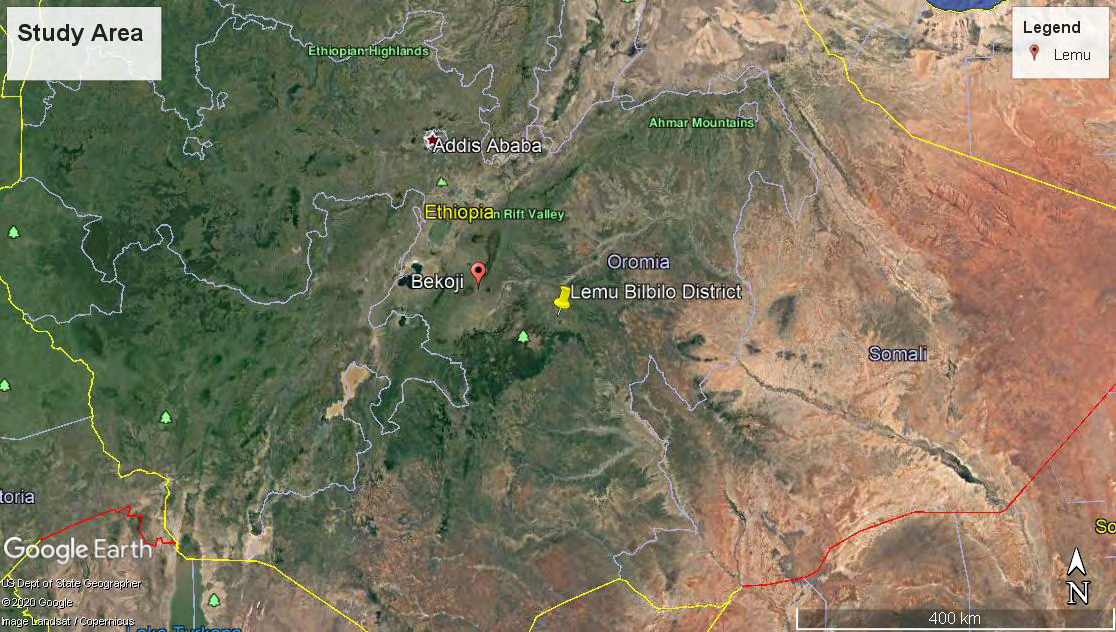
The study was conducted from September, 2017 to June 2018 At Lemu Bilbilo district of Arsi zone, south eastern part of Ethiopia which is located at 231 Kms. From Addis Ababa and latitudes of about 039016.340N and longitudes of about 07’33.131E as well as elevation ranging from 2755-2878meters above sea levels. The area receives the annual mean minimum and maximum rain fall of about 800 and 1400 mms respectively, which comes from the long and short rainy seasons. The minimum and maximum temperatureis180C and 280C respectively. The small ruminant populations in this area were 291,285 sheep and 28, 864 goats.
Study Animals and Study Design
Sheep of both sexes randomly select from small holder farmers from different Pa’s were used for the study. The suckling lambs, pregnant females, very old sheep (>5years) and animals treated with anthelmintic or traditional medicine were excluded from study. In addition, each sheep selected were individually identify with a numbered ear tagged. Before the actual experiment, screening was done to identify sheep naturally infected with Gastro intestinal nematodes and eggs per gramc (EPG) greater than 200 were eligible for inclusion in the field experiment following guidelines by Coles, et al.
(1992) [1]. Accordingly a total of 48 animals grouped into four treatment groups: valbendazole, tetramisole, ivermectin and control (i.e. left untreated). On day 0, fecal samples were collected from each animal enrolled in the study, and then the animals were either treated with an anthelmintic or left untreated. Dose rate and route of administration were based on manufactures’ recommendation and anthelmintics were chosen based on the frequency of utilization in the study area described in Table 1. Fecal samples were collected again 10 to 14 days post-treatment from all animals included in the study, and the changes in the EPG were determined.
| Trade Name | Generic name | Manufacture | Dose | Route |
|---|---|---|---|---|
| Albenda-QK 300MG | Albendazole | Chengdu QiankunVet. Pharm. co. Ltd., China | 7.5 mg per kg | oral |
| Ivermectin 1% | Ivermectin | Chengdu QiankunVet. Pharm. co. Ltd., China | 0.2 mg per kg | Subcutaneous |
| Tetraclozash-900 | Tetramisole+ Oxyclozanide | Ashish Life Science PVT, India | 7.5 mg per kg | Oral |
Table 1: Drugs used in the trial.
Data Analysis
The effectiveness of different anthelmintics was evaluated by calculating FECRT% by applying the formula E= [1- (T/C)]*100, where E = percentage efficacy; C= mean number of eggs in the control group; T= mean number of eggs in the treated group; where the value of FECRT % less than 95% was suspected as developed resistance or poor efficacy described by Coles, et al. (1992).
were found to be positive for the gastrointestinal nematode eggs. The major GI nematodes observed in ruminants at the study area were Strongyle type, Strongyloides and Trichuris with the prevalence of 22%, 9% and 1%, respectively. In this mixed nematode eggs were also examined with prevalence of 12.4%. The mean pre and post treatment faecal egg counts (EPG) and the percentage of faecal egg count reduction (FECR) and The percentage reduction of faecal egg count for resistance evaluation of albendazole, Tetraclozash and ivermectin were found 90.53%, 98.1% and 96.59 % respectively.
- Result
- In the present study out of 162 examined 72 (44.4 %)
- Drug
- № of animal used in each group
- Pre-treatment mean ±
- SEM
- Post-treatment mean
- ± SEM
- Reduction
- (%)
- 95%CL (UCL-
- LCL)
- Albendazole n=12
- 550.00 ± 112.983
- 104.17±39.147
- 90.53
- 95.1 - 84.4
- Ivermectin n=12
- 1212.50± 207.814
- 37.50 ± 23.131
- 96.59%
- 97.01 - 91.3
- Tetraclozash n=12
- 1395.83±339.700
- 20.83±8.65
- 98.1%
- 99 - 90.99
- Control n=12
- 975.00±297.114
- 1100±238.127
- NA
- NA
Table 2: The Faecal Egg Count Reduction percentage following treatment with Albendazole, Tetraclozash and Ivermectin, in
| Nematode egg type | No examined | No of positive (prevalence) |
| Strongyle | 162 | 36(22.2%) |
| Strongloides | 162 | 15(9.3%) |
| Trichuris | 162 | 2(1.2%) |
| Mixed type | 162 | 20(12.4%) |
| Total | 162 | 73(45%) |
Table 3: The Faecal Egg Count Reduction percentage following treatment with Albendazole, Tetraclozash and Ivermectin, in sheep.
Discussion
The presence of anthelmintic resistance on the investigated area was initially declared by considering the percentage reduction in faecal egg counts was less than 95% and the lower limit of the 95% confidence interval was less than 90%. If only one of these criteria is met, anthelmintic resistance is suspected. Based on this criterion, the FECR percentage and the lower confidence limit obtained from lemu Bilbilo district smallholder sheep production system revealed the absence of a significant level of GIN resistance to tetramisole and ivermectin. This finding is in line with other studies conducted in various parts of Ethiopia [15, 17, 18, 19]. These studies also reported the absence of anthelmintic resistance to albendazole, tetramisole and ivermectin in small ruminants in Ogaden. This finding revealed that albendazole was suspected for resistance in the area [20, 21, 22, 23, 24, 25, 26].
Conclusion and Recommendation
The current findings indicated that albendazole was suspected for development of resistance, while ivermectin and tetraclozash were found to be not resistance. To prevent further development of anthelmintic resistance in this area, the following practices are recommended: avoid frequent and unnecessary treatments anthelmintics, opting instead for strategic deworming and under dosing of animals, further studies are needed to determine the anthelmintic resistance status of the different species of nematodes parasites, targeted selective treatment traditionally practiced by farmers should be promoted and supported by coprological examination to identify animals in need of treatments, and anthelmintic efficacy tests should also be part of the worm management programs to monitor treatment failures.
Acknowledgments
The authors would like to thank Asella Regional Veterinary Laboratory, Lemu Bilbilo District and the sheep owners for their active participations and cooperation during samples collection in the field and analysis in the laboratory.
References
-
Wesongah JO, Chemulitti J, Wesonga FD, Munga L, Ngare P, et al. (2005) Prevalence of parasitic infections in small ruminants in a pastoral community in Narok district, Kenya. Bulletin of Animal Health and Production Journal 53(4): 218-225.
-
CSIRO (1989) Anthelmintic resistance. Report of working party for the Animal Health Committee of the Standing Committee on Agriculture (SCA). SCA Technical Report Series 28: 26.
-
Bekele T, Woldeab T, Lahlou-Kassi A, Sherington J (1992) Factors affecting morbidity and mortality on-farm and on-station in the Ethiopian highland sheep. Acta Tropica 52(2-3): 99-109.
-
Tembely S (1998) Development and survival of infective larvae of nematode parasites of sheep on pasture in a cool tropical environment. Veterinary Parasitology 79(1): 81-87.
-
Tembely S, Lahlou-kassi A, Rege JE, Sovani S, Diedhiou ML, et al. (1997) The epidemiology of nematode infections in sheep in a cool tropical environment. Veterinary Parasitology 70(1-3): 129-141.
-
Ngategize PKJ, Bekele T, Tilahun G (1993) Financial losses caused by ovine fascioliasis in the Ethiopian highlands. Tropical Animal Health and Production_._ Tropical Animal Health and Production 25: 155-161.
-
Mezgebu M (1995) A Survey on Ovine Fascioliasis and Lungworm Infection in Addis Ababa and the Surrounding Highland Areas. DVM Thesis, Faculty of Veterinary Medicine, Addis Ababa University, Debre Zeit, Ethiopia.
-
Debela E (2002) Epidemiology of gastro-intestinal helminthiasis of Rift Valley goats under traditional husbandry system in Adami Tulu district, Ethiopia. Ethiopian Journal of Science 25(1): 35-44.
-
Miller JE, Horohov DW (2006) Immunological aspects of nematode parasite control in sheep. J Anim Sci 84: E124-E132.
-
Pino La M (2001) Drogas anti-helmíntic assobreestrongilosdigestivosemovinosestabulados. Rev Cient Vet Trop 26: 147-158.
-
Good B, Hanrahan JP, de Waal DT, Patten T, Kinsella A, et al. (2012) Anthelmintic-resistant nematodes in Irish commercial sheep flocks- the state of play. Ir Vet J 65: 21.
-
Kaplan RM (2004) Drug resistance in nematodes of veterinary importance: a status report. Trends Parasitol 20(10): 477-481.
-
Silvestre A, Leignel V, Berrag B, Gasnier N, Humbert JF, et al. (2002) Sheep and goat nematode resistance to anthelmintics: pro and cons among breeding management factors. Vet Res 33(5): 465-480.
-
Biffa D, Jobre Y, Chaka H (2006) Ovine helminthosis, a major health constraint to productivity of sheep in Ethiopia. Anim Health Res Rev 7(1-2): 10-118.
-
Asmare K, Gelaye E, Ayelet G (2005) Anthelmintic resistance test in gastrointestinal nematodes of small ruminants in southern Ethiopia. Bulletin of Anim Health Prod Afr 53(2): 89-95.
-
Maingi N, Bjorn H, Thamsborg SM, Bogh HO, Nansen P (1996) A survey of anthelmintic resistance in nematode parasites of goats in Denmark. Vet Parasitol 66(1-2): 53- 66.
-
Kumsa B, Wosene A (2006) Efficacy of Albendazole and Tetramisole against Heamonchus contortus in Experimentally Infected Lambs. International Journal of Applied Research in Vet Med 4: 94-98.
-
Sheferaw D, Asha A (2010) Efficacy of selected anthelmintics against gastrointestinal nematodes of sheep owned by smallholder farmers in Wolaita, Southern Ethiopia. Ethiop Vet J 14(2): 31-38.
-
Tadesse A, Asmare K, Bekele J, Abebe G (2009) Study on anthelmintic resistance nematodes at goat farm of Hawassa college agriculture southern Ethiopia. Ethiop Vet J 13(2): 49-57.
-
Waller PJ (1997) Anthelmintic Resistance. Vet Parasitol 72(3-4): 391-405.
-
Demeke N, Zewdu S (2017) A Review on Anthelmintic Resistance and Potential Risk Factors in Domestic Ruminants College of Veterinary Medicine, University of Gondar, Gondar, Ethiopia. Acta Parasitologica Globalis 8(2): 58-67
-
Fikru R, Lelisa K, Gezhagn M, Bersisa K, Tekele B (2013) Efficacy of commonly used Antihelmentic drugs in Naturally Infected sheep and goats in central Oromia, Ethiopia. Research Journal of Pharmacology 7(4): 48-53.
-
Jemal A, Ararsa D, Dareje R, Dinaol B, Roba J (2017) Gastrointestinal Nematode Parasites of Small Ruminants and Anthelmintics Efficacy Test in Sheep of Haramaya District, Eastern Ethiopia. Animal and Veterinary Sciences 5(3): 39-44.
-
Klauck V, Pazinato R, Lopes LS, Cucco DC, Lima HLDE (2014) Trichostrongylus and Haemonchus anthelmintic resistance in naturally infected sheep from southern Brazil. An Acad Bras Cienc 86(2): 777-784.
-
Sissay MM (2007) Helminth Parasites of Sheep and Goats in Eastern Ethiopia Epidemiology, and Anthelmintic Resistance and its Management. Applications of agriculture in Sweden, pp: 50.
-
Yitayew D, Zewdu S, Kalkidan G, Dagmawi Y (2016) Anthelmintics Resistance Against Gastrointestinal Nematodes of Sheep: A Review Faculty of Veterinary Medicine, University of Gondar, Gondar, Ethiopia. World Journal of Agricultural Sciences 12(4): 245-253.
- Acido Labile or Gastro Irritant Apis and Enteric Release in Galenic Practice: An Overview
- A Study on Knowledge, Attitude and Practice of Hand Hygiene among Healthcare Professionals at a Tertiary Care Hospital, India
- Influence of Inoculum Concentration on In Vivo Incubation Period of Emmia lacerata, Pathogenesis and Management of Wilt in Pepper (Capsicum annuum L.)
- Vanilla’s Chemistry
- Marine Anti-Cancer Compounds and Adverse Effects of Global Warming on Oceans: An Overview
- Serological Investigation of Chikungunya Virus Antibody among Malaria-Suspected Febrile Patients in Some Healthcare Facilities in Rivers State