
Covid Cure in the Light of Diet: Eating Habits
People those who eat nutritious and a well-balanced diet will possess a strong immune systems along with low incidence of chronic and infectious diseases. People with chronic disease would have the possibility to get infect with COVID-19; thereby they may require supportive help in relation to balance their mental health and even diet which can ensure to improve their health. Some vitamins and foods should be included in our diet to provide strong and improved immune system that can able to fight against COVID-19. The spread of misinformation is a dangerous thing at all times. There are a plethora of questions that arise in the realm of food and eating practices in this pandemic time. This chapter will help you to choose your diet either you are vegetarian and non-vegetarian.
Introduction
Corona virus is a respiratory infection that spreads via transmission through droplets in the environment. Usually, COVID-19 is transmitted via direct contact with an infected individual’s body fluids such as through sneezing, coughing or indirectly through contaminated zone. This viral infection has been announced as a global epidemic, which has covered around sixty countries across the world with such viral infection. Now a day, several cases of COVID-19 infection has been reported in India, which may be developing a pandemic situation across the country [1].
Good amount of nutrition is important for health, especially during the diseased state. Regular consumption of vegetables and fruits those are rich in ascorbic acid, β-carotene and other essential supplements. Certain food ingredients and green vegetables such as tomato, pepper, mushrooms, broccoli and spinach are the good options to enhance the immune system in the body.
Immunity Boosters as Safeguard for Covid-19 Infection
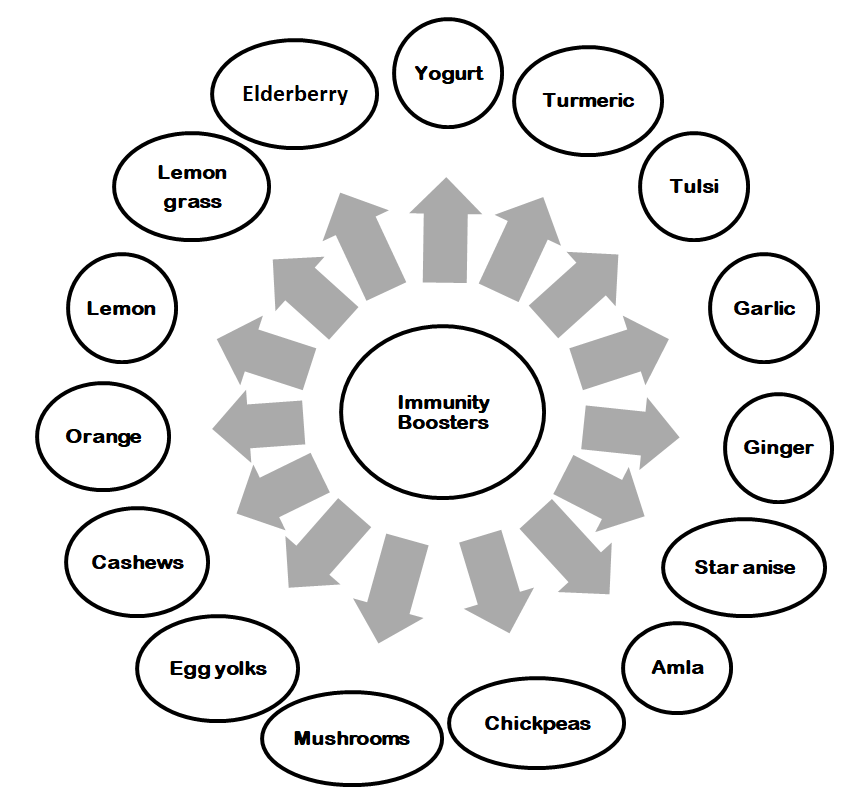
Proper amount of balanced nutrition and hydration are important for our body. So, what we eat and drink will definitely play a vital role in building up our immune system. Therefore, in other words we can say that if we have a strong immunity, our body itself can act as a safeguard against any disease. To protect ourselves from this virus we can inculcate some food item in our diet plan as given below to enhance our immune system that in turn, fight against COVID-19 (Figure 1) [2]. • Yogurt: It is called as a probiotic that helps in the production of good mimcro-organisms in the body. • Turmeric: It is considered as a golden spice having wonderful anti-oxidant and anti-inflammatory properties. Curcumin, the compound present in turmeric is a very potent agent and aids in healing of wounds and infections. This is the reason; it is often suggested to have turmeric milk. It can also be taken with coconut oil and black pepper.
• Naturall occurring Anti-viral Foods: Leaves of Tulsi (3-4) boiled in water and star anise (a spice) – boiled with clove, garlic are used to boost the immune system. Combination of amla and ginger juice are natural anti- viral food supplements. • Vitamins: Among all other Vitamins, Vitamin C and Vitamin D play an important role in order to provide the immune-strengthening. Sources of Vitamin C and D such as lemon, amla, orange Amla, egg yolks and mushrooms are easily available. • Zinc: Another nutrient which helps to improve the immune system of our body and metabolic functions. Some of the Zinc supplements such as pumpkin seeds, cashews, and chickpeas can be incorporated in the diet plan.
During quarantine days, there is a need to take good health care so that if a person has got the COVID-19 infection can able to remain strong and fight against COVID-19. For this, the most significant things is to eat is the right food products that would consists of various ingredients such as iron, zinc, protein, vitamin B and vitamin D-rich foods. The food items selected should be good for our lungs and heart health. Table 1 shown below is the compiled vegetarian diet chart can be used in case of self-quarantine case [3].
| Quarantine Day | 1&2 | 3&4 | 5&6 | 7 |
|---|---|---|---|---|
| Meal 1 | Soaked almonds and raisins | Date and walnuts | Unsalted pistas and Khareek with ghee | Cashew and soaked raisins |
| Meal 2 | Poha with peanuts | Idli Sambhar | Ragi dosa or plain dosa | Upma |
| Meal 3 | Lemon water | Rasam with pepper | Dry coconut and jaggery with 1-2 Dhaniya seeds | Lemon water |
| Meal 4 | Dal, rice, and some green leafy vegetables | Ajwain Namak Paratha with Dahi | Rajma rice | Sabudana Wada and Chutney or Sabudana Khichdi with curd |
| Meal 5 | Peanuts | Cashews with jaggery | Mathri | Ghee and salt roasted kurmura |
| Meal 6 | Roti with dal | Khichdi | Roti with green vegetables | Jeera rice and sprouts cooked with little tadka |
| Bedtime Drink | Turmeric milk | Turmeric milk | Turmeric milk | Ragi malt or Kadha |
Table 1: Vegetarian Diet Chart for Home Quarantined People.
Is Eating Non-Vegetarian Food Is Perfectly Safe?
Till now there is no current evidence available which can support that food can be source of viral transmission. Therefore, eating non-vegetarian food is quite safe but definitely consumption of raw meat should be avoided. Good hygienic practices must be followed before consuming non-vegetarian. And even extra care should be taken while cooking such food items. COVID-19 spreads mainly from person to person and eating non-vegetarian food and eggs do not cause corona virus infections. Corona viruses require a host that cannot grow in food [4].
Recovery Diet Form Covid-19 Infection
WHO, UK’s NHS and the Indian MoHFW have provided several dietary recommendations during pandemic year. Depending on these guidelines, a proper recovery diet for COVID-19 patients should be included with following ingredients [5, 6]:
- Add breads, potatoes, pasta, rice, grains and cereals in the diet as these are calorie-dense foods to provide energy back up, but junk foods should be avoided.
- Add whole grains, dairy items, legume, lentils, nuts and soy products in the diet to start feeling better, so eat more protein-rich foods. Beans have a high amount of zinc. It boosts the immune system and helps the body to fight against toxins. A zinc deficiency can lead to bad immunity.
- Eggs are rich in protein. A protein-rich diet is very important for your body especially when you are recovering from COVID. It has amino acids that protect your body against pathogens. Consumption of meat and poultry foods also increases your zinc intake.
- Add fruits and vegetables as good sources of dietary fiber, vitamins, minerals and antioxidants.
- Vitamin C helps in the production of antibodies and even in speedy recovery. It is extremely found beneficial to enhance the immune system and to provide energy. We should consume citrus fruits kiwis and strawberries.
- An antioxidant such as vitamin E provides energy to the body which might have been lost during diseased state. For this, almonds, avocades and some other dry fruits to be consumed to retain the appropriate amount of vitamin E.
- Herbs, spices, fruits and vegetables must be added in the diet as they are fully loaded with numerous active phytochemicals which may act as immune enhancer. Some favorable drinks such as green tea, lemon water, herbal tea, turmeric milk and kadha should be incorporated in the diet.
- Even with the addition of all these nutrients and supplements in the diet, it is very much necessary to remain hydrated all the time. Therefore for this around
8-12 glasses of mineral water should be drink every day. Additionally soups, broths, coconut water, pudina water, zeera water, ajowan water, butter milk and other healthy beneficiary drinks must be added in the diet. All these drinks would be found helpful in recovery from disease.
Besides from all these things, some other following points should keep in mind as to make the diet more healthy and effective:
- Fresh form of fruits and vegetables should be preferable over packed ones.
- Meals should be prepared in a simple way without adding too much spices and condiments and even oil/ ghee.
- Meal should be cooked preferably at home rather than relying on outside.
- Hands should be thoroughly washed before and even after preparing the meal and/or while eating.
- Soft and mashed meals must be prepared like Khichdi , espscially for COVID patients .
- Adequate sleep should be taken during diseased state. Along with this, some physical activities should be incorporated.
Some Nutrition Advice
An individual who consume a proper balanced diet would enhance teir immune systems and lower the incidence of chronic diseases. Some important advice to be given below during this pandemic era are as follow:
- Intake fresh fruits, legumes, grains, pulses, vegetables, millets, brown rice, wheat oats and some starchy foods such as yam, potato, sweet potato.
- Incorporate dairy products such as milk, curd, buttermilk, paneer.
- Even fishes, eggs or meat should be added in the diet.
- Not advisable to overcook the food as this overcooking process may deteriorate most of the vitamins.
- Drink sufficient amount of water every day.
- Intake unsaturated fats containing diets such as fish, olive oil, avocados, sunflower , corn oils than saturated fats
- Meat and fish should be preferably added as they are containing low fat than red meat.
- Adequate amount of salt should be in the meal.
- It is advisable not to eat outside as it may reduce the rate of contact with other people or infected individual.
With all these things, it is necessary to support the mental health and diet for those people who have infected with coronavirus. Some unusual habits like smoking and alcohol consumption should be avoided as they have major drawbacks in causing weakness towards body’s immune system and get more prone to illness. Even smoking habit has proven to may affect the lung capacity and even damage the cell lining of the respiratory system. These cell lining are very important to fight against viral infection as they act as a barrier for them.
Proper diet must be followed by routine exercise. It is highly recommended to do regular exercise for around 20-40 minutes to get your life back normal [7].
Impact of Probiotics on Covid-19 Outcomes
Our Indian diet containing maximum proportion of pulses and whole grains, and may considered as a richest source of dietary fibers and carbohydrates. After the intake of these nutrients, they get fermented within the colon and results in the formation of short chain fatty acids. These products act as energy supplier to the body and enhance the immune system. If an individual is regularly intake probiotics in diet, this could help in prognosis of viral infection. The probiotcs are helpful in enhancing the mucosal immunity via T cells activation, improving the antiviral defensive action and even decreasing the pro-inflammatory cytokines in respiratory infection [8, 9].
Conclusion
As to fight against such viral infection, the most important point is that the immunity should be strong enough with proper nourishment against such infections. It is necessary to intake proper diet with balanced nutrient. Even WHO has framed some dietary guidelines during pandemic outbreak that revealed the importance of proper diet in maintaining the immune system and even minimizing the chronic illness.
References
-
Ahuja A (2020) Should You Avoid Eating Meat To Prevent Corona Virus? Here’s What Doctors Say.
-
Swatch India (2020) Coronavirus Outbreak: 5 Foods Items to Boost Your Immunity and Safeguard You from Infections.
-
Kumari J (2020) COVID-19 Diet Chart for Home Quarantined People: What to Eat from Morning to Night.
-
Times of India (2020) Corona virus: Is it safe to eat meat and poultry?.
-
News 18 (2020) What Corona Virus Patients Should and Shouldn’t Eat While Recovering.
-
Times Now Digital (2021) Add these 5 foods to your diet for a speedy recovery from COVID-19.
-
Narayana Health (2020) Boosting Your Immune System Against Corona Virus: How To Minimize The Risk of Infection?.
-
Zahid H (2021) COVID-19- Correlation with Indian Diet and Gut Microbiome.
-
World Health Organization (2021) Nutrition advice for adults during the COVID-19 outbreak.
- Acido Labile or Gastro Irritant Apis and Enteric Release in Galenic Practice: An Overview
- A Study on Knowledge, Attitude and Practice of Hand Hygiene among Healthcare Professionals at a Tertiary Care Hospital, India
- Influence of Inoculum Concentration on In Vivo Incubation Period of Emmia lacerata, Pathogenesis and Management of Wilt in Pepper (Capsicum annuum L.)
- Vanilla’s Chemistry
- Marine Anti-Cancer Compounds and Adverse Effects of Global Warming on Oceans: An Overview
- Serological Investigation of Chikungunya Virus Antibody among Malaria-Suspected Febrile Patients in Some Healthcare Facilities in Rivers State