
A Bibliographic Analysis of Indian Contribution in Application of Presurgical Naso-Alveolar Molding in Cleft Lip/Palate Infants
Background: Pre-surgical nasoalveolar molding is a novel treatment modality applied in cleft lip/palate infants prior to surgery. Numerous articles have been published in the literature. Using Bibliographic analysis tt is essential to know the nation wise contribution of total research output towards PSNAM. Aim: To evaluate Indian contribution globally on the domain ‘application of presurgical naso-alveolar molding in cleft lip/palate infants’ by analysing all the studies published till date. Materials and Methods: A detailed bibliographic database search was carried out using PUBMED for a period of two months from September to October 2023. Different Mesh keywords in several combinations were used to obtain the articles. All types of published articles from inception till October 2023 and were published in English language were considered for this bibliographic analysis. The selected published articles pertaining to Indian Institutions, researchers or authors and specialties were tabulated and evaluated to obtain the overall bibliographic details. Results: India’s global contribution was 6.65% (total 31 articles). More number of case reports (n=15) were published followed by case control studies (n=5). Highest publication credit was conquered by author Thakur S (n=5) and Journal of Indian Prosthodontic Society and Contemporary clinical dentistry journals shared maximum articles published (n=5 each) having impact factor of 0.265 and 1.2 respectively. South zone contribution was highest (n=12) in that Karnataka state bagged with highest contribution. H.P. Government Dental College and Hospital and regarding specialty, Pediatric and Preventive Dentistry contributed more research work towards PSNAM. Conclusion: From the present bibliographic review, it was concluded that there is a growing demand and increasing trend in the application of PSNAM in cleft lip/palate infants. The current review provides insight into the current literature on PSNAM and paves for further research and its application in clinical practice
Introduction
India one among the sub-continent nation known for its high population with a record of 24.5 million births per year constituting birth prevalence of cleft lip/palate ranging from 27,000 and 33,000 per year [1]. The increased prevalence of cleft lip/palate is due to the existence of consanguineous marriage culture in India. Cleft lip and palate are perceived to be a life-threatening abnormality and there is little awareness about these clefts can be surgically repaired with considerable success both aesthetically and functionally [2, 3]. However, recently this scenario has been significantly changed due to development of non-governmental organisations like ‘Smile Train’ and ‘Transforming Faces’ which regularly conduct primary surgical repair programmes [1]. India has exuberant potential to contribute by virtue of improving research expertise. As a result, the interest of India in birth defects like Cleft lip/palate registration and international efforts targeting at enhancing quality of care has resulted ultimately the prevention of non-syndromic clefts of the lip and palate [4, 5]. Presurgical Naso-alveolar molding (PSNAM) is an innovative concept introduced by a Grayson in the year 1985 which represents a paradigm shift from the traditional method of presurgical infant orthopedics and consists of active molding of the alveolar segments as well as the surrounding soft tissues [6].
Gradually this new treatment modality has become fastest growing field in cleft lip/palate domain all over the world. However, unfortunately there are no articles showing bibliometric analysis of research output and global contribution of different nations in this challenging field. India being a part of the globe and a second largest populous country is credited with numerous publications in this arena. A bibliometric analysis is one among the high rank in the hierarchy of scientific research evidence which is used for the quantitative assessment of research output in a particular research domain [7]. Therefore, the aim of the present bibliometric analysis was to evaluate the current status and trend of research happening in a particular country like India. Performance of such analysis will help to provide a broad view about countries’ status of scientific research in the particular domain for its comparison with other nations and its contribution towards global literature. This will also guide in identifying research activities and addressing challenges and non-investigated parts of research in order to further develop or encourage to increase the total contribution to the scientific literature globally [8]. In addition to this, such analysis helps to increase international collaborations with various organisations and also to enhance utilization of international fund. Therefore, the present bibliometric analysis was carried out to shed light on the Indian contribution on the holistic approach of PSNAM in cleft lip/palate infants to the global literature and research.
Materials and Methods: The present bibliographic analysis was performed from the period September to October 2023 using available electronic data base like PUBMED which was retrieved and evaluated retrospectively.
Inclusion Criteria: The present bibliographic review consisted of all type of publications including original studies, case reports, case series, surveys, review articles and other articles like letter to editor carried out on PSNAM in cleft lip and palate infants. Among publications, articles belonging to authors of Indian ethnicity and affiliated to Indian institutions and articles published only in English language were included.
Exclusion Criteria: Articles belonging to authors of Indian origin but affiliated to organisations or universities outside India were excluded. Studies or reports showing use of other preorthopedic appliances such as Hotz appliance, feeding appliances were also excluded. Articles with repeated titles or only abstracts are also excluded.
Study Protocol: For a period of two months, well known electronic database like PubMed was searched using the medical MeSh keywords like pre-orthopedic treatment, cleft lip/palate, cleft infant, PSNAM, presurgical naso- alveolar molding, preorthopedic appliance with several permutations. All types of articles published in peer- reviewed journals irrespective of dental specialty were selected. Articles published only in English language were included irrespective of date. Selected articles were read in detail pointing on title and abstract of the study based on inclusion criteria. When additional information was required or in case of unclear information of the study, or to confirm the ethnicity and affiliation of the authors, the entire manuscript was downloaded and read and also correlated with author information. Articles were tabulated encompassing the important details like name of the first author, year of publication, college/university/Institution/ research centre and state of affiliation, journal in which article is published, type of the article and journal impact factor. The state, institution /research centre and the specialty with maximum publications were recorded. Five zones of India like South, North, West, East and Central were created and the distribution of the publications across these five zones was also calculated.
Results: Following electronic search in well-known data base, PUBMED, a total of 396 articles were scrutinised. These articles were thoroughly searched and duplicates or irrelevant publications were eliminated based on the inclusion and exclusion criterion. Finally, only 30 articles were selected for the evaluation, which included all case reports, research studies and review articles including systematic reviews. Abstracts including the above domain were not considered. Articles which found from the year 2005 to till date were arranged in descending order from the recent publication to older one Table 1 [9, 10, 11, 12, 13, 14, 15, 16, 17, 18, 19, 20, 21, 22, 23, 24, 25, 26, 27, 28, 29, 30, 31, 32, 33, 34, 35, 36, 37, 38, 39].
| Sl. No. | Title of the Article | Authors Name | Year of Publication | Journal Name | Journal Impact Factor |
|---|---|---|---|---|---|
| 1 | Presurgical orthopedic nasoalveolar molding in cleft lip and cleft palate: case report | Shaik, et al[9] | 2023 | International Journal of Clinical Pediatric Dentistry | 0.74 |
| 2 | Surgical assistance for favourable outcome achieved through presurgical nasoalveolar molding using innovative impression technique: A case report. | Rathee M, et al [10] | 2023 | International Journal of Clinical Pediatric Dentistry | 0.74 |
| 3 | Nasal Cartilage Molding in a Case of Unilateral Cleft Lip and Alveolus (Type D): A Case Report. | Taori et al [11] | 2023 | Cureus | 1.2 |
| 4 | Changes in nasal symmetry after presurgical nasoalveolar molding in infants treated with complete unilateral cleft lip and palate: A follow-up study | Thakur S, et al [12] | 2022 | Dental Research Journal (Isfahan) | 0.319 |
| 5 | Naso-alveolar molding for newborn cleft lip and palate. | Breh, et al [13] | 2022 | Bioinformation | 1.9 |
| 6 | Comparative evaluation of nasal and alveolar changes in complete unilateral cleft lip and palate patients using intraoral and extraoral nasoalveolar molding techniques: randomized controlled trial. | Kalaskar, et al [14] | 2021 | Journal of Korean Association of Oral and Maxillofacial Surgery | 0.436 |
| 7 | Comparative clinical evaluation of modified and conventional Grayson’s presurgical nasoalveolar molding technique in infants with complete unilateral cleft lip and palate. | Thakur S, et al [15] | 2021 | Dental Research Journal (Isfahan) | 0.319 |
| 8 | Effectiveness of the novel impression tray “cleftray” for infants with cleft lip and palate: a randomized controlled clinical trial. | Kalaskar, et al [16] | 2021 | Journal of Korean Association of Oral and Maxillofacial Surgery | 0.436 |
| 9 | Dynamic changes in nasal symmetry after presurgical nasoalveolar molding in infants with complete unilateral cleft lip and palate. | Thakur S, et al [17] | 2020 | African Journal of Paediatric Surgery | 0.14 |
| 10 | Better late than never! | Jain R [18] | 2020 | Journal of Indian Prosthodontic Society | 0.265 |
| 11 | A comparative evaluation of efficacy and efficiency of Grayson’s presurgical nasoalveolar molding technique in patients with complete unilateral cleft lip and palate with those treated with Figuero’s modified technique | Singh A, et al [19] | 2018 | Contemporary Clinical Dentistry | 1.2 |
| 12 | Presurgical nasoalveolar moulding in clp patients. | Datta A [20] | 2018 | Journal of Indian Prosthodontic Society | 0.265 |
| 13 | Management of cleft lip and cleft palate by presurgical nasoalveolar molding. | Rajguru VL [21] | 2018 | Journal of Indian Prosthodontic Society | 0.265 |
| 14 | Achievement in nasal symmetry after cheiloplasty in unilateral cleft lip and palate infants treated with presurgical nasoalveolar molding. | Thakur S, et al [22] | 2018 | Contemporary Clinical Dentistry | 1.2 |
| 15 | Presurgical nasoalveolar moulding in unilateral cleft lip and palate. | Zuhaib M, et al [23] | 2016 | Indian Journal of Plastic Surgery | 0.8 |
| 16 | Presurgical nasoalveolar molding: A boon to facilitate the surgical repair in infants with cleft lip and palate. | Attiguppe PR, et al [24] | 2016 | Contemporary Clinical Dentistry | 1.2 |
| 17 | A modified presurgical orthopedic (nasoalveolar molding) device in the treatment of unilateral cleft lip and palate. | Subramanian, et al [25] | 2016 | European Journal of Dentistry | 0.622 |
| 18 | Presurgical nasoalveolar moulding: A boon in the management of cleft lip and palate. | Chaudhary DC, et al [26] | 2016 | Medical Journal of Armed Forces India | 0.55 |
| 19 | Presurgical nasoalveolar molding in unilateral cleft lip and palate. | Hegde, et al [27] | 2015 | Contemporary Clinical Dentistry | 1.2 |
| 20 | Presurgical nasoalveolar remodeling - An experience in the journey of cleft lip and palate. | Mandwe RS, et al [28] | 2014 | Clinical, Cosmetic and Investigational Dentistry. | 0.379 |
| 21 | Current status of presurgical infant orthopaediac treatment for cleft lip and palate patients: A critical review. | Niranjane PP, et al [29] | 2014 | Indian Journal of Plastic Surgery | 0.8 |
| 22 | Presurgical nasal moulding in a neonate with cleft lip. | Deshpande et al [30] | 2014 | BMJ Case Reports | 0.23 |
| 23 | Nasoalveolar moulding for children with unilateral cleft lip and palate. | Chammanam SG, et al [31] | 2014 | Journal of Maxillofacial and Oral Surgery | 1.3 |
| 24 | Presurgical nasoalveolar molding: changing paradigms in early cleft lip and palate rehabilitation. | Murthy PS, et al [32] | 2013 | Journal of International Oral Health | 0.169 |
| 25 | Naso alveolar molding in early management of cleft lip and palate | Jayashree M, Paul S. [33] | 2013 | Journal of Indian Prosthodontic Society | 0.265 |
| 26 | Supporting the drive to thrive in cleft lip and palate infant – a case report. | Thabitha Rani, et al [34] | 2013 | Journal of Clinical Diagnostic Research | 1.148 |
| 27 | Positive outcomes of naso alveolar moulding in bilateral cleft lip and palate patient. | Singh K, et al [35] | 2013 | National Journal Maxillofacial Surgery. 2013 Jan;4(1):123-4. | 0.57 |
| 28 | Pre: Surgical orthopedic pre-maxillary alignment in bilateral cleft lip and palate patient. | Ellore VP, et al [36] | 2012 | Contemporary Clinical Dentistry | 1.2 |
| 29 | Pre-surgical management of unilateral cleft lip and palate in a neonate: A clinical report | Banerjee S, et al [37] | 2011 | Journal of Indian Prosthodontic Society | 0.265 |
| 30 | Modified presurgical nasoalveolar molding in the infants with complete unilateral cleft lip and palate: A stepwise approach | Bajaj, et al [38] | 2011 | Journal of Maxillofacial and Oral Surgery | 1.3 |
| 31 | Presurgical nasoalveolar molding for correction of cleft lip nasal deformity: Experience from Northern India. | Mishra B, et al [39] | 2010 | Eplasty | 0.3 |
Table 1: List of Indian Publications in descending order from new to old showing title of the article, author’s name, year of pub
India’s Global Contribution in Publications
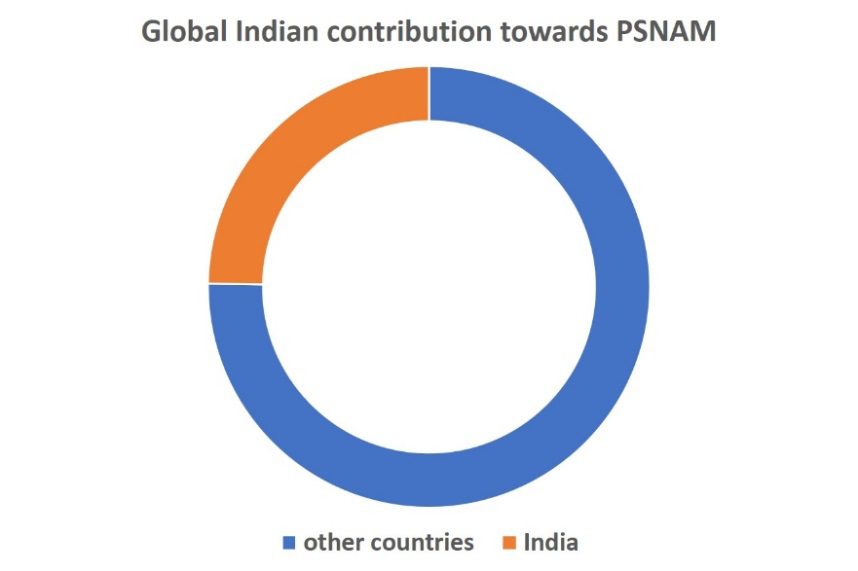
The publication contribution of India (31 publications) among global PUBMED indexed publications was 6.56% (Figure 1).
Bibliometric Author analysis
Bibliographic analysis of authors who contributed to their publications on this domain consisted of 96 researchers of India. The total numbers of first authors consisted in these publications were 27. Published articles consisted authors in number ranging from a single author to maximum of 9 authors. Maximum publications were contributed by authors like Thakur S (n=5), Rani A (n=3), Diwana VK (n=3), Singh A (n=3) and Thakur NS (n=3). Jishad C and Kalaskar contributed two publications each (Table 2).
| Authors/ Researchers | Contribution to number of publications |
|---|---|
| Thakur S | 5 |
| Thakur NS | 3 |
| Jishad C | 2 |
| Singh A | 3 |
| Rani A | 3 |
| Diwana VK | 3 |
| Kalaskar | 2 |
Table 2: Bibliometric Author Analysis.
Indian Publication Metrics
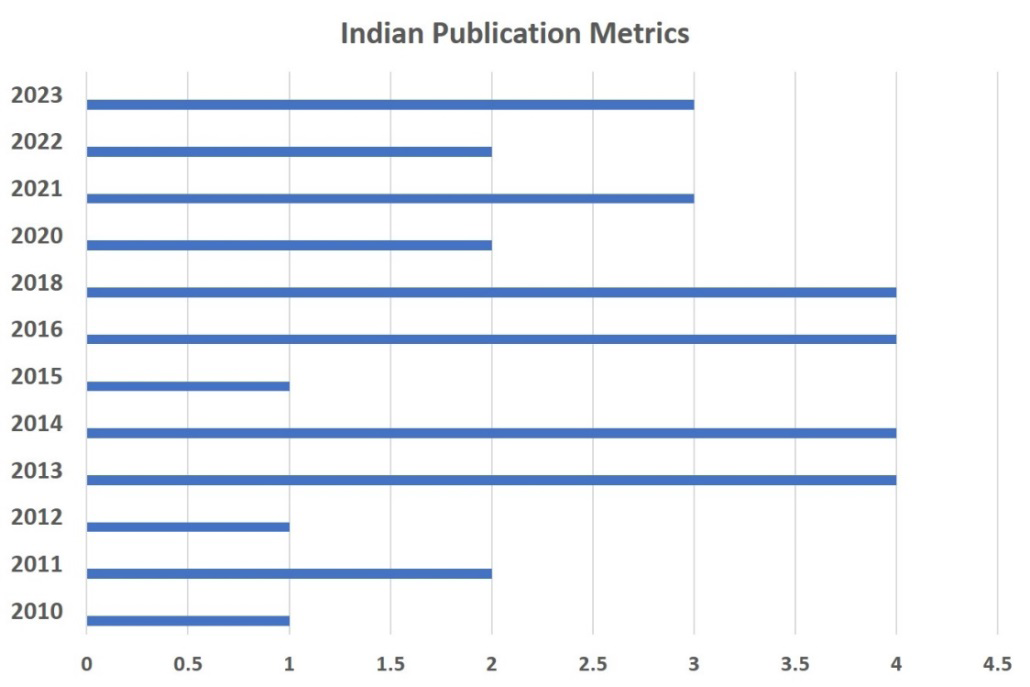
The first publication on PSNAM was contributed by Mishra and his co-authors in 2010 from Northern India who conducted a Case-control study. Although the first description of publication on PSNAM can be seen long back in the year 2005, till 2010 there are no publication contributions from India on PSNAM. In 2011, Banerjee reported a clinical report and in 2013, three publications were published. Maximum publications of four were seen in the year 2014, 2016 and 2018. Fluctuations in the publications was noticed year to year from 2010 to 2023. No publications were seen in the year 2017 and 2019 (Figure 2).
Publication Type Analysis
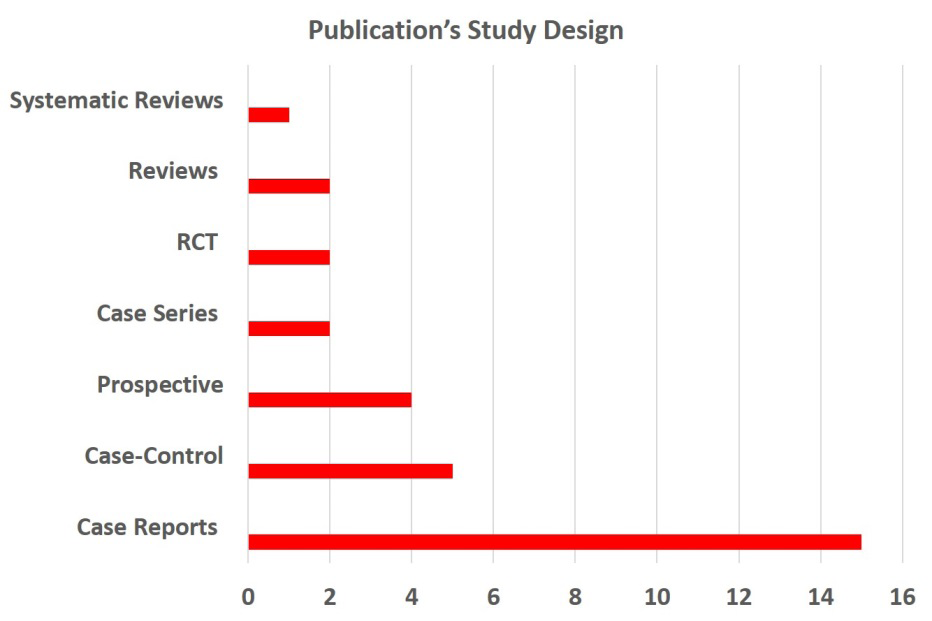
Highest number of publications contributed by Indian authors on PSNAM are case reports (n=15) followed by Case-control studies (n=5). Other type of publications observed were Prospective studies (n=4), case series (n=2), Randomized controlled trial (n=2) and reviews (n=2). Only one systematic review was published in 2013 by Murthy and his co-researchers from Southern India (Figure 3).
Journal Analysis
Evaluation of journal metrics revealed maximum publications in the Journal of Indian Prosthodontic Society (n=5) followed by Contemporary Clinical Dentistry (n=4). More than one publication was observed in journals like Indian Journal of Plastic Surgery, Journal of Korean Association of Oral and Maxillofacial Surgery, Dental Research Journal (Isfahan) and International Journal of Clinical Pediatric Dentistry and Journal of Maxillofacial and Oral Surgery (n=2) (Table 3).
| Sl. No. | Journal Name | Total number of publications |
|---|---|---|
| 1 | Journal of Indian Prosthodontic Society | 5 |
| 2 | Contemporary Clinical Dentistry | 5 |
| 3 | Clinical, Cosmetic and Investigational Dentistry | 1 |
| 4 | Indian Journal of Plastic Surgery | 2 |
| 5 | Dental Research Journal (Isfahan) | 2 |
| 6 | International Journal of Clinical Pediatric Dentistry | 2 |
| 7 | Journal of Korean Association of Oral and Maxillofacial Surgery | 2 |
| 8 | Bioinformation | 1 |
| 9 | African Journal of Paediatric Surgery | 1 |
| 10 | European Journal of Dentistry | 1 |
| 11 | Medical Journal of Armed Forces India | 1 |
| 12 | BMJ Case Reports | 1 |
| 13 | Journal of Maxillofacial and Oral Surgery | 2 |
| 14 | Journal of International Oral Health | 1 |
| 15 | Journal of Clinical and Diagnostic Research | 1 |
| 16 | Eplasty | 1 |
| 17 | National Journal Maxillofacial Surgery | 1 |
| 18 | Cureus | 1 |
Table 3: Journal analysis.
Zonal Distribution of Indian Publications
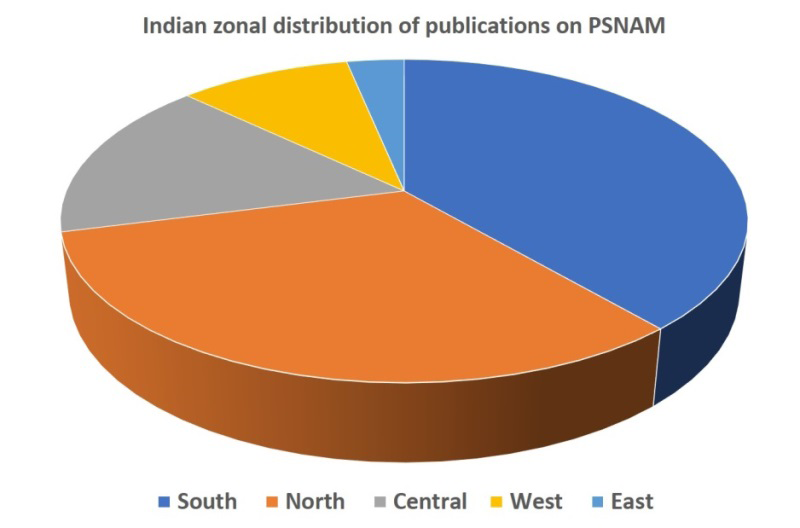
Evaluation of publications across five zones of India revealed maximum publications from South zone (n=12), North zone (n=10), followed by Central zone (n=5), West zone (n=3) and East zone (n=1) (Figure 4).
Analysis of Institutions, States/Union Territory and Specialty Contribution Towards PSNAM
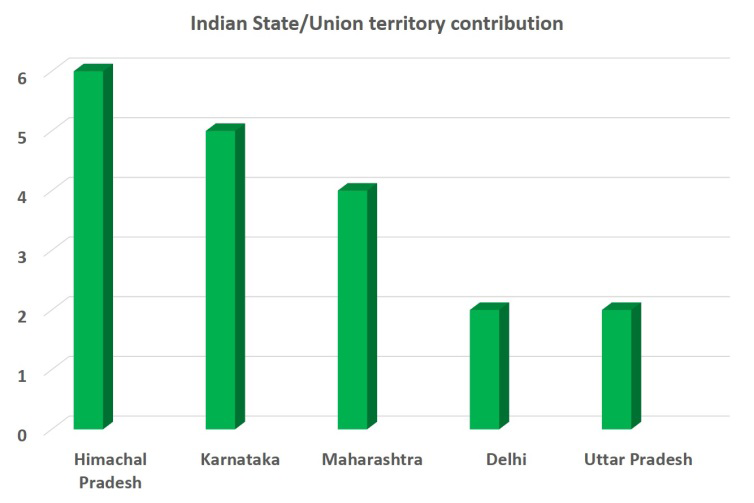
A total of 27 institutions has contribution of research publications pertaining to PSNAM. The number of states/ union territories hosting these institutions are 15 consisting of highest publications from Himachal Pradesh (n=6), Karnataka (n=5), Maharashtra (n=4) followed by Delhi (n=2) and Uttar Pradesh (n=2) (Figure 5).
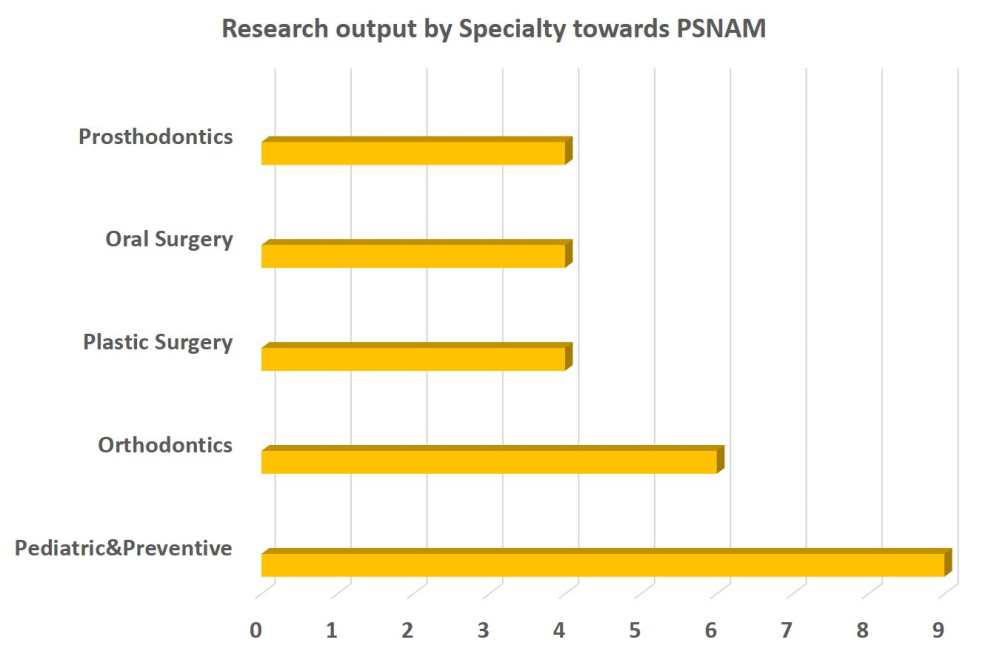
The credit of maximum publications contribution goes to H. P. Government Dental College and Hospital (n=6) located in Shimla, Himachal Pradesh. The second institutions captured with highest publications are Government Dental College and Hospital, and Bharati Vidyapeeth Dental College and Hospital, Maharashtra (n=4). Remaining institutions contributed a single publication each. The specialty which utilized PSNAM modality in maximum percentage was the Pediatric and Preventive Dentistry (n=9), followed by Orthodontics and Dentofacial Orthopedics (n=6), Plastic Surgery (n=4), Oral and Maxillofacial Surgery (n= 4) and Prosthetic Dentistry (n=4) (Figure 6).
Discussion
PSNAM was developed to reduce the severity of the alveolar defect before surgery, and forms a valuable adjunct to the primary nasal and lip repair [40]. However, acceptance and implementation of PSNAM in Indian set-up has not been wide spread due to various reasons like lack of the resources and inability of the parents to comply with frequent appointment schedule [41]. But recently numerous research has been undertaken and it is evident with great number of articles published on the domain PSNAM in cleft lip/palate infants in the arena of Dentistry and is gaining popularity across the globe [40]. India is not exception to this [9, 10, 11, 12, 13, 14, 15, 16, 17, 18, 19, 20, 21, 22, 23, 24, 25, 26, 27, 28, 29, 30, 31, 32, 33, 34, 35, 36, 37, 38, 39]. Due to the enormous funding and development of non-government organisations like ‘smile train’ and ‘transforming faces’ there is increased utilization of PSNAM in Indian patients [1, 3]. At this juncture, it is essential to analyse total research output produced from India. Therefore, the present study is the first one in throwing light on Indian contribution to the total research output in the field of PSNAM. The present article, also reflects one among those few publications to shed light on most warranted analysis in the field of Pediatric Dentistry.
We can come across some bibliographic analysis carried out in the field of medicine to enlighten the institutions or researchers or authors tremendous work in their particular domain [42]. In dentistry, such country-based bibliometric analyses in the area of research belonging to particular specialty are lacking. Therefore, it is time to perform more and more such analyses to explore the present available resource/results/literature on a particular domain on a national level which in turn provides a platform to exhibit the current status of national research and its comparison with the overall global research output [43].
Based on the present analysis, India contributed 6.5% to the total PubMed indexed global publications about PSNAM. The highest number of publications was contributed by southern zone of India consisting of various institutions or research centers from the Karnataka state. For instance, in Karnataka, at the Nitte Meenakashi Institute of Craniofacial surgery, since 2005 following introduction of PSNAM by Grayson, this treatment modality has been used for the infants with cleft lip and palate. Being a tertiary care center, this institute receives patients from the far-off places [38]. However, from an institutional level the maximum contribution is donated from H.P. Government Dental College and Hospital, Himachal Pradesh [12, 13, 14, 15, 16, 17, 18, 19, 20, 21, 22] and Government Dental College and Hospital, and Bharati Vidyapeeth Dental College and Hospital, Maharashtra (n=4) [14, 15, 16]. This type of institutional analyses will encourage other institutions and other specialities to conduct future research work and also guide investigators to avoid working on old concepts or modalities and waste of resources or funding for repetitive research [43]. In addition to this, the investigators/ institutes can also plan and implement quality collaborative multicentric research work including multiple specialties. Focused research and utilization of fund/resources in proper way is the need of the hour and gateway in the field of PSNAM.
The specialty which contributed maximum research work on this domain is the Pediatric and Preventive Dentistry followed by Orthodontics, Oral and Maxillofacial Surgery and Prosthetic Dentistry. The reason for this can be attributed to the fact that pediatric dentist is the first person who deal with infants affected by cleft lip and palate. Therefore, the research work done by this specialty is maximum compared to other fields. Moreover, the acceptance by oral and maxillofacial surgeons for the nasoalveolar molding has been slow in the Indian scenario. They directly wish to do the surgical repair rather than going for PSNAM. Reason for it is twofold. There is lack of sufficient resources, poor background and incompliance of the parents, which further limits the efficacy of the cleft team work and drop out of patients [44]. As a result, the contribution on PSNAM from plastic surgery and other speciality like Oral and Maxillofacial Surgery is scarce.
Evaluation of journal metrics revealed maximum publications in the Journal of Indian Prosthodontic Society (n=5) and Contemporary Clinical Dentistry (n=5) both are from Indian based publishing agency having impact factor of 0.265 and 1.2 respectively. Regarding the study design, the greater number of articles are on sole case reports and fewer on clinical trials. This highlights the requirement of more and more prospective studies to further explore the effectiveness and benefits of PSNAM in cleft lip/palate patients. Although the scope of PSNAM is presently limited to Pediatric Dentistry, the research is still underway to expand its hands to other specialities which if achieved, would definitely revolutionize the holistic field of cleft lip/palate care for infants and will be advantageous to parents, patients and public health sector [43]. As a result, new techniques in impression making like 3 D technology [45, 46] and modifications in appliance design have touched the door of advanced technology to reduce the burden on poor parents and to increase the acceptance towards PSNAM [47].
In order to further explore the domain of PSNAM in cleft lip/palate infants, the identification of national level health sectors, resources, improved research strategies are highly essential to create ample clinical research evidence for further contribution to the global literature. Therefore, the present bibliometric analysis will pay the way for such analysis in the near future to generate more international collaborations and identification of active research groups with concurring interests.
Conclusion
From the present bibliographic analysis, it was concluded that there is a growing and increasing trend in the application of PSNAM in cleft lip/palate infants. The current review provides insight into the current research out put on PSNAM and paves for further research and its application in clinical practice.
References
-
Mossey P, Little J (2009) Addressing the challenges of cleft lip and palate research in India. Indian J Plast Surg 42: S9-S18.
-
Shaw WC, Semb G (2002) Evidence based care for children with cleft lip and palate. In: Wyszynski DF (Eds.) Cleft lip and palate from origin to treatment. Oxford University Press, pp: 428-439.
-
Mosey PA, Little J (2002) Epidemiology of oral clefts an international perspective. In: Wyszynski DF (Eds.) Cleft lip and palate from origin to treatment. Oxford University Press, pp: 127-158.
-
IIIPS National Family and Health Survey India 1992-1993 (1995) Mumbai International Institute for Population Sciences.
-
Reddy SG, Reddy RR, Bronkhorst EM, Prasad R, Ettema AM, et al. (2010) Incidence of cleft lip and palate in the state of Andhra Pradesh South India. Indian J Plast Surg 43(2): 184-189.
-
Grayson BH, Cutting C, Wood R (1993) Preoperative columella lengthening in bilateral cleft-lip and palate. Plast Recosntr Surg 92: 1422-1423.
-
Ellegaard O, Wallin JA (2015) The bibliometric analysis of scholarly production How great is the impact. Scientometrics 105(3): 1809-1831.
-
Prashar A, Sunder MV (2020) A bibliometric and content analysis of sustainable development in small and medium sized enterprises. J Clean Prod 245(2): 118665.
-
Shaik N, Eggula A, Pudi S, Yemineni BC, Jagati S, et al. (2023) Presurgical orthopedic nasoalveolar molding in cleft lip and cleft palate case report. Int J Clin Pediatr Dent 16(4): 659-662.
-
Rathee M, Singh K, Alam M, Malik S (2023) Surgical assistance for favourable outcome achieved through presurgical nasoalveolar molding using innovative impression technique A case report. Int J Clin Pediatr Dent 16(1): 153-158.
-
Taori KP, Niranjane PP, Daigavane P (2023) Nasal Cartilage Molding in a Case of Unilateral Cleft Lip and Alveolus (Type D) A Case Report. Cureus 15(12): e50998.
-
Thakur S, Jishad C, Thakur NS, Deep A (2022) Changes in nasal symmetry after presurgical nasoalvolar molding in infants treated with complete unilateral cleft lip and palate A follow up study. Dent Res J (Isfahan) 19: 95.
-
Breh R, Singodia P, Sarangi S (2022) Naso alveolar molding for newborn cleft lip and palate. Bioinformation 18(5): 492-495.
-
Kalaskar R, Bhaje P, Sharma P, Balasubramanian S, Ninawe N, et al. (2021) Comparative evaluation of nasal and alveolar changes in complete unilateral cleft lip and palate patients using intraoral and extraoral nasoalveolar molding techniques randomized controlled trial. J Korean Assoc Oral Maxillofac Surg 47(4): 257-268.
-
Thakur S, Jishad C, Singhal P, Chauhan D (2021) Comparative clinical evaluation of modified and conventional Graysons presurgical nasoalveolar molding technique in infants with complete unilateral cleft lip and palate. Dent Res J (Isfahan) 18: 68.
-
Kalaskar R, Bhaje P, Balasubramanian S, Kalaskar A (2021) Effectiveness of the novel impression tray cleftray for infants with cleft lip and palate a randomized controlled clinical trial. J Korean Assoc Oral Maxillofac Surg 47(2): 82-90.
-
Thakur S, Singh A, Diwana VK, Rani A, Thakur NS (2020) Dynamic changes in nasal symmetry after presurgical nasoalveolar molding in infants with complete unilateral cleft lip and palate. Afr J Paediatr Surg (1-2): 1-4.
-
Jain R (2020) Better late than never. J Indian Prosthodont Soc 20(S1): S31-S32.
-
Singh A, Thakur S, Singhal P, Diwana VK, Rani A (2018) A comparative evaluation of efficacy and efficiency of Grayson’s presurgical nasoalveolar molding technique in patients with complete unilateral cleft lip and palate with those treated with Figuero’s modified technique. Contemp Clin Dent 9(S1): S28-S33.
-
Datta A (2018) Presurgical nasoalveolar moulding in clp patients. J Indian Prosthodont Soc 18(S2): S109.
-
Rajguru VL (2018) Management of cleft lip and cleft palate by presurgical nasoalveolar molding. J Indian Prosthodont Soc 18(S2): S106-S107.
-
Thakur S, Singh A, Thakur NS, Diwana VK (2018) Achievement In nasal symmetry after cheiloplasty in unilateral cleft lip and palate infants treated with presurgical nasoalveolar molding. Contemp Clin Dent 9(3): 357-360.
-
Zuhaib M, Bonanthaya K, Parmar R, Shetty PN, Sharama P (2016) Presurgical nasoalveolar moulding in unilateral cleft lip and palate. Indian J Plast Surg 49(1): 42-52.
-
Attiguppe PR, Karuna YM, Yavagal C, Naik SV, Deepak BM, et al. (2016) Presurgical nasoalveolar molding: A boon to facilitate the surgical repair in infants with cleft lip and palate. Contemp Clin Dent 7(4): 569-573.
-
Subramanian CS, Prasad NK, Chitharanjan AB, Liou EJW (2016) A modified presurgical orthopedic (nasoalveolar molding) device in the treatment of unilateral cleft lip and palate. Eur J Dent 10(3): 435-438.
-
Chaudhary DC, Sharma R, Sharma V, Kaur S (2016) Presurgical nasoalveolar moulding: A boon in the management of cleft lip and palate. Med J Armed Forces India 72(S1): S164-S168.
-
Hegde RJ, Kharkar VR, Kamath S (2015) Presurgical nasoalveolar molding in unilateral cleft lip and palate. Contemp Clin Dent 6(4): 567-569.
-
Mandwe RS, Puri S, Shingane S, Pawar G, Kolhe VR, et al. (2014) Presurgical nasoalveolar remodeling - An experience in the journey of cleft lip and palate. Clin Cosmet Investig Dent 7: 1-7.
-
Niranjane PP, Kamble RH, Diagavane SP, Shrivastav SS, Batra P, et al. (2014) Current status of presurgical infant orthopaediac treatment for cleft lip and palate patients: A critical review. Indian J Plast Surg 47(3): 293-302.
-
Deshpande A, Shah D, Macwan CS (2014) Presurgical nasal moulding in a neonate with cleft lip. BMJ Case Rep 2014: bcr201320989.
-
Chammanam SG, Biswas PP, Kalliath R, Chiramel S (2014) Nasoalveolar moulding for children with unilateral cleft lip and palate. J Maxillofac Oral Surg 13(2): 87-91.
-
Murthy PS, Deshmukh S, Bhagyalakshmi A, Srilatha K (2013) Presurgical nasoalveolar molding: changing paradigms in early cleft lip and palate rehabilitation. J Int Oral Health 5(2): 70-80.
-
Jayashree M, Paul S (2013) Naso alveolar molding early management of cleft lip and palate. J Indian Prosthodont Soc 13(3): 362-365.
-
Thabitha RS, Manjula M, Sreelakshmi N, Rajendra Reddy E, Rajesh A et al. (2013) Supporting the drive to thrive in cleft lip and palate infant – a case report. J Clin Diagn Res 7(12): 3102-3104.
-
Singh K, Kumar D, Singh K, Singh J (2013) Positive outcomes of naso alveolar moulding in bilateral cleft lip and palate patient. Natl J Maxillofac Surg 4(1): 123-124.
-
Ellore VP, Ramagoni NK, Taranatha M, Nara A, Gunjalli G, et al. (2012) Pre: Surgical orthopedic pre-maxillary alignment in bilateral cleft lip and palate patient. Contemp Clin Dent 3(3): 359-362.
-
Banerjee S, Banerjee R, Radke UM, Mundhe D (2011) Pre- surgical management of unilateral cleft lip and palate in a neonate: A clinical report. J Indian Prosthodont Soc 11(1): 71-76.
-
Bajaj A, Rao KS, Shrma SM, Shetty V (2011) Modified presurgical nasoalveolar molding in the infants with complete unilateral cleft lip and palate: A stepwise approach. J Maxillofac Oral Surg 10(3): 275-280.
-
Mishra B, Singh AK, Zaidi J, Singh GK, Agrawal R, et al. (2010) Presurgical nasoalveolar molding for correction of cleft lip nasal deformity: Experience from Northern India. Eplasty 10: e55.
-
Ogino S, Kawanabe H, Fukui K, Sone R, Oyama A (2023) Effect of pre-surgical orthopedic treatment on hard and soft tissue morphology in infants with cleft lip and palate. Diagnostics (Basel) 13(8): 1444.
-
Roth M, Lonic D, Lo LF (2021) NAM-help or burden Intercultural evaluation of parental stress caused by nasoalveolar molding: a retrospective multi-center study. Clin Oral Invest 25: 5421-5430.
-
Devos P, Menard J (2019) Bibliometric analysis of research relating to hypertension reported over the period 1997-2016. J Hypertens 37: 2116-2122.
-
Vieira AR (2021) A need for updating the research agenda for cleft lip and palate and extending the cleft team model to dental medicine. Front Dent Med 2: 678477.
-
Dean RA, Wainwright DJ, Doringo IL, Teichgraeber JF, Greives MR (2019) Assessing burden of care in the patient with cleft lip and palate factors influencing completion and noncompletion of nasoalveolar molding. Cleft Palate Craniofac J 56(6): 759-765.
-
Ahsanuddin S, Ahmed M, Slowikowski L, Heitzler J (2022) Recent advances in nasoalveolar molding therapy using 3D Technology. Craniomaxillofac Trauma Reconstr 15(4): 387-396.
-
Zarean P, Zarean P, Thieringer FM, Mueller AA, Kressmann S, et al. (2022) A point of care digital workflow for 3D printed passive presurgical orthopedic plates in cleft care. Children (Basel) 9(8): 1261.
-
Hao J, Wan Q, Liu J, Wu W, Liu J, et al. (2022) Modified presurgical nasoalveolar molding for patients with neonatal complete bilateral cleft lip and palate having a severely malpositioned premaxilla. Am J Transl Res 14(6): 3988-3994.
- Understanding Pediatric Multiple Sclerosis: Clinical Presentation, Diagnostic Criteria, Therapeutic Advances, and Supportive Care Approaches
- Hemophilia in Children
- Xia-Gibbs Syndrome- A Case Report
- A Study to Assess Effectiveness of Play Therapy in Reducing Post-Operative Pain among Children Age 2 To 5 Year who have Undergone General Surgeries in Selected Pediatric Hospitals of Vadodara
- Preterm Birth: Scope of the Problem, Cost of Care, Potential Complications and Current Guidelines for Management
- Noradrenaline: Can we Use it to Manage Hemodynamic Instability among Neonatal Septic Shock at the NICU?