
Limbic System and Ayurveda
Emotion is a coordinated set of response with physiological, behavioural and neural mechanisms, controlled by Limbic System. Lesions of emotional brain results in psychological disturbances like depression, fear, anxiety. Ayurveda takes the pathway of limbic structures for the treatment of many manasarogas through Nasya, Sirodhara like treatment modalities which act upon the limbic system thus influencing the patients mental state. Hence limbic system is the border zone where psychiatry meets neurology. For a healthy mind, limbic system should be intact. So one should be more alert regarding the mental health, as depression is going to be the leading cause of mortality by 2030.
Introduction
Emotion is a complex set of feelings that results in physical and psychological changes in a man. These emotions are controlled by a complex set of structures present in our brain the Limbic System [1].
The word limbic comes from the latin word limbus which means border. This forms an inner border in the medial surface of the brain with the structures in the cortical and subcortical region. History shows that in 1664, Thomas Willis given the term cerebri limbi for structures encircling brain stem, In 1878 Paul Pierre Broca applied the term ‘le grand lobe limbique’, In 1937, its putative role in emotion was elaborated by the American physician, James Papez, in 1948 Yakovlev proposed Yakovlev’s circuit and In 1952, Paul D Mac lean given the term as limbic system [2].
Our Emotional brain consists of Cortical and Subcortical structures, where Cortical structures include limbic lobe and hippocampal formation and the Subcortical structures include Amygdala, Septal area, Hypothalamus, Thalamus and Olfactory area.
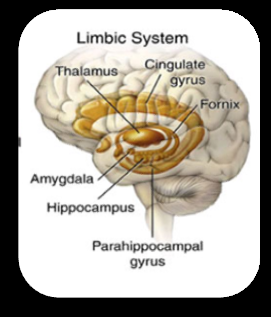
Mainly limbic system works on the logic of pain and pleasure and this system focuses on conservation of self and species, through our emotional behaviour. Also plays an important role in aggression for self defence, Sex urge for mating, learning, memory processing, olfaction so on. Evolution has thus developed certain areas in our brain whose role is to provide a pleasant sensation as reward and unpleasant sensation as punishment. Septal region, temporal lobe are considered as Reward centres and Punishment centres as Amygdala, Hippocampus
Appetite and Eating Behaviours
Amygdala plays an important role in food choice and emotional modulation of food intake. And the lateral nucleus of the hypothalamus is the centre for control of feeding whereas the ventromedial nucleus functions as the satiety centre.
Sexual Behaviours
Parts of the brain thought to be most concerned with sexual response are limbic system and hypothalamus.
Memory and Learning
Emotion has powerful influence on learning and memory. Amygdala, prefrontal cortex , hippocampus are involved in consolidation and retrieval of emotional memories. Hypothalamus, mammillary body and the dorsomedial nucleus of thalamus are important for the storage of recent memory. Hippocampus is critical for long-term, declarative
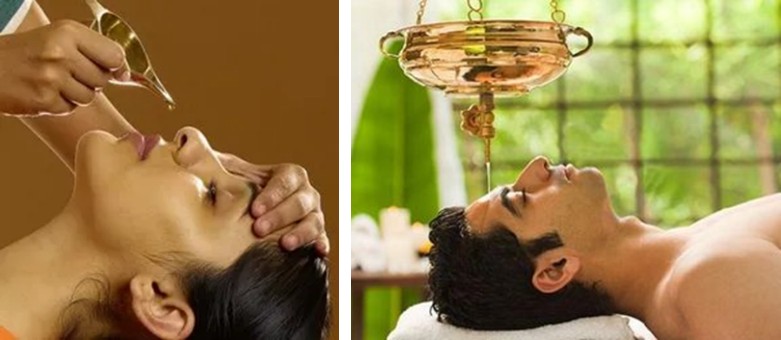
Nasya
The most important therapeutic measure in Panchakarma, which has direct access to head where the medicine is instilled into the nostrils. Here the mode of action memory storage.
Social Cognition
Cingulate gyrus and amygdala plays an important role in social interactions and makes an individual socially adaptable.
Dreams
Hippocampus and amygdala interweaves unconscious emotions with our conscious cognitive thoughts and perceptions and thereby ties together emotions and memory, during rapid eye movement sleep to form the content of dreams. Whereas the anterior cingulate gyrus, governs attention and motivation which might be the part of reason that the images we see in dreams are vivid and variable. Autonomic and Endocrine system response to every phases of emotions.
Discussion
Clinical conditions like anxiety disorders or affective disorders shows the involvement of Limbic structures like Cingulate gyrus, hippocampus or prefrontal cortex, its dysfunctions or also due to the failure of proper circuit of emotions.
Ayurveda treatment modalities play an important role in the treatment of such Manasarogas, through activating the structures involved in Limbic system.
occurs through the Olfactory pathway, where medicines like Jyothishmathi tailam or Brahmi ghrutha influence the limbic structures such as Amygdala and Hippocampus, which are responsible for the regulation of emotions, by controlling its functions. It is the action of chemoreceptors by taking different odorant molecules to different parts of brain for their specified action. Nasyakalpanas can also varies based on the difference in chemoreceptors like the use of Choorna nasya used in Apasmara [3].
Nasya also influence the production of neurotransmitters like serotonin, dopamine which are very important for emotional balance. In anxiety conditions, anxiolytic properties of drugs used in nasya balance the functions of limbic structures mainly Amygdala. Influences Hypothalamus, which is responsible for endocrine and autonomic functions, for proper fight or flight response, by restoring Hypothalamic Pituitary Adrenal axis.
Murdhini Taila
All the treatments under this give tactile stimulation. Like in Shirodhara, a traditional Ayurvedic therapy which involves the pouring of warm medicated oil continuously over the prefrontal area, helps to reduce stress by influencing the autonomic system through the activation of sensory pathways.
Here the mode of action occurs through the activation of sympathetic and parasympathetic nervous system by the tactile stimulation over the prefrontal area, leading to a state of relaxation. By the use of medicines like Ksheera bala thailam, Chanthanathi thailam, Himasagara thailam helps in decreasing the levels of stress hormone like cortisol, thus influencing the function of limbic structures mainly hippocampus for the regulation of emotions.
Also helps in the release of chemicals such as Endorphins, which reduces stress and thus improves the sense of well being
Aroma Therapy
Based on aroma, brain releases neurotransmitters to relax and stimulate nervous system.
Yoga
Regular practise of Yoga which includes Aasanas, pranayamas reduces stress, maintains our emotional state by influencing the limbic system. Mainly breathing exercises or pranayama helps in relaxing the nervous system , thus regulating the limbic structures response to stress. Helps in mood regulation by stimulating the release of endorphins or GABA like neurotransmitters.
Conclusion
Limbic System and Ayurveda provides a holistic approach to mental and emotional wellbeing. Ayurvedic treatment principles offers a unique approach in supporting the limbic structures and thus promoting emotional balance. So Promoting and Preventing mental health is very important in every phase of our life.
References
-
Tortora GJ, Derrickson B (2006) Principes of Anatomy and Physiology. In: 11th (Edn.), Wiley pp: 1146.
-
Gray H, Williams PL, Bannister LH (2000) Grays Anatomy: the anatomical basis of medicine and surgery. In: 38th (Edn.), Churchill Livingstone, New York, USA, pp: 2092.
-
Charaka, Drdhabala (2013) Charaka Samhitha. In: Acharya VT (Ed.), Chaukambha Prakashan, India.
- Management of Ear Keloid with Ksharsutra: A Case Study
- Yoga and Global Sustainability: A Holistic Path to One Earth, One Health
- Autoimmune Diseases in Ayurveda: A Narrative Review with Classical and Modern Perspectives
- Management of Cluster Headache Associated with Pituitary Apophysitis by CERT (Chakrasiddh Energy Release Technique): A Case Report on Energy Rebalancing
- Zygophyllum Geslini Coss : Biochemicals and Antioxidant Activity
- Observations of a Beginner Vaidya