
Introductory Aspects on Human Rights Violations Suffered by Indigenous Peoples during the Period of Brazilian Civil-Military Dictatorship
This current work studies the human rights violations suffered by indigenous peoples during the period of the Brazilian CivilMilitary Dictatorship. Likewise, it makes some notes about the beginning of the violations in a moment before this dark period. On this path, even before the Military Coup was launched in the year 1964 (one thousand nine hundred and sixty-four), the Indians were already experiencing constant usurpations of their rights at the expense of irresponsibilities commanded most of the time, by those who should watch over their rights lives. As will be seen, the violation and disrespect for Human Rights in the face of these peoples ended up becoming common and gaining strength mainly in the beginning of the implementation of the military regime. Negligent attempts at acculturation and "emancipation", in addition to inconsequential contacts with isolated peoples, culminated in the destruction and predatory logging of their lands. Missing processes of terribly violating demarcations of indigenous areas promoted the expulsion of countless peoples, causing the Indians to fall into a life totally surrounded by hunger, begging, alcoholism and prostitution. All in the name of the so-called “economic advance”, which aimed at building roads, in what was called “occupation of the Amazon”? As frequently stated by the authorities at the time, the Amazon rainforest was seen and understood as a “population void” by the Military Government. According to this thought idealized by the disgusting dictators and supporters, it will be observed that the cases of violations of Human Rights have been systematically “legalized”. The life, land and culture of indigenous peoples were left in the background. Depending on this brief narrative developed through documentary research, based on a hypothetical-deductive method, the intention is to rescue the martyrdoms of that time, demonstrating what actually happened to indigenous peoples during the Military Regime, in the simplest attempt to remember or even disclose to those who are unaware of this part of history. All that said, don't you forget. So that it never happens again.
Introduction
Although more than 56 (fifty-six) years have passed since the beginning of the Brazilian Civil-Military Dictatorship, this issue is still in vogue, and is currently the subject of discussions. That dark period lived, stained the history of the country with blood. He violated human rights and affected everyone who opposed the military regime.
However, despite all the reports and studies regarding the cases that occurred during the “Years of Lead”, the figure of the Brazilian Indian has often remained hidden and forgotten. As in practically all of its history, since the 1500s (fifteen hundred) years, indigenous peoples have again remained on the margins of any type of study or concern with their desires. After all, who are the Indians interested in?.
Notoriously few, given that, in any period of time revisited, be it during the time of Brazil-Colony, or during the period of the Civil-Military Dictatorship, the indigenous people were, and still are, incomprehensibly invisible, forgotten or, as it was in the times of the State of Exception, a “hindrance”, for many Governments, and also for a portion of Brazilian society.
Thus, through documentary research and with a hypothetical-deductive method, the intention is to rescue the martyrdoms of that time, demonstrating what actually happened to indigenous peoples during the Military Regime, due to the immeasurable disregard and violations of rights they had. It is noteworthy that the theme of this research aims to deal more specifically with violations of Human Rights in relation to forestry during the time of the Dictatorship, revisiting historical landmarks that preceded the beginning of the Military Coup, in order to reveal or recall the ills experienced by the Indians at that time. For, as will be seen the cases of violations and explicit indifference to indigenous peoples currently seen in Brazil’s political-social scenario, they are not isolated, nor are they new.
Therefore, the search for the recovery of historical truth in the form of underground memory is sought, since many practices that occurred during the years of the Civil- Military Dictatorship, still remain unspoken. The massacre of indigenous peoples and the violation of their rights during the years 1964 to 1988 deserves to be revealed and made public, as it is a subject that is not publicized, nor spoken to the Brazilian population, therefore, there is no knowledge and awareness of people on this subject. As researchers, we have a duty to inform readers about the breach of human rights that the legitimate owners of this land have suffered
Brazilian Indigenous Peoples: The Martyrd of a Civil-Military Dictatorship
Indigenous peoples, after their first contacts with the “white man”, in most cases, have already undergone some type of discriminatory act in their own territory, which today is called Brazil. As is known, the disregard for Human Rights employed to them arose from the period of Brazilian colonization.
Although some centuries have passed since the years of 1500 (fifteen hundred) until the present moment, History reveals to us that it was tragic and remarkable the experience lived through the centuries by this society, mainly when we bring to (re) analysis and (re) remembering the entire period lived in the Brazilian Civil-Military Dictatorship.
It is known that one of the main reasons that spearheaded the period of constant violations against indigenous peoples was their lands. Begun since the times of colonization and spread over the centuries, the growing greed of countless people: starting with the European peoples who arrived here. It is perceived not only today, but from the beginning, that the desire to usurp the Indians in their territories never ended and, likewise, did not start with the Military Coup. In contrast to the “civilized ”’s eagerness to take over the vast existing territories, it made the indigenous peoples always resist and fight bravely for every piece of their ground.
Some victories and countless defeats marked several periods, causing the indigenous feeling of love for its territorial space to resurge from generation to generation through each battle. The life of the Indians has always had an enormous connection with the land, as it was from it that both the present and the ancestor generations, took their livelihood in order to survive, in addition to carrying in that space, an immeasurable historical value for their people. Regarding this importance of land to indigenous peoples, the historian Lígia T.L. Simonian highlights that, the possession of “[...] land ownership is essential for the survival of the indigenous people; they are linked to it by all its customs, traditions and cults” [1]. Thus, the struggle carried out by the Indians throughout their history shows that the land is not only a symbol of the maintenance of its existence, but also of a cultural preservation of its origins. For this reason and in order to protect indigenous life and history, the SPI (Indian Protection Service) was created in 1,910 (one thousand nine hundred and ten), aiming to curb the real killings of these peoples, carried out by farmers, prospectors and loggers, who arrived in their territories with the desire to usurp their lands and their wealth. After so much suffering caused, some”[...] groups of Indians had already decided to make peace with the self-styled ‘civilized’ man, overcome by the massacres, diseases and hunger [...]” [2], which made the idea grow before the Brazilian Government at the time and later to become a State policy by the Dictatorial Government to integrate the Indian into the Brazilian society called “civilized”.
For this, even before the period of the Military Dictatorship, the Brazilian State already had this thought of integration, with the intention of pacifying it and seeing the end of centuries of struggles and violations that occurred against the Indians. In this way, the idea of demarcating indigenous territories arose, which gained shape and strength in the days of Marechal Cândido Rondon, who was - before protector of the Indians and creator of the SPI (Indian Protection Service) - head of the Lines Building Commission Telegraph.
It was in this way that at the beginning of the 20th century, while working for this Commission, Rondon had already managed to maintain a friendly relationship with the Bororos, Terena and Quiniquenaus Indians, making “[...] the government of Mato Grosso recognize his property, and also placed the cadiueus and oiafés, inhabitants of the headwaters of the Taboco and Negro rivers, under the protection of the commission, who were being murdered by cattle ranchers”. From then on, the demarcation of indigenous lands began to be put into practice.
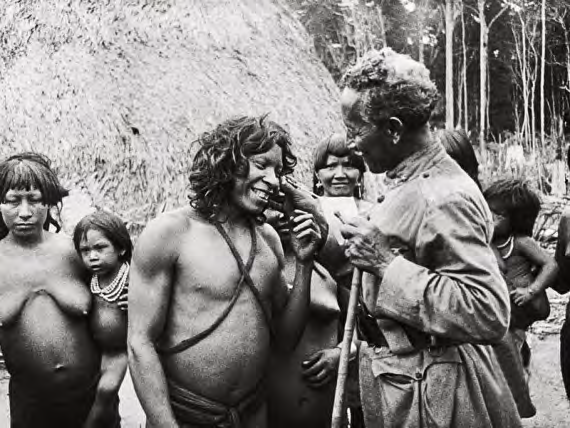
In this way, it was through Rondon that the expedition and demarcation processes would take center stage in the country, as they had the intention of protecting indigenous territories from the attacks of any “civilized” who tried to expel them from their lands, through the complete extermination of the existing tribes. However, despite appearing protective, the demarcation started to cause harmful problems to the Indians, such as the misappropriation of territories, made by both the Brazilian State and private individuals, demonstrating that these cases were not limited to occur only in the colonial period or until the end of the 19th century, on the contrary, it gained strength from the 20th century and became common in the State of Exception. Thus, the SPI (Indian Protection System) itself, together with the Brazilian State, started to take possession of indigenous lands. At the beginning of the 20th century, appropriation took place in areas close to the coast, where the Government started to establish a greater population of these places. In view of this, the System in vogue, was seen to have “[...] the task of sedentarising and allocating the indigenous people that represented an obstacle ahead of expansion” [3].
The indigenous land was cleared by the Brazilian states in a clear and evident way. Through the enactment of laws and counting on the full support of farmers, the financial bias and the expectation of profit increased the destruction and invasion of indigenous territories. On these events, he highlighted the Final Report of the National Truth Commission when he said that: The economic interests of landowners were represented in the local authorities to pressure the advance of the agricultural frontier over indigenous areas. In 1958, deputies of the Legislative Assembly of Mato Grosso approved Bill No. 1,077, which made the lands of the Kadiweu Indians vacant. In 1961, the Federal Supreme Court ruled that the law was unconstitutional, but, at that point, the invasion was established, since the lands had already been divided into lots [...]. In addition to the invasions themselves, land leases that did not comply with the terms of the contract were common - when there was one - occupying huge extensions of indigenous lands; constituting, in some cases, a situation of accommodation of irregularities (invasions practiced and later legalized by SPI through lease agreements) [4].
One of the most used means for the expropriation of land was the declaration of title of property, which had as its initial mark to make the indigenous territory a vacant area. Thus, the false legality was being imposed with the desire to make the indigenous territories vacant lands, being granted by the Brazilian State to private individuals.
At the beginning of the 1960s (one thousand nine hundred and sixty), even before the Military Coup, the destruction carried out by the Government of Jânio Quadros and later, by João Goulart, continued to be exercised against the Indians. As highlighted by the National Truth Commission in its final report, in the beginning “[...] of the 1960s, the State consolidates the process of territorial destruction of the Xetá, by promoting the removal of the last Indians still in contact at the Santa Rosa farm” [4].
Throughout the national territory, the practice of expelling indigenous peoples from their areas has become commonplace. Esbulho became a policy disseminated by the Government and by the SPI (Indian Protection Service), because years before the coup, Brazilian states began to adopt the practice of issuing property titles to the “civilized”, thus expanding , the entire process of depleting indigenous lands, together with the disregard for Human Rights, which was crystalline employed.
Thus, as the writers, Liana Amin Lima da Silva and Carlos Frederico Marés de Souza Filho, point out: The historical processes of depletion, invasion of lands and expulsion of communities were mostly legitimized by titles granted by the State as if the territory occupied by traditional peoples and communities dealt with vacant lands, just as legitimated and legalized has been land grabbing [5].
Illustrating these facts, it is known today that the Government of the State of Rio Grande do Sul, with the help of public authorities in the early 1960s (one thousand nine hundred and sixty), expelled indigenous peoples from their territories, maintaining their called “intruders”. Thus, on “[...] 02/16/1962, the agrarian reform bodies of the Secretariat of Agriculture, promoted the destruction of our Indians by taking possession of their lands and selling them to the colonists” [1].
Thus, even before the dark times of the Brazilian Civil- Military Dictatorship, indigenous peoples were already suffering the ailments imposed by the Government itself and by its System for the Protection of Indians (SPI). Both the processes of turning the lands vacant, as well as the process of integration of the Indian or the demarcation of territories which had a false attempt to constitute and establish rights made Brazilian Indians the real victims of state control. The State had ample power, through these overwhelming contact procedures that almost always resulted in a massive disruption of indigenous societies, counting on the deprivation of rights to their territorial spaces.
Thus, over time, indigenous rights have been disregarded and equally curtailed, precisely by those who should care for them, especially with regard to indigenous lands which, as already mentioned, it has always been of vital importance to these peoples. Carolina Ribeiro Santana points out that: The timeline thesis clearly deprives the indigenous of their territorial rights and cruelly imposes double punishment on them: the first by expelling them from their lands and the second by denying them the right to that same land from which they were expelled under the claim that they were not sufficiently capable of resisting the massacring historical process of destruction practiced by both the State and private individuals [6].
The period that preceded the Military Dictatorship reveals that the constant practices of miscellaneous caused by the expropriation of the indigenous lands, in addition to the almost always malicious demarcations, were fully carried out by the Brazilian Government, both at the federal or state level, and even by the Indian Protection System (SPI). However, since the 1964 Coup (one thousand nine hundred and sixty-four), these terrible practices have become even more constant, given the countless numbers of Indians who were expelled from their lands during the “Lead Years”.
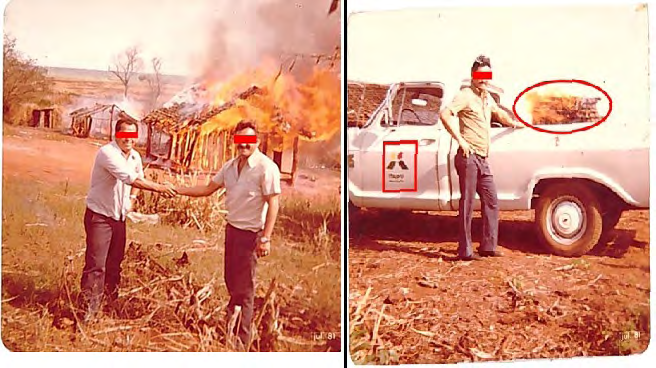
The common practice of violating expulsion, instituted under the aegis of the Dictatorial Government, also occurred in a disgusting way against the Guarani indigenous society, at the time of the construction of the Itaipu Plant. When the Indians did not accept the withdrawal from their territory, “[...] officials set fire to the occasions of Guarani Indians who lived in the region of Foz do Iguaçu, in Paraná, to expel them from the place” [7]. The photograph shown below depicts the criminality and greed of the white man who, forcibly and brutally removed the Indians from their lands, aiming at the creation of a hydroelectric plant.
Without any kind of prohibition, the Military Government itself, in addition to expelling the foresters, continued to make the false ones demarcations, which, in fact, only benefited the military themselves and their partners and, equally, the concession of titles of indigenous properties to the “friends of the Regime”, regardless of the colonists of the Dictatorial era, continued.
In addition to the lands that had not yet been demarcated, the draconian Government, led by former President Castello Branco, began making pacts with Brazilian states and removing the territories of indigenous peoples. A remarkable case occurred with the State of Mato Grosso in the year of 1966 (one thousand nine hundred and sixty-six), counting on the sordid work of its governor, Pedro Pedrossian and the general and former governor of Paraná, who was at that time the Minister of Agriculture, Ney Braga. Together, they made the indigenous land of the Bororo, which years ago had been demarcated with the help of Marshal Cândido Rondon, suffered an unprecedented disaster. Valente reports that:
In fact, the agreement between government and ministry, which won the euphemistic denomination “covenant” [...] with a single stroke, the Indians lost more than half of their land in exchange for crumbs and promises. The term of the “agreement” was published in the Official Gazette of Mato Grosso with the names of Braga and Pedrossian on July 20, 1966. Quickly, in August, the Legislative Assembly of Mato Grosso decreed, and the governor sanctioned, the ratification of “agreement”, while making all rural property titles issued by the state definitive in the Bororo land definitive. The agreement was also endorsed by the Federal Audit Court in Brasília. What Pedrossian’s letter and the terms of the agreement did not make clear is that in fact the area was already invaded by settlers and with the declared support of the state government, which issued titles that focused on the rights of the Indians. The agreement between state and ministry, therefore, sought to legally accommodate an accomplished and illegal fact [2].
Furthermore, the Military Regime established a massive violation in relation to the indigenous territory, since countless tribes no longer have the right to land given to the corrupt system of “legalized draft” that ended up being practiced. As a consequence, of this profound impact on the life of the so-called foresters, entire peoples ended up being expropriated from where they lived most of the time with the practice of violence, which has become a means constantly used by the military. The expulsion of the Indians was seen as necessary for the lands to be vacated and the advance of agribusiness and the latifundium to be carried out. In this context, Brazilian indigenous peoples were considered obstacles to the Dictatorial Government, which increased the practice of expulsion from their lands.
Thus, the desire of the Government at the time of the Military Dictatorship to have indigenous territories for itself, aiming at the use of these areas for the realization and, in certain cases, the expansion of field activities and/ or the withdrawal of natural wealth, made advance the undue contact and disruption of indigenous peoples. As Julio José Araujo Junior adds: The relevance of this debate is to demystify the demarcation as constituting rights. Indigenous peoples were and are victims of an overwhelming process of contact and disruption precisely because of the lack of demarcation, with the occupation of their lands by large farmers, the performance of enterprises and measures that leave them confined in spaces where neither they cannot even withdraw their livelihood. They were also unjustly removed for several illegal acts [3].
Consequently, the lives of indigenous peoples in the years 1964 (one thousand nine hundred and sixty-four) to 1,985 (one thousand nine hundred and eighty-five), became a real martyrdom - not that before that it was peaceful and harmonious - as a result of the debacle of the coup, whether civil or military. The expulsions of the Indians from their territory definitely got worse during the Exception Regime. Thus, the demarcations followed the path of increasing illegality that was installed between these 21 (twenty-one) years, given the loss of guarantee of the lands belonging to the indigenous people, together with the occupation and occupation of these vast spaces, removing the right belonging to these peoples in an unequivocal violating demarcation process.
In addition to the demarcation and consequent depletion adopted by the Regime, the expulsion of indigenous peoples from their territory, began to occur equally fully from the so-called emancipation, which was an idea strongly adopted and debated among the military. Emancipating the Indian was yet another subterfuge - a kind of “freedom letter” - for the Dictatorial Government to occupy the indigenous lands, using it in a fraudulently “legalized” way. As the National Truth Commission points out: This incongruity of the law was what later motivated the government’s attempt, through Funai, to ‘emancipate’ a good part of the indigenous peoples, aiming to consider them ‘acculturated’ and, with this, to argue that they would lose their territorial rights guaranteed by 1946 and 1967 [...]. Thus, a policy is established in practice that, instead of protecting indigenous ‘uses, customs and traditions’, acts directly to change them whenever it is believed that they present themselves as a ‘hindrance’ to the government’s political project. An exception policy is created, from which the ‘way of being’ of each of the indigenous peoples always remains under suspicion and the protection of their territories, ensured by the Constitution, becomes arbitrarily subject to relativization according to political interests. . This common axis, which transforms the ‘way of being’ of each of the indigenous peoples into a political target of State persecution aimed at the appropriation of their territories [...] [4].
In addition to this scam - which brought the attempt to “emancipate” the Brazilian Indians - another mechanism was used by the Dictatorship to continue and expand the practice of expulsions. The process of building roads and highways all over the country began in the first Military Government of ex-President Castello Branco. With that, the military’s recurrent desire to carry out the “occupation of the Amazon” was resumed.
It was in the month of December of the year 1966 (one thousand nine hundred and sixty-six), that the aforementioned former president gathered in the capital of the State of Pará, a large part of his allies, in addition to businessmen and industrialists “[...] for announce the ‘Operation Amazon’, a set of measures that aimed to create ‘settlement conditions’ in the region, which has become nothing less than ‘an imperative of national security itself’” [2].
Combining the idea of “occupation of the Amazon”, already in the government of ex-president Médici, the moment was taken to advance the works on the construction of highways across the country and also to implement a model of integration between the Indians towards the rest of the country Society. As a result, one of the main works of the Military Regime appeared: the Transamazônica (BR-230). As the National Truth Commission reports: The National Integration Plan (PIN), published in 1970, calls for encouraging the occupation of the Amazon. The Amazon is represented as a population void, thus ignoring the existence of indigenous peoples in the region. The idea of integration is based on opening roads, particularly the Transamazônica and BR 163, from Cuiabá to Santarém, in addition to BR 174, 210 and 374. The goal was to settle some 100 thousand families along the roads, in more than 2 million square kilometers of expropriated land. At the time, the interior minister was the military and politician José Costa Cavalcanti, one of the signatories of the AI-5, who would remain in office from 1969 to 1974, supported by Costa e Silva (whom he had helped to become president) and by Médici. Costa Cavalcanti himself declares that the Transamazônica would cut lands of 29 indigenous ethnic groups, with 11 isolated groups and nine in intermittent contact resulting in forced evictions. To carry out such a program, Funai, then directed by General Bandeira de Mello, signed an agreement with the Superintendence of Development of the Amazon (Sudam) for the ‘pacification of 30 remote indigenous groups’ and became the executor of a policy of contact, attraction and removal of Indians from their territories for the benefit of roads and intended colonization [4].
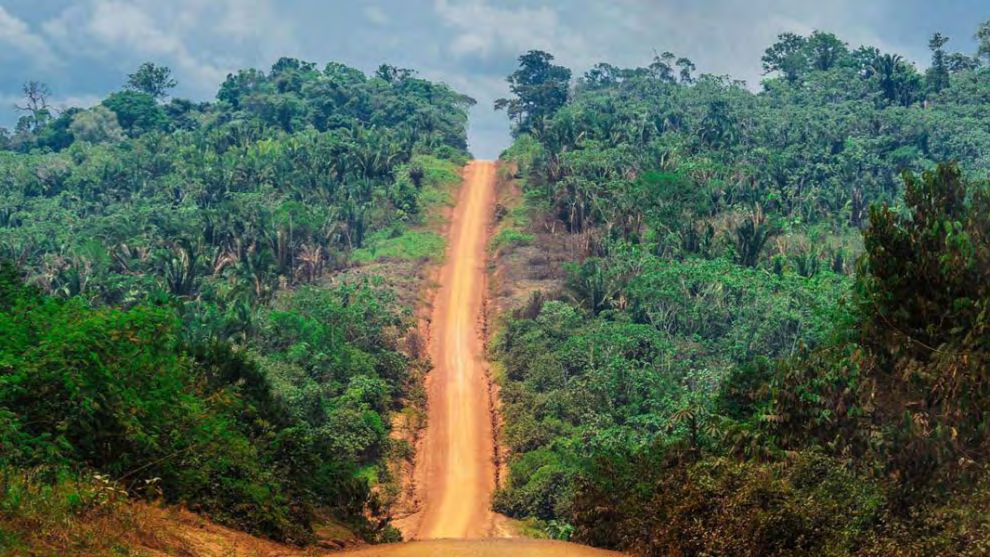
As of Institutional Act No. 05, issued by ex-president Costa e Silva which gave space to ex-president Médici the rigidity with which the Indians were treated during the Civil-Military Dictatorship became evident. The idea was to occupy the Amazon region, as it was considered a population void, totally ignoring the existence of indigenous peoples in that place. However, the construction of the Transamazônica highway was used for a greedy “[...] colonization program that included the displacement of almost 1million people with the aim of occupying strategically the region, not leaving any space of the national territory uninhabited and buffering the border area” [8].
It turns out that this utopian integration never really occurred. In that dark period, what actually happened and let it be said: incessantly were fraudulent demarcations, followed by dregs of indigenous peoples’ lands, because as “[...] the Transamazônica was advancing, those responsible were killing Indians and in their place, placing oxen” [2].
Therefore, a genuine genocide against the Indians was implemented. The integration idealized by the Government, in fact, was nothing more than a great excuse, because “[...] the main objective in the construction of the Transamazônica was not the ‘integration’ of indigenous peoples: ‘The most important thing is to remove, and quickly, possible obstacles to the passage of earthmoving machines” [4].
However, Transamazônica was not the only highway built, which became responsible for the expulsion of several indigenous peoples from their territories. During the years in which Brazil experienced the ailments of the Civil-Military Dictatorship, other works were made with the attempt of “occupation”, deepening the problems that were brought to these countless societies.
In this way, Perimetral Norte was created: BR-210, to interconnect the States of Pará, Amapá and Roraima, up to the State of Amazonas. For, like the other roads laid out during the Military Regime: [...] Perimetral Norte, was being opened without prior consultation with Funai. This time the military plans for “occupation of the Amazon” would reach some of the most numerous isolated groups on the planet, who spoke four different languages, preserved their eating and cultural habits and occupied an extensive and mountainous area, with more than 9 million hectares, which extended from Brazil to Venezuela. The Yanomami were on the path of machines that would again tear through the jungle to try to take another paper from the paper, whose route ran to the north, in parallel to the Transamazônica [2].
Another work that caused calamitous losses to the indigenous communities was the construction of the BR - 174, which connected the State of Amazonas to the State
of Roraima. In the same way that Perimetral Norte brought countless losses to the Yanomami peoples, the highway “[...] BR-174 motivated and carried out a directed and spontaneous invasion of the Waimiri-Atroari territory.
It was preached as an irreversible fatality by the Military Dictatorship. FUNAI, from the beginning, was in line with this fatality” [4]. Thus, in addition to the loss of land and the evictions practiced as a result of the authoritarianism used by the Dictatorial Regime, tragic consequences were imposed on the Indians due to the construction of roads between their territories.
One of these consequences caused the indigenous peoples to live on the side of the roads, wandering for kilometers. In the search for food, they begged for alms or some kind of help with the military and workers who carried out the works. For this reason, after starting to live far from their territories, many Indians ended up dying of malnutrition.
Thus, with the beginning of highway and road construction projects, Brazil became an immense construction site, and the Indians, as usual, continued to be victims of the dictatorship’s governmental ambitions. Their lives were constantly altered, as well as, the right to enjoy their own territories, which ended up being usurped.
Indigenous survival was an issue to be treated with more zeal, but the Regime was not interested in the sufferings that the Indians went through. Events like these mentioned, have definitely become remarkable in the lives of the Yanomami peoples, who: [...] with the arrival of the road, most Yanomami known as Opiktheri opted for a “roadside nomadism” (“roadside nomadism”). They spent their time going from one work camp to another, covering distances of more than 50km. They developed a technique of blocking the road by making a human barrier in order to force drivers to stop to ask for food, clothing or just a ride. They were always complaining of hunger, begging for food at the construction sites, by the side of the road and in the village Wakathau theri. They started stealing products from the Catrimani Mission, a short distance from km 146. Hunting and forest products helped to improve the food situation, but there was a serious threat of malnutrition, particularly among women and children [9].
Thus, the begging of the Indians along the roads and highways, built by the Military Regime above their lands, became a sad scenario experienced in the country. Many peoples began to wander aimlessly, without hope. Their lives during the period of the Brazilian Civil-Military Dictatorship were constantly plagued by countless cases of disregard and violation of Human Rights, practiced by the Government that wanted the development of only a small portion of society, and that was not concerned at all with the existence of indigenous people.
The fateful path traveled by the Indians, was not only at the edge of highways and roads, but also at the edge of a precipice of human degradation, which was about to exterminate them completely, due to the misery they were experiencing. In the midst of the journeys, some of them ended up resorting to hitchhikers from anyone, so that they could reach the city and, who knows, find, in addition to land and food, the dignity that had been usurped by the military.
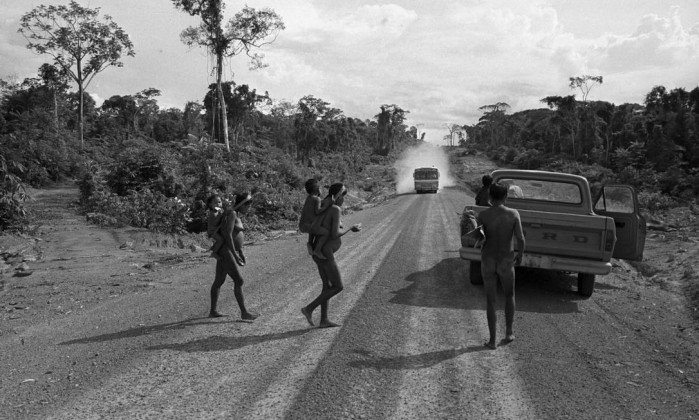
Thus, in addition to the evictions from their lands and the hunger that affected them, the Indians began to live with other factors that made them even more unbalanced. “Prostitution, abandoning work in the fields, alcoholism, begging and roadside nomadism ’have destabilized the lives of communities, creating harmful consequences to this day” [9].
As an example to these facts, the Yanomami peoples were one of the countless tribes that ended up suffering the cruel processes of human degradation, due to the construction of highways and roads, as in the case of Perimetral Norte after starting to live by the side of the road, young Indians “[...] became prostitutes, almost all the Indians in the area became beggars and parasites at sawmills, etc., on the road, and almost all of them entered a phase of abandoning their traditional customs, including (at least in the presence of whites) speaking their own language” [9].
The way of life of indigenous peoples was abruptly altered from the demarcations and expulsions carried out by the Military Dictatorship. Countless tribes came to be at the mercy of the interests of “civilized” Brazilian society, being forced to work outside their lands, for farms, lumber companies or farms. From this moment on, the process of acculturation and indigenous social degradation became a reality in the country.
In this way, the Indians found themselves in the need to abandon their life altogether, being forced to seek other ways so as not to end up perishing in their territories. As Simonian points out: Without many alternatives within the reserve and without effective support from FUNAI, the indigenous people travel to work in the farms (agricultural companies) in the region, often reaching long distances; others opt for urban work (bank guard) or produce basketwork to sell [1].
Thus, the indigenous people went through a sudden change, since tribes forcibly stopped carrying out cultural and daily natural activities, pervaded by their ancestors, namely: hunting, gathering and small-scale agriculture within these delimited lands, the indigenous people were violated, because they compulsorily started to produce handicrafts to sell in the cities, in addition to being paid for precarious remuneration, in order to obtain some type of income. With that, “[...] instead of the standard of living that in the past was very abundant, today they are living in misery, suffering all the precariousness that the excluding society has produced” [10].
Furthermore, it was during the Civil-Military Dictatorship, through the processes of demarcation and land scraps of indigenous societies that “[...] a process of destruction of nature and pre-existing social relations was established. [...] they removed part of the conditions for survival, not only economic but also social, cultural and political” [11]. In this way, it is clear that the (in) consequent evictions carried out by the Government of the time, resulted in numerous and varied practices in violation of the Human Rights of indigenous peoples during that tragic period.
Conclusion
In the course of this research, the objective was to bring the remarkable facts experienced by the indigenous society in relation to the Human Rights violations perpetrated before and during the period of the Civil-Military Dictatorship. We tried to bring to the present work, an overview with valuable historical details about the Military Regime, in order to understand the countless problems that occurred with the forestry peoples [12, 13, 14].
The objective was to rescue the constant restriction of rights, systematically imposed by the brutal and misshapen Dictatorial Government, in order to make the scourges more and more real in the memory of the reader [15]. In this way, the subjects covered leave traits that go beyond a simple job for the academic scope, as well as for the Brazilian society in general.
Nevertheless, the facts brought up reveal the utopian and delusional idea that the Dictatorship was good for Brazil, or that the country grew at that time, due to “economic progress” or “development plans”, and that it only persecuted the “communists” or “internal enemies”. With this, the benefit that was tried to cause under an academic and social bias was in demonstrating the violations that occurred during the “Lead Years”, against countless indigenous peoples who had little or no voice, being constantly silenced and forgotten and undeniably abandoned expelled, losing and ceasing to possess not only the greater good than any human being that is life, but also their cultures, beliefs, languages, histories and origins.
In the end, it can be highlighted and exalted that the current and still in force democracy is the best for all of us. Living in a democracy guarantees us rights, which does not happen in authoritarian periods [16, 17]. We are entitled to collective memory, whether it is established in different forms, covering all social groups.
In the most specific case of the Indians, what was treated in the work is observed as a true underground memory, which remained as unspoken for a long time, entangled in the true silences of History. We need at each historical period to reveal memories that concern social groups [18, 19], especially those considered as excluded or forgotten, since they are all members of the very multiculturalism present in Brazilian society. It is worth remembering that we are multicultural and miscegenated, fruits of the combination of ethnicities and cultures, among them, the indigenous.
Image References
20. (2018) Trans-Amazon: the loneliest truck on the planet. Marca.
21. (2017) The Globe. The history of resistance and death of indigenous peoples in the military dictatorship. Brasil
22. (2015) Portal of the Government of the State of Rondônia. Cândido Mariano da Silva Rondon is the name. Brasil.
References
-
Lígia TLS (1979) The defense of indigenous lands. A fight by Moysés Westphalen. Fidene- Coordination of Research and Documentation Anthropological Museum Director Pestana. Ijuí/RS.
-
Rubens V (2017) Rifles and arrows: The history of indigenous blood and resistance in the dictatorship. 1st (Edn.), São Paulo: Companhia das Letras.
-
Julio José A (2018) The time frame and an assimilationist constitutional practice. In: Gustavo Kenner A, et al. (Eds.), Indians, original rights and territoriality. National Association of Public Prosecutors. 6th Coordination and Review Chamber. Federal Public Ministry. ANPR Publishing House, Brasília/DF.
-
(2017) National Commission of the Truth in Minas Gerais. Final report. Belo Horizonte/MG.
-
Amin Lima SL, Filho S, Frederico Marés CD (2018) Time frame with the regression of indigenous and quilombola territorial rights. In: Gustavo Kenner A, et al. (Eds.), Indians, original rights and territoriality. National Association of Public Prosecutors. 6th Coordination and Review Chamber. Federal Public Ministry. ANPR Publishing House, Brasília/DF.
-
Carolina Ribeiro S (2018) Indigenous territorial rights and the time frame: the Supreme Court against the Constitution. In: Gustavo Kenner A, et al. (Eds.), Indians, original rights and territoriality. National Association of Public Prosecutors. 6th Coordination and Review Chamber. Federal Public Ministry. ANPR Publishing House, Brasília/DF.
-
(2020) Unpublished photos: Itaipu officials celebrate fire in indigenous homes. The Intercept Brazil.
-
Lilia Moritz S, Heloisa Murgel S (2015) Brazil: a biography. 1st Ed. São Paulo/SP. Editora Companhia das Letras.
-
Duarte RDP (2014) Report on the violation of human rights in TIY: 1960-1988: National Truth Commission.
-
Kimiye T (2014) Indigenous peoples In: Laranjinha T, et al. (Eds.), Experiences of indigenous policies with SPI and FUNAI in the 20th century: Document produced for and at the request of the Paraná State Truth Commission. São Paulo/SP.
-
(2012) Amazon Truth Committee. 1st Report of the State Truth Committee: The genocide of the Waimiri-Atroari people.
-
(2014) State Commission of Truth-PR-Teresa Urban. Final Report.
-
Carlos Dias J, Paulo Cavalcanti J, Rita Kehl M, Dallari P, Sérgio Pinheiro P, et al. (2014) Report of the National Truth Commission.
-
Cândido R, Militar; sertanista; ch. SPI 1910-1958.
-
(2014) After 50 years, Golpe Militar left its mark on the Amazon. Instituto Humanistas Unisinos.
-
Rita A (1993) The political role of epidemics in the Yanomami case. University of Brasilia.
-
Dailor S, Gilberto Leivas P (2018) The time frame of the occupation of indigenous lands and the legal paradigm of the indigenous question: recognition or integrationism? In: Gustavo Kenner A, et al. (Eds.), Indians, original rights and territoriality. National Association of Public Prosecutors. 6th Coordination and Review Chamber. Federal Public Ministry. ANPR Publishing House, Brasília/DF.
-
(1980) Visualization: State expropriates and dominates Guarani and Kaingang people. Fidene- Coordination of Research and Documentation Anthropological Museum Director Pestana. Ijuí/RS.
-
Mendonça Oliveira MD, Vera Lúcia Salazar P (2010) The formation process of the rondoniense territory revisited: from the colony to the coup of 1964. Federal University of Roraima, Acta Geográfica, Revista do Curso de Geografia 4(8).
- Are We Looking at an Overwhelming Crisis in Healthcare, or A Poorly Hidden Opportunity Calling on us to Improve our Systems? Perhaps Both?
- Sex, Metaphorical Drugs, and the Dissolution of Boundaries in the Perception of Time: Robert Muller’s Tropen: Der Mythos Der Reise (Tropics. The Myth of Travel) From 1915 Serves as an almost Forgotten Example
- Artificial Intelligence in Healthcare: Bioethical and Legal Challenges in the Brazilian Context
- Today Our Health and Our Principles are Challenged on Many Fronts Simultaneously, Where Can We Go from Here?
- The Value of Prevention, Avoid the Games and Focus on Real, Evidenced-Based Opportunities to Improve Health, Wellbeing and Longevity
- A Time of Opportunities to Improve our Health and Address Chronic Diseases