
Students Act as 21st Century Preventive-Pandemic-COVID-19 Model: Improved Advance-Clinical-Toxicology Biomedicine Green-Socio-Economy Science-Technology-Innovations
The pandemic-COVID-19 adverse effects on the environment, travel, education and clinical research, and the global health of humans and animals, and the impact on human-civilization, agriculture, global socio-economy, and damage brain-tissue or long term neurological-disorder, with more than 88-million infections and more than 1.8-million death of human lives. Recently the application of vaccine starts, but its proper efficacy, longevity, cost-effectiveness, allergic-toxic-reaction, and chance of reinfection due to new variant and mutation, are not still known. Though the middle-and upper-classes are able to tackle, but the economically poor-households, the marginalized in the Purba Bardhaman district, and groups like senior-citizens and street-children and animals, are badly affected still now. So in this paper students act as a 21st-century preventive-pandemic- COVID-19 model, improving advanced-clinical-toxicology, biomedicines, green-socio-economy, and science-technologyinnovations- communication by boosting community immunity or herd-immunity, and developing policy-initiative social strategies issues, removing the adverse effects of chemicals on living organisms and clinical studies in all areas of toxicology. This paper is considered the possible pathway of future pandemic COVID-19 like’s virus-free world.
Introduction
In this paper, it is planned to overcome the ‘Midst Human Challenges Viral Pandemic COVID-19’ with the help of higher secondary students (Plate 1) of Kanchannagar D.N.Das High School (HS), Kanchannagar, Burdwan, West Bengal, India, based on the theme “Vision 2040”, aiming the students, teachers and communities relationships with the ‘Common Goals for removing immunotoxicity, neurotoxicity and drug toxicity’ [1]for the effective advancement of science and technology- ‘Innovative Partnership’ and fulfill the objectives, and resources that would retain the human civilization’s in the ‘Old or New Normal Forms’ in the following ways.
Emphasis on Consumption of Nutritious Food
The students aware among the 195 families in the three different areas of Bardhaman (Table 1), consumption of weed, vegetables, and fruits like amaranth, okra, cowpea and cucumber etc., nutritious, as well as traditional medicine for preventive measures against many human- and plants- diseases including COVID-19 with the help of virtual meeting as well as direct awareness among the students, maintain COVID-19 protocol or rules and regulations, and 1251 family are benefitted [2, 3, 4, 5, 6, 7, 8] and And the activities were conducted and measured from 15th March 2020 to 17th Januatry 2021 and up-to-date. All the data were counted for statistical analysis by ‘t’-test (P<0.01).
| Students Activity Rural / Semi- Urban / Urban Area | Number of Infected Person (COVID +Ve) | Number of Family | Number of Family Member | Number of Containment Zones | Number of the Slum Area | Rate of Recovery (%) | Rate of Mortality (%) | COVID-19 | ||||
| Active (Symptomatic cases) | Passive (Asymptomatic cases) | Remarks | ||||||||||
| Age Group (<60) | Age Group (<18) | Age Group (<60) | Age Group (<18) | Home Quarantine / COVID-19 hospital | ||||||||
| I. Rural Area | 1c±0.01 | 65a ±0.02 | 398b ±.14 | 1a±0.01 | 4b±0.02 | 100% | Nil | 0 | 0 | 1c±0.01 | 0 | One migratory labor in the home quarantine |
| II. Semi-Urban Area | 2b±0.02 | 65a ±0.13 | 595c ±1.35 | 1a±0.01 | 4b±0.02 | 100% | Nil | 0 | 0 | 2b±0.01 | 0 | Two migratory labor stay in the COVID-19 hospital |
| III. Urban Area | 4a±1.22 | 65α ±0.02 | 258α ±0.12 | 1a±0.01 | 2a±0.02 | 75% | 25% | 1±0.01 | 0 | 3a±0.02 | 0 | Three COVID19+Ve stay in home quarantine and other admitted in the COVID-19 hospital |
| Total: 3 | 7 | 195 | 1251 | 3 | 10 | 85.71% | 14.28% | 1 | 0 | 6 | 0 | All survive except the one senior citizen in urban area |
Table 1: Higher secondary student’s activities regarding COVID-19 infection in the 3-study area 15th March 2020 to 17th January 2
Emphasis on Multiple-Inter-Cropping
Many naturally infected plant diseases caused by different pathogens adversely affect food production in agriculture and the economy of the country, which are remarkably controlled by multiple-intercropping, and enriched production as well as the nutrient quality of soil, and farmers as well as communities are double benefitted, without using any toxic chemical pesticides [4, 6, 7, 8, 9].
Emphasis on Different Social Responsibilities with Community
The different social-awareness virtual camp (VC) organized among the students and communities in different ways, use masks, clean-hands with soap, maintain physical- distance, avoid-touching eyes-nose-mouth, adopt strict- lockdown-measures, arrange blood-donation-camp, tree- plantation with conservation-biodiversity, day-celebration, and reduce-economic-activities to a minimum, distributing- rations to families in slums to providing cooked-meals to migrants to ensuring that senior-citizens have medicines, distributing-clothes, educational-materials also, and by taking some simple precautions, and nutritious vegetables for improving immunity to human disease-free-healthy-life [5].
Emphasis on Experimental Learning Project
Recently in the last birth anniversary of Hon’ble Ex- President, Late Dr. APJ Abdul Kalam, the Government of India
has been declared as Rashtriya Avishkar Saptaha-2020, at the school level for the joyful and meaningful encouragements, and engagements, and the creative activity, to nature, innovations and use of technologies among the students, communities, and teacher by virtual meeting or workshop on the “Water auditing and Calculation of carbon footprint”, which directly or indirectly the environment, agriculture, socio-economic and biodiversity, by proper use or reuse of water and resisting emission of Co2, forming toxic-free world [10]. Emphasis on Civil-Engineering COVID-19 Epidemic-Model The students aware among communities and other students of the three areas of rural and urban areas, organized a virtual meeting for suggestion and constructs or set up different types of the attic artificial nest in the attic, rainwater harvesting with fishery and floating gardening covered by wired-net with the artificial nest, shaded by solar-panel supplying electricity for the oxygen-producing motor in water, OR rooftop-/-vertical-gardening attached with ‘Bird’s-/ Sky-Observer Box-shaped Balcony’, forming the common complex toxic-free ecosystem on ecology food- chain relationships issues, and nutritious kitchen garden management, micro-and macro- climate issues, and also community health, etc., related to the adverse effects of chemicals on living organisms and clinical studies in all areas of toxicology like immunotoxicity, neurotoxicity and drug toxicity [1, 11, 12].
Emphasis on Development of Biomedicines Social Vaccine or Vaccine
The students aware of saving toxic-free conservation of biodiversity of plants and animals, for the proper biomedicine, social vaccine, or vaccine for epidemic diseases [2, 3, 4, 5, 6, 7, 8, 9, 10, 11, 12, 13, 14, 15, 16, 17, 18, 19, 20].
Emphasis on Science and Technology Communication Applications
The total activities and impact (Tables 1,2 & Plate 1), is viewed by the students of different classes, teachers, researcher, staff, community, photographers, visitors, administrators, institutions, farmers, NGOs, and media personnel campaign, aware, discuss, arrange workshops and seminars, make news and publish in different national- and local- audiovisual media (TV channels), different social media, web pages, newspapers and different -national and –international Journals as well as Congress Proceedings also [2, 3, 4, 5, 6, 7, 8, 9, 10, 11, 12, 13, 14, 15, 16, 17, 18, 19, 20].
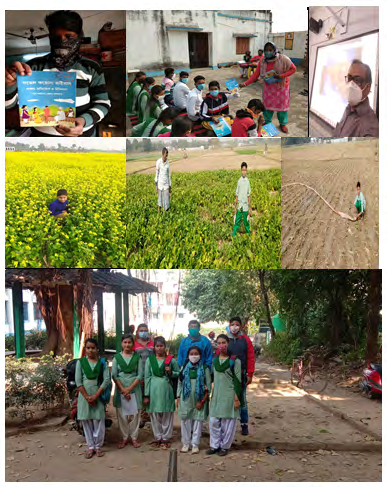
Plate 1: Different activities of the students of Kanchannagar D.N.Das High School (HS).
Part I: Related to COVID-19.
- i)
- Total No. of COVID Positive Patients found on the day of reporting *
- :
- 11 ii)
- Total no of COVID positive patients**
- :
- 11994 iii)
- Total no of active patients as on today***
- :
- 85 iv)
- Total no of discharged cases
- :
- 11732 v)
- Total no of COVID death recorded
- :
- 177
- Quarantine status vi)
- Total no of persons under institutional quarantine
- :
- 538 vii)
- Total no of persons under house quarantine
- :
- 0 viii)
- Total no of persons under quarantine from Maharashtra, Delhi,
- Gujarat, Tamil Nadu & M.P.
- :
- 733 ix)
- Total no of persons under quarantine from other state of India
- :
- 27 x)
- Total no of persons relaxed from institutional quarantine
- :
- 192
- Testing status xi)
- Total no of Sample collected up to 16.01.2021
- :
- 170066 xii)
- Total no of Sample tested
- :
- 169320 xiii)
- Total no of Positive cases
- :
- 6802 (+50 repeat +ve) xiv)
- Total no of negative Cases
- :
- 161385(+1083spillage/rejected)
- Containment Zone status xv)
- Total no of Containment Zone as on today
- :
- 110 xvi)
- Total no of containment withdrawn
- :
- 4103
- On date – Positivexvii)
- Total No. of Migrant (Other State + Other Dist. of WB):
- :
- 0 xviii)
- No. of Persons in Safe House:
- :
- 0 xix)
- No. of Person in Covid Hospital:
- :
- 3 xx)
- No. of Persons in Home Isolations:
- :
- 8
- Analysis on COVID-19 +Ve Cases xxi)
- Rate of Recovery# (Percentage)
- :
- 97.81 xxii)
- Rate of Mortality# (Percentage)
- :
- 1.47
- Report on Sample Testing xxiii)
- Antigen Test
- :
- 99 xxiv)
- RT-PCR Test
- :
- 801 xiv)
- Test Result within 24 Hrs.
- :
- 164 (RAT-99 + RTPCR-65)
Table 2: Daily Press Briefing: Purba Bardhaman.
Part- II: Related to COVID-19.
| Analysis on COVID +Ve Cases on 17/01/2021 | *COVID Positive as on today | **Total Positive Cases | |
|---|---|---|---|
| Type | Symptomatic | 3 | 1808 |
| Asymptomatic | 8 | 10186 | |
| Total | 11 | 11994 | |
| Contact Analysis | Primary Contact | 2 | 1364 |
| Travel from High Burden Dist. of W.B. | 0 | 215 | |
| Travel from Other State | 0 | 435 | |
| No Travel History | 9 | 9980 | |
| Total | 11 | 11994 |
Table 3: Daily Press Briefing: Purba Bardhaman. Date: 17/01/2021 (Up to 5.00 P.M.):(Report to be sent by 7.00 P.M Daily) #on Tota
Distribution of COVID Positive Cases found on 17/01/2021[Burdwan Municipality: 06, Katwa Municipality: 01, Aushgram-I: 01, Jamalpur: 02, Ketugram-I: 01]. Table 2: COVID-19 report on 17th January 2021 of Purba Bardhaman district (Part-I & II).
Conclusion
It may be concluded that this paper should be considered for the possible pathway of future pandemic COVID-19 like’s virus-free world, where the student’s act as a 21st-century preventive-pandemic-COVID-19 model, improving advanced- clinical-toxicology, biomedicines, green-socio-economy, and science-technology-innovations-communication (Tables 1,2 & Plate 1) by boosting community immunity or herd- immunity, and developing policy-initiative social strategies issues, removing the adverse effects of chemicals on living organisms and clinical studies in all areas of toxicology like immunotoxicity, neurotoxicity and drug toxicity etc.
References
-
Dasgupta M (2018) Neurotoxicity, Immunotoxicity and Drug Toxicity-A Review. Adv Clin Toxicol 3(S1): 1-2.
-
Datta SC (2020a) Okra Maybe Potential Cost-Effective Personalized-Biomedicines Social-Vaccine against COVID-19: Improved Immunity Food-Security Green- Economy Science-and-Technology-Communication Applications. Innovative Journal of Medical Sciences 4(2): 5-20.
-
Datta SC (2020b) Potential Policy-Developed Global- COVID-19-Vaccine: Enriched Medical Sciences and Technology Green-Socio-Economy. Cross Current International Journal of Medical and Biosciences 2(10): 143-154.
-
Datta SC (2020c) Intercropped Cowpea Maybe Use as Biomedicine Improved Immunity against COVID-19: Enriching Science and Technology Communication Applications Food Security Economy. Diagnosis and Therapies Complementary and Traditional Medicine, pp: 35-48.
-
Datta SC (2020d) NGO Act as Potential-Policy-Developer Social-Vaccine-COVID-19 Epidemic-Model until Discovery-of-Medical-Vaccine: Achieved Green-Socio- Economic Welfare Science Technology Innovations. Arch Community Med Public Health 6(2): 225-232.
-
Datta SC (2020e) Weeds-Vegetables and Fruits Act as Potential Biomedicines against COVID-19: Enriched Agriculture Biodiversity Socio-Economy Science Technology Communications by Controlling Plants Diseases. Journal of Experimental Biology and Agricultural Sciences, October - 2020; 8(2): S139-S157.
-
Datta SC (2021a) Amaranth plant protects climate-health- development socio-economy sciences-technology- communication: Act as potential biomedicine-vaccine against plant and 21st century-epidemic COVID-19 diseases. Environmental Science: An Indian Journal.
-
Datta SC (2021b) Weed-Plant Act as Vaccine against Plant-and-COVID-19 Diseases: Enriched-Agriculture- Health-Development Socio-Economy Sciences- Technology-Communication-Application. International Journal of Pharmaceutical Sciences and Clinical Research for publication in the ‘Special Issue’ of the Thomsanreuters- Clarivate Analytics platform associate with Pubmed Review connect Journal.
-
Datta SC (2021c) Improved midday meal by using cowpea as eco-friendly crop controlling root-knot forming global, green, growth and green economy. International Journal of Advanced Research.
-
Datta SC (2021d) Editorial Note: Only Environmental Science Act as Natural Biomedicine Preventive Epidemic Model of 21st Century Pandemic Diseases! Environmental Science: An Indian Journal.
-
Datta SC (2020f) Artificial-Nest Rainwater-Harvesting with Fishery and Floating-or-Rooftop-Gardening Act as 21st Century Civil-Engineering COVID-19 Epidemic-Model: Improved Biodiversity Agriculture Socio-Economic Environmental-Sciences Technology- Communication. Journal of Civil Engineering and Environmental Sciences 6(2): 022-036.
-
Datta SC (2020g) Improved Science and Technology Communications: Barn Owl Act as Social Vaccine Against COVID-19. International Journal of Latest Research in Science and Technology 9(3): 6-13.
-
Datta SC (2020h) Enriched Science and Technology Communication Economy in Agriculture by Use of Acacia sides as Potential Bio-Agents against Various Pathogens. Advances in Agriculture, Horticulture and Entomology 2: 1-13.
-
Datta SC (2020i) Discovery of COVID-19 Vaccine by Using Acaciades as a Phytomedicine Improving Science and Technology Communication Applications- An Ideas. Open Access Journal of Biogeneric Science and Research 2(1): 1-30.
-
Datta SC (2020j) Biomedicines-Cina against COVID-19: Controlled Plant Diseases Enriched Science and Technology Communication Green Economy. The International Journal of Research-Granthaalayah 8(9): 234-255.
-
Datta SC (2020j) _Acacia auriculiformis_-Extract Synthesis PR-Proteins Developed Potential Biomedicines-Vaccine against Okra-Diseases and COVID-19: Improved Science Technology Communications Bio-Economy Applications 8(10): 249-270.
-
Datta SC (2020k) Biomedicines-Aakashmini Cost- Effective COVID-19 vaccine: Reduced Plant-Diseases Enriched Science Technology Communications Socio- Economy Bio-Applications. Global Journal of Bioscience and biotechnology 9(4) 2020: 127-144.
-
Datta SC (2020l) Biological and BioSystems Engineering Barn Owl Controlled COVID-19: Engineering Bio-mechanical Biomedical Science Technology Communication Enriched Agriculture Environment. International Journal of Engineering and Science Invention.
-
Datta SC (2020m) Cina-Pretreatments Act as Potential- Biomedicine-Vaccine against COVID-19 and Okra-Plant- Diseases: Synthesis PR-Proteins Increased-Immunity Improved Biomedicines-Economy Applications Science- Technology-Communications. International Journal of Ayurveda 6(1): 05-26.
-
Datta SC (2020n) Homeopathic Medicines Aakashmoni Will Be the Best Vaccine against COVID-19: Enriching Agriculture Science and Technology Communication Mechanism Application Issues! for publication in the International Journal of Research-Granthaalayah 8(11): 333-361.
- Pattern of Gonadal Hormones in Oral Testosterone-Supplimented Male Wistar Rats with Diabetes-Induced Hypogonadism
- Re-Evaluation of the Genotoxicity of Currently Used Food Dyes in Mouse Multiple Organs Via Continuous Administration by Drinking Using the Comet Assay
- Pharmacogenetics of Type 2 Diabetes Mellitus: Linking Genetic Variability to Drug Efficacy and its Cardiovascular Outcomes
- Exploratory Proteomic Profiling of SARS-CoV-2 Infected THP-1 Macrophages Reveals Alterations in Inflammatory Response and Cellular Metabolism
- Study of Genotoxicity of Hepatocarcinogens in Multiple Organs in Mice by Feeding and Drinking Using the Comet Assay
- Spirulina Polypeptides Inhibit the Growth of Human Lung Tumor (H460) Cells