
Evaluation of Changes in the Uptake of Heavy Metals in Leachate using Vetiver Phytoremediation
The aim of this study was to evaluate the potential of uptake of heavy metals from waste leachate to determine the amount of uptake of lead, cadmium, manganese and nickel by vetiver was performed in greenhouse conditions. This research it was performed Based on a completely random design in three replications with four treatments Includes leachate, 0, 30, 60 and 100%. Data analysis was performed with Spss 19 software, comparison of mean treatments with analysis of variance and Duncan test at 1 % probability level and plotting of graphs with Excel software. The results showed that the uptake of heavy metals by the plant, There is a significant difference at the 99% level. Also by increasing leachate treatment levels, Root and shoot length, There is a significant difference at the 99% level. And with increasing levels of leachate treatment, the uptake of heavy metals has increased. The highest root uptake was with an average of 200.21 mg/kg. And in the shoot, was 147.93 mg/ kg in a total of four treatments. The highest rate of heavy metal uptake was related to 100% treatment with a total of 225.25 mg/kg in roots and 178.87 mg/kg in shoots for four metals lead, cadmium, manganese and nickel. Among the heavy metals absorbed in the roots and shoots, the highest levels were related to manganese, nickel, lead and cadmium, respectively. And manganese with an average of 123.88 mg, lead 91.08, nickel 79.69 and cadmium 53.49.27 mg/kg had the highest uptake by the plant. Also the biological concentration factor was more than one and the translocation factor was less than one The results showed that vetiver can be used as a Phytoestablization plant to purify contaminants. Vetiver can be considered as a refining plant due to its vegetative characteristics and cost-effectiveness.
Introduction
Rapid development, an increase in population, rural- urban migration, affluence and the rate of consumption have brought about an increase in waste generation and pollution which has badly affected man and environment [1]. Landfilling is amongst the human activities that have completely changed the fate of the natural ecosystems [2, 3, 4]. Landfill leachate is generated when rainwater mixes with the waste in a landfill [5]. Landfill leachate is a potentially polluting liquid, which unless returned to the environment in a carefully controlle [6, 8]. Leachate is defined as the aqueous effluent generated as a result of the filtration of rainwater through the wastes and the inherent water content of the wastes themselves deposited in landfills [7, 9]. Landfill leachate is generally high in contaminants [10]. Especially heavy metals and organic and inorganic matter [8, 11, 12, 13, 14]. That can contaminate groundwater and surface water in the area near the landfill [2, 8, 11, 14, 15, 16]. The effects on human health and ecosystems associated with heavy metal (HMs) pollution [17, 18, 19]. Become even more worrying given their tendency to accumulate and magnify along trophic levels [20].
For example, due to their bioaccumulation they can have toxic effects on living organisms when they exceed a certain concentration [17, 19, 21, 22, 23]. Representing a risk to human health when transferred thought the food chain [17, 18, 24, 25, 26, 27, 28].
The leachate has a dark color, bad smell, and high organic and nitrogen loads. Leachate may carry immiscible liquids (e.g., oil), small particulates (suspended solids) and a range of organism (e.g., bacteria and viruses) [29]. Leachate may also contain a large amount of organic matter (biodegradable, but also refractory to biodegradation). Treatment for leachate is difficult because leachate contained heavy metals, humic substances, recalcitrant compounds and chlorinated organic and inorganic salt [30].
Pollution of water resources with heavy metals and other contaminants is becoming an alarming risk of global environment owing to their persistence, abundance and significant toxicity [31]. Therefore, precise management and treatment of the landfill leachate are necessary to prevent the detrimental effect that contaminants can bring into the environment before its final discharge [32].
For leachate treatment using conventional methods, it can be classified into three major groups: (a) leachate transfer: recycling and combined treatment with domestic sewage, (b) biodegradation: aerobic and anaerobic processes and (c) chemical and physical methods: chemical oxidation, adsorption, chemical precipitation, coagulation/flocculation, sedimentation/flotation and air stripping [33, 34]. However, with the continuous hardening of the discharge standards in most countries and the aging of landfill sites with more and more stabilized leachates, conventional treatments (biological or physicochemical) are not sufficient anymore to reach the level of purification needed to fully reduce the negative impact of landfill leachates on the environment. In spite of being efficient, these methods are expensive, time- consuming and environmentally devastating. Moreover, these methods create soil deterioration. Therefore, developing new technologies that are low-cost and environmentally friendly is necessary [31, 35]. Faced with this problem,, phytoremediation has emerged to be the green plant based cleanup solution that is able to remove, metabolize and degrade a wide range of hazardous soil HMs contaminants with minimum cost required and are non-destructive to the natural ecosystem [36, 37].
Phytoremediation is an energy-efficient, cost-effective and aesthetically pleasing alternative to remediation sites with low to moderate levels of pollution [38, 39, 40]. It is a set of technologies that reduce in situ or ex situ the concentration of various compounds from biochemical processes carried out by plants and associated microorganisms [24, 41, 42, 43]. In the phytoremediation method, plants and microbes are used for the elimination of contamination. The most ideal plant for phytoremediation is a plant with high biomass, high growth rate, and higher ability to accumulate metals, in phytoremediation, as a biotechnological strategy, plants are employed to extract and sequester complex pollutants from terrestrial or aquatic environments [34, 44]. Phytoremediation is the utilization of plant to remove and accumulate contaminants from environment, including the use of plants to mitigate, transfer, stabilize or degrade pollutants in soil, sediments and water [45, 46].
Numerous plants have being studied over the years, with reports suggesting Vetiver grass, Vetiveria zizanioides (Linn.) Nash to be one of the most promising plants, with a fast growth rate, and the ability to adapt to many environmental conditions and stress, in addition to being able to tolerate a wide range of extreme HM contamination in soils, The Vetiver plant has been considered for phytoremediation due to its special characteristics [47, 48].
Vetiver grass is belongs to the Poaceae family and it is native to south and south-east Asia. Vetiver, a medicinally important perennial plant, known to control soil erosion, toleratesa wide range of pH and elevated levels of toxic metals [45, 49]. Vetiver is hydrophilic terrestrial plant which has physiological characteristics like the ability to absorb dissolved nutrients such as N and P, reduce BOD, COD, TSS, oil spill, accumulate HMs, batik production wastewater, tofu production waste water, and high tolerance to herbicides and pesticides [50, 51, 52].
Recent studies by Singh, et al. [53] have solely focused on the phytoassessment of a single metal accumulation. However, there is a growing concern on mixed (Cd–Pb-Mn- Ni) metal contamination with Vetiver urgent clarification. Lead, cadmium, manganese and nickel elements are extremely toxic even at low concentration levels [54, 55]. Although some phytoremediation studies have been carried out using Vetiver grass [53, 56, 57]. In this research, Vetiver grass (Vetiveria zizanioides) will be investigated in terms of its potential application in phytoremediation of soils contaminated with heavy metals (cadmium, lead, manganese, nickel) by leachate and, the method and rate of absorption of HMs in stems and roots of Vetiver plant has been investigated. The aim of this study was to determine the amount of adsorption of leachate HMs by the plant under study.and as well as compare the performance of different organs of the Vetiver plant (roots and shoots) in the absorption of leachate heavy metals from the soil in greenhouse conditions. Also, in order to better understand the accumulation and transfer of HMs in the plant, different indicators such as biological aggregation index, transfer factor and transfer efficiency index were calculated.
Previous studies have focused on the uptake of one element in the waste leachate by the plant, but in this study, four elements were investigated. Also, transfer and bioaccumulation factors have been studied. This study describes the application, research experience and future prospects in relation to applying phytoremediation of Vetiver grass as a suitable natural tool for promoting a sustainable environment.
Materials and Methods
The research method is descriptive-analytical and applied in terms of purpose. Data collection is collected through library, field, laboratory and database studies. Sampling location of landfill waste leachate for conducting this project is the geographical coordinates of Zone 39S 37°05’19.20”N 49°37’50.73”E, and about 800 meters below the exit of waste leachate from the landfill area, and its flow to the leachate stream, which moves towards the Kacha River. Leachate collection was carried out exactly at a time when 3 days prior to its collection, there had been no rainfall. Also, there was no sewage or water stream in the path of the leachate stream. According to plant irrigation rate and water requirement, 20 gallons of 25 liters of leachate was collected. Then, in order to stabilize it, 5 ml of concentrated 65% nitric acid was added per each liter of leachate which preserved the compounds and elements inside the leachate for six months. After stabilization, leachate was transferred to the greenhouse and treatments of 0, 30, 60 and 100% of leachate were prepared for implementation of the experimental design and irrigation of Vetiver plants and this leachate was used for about 4 months.
Concentration of Heavy Metals in the Leachate
To determine the amount of heavy metals of leachate used for irrigation of Vetiver from the landfill of Saravan, Rasht, 3 samples were taken and after analysis of samples in the laboratory, the amount of heavy metals in leachate are presented in (Table 1) [58].
| Metal | Concentration | Threshold Limit |
|---|---|---|
| Pb | 101 | 4.4 |
| Cd | 45 | 0.1 |
| Mn | 256 | 1152 |
| Ni | 209 | 31 |
Table 2: Heavy metal concentrations (μg/L) of leachate of the site studied and the corresponding threshold limit values.
Plant Cultivation and Irrigation with Waste Leachate
To implement this design, two locations were considered. One was planted in the greenhouse at the location of the project implementation and, using the waste leachate collected from the location of the Saravan landfill, was irrigated based on the water requirement of plants during the growth period. This leachate was stabilized using 5ml of concentrated nitric acid (65%) per each liter of leachate. This stabilizes the leachate and preserves the compounds and elements in the leachate for 6 months [59].
Conservation
Vetivers were irrigated and maintained for about 5 months according to the same temperature conditions and water requirements and with regard to irrigation with leachate were also irrigated and maintained on the same basis, and during this time, plants were cleared of weeds.
| Parameter (unit) | Mean |
|---|---|
| Soil Texture | |
| Sand (%) | 65.58 |
| Very coarse sand (%) | 8.16 |
| Coarse sand (%) | 26.02 |
| Medium coarse sand(%) | 31.21 |
| Fine sand (%) | 13.54 |
| Very fine sand (%) | 2.07 |
| Silt (%) | 19.48 |
| Clay (%) | 14.94 |
| Temperature (°C) | 30.3 ± 4.5 |
| pH | 6.5-7.4 |
| ECedS.m -1 | 1.6 |
| Water content (%) | 5.72 ± 2.03 |
| Field capacity (%) | 40.93 ± 6.3 |
| Saturation level (%) | 13.97 |
| Bulk density (g/cm3) | 1.62 ± 0.78 |
| Porosity (%) | 38.87 ± 4.39 |
| Metal Contents (mg/kg) | |
| Pbmg kg-1 | 16.55 ± 4.08 |
| Cd mg kg-1 | 4.23 ± 1.91 |
| Mn mg kg-1 | 32.94 ± 3.4 |
| Ni mg kg-1 | 18.22 ±4.26 |
| Avai. P (ppm) | 12.1 |
| Avai. K (ppm) | 215 |
| TN (%) | 0.225 |
| OC (% | 2.09 |
Table 1: Physicochemical properties of selected soils.
In the present study, the effects of four types of leachate with different concentrations were evaluated on Vetiver plant in three replications. The Vetiver plant was cultivating in 10 kg of contaminated landfill soil. Leachate was diluted with concentrations of 0, 30, 60 and 100% compared to the original leachate. Plant height was measured weekly. Soil samples were air dried and then ground. Heavy metals were analyzed using an atomic absorption device; also, other physical and chemical properties of the soil were determined (Table 2).
Preparation of samples, Acidic digestion, HMs analysis
As accordance to Method laboratory instruction (I.R.I.DOE, 2010 Edition) After transferring the samples to the laboratory, and drying and crushing them, and determination of dry weight of plant organs (roots and shoots) (Table 3), samples were prepared for the acid digestion process using concentrated nitric acid (65%). Then using 1, 2, 3 ppm solution of each HMs from the prepared standard 1000 ppm solution, the calibration curve of the HMs solution was created. and finally, The amount of uptake by plant organs was determined using the Perkin-Elmer PinAAcle 900TT Atomic Absorption spectrophotometer (AAS) [59, 60, 61, 62]
| Dry weight of vetiver g/pot | ||
|---|---|---|
| Leachate treatment levels | Roots | Shoots |
| Blank | 32.12 | 18.61 |
| Leachate 30% | 34.54 | 19.52 |
| Leachate 60% | 38.01 | 25.11 |
| Leachate 100% | 30.01 | 17.21 |
Table 3: Dry weight of Vetiver.
Data analysis
This study was performed based on a completely randomized design in three replications with four treatments, including zero, 30, 60 and 100% leachate to determine the heavy metals lead, cadmium, manganese and nickel. Variance analysis of data was calculated with SPSS19 software, comparison of means for treatments was calculated by analysis of variance and Duncan’s test with probability level of 5%, and graphs were made with Excel software.
Results
Mean heavy metal (lead, cadmium, manganese, nickel) uptake by rootand shoots. of Vetiver plant in different leachate treatments
Considering the result shown in Figures 1-8 related to the mean (HMs) uptake of lead, cadmium, manganese and nickel in different treatments of waste leachate (with different leachate concentrations of 0, 30, 60 and 100% in the roots and shoots, the mean uptake there is a significant difference in the level of 99%., and with the increase of waste leachate treatment levels, the uptake of heavy metals in roots and shoots has increased.
The results showed that the highest rate of uptake in all four treatments was related to the root with a total of 200.21 mg/kg. That is, on average, the root was able to absorb 200.21 mg / kg of heavy metals from the 4 treatments used. Among the treatments used, the highest amount of (HMs) adsorption is related to 100% treatment Among the treatments used, the highest amount of heavy metal uptake is related to 100% treatment with a total of 225.25 mg/ kg for the four studied metals (lead, cadmium, manganese and nickel) in the root. Among the heavy metals absorbed in the roots, the highest levels were related to manganese, lead, nickel and cadmium, respectively. And manganese with an average of 70.70, lead 52.73, nickel 44.56 and cadmium 32.22 mg/kg had the highest uptake by the plant. In the shoots, the total amount of uptake, with an average of 147.93 mg/kg, was for four treatments. In other words, on average, the shoot was able to absorb 147.93 mg/kg of heavy metals from the 4 treatments used. Among the treatments used, the highest rate of heavy metal uptake is related to 100% treatment with a total of 178.87 mg/kg for the four metals studied (lead, cadmium, manganese and nickel) in the shoots. Among the heavy metals absorbed in the shoots, the highest amounts were related to manganese, lead, nickel and cadmium, respectively. Manganese with an average of 53.18, lead 38.35, nickel 35.13 and cadmium 21.27 mg/kg, had the highest uptake by the plant in the shoots. The results show that the plant significantly is able to absorb higher amounts of heavy metals by exposing higher concentrations of leachate. Vetiver in roots and shoots in total with exposure to four treatments used in greenhouse conditions, the highest amount of uptake was related to manganese, lead, nickel and cadmium, respectively. Of course, this amount of heavy metals absorption in the roots and shoots (maximum and minimum amount of metal absorption) is due to their amount in leachate and soil and also the concentration of leachate.
Based on Table 4, analysis of variance table with dependent variables of lead, cadmium, manganese, nickel and independent variables of leachate treatments (with different leachate concentrations of 0, 30, 60 and 100%, compared to the main leachate) shown in the root The effect of leachate treatments on the uptake of heavy metals lead, cadmium, manganese and nickel in the roots of vetiver plant has a significant difference at the level of 99%. In other words, with increasing leachate concentration in the plant soil, the uptake of heavy metals (lead, cadmium, manganese
- and nickel) in the plant roots increases, and the root is able to collect more heavy metals. This effect of leachate levels on the uptake of heavy metals by plant roots was also confirmed in the test (Duncan Multi-Range Test).
- Source of Variation df
- Mean Square
- Hevy metals concentration (Pb, Cd, Mn, Ni) in roots plant
- Pb of roots
- Cd of roots
- Mn of roots
- Ni of roots
- Effects of leachate treatment
- 3
- 134.000**
- 89.763**
- 69.876**
- 54.110**
- Error
- 8
- 0.251
- 0.335
- 0.236
- 0.171
- C.V %
- -
- 8.7
- 6.44
- 16.23
- 3.47
Table 4: Analysis of variance (mean squares) the effects of waste leachate treatments on the uptake of heavy metals (lead,
- Table 4: Analysis of variance (mean squares) the effects of waste leachate treatments on the uptake of heavy metals (lead, cadmium, manganese and nickel) in the roots of vetiver.
- ** Significant at the 99% probability level; * Significant at the 95% probability level; ns: not significant
- Source of Variation df
- Mean square
- Heavy metals concentration (Pb, Cd, Mn, Ni) in roots plant
- Pb of shoots
- Cd of shoots
- Mn of shoots
- Ni of shoots
- Effects of leachate treatment
- 3
- 182.149**
- 101.741**
- 97.400**
- 222.903**
- Error
- 8
- 0.102
- 0.016
- 0.016
- 0.076
- C.V %
- -
- 5.44
- 4.04
- 10.33
- 4.51
Table 5: Analysis of variance (mean squares) the effects of waste leachate treatments on the uptake of heavy metals (lead,
Table 5: Analysis of variance (mean squares) the effects of waste leachate treatments on the uptake of heavy metals (lead, cadmium, manganese and nickel) in the shoots of vetiver. ** Significant at the 99% probability level; * Significant at the 95% probability level; ns: not significant Based on Table 5, analysis of variance table with dependent variables of lead, cadmium, manganese, nickel and independent variables of leachate treatments (with different leachate concentrations of 0, 30, 60 and 100%, compared to the main leachate) shown in the shoots The effect of leachate treatments on the uptake of heavy metals lead, cadmium, manganese and nickel in the shoots of vetiver plant has a significant difference at the level of 99%. In other words, with increasing leachate concentration in the plant soil, the uptake of heavy metals (lead, cadmium, manganese and nickel) in the plant shoots increases, and the shoots is able to collect more heavy metals. This effect of leachate levels on the uptake of heavy metals by plant shoots was also confirmed in the test (Duncan Multi-Range Test).
Capture of Heavy Metals in Vetiver zizanioides
The concentration of the heavy metals found in Vetiverzizanioides, is shown in Figures 1 to 8.
Figures 1 to 8, Concentration of heavy metals in Vetiver expressed in mg/kg
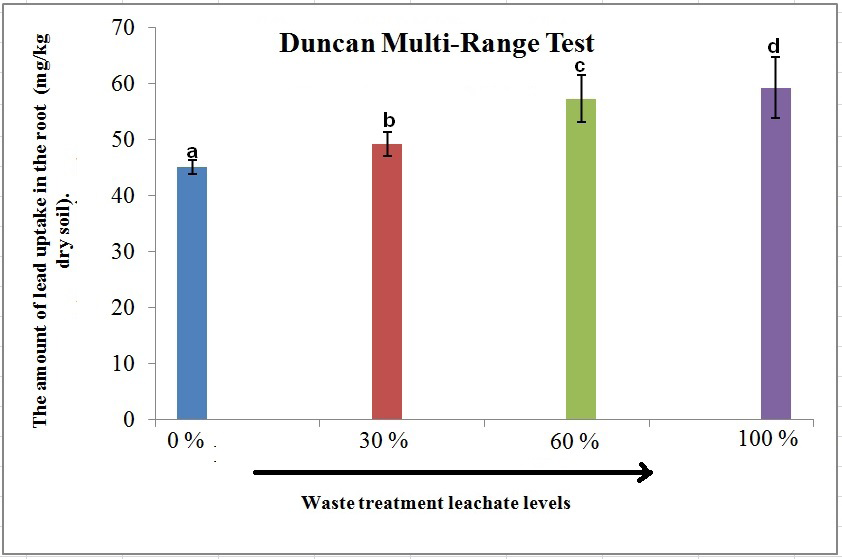
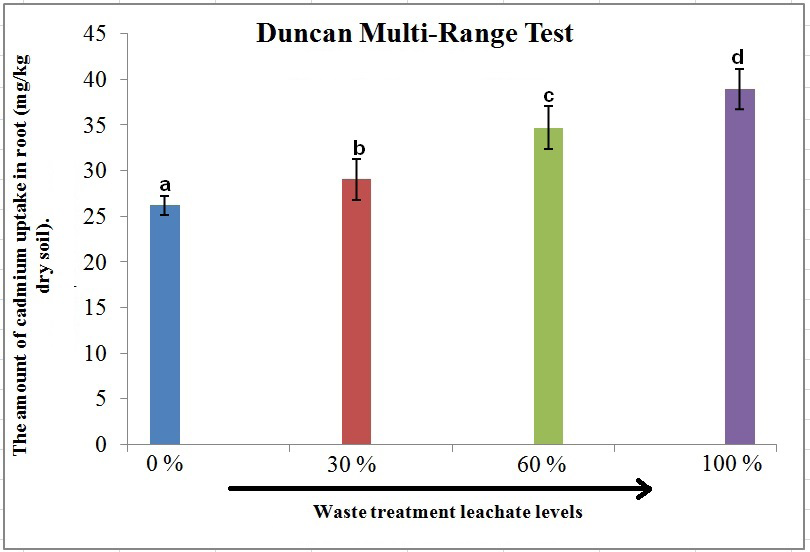
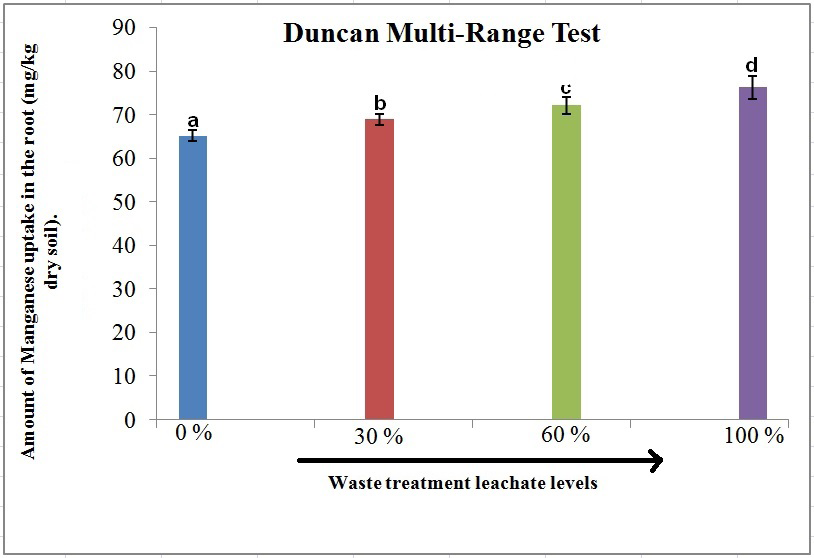
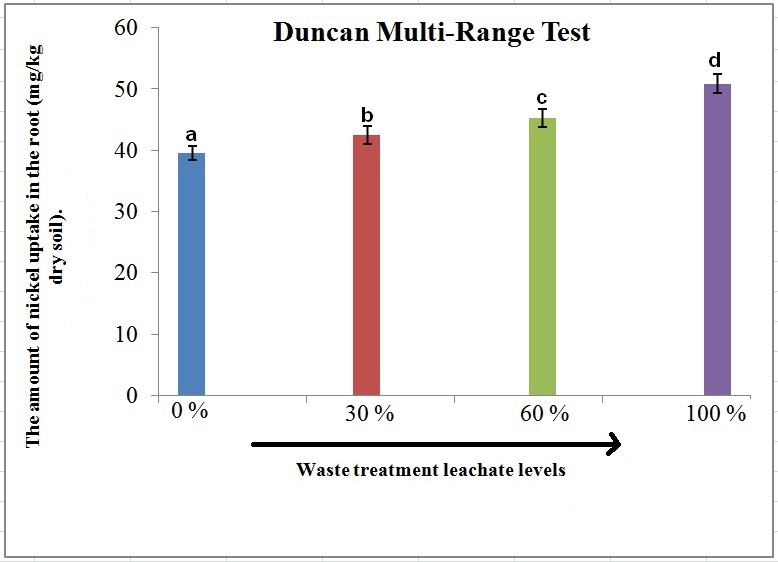
*In Figures 1-4, different letters indicate a significant difference in the Duncan Multi-Range Test at a probability level of 5% between different levels of treatment in nickel absorption. *Each number in the graph is average of three repetitions Considering the result shown in Figures 1-4 Evaluating the Duncan’s test regarding the effect of variation of different concentrations of leachate in soil (leachate treatment levels), it was revealed that with the increase of different concentrations of leachate, the accumulation and uptake rate of the heavy metals lead, cadmium, manganese and nickel in the root there is a significant difference in the level of 95%, which shows that with the increase of leachate treatment levels (increase in leachate concentration), the uptake of these heavy metals in the roots increases.
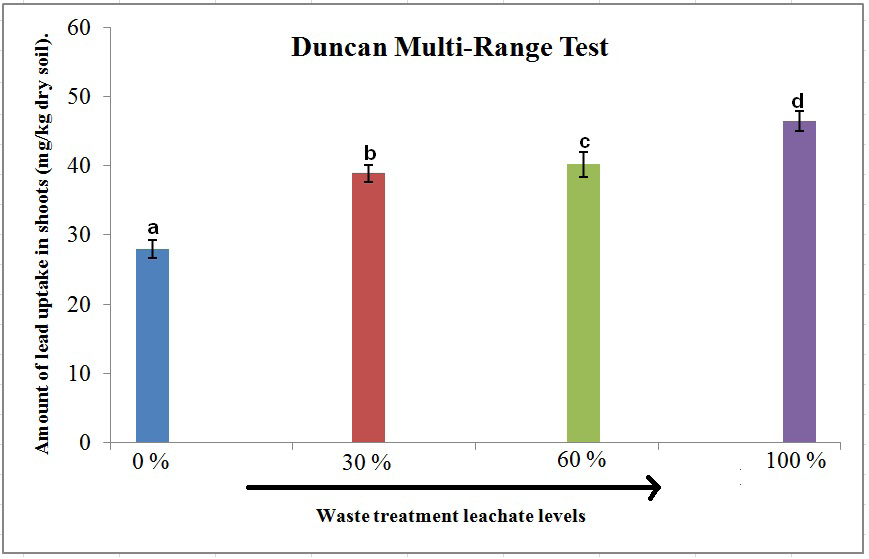
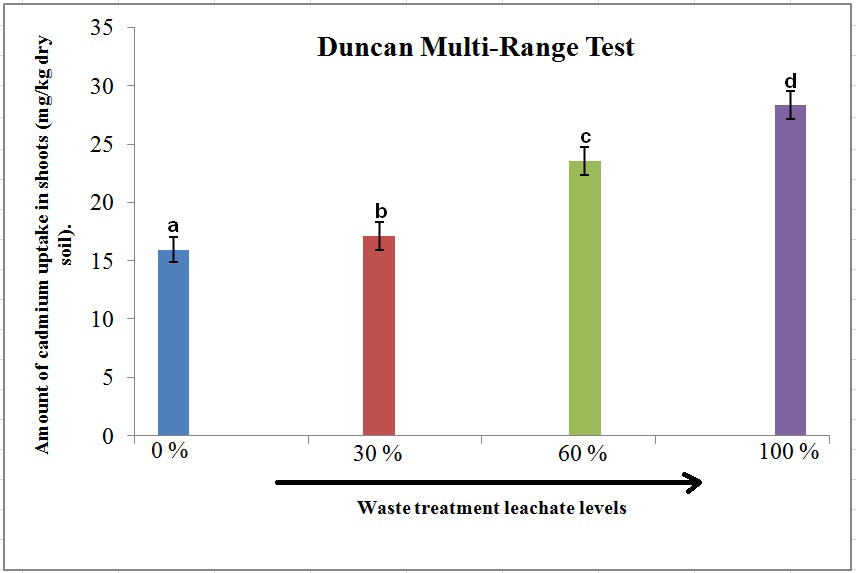
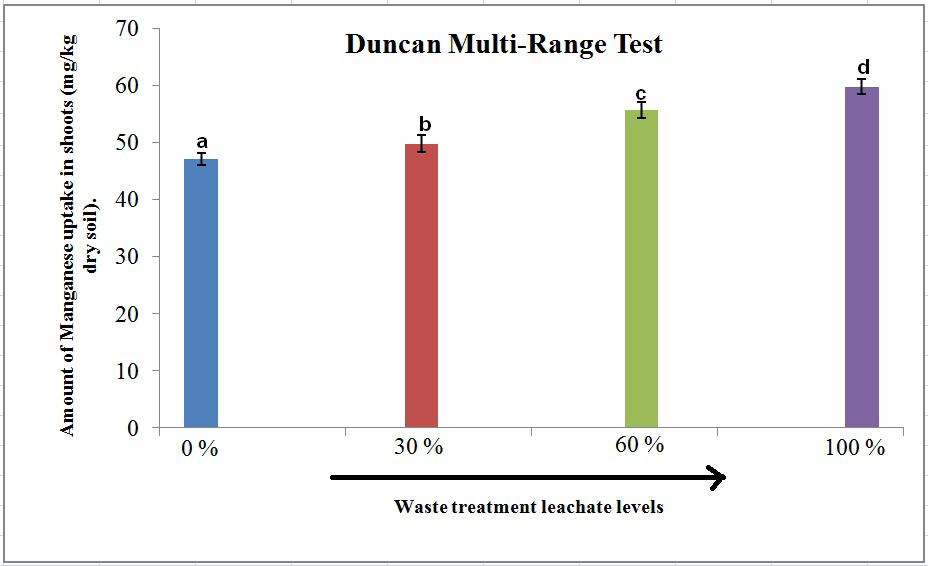
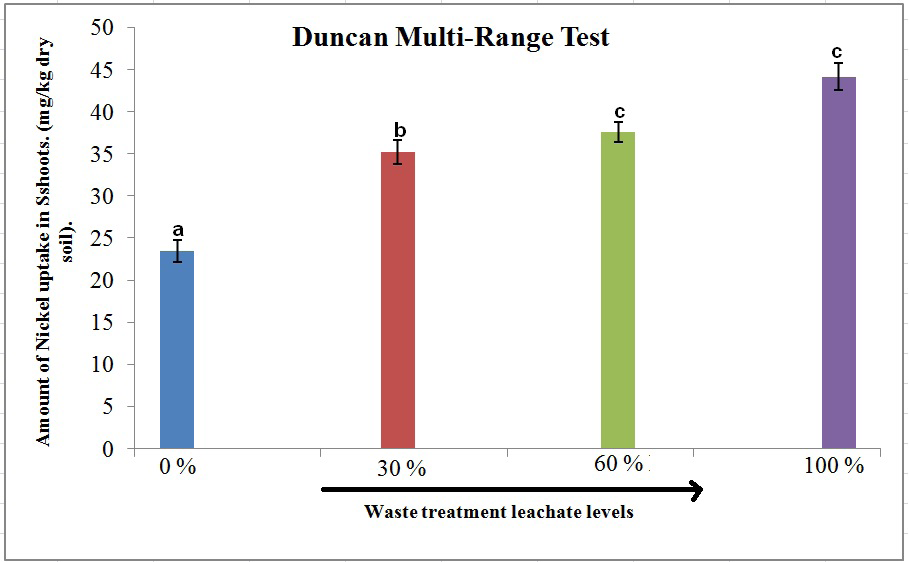
* In Figures 1-4, different letters indicate a significant difference in the Duncan Multi-Range Test at a probability level of 5% between different levels of treatment in nickel absorption. * Each number in the graph is average of three repetitions.
Based on the Figures 5-8 Evaluating the Duncan’s test regarding the effect of variation of different concentrations of leachate in soil (leachate treatment levels), it was revealed that with the increase of different concentrations of leachate, the accumulation and uptake rate of the heavy metals lead, cadmium, manganese and nickel in shoots, there is a significant difference in the level of 95%, which shows that with the increase of leachate treatment levels (increase in leachate concentration), the uptake of these heavy metals in the aerial organs increases.
Ability for Metal Translocation and Accumulation
In this study the ability for metal translocation and accumulation were evaluated by the biological concentration factor (BCF), biological accumulation coefficient (BAC), translocation factor (TF), as follows: BCF = HMs concentration in root - shoot / HMs concentration in soil BAC = HM concentration in shoot / HM concentration in soil TF = HM concentration in shoot / HM concentration in root [36, 37, 63, 64].
| Treatments | Total uptake of heavy metals (lead, cadmium, manganese and nickel) in roots and shoots (mg/ kg dry soil) | BCF root | BAC | TF |
|---|---|---|---|---|
| bio-concentration factors in roots | Bioaccumulation factor | translocation factor | ||
| Blank | 290.82c | 1.3 | 0.58 | 0.65 |
| Leachate 30% | 220.85a | 1.14 | 0.65 | 0.74 |
| Leachate 60% | 266.65b | 1.16 | 0.66 | 0.75 |
| Leachate 100% | 404.27d | 1.22 | 0.77 | 0.8 |
Table 6: Total average of adsorption and the effect of various HMs treatments on biological concentration factor (BCF), biologica
Based on the results of Table 4 to determine the potential of Vetiver phytoremediation, through translocation and bio- concentration factors (TF and BCF), it was found that with increasing levels of leachate treatment, translocation and bio-concentration factor, there is a significant difference at the level of 99%. And the highest translocation factor and biological concentration is related to leachate treatment with 100% concentration. The results showed that the translocation factor is less than one (TF<1) and the bio- concentration factor is more than one (BCF>1).
Morphological Changes of Vetiver Plant against Leachate Treatment Levels
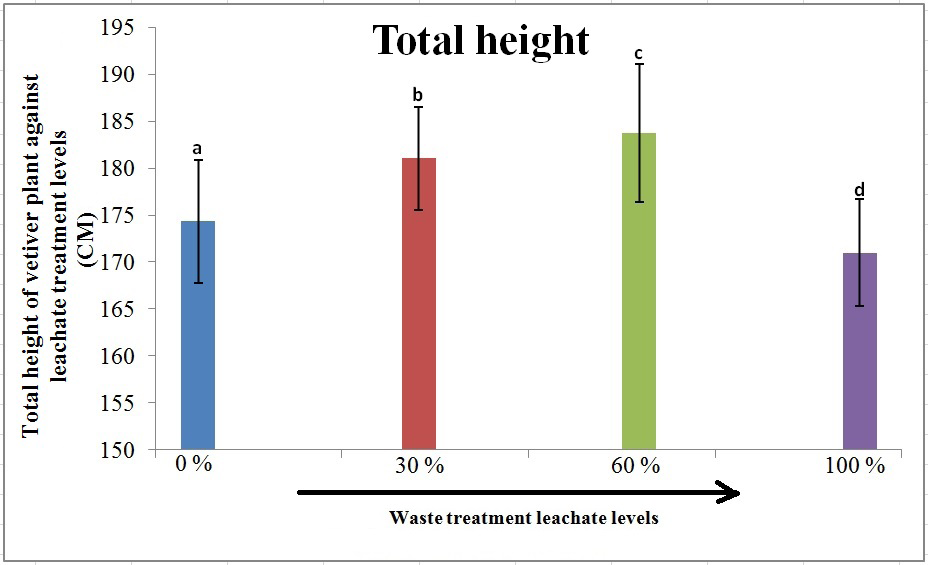
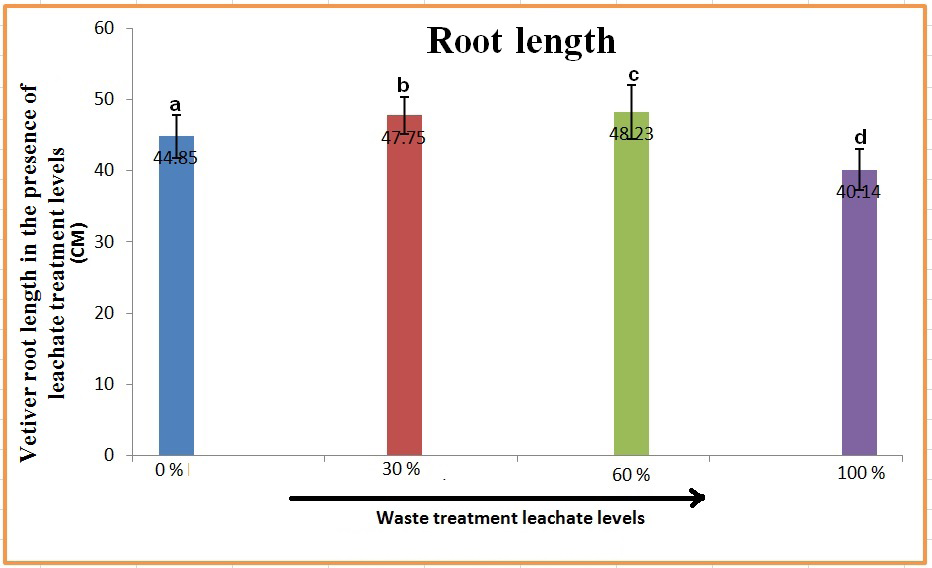
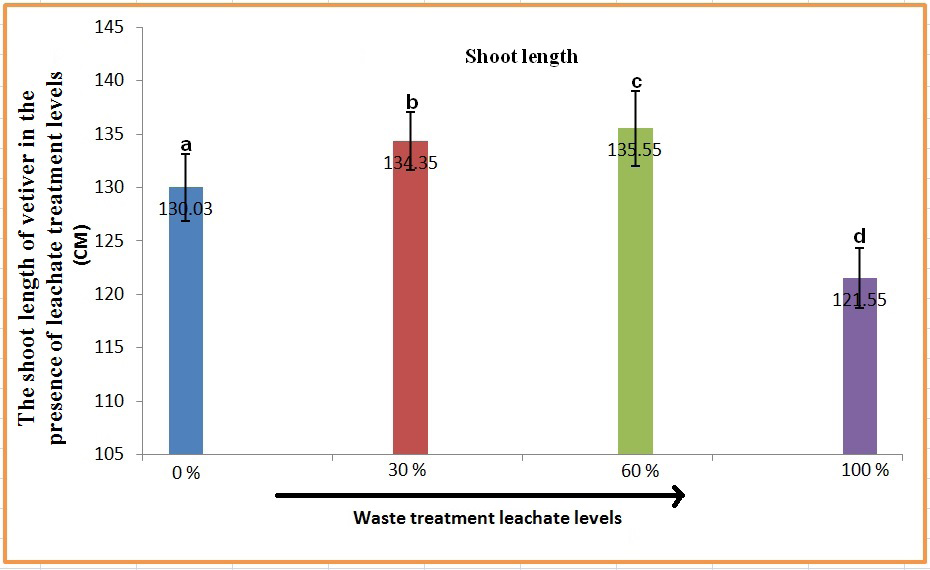
• Effect of heavy metals on vegetative traits (length root, shoot and total height) of vetiver seedlings Based on the results in Figures 9 to 11, it was shown that different levels of leachate treatment have a significant effect on the vegetative characteristics (length root, shoot and total height) of the studied seedlings and with increasing leachate concentration from 0 to 60%, the length of roots and shoots increases and when Vetiver plant is treated with 100% leachate or pure leachate, root and shoot length as well as total height are significantly reduced compared to 0, 30 and 60% treatments. The maximum increase in root and shoot length as well as total height is 60% for leachate treatment. And the minimum length of roots and shoots as well as total height is attributed to 100% leachate treatment.
Discussion
Physiological Function of Plant Roots and Shoots in the Uptake of Heavy Metals
Lead, cadmium, manganese and nickel are toxic heavy metals in the body when present beyond required levels it can bind with important enzymes and inactivate them [65]. Lead, cadmium, manganese and nickel in untreated leachate was found to be beyond WHO limit [66]. However in this study, it was found that Vetiver grass significantly reduced manganese, lead, nickel and cadmium after leachate treatments waste bringing it to concentration within acceptable limit.
Root length is an important indicator to measure of plant stress against any pollutant [67]. Root length decreased with the increase in the concentration of leachate treatments in the soil. Absorption of heavy metals in plants included transfer of metals outside the cells of the root, storing in tissues of xylem, and then subsequent detoxification, translocation and sequestration of metals occurred at both cellular and whole-plant level [68]. Results obtained from the present study revealed that roots of the plants absorb more concentration of heavy metals than the shoots of the plant (Figures 1 to 8). The highest adsorption of heavy metals under different leachate treatments for Vetiver is for manganese > lead > nickel> cadmium, respectively. And maximum plant uptake was observed in 100% treatment. In plants, the transfer of ions through cell membranes is first mediated by proteins called transporters. These ion carriers are specific ion transmitters and have specific function and are transported to the shoots of the plant [69]. But reason for the increase of lead, cadmium, manganese, and nickel) in the root of the Vetiver plant is its accumulation in the vacuoles; the accumulation of elements in cell vacuoles prevents their transmission to the aerial parts [70]. Therefore, the value of these heavy metals in the roots is more than the shoot [70]. However, absorption of HMs in the vacuole and especially in the cell wall has less toxic effects on the plant [70].
In Vetiver plant, lead cadmium, manganese, and nickel, remain attached to the cell wall or are stored in the root vacuole. It appears that lead and other elements (cadmium, manganese, and nickel) reduce water transfer to the shoots and following that, a portion (less than root absorption) is transferred to the shoot, and most of their accumulation has occurred in the root.
In fact, the stabilization and accumulation of HMs in the roots and less transmission to the shoot compared to the roots, which may be due to the sequestering of metal pollutants in root vacuole and the cells, is a strategy that some plants adopt to counteract the toxicity of heavy metals.
In this way, organs that are involved in the metabolism of plants are protected from the damage of HMs [71] but in this research, According to the data in Figures 1 to 8 and Table 4, although the Vetiver plant was more successful in absorbing HMs leachate in the root compared to the shoot and this is consistent with the research mentioned above, it has also been successful in the absorption and transfer of HMs to the shoot and this has not caused a disruption in the growth of Vetiver plants Figures 9 to 11, and the statistics of approximately 100% survival in Vetiver plants signifies this claim, therefore, according to its characteristics, Vetiver plant can be effective in clearing soils contaminated with HMs leachate.
Evaluation of Vetiver Phytoremediation Potential in Refining Heavy Metal Contaminated Soils Based on BCF and TF
TF and BCFs are important indicators to determine the phytoremediation potential. TF is the ratio of metal in shoots to the concentration of that metal in the roots of the plant BCF is used to measure the ratio of heavy metals in the shoots or root of the harvested plant to the (HMs) concentration in the soil [72]. BCF has four criteria which value less than 0.01 mean has no accumulation, value between 0.01–0.1 means low accumulation of heavy metals, value between 0.1-1.0 as medium accumulation and value more than 1.0 is considered as high accumulation of heavy metals [36, 37, 63, 64]. Maximum BCF values was observed in 100% treatment The difference in the BCF values for the understudy heavy metals through these plants was attributed to the mobility and the forms of these metals in which they exist. Overall, Vetiver had a relatively high concentration of heavy metals in its tissues as compared. The maximum TF value for the treatment was 100%. Then it was related to leachate treatments 60, 30 and control, respectively. That is, the transfer factor of the studied treatments was significantly higher than the control treatment. Which shows the effect of leachate and the ability of vetiver to deal with the toxic effects of heavy metals in leachate and to fight for survival against these effects In Vetiver, BF> 1 and TF <1 were reported (Table 4).
The low ability of plants translocation, from roots to shoots might be due to the reason that these plants possess multifaceted vacuoles in root tissues [73]. Interaction of different metals not only affects the rate of translocation but also alters the uptake efficiency and distribution of. This is confirmed by the Duncan multi-domain test and variance analysis. In the current study, vteiver store maximum concentration of heavy metals in roots while a smaller portion of these metals translocated in higher parts such as shoots. Significant metal immobility occurs due to the binding of metals to root cells, which can be considered a type of plant tolerance mechanism [74, 75].
These indicators (BCF, TF, BAC), the plant’s ability purification of contaminated soils from pollutants is assessed. Due to the fact that the Phytoremediation potential is determined according to the translocation factor (TF), biological concentration factor (BCF), biological accumulation coefficient (BAC) [36, 37, 63, 64, 76]. If the TF value is less than one and the BCF value is more than one the plants are suitable for the Phytoestablization process, and if the TF is greater than one, the plant is suitable for Phytoextraction. Also, the plants with TF and BAC index values greater than one are suitable for the Phytoextraction process. Also, the plants with TF and BCF values greater than one are suitable for the Phytoextraction and Phytoestablization process in the Phytoremediation process. And they can be a hyper- accumulating [76]. In this research, indices such as biological concentration factor (BCF), biological accumulation coefficient (BAC), translocation factor (TF), together with transfer efficiency indices were considered. In this study, it was found that with the increase of leachate concentration in the soil, BCF, and finally the TF have showed a significant increase. That is, when the plant is exposed to more heavy metals (when the concentration of leachate increases and we move towards treatments with a higher concentration of leachate) the vetiver plant reacts against it reacts with more accumulation of metals in the roots and their relative transfer to the shoot and resists this behavior against heavy metals. The results of this study showed that the BCF level was more than 1 (Table 4).
This factor indicates the ratio of HMs in plant organs to the soil bed [77]. In fact factor BCF has important value for estimating plant potential for plant extraction or plant stabilization [36, 37, 64]. If the value of BCF in the root is higher than that of the shoot, it indicates that the HMs is more accumulation in the roots [76]. According to the results of this study, the root accumulation factor is higher than the shoots, indicating that the Vetiver plant has stored HMs mostly in the roots, (Table 4). Based on the findings in Table 4, in the vetiver plant, due to having BCF > 1 and TF < 1, It can be said that it is suitable for refining leachate HMs pollution as an Phytoestablization. The Amount of Heavy Metal Uptake in Roots and Shoots in Contaminated Soils under the Influence of Leachate According to Tables (3-4), which shows the average absorption at different levels of treatments, it was found that the highest amount of adsorption, among the treatments, was related to Mn metal, which was 123.88 mg/kg in root and shoots, of this amount, 70.70 mg/kg in roots and 53.18 mg/ kg in shoot were accumulated, then, the highest absorption, respectively, was related to Pb > Ni > Cd Of course, this amount of absorption of metals is due to their amount in leachate and soil. Of course, this amount of metal absorption is due to the amount and nature of them in leachate and soil and in all treatments, root uptake was significantly higher than shoot. This is due to the fact that, first, the root of the first organ is in contact with toxic elements, and typically the accumulation of heavy metals in plant roots is higher than in shoots. This is because, the root of the first organ is in contact with toxic elements, and usually the accumulation of heavy metals in the roots of the plant is more than the shoots and in this study, by increasing the concentration of leachate, (leachate treatments) the absorption of metals increases. However, due to the amount of metals remaining in the soil, the percentage of metal uptake has decreased, and the first level of treatment had the highest percentage of absorption.
The mechanism of metal uptake from the roots is that plants are highly absorbent of metals and around their rhizosphere, they release protons that, by acidifying the soil, increase the mobility of metal ions and make it available to the roots [78]. Root secretions have a variety of roles, chelating metals that may increase the absorption of certain metals. Apoplast is the first site of metal uptake in the root [79]. Some of the metals adsorbed to the apoplast bind to cell wall compounds. In the cell wall, pectins such as polygalacturonic acid and its negatively charged carboxyl groups act as cation exchangers. The other part of the adsorbed metals is transferred to the hydroponic part of the apoplast and some of them are transferred to the cytoplasm through the plasma membrane. Plants have different mechanisms for absorbing heavy metals [80]. Among amino acids, proline is more sensitive to environmental stresses. Increasing proline causes the cell to adapt more to the stress conditions and protects cytosolic enzymes and cell structures. Proline has several roles in cells, stabilizing proteins, protecting against cold, and regulating redox potential. Proline accumulates mainly in the cytoplasm to balance the osmotic potential of the vacuole, such as pH adjustment. Numerous studies have been performed on the pathways of proline biosynthesis and catabolism. Vetiver seems to use the mechanism of metal excluders to reduce the toxicity caused by heavy metals, because it prevents the increasing accumulation of metal ions in the shoots and accumulates them more in the roots. To do this, the vetiver releases more proline to defend against the stresses of the heavy metals lead, cadmium, manganese and nickel.
Investigation of Organs Length of Vetiver Plant in Different Concentrations of Leachate
In general, changes in root morphology due to increased leachate concentration due to the presence of heavy metals and changes in root structure reduce nutrient uptake and reduce growth [81]. Reduction of sub-branches of plant root due to increase in nickel concentration, change in root color and decrease in root diameter are among the effects of nickel metal on Petroselinum crispum, which has been confirmed in other plants [82]. Given the long time that vetiver plants were under leachate treatments and as seen in (Figures 9-11) with increasing the leachate concentration to 60%, the root length of vetiver plants increased after 5 months of leachate irrigation. The highest root length was observed in vetiver plants irrigated with 60% leachate, which was equal to 48.23 cm. Root lengths of plants irrigated with 100% leachate were the shortest and was equal to 40.14 cm. The slope of root length changes in leachate treatment 60% was higher than other treatments and we face an increasing slope and then decreases. Differences in root length of control vetiver plants with plants irrigated with different percentages of leachate; it was statistically significant. Plants irrigated with leachate were also significantly different from each other. According to (Figures 9-11) it was found that the amount of heavy metals studied in leachate treatments, initially (up to 60% leachate treatment) increased the root length of vetiver plants. Then, by increasing the concentration of leachate, in 100% leachate treatment, it reduced the root length of plants irrigated with leachate.
Paraltau, et al. suggested that root damage caused by heavy metals was the main cause of growth reduction. Reduction of root length due to accumulation of heavy metals, increase in the process of disruption of plant biosynthesis, destruction of root tip meristems, or Cell division disorders and mitosis is abnormal [83]. Toxic concentrations of nickel, cadmium and manganese, by changing the membrane structure of root cells and reducing water absorption levels, have a negative effect on physiological processes such as transpiration, respiration, photosynthesis and ultimately reduce plant growth [81, 84]. Heavy metals have a negative effect on root structure and function and reduce the absorption of water and salts, reducing water absorption and creating secondary drought stress in plants [85]. According to the results of this study, a study performed on Petroselinum crispum showed that high concentrations of nickel have a significant effect on root length. So that with increasing nickels concentration, root length decreased [86]. In this study, the effect of leachate treatments on the height of vetiver organs was statistically significant at the level of 1%. Heavy metal stress caused a significant reduction in growth traits. Reduce growth may be due to reduced photosynthesis, because it has been shown that exposing plants to high concentrations of heavy metals reduces photosynthesis. Damage to photosynthesis occurs mainly due to a decrease in chlorophyll and an increase in lipid peroxidation [87]. In this study, it seems that heavy metals have reduced the height of the plant by affecting the photosynthesis of the plant. On the other hand, Vetiver has minimized this lack of growth and shortening of the organs by releasing large amounts of proline. Reduced growth of roots and shoots under lead stress can be due to high accumulation of lead in the roots, ligninization of the wall under the influence of heavy metal, direct impact of heavy metal on the cell nucleus, and interaction of heavy metals with sulfhydryl groups of cell membranes and inactivation. Other negative effects of lead on plant growth include its reduction in root and aerial part biomass and reduced function. Toxic effects of lead on plant photosynthesis can be applied in various ways, including reducing chlorophyll biosynthesis by reducing the concentration of essential elements magnesium and iron in leaves, complexing with photosynthetic proteins and increasing chlorophylase activity for chlorophyll degradation. Lead reduces the uptake of essential nutrients such as calcium, magnesium and iron by disrupting the normal activity of root cell membrane carriers, and as a result, lead-treated plants show signs of deficiency of these essential elements. Lead toxicity is due to the fact that it mimics many aspects of calcium metabolic behavior and inhibits the activity of many enzymes. Studies have shown that cadmium affects cell division and growth, overall plant growth, cell division in the meristem area, and regulates plant growth and development. Cadmium also causes chlorosis and necrosis, decreased total chlorophyll, a and b, carotenoids in plants, and impaired carbohydrate metabolism. The most important cause of the destructive effect of cadmium is that it cause produces reactive oxygen radicals such as superoxide (-2O) hydroxide (-OH) and hydrogen peroxide free radicals. These radicals react rapidly with DNA, fats and proteins. And cause cell destruction. Plants use enzymatic antioxidants (such as superoxide dismutase, catalase, peroxidases, etc.) and non-enzymatic (such as glutathione, ascorbate, volatile carotenoids, and proline) to counteract these free radicals [88]. High concentrations of nickel and manganese are considered as stressors factor for plants that can affect the physiological and biochemical properties of plants as a growth limiting factor. Nickel competes with the cations of calcium, magnesium, iron and zinc, so high the amount of nickel in the root environment of contaminated soils may lead to iron and zinc deficiency in the plant. One of the reasons for the toxicity of nickel and manganese in plants is its effect on iron homeostasis in roots and shoots with different mechanisms. High levels of nickel are involved in iron homeostasis. Vetiver seems to use the mechanism of metal excluders to reduce the toxicity caused by heavy metals, because it prevents the increasing accumulation of metal ions to the shoots and accumulates them more in the roots. Vetiver plant to reduce the toxicity of metals (lead, cadmium, manganese and nickel) studied in waste leachate, among non-enzymatic antioxidants, it benefits from the presence of proline. Proline is an antioxidant that scavenges free radicals, and by binding to heavy metals and forming a heavy metal-proline complex, it prevents the toxicity of this element [89, 90, 91, 92, 93, 94, 95, 96, 97, 98, 99, 100, 101, 102, 103, 104, 105].
Conclusion
Based on the results mentioned above, which was obtained under greenhouse conditions, certainly can be concluded that Vetiver has been very specialized in reducing heavy metals and other pollutants and has the ability to reduce the harms of heavy metals caused by waste leachate. Vetiver was found efficient accumulator for the heavy metals for the treatment of landfill leachate. In general, according to the results of the present study, it can be stated that, considering the optimum growth, acceptable viability, acceptable transfer of HMs from soil to roots and from roots to shoot, Interaction of metals in their uptake by plants, along with accumulation improvement of lead, cadmium, manganese and nickel in Vetiver plant organs grown in contaminated soil, vetiver have the ability to filtrate soils contaminated with leachate contains heavy metals lead, cadmium, manganese and nickel [106, 107, 108, 109].
References
-
Fauziah SH, Agamuthu P (2005) Pollution Impact of MSW Landfill Leacheate. Malaysian Journal of Science 24(1): 31-37.
-
El-Fadel M, Bou-Zeid E, Chahine W, Alayli B (2002) Temporal variation of leachate quality from pre-sorted and baled municipal solid waste with high organic and moisture content. Waste Manage 22 (3): 269-282.
-
Koda E, Pachuta K, Osinski P (2013) Potential of plants application in the initial stage of landfill reclamation process. Pol J Environ Stud 22: 1731-1739.
-
Wong MH, Chan YSG, Zhang C, Wang-Wai C (2016) Comparison of pioneer and native woodland species growing on top of an engineered landfill, Hong Kong: restoration programme. Land Degrad Dev 27(3): 500- 510.
-
Agamuthu P, KahlilKhidzir FSH (2009) Evaluations of solid waste management in Malaysia: Impacts and implications of the solid waste bill, 2007. J Material cycles and Waste Management 11: 96-103.
-
Remmas N, Roukouni C, Ntougias S (2017) Bacterial community structure and prevalence of Pusillimonas- like bacteria in aged landfill leachate. Environ Sci Pollut Res 24: 6757-6769.
-
Gworek B, Dmuchowski W, Koda E, Marecka M, Baczewska AH, et al. (2016) Impact of the municipal solid waste Łubna Landfill on environmental pollution by heavy metals. Water 8(10): 470.
-
Renou S, Givaudan JG, Poulain S, Dirassouyan F, Moulin P (2008) Landfill leachate treatment: review and opportunity. Journal of Hazardous Materials 150(3): 468-493.
-
Muñoz ZAF, Sanchez ZCE (2013) Un método de gestión ambiental para evaluar rellenos sanitarios. Gestion Y Ambiente 16(2): 105-120.
-
Roongtanakiat N, Nirunrach T, Chanyotha S, Hengchaovanich D (2003) Uptake of heavy metals in landfill leachate by Vetiver grass. Kasetsart J Nat Sci 37(2): 168-175.
-
Christensen TH (1992) Attenuation of Leachate Pollutants in Groundwater in Landfilling of Waste: Leachate, Christensen TH, et al. (Eds.), Elsevier, Barking, UK, pp: 441-483.
-
Bulc TG (2006) Long-term performance of constructed wetlands for landfill leachate treatment. Ecol Eng 26(4): 365-374.
-
Foo KY, Hameed BH (2009) An overview of landfill leachate treatment via activated carbon adsorption process. J Hazard Mater 171(1-3): 54-60.
-
Xie S, Ma Y, Strong PJ, Clarke WP (2015) Fluctuation of dissolved heavy metal concentrations in the leachate from anaerobic digestion of municipal solid waste in commercial scale landfill bioreactors: the effect of pH and associated mechanisms. J Hazard Mater 299: 577- 583.
-
Khattabi H, Aleya L (2007) The dynamics of macroinvertebrate assemblages in response to environmental change in four basins of the Etueffont landfill leachate (Belfort, France). Water, Air, Soil Pollut 185: 63-77.
-
Oman CB, Junestedt C (2008) Chemical characterization of landfill leachates-400 parameters and compounds. Waste Management 28(10): 1876-1891.
-
Mahmoud E, El-Kader NA (2014) Heavy metal immobilization in contaminated soils using phosphogypsum and rice straw compost. Land Degrad Dev 26(8): 819-824.
-
Roy M, McDonald LM (2015) Metal uptake in plants and health risk assessments in metal contaminated smelter soils. Land Degrad Dev 26(8): 785-792.
-
Vaverkova MD, Adamcová D, Radziemska M, Voběrková S, Mazur Z, et al. (2018) Assessment and evaluation of heavy metals removal from landfill leachate by _Pleurotus_ _ostreatus_. Waste and Biomass Valorization 9(3): 503- 511.
-
Anning AK, Akoto R (2018) Assisted phytoremediation of heavy metal contaminated soil from a mined site with Typhalatifolia and Chrysopogon zizanioides. Ecotoxicology and Environmental Safety 148: 97-104.
-
Nriagu JO (1990) Human influence on the global cycling of trace metals. Palaeogeography, Palaeoclimatology, Palaeoecology 82(1-2): 113-120.
-
Gusiatin ZM (2013) Use of sewage sludge-compost in remediation of soil contaminated with Cu, Cd and Zn. Environ Eng 4: 213-223.
-
Sas W, Głuchowski A, Radziemska M, Dzięcioł J, Szymański A (2015) Environmental and geotechnical assessment of the steel slags as a material for road structure. Materials 8(8): 4857-4875.
-
Kelley S, Aitchison E, Deshpande M, Schnoor J, Alvarez P (2001) Biodegradation of 1:4-dioxane in planted and unplanted soil: effect of bio augmentation with Amycolata sp. CB1190. Water Res 35(16): 3791-3800.
-
Kamarudzaman AN, Aziz, RA, Jalil FA (2011) Removal of heavy metals from landfill leachate using horizontal and vertical subsurface 10 Z. ABBAS ET AL. flow constructed wetland planted with Limnocharisflava. Int J Civil Environ Eng IJCEE-IJENS 11: 85-91.
-
Mojiri A, Aziz HA, Aziz SQ (2013) Trends in physical- chemical methods for landfill leachate treatment. IJSRES 1: 16-25.
-
Mazur Z, Radziemska M, Maczuga O, Makuch A (2013) Heavy metal concentrations in soil and moss (Pleuroziumschreberi) near railroad lines in Olsztyn (Poland). Fres Environ Bull 22(4): 955-961.
-
Radziemska M, Mazur Z, Jeznach J (2013) Influence of applying halloysite and zeolite to soil contaminated with nickel on the content of selected elements in Maize (Zea mays L.). Chem Eng Trans 32: 301-306
-
Environment Agency (2003) Guidance on Monitoring of Landfill Leachate, Groundwater and Surface Water, London, UK.
-
Monje-Ramirez I, Orta de Velásquez MT (2004) Removal and transformation of recalcitrant organic matter from stabilized saline landfill leachates by coagulation- ozonation coupling processes. Water Res 38(9): 2358- 2367.
-
Kumari M, Tripathi BD (2015) Effect of Phragmites australis and Typhalatifolia on biofiltration of heavy metals from secondary treated effluent. Int J Environ Sci Technol 12(3): 1029-1038.
-
Koda E, Miszkowska A, Sieczka A (2017) Levels of organic pollution indicators in groundwater at the old landfill and waste management site. Appl Sci 7(6): 2-22.
-
Shanying H, Zhenli HY, Xiaoe Y, Virupax CB (2012) Mechanisms of nickel uptake and hyperaccumulation by plants and implications for soil remediation. Adv Agron 117: 117-189.
-
Kafil M, Nasab SB, Moazed H, Bhatnagar A (2019) Phytoremediation potential of Vetiver grass irrigated with wastewater for treatment of metal contaminated soil. Int J Phytoremediation 21(2): 92-100.
-
Ahmadpour P, Ahmadpour F, Sadeghi S, Tayefeh F, Soleimani M, et al. (2015) Evaluation of four plant species for phytoremediation of copper-contaminated soil. In: Hakeem KR, et al. (Eds.), Soil remediation and plants. New York (NY): Elsevier, pp: 147-205.
-
Ali H, Khan E, Anwar M (2013) Phytoremediation of heavy metals: concepts and applications. Chemosphere 91(7): 869-881.
-
Ng CC, Rahman MM, Boyce AN, Abas MR (2016a) Effects of different soil amendments on mixed heavy metals contamination in Vetiver grass. Bull Environ Contam Toxicol 97(5): 695-701.
-
Flathman PE, Lanza GR (2010) Phytoremediation: current views on an emerging green technology. J soil Contam 7(4): 415-432.
-
Mojiri A, Aziz HA, Tajuddin RBM, Gavanji S, Gholami A (2015) Heavy Metals Phytoremediation from Urban Waste Leachate by the Common Reed (Phragmitesaustralis). In: Ansari AA, et al. (Eds.), Phytoremediation. Springer, Cham, pp: 75-81.
-
Siyar R, Ardejani DF, Farahbakhsh M, Norouzi P, Yavarzadeh M, et al. (2019) Potential of Vetiver grass for the phytoremediation of a real multi-contaminated soil, assisted by electro kinetic 246: 125802.
-
Cherian S, Oliveira M (2005) Transgenic plants in phytoremediation: recent advances and new possibilities. Environmental Science & Technology 39(54): 9377-9390.
-
Eapen S, Singh S, D’Souza SF (2007) Advances in development of transgenic plants for remediation of xenobiotic pollutants. Biotechnology Advances 25(5): 442-451.
-
Cho C, Yavuz-Corapcioglu M, Park S, Sung K (2008) Effects of grasses on the fate of VOCs in contaminated soil and air. Water, Air, & Soil Pollution 187: 243-250.
-
Kavamura VN, Esposito E (2010) Biotechnological strategies applied to the decontamination of soils polluted with heavy metals. Biotechnol Adv 28(1): 61- 69.
-
Ojoawo SO, Udaya kumar G, Naik P (2015) Phytoremediation of phosphorus and nitrogen with Canna x generalis reeds in domestic wastewater through NMAMIT constructed wetland. Aquatic Procedia 4: 349- 356.
-
Effendi H, Widyatmoko, Utomo BA, Pratiwi NTM (2020) Ammonia and orthophosphate removal of tilapia cultivation wastewater with _Vetiveria zizanioides._ Journal of King Saud University Science 32(1): 207-212.
-
Truong P, Hart B (2001) Vetiver grass for wastewater treatment. Pacific Rim Vetiver Network Technical Bulletin No. 2001/2.
-
Truong PD, Danh LT (2015) The Vetiver system for improving water quality: prevention and treatment of contaminated water and land, 2nd (Edn.), The Vetiver Network International.
-
Gautam M, Agrawal M (2017) Phytoremediation of metals using Vetiver (_Chrysopogon zizanioides_ (L.) Roberty) grown under different levels of red mud in sludge amended soil. J Geochem Explor 182(B): 218- 227.
-
Seroja R, Effendi H, Hariyadi S (2018) Tofu waste water treatment using Vetiver grass (_Vetiveria zizanioides_) and zeliac. Appl Water Sci 8: 2.
-
Effendi H, Munawaroh A, Ayu IP (2017a) Crude oil spilled water treatment with Vetiveria zizanioides in floating wetland. Egypt. J Aquat Res 43(3): 185-193.
-
Tambunan AM, Effendi H, Krisanti M (2018) Phytomerediating batik wastewater using Vetiver Chryspogon zizanioides (L). Polish J Environ Stud 27(3): 1281-1288.
-
Singh S, Sounderajan S, Kumar K, Fulzele DP (2017) Investigation of arsenic accumulation and biochemical response of in vitro developed _Vetiveria zizanoides_ plants. Ecotoxicol Environ Saf 145: 50-56.
-
Nagajyoti PC, Lee KD, Sreekanth TVM (2010) Heavy metals, occurrence and toxicity for plants: a review. Environ Chem Lett 8(3): 199-216.
-
Ng CC, Rahman MM, Boyce AN, Abas MR (2016b) Heavy metals phyto-assessment in commonly grown vegetables: water spinach (I. aquatica) and okra (A. esculentus). Springer Plus 5(1): 469.
-
Aibibu N, Liu Y, Zeng G, Wang X, Chen B, et al. (2010) Cadmium accumulation in _Vetiveria zizanioide_s and its effects on growth, physiological and biochemical characters. Bio resour Technol 101(16): 6297-6303.
-
Panja S, Sarkar D, Datta R (2018) Vetiver grass (_Chrysopogon zizanioides_) is capable of removing insensitive high explosives from munition industry wastewater. Chemosphere 209: 920-927.
-
ASTM (2003) Standard practice for nitric acid digestion of solid waste.
-
Yan Y, Gao J, Wu J, Li B (2014) Effects of inorganic and organic acids on heavy metals leaching in contaminated sediment. In: Interdisciplinary response to mine water challenges Sui W, et al. (Eds.), China University of Mining and Technology Press, Xuzhou, pp: 406-410.
-
ASTM (2014) Standard Test Method for Analysis of Nickel Alloys by Flame Atomic Absorption Spectrometry.
-
ASTM (2014) Standard Test Method for Low Concentrations of Lead, Cadmium, and Cobalt in Paint by Atomic Absorption Spectroscopy.
-
ASTM (2017) Standard Test Method for Manganese in Gasoline By Atomic Absorption Spectroscopy.
-
Kabata-Pendias A (2011) Trace elements in soils and plants. Fourth edition, CRC Press, Taylor & Francis Group, New york, pp: 505.
-
Alloway BJ (2013) Heavy metals in soils: trace metals and metalloids in soils and their bioavailability. 3rd (Edn.), Environ Pollut. In: Alloway BJ (Ed) Sources of heavy metals and metalloids in soils. Springer, London, pp: 11–50.
-
Ahameda M, Siddiqui MKJ (2007) Low level lead exposure and oxidative stress: current opinions. Clinica Chimica Acta 383(1-2): 57-64.
-
World Health Organization (2011) Guidelines for Drinking Water Quality, 4th (Edn.), Geneva, Switzerland.
-
Yao XJ, Chu G, Wang (2009) Effects of selenium on wheat seedlings under drought stress. Biol Trace Elem Res 130(3): 283-290.
-
Lombi E, Tearall KL, Howarth JR, Zhao FJ, Hawkesford MJ, McGrath SP (2002) Influence of iron status on calcium and zinc uptake by different ecotypes of the hyper accumulator Thlaspicaerulescens. Plant Physiol 128(4): 1359-1367.
-
Kruatrachue M, Rotkittikhun P, Chaiyarat R, Paijitprapaporn A, Baker M (2006) Uptake and accumulation of lead by plants from the Bo Ngam lead mine area in Thailand. Journal of Environmental Pollution 144(2): 681-688.
-
Mobin M, Khan NA (2007) Photosynthetic activity pigment composition and antioxidative response of two mustard cultivars differing in photosynthetic capacity subjected to cadmium stress. J plant Physiol. 164(5): 601-610.
-
Kamalpour S, Ali Alikhani H, Motasharzadeh B, Zarei M (2014) Investigating the effect of some biological factors on lead vegetation and phosphorus uptake By eucalyptus (camaldulensis Eucalyptus), Iranian Forest Magazine, Fifth Year 4: 457-470.
-
Jitar O, Teodosiu C, Oros A, Plavan G, Nicoara M (2015) Bioaccumulation of heavy metals in marine organisms from the Romanian sector of the black sea. New Biotechnol 32(3): 369-378.
-
Kidd PS, Dominguez-Rodriguez MJ, Dıez J, Monterroso C (2007) Bioavailability and plant accumulation of heavy metals and phosphorus in agricultural soils amended by long-term application of sewage sludge. Chemosphere 66 (8): 1458-1467.
-
Mateos-Naranjo E, Castellanos E, Perez-Martin AM (2014) Zinc tolerance and accumulation in the halophytic species Juncusacutus. Environ Exp Bot 100: 114-121.
-
Peng D, Shafi M, Wang Y, Li S, Yan W, et al. (2015) Effect of Zn stresses on physiology, growth, Zn accumulation, and chlorophyll of Phyllostachyspubescens. Environ Sci Pollut Res Int 22(19): 14983-14992.
-
Yoon J, Cao X, Zhou LQ, Ma Q (2006) Accumulation of Pb, Cu, and Zn in native plantsgrowing on a contaminated Florida site. Science of the Total Environment 368(2-3): 456-464.
-
Zacchini M, Pietrini GS, Mugnozza V, Iori L, Pietrosanti A (2009) Metal tolerance, accumulation and translocation in poplar and willow clones treated with cadmium in hydroponics. Water, Air, and Soil Pollution 197(1-4): 23- 34.
-
Zhao X, Cheng K, Liu D (2009) Organosolv pretreatment of lignocellulosic biomass for enzymatic hydrolysis. Applied microbiology and biotechnology 82(5): 815- 827.
-
Marschner H, Romheld V, Horst WJ, Martin P (1986) Root‐induced changes in the rhizosphere: Importance for the mineral nutrition of plants. _Zeitschrift für_ _Pflanzenernährung und Bodenkunde_ 149(4): 441-456.
-
Prasad MNV, Hagemeyer J (1999) Metallothioneins and Metal Binding Complexes in Plants. Heavy metal stress in plants. From molecules to Ecosystems.
-
Arduini I, Godbold DL, Onnis A (1994) Cadmium and copper change root growth and morphology of Pinus pinea and Pinus pinaster seedlings. Physiologia plantarum 92(4): 675-680.
-
Molas J, Baran S (2004) Relationship between the chemical form of nickel applied to the soil and its uptake and toxicity to barley plants (_Hordeum vulgare_ L.). Geoderma 122(2-4): 247-255.
-
Gregory RPG, Bradshaw AD (1965) Heavy metal tolerance in populations of Agrostis tenuis Sibth.and other grasses. New phytologist 64(1): 131-143.
-
Espinosa Fuentes FF (2006) Metodologia para inovação da gestão de manutenção industrial.
-
Parida BK, Chhibba IM, Nayyar VK (2003) Influence of nickel-contaminated soils on fenugreek (Trigonella corniculata L.) growth and mineral composition. Scientia horticulturae 98(2): 113-119.
-
Khatib H, Huang W, Mikheil D, Schutzkus V, Monson RL (2009) Effects of signal transducer and activator of transcription (STAT) genes STAT1 and STAT3 genotypic combinations on fertilization and embryonic survival rates in Holstein cattle. Journal of Dairy Science 92(12): 6186-6191.
-
Chaoui A, El Ferjani E (2005) Effects of cadmium and copper on antioxidant capacities, lignification and auxin degradation in leaves of pea (Pisum sativum L.) seedlings. Comptes rendus biologies 328(1): 23-31.
-
Sharma SS, Dietz KJ (2006) The significance of amino acids and amino acid-derived molecules in plant responses and adaptation to heavy metal stress. Journal of experimental botany 57(4): 711-726.
-
Alia G, Srivastava PS, Iobal M (2001) Responses of bacopa moniera cultures to cadmium toxicity. Bulletin of Environmental Contamination and Toxicology 66(3): 342-349.
-
Ajayi TO, Ogunbayo AO (2012) Achieving environmental sustainability in wastewater treatment by phytoremediation with water hyacinth (Eichhorniacrassipes). J Sustain Dev 5(7): 80-90.
-
Akinbile CO, Ogunrinde TA, Hasfalina CBM, Aziz HA (2015) Phytoremediation of domestic wastewaters in free water surface constructed wetlands using Azollapinnata. Inter J Phytorem 18(1): 54-61.
-
Białowiec A (2011) Hazardous emissions from municipal solid waste landfills. Some aspects of environmental impact of waste dumps. Contemporary Problems of Management and Environmental Protection 9: 1-18.
-
Chen Y, Shen Z, Li X (2004) The use of Vetiver grass (Vetiveriazizanioides) in the phytoremediation of soils contaminated with heavy metals. Applied Geo Chemistry 19(10): 1553-1565.
-
Elfeky SA, Imam H, Alsherbini AA (2013) Bio-absorption of Ni and Cd on Eichhorniacrassipes root thin film. Environ Sci Pollut Res Int 20(11): 8220-8226.
-
Ganesh R, Balaji G, Ramanujam RA (2006) Biodegradation of tannery waste water using sequencing batch reactor- Respirometric Assessment. Bioresource Technology 97(15): 1815-1821.
-
Kadukova J, Manousaki E, Kalogerakis N (2008) Pb and Cd accumulation and phyto-excretion by salt cedar (Tamarixsmyrnensis Bunge). International journal of phytoremediation 10(1): 31-46.
-
Koda E, Sieczka A, Osiński P (2016) Ammonium concentration and migration in groundwater in the vicinity of waste management site located in the neighborhood of protected areas of Warsaw, Poland. Sustainability 8(12): 1253.
-
Kurd B, Khademi A, Abbasi P (2011) Phytoremediation of lead by some tree species in urban polluted soils. Journal of Lahijan Branch Life Sciences 5(3): 119-109.
-
Naderi M (2012) Phytoremediation review of soils contaminated with heavy metals. Journal of Human and Environment.
-
Peer WA, Baxter R, Richards IEL, Freeman JL, Murphy AS (2005) Phytoremediation and hyper accumulator plants Molecular biology of metal homeostasis and detoxification, pp: 299-340.
-
Priya ES, Selvan PS (2014) Water hyacinth (Eichhorniacrassipes)-an efficient and economic adsorbent for textile effluent treatment-a review. Arab J Chem 10(2): 3548-3558.
-
Saha P, Shinde O, Sarkar S (2016) Phytoremediation of industrial mines wastewater using Water hyacinth. Int J Phytoremed 19(1): 87-96.
-
Ganesh SK, Sundaramoorthy P, Chidambaram ALA (2006) Chromium toxicity effect on blackgram, soybean and paddy. Poll Res 25: 257-261.
-
Sricoth T, Meeinkuirt W, Saengwilai P, Pichtel J, Taeprayoon P (2018) Aquatic plants for phytostabilization of cadmium and zinc in hydroponic experiments. Environ Sci Pollut Res 25(15): 14964-14976.
-
Swain G, Adhikari S, Mohanty P (2014) Phytoremediation of copper and cadmium from water using water hyacinth, Eichhorniacrassipes. Int J Agric Sci Technol 2(1): 1-7.
-
Sytar O, Brestic M, Taran N, Zivcak M (2016) Chapter 14-plants used for bio monitoring and phytoremediation of trace elements in soil and water. In: Ahmad P, (Eds.), Plant metal interaction: emerging remediation techniques. Amsterdam: Elsevier, pp: 361-376.
-
Tanvir MA, Siddiqui MT (2010) Growth performance and cadmium (Cd) uptake by Populusdeltoides as irrigated by urban waste water. Pakistan Journal of Agricultural Sciences 47(3): 235-240.
-
Tatsi AA, Zouhoulis AI (2002) A field investigation of the quantity and quality of leachate from a municipal solid waste landfill in a Mediterrane an climate (Theeealoniki, Greece). Adv Environmental Res 6(3): 207- 219.
-
Zhou JZ, Zhang XQ, Xie WM, Yang SQ, Du MX, et al. (2018) The enhanced effect of activated sludge attached to the roots of Pistiastratiotes on nutrient removal for secondary effluent. Water Sci Technol 77 (6): 1683-1688.
- Pattern of Gonadal Hormones in Oral Testosterone-Supplimented Male Wistar Rats with Diabetes-Induced Hypogonadism
- Re-Evaluation of the Genotoxicity of Currently Used Food Dyes in Mouse Multiple Organs Via Continuous Administration by Drinking Using the Comet Assay
- Pharmacogenetics of Type 2 Diabetes Mellitus: Linking Genetic Variability to Drug Efficacy and its Cardiovascular Outcomes
- Exploratory Proteomic Profiling of SARS-CoV-2 Infected THP-1 Macrophages Reveals Alterations in Inflammatory Response and Cellular Metabolism
- Study of Genotoxicity of Hepatocarcinogens in Multiple Organs in Mice by Feeding and Drinking Using the Comet Assay
- Spirulina Polypeptides Inhibit the Growth of Human Lung Tumor (H460) Cells