
Synthesis of Hydrogels Containing Halloysite and Investigation of Antiproliferative Activity
In this study, superabsorbent hydrogels containing halloysite clay, biopolymer (CMC, carboxymethyl cellulose), acrylamide (AM) and 2-acrylamido-2-methyl-1-propanesulfonic acid (AMPS) were synthesized and characterized by free radical polymerization method. Then, the cytotoxic effect of hydrogels on MDA-MB-231 breast cancer cells was evaluated. According to the findings, hydrogels were successfully synthesized and their cytotoxic properties were supported by in vitro studies. In order for these hydrogels to be used as a drug delivery system, their potential properties need to be supported by further research such as in vivo.
Introduction
Hydrogels are three-dimensional network polymers containing a large number of hydrophilic groups that are insoluble in water but swell in water. Hydrogels have functional groups such as -SO3H, -COOH, -CONH2, -OH and -NH2, which provide hydrophilic character to polymer chains. The properties of hydrogels with these functional groups can be changed with pH and temperature. Hydrogels have the ability to swell quickly when placed in water, and they can hold large volumes of water in their swollen structures [1, 2, 3, 4].
Halloysite which has the formula Al2Si2O5(OH)4 is a type of clay in the kaolin group. The inner (Al-OH) and outer surface (Si-O) have different ionic structures and therefore allow for different surface modifications. 3D image of halloysite clay is given in Figure 1 [5, 6].
Super adsorbent biocomposite hydrogels are cross- linked hydrophilic polymers that can hold hundreds of times their own weight in water with their very high adsorption and swelling capabilities. Desired properties for a superabsorbent biocomposite hydrogel are high swelling capacity, high swelling rate and good gel strength [7, 8, 9]. Modifying the clays into the network of super adsorbent biocomposite hydrogels significantly reduces the production cost. Adding clay to hydrogel composites leads to significant improvements in their physical, mechanical and chemical properties [10, 11]. In order to improve the mechanical properties of hydrogels, polymeric hydrogel nanocomposites were synthesized. The addition of 25% halloysite clay to the gellan gum/glycerol hydrogel increased the mechanical properties of the hydrogel while decreasing its water holding capacity. When human fibroblast cells were incubated in these hydrogels containing halloysite clay, it was determined that these cells survived for 7 days [12]. As the biopolymer resembles extracellular matrices, they repair damaged tissues and organs. Maroufi et al. synthesized chitosan/quince seed gum/curcumin- loaded halloysite bionanocomposite hydrogel and found that the synthesized hydrogel can be used for the protection of damaged tissues and organs [13]. Halloysite clay modified with various chemicals is used in controlled drug release [14, 15, 16]. The structures of halloysite clay modified with various biopolymers are given in Figure 2 [17].
![Figure 1: Structure of halloysite clay [6].](/fulltextimages/10724/fig_1.png)
![Figure 2: Structure of halloysite clay modified with various biopolymers [17].](/fulltextimages/10724/fig_2.png)
Electrostatic interaction of functional groups in the structure of the clay and the drug reduces the interaction of the drug with the cancerous cell [18, 19]. Modified halloysite slows drug release and allows the drug to be delivered to the cancerous cell for a longer time. Halloysite interior can be loaded with various anticancer drugs. Grimes et al. investigated their potential to selectively target tumor cells by modifying the halloysite surface with folic acid and fluorescein isothiocyanate [20]. Quercetin is an anti-cancer drug and has low water solubility and its using as a cancer drug is limited due to its low biological half-life. Sabzini et al. synthesized the chitosan/halloysite/graphite carbon nitride hydrogel nanocomposite and determined that it could be used in the controlled release of quercetin [21]. Keihan et al. synthesized magnetic biocomposites containing silk fibroin, sodium alginate, halloysite, Fe3O4 for use in cancer treatment. They determined that it showed high blood compatibility against the HEK293T normal cell line, did not show any toxic effect, and also showed activity against the BT549 cell line [22].
Breast cancer is the most common type of cancer in women. The effects of different drugs and substances on the cancer cell line have been investigated for the treatment of this disease. Studies with chitosan nanoparticles have been found to reduce the viability of cancer cells and inhibit the proliferation of cancer cells [23]. Kassas, et al. determined that the gold nanoparticles they synthesized showed effective cytotoxic activity against MCF-7 breast cancer cells [24]. Alarifi, et al. determined that iron oxide nanoparticles in MCF-7 cells inhibited proliferation of MCF-7 cells depending on concentration and time [25]. Wang, et al. reported that gold nanoparticles inhibit the proliferation of MDA-MB-231 cells depending on the concentration [26]. Ramar, et al.
investigated the antibacterial and anticancer properties of silver nanoparticles and found that it was effective against MCF 7 [27]. In this study, hydrogels with different structures containing acrylamide and AMPS (using different ratios), biopolymer and clay were synthesized and characterized. Then, the cytotoxic properties of these hydrogels in MDA- MB-231 breast cancer cells were investigated. In this study, MDA-MB-231 cancer cell lines were used to investigate the cytotoxic properties of serially synthesized hydrogels.
Material and Methods
Raw halloysite clay with particle size < 45 μ was obtained from Esan-Eczacıbaşı [5]. Carboxy methyl cellulose (CMC) was obtained from (Aldrich). For the hydrogel synthesis, Acrylamide (AM) (Aldrich), and 2-acrylamido-2-methyl-1-propanesulfonic acid (AMPS) monomers (Aldrich) as monomer and poly(ethylene glycol) diacrylate (PEGDA) as cross-linked were used. Ammonium persulfate (APS) (Aldrich) was used as initiator, N,N,N’,N’- tetramethylethylenediamine (TEMED) (Aldrich) was used as accelerator, and tri-distilled water was used as solvent. The chemical structures of AM, AMPS and CMC are given in Figure 3, respectively.
![Figure 3: Chemical structure of a) AM [28], b) AMPS [28], c) CMC [29].](/fulltextimages/10724/fig_3.png)
Instrumental Measurements
PerkinElmer Spectrum Two (UATR) IR spectrometer was used for the spectroscopic characterization of the hydrogels. Inverted Microscope (BAB) and microscope camera (Leica) were used for microscope images. Laminar flow cabinet (Core MN 090), CO2 incubator (Core EC 160) and ELISA device were used in cytotoxic analysis studies of hydrogels.
Synthesis of Hydrogels
• Synthesis of AM/AMPS (0)/(60)/(300) Hydrogels: AM/AMPS hydrogels were re-synthesized according to the literature (Figure 1) [30, 31]. AM monomer (1 g) was dissolved in tri distilled water (1 mL) and added to this solution in different proportions (0, 60, and 300 mg) of AMPS monomer. APS (0.2 mL) as initiator, PEGDA (0.25 mL) as cross-linked, and TEMED (0.25 mL) as accelerator were added dropwise to the solution and mixed. Then, it was kept in an oven at 60 °C for 1 hour and polymerized. The gels taken in the watch glass were dried in an oven. All other hydrogels were synthesized by a similar method.
• Synthesis of AM/CMC/AMPS (0)/(60)/(300) Hydrogels: 2% CMC solution (0.5 mL) and 0.5 mL distilled water were added to the monomer mixture containing AM and AMPS. Other experimental procedures were performed similarly to AM/AMPS synthesis.
• Synthesis of AM/HNT/AMPS (0)/(60)/(300) Hydrogels: 2% halloysite suspension was prepared 0.5 mL halloysite and 0.5 mL distilled water were added to the monomer mixture containing AM and AMPS. Other experimental procedures were performed similarly to AM/AMPS synthesis.
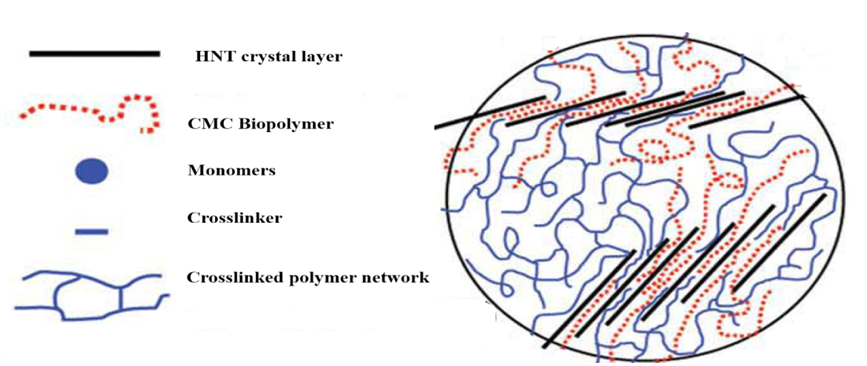
• Synthesis of AM/CMC/HNT/AMPS (0)/(60)/(300) Hydrogels: 0.5 ml of 2% CMC solution and 0.5 ml of 2% halloysite suspension were added to the monomer mixture containing AM and AMPS. Other experimental studies were performed as described above. The schematic representation of the hydrogels is given in Figure 4.
• Antiproliferative Effect of Hydrogels on MDA-MB-231 Cell Line To assess the cytotoxicity of the samples, the XTT assay was used. The viability of MDA-MB-231 cells in the samples was examined by measuring the absorbance of each well at 500 nm using an ELISA reader.
Results and Discussions
FTIR Spectroscopy of Hydrogels
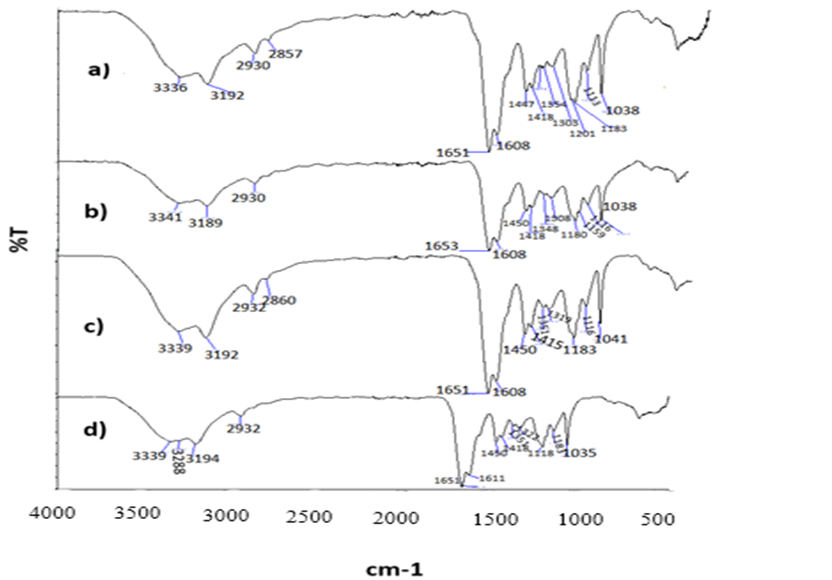
Synthesized AM/AMPS (0)/(60)/(300), AM/CMC/ AMPS (0)/(60)/(300), AM/HNT/AMPS (0)/(60)/(300), and AM/CMC/HNT/AMPS (0)/(60)/(300) hydrogels were characterized with the PerkinElmer Spectrum Two (UATR) IR spectrometer. In the FTIR spectrum of halloysite clay, bending vibrations of Si-O are at 450-525 cm-1, Al-OH peaks are at 907 cm-1, Si-O stresses are at 1116-1006 cm-1, vibrational peaks of OH groups are 3695-3628 cm-1 was observed [5, 32]. In the FTIR spectrum of the CMC biopolymer, the peak at 709 cm-1 has the C-H vibration in the ring, the peak C-O stretching vibration at 1054 cm-1, the peak at 1589 cm-1 to the carbonyl group in the HCOO- group (C=O), the 1739 cm-1 peak to the carbonyl group (C=O) belongs to the stretching vibration, the peak seen at 3264 cm-1 belongs to the OH stretching vibration, approximately [33]. The wide band N-H stresses caused by AM and AMPS at 3000-3500 cm-1, the peak at 2930 cm-1 correspond to C-H stretching vibrations, the peaks at 1450-1418 cm-1 to CH2 stretching vibrations, the peaks at 1113-1118 cm-1 to aliphatic C-N belongs to stretching vibrations, approximately [34, 35]. In the FTIR spectrum of AM/CMC/AMPS, AM/HNT/AMPS, and AM/CMC/HNT/AMPS hydrogels, halloysite and CMC peaks could not be clearly observed due to the 2% halloysite and 2% CMC content. When the FTIR spectra of the hydrogels were examined, the peak of the S=O functional group originating from AMPS was observed at 1035-1041 cm-1, the -C=O stretching vibration originating from the AM carbonyl bond was observed at 1605-1653 cm-1, approximately. Figure 5 shows the FTIR spectra of some hydrogels.
Microscope Images of Hydrogels
The antiproliferative effect of all synthesized hydrogels was investigated in MDA-MB-231 breast cancer cells. The effect of all hydrogels on MDA-MB-231 breast cancer cells is given in Figure 6.
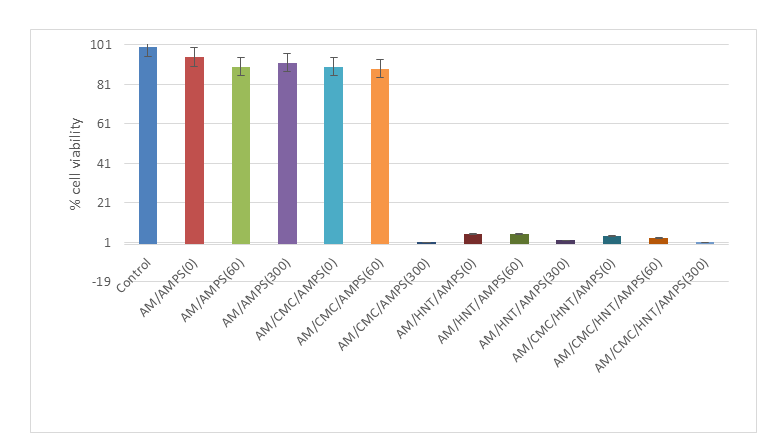
MDA-MB-231 tumor cells were used for the cell viability assay. The cell line of breast cancer epithelial adenocarcinoma is aggressive and poorly differentiated. The twenty different groups were used to treat MDA-MB-231 cells. Table 1 outlines the hydrogel components and their concentrations in the treatments. Figure 6 shows the results of cell viability. AM/AMPS(0) AM/AMPS(60) AM/AMPS(300) AM/CMC/ AMPS(0) AM/CMC/AMPS(60) did not harm cells at the tested concentrations (Figure 6). All cell viabilities remained above 80% and considered non-cytotoxicity. The hydrogels are verified to be biocompatible. The cytotoxic effect of AM/ CMC/AMPS(300), AM/HNT/AMPS(0), AM/HNT/AMPS(60), AM/HNT/AMPS(300), AM/CMC/HNT/AMPS(0), AM/CMC/ HNT/AMPS(60), AM/CMC/HNT/AMPS(300) hydrogels are seen quite clearly on cells (Figure 6).
| Hydrogels | Concentration (µg/ml) | Cell Proliferation |
|---|---|---|
| (mean %) | ||
| Control | No hydrogels | 100 |
| AM/AMPS(0) | 5, 250, 1000 | 95 |
| AM/AMPS(60) | 5, 250, 1000 | 90 |
| AM/AMPS(300) | 5, 250, 1000 | 92 |
| AM/CMC/AMPS(0) | 5, 250, 1000 | 90 |
| AM/CMC/AMPS(60) | 5, 250, 1000 | 89 |
| AM/CMC/AMPS(300) | 5, 250, 1000 | 1 |
| AM/HNT/AMPS(0) | 5, 250, 1000 | 5 |
| AM/HNT/AMPS(60) | 5, 250, 1000 | 5 |
| AM/HNT/AMPS(300) | 5, 250, 1000 | 2 |
| AM/CMC/HNT/AMPS(0) | 5, 250, 1000 | 6 |
| AM/CMC/HNT/AMPS(60) | 5, 250, 1000 | 3 |
| AM/CMC/HNT/AMPS(300) | 5, 250, 1000 | 1 |
Table 1: Corresponding concentrations for hydrogels used on the cancer cells for XTT assay.
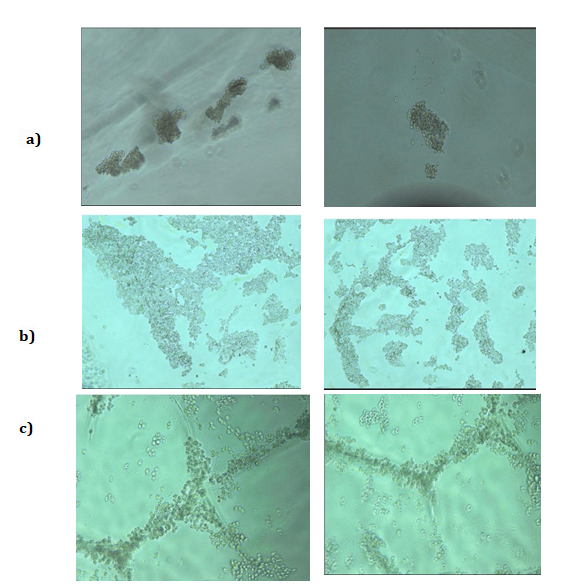
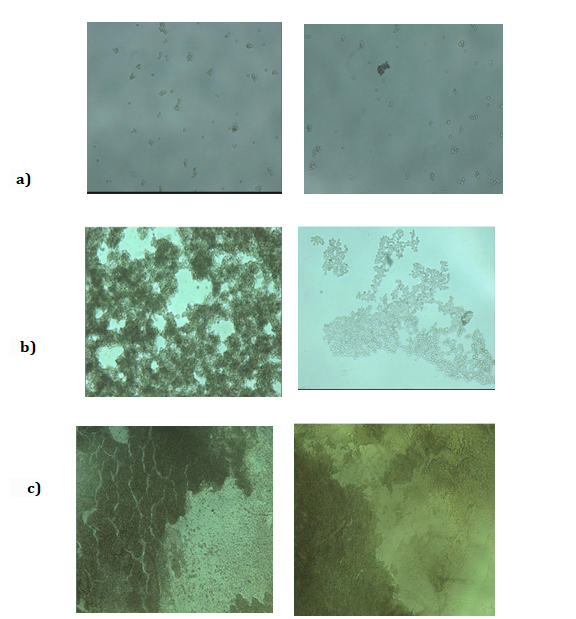
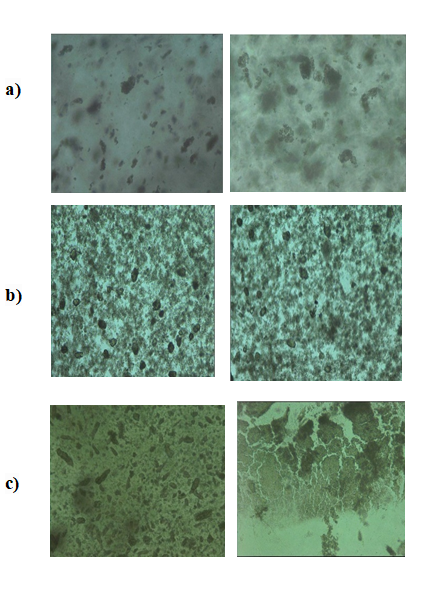
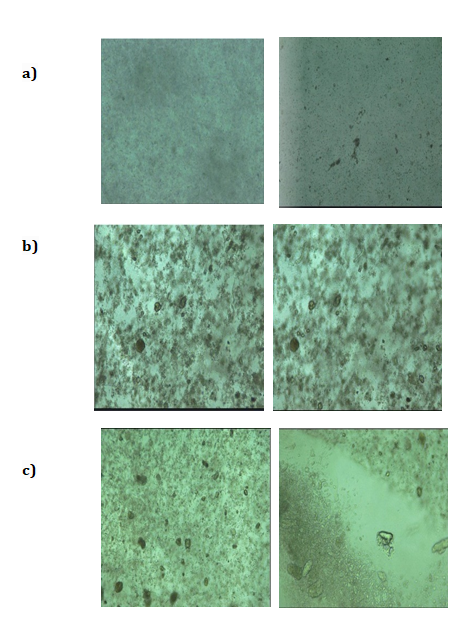
Experiments have been carried out for factors such as temperature, humidity, magnetic field, which affect cell survival in hydrogels. It has been observed that the temperature accelerates the formation of a sticky tissue in the gel structure, the humidity kills the cells by making water deposits in the gels, and the magnetic field does not affect the gels and cells. Also it has been observed that the 4.5 atm pressure CO2 gas in the oven increases the moisture content in the gels, although it is necessary for the cells to survive no cell growth or cell viability was observed in the halloysite- containing hydrogels and the AM/CMC/AMPS (300) hydrogel alone. It can be said that the reason why breast cancer cells do not survive in the AM/CMC/AMPS (300) hydrogel is due to the presence of AM or CMC or the amount of AMPS for this hydrogel. Therefore, all hydrogels containing halloysite clay showed activity against cancer cells. Apart from this, cells lived in all other hydrogels and managed to attach to the surface. Inverted microscope images of hydrogels are given in (Figures 7-10).
Conclusion
In this study, AM/AMPS (0)/(60)/(300), AM/CMC/AMPS (0)/(60)/(300), AM/HNT/AMPS (0)/(60)/(300), AM/CMC/ HNT/AMPS (0)/(60)/(300) hydrogels were synthesized, spectroscopic characterization was performed. Then, its toxic effects on MDA-MB-231 cell lines were evaluated. Hydrogels containing halloysite clay MDA-MB-231 acted against breast cancer cells and prevented cancer cells from surviving. Antibacterial and cytotoxic properties of halloysite clay and composites containing halloysite clay are known in the literature, and in this study, hydrogels containing halloysite clay prevented the survival of breast cancer cells. Hydrogels that do not show cytotoxic effects can be used together with various drug active substances to destroy cancer cells. It is thought that hydrogels containing halloysite clay, which have cytotoxic effects, can be used alone in cancer treatments. However, the study is a preliminary study and in vivo studies are required to develop the present study and similar studies.
Acknowledgments
The authors thank Uşak University Scientific Research Project Unit, which provided financial support with the project numbered 2017/TP018 in the conduct of this study.
References
-
Wang WB, Huang DJ, Kang YR, Wang AQ (2013) One-step in situ fabrication of a granular semi-IPN hydrogel based on chitosan and gelatin for fast and efficient adsorption of Cu2+ ion. Colloids Surf B: Biointerfaces 106: 51-59.
-
Duran S, Şolpan D, Güven O (1999) Synthesis and characterization of acrylamide-acrylic acid hydrogels and adsorption of some textile dyes. Nucl Instrum Methods Phys Res 151(1-4): 196-199.
-
Şen M, Güven O (1998) Prediction of swelling behaviour of hydrogels containing diprotic acid moieties. Polymer 39(5): 1165-1172.
-
Savaş H, Güven O (2001) Investigation of active substance release from poly(ethyleneoxide) hydrogels. Int J Pharm 224(1-2): 151-158.
-
Çankaya N, Yalçın S, Özek NT (2021) Preparation of poly(MPAEMA)/halloysite nanocomposites and investigation of antiproliferative activity. J Mex Chem Soc 65(2): 189-2011.
-
Zhang Y, Tang A, Yang H, Ouyang J (2016) Applications and interfaces of halloysite nanocomposites. Applied Clay Sci 119: 8-17.
-
Qunyi T, Ganwei Z (2005) Rapid sythesis of a superabsorbent from a saponified starch and acrylonitrile/AMPS graft copolymers. Carbohydr Polym 62(1): 74-79.
-
Li A, Zhang J, Wang A (2007) Utilization of starch and clay for the preparation of superabsorbent composite. Bioresource Techology 98(2): 327-332.
-
Zhang J, Wang A (2007) Study on superabsorbent composites. IX: sythesis, characterization and swelling behaviors of polyacrylamide/clay composites based on various clays. React Funct Polym 67(8): 737-745.
-
Zhang J, Wang Q, Wang A (2007) Synthesis and characterization of chitosan-g-poly(acrylic acid)/ attapulgite superabsorbent composites. Carbohydr Polym 68(2): 367-374.
-
Kaşgöz H, Durmuş A (2008) Dye removal by a novel hydrogel-clay nanocomposite with enhanced swelling properties. Polym Adv Technol 19(7): 838-845.
-
Tipa C, Cidade MT, Borges JP, Costa LC, Silva JC, et al. (2022) Clay-based nanocomposite hydrogels for biomedical applications: a review. Nanomater 12(19): 3308-3344.
-
Maroufi LY, Ghorbani M (2021) Injectable chitosan- quince seed gum hydrogels encapsulated with curcumin loaded-halloysite nanotubes designed for tissue engineering application. Int J Biol Macromol 177: 485- 494.
-
Massaro M, Colletti CG, Lazzara G, Riela S (2018) The use of some clay minerals as natural resources for drug carrier applications. J Funct Biomater 9(4): 58-80.
-
Sun L, Boyer CB, Grimes R, Mills DK (2016) Drug coated clay nanoparticles for delivery of chemotherapeutics. Curr Nanosci 12(2): 207-214.
-
Lvov Y, Wang W, Zhang L, Fakhrullin R (2016) Halloysite clay nanotubes for loading and sustained release of functional compounds. Adv Mater 28: 227-1250.
-
Bertolino V, Cavallaro G, Lazzara G, Merli M, Milioto S, et al. (2016) Effect of the biopolymer charge and the nanoclay morphology on nanocomposite materials. Ind Eng Chem Res 55(27): 7373-7380.
-
Patel S, Jammaladaka U, Sun L, Tappa K, Mills DK (2016) Sustained release of antibacterial agents from doped halloysite nanotubes. Bioeng 3(1): 1-14.
-
Wei W, Abdullayev E, Hollister A, Mills DK, Lvov YM (2012) Clay nanotube/poly(methylmethacrylate) bone cement composites with sustained antibiotic release. Macromol Mater Eng 297(7): 645-653.
-
Grimes WR, Luo Y, Farland AWM, Mills DK (2018) Bi- functionalized clay nanotubes for anticancer Therapy. Appl Sci 8(2): 281-293.
-
Sabzini M, Pourmadadi M, Yazdian F, Parsi PK, Rashedi H (2023) Development of chitosan/halloysite/ graphiticcarbon nitride nanovehicle for targeted delivery of quercetin to enhance its limitation in cancer therapy: An in vitro cytotoxicity against MCF-7 cells. Int J Biol Macromol 226: 159-171.
-
Keihan RE, Sadat Z, Aliabadi HAM, Ganjali F, Kashtiaray A, et al. (2022) Fabrication of a magnetic alginatesilk fibroin hydrogel containing halloysite nanotubes as a novel nanocomposite for biological and hyperthermia applications. Sci Rep 12(1):15431.
-
Dağlıoğlu Y, Yılmaz HÖ, Yılmaz O (2018) Nanoparticle applications in mammalian tumor and normal cell lines. Arch Med Res 27(2): 136-174.
-
Kassas YHE, Sheekh MME (2014) Cytotoxicity of biosynthesized gold nanoparticles with an extract of the red seaweed _corallina officinalis_ in MCF-7 human breast cancer cell line. Asian Pac J Cancer Prev 15(10): 4311- 4317.
-
Alarifi S, Ali D, Alkahtani S, Alhader MS (2014) Iron oxide nanoparticles induce oxidative stress, DNA damage, and caspase activation in the human breast cancer cell line. Biol Trace Elem Res 159(1-3): 416-424.
-
Wang C, Jiang Y, Li X, Hu L (2015) Thioglucose-bound gold nanoparticles increase the radiosensitivity of a triple-negative breast cancer cell line (MDA-MB-231). Breast Cancer 22(4): 413-420.
-
Ramar M, Manikandan B, Marimuthu NP, Raman T, Mahalingam A, et al. (2015) Synthesis of silver nanoparticles using Solanum trilobatum fruits extract and its antibacterial, cytotoxic activity against human breast cancer cell line MCF 7. Spectrochim Acta A Mol Biomol Spectrosc 140: 223-228.
-
Kundakcı S, Üzüm ÖB, Karadağ E (2008) Swelling and dye sorption studies of acrylamide/2-acrylamido-2- methyl-1-propanesulfonic acid/bentonite highly swollen composite hydrogels. Reactive and Functional Polymers 68(2): 458-473.
-
Kpogbémabou D, Bennadji FG, Hoang LC, Ghilardi S, Jacquet A, et al. (2014) Structural and microstructural studies of montmorillonite-based multilayer nanocomposites. Journal of Colloid and Interface Science 417:152-158.
-
Karadağ E, Nalbantoğlu A, Kundakcı S, Üzüm ÖB (2014) Highly swollen polymer/clay composite sorbent-based AAm/AMPS hydrogels and semi-IPNs composed of carboxymethyl cellulose and montmorillonite and cross- linked by PEGDA. Polymer-Plastics Technology and Engineering 53(1): 54-64.
-
Karadağ E, Nalbantoğlu A, Kundakcı S, Üzüm ÖB (2018) Uranyl ion sorption characteristics of novel polymer/ montmorillonite/carboxymethyl cellulose-composite biosorbent-based AAm/AMPS hydrogels and semi-IPNs. Adv Polym Technol 37(2): 575-585.
-
Dong Y, Marshall J, Haroosh HJ, Mohammadzadehmoghadam S, Liu D, et al. (2015) Polylactic acid (PLA)/halloysite nanotube (HNT) composite mats: Influence of HNT content and modification. Composites Part A: Applied Science and Manufacturing 76: 28-36.
-
Gokmen FO, Rzayev ZMO, Salimi K, Bunyatova U, Acar S, et al. (2015) Novel multifunctional colloidal carbohydrate nanofiber electrolytes with excellent conductivity and responses to bone cancer cells. Carbohydr Polym 133: 624-636.
-
Kodoth AK, Badalamoole V (2019) Pectin based graft copolymer-ZnO hybrid nanocomposite for the adsorptive removal of crystal violet. Journal of Polymers and the Environment 27(9): 2040-2053.
-
Nakhjiri MT, Marandi GB, Kurdtabar M (2018) Effect of bis[2-(methacryloyloxy)ethyl] phosphate as a crosslinker on poly(AAm-co-AMPS)/Na-MMT hydrogel nanocomposite as potential adsorbent for dyes: kinetic, isotherm and thermodynamic study. Journal of Polymer Research 25(11): 244-263.
- Pattern of Gonadal Hormones in Oral Testosterone-Supplimented Male Wistar Rats with Diabetes-Induced Hypogonadism
- Re-Evaluation of the Genotoxicity of Currently Used Food Dyes in Mouse Multiple Organs Via Continuous Administration by Drinking Using the Comet Assay
- Pharmacogenetics of Type 2 Diabetes Mellitus: Linking Genetic Variability to Drug Efficacy and its Cardiovascular Outcomes
- Exploratory Proteomic Profiling of SARS-CoV-2 Infected THP-1 Macrophages Reveals Alterations in Inflammatory Response and Cellular Metabolism
- Study of Genotoxicity of Hepatocarcinogens in Multiple Organs in Mice by Feeding and Drinking Using the Comet Assay
- Spirulina Polypeptides Inhibit the Growth of Human Lung Tumor (H460) Cells