
The Biofield Energy Treatment and its Effect on the Relative Oral Bioavailability of Lovastatin Hydroxy Acid in Rats after a Single Oral Dose of Lovastatin
Lovastatin is a lipid-lowering drug used to reduce the risk of cardiovascular disease. Lovastatin shows poor oral bioavailability (<5%) because of its low water solubility and short half-life. Therefore, the present study was performed to determine the effects of the Trivedi Effect®- Consciousness Energy Treatment (Blessing) on lovastatin and rats through the measurement of plasma lovastatin hydroxy acid concentrations after the oral administration of lovastatin in rats. The test item, lovastatin was divided into two parts. One part was denoted as the control, while the other part was defined as the Biofield Energy Treated sample, which received the Biofield Energy Treatment for about 3 minutes by renowned Biofield Energy Healer, Dahryn Trivedi. Additionally, one group of animals also received Biofield Energy Treatment under similar conditions. The Biofield Energy Healer who was located in the USA, while the test samples and animals were located in the research laboratory in India. Lovastatin oral formulations were administrated by oral gavage at a dose of 50 mg/kg in groups viz. G1 (untreated lovastatin), G2 (Biofield Treated lovastatin), and G3 (Biofield Treated animals received untreated lovastatin) group. The majority of lovastatin was rapidly converted to its metabolite, i.e., lovastatin hydroxy acid following the oral administration. The pharmacokinetic parameter, the Cmax of lovastatin hydroxy acid was significantly altered by 155.76% and -24.82% in G2 and G3, respectively compared to G1. The Tmax of lovastatin hydroxy acid was significantly increased by 254.55% in G2 and 51.52% in G3 compared to G1. The mean residence time of lovastatin hydroxy acid was also altered in G2 (-30.46%) and G3 (3.96%), as compared to the G1. The relative oral bioavailability (Fr) of lovastatin was significantly increased by 281.87% in the group G2 and 15.71% in the group G3 compared to the G1. These data suggest that the Biofield Energy Treatment could be considered as an innovative strategy that opens new avenues to improve the bioavailability of nutraceuticals/pharmaceuticals and can also modulate the therapeutic performance of orally active molecules. The Biofield Energy Treated lovastatin could be beneficial for the treatment of cardiovascular disease, which includes heart attack, stroke, atherosclerosis, coronary revascularization, coronary death, myocardial infarction, unstable angina, peripheral artery disease, abdominal aortic aneurysm, chronic kidney disease, etc.
Introduction
Lovastatin is a fungal metabolite derived synthetically from a fermentation product of Aspergillus terreus, used as a lipid-lowering drug, which reduce the risk of cardiovascular disease [1]. It controls abnormal lipid levels by inhibiting the endogenous production of cholesterol in the liver [2]. Specifically, it competitively inhibits the hydroxymethylglutaryl-coenzyme A (HMG-CoA) reductase.
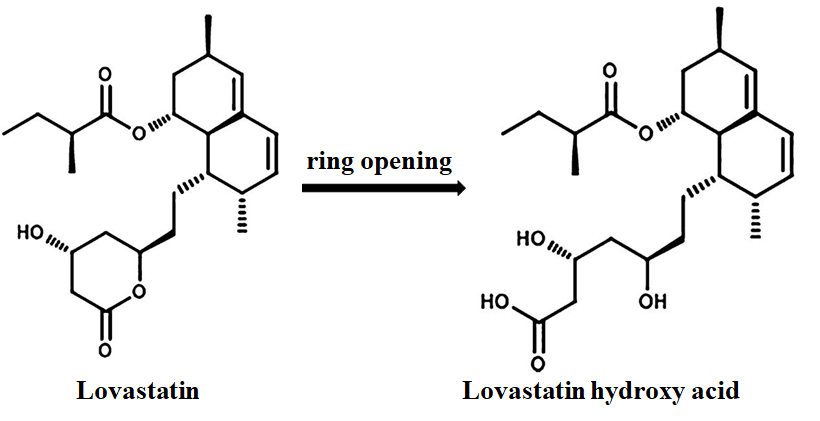
It catalyzes the conversion of HMG-CoA to mevalonic acid and in a sequence of metabolic reactions involved in the production of lipid metabolism and transport, including cholesterol, low-density lipoprotein, and very-low-density lipoprotein [3]. Lovastatin is used in any cardiovascular event and for people with a moderate to high risk of developing cardiovascular diseases, such as type 2 diabetes. Statin drugs have very nominal side effects, or long term effects has resulted in becoming one of the most widely recommended medications in the USA [4, 5]. Lovastatin is a prodrug, an inactive gamma-lactone closed ring form which hydrolysed in vivo to the β-hydroxy acid open ring active form (Figure 1) [6].
Lovastatin is used for the treatment of heart attack, stroke, atherosclerosis, angina, coronary revascularization, and coronary death; reduce the risk of myocardial infarction, unstable angina, peripheral artery disease, chronic kidney disease, and abdominal aortic aneurysm [7]. It reduces low-density lipoprotein (LDL) levels have been shown in a number of landmark studies to significantly reduce the risk of development of CVD and all-cause mortality [8, 9, 10, 11]. Lovastatin has been reported to have beneficial effects on multi-factorial stress-triggered cell death and DNA degradation response in breast cancer cells [12]. It has also been shown to inhibit histone deacetylase 2 (HDAC2) activity and increase the accumulation of acetylated histone-H3 and the expression of p21 (WAF/CIP) in human cancer cells, suggesting that statins might serve as novel HDAC inhibitors for cancer therapy and chemoprevention [13].
Lovastatin and its metabolite are highly bound to human plasma proteins (>95%) due to its lipophilicity. Lovastatin is able to cross the placenta and blood-brain barrier. An oral dose of lovastatin to human, 10% of the dose was excreted in the urine, and 83% in feces. The latter represents absorbed drug excreted in bile, together with the unabsorbed drug.
However, lovastatin exhibits poor oral bioavailability (<5%) because of its poor water solubility (0.4×10⁻³ mg/mL) and short half-life [2, 14]. Lovastatin half-life is reported to be of 13.37 hours. The elimination half-life of the lovastatin hydroxy acid form is reported to be of 0.7-3 hours [15]. In addition, it undergoes extensive first-pass metabolism; hepatic extraction leads to low and variable availability of the drug to the general circulation [16, 17].
Many investigations carried out and attempted to improve the aqueous solubility of lovastatin by preparing nanocrystals, nanomatrix-supported lipid bilayers, microspheres, self-nanoemulsifying drug delivery systems, methylated beta-cyclodextrin, and solid lipid nanoparticles (SLNs) [18, 19, 20, 21, 22, 23]. Authors have used a complementary approach, i.e., Biofield Energy Treatment on lovastatin and animals to evaluate the alteration in bioavailability after treatment.
Biofield Energy is an electromagnetic Energy Field around the human body, has a significant capacity for various clinical benefits [24]. Numerous clinical reports suggested the significant use of energy medicine and its healing capacity, which is well demarcated by the National Center for Complementary and Integrative Health (NCCIH) in order to promote wellness [25, 26, 27, 28]. The Biofield Energy Treatment leads to receive the energy by the object and respond in a useful way. The Trivedi Effect®-Consciousness Energy Treatment has been reported with significant discovery in both living and nonliving materials. The Trivedi Effect® has been described with significant transformation in the physicochemical properties of polymers, organic compounds, ceramics, and metals, improved agricultural crops overall productivity, yield and quality, altered antimicrobial characteristics of pathogenic microbes, improved activity of nutraceutical and pharmaceutical compounds [29, 30, 31, 32, 33, 34, 35], etc.
It has been reported that the Trivedi Effect® has the significant capability to transform the properties of various pharmaceutical and nutraceutical compounds through possible mediation of neutrinos [36]. The Trivedi Effect®-Consciousness Energy Treatment would be a useful approach for the enhancement of the bioavailability of nutraceutical compounds [37, 38]. The current study was planned to evaluate the impact of the Trivedi Effect® on the pharmacokinetics of lovastatin hydroxy acid (active metabolite) in male Sprague Dawley rats following a single dose administration of Biofield Energy Treated lovastatin.
Materials and Methods
Chemicals and Reagents
Lovastatin (98.9%) was purchased from Alfa Aesar, India, and lovastatin hydroxy acid sodium salt (89.52%) was purchased from TRC, Canada. The reagents used for sample preparation and analysis included acetonitrile (HPLC grade, Merck), methanol (HPLC grade, Merck), water (Milli-Q water), and formic acid (LC-MS grade, Fluka). USP grade nitrogen was used as the curtain gas, and collision gas for LC-MS/MS were supplied from air compressor (Anesta Iwata, Japan), polypropylene tubes (Tarsons, India), Class-A, measuring cylinders and volumetric flasks (Borosil, Germany) and membrane filters, 0.22 μm & 0.45 μm (Millipore) were used during the study. All other reagents and solvents were of analytical grade available in India.
Consciousness Energy Treatment Strategies
The test items, lovastatin, and lovastatin hydroxy acid sodium salt were divided into two parts. One part was considered as the control group, while the other part was termed as the Biofield Energy Treated group. The test items in Biofield Treated group were subjected to the Trivedi Effect®-Consciousness Energy Treatment by a renowned Biofield Energy Healer, Dahryn Trivedi, USA. Additionally, one group of animals also received the Biofield Energy Treatment per se by the same Biofield Energy Healer under the similar experimental conditions. The Biofield Energy Healer who was located in the USA, while the test samples and animals were located in the research laboratory in India. This Biofield Treatment was provided for approximately 3 minutes through the Biofield Energy Healer’s unique Energy Transmission process (the Trivedi Effect®), administered to the test sample and animals. Similarly, the control test sample was subjected to a “sham” healer for 3 minutes under similar laboratory conditions without having any awareness about the Biofield Energy Treatment. Further, the Biofield Energy Treated and untreated test items were kept in similar sealed conditions and used for the study as per design.
In Vivo Pharmacokinetics Study
Animals: Male Sprague-Dawley (SD) rats (body weight 230- 270 gm) were procured from Liveon Biosciences, Bangalore, India. Animals were housed in polycarbonate cage. For maintenance of animals, standard conditions such as temperature and humidity were maintained at 22 ± 3°C, and 40% to 70%, respectively, and illumination was controlled to give a sequence of 12 hours light and 12 hours dark cycle. The temperature and humidity were recorded by autocontrolled data logger system. All the animals were provided a laboratory rodent diet (Vetcare India Pvt. Ltd., Bengaluru). Reverse osmosis water treated with ultraviolet light was provided ad libitum. The experiments using animals in this investigation were performed in accordance with the guidelines provided by the Committee for the Purpose of Control and Supervision of Experiments on Animals (CPCSEA) as published in The Gazette of India, January 7, 2010 and protocol approved by the Institutional (GVK Bio) Animal Ethics Committee (IAEC approval number: B-011).
Experimental design: Sprague-Dawley Rats were divided into three groups (n = 3): group 1 (Gr. 1) – per oral (p.o.) dosing of untreated lovastatin, group 2 (Gr. 2) – per oral (p.o.) dosing of Biofield Energy Treated lovastatin and group 3 (Gr. 3) – per oral (p.o.) dosing of untreated lovastatin in biofield energy treated animals. All animals were received per oral dose at 50 mg/kg of lovastatin solution formulation. The dose of the test item was chosen based on the preliminary experiments performed in our laboratory and observed the quantifiable concentration of this analyte in rat plasma.
Formulation Preparation
The solution formulations of the test item was prepared in Tween 80 (1% v/v) + 40 % w/v 2-hydroxylpropyl-β- cyclodextrin (HP-β-CD) in distilled water (99% v/v). All formulations were prepared freshly prior to dosing. The dose volume for per oral route was 10 mL/kg.
Pharmacokinetic Studies
The solution of lovastatin formulations was freshly prepared for per oral dosing. All rats have fasted overnight, and the fasting continued up to 4 hours post dosing with free access to drinking water. The oral test formulation was administered at 50 mg/kg dose through oral gavage using an 18G stainless steel intubation cannula. The dosing volume administered was 10 mL/kg. Blood samples (~120 µL) were collected from the jugular vein catheter of three rats from each group at each time point [pre-dose, 0.25, 0.5, 1, 2, 4, 8, 12, and 24 hours (p.o.). Samples were collected into labeled micro centrifuge tubes, containing 20% w/v K2EDTA as an anticoagulant. Plasma samples were separated from the blood by centrifugation at 2500 g for 10 min at 4 ± 2°C and stored below -40°C (Thermo Scientific, USA) deep freezer until bioanalysis.
LC-MS/MS Analysis
Analysis of rat plasma samples was performed using LC-MS/MS (Shimadzu prominence UFLC system coupled with API 4500 Applied Biosystems/MDS SCIEX mass spectrometry) using telmisartan as an internal standard (IS). Phenomenex, Kinetex, EVO, C18 column, 4.6 x 50 mm, 5 μm was used for study samples analysis. The mobile phase used are 0.1 % formic acid in water (A) and ethanol (B). Stock solutions of lovastatin, lovastatin hydroxy acid sodium salt, and telmisartan were prepared in methanol at approximately 0.989 mg/mL, 0.848 mg/mL, and 1 mg/mL, respectively and subsequently diluted which were used for the bioanalysis. Injection volume was 10 μL. Generic mass spectrometry parameters of the analyte were developed and used for the analysis. The optimum operating parameters were determined by positive Turbo Ion Spray. These parameters were the curtain gas (20 arbitrary units), collision gas (12 arbitrary units), ionspray voltage (5500 V), source temperature (550°C), and ion source gas 1 and gas 2 (50 and 55, respectively arbitrary units each). Interface heaters were kept on for the analyte. The analyte was detected by positive ion spray in the multiple reaction monitoring mode (MRM) mode using predetermined parent/product mass transition ion pairs. The parameters of the selected MRM monitoring transitions for the [M + Na]+ and [M + H]+ precursor ion to selected product ion (m/z) were optimized with 427.2/325.1 (lovastatin), and 515.30/286.70 (telmisartan as an internal standard), respectively. Whereas, lovastatin hydroxy acid sodium salt was analyzed in negative Turbo Ion Spray mode (-4500 volts). Precursor ion [M - H]- to selected product ion (m/z) were optimized with 421.1/318.8.
The extraction procedure for plasma samples or the spiked plasma calibration standards and quality control samples was identical. A 50 μL sample of either study sample or spiked calibration standard/quality control samples were added to individual wells of 96 well plate with 500 μL capacity. 200 μL of IS prepared in acetonitrile was added to the samples in deep well plate except for blank, where 200 μL of acetonitrile was added and vortexed for 5 minutes. Samples were centrifuged for 10 minutes at a speed of 4000 rpm (3220 g) at 4℃. Following centrifugation, 120 μL of supernatant was transferred into 1000 μL capacity deep well plate and mixed with 120 μL of methanol: water, 50:50, v/v. The plate was kept in the auto-sampler for the LC-MS/ MS analysis. The activity was documented in the sample processing form.
The data was collected and concentrations were calculated using Analyst Software Version 1.6.3. Calibration standard curves were constructed from the peak area ratios of lovastatin and lovastatin hydroxy acid to the internal standard against the concentrations of lovastatin and lovastatin hydroxy acid using a weighted (1/X2) linear least-square regression. Study sample concentrations were calculated from the peak area ratios of analyte to the internal standard using the calibration standard curve. The lower limit of quantification (LLOQ), the upper limit of quantification (ULOQ) for lovastatin was 1.03 ng/mL, 1028.56 ng/mL and for lovastatin hydroxy acid these were 1.02 ng/mL, 1018.66 ng/mL.
Pharmacokinetic Analysis
The pharmacokinetic parameters of lovastatin and its metabolite, lovastatin hydroxy acid such as Cmax, Tmax, AUMC, AUC0-t, AUC0-∞, T1/2, CL/F, Vd/F, MRToral, %F, Kel, Ka, and MAT (for p.o.) in rat plasma were obtained by non-compartmental analysis module in Phoenix WinNonlin® (Version 7) (Pharsight, Mountain View, trapezoidal rule). The terminal elimination rate constant (kel) was determined by regression analysis of the linear terminal portion of the log plasma concentration-time curve. The areas under the concentration time curve (AUC0-t and AUC0-∞) were calculated by linear terminal portion of the log plasma concentration-time curve. Peak test item concentrations (Cmax) and the times when concentration occurred (Tmax) were derived directly from the data. The absolute bioavailability was taken into consideration when clearance was determined by the oral route (CL/F).
Statistical Analysis
All mean values are reported with their standard deviation (mean ± S.D.). Data were analyzed for statistically significant differences using unpaired Student’s t-test. A significant difference was to be considered at a level of p < 0.05.
Results and Discussions
The mean pharmacokinetic parameters and profiles of lovastatin hydroxy acid in the rat plasma after a single oral dose of administration of lovastatin solution formulations in three different groups are summarized in (Table 1).
| Gr. 1 | Gr. 2 | Gr. 3 | |
|---|---|---|---|
| Parameter | (Untreated lovastatin) | (Biofield Energy Treated lovastatin) | (Biofield Treated Rats + Untreated lovastatin) |
| Cmax(ng/mL) | 1698.21 ± 399.94 | 4343.36 ± 1046.63 | 1276.66 ± 767.81 |
| Tmax(hr) | 0.33 ± 0.14 | 1.17 ± 0.76 | 0.50 ± 0.00 |
| AUC0-1(ng.hr/mL) | 5958.79 ± 1880.95 | 24051.93 ± 16829.62 | 7422.99 ± 8643.39 |
| MRT(hr) | 5.81 ± 1.57 | 4.04 ± 0.74 | 6.04 ± 1.67 |
| Kel(hr-1) | 0.14 ± 0.10 | 0.32 ± 0.19 | 0.16 ± 0.08 |
| Ka(hr-1) | 0.29 ± 0.14 | 0.48 ± 0.16 | 0.26 ± 0.09 |
| MAT(hr) | 4.01 ± 1.57 | 2.24 ± 0.74 | 4.24 ± 1.67 |
| Fr(%) | 100 | 381.87 ± 234.72 | 115.71 ± 135.22 |
Table 1: Pharmacokinetic parameters of lovastatin hydroxy acid after p.o. administration lovastatin at 50 mg/kg body weight to Sp
Table 1: Pharmacokinetic parameters of lovastatin hydroxy acid after p.o. administration lovastatin at 50 mg/kg body weight to Sprague Dawley male rats. (Mean ± SD; n=3) The data are expressed as mean values. p.o.: per oral; Cmax, peak concentration; Tmax, time to reach peak concentration; AUC, area under the plasma concentration–time curve from 0 hours to last; MAT, mean absorption time; Kel, absorption rate constant; Ka, absorption rate constant, MRT, mean residence time; Fr: relative oral bioavailability.
Majority of lovastatin was rapidly converted to its metabolite, i.e., lovastatin hydroxy acid following both intravenous and oral administration [6]. The pharmacokinetic parameters of lovastatin hydroxy acid was studied after oral administration lovastatin at a dose of 50 mg/kg body weight to Sprague Dawley male rats (Table 1). The maximum concentration (Cmax) of lovastatin hydroxy acid was significantly altered by 155.76% and -24.82% in the G2 and G3 groups, respectively compared with the G1 group. The comparative mean plasma concentration vs. time profiles of lovastatin hydroxy acid after per oral administration of lovastatin to Sprague Dawley rats is shown in (Figure 2). Tmax of lovastatin hydroxy acid was significantly increased by 254.55% in the G2 group and 51.52% in the G3 group compared to the group G1. The mean residence time (MRT) of lovastatin hydroxy acid was also altered in G2 group (-30.46%) and G3 group (3.96%), as compared to the G1. The relative oral bioavailability (Fr) of lovastatin was significantly increased by 281.87% in the G2 group and 15.71% in the G3 group compared to the G1 (Table 1).
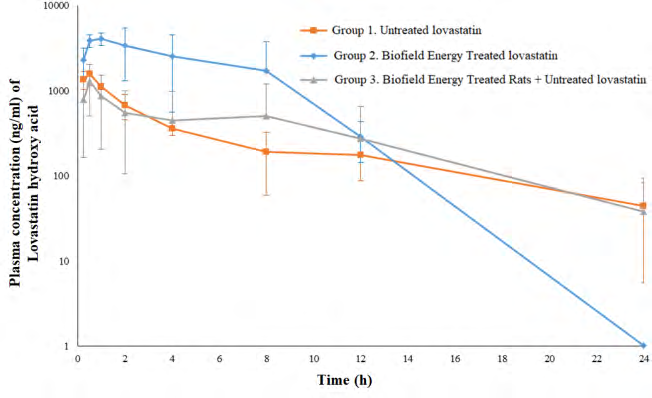
The results indicated that the Biofield Energy Treated lovastatin and animals per se significantly altered the rate and extent of oral absorption of lovastatin hydroxy acid. The altered absorption may be due to the alteration of the specific surface area of the lovastatin formulation, or the stability of the lovastatin formulation in the gastrointestinal tract or due to the altered lovastatin metabolism pathways [2, 14, 15, 16, 17]. The Trivedi Effect® has shown the significant capability to transform the physicochemical properties of various nutraceutical and pharmaceutical compounds through possible mediation of neutrinos [34, 35, 36]. The Trivedi Effect®-Consciousness Energy Treatment also altered the bioavailability of nutraceutical compounds [37, 38, 39, 40]. Finally, the relative oral bioavailability of lovastatin was significantly increased in the group G2 and G3 compared to the G1. The significant alteration of pharmacokinetic parameters of lovastatin hydroxy acid in the Biofield Energy Treated group might be translated into improve the therapeutic performance in various disease conditions. The Biofield Energy Treated lovastatin could be more useful for the treatment of cardiovascular disease, which includes stroke, heart attack, atherosclerosis, coronary revascularization, angina, coronary death, unstable angina, reduce the risk of myocardial infarction, peripheral artery disease, abdominal aortic aneurysm, chronic kidney disease, apoptosis and DNA degradation response in breast cancer cells, etc.
Conclusions
The Trivedi Effect®-Consciousness Energy Treatment significantly altered the pharmacokinetic parameter, the maximum concentration (Cmax) of lovastatin hydroxy acid by 155.76% and -24.82% in G2 and G3, respectively compared to G1. The Tmax of lovastatin hydroxy acid was significantly increased by 254.55% in G2 and 51.52% in G3 compared to G1. The mean residence time (MRT) of lovastatin hydroxy acid was also altered in G2 (-30.46%) and G3 (3.96%), as compared to the G1. The relative oral bioavailability (Fr) of lovastatin was significantly increased by 281.87% in the G2 group and 15.71% in the G3 group compared to the G1. The relative oral bioavailability of lovastatin was significantly increased in the G2 and G3 groups compared to the G1. These data indicated that the Biofield Energy Treatment might be considered as an innovative strategy that opens new avenues to improve the bioavailability of nutraceuticals/ pharmaceuticals and can also increase the therapeutic performance of orally active molecules. The Biofield Energy Treated lovastatin could be useful for the treatment of cardiovascular disease, which includes heart attack, stroke, atherosclerosis, coronary revascularization, coronary death, myocardial infarction, angina, peripheral artery disease, abdominal aortic aneurysm, chronic kidney disease, multi- factorial stress-triggered cell death and DNA degradation response in breast cancer cells, etc.
Acknowledgements
Authors are grateful to GVK Bioscience, Trivedi Science, Trivedi Global, Inc., and Trivedi Master Wellness for their support throughout the work.
References
-
(2020) Lovastatin Monograph for Professionals. Drugs. com. American Society of Health-System Pharmacists.
-
Alberts AW, Chen J, Kuron G, Hunt V, Huff J, et al. (1980) Mevinolin: A highly potent competitive inhibitor of hydroxymethylglutaryl-coenzyme A reductase and a cholesterol-lowering agent. Proc Natl Acad Sci U S A 77(7): 3957-3961.
-
Moghadasian MH (1999) Clinical pharmacology of 3-hydroxy-3-methylglutaryl coenzyme A reductase inhibitors. Life Sci 65(13): 1329-1337.
-
Anderson TJ, Gregoire J, Pearson GJ, Barry AR, Couture P, et al. (2016) 2016 Canadian Cardiovascular Society Guidelines for the Management of Dyslipidemia for the Prevention of Cardiovascular Disease in the Adult. Can J Cardiol 32(11): 1263-1282.
-
Grundy SM, Stone NJ (2018) American Heart Association/ American College of Cardiology Multisociety Guideline on the Management of Blood Cholesterol: Primary Prevention. JAMA Cardiol 4(5): 488-489.
-
Whirl-Carrillo M, McDonagh EM, Hebert JM, Gong L, Sangkuhl K, et al. (2012) Pharmacogenomics knowledge for personalized medicine. Clin Pharmacol Ther 92(4): 414-417.
-
Kreatsoulas C, Anand SS (2010) The impact of social determinants on cardiovascular disease. Can J Cardiol 26 Suppl C(Suppl C): 8C-13C.
-
Kannel WB, Castelli WP, Gordon T, McNamara PM (1971) Serum cholesterol, lipoproteins, and the risk of coronary heart disease. The Framingham study. Ann Intern Med 74(1): 1-12.
-
Cannon CP, Braunwald E, McCabe CH, Rader DJ, Rouleau JL, et al. (2004) Intensive versus moderate lipid lowering with statins after acute coronary syndromes. N Engl J Med 350(1): 1495-504.
-
Taylor F, Huffman MD, Macedo AF, Moore TH, Burke M, et al. (2011) Statins for the primary prevention of cardiovascular disease. Cochrane Database Syst Rev 19(1): CD004816.
-
Mihaylova B, Emberson J, Blackwell L, Keech A, Simes J, et al. (2012) The effects of lowering LDL cholesterol with statin therapy in people at low risk of vascular disease: meta-analysis of individual data from 27 randomised trials. Lancet 380(9841): 581-590.
-
Mahmoud AM, Aboul-Soud MA, Han J, Al-Sheikh YA, Al- Abd AM, et al. (2016) Transcriptional profiling of breast cancer cells in response to mevinolin: Evidence of cell cycle arrest, DNA degradation and apoptosis. Int J Oncol 48(5): 1886-1894.
-
Lin YC, Lin JH, Chou CW, Chang YF, Yeh SH, et al. (2008) Statins increase p21 through inhibition of histone deacetylase activity and release of promoter-associated HDAC1/2. Cancer Res 68(7): 2375-2383.
-
Neuvonen PJ, Backman JT, Niemi M (2008) Pharmacokinetic comparison of the potential over-the- counter statins simvastatin, lovastatin, fluvastatin and pravastatin. Clinical Pharmacokinetics 47(7): 463-474.
-
Lennernas H, Fager G (1997) Pharmacodynamics and pharmacokinetics of the HMG-CoA reductase inhibitors. Similarities and differences. Clin Pharmacokinet 32(5): 403-425.
-
Michalik M, Soczek E, Kosińska M, Rak M, Wójcik KA, et al. (2013) Lovastatin-induced decrease of intracellular cholesterol level attenuates fibroblast-to-myofibroblast transition in bronchial fibroblasts derived from asthmatic patients. Eur J Pharmacol 704(1-3): 23-32.
-
Maron DJ, Fazio S, Linton MF (2000) Current perspectives on statins. Circulation 101(2): 207-213.
-
Guo M, Fu Q, Wu C, Guo Z, Li M, et al. (2015) Rod shaped nanocrystals exhibit superior in vitro dissolution and in vivo bioavailability over spherical like nanocrystals: a case study of lovastatin. Colloids Surf B Biointerfaces 128: 410-418.
-
Zhang Y, Zhang H, Che E, Zhang L, Han J, et al. (2015) Development of novel mesoporous nanomatrix- supported lipid bilayers for oral sustained delivery of the water-insoluble drug, lovastatin. Colloids Surf B Biointerfaces 128: 77-85.
-
Guan Q, Chen W, Hu X (2015) Development of lovastatin- loaded poly (lactic acid) microspheres for sustained oral delivery: in vitro and ex vivo evaluation. Drug Des Devel Ther 9: 791-798.
-
Beg S, Sandhu PS, Batra RS, Khurana RK, Singh B (2015) QbD-based systematic development of novel optimized solid self-nanoemulsifying drug delivery systems (SNEDDS) of lovastatin with enhanced biopharmaceutical performance. Drug Deliv 22(6): 765- 784.
-
Süle A, Szente L, Csempesz F (2009) Enhancement of drug solubility in supramolecular and colloidal systems. J Pharm Sci 98(2): 484-494.
-
Suresh G, Manjunath K, Venkateswarlu V, Satyanarayana (2007) Preparation, characterization, and in vitro and in vivo evaluation of lovastatin solid lipid nanoparticles. V AAPS PharmSciTech 8(1): 24.
-
Rubik B, Muehsam D, Hammerschlag R, Jain S (2015) Biofield science and healing: history, terminology, and concepts. Glob Adv Health Med 4(Suppl): 8-14.
-
Barnes PM, Bloom B, Nahin RL (2008) Complementary and alternative medicine use among adults and children: United States Natl Health Stat Report 12: 1-23.
-
Nayak G, Trivedi MK, Branton A, Trivedi D, Jana S (2018) Physicochemical and thermal properties of consciousness energy healing treated hydroxypropyl **β**-cyclodextrin. Med & Analy Chem Int J 2: 124.
-
Trivedi MK, Branton A, Trivedi D, Nayak G, Panda P, et al. (2016) Gas chromatography-mass spectrometric analysis of isotopic abundance of 13C, 2H, and 18O in biofield energy treated p-tertiary butylphenol (PTBP). American Journal of Chemical Engineering 4(4): 78-86.
-
Nayak G, Trivedi MK, Branton A, Trivedi D, Jana S (2018) Evaluation of the physicochemical and thermal properties of chromium trioxide (CrO3): Impact of consciousness energy healing treatment. Research & Development in Material Science 8(3): 1-6.
-
Trivedi D, Trivedi MK, Branton A, Nayak G, Jana S (2018) Spectroscopic and calorimetric evaluation of the consciousness energy healing treated lead. Global Journal of Environmental Science and Technology 6(3): 548-547.
-
Trivedi MK, Branton A, Trivedi D, Nayak G, Gangwar M, et al. (2015) Agronomic characteristics, growth analysis, and yield response of biofield treated mustard, cowpea, horse gram, and groundnuts. International Journal of Genetics and Genomics 3(6): 74-80.
-
Sances F, Flora E, Patil S, Spence A, Shinde V (2013) Impact of biofield treatment on ginseng and organic blueberry yield. AGRIVITA, Journal of Agricultural Science 35(1): 22-29.
-
Trivedi MK, Branton A, Trivedi D, Nayak G, Mondal SC, et al. (2015) Antimicrobial sensitivity, biochemical characteristics and biotyping of Staphylococcus saprophyticus: An impact of biofield energy treatment. J Women’s Health Care 4(6): 271.
-
Trivedi MK, Branton A, Trivedi D, Nayak G, Shettigar H, et al. (2015) Antibiogram of multidrug-resistant isolates of Pseudomonas aeruginosa after biofield treatment. J Infect Dis Ther 3(5): 244.
-
Nayak G, Trivedi MK, Branton A, Trivedi D, Jana S (2018) Impact of Consciousness energy healing treatment on the physicochemical and thermal properties of vitamin D3 (cholecalciferol). Food Sci Nutr Technol 3(5): 000162.
-
Nayak G, Trivedi MK, Branton A, Trivedi D, Jana S (2018) Consciousness energy healing treatment: Impact on physicochemical and thermal properties of silver sulfadiazine. Journal of advanced pharmaceutical science and technology 2(1): 1-13.
-
Trivedi MK, Mohan TRR (2016) Biofield energy signals, energy transmission and neutrinos. American Journal of Modern Physics 5(6): 172-176.
-
Branton A, Jana S (2017) The influence of energy of consciousness healing treatment on low bioavailable resveratrol in male Sprague Dawley rats. International Journal of Clinical and Developmental Anatomy 3(3): 9-15.
-
Branton A, Jana S (2017) The use of novel and unique biofield energy healing treatment for the improvement of poorly bioavailable compound, berberine in male Sprague Dawley rats. American Journal of Clinical and Experimental Medicine 5(4): 138-144.
-
Malcolm Rowland, Tozer TM (2011). Clinical pharmacokinetics and pharmacodynamics, concepts and applications (4ed) Baltimore MD: Lippincott Williams & Wilkins.
-
Dasgupta A, Krasowski MD (2020) Pharmacokinetics and therapeutic drug monitoring. Therapeutic Drug Monitoring Data. Elsevier pp 1-17.
- Effects of 5-HTP and Melatonin on the Sleep Cycle of Medical Students
- Adsorption of Bisphenol A on NH4OH- Modified Rice Husk and Sugar Cane Bagasse Biochar
- Comparative Assessment of the Reinforcement Efficiency of Palm Fruit Fibre and Coconut Fibre in High Density Polyethylene (HDPE) Matrix Composite
- Importance of Bio Compounds Naturally Present in Food with Functionality in Animal Metabolism
- Sub-Acute Study on the Cardiotoxic Effects of Monosodium Glutamate Ingestion in Albino Rat
- Weight Management and Its Natural Solutions: A Review