
Studies on the Bioactive Components and Antibacterial Activities of Kigelia Africana
Objective: Nature has been a source of medicinal agents for thousands of years and an impressive number of modern drugs have been isolated from natural sources. K. africana is a plant which various part have been used as antibacterial agents, antiprotozoal agents, antineoplastic agents, CNS stimulants e.t.c. Method: Fresh leaves and stem bark of K. africana were collected from Egugwu Agbaja Izzi LGA, Ebonyi State. The plant was washed, soaked, filtered and air-dried to get the aqueous extract. Semi quantitative phytochemical identification, Gas chromatography/Mass spectrometry as well as antibacterial assays of the extracts against C. freundii, E. coli, K. pneumonia and S. aureus by agar well diffusion method were carried out. The aqueous extracts were re-extracted to obtain an ethanolic fraction. Result: The aqueous extract of the leaf had more inhibitory effects than that of the stem bark on the test organisms. The aqueous extract had more inhibitory effects against S. aureus, K. pneumonia and C. freundii as compared to E. coli. The ethanolic fraction had a very significant (P˂0.05) inhibitory effect against all the test organism. Phytochemical analysis of the crude extracts showed the presence of glycosides, tannins, carbohydrate resin and reducing sugar in all extract while saponin and flavonoid was noted only in the aqueous extract of K. africana stem bark. The GC/MS revealed the presence of acetic acid, hydroxy-ethyl ester e.t.c in the leaf aqueous extract whereas phenol, 3-methoxy-2,4,6-trimethyl was revealed in the stem bark. Conclusion: This study revealed that aqueous extract of K. africana contains high amount of phyoconstituents and it may be responsible for its good antibacterial activity.
Introduction
Almost half of all drugs in clinical use in the world find their origin from natural products and their derivatives. According to World Health Organization estimates, about 80 percent of people living in developing countries rely on wild plants for some part of their primary health care [1]. Different regions of the world are blessed with different plants and there are several reports on the antibacterial activity of some of these plants extract [2, 3]. Recently, due to the side effects, high cost, unavailability and the resistance developed by pathogenic microorganisms against conventional antibiotics, much attention has been paid to plants as well as their compounds that are bioactive against pathogenic organisms [2]. Plant extracts have great potential as antibacterial compound against microorganisms [4]. The medicinal value of plants lies in the bioactive compounds such as alkaloids, flavonoids, tannins, and phenolic compounds that produce a definite physiological action on the human body. The increasing use of plant extracts in the food, cosmetic, and pharmacological industries suggests that in order to extract active compounds, a systematic study of medicinal plants is very important [5].
The genus Kigelia comprises one specie, Kigelia africana which occurs throughout tropical Africa Plate 1 Common names include Sausage tree (English), Um Vunguta (Zulu), Muvevha (Venda), Worsboom (Afrikaans), Rahaina (Hausa), Pandoro (Yoruba) and Ishi (Igbo) [6].
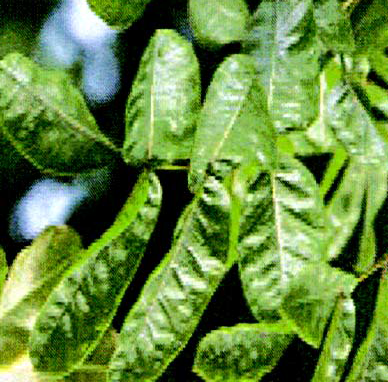
Plate 1: Leaves of Kigelia Africana.
K. africana is widely used to treat gynaecological disorders. Aqueous preparations of the leaves, roots, fruits and flowers are administered orally or as a virginal pessary while the fruits and barks are used to promote breast development in young women or in contrast to reduce swelling and mastitis of the breast [7]. The wound healing activity of the aqueous extract of shade-dried bark of K. africana in rats was attributed to epithelization [8]. A crude ethanol extract exhibited antibacterial and antifungal activities against Staphylococcus aureus and Candida albicans [9]. The leaf extract formulated as shampoo also exhibited antibacterial activity [10]. The extracts of the plant has been shown to possess potential anticancer agents [11, 12]. Butanol extract of the stem bark exhibited in vitro antiamoebic activity when tested against HK-9 strain of Entamoeba histolytica (micro dilution method) using metronidazole as reference drug [12]. The present study was designed to investigate the antibacterial activities of the aqeous extract of K. africana as a prelude to isolating the active compounds responsible for the claimed biological activities.
The use of synthetic drugs in the treatment of diseases caused by microorganisms has been proven to be less effective and the effectiveness depreciate with time due to increasing resistance to the drugs, it increasing toxicity and allergic reaction. Demand for medicinal is increasing in both developing & developed countries due to growing recognition of natural products, being non-narcotic and having no side- effects. According to the world health organization (WHO), 80% of the world population uses medicinal plant as the primary health care source in the treatment of diseases [3]. With the upsurge in the use of herbal remedies, there is need of a thorough scientific evaluation to validate or disprove the supposedly therapeutic effects of some of the medicinal plants. Hence this study is aimed to determining the biological active component of K. africana leaf and bark and evaluate it antibacterial activities on clinical bacterial isolate.
Materials and Methods
Study Area
The study area is Ebonyi local government, Ebonyi state, Nigeria.
Sample Collection and Preparation
The leaf and bark of Kigelia africana were collected from Egugwu Agbaja Izzi of Ebonyi state, Nigeria. The plants were examined and authenticated by Nwankwo O.F. in the herbarium section in the department of biological science, applied biology unit, Ebonyi state university Abakiliki, Nigeria. The plant samples were transferred to the laboratory, microbiology unit of Genbuk diagnostic laboratory for processing.
Extraction of Plant
The plant was extracted with water and absolute ethanol. The crude extracts stored in the refrigerator at 4 ˚C.
Aqueous Extraction/ Preparation of Extract
At arrival, the plants were washed with distilled water to reduce the bacterial load. The plant leaves were dried at room temperature. Drying was continued until constant weight obtained. 100 g of the plant was weighed and soaked into 100 ml of distilled water in a sterile container and stirred and allowed to macerate for 24 hours. Filtration was done using sterile filter cloth (sieve) and the filtrate collected. The filtrate collection was for two purposes. One part of the filtrate was stored in the refrigerator for further use and the second part of the filtrate collected was placed in a sterile stainless tray and then evaporated to dryness. 3000 mg/ml of the aqueous extract was prepared by dissolving 6g of the aqueous extract in 2 ml of distilled water. Further concentrations were produced by serial dilution.
Absolute Ethanol Re-Extraction
1g of the aqueous extract was dissolve in 10ml of absolute ethanol in a conical flask and was covered with aluminum foil to avoid evaporation of ethanol. After 48 hours, the extract was filtered with Whattman No 1 filter paper. 1g of the ethanolic fraction was dissolve in 10ml of 50% ethanol.
Antimicrobial Screening
Organisms Source: The organisms used were clinical isolates which include; Staphylococcus aureus, Klebsiella pneumonia, Escherichia coli and Citrobacter freudii . They were obtained from the Department of Medical Microbiology, Alex Ekwueme Federal Teaching Hospital Abakaliki, Ebonyi State, Nigeria. All the organisms were confirm using conventional cultural, morphological and biochemical methods and maintained at 4ᵒC in nutrient agar slants.
Preparation of the Inoculums
Preparation of Mcfarland Standard: First, 1% chemically pure sulphuric acid was prepared by adding 1ml of concentrated acid on 99ml of distilled water in a conical solution was prepared in another test tube by adding 0.5g of barium chloride to 5ml of distilled water. Then slowly, with agitation, 0.5ml barium chloride solution was added to 99.5ml of sulphuric acid [13].
Standardization of Inoculum: Suspension of inoculum was placed in test tube from the stock culture, which was maintained on nutrient broth at 37°C. The density of organism inoculated on to the media for susceptibility test was determined by comparison with the turbidity of 0.5 Mcfarland standard solution.
Agar Well Diffusion Method: A total of 25ml Nutrient agar was poured in a pedri dish and allowed to solidify. The test organisms was inoculated and spread on the plate using a glass spreader and on each plate, wells of 5mm in diameter were made. The open wells were filled with different concentrations of the extract ranging from 1000mg/ml to 3000mg/ml, and incubated at 37°C for 24hours. The inhibition zone diameter was measured using a meter rule.
Phytochemical Analysis: The preliminary phytochemical screening of the aqueous extract of Kigelia africana was carried out in order to ascertain the presence of various constituents’ viz. steroids, alkaloids, flavonoids, tannins, sugars and glycosides by utilizing standard conventional protocols [14].
Gas Chromatography/ Mass Spectrometry (GCMS): High performance liquid chromatography was used to identify the chemical compounds present in the aqueous extract.
Statistical Analysis: Data collected were analyzed statistically by applying two-way ANOVA using Statistics software (Genstat version 4) and significant difference were tested (p<0.05).
Result
The results revealed that the tested ethanol and aqueous extract of K. africana possessed significant antibacterial activity against various bacterial strains.
Antibacterial Assay of K. Africana Aqueous Extract
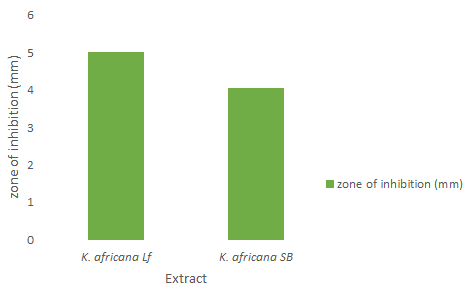
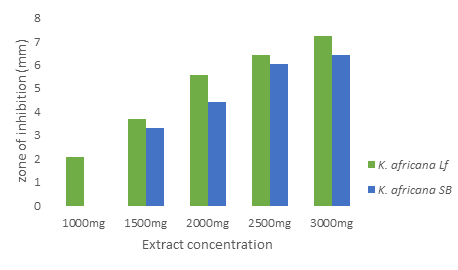
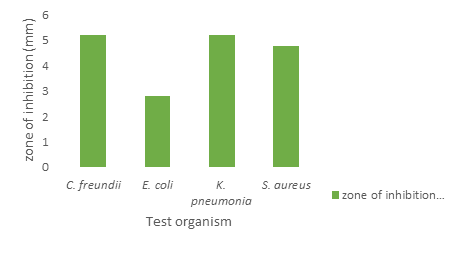
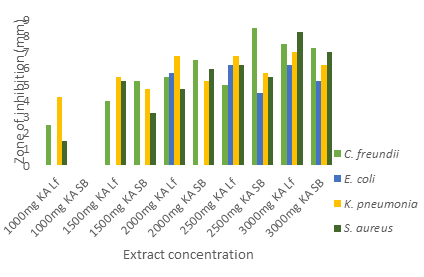
The result showed that K. africana leaf aqueous extract has significantly (P<0.05) more inhibitory effect on clinical bacterial isolate than K. africana stem bark aqueous extract as seen in Figure 1. As the concentration of the aqueous extract increases the inhibitory effect also increased (Figure 2). The aqueous extract had more inhibitory effect against S. aureus, K. pneumonia and C. freundii as compared to E. coli (Figure 3). The result also show that at low concentration (˂1000mg/ml) the leave aqueous extract has no inhibitory effect against E. coli while the stem bark aqueous extract has no inhibition against all the test organisms (Figure 4).
Antibacterial Assay of K. Africana Ethanolic Extract
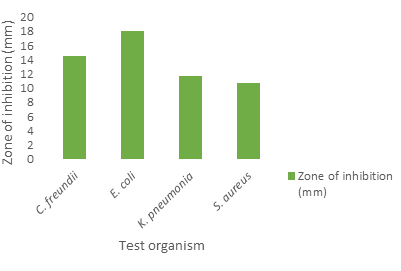
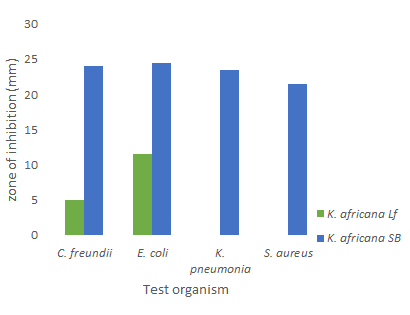
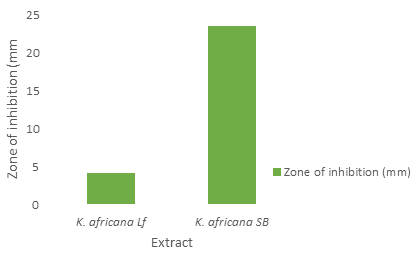
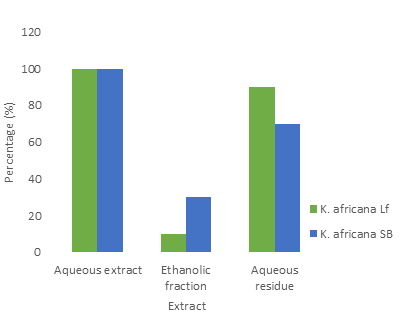
The result shows that K. africana stem bark ethanolic extract showed significantly (P<0.05) more inhibitory effect than K. africana leaf ethanolic extract (Figure 5). 10% leaf ethanolic fraction was re-extracted from the aqueous extract and 30% stem bark ethanolic fraction was re-extracted from the aqueous extract (Figure 6). The stem bark ethanolic extract shows significant (P<0.05) inhibitory effects against the entire test organism (Figure 7). The leaf ethenolic extract shows average inhibitory effect against E. coli and C. freundii and no inhibitory effect aginst S. aureus and K. pneumonia (Figure 8).
Semi Quantitative Phytochemical Screening Results
Phytochemical screening results of the aqueous extracts of Kigelia Africana leaf and bark are shown in Table 1. The presence of saponin, tannins, resin, carbohydrate, alkaloids, flavonoid and reducing sugar were noted in the aqueous extracts.
| Extracts | Saponin | Tannin | Reducing | Carbohydrate | Glucoside | Resin | Flavonoid |
|---|---|---|---|---|---|---|---|
| Sugar | |||||||
| K. africana leaf | - | ++ | ++ | ++ | ++ | ++ | - |
| K. africana stem bak | ++ | ++ | ++ | ++ | ++ | ++ | ++ |
Table 1: Phyochemicals identified in K. africana leaf and stem bark aqueous extracts Keys: indicates absence, + indicate positive
Gas Chromatography/ Mass Spectrometry (GCMS) Table 2
| Extract | Number of Compound | Names of the Identified Bioactive Compound |
|---|---|---|
| Identified | ||
| Leaf | 4 | Di-allo-cystathionine, 10, 13-Octadecadiynoic acid methyl esther, S-(2-Aminoethyl)-l-icyteine, Acetic acid hydroxyl-ethyl ester. |
| Stem Bark | 3 | (3R,4R)-3-(Benzo (1, 3) dioxo-5-ylmethyl)-4-(3, 4-dimethoxybenzyl) dihydrofuran-2(3H)-one, 2-Hexanol(R), Phenol-3-methoxy-2,4,6-trimethyl. |
Table 2: Bioactive compounds identified in K. africana leaf and stem bark aqueous extracts.
Discussion
Antimicrobial compounds from plants represent a potentially novel source of antimicrobial substances since they act against bacteria via mechanisms that are different from those of currently used antibiotics and may thus have a clinical value in the treatment of antibiotic resistant antimicrobial strain [15]. The findings of this study revealed that the ethanolic and aqueous extract of K. africana leaf and stem bark possess good antibacterial activity Figure 3 and Figure 6. The findings of this study that the extract of K. africana has antibacterial effects is consistent with the report of Dyary, et al. [16] that K. africana may be used as the alternative source for treating several infectious diseases caused by various bacterial pathogens.
The study also show that K. africana leaf aqueous extract had more inhibitory effects on clinical bacterial isolates as compared to the stem bark aqueous extract Figure 1. This is similar to the report of Binutu, et al. [17] that the leaf extract has more antimicrobial effects which may be due to the presence of tannin and other polyphenol in the extract.
The ethanolic extract of the stem bark had more inhibitory effect than the aqueous extract on clinical bacterial isolate. This result is consistent with the findings of Grace, et al. [18] that ethanolic extracts of K. africana stembark showed greatest activity against E. coli, K. pneumoniae and S. aureus. Antimicrobial activity of stem bark has been attributed to dihydroisocoumarins, naphthoquinones, iridoids and phenylpropanoids [19].
Plants contain numerous chemical constituents, many of which are known to be bioactive and are responsible for exhibiting diverse pharmacological activities [20]. It is therefore desirable to have knowledge of the chemical constituents of plants to discover new therapeutic agents and lead compounds that may lead to the synthesis of more potent analogs of great economic value. Phytochemical analysis revealed the presence of tannin, reducing sugar; glycoside, carbohydrate and resin in both the leaf and stem bark aqueous extract. Saponin and flavonoid was found only in the stem bark. This contradicts the findings of Christian, et al. [21] that flavonoid is found in the aqueous leaf extract of K. africana. The phytochemical constituents of a plant often determine the physiological action on the human body. Antioxidants are agents that protect cells against damage caused by molecules known as free radicals. The antioxidant activities of extracts are mainly due to the presence of phenolic compounds such as flavonoids, phenolic acids, tannins, and phenolic diterpenes [22]. Hence, the constituents of the extracts, such as tannins and flavonoids, play a major role in the wound healing by preventing and protecting oxidative damage from free radicals [23].
Complex mixture of compounds constitute the non- polar extracts of medicinal plant species, including essential oils, monoterpenes, diterpenes, sesquiterpenes, triterpenes, long-chain aliphatics, alicyclics, and their oxygenated derivatives (alcohols, aldehydes, esters, ethers, ketones andoxides) and in some cases, alkaloids and phenols [24]. GCMS of the aqueous extract revealed the presence of Di- allo-cystathionine, 10,13-Octadecadiynoic acid methyl esther, S-(2-Aminoethyl)-l-cyteine, Acetic acid hydroxyl- ethyl ester in the leaf and (3R,4R)-3-(Benzo (1,3) dioxo-5- ylmethyl)-4-(3,4-dimethoxybenzyl) dihydrofuran-2(3H)- one, 2-Hexanol(R), Phenol-3-methoxy-2,4,6-trimethyl in the stem bark. In the findings of Prabhadevi, et al. [25], 10, 13-Octadecadiynoic acid methyl esther was reported to have a good antibacterial activity. S-(2-Aminoethyl)-l-cyteine was also reported by Ogo, et al. [26] to have cytotoxic effect on bacterial cell by inhibiting protein synthesis and that it is a toxic analog of lysine. This explains why the K. africana leaf aqueous extract have more inhibitory effects as compared to K. africana stem bark aqueous extract. Therefore, aqueous and ethanolic extract of K. africana may provide metabolites that may help treat infectious bacterial diseases that have increased resistance to current antibiotics and could provide alternative medical treatment.
Conclusion
From the entire work, it was deduced that Kigelia africana had antibacterial effects. Also, the presence of glycosides, saponin, resin, carbohydrate, alkaloids, and reducing sugar was confirmed in aqueous extract of Kigelia africana. Moreover, the plant was confirmed to be rich in flavonoids and tannin, which are suspected to be responsible for the antibacterial as well as antioxidant potential of the plant.
References
-
Elisabetsky E, Balick MJ, Laird SA (2006) Medicinal Resources of the Tropical Forest: Biodiversity and Its Importance to Human Health. Columbia University Press, New York, pp: 440.
-
Gulluce M, Sokmen M, Daferera S (2013) Traditional Medicine. J Agric Food Chem 51(14): 3958-3965.
-
Hammer KA, Carson CF, Riley TV (2009) Antimicrobial Effects of Herbaceous Plants. J Applied Microbiol 86(6): 985-990.
-
Nascimiento J, Locatelli PC, Freitas GL (2010) Pharmacological uses of Kigelia africana. Brazil J Microbiol 31(4): 247-256.
-
Nostro A, Germano MP, DÁngelo V, Cannatelli MA (2011) Antimicrobial activities of Kigelia africana. Lettr Applied Microbiol 30: 379-384.
-
Gabriel OA, Olubunmi A (2009) Comprehensive scientific demystification of Kigelia africana: A review. Afr J Pure Applied Chem 3(9): 158-164.
-
Sharma UK, Singh A, Sharma U, Kumar M, Rai D, et al. (2010) Wound healing activity of Kigelia pinnata bark extract. Asian Journal of Pharmaceutical and Clinical Research 3(4): 73-75.
-
Owolabi OJ, Omogbai KI, Obasuyi W (2011) Antifungal and antibacterial activities of the ethanolic and aqueous extract of Kigelia africana (Bignoniaceae) stem bark. African Journal of Biotechnology 6(14): 1677-1680.
-
Abere TA, Olusanya OE, Uti SI (2012) In-vitro antimicrobial activity of the leaf extract of Kigelia africana (Bignoniaceae) formulated as shampoo. Journal of Pharmaceutical and Allied Science 9(2): 1500-1506.
-
Carey MW, Babud MJ, Rao VN, Mohan KG (2008) Anti- inflammatory activity of the fruit of Kigelia pinnata. Pharmacologyonline 2: 234-245.
-
Khan MR (2008) Cytotoxicity assay of some Bignoniaceae. Health & Environmental Research Online 69(6): 538- 540.
-
Neelam B, Shailendra S, Fehmida N, Amir A (2006) Isolation and in vitro antiamoebic activity of iridoids isolated from Kigelia pinnata. ARKIVOC 5: 69-76.
-
Cheesbrough M (2006) District laboratory practice in tropical countries. 2nd (Edn.), Press Syndicate of the University of Cambridge Publisher, UK, pp: 1-434.
-
Harbone JBC (1984) Phytochemical methods. In: Harbone JBC (Ed.), A Guide to Modern Techniques of Plant Analysis. 3rd (Edn.), Chapman and Hall, London, pp: 279.
-
Eloff JN (2008) Which extractant should be used for the screening and isolation of antimicrobial components from plants. Journal of Ethnopharmacology 60(1): 1-8.
-
Dyary HO, Arifah RS, Sharma AK, Rasedee A (2014) Antitrypanosomal and cytotoxic activities of selected medicinal plants and effect of Cordyline terminalis on trypanosomal nuclear and kinetoplast replication. Pak Vet J 34(4): 444-448.
-
Binutu OA, Adesogan KE, Okogun JI (1996) Antibacterial and antifungal compounds from Kigelia pinnata. Planta Med 62(4): 352-353.
-
Grace OM, Light ME, Lindsey Kl, Mulholland DA, Staden J, et al. (2002) Antibacterial activity and isolation of active compounds from fruit of the traditional African medicinal tree Kigelia Africana. South African Journal of Botany 68(2): 220-222.
-
Inoue L, Inouye H, Chen CC (2011) A naphthoquinone and a lignin from the wood of Kigelia pinnata. Phytochemistry 20(9): 2271-2276.
-
Gu R, Wang Y, Long B, Kennelly E, Wu S, et al. (2014) Prospecting for bioactive constituents from traditional medicinal plants through ethnobotanical approaches. Biol Pharm Bull 37(6): 903-915.
-
Christian A, Anita DS, Nicholas A, Boakye YD, Mensah KB, et al. (2013) Antimicrobial, Antioxidant, and Wound Healing Properties of Kigelia africana (Lam.) Beneth. And Strophanthus hispidus DC. Adv Pharmacol Sci 2013: 692613.
-
Ayoola GA, Folawewo SA, Adesegun OO, Abioro AA, Adepoju-Bello AD, et al. (2008) Phytochemical and antioxidant screening of some plants of Apocynaceae from south eastern Nigeria. International Journal of Plant Breeding and Genetics 6(4): 1-5.
-
Nayak BS, Sandiford S, Maxwell A (2009) Evaluation of the wound-healing activity of ethanolic extract of Morinda citrifolia L. leaf. Evid Based Complement Alternat Med 6(3): 351-356.
-
Regasini LO, Vieira-Junior GM, Fernandes DC, Bolzani VD, Cavalheiro AJ, et al. (2009) Identification of triterpenes and sterols from Pterogyne nitens (Fabacea-Caesalpinioideae) using high-resolution gas chromatography. Journal of Clinical Chemistry Society 54(3): 218-221.
-
Prabhadevi V, Sahaya SS, Johnson M, Venkatramani B, Janakiraman N (2012) Phytochemical studies on Allemanda cathartica using GC-MS. Asian Pacific Journal of Tropical Biomedicine 2(2): 550-554.
-
Ogo N, Oihi S, Matsuno K, Sawada JI, Fujii N, et al. (2007) Synthesis and biological evaluation of L-cysteine derivative as mitotic kinesin Eg5 inhibitors. Bioorg Med Chem Lett 17(14): 3921-3924.
- Effects of 5-HTP and Melatonin on the Sleep Cycle of Medical Students
- Adsorption of Bisphenol A on NH4OH- Modified Rice Husk and Sugar Cane Bagasse Biochar
- Comparative Assessment of the Reinforcement Efficiency of Palm Fruit Fibre and Coconut Fibre in High Density Polyethylene (HDPE) Matrix Composite
- Importance of Bio Compounds Naturally Present in Food with Functionality in Animal Metabolism
- Sub-Acute Study on the Cardiotoxic Effects of Monosodium Glutamate Ingestion in Albino Rat
- Weight Management and Its Natural Solutions: A Review