
An Overview: Several Causes of Breast Cancer
In this short communication, various causes of breast cancer have been illustrated. Breast cancer is a one of the serious disease in women in world wide. Increasing age, reproductive factors, mammographic density and, in around 9% of cases, genetic factors and family history are all known risk factors for breast cancer. A range of factors, such as dietary fat intake, and solvent and pesticide exposure, have also been implicated as potential risk factors but the evidence so far has been inconclusive. For most cases of breast cancer, the true cause remains unknown. Studies worldwide have identified many factors to which women with breast cancer attribute their condition, including stress and other psychosocial factors; knocks, bruises or injury to the breast; religious causes; chemicals, food additives; proximity to electronic equipment or overhead power lines; viral or bacterial infection; and bad luck, although there is limited evidence to support the attributions. The objective of this study was too aware the women from various causes of breast cancer.
Introduction
The causes of breast cancer are not fully known. Cancer is a dangerous disease but breast cancer in women is a most serious problem in not even present time in future in worldwide [1]. Cancer is metastasis which is a complex series of steps in which cancer cells migrate from one organ (original tumor site) to another organ of the body through circulatory and lymphatic system. Breast cancer is fundamentally a systemic disease. Estrogens are closely related to the pathogenesis of breast cancer. Breast cancer is the most commonly occurring neoplastic disease in women worldwide and is second only to lung cancer as a cause of cancer death in women. There is a gradual increase in breast cancer incidence in most developed countries and in societies which became westernized recently or are in the process. Breast cancer is the second most common cancer among Indian women [2]. Main aim of this review articles is to compile a various reason of breast cancers which can be avoidable. Breast cancer is the most frequently diagnosed cancer in women, the incidence rate of which has increased considerably among women in recent years. The established risk factors include (a) menstrual and reproductive history, (b) family history of breast cancer, (c) Postmenopausal obesity, (d) genetic susceptibility (e) Tobacco smoking and (f) exposure to ionizing radiation. Yet more than half of breast cancer risk remained unexplained.
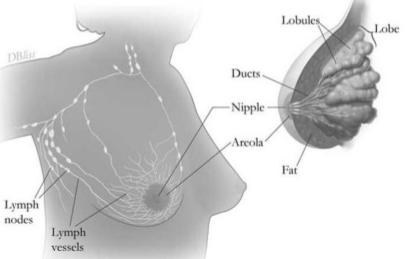
In Figure 1, Breast anatomy: Each breast contains 15 to 20 lobes of glandular tissue, arranged like the petals of a daisy. The lobes are further divided into smaller lobules that produce milk for breast-feeding. Small tubes (ducts) conduct the milk to a reservoir that lies just beneath your nipple [3].
Breast cancer is one of the most commonly diagnosed invasive cancers and it accounts for a quarter of the female cancers diagnosed annually in Australia. In Western societies it is estimated that one in nine women will have breast cancer before the age of 85. Increasing age, reproductive factors, mammographic density and, in around 9% of cases, genetic factors and family history are all known risk factors for breast cancer. A range of factors, such as dietary fat intake, and solvent and pesticide exposure, have also been implicated as potential risk factors but the evidence so far has been inconclusive. For most cases of breast cancer, the true cause remains unknown. Studies worldwide have identified many factors to which women with breast cancer attribute their condition, including stress and other psychosocial factors; knocks, bruises or injury to the breast; religious causes; chemicals, food additives; proximity to electronic equipment or overhead power lines; viral or bacterial infection; and bad luck, although there is limited evidence to support the attributions. Women without breast cancer also frequently identify similar risk factors when asked about their beliefs about the causes of breast cancer [4]. In 2012, 1.7 million new cases of breast cancer were diagnosed globally, and breast cancer was responsible for nearly 700,000 deaths. Worldwide, cumulative lifetime risk for women of developing breast cancer between the ages of 0 and 74 currently stands at 4.6%, and lifetime risk of dying from breast cancer is 1.4% [5].
Causes of Breast Cancer
- Environmental factors: slightly more control women reported one or more environmental factors as risks for breast cancer. However specific chemicals were rarely identified by participants, who generally referred to broad factors such as ‘pollutants’, ‘toxins’ or ‘additives’ in describing environmental risks. A number of chemicals found in the environment, such as benzene (found in vehicle exhausts), are known carcinogens although with no definite connection to breast cancer. Some pesticides have been shown to mimic the effects of oestrogen and it is plausible that they could increase breast cancer risk, although the current epidemiological evidence is weak [4].
- Alcohol use: Drinking alcohol is a one of the most important factor to cause breast cancer [4]. Alcohol consumption is increasing in many countries and is an important cause of cancer worldwide. Most people know that heavy drinking can cause health problems. But many people might not know that drinking alcohol also can raise their risk of getting cancer. Use of alcoholic drinks associates with the risk of cancers of mouth, throat, pharynx, voice box, larynx, esophagus, liver, colon, rectum, pancreases, stomach and breast etc. Alcoholic beverages such as beer, wine, and liquor have a potential vector for increasing risk of women’s health by misbalance of hormones and receptor which lead to breast cancer. Alcohol promotes the level of estrogen and other hormones associated with hormones, receptors which are responsible to cause breast cancer [1]. It also may enlarge breast cancer risk by DNA damage in cells. Compare to teetotaler women, women who have thrice alcoholic drinks per week have a 15% higher risk of breast cancer. Experts estimate that the risk of breast cancer goes up another 10% for each additional drink women regularly have each day. But one more interesting things, Age of girls between 10-16 years who have three-five times alcoholic drinks per week leads to increases the three times the risk of developing benign breast lumps. Most breast lumps are benign which means they are not cancerous. Benign breast lumps usually have smooth edges and can be moved slightly when you push against them. They are often found in both breasts. There are various common causes such as normal changes in breast tissue, breast infection or injury, alcoholic drinks and medicines that may cause lumps as well as breast pain. Breast tissue changes during women’s entire life. breast tissue changes are sensitive to changing hormone level during the menstrual cycle. Non cancerous breast lumps are associated with a higher risk of breast cancer later in life [6, 7, 8]. Oxidative catabolism of estrogen, mediated by various cytochrome P450 enzymes, generates reactive free radicals that can cause oxidative damage. The same enzymes of estrogenic metabolic pathways catalyze biological activation of several Xenobiotic.
Xenobiotic chemicals may exert their pathological effects. Breast tissue can be a target of several xenobiotic agents. DNA-reactive metabolites of different xenobiotic compounds have been detected in breast tissue. This was also found in Buykx, et al., 2015 where the majority of participants linked alcohol to liver cancer, but very few linked breast cancer to alcohol [9].
• Tobacco use: Smoking increases the risk of many types of cancer (including cancers of the lung, kidney and pancreas). Although findings on a possible link to breast cancer remain mixed, there's growing evidence smoking may slightly increase the risk of breast cancer. More research is needed before solid conclusions can be made about a potential link between smoking and breast cancer. Some studies have shown smoking before a first childbirth may increase the risk of breast cancer. Others have found no link between the two [10, 11]. Tobacco smoking may be one of the few modifiable risk factors for breast cancer. The following is a summary of information from epidemiological studies on smoking and breast cancer [12]. Tobacco smoking has been suggested as a cause of breast cancer. In the evaluation of IARC, smoking and tobacco smoke are judged to be carcinogenic to humans. Chemical carcinogens in tobacco smoke can cause mammary tumors in animals. Metabolites of tobacco smoke have been formed in the breast fluid or tissue of smokers [13]. Thus, it is biologically plausible that exposure to tobacco smoke is related to breast cancer. Chisato nagata, et al. [12] has studied on Tobacco Smoking and Breast Cancer Risk: An Evaluation Based on a Systematic Review of Epidemiological Evidence among the Japanese Population and they concluded that Tobacco smoking possibly increases the risk of breast cancer.
• Genetic risk factors: The attribution of breast cancer development to inherited or genetic factors was the most commonly identified cause among control women, a finding previously re-ported by others [14]. About 5% to 10% of breast cancer cases are thought to be hereditary, caused by gene changes (mutations) inherited from a parent. Inherited mutations in BRCA1 or BRCA2 are the most common cause of hereditary breast cancer. Women with BRCA mutations have a high risk of developing breast cancer during their lifetime. When they do develop it, they are often younger than other women with breast cancer who are not born with one of these gene mutations. Mutations in other genes are less common causes of inherited breast cancer.
• DES exposure: DES exposure slightly increases risk of breast cancer. Diethylstilbestrol (DES), also known formerly as stilboestrol, is a synthetic nonsteroidal estrogen of the stilbestrol group which was first synthesized in 1938. It is also classified as an endocrine disruptor. Human exposure to DES occurred through diverse sources, such as dietary ingestion from supplemented cattle feed and medical treatment for certain conditions, including breast and prostate cancers. From about 1940 to 1971, DES was given to pregnant women in the mistaken belief it would reduce the risk of pregnancy complications and losses.
• Overweight: Obesity is the most common disease. It raises the risk of having breast cancer, especially for women after menopause. Obesity is a complex, multifaceted condition and that active avoidance of excessive weight for height, irrespective of menopausal status, has a direct and consistent bearing on the number of women who die from this disease. Thus, it is critical to fully investigate how obesity impacts the carcinogenic process in the breast [5]. From a physiological perspective, inflammation is a necessary response to tissue injury associated with obesity induced adipocyte dysfunction. Expression of pro-inflammatory cytokines, including interleukin (IL)-1 α/β, IL-6, interferon (IFN)-γ, tumor necrosis factor (TNF)-α, and transforming growth factor (TGF)-α/β, is usually closely followed by the production of anti-inflammatory cytokines within the tissue, including IL-10, IL-13, and IL-14, under normal acute conditions [15]. Only three in 10 (31%) associated breast cancer with obesity which has the second largest number of cancer cases after bowel cancer [16].
• DNA changes: Most likely cause to changes in the genetic material (DNA) in our cells. DNA changes are often related to our lifestyle, but some can be due to age and other factors. Cancer is intimately related to the accumulation of DNA damage, and repair failures (including mutation prone repair and hyperactive repair systems). Davis et al. has discussed the overlap between classification schemes of breast cancers and the relationship between DNA damage and breast cancer and endogenous-exogenous sources of DNA damage, and how DNA damage might accumulate in a woman's breast tissue over her lifetime. They have elaborates the role of molecular biology of three important DNA damage response genes, BRCA1 (Breast cancer 1), BRIT1 [BRCT-repeat inhibitor of hTERT expression], a repressor of human telomerase function, is implicated in cellular immortalization, and PARP-1 (Poly [ADP-ribose] polymerase 1 (PARP-1) also known as NAD+ ADP-ribosyltransferase 1 or poly[ADP-ribose] synthase 1 is an enzyme that in humans is encoded by the PARP1 gene) [17]. Changes or mutations in DNA can cause normal breast cells to become cancer. Certain DNA changes are passed on from parents (inherited) and can greatly increase your risk for breast cancer. Acquired DNA changes take place over time and are only in the breast cancer cells. Certain inherited DNA mutations (changes) can dramatically increase the risk for developing certain cancers and are linked to many of the cancers that run in some families [18].
• Current or recent use of birth control pills: There are two main types of pill: (i) The combined contraceptive pill, which contains the female hormones oestrogen and progestogen (ii) The mini pill, which contains progestogen only. There are other types of hormone-based contraception, including patches,
| Lack of exercise: | Research shows a link | |
|---|---|---|
| between exercising regularly at a moderate or intense | ||
| level for 4 to 7 hours per week and a lower risk | ||
| of breast cancer. Exercise consumes and controls blood | ||
| sugar and limits blood levels of insulin growth factor, a | ||
| hormone that can affect how breast cells grow and | ||
| behave. |
are constantly going through change, from the time of their development, through pregnancy and the menopause. This is because of the varying levels of the female hormones oestrogen and progesterone in your body. Most breast changes are likely to be normal or due to a benign (not cancer) breast condition. Some benign breast conditions may cause problems and need treatment, but this is not always the case. Benign (non- cancerous) breast conditions are very common, and most women have them. In fact, most breast changes are benign. Unlike breast cancers, benign breast conditions are not life threatening. But some are linked with a higher risk of getting breast cancer later on.
- Previous chest radiation: Women who had radiation to the chest for another cancer as a child or young adult are at a much higher risk than those who did not.
- Post-menopausal hormone therapy (PHT): Increased risk in women who use or recently used combined PHT for many years.
- Recent use of hormonal contraceptives: Slightly higher risk than in women who never used them, but this goes down after use stops.
- Race: African American women are more likely to die of this cancer.
- Dense breast tissue: Women with denser breast tissue (as seen on a mammogram) have a higher risk of breast cancer.
- More menstrual cycles: Slightly higher risk if a woman started menstruation early or went through menopause late.
- Not breast feeding: Some studies suggest that breastfeeding may slightly lower breast cancer risk.
- Physical activity: More active reduces the risk of breast cancer.
- Hyperplasia or lobular carcinoma in situ (LCIS)
- Current or recent use of menopausal hormone therapy (postmenopausal hormone use) containing estrogen plus progestin.
- Not having children or having them later in life (after age 30) puts a woman at slightly higher risk.
Conclusion
Finally concluded that Breast cancer is the most common malignant disease in women in world and it is second among cancer deaths in women. Various risk factor of breast cancer has been described systematically. There is a need for health promotion campaigns to raise awareness and improve knowledge of the scientifically recognized risk factors, in order to allow women to make informed choices about their health and healthcare options. There is a role for additional research to quantify the impact of these misperceptions on breast cancer risk and for health promotion to improve knowledge and awareness of risk factors with a strong evidence base.
Acknowledgment
This work was financially supported from UGC in the form of SRF (UGC-Ref. No.:3296 (NET- JUNE2011) is highly acknowledged and highly thankful to Chairperson, Division of Forensic Science, Galgotias University Greater Noida, Uttar Pradesh, India for constant support and encouragement.
References
-
Dumitrescu RG, Shields PG (2005) The etiology of alcohol-induced breast cancer. In Alcohol 35(3): 213-225.
-
Mukherjee S, Koner BC, Ray S, Ray A (2006) Environmental contaminants in pathogenesis of breast cancer. Indian J Exp Biol 44(8): 597-617.
-
Society AC (2017) Breast Cancer. NCCN Guidel Breast Cancer Patients, (February): 6.
-
Thomson AK, Heyworth JS, Girschik J, Slevin T, Saunders C, et al. (2014) Beliefs and perceptions about the causes of breast cancer: a case-control study. BMC Res 7: 1-8.
-
Matthews SB, Thompson HJ (2016) The obesity- breast cancer conundrum: An analysis of the issues. Int J Mol Sci 17(6).
-
Langer A, Mohallem M, Berment H, Ferreira F, Gog A, et al. (2015) Breast lumps in pregnant women. Diagn Interv Imaging 96(10): 1077-1087.
-
Rubenstein S (1976) Breast Lumps. JAMA: The Journal of the American Medical Association 235: 1689.
-
Baraza R (1992) Breast lumps. East African Medical Journal 69(5): 229-230.
-
Boykx P, Li J, Gavens L, Lovatt M, Gomes de Matos E, et al. (2015) An investigation of public knowledge of the link between alcohol and cancer. Univ Sheff Cancer Res UK.
-
Lawlor DA, Ebrahim S, Davey Smith G (2004) Smoking before the birth of a first child is not associated with increased risk of breast cancer: Findings from the British Women’s Heart and Health Cohort Study and a meta-analysis. Br J Cancer 91(3): 512-518.
-
Gonzalez CA, Riboli E (2010) Diet and cancer prevention: Contributions from the European Prospective Investigation into Cancer and Nutrition (EPIC) study. Eur J Cancer 46(14): 2555-2562.
-
Nagata C, Mizoue T, Tanaka K, Tsuji I, Wakai K, et al. (2006) Tobacco smoking and breast cancer risk: An evaluation based on a systematic review of epidemiological evidence among the japanese population. Jpn J Clin Oncol 36(6): 387-394.
-
Petrakis NL, Gruenke LD, Beelen TC, Castagnoli N, Craig JC (1978) Nicotine in breast fluid of nonlactating women. Science 199(4326): 303-305.
-
Sanderson SC, Waller J, Jarvis MJ, Humphries SE, Wardle J (2009) Awareness of lifestyle risk factors for cancer and heart disease among adults in the UK. Patient Educ Couns 74(2): 221-227.
-
Skurk T, Alberti Huber C, Herder C, Hauner H (2007) Relationship between adipocyte size and adipokine expression and secretion. J Clin Endocrinol Metab. 92(3): 1023-1033.
-
Parkin DM, Boyd L (2011) Cancers attributable to overweight and obesity in the UK in 2010. Br J Cancer 105: S34-S37.
-
Davis JD, Lin SY (2011) DNA damage and breast cancer. World J Clin Oncol 2(9): 329-338.
-
Scully OJ, Bay BH, Yip G, Yu Y (2012) Breast Cancer Metastasis. Cancer Genomics and Proteomics 9: 311-320.
-
Collaborative Group on Hormonal Factors in Breast Cancer (1996) Breast cancer and hormonal contraceptives: collaborative reanalysis of individual data on 53297 women with breast cancer and 100239 women without breast cancer from 54 epidemiologic studies. Lancet 347(9017): 1713-1759.
- Epidemiological Surveillance and Rumors on Social Media
- Awareness and Treatment of Uncontrolled Hypertension in US Overweight/Obese Youths Aged 16–24 Years, NHANES 2021–2023
- Strengthening EPI Through Parental Engagement: Lessons from Dhaka Slums for IA-2030
- Mothers Knowledge of the Prevalence, Causes, Effects, Prevention and Control of Diarrhoea among Children in Ife East Local Government Area, Ile Ife, Osun State, Nigeria
- Covid-19 Reinfections Case Series from October 2023 to October 2024 in A General Medicine Office in Toledo (Spain)
- Water Contact! One Risk Too Many: Risk Factors Associated with Schistosoma haematobium infection in Osun State, Nigeria