
Epidemiological Study on the Prevalence of Helminth Parasites of Cattle in Guangua District, Awi zone of Amhara Region, North West Ethiopia
A cross-sectional study was conducted in Guangua district, Awi zone of Amhara Regional State, North West Ethiopia, from July 2019 to March 2020 to determine the prevalence of helminth parasites in cattle. A total of 460 randomly selected cattle were sampled and examined using standard coprological procedures. The current study result revealed that 54.13% (n=249/460) of cattle in the study area harbor one or more species of parasites. In the current study of qualitative fecal sample analysis, about 13 species of helminth parasites were detected. These gastrointestinal helminth parasites of cattle identified in the study area were Nematodes 48 (10.44%); (Ascaris, Coopera, Haemonchus, Nematodirus, Oesophagostomum, Ostertagia, Strongyles, Thelazia, Trichostrongylus), Trematodes 145 (31.52%); (Fasciola, Paramphistomum, Schistosoma) and Cestodes 6 (1.30%); (Monezia) and mixed infections 50 (10.87%), with the prevalence of each species of the parasites. In the current study, Fasciola species were dominant with a higher prevalence of 115 (25%) followed by Ascaris species 23 (5%) and Schistosoma species 17 (3.69%). The prevalence in different age groups was observed to be 46.67%, 46.78%, and 60.65% in the calf, young, and adult age groups, respectively. The helminth parasite infection was recorded to be 56.38% and 53.05% in male and female cattle respectively. The prevalence of helminth parasite infection in two different breeds of cattle was recorded to be 53.38% and 64.52% in local and cross breeds respectively. The prevalence of helminth parasites infection of cattle was detected to 58.5% and 48.5% in wet and dry seasons respectively, showing a statistically significant difference (p
Introduction
Ethiopia is believed to have the largest livestock population in Africa and this contributing a considerable portion to the economy of the country and still promising to rally round the economic development of the country. The total livestock population of the country accounts for about 60.4 million cattle, 31.3 million sheep, 32.7 million goats, 2.01 million horses, 0.46 million mules, 8.85 million donkeys, 1.4 million camels, 56.07 million poultry, and 6.5 million beehives [1, 2]. Despite this large population of cattle, production and productivity are low in Ethiopia, due to poor nutrition, reproduction insufficiency, poor breed improvement, management constraints, and prevailing of infectious and non-infectious animal diseases [3].
Livestock, including cattle farming, is among the major sectors representing a valuable asset in both traditional and modern agriculture in sub-Saharan Africa, as well as in other tropical and subtropical regions of the world providing the needed animal protein that contributes to the improvement of the nutritional status of the people, milk, meat, egg, honey, cheese, and butter during festivities around the world, flexible income for family units, employment, hides, and skin for leather production, farm/draught or packing energy, manure for enhancing agriculture of crop production and applied to improve soil fertility as compost and also used as a source of energy [4, 5].
Helminths parasites of ruminants refer to a group of complex multicellular eukaryotic parasites that are infective to animals all over the world [6]. Helminth infection is a menace for both small and large-scale farmers, but their impact is greater in sub-Saharan Africa including Ethiopia, due to the availability of a wide range of agro-ecological factors suitable for diversified hosts and parasite species [7].
Helminths parasitic infection is one of the major causes of disease, wastage, and decreased production and productivity of livestock in the country by exerting their effect through direct losses include those losses of livestock due to mortality, morbidity, condemnation of organs and carcasses at meat inspection, cause zoonotic disease which is important from the public health point of view; whilst indirect losses include the diminution of productive potentials such as reduced milk and meat production, decreased growth rate, weight loss in young growing calves, involuntary culling, lowered fertility, late maturity of slaughter stock, treatment costs and weaken the working capacity of the animal mainly in developing countries. The helminth parasites also cause unthriftiness, gut damage, anemia, diarrhea, anorexia, gastroenteritis, abdominal distention, emaciation, weaken the energy of their hosts, bring about deformity, reduced feed intake, and reduced absorption of nutrients [8, 9].
Economic losses associated with gastrointestinal helminth parasitic conditions range from decreased utilization of feeds in unthrifty animals to weight loss or even death [10]. Severe losses of production can occur in herds suffering from sub-clinical helminths infections even when animals appear to be healthy [11]. The effect of infection by gastrointestinal helminth parasites varies according to the parasite concerned, the degree of infestation, environment, and other risk factors such as species, age, sex, breed, season, and intensity of worm burden [12, 13]. The incidence of helminth parasite infections and their severity varies greatly from area to area depending on the relative importance of many factors like nutrition status, pasture management, climatic condition, humidity, temperature, rainfall, vegetation, genera of helminth parasites involved, animal species, animal immunity and host preference and presence of intermediate host [14, 15].
Studies comprising the identification of helminth parasites and their epidemiology are essential. The primary factors affecting the development and survival of the eggs and free-living larvae are temperature and moisture and different parasites vary in their ability to survive extremes of temperature and moisture. There is a marked seasonal fluctuation in the number and availability of infective stages on pasture. The causes for this conveniently grouped as factors affecting contamination of the environment and those controlling the survival, development, dissemination, and availability of free-living stages and intermediate hosts [16, 17].
The epidemiological occurrence of gastrointestinal helminths parasites mainly depends on seasonal climatic changes and certain management practices. The level of environmental contamination is influenced by factors including the biotic potential of helminths, host immune status, and hypobiosis [18]. The most important helminths parasites in cattle include nematodes (roundworms), trematodes (flukes), and cestodes (tapeworms). These parasites are a worldwide problem for both small and large- scale farmers, but there is a greater instance in sub-Saharan Africa in general, and Ethiopia in particular due to the availability of a wide range of agro-ecological factors suitable for diversified hosts and parasite species [19].
The investigations about the epidemiology of gastrointestinal parasites infections in cattle have been well documented in several foreign countries, which helped improve helminths control, animal performance, and decrease in production losses [20]; but still now there was a shortage of organized documents of animal diseases in different districts of Ethiopia in general, and in Guangua district in particular. And till to date, there are no published research papers or investigations that had been studied about the epidemiological prevalence, occurrences, distributions, species, and infection rate of helminth parasites of cattle in the study area of Guangua district. Therefore, the objective of this study was to determine the epidemiological occurrence of major helminth parasite infections and their qualitative prevalence in cattle of Guangua district, Awi zone of Amhara region, North West Ethiopia.
Materials and Methods
Study Area
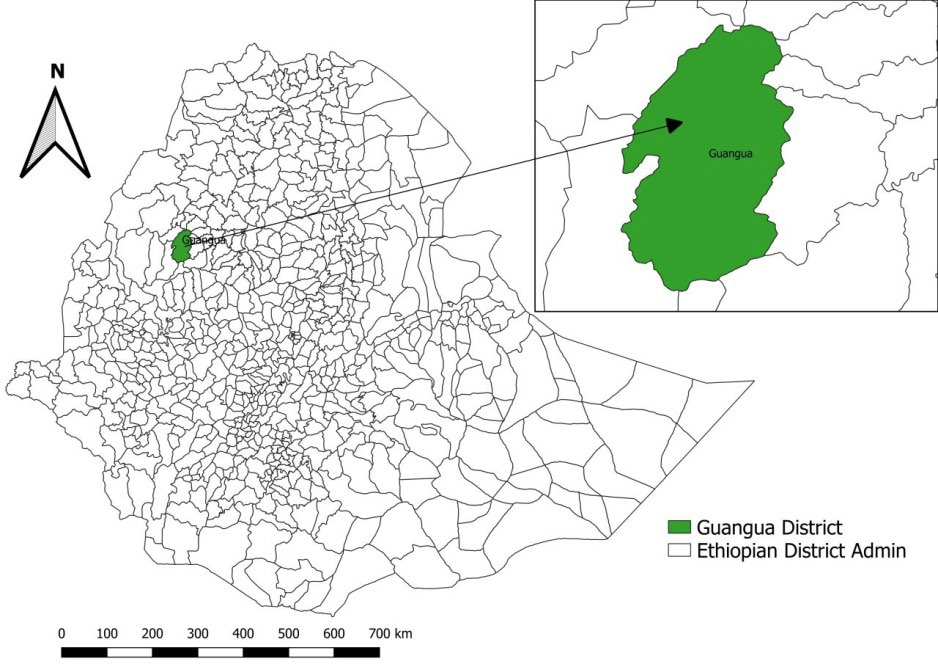
The study was conducted in Guangua district, Awi zone of Amhara regional state to determine the prevalence of helminth parasites of cattle and their epidemiological occurrence and distribution. Guangua district is located 505 km northwest of Addis Ababa, the capital of Ethiopia and it is found 179 km Southwest of Bahir Dar, the capital city of the Amhara region, and 57 km far from Injibara, the capital city of Awi zone administration. According to the data of Guangua district annual statistical magazine, (2018/2019), the total population number of the district was about 140,149. The altitude of the district is found between 1600-1710 meters above sea level with a mean annual rainfall of 1550mm (1300-1800 mm) and a mean annual temperature of 23.5°C (22-25°C). The production system is a crop-livestock mixed type of agriculture in which the extensive husbandry management of livestock has been practiced. Guangua district had a total livestock population of 144851, 35740, 22955, 2385, 918, 9645, 172933, 23598 cattle, sheep, goats, mules, horses, donkeys, poultry, and beehives, respectively [21] (Figure 1).
Study Animals
The study animals were cattle found in different kebeles of Guangua district which includes; Bizra Kani, Tiru Birhan, Waikela, Semen Degera, and Yimali kebeles. These selected localities had a different range of agro-ecological and weather conditions suitable for diversified hosts and parasite species. Cattle in the study areas were randomly selected for the helminth parasites egg examination. A total of 460 heads of both male and female sexes; and both local and crossbreeds of cattle were examined during the study period. Study animals were categorized into three age groups based on the study of Kemal J, et al. [22] into (Calf < 1-year-old; Young: 1 to 3 years old; and Adults and Olds >3 years old). The cattle were managed extensively with a free communal grazing system.
Study Design
A cross-sectional study was conducted from July 2019 to March 2020 to determine the prevalence of helminth parasites of cattle in which the fecal samples were collected for coprological examination and to investigate the epidemiological distribution and the risk factors influencing the prevalence of helminth parasites infection in cattle.
Sampling Method and Sample Size Determination
A simple random sampling method was employed to select the sample animals. The sample size was determined using the formula given by Thrusfield M [23].
N= [(1.96)2 Pexp (1-Pexp)]/d2
Where N=required sample size, Pexp = Expected prevalence (50%), d=desired absolute precision (0.05).
According to the above formula, 384 samples were needed, but to increase the precision, 460 cattle were sampled and examined by using the coprological examinations of fecal floatation and sedimentation techniques.
Faecal Sample Collection and Examination
The sample of fresh fecal was collected directly from the rectum by using sterile disposable plastic gloves. The samples were collected and placed in a labeled clean universal bottle (plastic container) and were preserved with formalin 10% and were submitted to Guangua district veterinary clinical diagnostic laboratory for processing. At the time of sampling, identification number, the name of the owners, nickname of the animal, date and season of sampling, age, sex, breed, and address or kebele were recorded for each cattle on a data recording format.
The fecal collected samples were processed and examined by using the standard floatation and sedimentation techniques for the qualitative investigation of the types of gastrointestinal helminth eggs. Nematode and Cestode eggs were identified by the floatation technique in saturated NaCl solution and Trematodes were examined by sedimentation methods. Fasciola species and Paramphistomum species eggs were distinguished by their morphological and color differences by staining with the reagent of methylene blue. The Fasciola eggs appear yellowish and paramphistomum eggs appear grayish with dark granules in the egg with a blue background. Eggs of the different helminths were identified based on morphological appearance, color, and size of eggs according to the literature [24, 25].
Data Management and Statistical Analysis
The data collected on helminth parasites of cattle and its associated risk factors were coded and entered in the Microsoft Excel worksheet 2016 and analyzed using STATA version 13. Descriptive Statistics was used to determine the prevalence through percentage and frequency. Percentages (%) were used to measure prevalence and chi-square (χ2) was applied to measure the association between the prevalence of the parasite and associated risk factors of age, sex, breed, and season. The significance of the association between variables was said to exist if the calculated level of significance is less than 5% (p<0.05) at a 95% confidence level.
Results
Overall Prevalence of Helminthosis
The current study result revealed that the overall prevalence of helminth parasites of cattle in the study area of Guangua district was 54.13%, which means from the total sample of 460 cattle examined, 54.13% (n=249) were found to harbor one or more species of parasites. In the current study, about 13 species of helminth parasites of cattle were detected. The helminth parasites of cattle identified in the study area were Nematodes (Ascaris, Coopera, Haemonchus, Nematodirus, Oesophagostomum, Ostertagia, Strongyles, Thelazia, Trichostrongylus), Trematodes (Fasciola, Paramphistomum, Schistosoma), and Cestodes (Monezia of cattle) with the prevalence of each of the parasites presented in Table 1.
The present study findings indicated that Fasciola was the dominant species of parasites in which higher prevalence was recorded in Fasciola species with 115 (25%) followed by Ascaris species 23 (5.0%) and Schistosoma species 17 (3.69%). The dominancy of Fasciola might be associated with the presence of swampy areas suitable for the growth of intermediate hosts (snails), and communal grazing of animals in the same grazing fields. Although Fasciola and Ascaris were the most prevalent parasites encountered, other helminth parasites like Coopera, Haemonchus, Nematodirus, Oesophagostomum, and Strongylus, were found to be the least prevalent. Based on this study the parasites of class Trematoda were dominant followed by class Nematoda and class Cestoda with a prevalence of 145 (31.52%), 48 (10.44%), 6 (1.30%), respectively. And the mixed infections of different classes and species of parasites were found to be 50 (10.87%) as summarized below in Table 1.
The prevalence of helminth parasite infection in different age groups was detected to be 46.67%, 46.78%, and 60.65% in calves, young, and adult age groups respectively and this was found statistically significant (x2 =8.9113, p=0.012). The prevalence of helminth parasite infection in the sex group was observed to be 56.38% in the male and 53.05% in female animals, but it was not statistically significant (x2=0.4475, p=0.504). The prevalence of helminth parasite infection in two different breeds of cattle was recorded to be 53.38% and 64.52% in local and cross breeds respectively (x2=1.4440, p=0.229).
| Species of helminth parasite detected | No. of cattle infected | Prevalence (%) | |
|---|---|---|---|
| Nematodes | 48 | 10.44 | |
| 1 | Ascaris (Toxocara vitulorum) | 23 | 5 |
| 2 | Coopera | 2 | 0.43 |
| 3 | Haemonchus | 2 | 0.43 |
| 4 | Ostertagia | 9 | 1.97 |
| 5 | Nematodirus | 2 | 0.43 |
| 6 | Thelazia | 3 | 0.65 |
| 7 | Oesophagostomum | 2 | 0.44 |
| 8 | Trichostrongylus | 3 | 0.65 |
| 9 | Strongyles | 2 | 0.44 |
| Trematodes | 145 | 31.52 | |
| 10 | Fasciola | 115 | 25 |
| 11 | Paramphistomum | 13 | 2.83 |
| 12 | Schistosoma | 17 | 3.69 |
| Cestodes | 6 | 1.3 | |
| 13 | Monezia | 6 | 1.3 |
| Mixed infections | 50 | 10.87 | |
| 14 | Mixed infection of two or more classes of parasites | 50 | 10.87 |
| 15 | Total | 249 | 54.13 |
Table 1: Prevalence and Species of helminth parasites of cattle detected in Guangua district (N=460).
The higher prevalence of helminth parasites infection of cattle was detected during wet season was 58.5% whereas 48.5% in dry seasons and it was found statistically significant associated between season and prevalence (x2=4.5179, p=0.034) (Table 2).
- Risk Factors
- Category
- No. of cattle examined
- No. of cattle infected
- Prevalence (%)
- X2 p-value
- Calf (<1 year)
- 45
- 21
- 46.67
- 8.9113
- 0.012
- Young (1-3years)
- 171
- 80
- 46.78
- Age groups
- Adults and Olds
- (> 3years)
- 244
- 148
- 60.67
- Sex
- Male
- 149
- 84
- 56.38
- 0.4475
- 0.504
- Female
- 311
- 165
- 53.05
- Breed
- Local
- 429
- 229
- 53.38
- 1.444
- 0.229
- Cross
- 31
- 20
- 64.52
- Season
- Dry
- 200
- 97
- 48.5
- 4.5179
- 0.034
- Wet
- 260
- 152
- 58.5
Table 2: The prevalence of helminth parasites of cattle and associations with different risk factors.
| Months | No. cattle examined | Prevalence (%) | Types of parasite detected | |||||||||||||||
|---|---|---|---|---|---|---|---|---|---|---|---|---|---|---|---|---|---|---|
| Ascaris | Coopera | Fasciola | Haemonchus | Moniezia | Nematodirus | Oesophagostomum | Ostertagia | Paramphistomum | Schistosoma | Strongylus | Thelazia | Trichostrongylus | Mixed infections | X2 | p-value | |||
| July | 55 | 36 (65.45) | 4 | - | 14 | - | - | 1 | 1 | - | 4 | 1 | 1 | 1 | - | 9 | 157.66 | 0.003 |
| August | 55 | 37 (67.27) | 4 | - | 24 | - | - | - | - | - | 1 | 3 | - | - | - | 5 | ||
| September | 50 | 24 (48.00) | 2 | - | 15 | - | - | - | - | - | - | 1 | - | - | - | 6 | ||
| October | 50 | 34 (68.00) | 3 | - | 21 | 1 | 2 | - | 1 | - | 1 | 1 | - | - | - | 4 | ||
| November | 50 | 21(42.00) | 2 | 1 | 6 | 1 | - | - | - | 2 | - | 4 | - | - | 2 | 3 | ||
| December | 50 | 24 (48.00) | 3 | - | 9 | - | - | - | - | 2 | 3 | 4 | - | - | - | 3 | ||
| January | 50 | 24 (48.00) | 3 | - | 7 | - | 1 | - | - | 4 | 4 | - | - | - | 1 | 4 | ||
| February | 50 | 26 (52.00) | 1 | 1 | 13 | - | 1 | - | - | - | - | 2 | 1 | 2 | - | 5 | ||
| March | 50 | 23 (46.00) | 1 | - | 6 | - | 2 | 1 | - | 1 | - | 1 | - | - | - | 11 | ||
| Total | 460 | 249 (54.13) | 23 | 2 | 115 | 2 | 6 | 2 | 2 | 9 | 13 | 17 | 2 | 3 | 3 | 50 |
Table 3: Monthly prevalence of the species of helminth parasites of cattle in Guangua district.
Also, the prevalence of helminth parasites of cattle in the different months was recorded and the presence of helminth parasites were associated with different months of the year which was found to be a statistically significant association with a p-value of less than 0.05, which is (x2=157.6562, p=0.003). The prevalence was with respect to the month was found 65.45%, 67.27%, 48%, 68%, 42.%, 48%, 48%, 52%, 46% in July, August, September, October, November, December, January, February, and March, respectively. And Fasciola species, Ascaris species, to some extent Schistosoma species, and mixed infections of different species of parasites were prevalent and encountered in all months of the year, as shown below in Table 3.
Discussion
This study revealed that the overall prevalence of helminth parasites of cattle is 54.13% with the different class of parasites namely with trematodes (31.52%), nematodes (10.44%), cestodes (1.3%), and mixed infections (10.87%). This result agrees with the result of previous works by Ntonifor H, et al. [26] with 56.7% in western Cameron, Teka [27], with 59.5% in Bahir Dar and its surroundings, Telila C, et al. [9] with 61% in eastern Oromia region of Ethiopia, Nwigwe J, et al. [28] with 50.8% in southeastern Nigeria, and Derib Y [29] with 50.0% in Bahir Dar, northwest Ethiopia.
This result is also relatively close to or approached with the works of Keyyu J, et al. [30] with 44.4% in dairy cattle from Tanzania, Addisu B, et al. [31] with 46.8% in southwestern Ethiopia, and Regea G [17] with 49.0% in west Arsi, Ethiopia were reported a prevalence of gastro-intestinal helminth parasites, respectively.
The prevalence of helminth parasites of cattle of the current of study to some extent was higher than the works of Kemal J, et al. [22] with 39.6% from Gedebano Gutazer Wolene district, Ephrem, [32] with 41.2% in the western Amhara region of Ethiopia and Gizaw S [33] with 42.33% in eastern Oromia region of Ethiopia.
However, it was lower than the works of Regassa F, et al. [7] with 69.6% in the western Oromia region of Ethiopia, Ola-Fadunsin S [8] with 79.92% in Nigeria, Zerfu M [34] with 81% in Assela and its surroundings, Ethiopia and Etsehiwot W [35] with 82.8% in Holleta, Ethiopia. These differences of the prevalence of helminth parasites of cattle in different study areas could probably be due to the difference and fact that cattle could have frequent exposure to the same communal grazing land that causes contamination of pasture, management system, de-worming practices using broad-spectrum anthelmintics, topography, season, climate and moisture of favorable environmental condition that could enable the survival, development of parasitic larval stage and its intermediate hosts [22].
The result of the present study showed thirteen (13) Species of gastrointestinal helminth parasites of cattle namely: from Nematodes (Ascaris, Coopera, Haemonchus, Nematodirus, Oesophagostomum, Ostertagia, Strongyles, Thelazia, and Trichostrongylus), from Trematodes (Fasciola, Paramphistomum and Schistosoma) and Cestodes (Monezia). The result current study almost agrees with the works of other researchers like Tulu D, et al. [36] who reported about eighteen (8) species of gastrointestinal helminth parasites prevalence’s from the Tulo district of Southeastern Ethiopia.
Fasciola species were the predominant helminth parasite 115 (25%) followed by Ascaris 23 (5%) and Schistosoma 17 (3.7%). The high level of multiple infections could be due to the inefficient methods of control including low attention given to the subclinical forms, coupled with the prevailing chronic nutritional stress, and suitability of the climate for survival and proliferation of the parasites [37]. This might be probably associated with a lack of strategic mass deworming, communal free-grazing animals, presence of swampy areas, and lack of supply in Guangua districts such as narrow- spectrum drugs of Fascinex® or Triclabendazole which is used for effective treatment and control of Fasciolosis.
While other helminths parasites like Coopera, Haemonchus, Nematodirus, Oesophagostomum, and Strongylus were found to be the least prevalent gastrointestinal helminths parasites, this might be related with that the animals may take a broad-spectrum of anthelmintic like albendazole drugs which can treat properly the above-mentioned class of nematode parasites. The result of the present study disagrees with the finding reported by Telila C, et al. [9] who reported a higher prevalence of, 41% Strongyle species were dominant in the East Showa zone, Central Ethiopia.
The present study showed that the prevalence of helminths parasites infection in cattle of Guangua district is greater in adult and old age groups (> 3years), 60.65% than in other age groups. Moreover, the prevalence was observed to be 46.67% and 46.78% in calves (<1 year) and youngs (1-3years) age groups respectively. The present findings on the prevalence of 46.67% of helminth parasites in calf age groups were similar to previous results of 42.61%; but there was a little difference in young and adult age groups with the prevalence of 65.76% and 45.27% respectively, as reported by Tulu D, et al. [36], in Tulo district west Hararghe zone of South-Eastern Ethiopia.
The present finding is similar to previous results reported by Monrad J, et al. [38] in communal grazing areas of Zimbabwe and Kemal J, et al. [22], in Gedebario Gutazer Wolane district, Ethiopia. The significant difference in the infection rate of gastrointestinal helminths parasite among different age groups in the present study is most probably due to susceptibility and resistance in different age groups. Some animals may acquire immunity to the parasites through frequent challenge and expel the ingested parasites before they establish infection keeping adult cattle for a longer period in breeding and milk production purposes or supply inadequate feed against their high demand, adults trekked long distances to valleys, rivers and flood plains, stress due to working habit or physiological conditions accessibility of communal grazing areas and presence of intermediate hosts.
The result of the current study indicated that there was not a significant association (p= 0.504), this is more probably due to an equal opportunity for infection when they are exposed to the parasites in the communal grazing pasture. The absence of association between sex and prevalence agrees with that of [39]. However, there was a little prevalence difference in the infection rate of gastrointestinal helminths parasite of cattle in among sexes in which a higher prevalence rate was recorded in the male 56.38% than female 53.05%. This finding is inconsistent with the work of Hillgarth N, et al. [40], who reported a prevalence rate of 56.5% in males and 52.9% in females, respectively. The difference in the infection rate of gastrointestinal helminths parasite in between male and female cattle is most likely due to hard-working, stressful conditions those males are mainly used for ploughing purpose and method of management systems.
Higher prevalences of helminth parasites of cattle were recorded in wet seasons (58.5%) than in dry seasons (48.5%), this might be related to the presence of favorable environmental conditions of temperature, moisture for the development of parasites and their corresponding intermediate hosts and the presence of communal grazing activities in the field during the wet season. This result is in line with the reports of Adrien M, et al. [41].
The prevalence of helminth parasites of cattle in the different months was recorded and the presence of helminth parasites were associated with different months of the year which was found to be a statistically significant association with a p-value of less than 0.05, which is (x2=157.6562, p=0.003). The prevalence was 65.45%, 67.27%, 48%, 68%, 42.%, 48%, 48%, 52%, 46% in July, August, September, October, November, December, January, February, and March, respectively. This result agrees with the works of Regea G [17] who had reported the monthly prevalence of 65%, 48.8%, 37.5%, 43.8%, 38.8% in November, December, January, February, and March, respectively, with a significant associated of (p-value=0.003) gastrointestinal helminth parasites of cattle in Jimma town, Oromia region of South West Ethiopia.
Conclusion and Recommendations
The current study result revealed that the overall prevalence of helminth parasites of cattle in the study area is 54.13%, of which Fasciola is the dominant species of parasite from these findings which accounts for about 25%. This high prevalence of helminthosis in the study area indicates the disease has great economic importance in the cattle population and requires wisely control and preventive issues. The most important helminth parasites of cattle identified in the Guangua district include nematodes (roundworms), trematodes (flukes), and cestodes (tapeworms).
In the current study trematode parasites (flatworms) such as Fasciola and Schistosoma were found mainly in Bizra Kani kebele, this result might be associated with the presence of communal grazing areas of swampy areas, presence of intermediate hosts (snails), and the grazing habit of some animals around Dura river and other rivers. Strategic and regular mass deworming should be practiced in all species of domestic animals to interrupt the life-cycle and hypobiosis nature of helminth parasites. And the narrow-spectrum drug such as Fascinex® or Triclabendazole should be supplied to the Guangua district, to interrupt this high prevalence of Fasciolosis.
The findings of this study would be a baseline data for the next researchers about internal helminth parasitic worms of cattle and disease surveillance which is extremely paramount important to design effective holistic prevention and control options including periodically strategic mass deworming for the improvement of the health status of cattle, as well as protecting the public from zoonotic parasitic diseases in the study area. Because animal disease diagnosis supported with veterinary laboratory examination avoids irrational use of veterinary drugs (which is the main contributing factor for the development of drug resistance); thus, these findings also enable to modernize and rationalize the services of treatments of animal diseases and to prescribe the narrow spectrum of a drug to reduce the drug-resistance in animals, which is the current and future threat or issue of treatment problem in the world.
In conclusion, adequate supply both in type and number of veterinary drugs, including Triclabendazole (Fascinex), to the district is essential for better treatment and control of Fasciolosis. Besides, applying Veterinary laboratory tests is mandatory to avoid the misdiagnosis of animal diseases, irrational use of veterinary drugs, proper utilization of drugs, and protecting the public from exposure to unnecessary drug residues. Moreover, the Veterinary Laboratories should be fulfilled with a sufficient amount of laboratory equipment, reagents, and laboratory technicians, in order to perform an accurate confirmatory diagnosis. Further researches should be studied on the epidemiology of helminthosis in different species of animals in the Guangua district and awareness creation about the devastating economic impact of helminth parasites on animals is mandatory.
References
-
Central Statistical Agency (2017) Report on livestock and livestock characteristics. The Federal Democratic Republic of Ethiopia, Private Peasant Holdings, Statistical Bulletin 570, CSA.
-
Getachew Y, Lemma A, Fesseha H (2020) Assessment on reproductive performance of crossbred dairy cows selected as recipient for embryo transfer in urban setup Bishoftu, Central Ethiopia. Int J Vet Sci Res 6(1): 80-86.
-
Alsan M (2012) The Effect of the TseTse Fly on African Development.
-
Bisimwa N, Lugano R, Bwihangane BA, Wasso S, Kinimi E, et al. (2018) Prevalence of gastro-intestinal helminths in slaughtered cattle in Walungu territory, South Kivu Province, Eastern Democratic Republic of Congo. Austin J Vet Sci & Anim Husb 5(1).
-
Yahaya A, Tyav Y (2014) A survey of gastrointestinal parasitic helminths of bovine slaughtered in abattoir, Wudil Local Government Area, Kano state, Nigeria. Greener Journal of Biological Sciences 4(4): 128-134.
-
Karshima SN, Maikai BV, Kwaga JK (2018) Helminths of veterinary and zoonotic importance in Nigerian ruminants: a 46-year meta-analysis (1970-2016) of their prevalence and distribution. Infectious diseases of poverty 7(1): 52.
-
Regassa F, Sori T, Dhuguma R, Kiros Y (2006) Epidemiology of gastrointestinal parasites of ruminants in Western Oromia, Ethiopia. Intern J Appl Res Vet Med 4(1): 51-57.
-
Ola-Fadunsin S (2017) Retrospective occurrence and risk factors associated with cattle parasitic infections in Osun State, Nigeria. Nigerian Veterinary Journal 38(3): 193-207.
-
Telila C, Abera B, Lemma D, Eticha E (2014) Prevalence of gastrointestinal parasitism of cattle in East Showa Zone, Oromia regional state, Central Ethiopia. Journal of Veterinary Medicine and Animal Health 6(2): 54-62.
-
Umar YA, Babayo SA, Mao PS (2018) Gastrointestinal helminths of slaughtered cattle in Bauchi Central Abattoir, Bauchi state, Nigeria. GSC Biological and Pharmaceutical Sciences 4(2): 58-65.
-
Allonby E, Urquhart G (1975) The epidemiology and pathogenic significance of haemonchosis in a Merino flock in East Africa. Veterinary parasitology 1(2): 129- 143.
-
Perry BD, Thomas FR, John JM, Keith RS, Philip KT (2002) Investing in animal health research to alleviate poverty. ILRI.
-
Singh S (2014) Fatal natural infection with microfilariae of Setaria species in a cattle bull. Progressive Research 9: 355-356.
-
Radostits O (2006) Nematode diseases of the alimentary tract. Veterinary Medicine, A textbook of the diseases of cattle, horses, sheep, pigs and goats.
-
Singla L (1995) A note on sub-clinical gastro-intestinal parasitism in sheep and goats in Ludhiana and Faridkot districts of Punjab. Indian Vet Med J 19: 61-62.
-
Levine AN (1987) Veterinary protozoology. In: Gregory M (Eds.), WB Saunders, pp. 414.
-
Regea G (2019) Prevalence of major gastrointestinal tract parasite of cattle at municipal Abattoir of Jimma Town, Oromia, South Western Ethiopia. Vet Med Open J 4(1): 36-44.
-
Armour J, Bairden K, Dalgleish R, Ibarra-Silva AM, Salman SK (1988) Clinical nematodiriasis in calves due to Nematodirus battus infection. Veterinary Rec 123(9): 230-231.
-
Tsegaye T (2009) Characterization of goat production systems and on-farm evaluation of the growth performance of grazing goats supplemented with different protein sources in Metema Woreda, Amhara Region, Ethiopia. Haramaya University
-
Moussouni L, Benhanifia M, Saidi M, Ayad A (2018) Prevalence of gastrointestinal parasitism infections in cattle of Bass Kabylie Area: Case of Bejaia Province, Algeria. Macedonian Veterinary Review 41: 73-82.
-
Guangua district administration (2018/19) Guangua district annual statistical magazine. In Annual statistical data of livestock resources, Guangua district Livestock resource development office (2017/18).
-
Kemal J, Terefe Y (2013) Prevalence of gastrointestinal parasitism of cattle in Gedebano Gutazer Wolene district, Ethiopia. Journal of Veterinary Medicine and Animal Health 5: 365-370.
-
Thrusfield M (2018) Veterinary epidemiology. John Wiley & Sons.
-
Hendrix CM (1998) Diagnostic veterinary parasitology.
-
Foriet W (1999) Reference Manual of Veterinary Parasitology. Wiley Blackwell, New York, USA.
-
Ntonifor HN, Shei SJ, Ndaleh NW, Mbunkur GN (2013) Epidemiological studies of gastrointestinal parasitic infections in ruminants in Jakiri, Bui Division, North West Region of Cameroon. Journal of Veterinary Medicine and Animal Health 5(12): 344-352.
-
Teka M (2008) A study on prevalence of Gastrointestinal Helminths in Cattle with Patent Natural Schistosoma Infection in and Around Bahir Dar. In Faculty of Veterinary Medicine Addis Ababa University.
-
Nwigwe J, Oliver ON, Oliver O, Cosmas UA (2013) Comparative study of intestinal helminths and protozoa of cattle and goats in Abakaliki metropolis of Ebonyi State, Nigeria. Advances in Applied Science Research 4: 223-227.
-
Derib Y (2005) The study on endoparasites of dairy cattle in Bahir Dar and its surroundings. Addis Ababa University.
-
Keyyu J, Kassuku AA, Msalilwa LP, Monrad J, Kyvsgaard NC (2006) Cross-sectional prevalence of helminth infections in cattle on traditional, small-scale and large- scale dairy farms in Iringa district, Tanzania. Vet Res Commun 30(1): 45-55.
-
Addisu B, Berihu H (2014) Study on prevalence of gastrointestinal nematodes and coccidian parasites affecting cattle in west Arsi zone, Ormia Regional State, Ethiopia. J Veterinar Sci Technolo 5(5): 1-6.
-
Epherem W (2007) Prevalence of Bovine GI helminths in selected Dairy farms of Addis Ababa. Jimma University, College of Agriculture and Veterinary Medicine.
-
Gizaw S (2010) Sheep and goat production and marketing systems in Ethiopia: Characteristics and strategies for improvement. ILRI, pp: 1-61.
-
Zerfu M (1991) The Study on the Prevalence of Gastro- Intestinal Helminthes of Cattle in Chilalo Awraja Arsi Administrative Region. In Faculty of Veterinary Medicine, Addis Ababa University.
-
Etsehiwot W (2004) Study on bovine gastrointestinal helminthes in dairy cows in and around Holetta. Addis Ababa University.
-
Tulu D, Lelisa K (2016) A Study on Major Gastro- Intestinal Helminths Parasites of cattle in Tulo District, West Hararghe Zone, South-Eastern Ethiopia. Journal of Veterinary Science and Animal Husbandry 3: 1027.
-
Biffa D, Jobre Y, Chakka H (2006) Ovine helminthosis, a major health constraint to productivity of sheep in Ethiopia. Anim Health Res Rev 7: 107-118.
-
Pfukenyi DM, Mukaratirwa S, Willingham AL, Monrad J (2005) Epidemiological studies of amphistome infections in cattle in the highveld and lowveld communal grazing areas of Zimbabwe. Onderstepoort J Vet Res 72: 67-86.
-
Nigatu K (2008) Gastrointestinal Helminthosis of sheep in Awi Zone, northwestern Ethiopia. Global Veterinaria 12: 121-129.
-
Hillgarth N, Wingfield J (1997) Parasite-mediated sexual selection: endocrine aspects. In Host-parasite evolution: general principles and avian models. Oxford University Press, pp: 1-104.
-
Adrien M, Ouedraogo OP (2001) Gastrointestinal nematodes and cestodes of cattle in Burkina Faso. Biotechnol Agron Soc Environ 5: 17-21.
- Epidemiological Surveillance and Rumors on Social Media
- Awareness and Treatment of Uncontrolled Hypertension in US Overweight/Obese Youths Aged 16–24 Years, NHANES 2021–2023
- Strengthening EPI Through Parental Engagement: Lessons from Dhaka Slums for IA-2030
- Mothers Knowledge of the Prevalence, Causes, Effects, Prevention and Control of Diarrhoea among Children in Ife East Local Government Area, Ile Ife, Osun State, Nigeria
- Covid-19 Reinfections Case Series from October 2023 to October 2024 in A General Medicine Office in Toledo (Spain)
- Water Contact! One Risk Too Many: Risk Factors Associated with Schistosoma haematobium infection in Osun State, Nigeria