
Review on Epidemiological Interface of Tuberculosis at Human Livestock Wildlife in Ethiopia
Bovine tuberculosis (BTB) is endemic in Ethiopian cattle. BTB is caused by Mycobacterium bovis (M. bovis) and has economic and public health significance. Which has significant impact on the health of livestock and human. It has been significantly a cause for great economic loss in animal production. Associated risk factors contributed to the prevalence of the disease in cattle and its transmission. Moreover, the majority of cattle owners lack awareness about the disease and its public health significance. The presence of multiple hosts including wild animals, inefficient diagnostic techniques, absence of defined national controls and eradication programs could impede the control of bovine TB. Awareness rising about the disease, its transmission and zoonotic implication however, in Ethiopia Bovine Tuberculosis in Human-Livestock-Wildlife Interface is not well studied in the country and there were no studies concerning the burden of the disease between human, animal and wild life which is of great importance for reduction and control measures. This paper aims to review the potential health and economic impact of bovine tuberculosis control in order to safeguard human and animal population in Ethiopia.
Introduction
In Ethiopia, the current information system does not provide the government with sufficient information on the incidence, prevalence and impact of zoonoses on society, thereby making it challenging to measure the returns on investments aimed at their prevention, management and control. There is a growing recognition of the importance of multi-species interaction for the emergence and re-emergence of pathogens in wildlife, livestock and humans [1, 2, 3].
Human diseases being multi-host pathogens [1, 4] and three- quarter of emerging human diseases being zoonotic [4], there is a strong public health interest in better understanding the dynamics of multi-species pathogens [5]. In other cases, the spill-over of domestic animal pathogens to wildlife caused severe outbreaks with great concerns for conservation, such as pasturellosis and Sierra Nevada outbreak in Bighorn sheep [6, 7], rabies in Ethiopian wolves [8], and bovine brucellosis and tuberculosis in bison [9].
Bovine tuberculosis is one of the chronic bacterial diseases of animals that can take a variable amount of time (from a few weeks to a lifetime) to develop from infection to clinical disease and to become infectious to other animals [10, 11]. The disease mostly affects cattle and rarely other species of domestic animals [12].
Mycobaterium bovis has an exceptionally wide range of mammalian hosts and affects all age groups of susceptible hosts of domestic, wild animals and human [12]. Cattle are the most common maintenance host for M. bovis infection from which transmission can occur to wildlife, or people from animals [13]. Opossums, badgers and bison are known maintenance hosts in different European countries and African buffalo, Kudu, deer, lechwe and wild boar have been classified as maintenance hosts for M. bovis in Africa [14]. Many susceptible animals and wildlife species, including man are spillover hosts in which infection is not self- maintaining [15].
Moreover, the information on the epidemiology of the disease in wildlife-livestock- human interface is scarce and not well established at a national level [12, 16]. Therefore, objectives of this paper is;
- To review the epidemiological features of M. Bovis in wildlife-livestock-human interface,
- To highlight risk factors considered in studies conducted so far in wildlife in Ethiopia.
- To over view the diseases economic losses in Ethiopia
Epidemiology of Bovine Tuberculosis
Risk factors in Cattle
In Ethiopia the overall prevalence of bovine tuberculosis the national estimate of 5.8 percent though available estimates vary widely. In the urban/peri-urban dairy systems, prevalence level ranging from 8.14 to 30 percent was reported [12, 16]. Bovine tuberculosis is also widely prevalent in the traditional production systems of mixed crop-livestock with values ranging between 1.6 percent and 22.2 percent [17, 18] and pastoral/agropastoral with values from 0.6 to 4.4 percent [19, 20]. In cattle, risk factors for bovine TB can be classified as animal level and herd level [21].
Animal Level Risk Factors
Bovine tuberculosis has been frequently reported in Ethiopia from small-scale studies. Prevalence varies de- pending on the geographical areas, the breeds and the husbandry practices. Yet large areas in the country remain un-investigated and as data is lacking across the different geographical areas, breed and host species, husbandry practices and wildlife reservoir, it is not ease to make association with these risk factors. Different authors reported ranges of prevalence rate in Ethiopia based on abattoir based study. For instance Regassa, et al. [22] reported 1.1% prevalence at Hawassa; Woyessa, et al. reported 5.9% at Nekemte Municipality abattoir; Shitaye, et al. [23] reported 3.46% in Addis Ababa; Teklul, et al. reported 4.53% at Hossana; Ameni, et al. [12] repoted 5.16% from Adama Manicipaliy abattoir; Ameni, et al. [24] repoted 5% at Kombolch meat processing plant, Southern Wollo; Regassa, et al. [25] reported 7.96% at Wolaita Sodo;
Demelash, et al. [26] reported 4.2% at five different abattoirs including four Municipal (Addis Ababa, Adama, Hawassa and Yabello) and one export (Melge-Wondo) abattoirs and Mamo, et al. [27] reported 5% prevalence of gross tuberculous lesion in camels slaughtered at Dire Dawa abattoir in eastern Ethiopia. Hiko, et al. reported 4.2% abattoir prevalence of BTB in Mojo export abattoir base on gross lesions.
Prevalence in dairy farms with cross-breeds varying between 3.5% and 50% [28]. Skin test prevalence in traditionally kept zebu cattle varies between 0.9-4% based on international used cut of value. Kiros [29] found that in Eastern Shoa of central Ethiopia local breeds had much lower prevalence rate 5.6% than exotic breeds (Holstein, 86.4%). Ameni, et al. [12] found an individual animal prevalence of 7.9% using comparative intradermal tuberculin test (CIDT) in Wuchale district of Central Ethiopia. Large scale study involving 5424 cattle carried out in Central Ethiopia showed that the overall prevalence in cattle was 13.5%, with higher prevalence found in Holstein (22.2%) compared to local zebus (11.6%) [30]. But prevalence in extensive farming system is generally low as it was reported by Tschopp, et al. [17] prevalence of BTB at human-livestock- wildlife interface in Hamer Woreda of South-West Ethiopia was showed individual BTB prevalence in cattle was 0.8% with the ≥4 mm cut-off and 3.4% with the ≥2 mm cut-off.
In Ethiopia, there were studies found that, statistically significant difference prevalence among age groups where higher prevalence of BTB was observed in older animals than younger ones [31, 32, 33, 34, 35, 36]. Gender mostly appears as a risk factor in published African studies [37]. In addition to management practices or behavioral habits, variation in disease prevalence between sexes of the animal can also be related with sample size problem. According to the study reports, higher bovine tuberculin reactivity was observed in animals with poor body condition as compared to those with good BCS. However, in cross- sectional studies, it is difficult to know the initial status of animals and this challenge to decide whether BTB has caused poor body condition in animals or animals with poor BCS are more susceptible to the disease. The real impact of BCS should be the subject of directed studies dealing with diet restriction [38, 39].
In contrast to the above results, Ameni, et al. [30] and Regassa, et al. [22] were found higher prevalence of the disease in animals with good body condition than poor body conditioned animals. On the other hand, during abattoir meat inspection animals, Demelash, et al. [26], Gebrezgabiher, et al. [36] Namomsa, et al. [35] and Zeru, et al. [40] were found that animals with medium and good body condition were less likely to have tubeculous lesions than those with poor body conditions. Although it is not commonly reported in our country, physiological state of the animal is also considered as one of the animal risk factor [41]. this agree with Ameni, et al. [30] were found significant variation in relation to reproductive status. This could be because animals lose sensitivity to tuberculin shortly before and after calving [22]
Herd Level Risk Factors
Risk factors at herd level are; herd size, types of farming practice and housing of cattle, geographical origin, history of bovine TB in the herd and human antecedent of tuberculosis in the household. in addition to this contact between animals and with wildlife reservoirs, introduction of cattle in a herd, herd movements and trading, lack of performance of diagnostic tests, the use of hired/shared bulls, manure and environmental persistence of M. bovis [42].
In Ethiopia, Firdessa, et al. [16], Ameni, et al. [24], Elias, et al. [31], Tsegaye, et al. [32], Romha, et al. [43], Biru, et al. [30] and Zeru, et al. [40] were observed prevalence of M. bovis where both individual animal and herd prevalence were found higher in large and medium herd size as compared to small herds. According to literature, in some intensive dairy farms of our country, particularly in those having large herd size, the prevalence of the disease in individual animal and herd level could be rises up to (89.9%) and (100%) respectively [44].
Risk Factors in Wild Life
Although no M. bovis infections have been reported in Ethiopian wildlife population so far, reports from different parts of the world have demonstrated several risk factors for the presence of the disease in wildlife. Direct contact or sharing of environment with domestic cattle, the extent of the disease prevalence within the region/country or domestic animal reservoir host, herd size (wildlife densities) and previous history of M. bovis in the wildlife populations are among the potential risk factors [41]. The presence of the aforementioned animals in different wildlife reserves may have an epidemiological role in the spread of the disease among other wild and domestic animal [45]. On the other hand, in Ethiopia, as wildlife habitats are not fenced, there is intensive interaction between a fast- growing human population and livestock and wildlife competing for scarce grazing land. Wildlife and, in particular, herbivores sharing pastures with cattle might therefore be at risk for bovine TB transmission [46]. Mamo, et al. [47] have reported that, in Amibara district of Afar pastoral region, domestic animal were sharing grazing land in close proximity with wildlife in the area where wild animals lives (in and around Awash National Park). This suggests that there is a possible exposure for potential risk of disease transmission to wildlife populations in Ethiopia.
Risk Factors in Human
In Ethiopia prevalence rates for bovine tuberculosis in humans are lower than those reported in the literature. For both cattle keepers and consumers, prevalence is 0.006 percent in this study. The findings of the literature are varying between 0.41 and 24 percent, but are again based on different reference periods and small samples [12, 48, 49, 50]. The proportion of BTB to the total of TB cases in humans depends on the prevalence of the disease in cattle, socioeconomic conditions, consumer habits, practiced food hygiene and medical prophylaxis measures [51].
The main risk factors which contribute to the acquisition M. bovis infections in both urban and rural human populations are poverty, malnutrition, HIV infection, illiteracy, the consumption of raw milk (unpasteurized milk), uncooked or poorly cooked meat, work condition and close contact to livestock and using cow dung. for plastering wall or floor [52, 53, 54].
Diagnosis
TB can be diagnosed clinically, but usually only in the later stages of the disease. The tuberculin skin test is universally recognized and is generally used for preliminary diagnosis in BTB control programs. However, in countries with low disease prevalence or disease free status, meat inspection is used for diagnosis and surveillance. Other tests, such as an antibody enzyme -linked immunoassay (ELISA) and the gamma interferon assay, have been used as supplementary tests in eradication and control [55]. Classical mycobacteria l culture remains the routine method for confirmation of infection.
Control of Tuberculosis
Control and eradication programs for BTB, human TB and zoonotic TB of humans due to M. bovis are based on early accurate detection and removal of infected animals, chemotherapy of infected humans and vaccination of target populations to attenuate or prevent the manifestation of the disease [56, 57].
The test and slaughter policy is the basis for international BTB control and eradication programs using the TST to detect affected herds (and re - test) periodically and removing reacting cattle [58] that may shed the infective organism. In many industrialized countries there are effective compulsory reporting of M.bovis infection of all animals, quarantine of infected herds, tracing and re- testing of animals in contact with BTB skin positive reactors. As well as movement restrictions of cattle herds not yet tested for TB as well as controlled animal movement out of known TB infected herds and endemic areas.
However, the test- and segregation program, a modified form of the test- and- slaughter policy, may be more useful for developing countries, where the test- and- slaughter policy cannot be practicable for the whole cattle population [59]. Thus, interim measures to segregate infected herds and phased slaughter of reactors are done. In most countries with strict TB eradication programmers, the test- and segregation strategy made up the early stages followed by the test- and slaughter methods in the final stage and infected slaughter/meat cases during inspection are traced back to the originating farms . Informed farm management decisions such as proper sanitation and disinfection are also important to reduce the spread of Mycobacterium, within and between herds as well as the risks of exposure and transmission of BTB infection to humans.
The occurrence of M. bovis in wildlife reservoir hosts complicates eradication efforts. Culling to reduce population density can decrease animal TB transmission but the situation must be assessed carefully to avoid unanticipated effects such as the economic benefit and increase scattering members of the infected species. The development of TB vaccines for wildlife reservoirs and use in situations where the test and slaughter policy is totally impracticable is also being considered as an alternative. Also, human TB due to M. bovis is rare in countries where raw and poorly cooked meat are not consumed and pasteurization of milk and milk products are components of BTB eradication programs.
Economic Importance of Tuberculosis In Ethiopia
Mycobaterium bovis has been widely distributed throughout the world and it represents a very significant economic and public health problem in numerous countries in both developed and the developing world. Consequently, most developed nations have embarked on campaigns to eradicate M. bovis from the cattle population or at least to control the spread of the infection [60]. In developed countries, although tuberculosis is eliminated in cattle, the disease still has a major economic impact, mainly due to the existence of a permanent wildlife reservoir that reduces the efficiency of control strategies. For instance, in the United Kingdom, where badger and other wildlife such as deer remain an important source of infection for livestock, approximately £100 million is spent annually in efforts to control the disease. Republic of Ireland and New Zealand also spent approximately 35 and 13 million US $ annually for disease control [61]. In Argentina, the annual loss due to bovine TB is approximately US$63 million. Although the disease has zoonotic threat, economic and financial burden to society, its cost has rarely been assessed and is largely unknown for Africa [62].
Animal tuberculosis is a disease of high economic relevance within the context of livestock farming as it directly affects animal productivity. The disease considerably reduces milk and meat production of infected animal and affect animal reproduction as well as it reduce pulling power in traditional farming system. Infected animal loses 10 to 25% of their productive efficiency. Direct losses due to the infection become evident by decrease in 10 to 18% milk and 15% reduction in meat production [63]. The culling loss is estimated to be 30–50% of the difference between the values of a dairy or beef breeding cow and its value at slaughter.
Moreover, national and international trade (market restrictions) and other economic sectors maybe indirectly affected by the disease. Tuberculosis has also an economical and financial burden to society human health costs. The disease become is an obstacle to socio-economic development; 75% of people affected by TB are within the economically productive age group of 15-54years. This may have a negative influence on the national economy [64, 65].
The public health cost of bovine tuberculosis in Ethiopia. The estimated total public health costs (USD PPP) of the disease among livestock keepers in all production systems and consumers are USD 74 740 696 and 12 781 597, respectively. This amounts to 0.05 percent of total GDP (Table 1).
| Livestock keepers | Consumers | Total | |
|---|---|---|---|
| Years of life lost due to mortality (YLL) | 35 530.48 | 6 045.37 | 41575.85 |
| Years lost due to morbidity (YLD) | 60.33 | 41.11 | 101.44 |
| DALYs (YLL +YLD) | 35590.81 | 6 006.47 | 41677.28 |
| Willingness to pay for one year of healthy life (USD PPP) | 2100 | 2100 | 2100 |
| Total social cost (USD PPP) | 74 740 696 | 12 781597 | 87 522 293 |
| Total social cost as percent of GDP (USD PPP) | 0.04 | 0.0! | 0.05 |
Table 1: Estimates of the annual public health costs of bovine tuberculosis in Ethiopia
The costs of bovine tuberculosis in livestock keepers to costs for the cattle sector by production system. Urban/ peri-urban and commercial dairy sectors suffer the most in terms of loss incurred due to death of animals, reduced and foregone production amounting to USD 1 500 876 724 and 1 223 364 444 (PPP), respectively. The public health costs are higher in mixed crop livestock and pastoral/agro- pastoral cattle production systems, largely due to their sheer sizes. The estimated monetary cost of the disease in animals accounts for 98 percent of the total loss caused by the disease [66] (Table 2).
| Dairy C. | Feedlot | U/P-U | Mixed | P/A | Tow | |
|---|---|---|---|---|---|---|
| Animals (USO PP) | 1223 364 444 | 780 309 | 1500 876 724 | 6.91E+08 | 63 321549 | 3 479 526 073 |
| Livestock keepers SD PP | 2 090 959 | 2 903802 | 57155 167 | 12590767 | 74740 696 | |
| Dairy C. =Commercial diary Feedlot = Beef Feedlot, U/ P·U = Urban/ Peri- urban; Mixed = Mixed Crop Livestock; P/A·P =Pastoral/Agro-pastoral |
Table 2: Annual costs of bovine tuberculosis in humans and cattle in different production systems.
Although the economic importance and public health significance of tuberculosis has been established in many countries, the economic impact of M. bovis on cattle productivity, bovine TB control programmes and other related economic effects of the disease are not yet well documented or studied in Ethiopia.
Only few meat inspection surveillances in the abattoirs have shown the economic loss due to condemnation of total or partial carcass and organs. According to Gezahegne, et al. [67] a report from eight export abattoirs showed a prevalence of 0.8% (978/144 487) of slaughtered animals, in which the whole carcasses of the infected animals were condemned. Asseged, et al. [68] also demonstrated that, based on the ten years retrospective analysis of the detection of tuberculous lesions in the Addis Ababa abattoir, there was a cause of 0.028% for whole carcass condemnation. Furthermore, study results of Shitaye, et al. [23] conducted in Addis Ababa and Debre-Zeit abattoirs35indicated that causes condemnation of carcasses and/or organs due to tuberculous lesions found to be highly significant economically.
According to the study reports, a prevalence of 0.052% and 0.001% Renwick, et al. [69] was observed in cattle and shoats respectively, and causes the whole animal–s carcass condemnation. Mycobacterium bovis infections in wildlife can affect the ecosystem; moreover, the disease constitutes a threat to endangered species and can hamper BTB eradication and control schemes in domestic cattle.
Bovine Tuberculosis at the Human- Livestock-Wildlife Interface
Diseases transmitted between humans, domestic animals, and wildlife are increasingly challenging public and veterinary health systems [70]. Three -fourths of all emerging infectious diseases (EIDs) of humans are zoonotic with most originating from wildlife reservoirs. Therefore, diseases that arise from the livestock–wildlife interface are of paramount importance and must be an area of focus for public and veterinary health systems. Despite this importance, cross- species transmission is one of the least studied aspects of disease ecology.
In east Africa, Due to increasing environmental pressure (e.g. drought, decreasing grazing areas) livestock share the same pastures and water sources as wildlife. Wildlife species share resources with pastoralist livestock, and this may influence the prevalence of bTB in cattle by having direct or indirect contact (i.e., ingestion of contaminated pastures) with cattle. Africa is recognized as a hotspot for biodiversity, but is suffering from rapid and extensive loss of that diversity. Current theories on diversity- disease relationships describe host species diversity as important factor influencing disease risk, either diluting or amplifying disease prevalence in a community. Thus, despite many studies of the relationship between diversity and diseases, evaluating the effects of different diversity metrics on disease risk has proven to be rare.
Human–livestock–wildlife interface is not a standard concept but rather one that varies tremendously across Sub- Saharan African pastoralists depending on human, livestock and Wildlife densities and their movements (e.g. migration, transhumance), wildlife species, environmental factors and anthropogenic land-use change [71].
BTB infections may be maintained (independently or not) within livestock populations and within wildlife populations, whereas human infections result from pathogen spillover from animals [72], and very rarely from human-to- human transmission [73].
Factors associated with BTB spillover from livestock to wildlife should also influence BTB spillback from wildlife to livestock [74]. The main risk factors are thus linked with: (i) the type of interface (fence, herding practices) and the distribution of resources (water and grazing), which directly influence contact patterns between livestock and wildlife the environmental conditions, which directly influence the persistence of BTB in the environment [75].
In this wildlife–livestock–human interfaces husbandry practices (housing, mixing cattle with small ruminants), food preferences (consumption of raw milk) and overall health and hygienic conditions are identified as the main BTB risks of transmission between livestock and humans. The complex and dynamic interactions involving domestic animals, wildlife, and humans create environments favorable for the transmission of infectious diseases across different species.
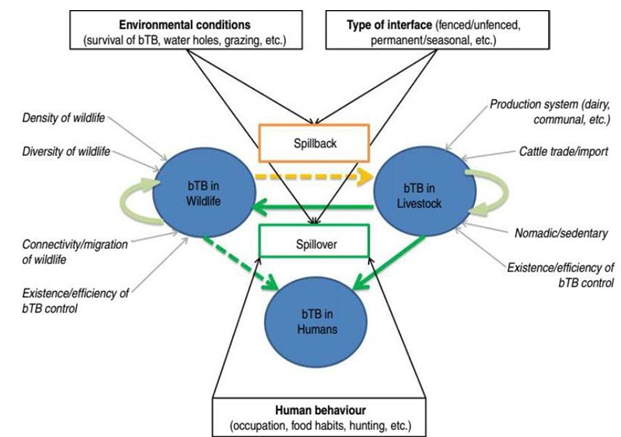
Mycobacterium bovis is an example of a pathogen shared at the human–livestock–wildlife interface [76]. In East Africa, humans encroach into wildlife habitats with their livestock in search of grazing areas and water, particularly during the dry season. Wildlife species that share resources with pastoralist livestock may influence the prevalence of bTB in cattle by having direct or indirect contact (i.e., ingestion of contaminated pastures) with cattle. More studies are required to better understand the effects of interactions between ecological and animal management risk factors in multi-host communities.
The list of wildlife species around the world from which M. bovis has been isolated is long and reports in the literature of new susceptible species have increased in recent years. Some wildlife species have long been known to be maintenance hosts (i.e., wildlife species that can maintain the disease in the absence of infected cattle). The maintenance hosts are a source of infection for livestock and can also be described as a source for BTB in humans that have close contact with infected animals, such as hunters and game farmers [77]. Classic examples of maintenance hosts include; the brush tail possum (Trichosurus vulpecula) in New Zealand; the white-tailed deer (Odocoileus virginianus) in the USA [78]; the Eurasian badger (Meles meles) in the UK and Ireland [79]; the African buffalo (Syncerus caffer) in South Africa. In addition to these the more recently described, the wild boar (Sus scrofa) in Spain and wood bison (Bison ison) in Canada. In ethiopia Grant–s gazelle and one lesser Kudu [80, 81, 82, 83, 84, 85, 86, 87, 88, 89, 90, 91, 92, 93, 94, 95, 96, 97, 98, 99, 100, 101, 102, 103, 104, 105, 106, 107, 108, 109, 110, 111, 112, 113, 114, 115, 116, 117, 118, 119, 120, 121].
However, intermediate species such as impala, kudu and warthog (Phacochoerus africanus), which are less affected by livestock presence, could play a role as disease –vector– by having close physical contact with BTB buffalo reactors, that stay within the park, and with livestock in the agricultural land outside the park [122, 123, 124, 125, 126, 127, 128, 129, 130, 131, 132, 133, 134, 135, 136, 137, 138, 139, 140, 141, 142, 143, 144, 145, 146, 147, 148, 149, 150, 151, 152, 153, 154, 155].
Common use of pastureland is another potential risk for BTB transmission between wildlife and livestock. Mainly wildlife grazer species (as opposed to browser species) are likely to compete with cattle. There seems to be a species- specific tolerance level for cattle presence. Many grazer species favor grazing in old pastoral places where grass cover is rich due to the cattle manure. As M. bovis can be excreted in cattle manure and survive in the environment over days and months, it is worth remembering that disease transmission can still occur even with a temporally asymmetric interface (with no direct animal contact).
Presence and abundance of wildlife species is also affected by the vegetation cover. If the latter is altered naturally or anthropogenetically, wild animals will move elsewhere, likely shifting the existing dynamics of the interface. Mycobacterium bovis has been designated a multi- host pathogen, for which open ecosystems provide almost unrestricted opportunities for pathogen exchange between domestic and wild animals.
Cattle have historically played a key role in the introduction of BTB into wildlife conservation areas in many countries. Once endemic, the possibility for spillback from wildlife to livestock and humans constitutes an animal and public health risk to communities neighboring infected wildlife reserves.
Conclusion and Recommendations
The prevalence of BTB in Ethiopia is reported to be high similar to other developing countries. However, no studies concerning the burden of the disease in wildlife and human beings were undertaken and this indicates that BTB is not well studied in the country. Human- livestock-wildlife interaction is dynamic. There are no sufficient studies clearly indicating the role of humans, livestock, wildlife and their environment with respect to the transmission dynamics of Mycobacterium bovis in the Ethiopian pastoral areas. Widespread evidence of M. bovis infection in animals and humans should be an alarm sign for medical and veterinary health professionals and government bodies. This illustrates the importance of the –One Health Concept– that can bring together medical and veterinary practitioners as an important tool to fight diseases of public health and economic importance. Therefore, from above In conclusion, the following recommendations forwarded;
• Detail studies concerning the burden of the diseases in wildlife, livestock and human beings should be undertaken.
• Further studies investigation the epidemiology of NTMs circulating between humans, livestock and wildlife in order to point out and address the possible measures in diseases.
• More research in identifying the role played by Mycobacterium. Tuberculosis transmission in animals, humans and wild life in Ethiopia.
References
-
Cleaveland S, Laurenson M, Taylor L (2001) Diseases of humans and their domestic mammals: Pathogen characteristics, host range and the risk of emergence. Philos Trans R Soc Lond B Biol Sci 356: 991-999.
-
Daszak P, Cunningham AA, Hyatt AD (2001) Anthropogenic environmental change and the emergence of infectious diseases in wildlife. Acta Trop 78: 103-116.
-
Chomel BB, Belotto A, Meslin FX (2007) Wildlife, exotic pets, and emerging zoonoses. Emerg Infect Dis 13: 6-11.
-
Taylor LH, Latham SM, Woolhouse ME (2001) Risk factors for human disease emergence. Philos Trans R Soc Lond B Biol Sci 356: 983-989.
-
Daszak P, Cunningham AA, Hyatt AD (2000) Emerging infectious diseases of wildlife: threats to biodiversity and human health. Science 287: 443-449.
-
George JL, Martin DJ, Lukacs PM, Miller MW (2008) Epidemic pasteurellosis in a bighorn sheep population coinciding with the appearance of a domestic sheep. Journal of Wildlife Disease 44: 388-403.
-
Clifford DL, Schumaker BA, Stephenson TR, Bleich VC, Cahn ML, et al. (2009) Assessing disease risk at the wildlife-livestock interface: a study of Sierra Nevada bighorn sheep. Biological Conservation 142: 2559-2568.
-
Randall DA, Marino J, Haydon DT, Sillero-Zubiri C, Knobel DL, et al. (2006) Integrated disease management strategy for the control of rabies in Ethiopian Wolves. Biological Conservation 131: 151- 162.
-
Tessaro S, Forbes L, Turcotte C (1990) A survey of brucellosis and tuberculosis in bison in and around Wood Buffalo National Park, Canada. Can Vet J 31: 174- 180.
-
Smith NH, Gordon SV, Rua-Domenech R (2006) Bottlenecks and broomsticks: the molecular evolution of Mycobaterium bovis. Nat Rev Micro 4(9): 670-681.
-
Kaneene JB, Pfeiffer D (2006) Epidemiology of Mycobaterium bovis. In Mycobaterium bovis infection in animals and humans. (2nd Edn.), Ames 34-48.
-
Ameni G, Amenu K, Tibbo M (2003) Bovine tuberculosis: Prevalence and risk factor assessment in cattle and cattle owners in Wuchale-Jida district, Central Ethiopia. The International Journal of Appllied Research and Veterinary Medicine 1(1): 17-26.
-
Radostits OM, Gay CC, Hinchelift KW (2007) Veterinary Medicine. A text book of the disease of cattle, sheep, pig, goat and horses 10th edition Can Vet J 51(5): 541.
-
Michel AL (2002) Implications of tuberculosis in African wildlife and livestock. Ann N Y Acad Sci 969: 251-255.
-
Tenguria KR, Khan FN, Quereshi S Review Article Epidemiological Study of Zoonotic Tuberculosis.
-
Firdessa R, Tschopp R, Wubete A (2012) High Prevalence of Bovine Tuberculosis in Dairy Cattle in Central Ethiopia: Implications for the Dairy Industry and Public Health. PLoS ONE 7(12): e52851.
-
Tschopp R, Aseffa A, Schelling E (2010) Bovine Tuberculosis at the Wildlife-Livestock-Human Interface in Hamer Woreda, South Omo, Southern Ethiopia. PLoS One 5(8): e12205.
-
Tschopp R, Bobosha K, Aseffa A (2011) Bovine tuberculosis at a cattle small ruminant human interface in Meskan, Gurage region, Central Ethiopia. BMC Infect Dis 11: 318.
-
Tschopp R, Schelling E, Hattendorf J (2009) Risk factors of bovine tuberculosis in cattle in rural livestock production systems of Ethiopia. Prev Vet Med 89(3-4): 205-211.
-
Gumi B, Schelling E, Firdessa R, Aseffa A, Tschopp R, et al. (2011) Prevalence of bovine tuberculosis in pastoral cattle herds in the Oromia region, southern Ethiopia. Trop Anim Health Prod 43: 1081-1087.
-
Morens DM, Folkers GK, Fauci AS (2004) The challenge of emerging and reemerging infectious diseases. Nature 430(6996): 242-249.
-
Regassa A, Medhin G, Ameni G (2008) Bovine tuberculosis is more prevalent in cattle owned by farmers with active tuberculosis in central Ethiopia. Vet J 178(1): 119-125.
-
Shitaye JE, GetahunB, Alemyehu T (2006) prevalence study of bovine tuberculosis by using abattoir meat inspection and tuberculin skin testing data, histopathological and IS6110 PCR examination of tissues with tuberculous lesions in cattle in Ethiopia. Veterinarni Medicina 51(11): 512-522.
-
Ameni G, Hewinson G, Aseffa A (2008) Appraisal of interpretation criteria for the comparative intradermal tuberculin test for the diagnosis of bovine tuberculosis in central Ethiopia. Clin Vaccine Immunol 15(8): 1272- 1276.
-
Regassa Alemu (2005) Study on Mycobaterium bovis in animals and human in and around Fiche, North Shewa zone, Ethiopia. Faculty of Veterinary Medicine Addis Ababa University Debre- Zeit Ethiopia.
-
Demelash B, Inangolet F, Oloya J (2008) Prevalence of Bovine tuberculosis in Ethiopian slaughter cattle based on post-mortem examination. Trop Anim Health Prod 41(5): 755-765.
-
Mamo G, Bayleyegn G, Sisay T, Legesse M, Medhin G, et al. (2011) Pathology of camel tuberculosis and molecular characterization of its causative agents in pastoral regions of Ethiopia. PLoS One 6(1): e15862.
-
Shitaye JE, Tsegaye W, Pavlik I (2007) Bovine tuberculosis infection in animal and human populations in Ethiopia: a review. Veterinarni Medicina 52(8): 317-332.
-
Kiros Teklu (1998) Epidemiology and zoonotic importance of bovine tuberculosis in selected sites of Eastern Shewa Ethiopia. Faculty of Veterinary Medicine, University and Freie Universitat Germany.
-
Ameni G, Aseffa A, Engers H (2007) High prevalence and increased severity of pathology of bovine tuberculosis in Holsteins compared to zebu breeds under field cattle husbandry in Central Ethiopia. Clin Vaccine Immunol 14(10): 1356-1361.
-
Elias K, Hussein D, Asseged B (2008) Status of bovine tuberculosis in Addis Ababa dairy farms. Rev Sci Tech 27(3): 915-923.
-
Tsegaye W, Aseffa A, Mache A (2010) Conventional and Molecular Epidemiology of Bovine Tuberculosis in Dairy Farms in Addis Ababa City, the Capital of Ethiopia. Intern J Appl Res Vet Med 8(2): 143-152.
-
Mamo G, Abebe F, Worku Y, Hussein N, Legesse M, et al. (2013) Bovine tuberculosis and its associated risk factors in pastoral and agro-pastoral cattle herds of Afar Region, Northeast Ethiopia. Journal of Veterinary Medicine and Animal Health 5(6): 171-179.
-
Namomsa B, Gebrezgabiher G, Biranu T (2014) Epidemiology of bovine tuberculosis in Butajira, Southern Ethiopia: A cross sectional abattoir- based study. African journals of microbiology research. 8(33): 3112-3117.
-
Gebrezgabiher G, Romha G, Ameni G (2014) Prevalence Study of Bovine Tuberculosis and Genus Typing of its Causative Agents in Cattle Slaughtered at Dilla Municipal Abattoir, Southern Ethiopia. African Journal of Basic & Applied Sciences 6(4): 103-109.
-
Humblet MF, Boschiroli ML, Saegerman C (2009) Classification of worldwide bovine tuberculosis risk factors in cattle: a stratified approach. Vet Res 40(5): 50.
-
Kazwala RR, Kambarage DM, Daborn CJ (2001) Risk factors associated with the occurrence of bovine tuberculosis in cattle in the Southern Highlands of Tanzania. Vet Res Commun 25(8): 609-614.
-
Biru A, Ameni G, Sori T (2014) Epidemiology and public health significance of bovine tuberculosis in and around sululta district, central Ethiopia. Africn Journal of microbiology Research 8(24): 2352- 2358.
-
Zeru F, Romha G, Berhe G (2014) Prevalence of bovine tuberculosis and assessment of Cattle owners’ awareness on its public health implication in and around Mekelle, Northern Ethiopia. Journal of Veterinary Medicine and Animal Health 6(6): 159-167.
-
Tamiru F, Hailemariam M, and Terfa W (2013) Preliminary study on prevalence of BTB in cattle owned by tuberculosis positive and negative farmers and assessment of zoonotic awareness in Ambo and Toke Kutaye districts, Ethiopia. J VetMed AH 5(10): 288- 295.
-
Cleavelan S, Shaw DJ, Mfinanga SG (2007) Mycobaterium bovis in rural Tanzania: risk factors for infection inhuman and cattle populations. Tuberculosis (Edinb) 87(1): 30-43.
-
Romha G, Gebre egziabher G, Ameni G (2014) Assessment of bovine tuberculosis and its risk factors in cattle and humans, at and around Dilla town, southern Ethiopia. Animal and Veterinary Sciences 2(4): 94- 100.
-
(2005) WHO Report, Country Profile, Ethiopia, pp: 83- 86.
-
Kriek N (2006) Bovine tuberculosis program in South Africa The impact of M bovis-infected wild species Mycobaterium bovis. Infection in Animals and Humans. 2nd [Edns.], Ames Iowa: Blackwell Publishing Professional, pp: 238-243.
-
Buddle BM, Wedlock DN, Parlane NA (2003) Revaccination of neonatal calves with Mycobacterium bovis BCG reduces the level of protection against bovine tuberculosis induced by a single vaccination. Infect Immun 71(11): 6411-6419.
-
Ayele WY, Neill SD, Zinsstag J (2004) Bovine tuberculosis: an old disease but a new threat to Africa. Int J Tuberc Lung Dis 8(8): 924-937.
-
De Garine-Wichatitsky M (2013) Consequences of animals crossing the edges of transfrontier parks. In: Andersson JA, editor. Areas People Living on the Edge New York London Earth scan, pp: 137-162.
-
Gumi B, Schelling E, Firdessa R (2012) Low prevalence of bovine tuberculosis in Somali pastoral livestock, southeast Ethiopia. Trop Anim Health Prod 44(7): 1445- 1450.
-
Kazwala RR, Kambarage DM, Daborn CJ, Nyange J, Jiwa SF, et al. (2001) Identification of the causative organism of tuberculosis lymphadenitis in Ethiopia by PCR. Journal of Clinical Microbiology 40(11): 4230-4234.
-
Asseged B, Lübke Becker A, Lemma E (2000) Bovine TB: a cross-sectional and epidemiological study in and around Addis Ababa. Bull Anim health Prod in Africa 48(2): 71-80.
-
Sunder S, Lanotte P, Godreuil S (2009) Human-to-human transmission of tuberculosis caused by Mycobaterium bovisin immunocompetent patients. J Clin Microbiol 47(4): 1249-1251.
-
Senedu B, Gebreegziabher, Solomon A Yimer (2008) Federal Ministry of Health Ethiopia Tuberculosis, Leprosy and TB/HIV Prevention and Control Program Manual FMOH, Addis Ababa. Journal of Tuberculosis Research 4(1).
-
Ayele WY, Neill SD, Zinsstag J, Weiss MG Pavlik I (2004) Bovine tuberculosis: an old disease but a new threat to Africa. International Journal of Tuberculosis and Lung Disease 8(8): 924-937.
-
Martin SW, Eves JA, Dolan LA (1997) The association between the bovine tuberculosis status of herds in the East Offaly Project Area, and the distance to badger setts, 1988-1993. Prev Vet Med 31(1-2): 113-125.
-
Pavlik I, Ayele WY, Parmova I (2002) Incidence of bovine tuberculosis in cattle in seven Central European countries during the years 1990-1999. Vet med 47(2): 45-51.
-
Gilbert M, Mitchell A, Bourn D, Mawdsley J, Clifton- Hadley R, et al. (2005) Cattle movements and bovine tuberculosis in Great Britain. Nature 435(7041): 491- 496.
-
WHO (2008) Global tuberculosis control Surveillance, Planning and Financing.
-
Cleaveland S, Mlengeya T, Kazwala RR, Michel A, Kaare MT, et al. (2005) Tuberculosis in Tanzanian wildlife. Journal of Wildlife Diseases 41(2): 446-453.
-
Weinhaupl I, Schopf KC, Khaschabi D, Kapaga AM, Msami HM (2000) Investigations on the prevalence of bovine tuberculosis and brucellosis in dairy cattle in Dares Salaam region and in zebu cattle in Lugoba area, Tanzania. Trop Anim Health Prod. 32(3): 147-154.
-
Hope JC, Villarreal-Ramos B (2008) Bovine TB and the development of new vaccines. Comp Immunol Microbiol Infect Dis 31(2‒3): 77-100.
-
Olson KM, Vanraden PM, Tooker ME, Cooper AT (2011) Differences among methods to validate genomic evaluation for dairy cattle. J Dairy Sci. 94(5): 2613-2620.
-
Teshome Yohanes (1993) Occurrence and zoonotic potential of M. bovis infection in Ethiopia: epidemiological, bacteriological and molecular biological aspects. Giessen, Germany.
-
Flamand JRB, Greth A, Haagsma J, Griffin F (1994) An outbreak of tuberculosis in a captive herd of Arabian oryx (Oryx leucoryx): diagnosis and monitoring. Vet Rec. 134(5): 115-118.
-
FAO (2009) Livestock production primary. Food and Agriculture Organization of the United Nations, USA.
-
Gezahegne L (1991) Economical aspect of condemned organs and parts due to cystycercosis, hydatidosis, fasciolosis and tuberculosis Analysis report MoA. Addis Ababa, Ethiopia.
-
Asseged B, Woldesenbet Z, Yimer E (2004) Evaluation of abattoir inspection for the diagnosis of Mycobaterium bovisinfection in cattle at Addis Ababa abattoir. Trop Anim Health Prod 36(6): 537-546.
-
Renwick AR, White PCL, Bengis RG (2007) Bovine tuberculosis in southern Africa wildlife: a multi- species host-pathogen system. Epidemiology and Infection 135(4): 529-540.
-
Miller E, Huppert A (2013) The effects of host diversity on vector borne disease: the conditions under which diversity will amplify or dilute the disease risk. PLoS One 8: e80279.
-
Zinsstag J, Schelling E, Roth F, Kazwala RR. Economics of bovine tuberculosis. In Mycobaterium bovis Infection in Animals and Humans (2nd Edn.) Ames, Iowa 2014, Blackwell Publishing, USA; Wobeser GA.
-
Biet F, Guilloteau LA, Boschiroli ML (2005) Zoonotic aspects of Mycobaterium bovisand Mycobacterium avium-intracellulare complex (MAC). Vet Res 36(3): 411-436.
-
Michel AL, Bengis RG, Keet DF, Hofmeyr M, de Klerk LM, et al. (2006) Wildlife tuberculosis in South African conservation areas: implications and challenges. Veterinary Microbiology, 112(2-4): 91-100.
-
Munyeme M, Muma JB, Samui KL, Skjerve E, Nambota AM, et al (2009) Prevalence of bovine tuberculosis and animal level risk factors for indigenous cattle under different grazing strategies in the livestock/wildlife interface areas of Zambia. Trop Anim Health Prod 41(3): 345-352.
-
Firdessa R, Berg S, Hailu E, Schelling E, Gumi B, et al (2013) Mycobacterial Lineages Causing Pulmonary and Extrapulmonary Tuberculosis, Ethiopia. Emerg Infect Dis. 19(3): 460-463.
-
Baker MG, Lopez LD, Cannon MC, De Lisle WG, Collins DM (2006) Continuing Mycobaterium bovistransmission from animals tohumans in New Zealand. Epidemiol Infect 134(5): 1068-1073.
-
Wilkins MJ, Meyerson J, Bartlett PC, Spieldenner LS, Berry ED, et al. (2008) Human Mycobaterium bovisinfection and bovine tuberculosis outbreak, Michigan, 1994-2007. Emerg Infect Dis 14(4): 657-660.
-
De Lisle GW, Bengis RG, Schmitt SM, O–Brien DJ (2002) Tuberculosis in free-ranging wildlife: detection, diagnosis and management. Scientific and Technical Review of the Office International des Epizooties, 21(2): 317-334.
-
Griffin JFT, MacKintosh CG, Rodgers CR (2006) Factors influencing the protective efficacy of a BCG homologous prime-boost vaccination regime against tuberculosis. Vaccine 24(6): 835-845.
-
Abraham Aseffa (2008) The Wellcome Trust Bovine TB Project in Ethiopia: The Bovine TB Project Team. Ethiop J JHealth Dev 22.
-
Alemu Taye (1992) Bovine tuberculosis in Ethiopia Tropical animal health and production. University of Edinburgh, Centre for Tropical Veterinary Medicine, UK.
-
Anonymous (2003) Project Appraisal document on pastoral community development project. The World Bank Document, USA, pp: 114.
-
Artois M, Blancou J, Dupeyroux O (2011) Sustainable control of zoonotic pathogens in wildlife: how to fair to wildlife. Rev Sci Tech 30(3): 733-743.
-
Barlow NA (1997) simulation model for the spread of bovine tuberculosis within New Zealand cattle herds. Prev Vet Med 32(1-2): 57-75.
-
Barouni AS, Augusto CJ, Lopes MTP, Zanini MS, Salas CE (2004) A pncA polymorphism to differentiate between Mycobacterium bovis and Mycobacterium tuberculosis. Molecular and Cellular Probes 18 (3): 167-170.
-
Barron MC, Tompkins DM, Ramsey DSL, Bosson MAJ (2015) The role of multiple wildlife hosts in the persistence and spread of bovine tuberculosis in New Zealand. New Zealand Veterinary Journal 63: 68-76.
-
Bengis RG, Kriek NP, Keet DF (2012) Bovine tuberculosis in free-ranging wildlife: a review of global occurrence, pathology and epidemiology of this disease, and potential conservation implications International Wildlife TB Conference. Skukuza, Kruger National Park South Africa
-
Biffa D, Bogale A, Skjerve E (2010) Diagnostic efficiency of abattoir meat inspection service in Ethiopia to detect carcasses infected with Mycobacterium bovis: Implications for public health. BMC Public Health 10: 462.
-
Malede B (2013) Livestock resource potential and constraints in Somali Regional State, Ethiopia. Global Veterinaria 10(4): 432-438.
-
Coldltz GA, Brewer TF, Berke KS, Wilson ME, Burdick E, et al. (1994) Efficacy of BCG vaccine in the prevention of tuberculosis. J Am med Assoc 271(9): 698-702.
-
Collins FM (194) The immune response to mycobacterial infection: Development of new vaccine. Vet Microbiol 40(1-2): 95-110.
-
Cook AJC, Tuchili LM, Buve A, Foster SD, Godfrey Fausett P, et al. (1996) Human and bovine tuberculosis in the Monze District of Zambia - a cross-sectional study. Br vet J 152(1): 37-46.
-
Corner LAL (2006) The role of wild animal populations in the epidemiology of tuberculosis in domestic animals: how to assess the risk. Vet Microbiol 112(2-4): 303-312.
-
Cosivi O, Grange JM, Dabron CJ, Raviglione MC, Fujikura T, et al. (1998) Zoonotic tuberculosis due to Mycobaterium bovis in developing countries. Emerg Infect Dis 4(1): 59- 70.
-
Cosivi O, Meslin F, Daborn C, Grange JM (1995) Epidemiology of Mycobacterium bovis infection in animals and humans, with particular reference to Africa. Scientific and Technical Review of the Office International des Epizooties 14(3): 733-746.
-
Cousins DV, Huchzermeyer HF, Griffin (2014) Tuberculosis Infectious Diseases of Livestock. Cape Town: Oxford University Press.
-
Cousins DV (2001) Mycobaterium bovis infection and control in domestic livestock Western Australia reference laboratory for bovine tuberculosis. Australia Rev Sci Tech 20(1): 71-85.
-
CSA (Central Statistical Agency) (2011) Report on Livestock and Livestock Characteristics. Agricultural Sample Survey 2011/2012.Addis Ababa: Central Statistical Agency of Ethiopia.
-
CSA (Central Statistical Agency) (2007) Report on livestock and livestock characteristics Statistical bulletin 388. Addis Ababa: Ethiopia; Agricultural sample survey 2006/07.
-
Daborn CJ, Grange JM (1996) HIV/AIDS and its implications for the control of animal tuberculosis. Br Vet J 149(5): 405-417.
-
Daborn CJ, Grange JM, Kazwala RR (1996) The bovine tuberculosis cycle--an African perspective. Journal Applied Bacteriology 25: 27-32.
-
De Lisle GW, Mackintosh CG, Bengis RG (2001) Mycobaterium bovisin freeliving and captive wildlife, including farmed deer. Revue Scientifique et Technique de l’Office International des Epizooties 20(1): 86-111.
-
De Vos V, Bengis RG, Kriek NP, Michel A, Keet DF, et al (2001) The epidemiology of tuberculosis in free-ranging Afican buffalo (Syncerus caffer) in the Kruger National Park, South Africa. Onderstepoort. J Vet Res 68(2): 119- 130.
-
Delahay RJ (2002) The status of Mycobaterium bovisinfection in UK wild mammals: a review. Vet J 164(2): 90-105.
-
Deresa B, Conraths FJ, Ameni G (2013) Abattoir- based study on the epidemiology of caprine tuberculosis in Ethiopia using conventional and molecular tools. Acta Veterinaria Scandinavica 55(1): 1-15.
-
Dye C, Scheele S, Dolin P, Pathania V, Raviglione MC (1999) Consensus statement. Global burden of tuberculosis: estimated incidence, prevalence and mortality by country. WHO Global Surveillance and Monitoring Project. JAMA 282(7): 677-686.
-
Ewnetu L, Melaku A, Birhanu (2012) Bovine Tuberculosis Prevalence in Slaughtered Cattle at Akaki Municipal Abattoir, Based on Meat Inspection Methods. Global Veterinaria 9(5): 541-545.
-
Kazwala RR, Kambarage D M, Daborn C J, Nyange J, Jiwa S F, et al. (2001) Risk Factors associated with the occurrence of bovine tuberculosis in cattle in the Southern Highlands of Tanzania. Veterinary Research Communications 25(8): 609-614.
-
FAO (Food and Agricultural Organization) (1993) Agriculture towards. Proceedings of the Food and Agricultural Organization, United Nations, Conference Report C/93/24: Rome Italy.
-
Trevor Wilson R, Ehui S, Mack S (1995) Livestock development strategies for low income counties. Proceeding of the joint ILRI/FAO round table on livestock development strategies for low income counties. FAO (Food and Agricultural Organization), Addis Ababa Ethiopi.
-
Fritsche A, Engel R, Zellweger J P (2004) Mycobaterium bovistuberculosis: from animal to man and back. Int J Tuberc Lung Dis 8(7): 903-904.
-
Glickman MS, Jacobs WR (2001) Microbial pathogenesis of MTB: dawn of a discipline. Cell 104(4): 477-485.
-
Ameni G, Erkihun A (2007) Bovine tuberculosis on small-scale dairy farms in Adama Town, central Ethiopia, and farmer awareness of the disease. Rev sci tech Off int Epiz 26(3): 711-719.
-
Grange JM, Yates MD (1994) Zoonotic aspects of Mycobaterium bovis infection. Vet Microbiol 40(1-2): 137-151.
-
Griffin JM, Martin SW, Thorburn, MA, Eves JA, Hammond RF (1996) A case control study on the association of selected risk factors with the occurrence of bovine tuberculosis in the Republic of Ireland. Preventive Veterinary Medicine 27: 75-87.
-
Halderman M (2004) The Political Economy of Pro- Poor Livestock Policy- Making in Ethiopia. Initiative P-PLP Italy, pp: 1-59.
-
Hirsh CD, Zee CY (1999) Veterinary Microbiology. USA: Blackwell science; 1999:158‒164.
-
Dinka H, Duressa A (2011) Prevalence of bovine tuberculosis in Arsi Zones of Oromia, Ethiopia. AJAR 6: 3853-3858.
-
Inangolet FO, Demelash B, Oloya J, Opuda Asibo J, Skjerve E (2008) A cross-sectional study of bovine tuberculosis in the transhumant and agro-pastoral cattle herds in the borde rareas of Katakwi and Moroto districts, Uganda. Trop Anim Health Prod 40(7): 501- 508.
-
IUCN (International Union for Conservation of Nature’s) (2008) Red List of Threatened Species.
-
Johnson L, Dean G, Rhodes S, Hewinson G, Vordermeier M, et al. (2007) Low-dose Mycobaterium bovis infection in cattle results in pathology indistinguishable from that of highdose infection. Tuberculosis 87(1): 71-76.
-
Jones KE, Patel NG, Levy MA, Storeygard A, Balk D, et al. (2008) Global trends in emerging infectious diseases Nature 451: 990-993.
-
Kassa B, Beyene F, Manig W (2005) Copping with drought among pastoral and agropastoral communities in Eastern Ethiopia. Journal of Rural Development 28: 185-210.
-
Katale B, Mbugi E, Karimuribo E, Keyyu J, Kendall S, et al. (2013) Prevalence and risk factors for infection of bovine tuberculosis in indigenous cattle in the Serengeti ecosystem, Tanzania. Veterinary Research 9: 267-275.
-
Kazwala RR, Daborn CJ, Kusiluka LJ, Jiwa SF, Sharp JM, et al. (1998) Isolation of Mycobacterium species from raw milk of pastoral cattle of Southern Highlands of Tanzania. Tropical Animal Health and Production 30(4): 233-239.
-
Kovalev GK (1980) Tuberculosis in wildlife(review). J Hyg Epidemiol Microbial Immunol 24(4): 495-504.
-
Kubica T, Agzamova R, Wright A, Rakishev G, Rusch Gerdes S, et al. (2006) M. bovis isolates with MTB specific characteristics. Emerg Infect Dis 12(5): 763-765.
-
Laval G, Ameni G (2004) Prevalence o bovine tuberculosis in zebu cattle under traditional animal husbandry in Boji district of western Ethiopia. Revue Méd Vét 155(10): 494-499.
-
Mezene W, Jibril Y, Ameni G, Duguma R (2014) Molecular Epidemiology of Mycobacterium Tuberculosis Complex at Nekemte Municipality Abattoir, Western Ethiopia. Sci Technol Arts Res J 3(2): 167-173.
-
MoH (Ministry of Health) (2004) Ministry of Health, Addis Ababa Ethiopia.
-
Mohammed N, Mazengia H, Mekonen G (2021) Prevalence and zoonotic implications of bovine tuberculosis in Northwest Ethiopia. Int J Med Med Sci 2(9): 182-192.
-
Monaghan ML, Doherty ML, Collins JD, Quinn PJ (1994) The tuberculin test. Vet Microbiol 40(1‒2): 111‒124.
-
Mostowy S, Inwald J, Gordon S, Martin C, Warren R, et al. (2005) Revisiting the Evolution of Mycobaterium bovis. J Bacteriol 187(18): 6386-6395.
-
Munyeme M, Muma JB, Siamudaala VM, Skjerve E, Munang’andu HM (2010) Tuberculosis in Kafue lechwe antelopes (Kobus leche kafuensis) of the Kafue Basin in Zambia. Prev Vet Med 95(3-4): 305-308.
-
NABC (2010) Livestock in Ethiopia and opportunity analyses for Dutch investment. Fact Sheet: Livestock, Ethiopia.
-
’R O eilly LM, Daborn CJ (1995) The epidemiology of Mycobaterium bovis infections in animals and man: A review. Tubercle Lung Dis 76S(1): 1-46.
-
Oloya J, Asibo JO, Djonne B, Muma JB, G Matope (2006) Responses to tuberculin among Zebu cattle in the transhumance regions of Karamoja and Nakasongola district of Uganda. Trop Anim Health Prod 38(4): 275- 283.
-
Omer MK, Skjerve E, Woldehiwet Z, Holstad G (2001) A cross-sectional study of bovine tuberculosis in dairy farms in Asmara, Eritrea. Trop Anim Health Prod 33(4): 295-303.
-
Otte MJ, Fao R, Chilonda P (2002) Cattle and small ruminant production systems in subSaharan Africa - A systematic review.
-
Radostits OM Blood DC (1994) Disease caused by mycobacteria IV. In: Veterinary Medicine. 7th (Edn.), London UK Bailliere Tindall 7: 710-740.
-
Reviriego GFJ, Vermeersch JP (2006) Towards eradication of bovine tuberculosis in the European Union. Vet Microbiol 112(2-4): 101-109.
-
Rogers LM (2000) Changes in badger (Meles meles) spatial organisation in Woodchester Park, south-west England. In: Griffiths H, editor. Mustelids in the Modern World. Hull, England: Hull University Press.
-
Ryan TJ, Livingstone PG, Ramsey DSL, de Lisle GM, Nugent G, et al. (2006) Advances in understanding disease epidemiology and implications for control and eradication of tuberculosis in livestock: the experience from New Zealand. Vet Microbiol 112(2-4): 211-219.
-
Schiller I, Oesch B, Vordermeier HM, Palmer MV, Harri BN (2010) Bovine Tuberculosis: A Review of Current and Emerging Diagnostic Techniques in View of their Relevance for Disease Control and Eradication. Transboundary and Emerging Diseases 57(4): 205-220.
-
Smits HL (2013) Brucellosis in pastoral and confined livestock: prevention and vaccination. Scientific and Technical Review of the Office International des Epizooties 32(1): 219-228.
-
Suazo FM, Escalera AMA, Torres RMG (2003) A review of M-bovis BCG protection against TB in cattle and other animals species. Prev Vet Med 58(1-2): 1-13.
-
Complex (2011) (ZTBC) World Journal of Science and Technology 1: 31-56.
-
Dechassa T(2014) Gross pathological lesions of bovine tuberculosis and efficiency of meat inspection procedure to detect-infected cattle in Adama municipal abattoir. Journal of Veterinary Medicine and Animal Health 6(2): 48-53.
-
Thoen CO, LoBue PA, Enarson DA, Kaneene JB, de Kantor IN (2009) Tuberculosis: are-emerging disease of animals and humans. Vet Ital 45(1): 135-181.
-
Thoen CO, LoBue PA, de Kantor I (2010) Why has zoonotic TB not received much attention? The international Journal of TB and Lung Disease 14: 1073-1074.
-
Thoen C, Lobue P, de KI (2006) The importance of Mycobaterium bovisas a zoonosis. Vet Microbiol 112: 339-345.
-
Thoen CO, Lobue PA, Enarson DA, Donald A Enarson, John B Kaneene (2009) Tuberculosis: a re-emerging disease in animals and humans. Vet Ital 45(1): 135-181.
-
Tigre W, Alemayehu G, Abetu T, Deressa B (2011) Preliminary Study on Public Health Implication of Bovine Tuberculosis in Jimma Town, South Western Ethiopia. Global Vet 6(4): 369-373.
-
Waddington K (1890-1939) Bovine tuberculosis and tuberculin testing in Britain. Med Hist 48(1): 29-48.
-
WHO (2012) Global tuberculosis control: World Health Organization report.
-
WHO (2008) Global tuberculosis control. WHO report pp: 105-108.
-
Wood PR, Corner LA, Rothel JS, Baldock C, Jones SL, et al. (1991) Field comparison of the interferon gamma assay and the intradermal tuberculin test for the diagnosis of bovine tuberculosis. Aust vet J 68(9): 286- 290.
- Epidemiological Surveillance and Rumors on Social Media
- Awareness and Treatment of Uncontrolled Hypertension in US Overweight/Obese Youths Aged 16–24 Years, NHANES 2021–2023
- Strengthening EPI Through Parental Engagement: Lessons from Dhaka Slums for IA-2030
- Mothers Knowledge of the Prevalence, Causes, Effects, Prevention and Control of Diarrhoea among Children in Ife East Local Government Area, Ile Ife, Osun State, Nigeria
- Covid-19 Reinfections Case Series from October 2023 to October 2024 in A General Medicine Office in Toledo (Spain)
- Water Contact! One Risk Too Many: Risk Factors Associated with Schistosoma haematobium infection in Osun State, Nigeria