
Physical and Chemical Features of Slope Lands on the Southeast Part of the More Caucasus on the Example Gobustan, Shamah and Ismaillinsky Districts
The present article describes physical, chemical, and physicochemical properties of the Steppificated Mountain brown soils under perennial plantings by using modern irrigation technology with the aim of increasing the productivity of soils in freshwater. Corresponding norms were determined in watering of orchards on the steppificated mountain brown soils of the southeastern slope of the Greater Caucasus. Chemical characteristics of the soil taken from the experimental zones vary among gyroscopic humidity in upper layer 6,18-6,23 %, humus 4,03-4,30%, total nitrogen 0,252- 0,238%, total phosphorus 12,22-13,33 mg/kg; CO2 5,58%; CaCO3 in relation to CO2 - 12,70%; Ca in 100gr soil – 30,5 mg/kg; Ca-84,72- 87,14%; Mg-12,86-15,28%. According to morphological characteristics of sections taken from steppificated mountain brown soils, mechanical content of this soil is heavy clay. Amount of physical clay in the upper layers of this soil vary between 67,20-69,20%, amount of clay between 34,40-39-20%, in the lower layer between 65,20-77,20%; 29,60- 32,80%. Structural content of this soil, amount of structural parts higher than 1mm in the upper layer of the soil varies between 61,72-62,33% and in the lower layer between 68,05- 68,80%.
Introduction
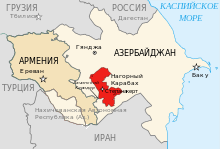
Implementation of State Programs adopted recently in order to meet the population's demand for food products, measures taken to promote the production of agricultural products in the agrarian sector, have led to significant results in the development of traditional agricultural lands in the country, promoting population employment and reducing poverty created [1]. Many countries in the world are trying to use new irrigation techniques to conserve irrigation water for agricultural crops and provide them with the proper moisture. Such methods include rainfall irrigation, aerosol irrigation, drip irrigation and so on. includes. These techniques are of great importance when maximizing the irrigation system, while reducing irrigation water, human labor, electricity, and other resources. Studies show that the economically advantageous drip irrigation methods described above are in the highlands with high pellets. Objective and Methodology of the Research The purpose of the research is to determine the optimal irrigation norms and achieve high productivity on the basis of experiments on perennial irrigation practices using drip irrigation technology in Nagorno-Shirvan [1, 2] (Figure 1).
Physical properties of soils (granulometric composition, hygroscopic moisture, dry and wet soil structure) for research. Chemical composition (general nitrogen, CO2, potassium, phosphorus, Ca and Mg, absorbed, humus, and pH values of the physicochemical properties of vegetation [2, 3]. Analysis and Discussion As a research object on the southeastern slopes of the Greater Caucasus, Shamakhi In the developmental phases of the apple plant, the following three variants were applied: control - ambient conditions, drip irrigation (0.8 l / h), drip irrigation (1.2 l / h), drip irrigation irrigation with drip irrigation (1,6 l / h), irrigation with droplets (2,0 l / h), 0-20, 20-40, 40-60, 60-80 and 80 degrees with the characteristic of the genetic layers of soil profile in the soil Ground samples were taken from the 100 cm layer and the granulometric composition of the soil based on the current methodology, hygroscopic moisture, humus, and absorbed bases (Ca, Mg, K), neutrality (pH) is determined [3, 4]. The gray-brown soils are used as the main fund of the mountain farming zone and used under cereals and feed crops.
These soils are located at an altitude of 800-1200 m above the sea level, making the transition between mountain gray-brown soils, mountainous and forested lands. These soils have developed in the conditions of tails, and the various types of carbonate species that have been washed away from typical substances are found under the sparse forest and shrubs. Dark brown soils are characterized by thick, brown color of the humus layer, the structure of the clay, carbonaceous illudial layer, humus accumulation on the top floor and some other morphological features [2]. This terrain is characterized by complex relief conditions, fragmentation of areas, high slopes, deep gullies and dykes.
The continental climate for the zone of land, falling rainfall is 400-500 mm. In the field of practice, several sections have been set up to study the physico-chemical properties of gray-brown soils. The morphological description and indicators of those characteristics that are more specific to the terrain are given below. The morpholoid description of the 4th number is as follows:
- 4 0-27 - dark brown, resistant, top-kernel, clay, wheat, damp, plant root and roots, passage clear, HCl boils [3, 5].
- 27-42 - dark brown, cyanic, gilding, lilac, wet, multicolored roots and roots, worm lines, clear, HCl - dark brown [3, 5].
- 42-70 - light brown, clay, quartz, solid, damp, plant roots and roots, relative to the passage, carbonate layers and moisture from the effect of HCl [3, 5].
- 70-105 - light brown, clay, unstructured. solid, moisture, herbaceous roots, carbonate layers and spots, passage clear, boils off from HCl [3, 5].
- 105-134 - light, gray, unstructured. solid, moisture, boosts the effect of HCl. From the morphological description of the cut, it appears dark brown on the top layer and turns into a light brown and light gray color [3, 5].
| Dimensions of fractions, mm | ||||||||||||||||||||||||||
|---|---|---|---|---|---|---|---|---|---|---|---|---|---|---|---|---|---|---|---|---|---|---|---|---|---|---|
| C | uttings № | Depth, cm | ||||||||||||||||||||||||
| 1-0,25 | 0,25-0,05 | 0,05-0,01 | 0,01-0,005 | 0 | ,005-0,00 | 1 | <0,001 | <0,01 | ||||||||||||||||||
| 0-20 | 0,91 | 9,09 | 20,80 | 11,20 | 18,80 | 39,20 | 69,20 | |||||||||||||||||||
| 20 -30 | 0,52 | 10,68 | 17,20 | 18,40 | 26,00 | 27,20 | 71,60 | |||||||||||||||||||
| 3 | 30-56 | 0,62 | 9,38 | 16,80 | 20,40 | 21,20 | 31,60 | 73,20 | ||||||||||||||||||
| 56-92 | 0,43 | 3,97 | 19,20 | 18,80 | 24,80 | 32,80 | 76,40 |
| 92-130 | 0,31 | 5,69 | 16,80 | 19,60 | 27,20 | 30,40 | 77,20 | |
|---|---|---|---|---|---|---|---|---|
| 0 - 27 | 0,09 | 7,91 | 24,80 | 15,20 | 17,60 | 34,40 | 67,20 | |
| 27 - 42 | 0,14 | 5,06 | 25,60 | 15,60 | 16,40 | 37,20 | 64,20 | |
| 4 | 42 - 70 | 0,05 | 7,15 | 20,80 | 17,60 | 21,20 | 33,20 | 72,00 |
| 70 - 105 | 0,07 | 3,93 | 22,00 | 19,20 | 22,00 | 32,80 | 74,00 | |
| 105 - 134 | 0,12 | 7,43 | 27,20 | 18,80 | 17,20 | 29,20 | 65,20 |
Table 2: Granulometric markers of gray-brown soil.
- P2O5,
- CO2,
- Total nitrogen cuttings
- Depth,
- Hicroscopic moisture, %
- Humus
- № cm
- %-lə
- %
- %
- 0-20
- 6,18
- 4,3
- 0,252
- 12,22
- -
- -
- 30,5 5,5
- 36,0
- 84,72 15,28
- 20 -30
- 5,95
- 3,5
- 0,196
- 11,11
- -
- -
- 32,0 6,0
- 38,0
- 84,21 15,79
- 30-56
- 6,65
- 2,8
- 0,168
- 8,89
- -
- -
- 29,0 5,5
- 34,5
- 84,06 15,94
- 56-92
- 6,08
- 1,5
- -
- 7,78
- -
- -
- 28,0 5,0
- 33,0
- 84,85 15,15
- 92-130
- 7,32
- 0,8
- -
- 5,55
- -
- -
- 26,0 4,5
- 30,4
- 85,53 14,47
- 3
- 0 - 27
- 6,23
- 4,03
- 0,238
- 13,33
- 5,58
- 12,70
- 30,5 4,5
- 35,0
- 87,14 12,86
- 27 - 42
- 6,42
- 2,59
- 0,154
- 11,11
- 6,15
- 13,97
- 31,5 6,0
- 37,5
- 84,00 16,00
- 42 - 70
- 6,35
- 1,24
- 0,070
- 10,00
- 6,52
- 14,81
- 29,0 5,0
- 34,0
- 85,29 14,71
- 70 - 105
- 6,35
- 0,88
- 0,056
- -
- 6,90
- 15,68
- -
- -
- -
- -
- -
- 105 - 134
- 6,84
- 0,46
- 0,028
- -
- 6,71
- 15,25
- -
- -
- -
- -
- -
- 4
Table 3: Some chemical characteristics of gray-brown soils.
- Cuttings №
- Depth, cm
- >7
- 7-5
- 5-3
- 3-1
- 1-0,5
- 0,5-0,25
- <0,25
- >1
- 0-20
- 30.62
- 16.40
- 8.00
- 6,70
- 14,00
- 16,43
- 7,85
- 61,72
- 20 -30
- 28.56
- 14.55
- 13.20
- 12,00
- 11,70
- 10,89
- 9,10
- 68,31
- 3
- 30-56
- 22.83
- 10.99
- 15.70
- 12,53
- 11,22
- 17,90
- 8,83
- 62,05
- 56-92
- 24.1
- 14.51
- 18.76
- 11,43
- 13,95
- 10,11
- 6,54
- 68,80
- 4
- 0 – 27
- 27,67
- 17,96
- 9,00
- 7,70
- 16,88
- 14,79
- 6,00
- 62,33
- 27 - 42
- 29,93
- 10,20
- 14,55
- 13,00
- 9,63
- 13,70
- 8,99
- 67,68
- 42 - 70
- 27,15
- 11,11
- 12,00
- 14,20
- 13,70
- 14,00
- 7,84
- 64,46
- 70 - 105
- 26,37
- 14,70
- 11,10
- 14,71
- 14,00
- 12,12
- 7,00
- 66,88
- 105 - 134
- 29,10
- 16,00
- 13,10
- 9,85
- 10,99
- 13,41
- 6,95
- 68,05
Table 4: Structural composition of gray-brown soils.
The hashroscopic moisture content of the soil surface of the soil surface is 6.18-6.23% , humus 4,03-4,30%, total nitrogen 0.252-0.238%, total phosphorus 12,22-13,33 mg / kg; CO2 5.58%; CaCO3 -12.70% by CO2; Ca -100 qr in soil -30.5 mg / kg; Ca84, 72-87.14%; Mg- varies between 12.86 and 15.28%.
The morphological features of the 3 and 4 slices taken from gray-brown soils are that the mechanical composition of these soils is heavy. As can be seen from the table, the amount of physical clay at the top of these soils is between 67.20-69.20%, the amount of clay is
34.40-39.20%, and the lower layer is 65.20-77.20%; Ranging from 29.60 to 32.80%.
Based on the research findings of Alekberov KA [1] Aliyev BH, et al. [3] and others, it can be concluded that the research object has lost its fertility due to the widespread erosion process in the terrain and lost its productivity.
As shown by the authors, the sowing characteristics are sharply broken. Aliyev BH, et al. [3] as their resistance points out, their structural composition sharply deteriorates as their resistance to degrading water degrades in the degraded mountain-brown soils. Thus, in the upper layer of moderately eroded soils, the number of structural particles exceeding 1 mm is 72.42-78.30%, the number of aggregates is 8.77-7.12.67%, structural particles 61.21-70 in heavily eroded soils, 25%, aggregates vary from 6,10-8,54%. In the upper layers of the average degree of erosion of these soils, size aggregates of 5-3 mm are between 2.72-4.88% and severe degrees of erosion from 2.02 to 3.04%.
The erosion process causes worsening of the structure and aggregate composition of soils and their degradation.
The table 2 of the structural composition of the gray- brown soils is visible from the table above where the number of structural particles exceeding 1 mm in the upper layer of the soil varies between 61.72 and 62.33%, while in the lower floor this figure varies between 68.05 and 68.80% [6].
Results
The results of our research show that soil cover and climatic conditions are very favorable for the development of pears, plums, cherries and other trees. Here, the trees are irrigated mainly by drip irrigation.
This also plays a major role in preventing the development of irrigation erosion.
References
-
Alakbarov KA (1961) Land erosion and struggle with it in Azerbaijan. Publishing House of the Academy of Sciences of Azerbaijan, Baku, pp: 219.
-
Mustafayev XM (1974) Land erosion and measures to combat it. Azernəşr, Baku, pp: 127.
-
Aliyev BH, Qiyasi HA (2012) Improving the fertility of erosioned soils with perennial legumes. Baku, pp: 32- 33.
-
Aliyev HA (1964) Forest and meadows of the north- eastern part of the Greater Caucasus. West EA publishing house, Baku, pp: 164-188.
-
Aliyev ZH (2008) Scientific bases of automatic irrigation management in mountainous conditions of Azerbaijan. Publishing house "Ziya-Nurlan" Baku, pp: 209.
-
Hasanov ZM, Aliyev CM (2007) Fruit growing. Baku, pp: 519.
- Lessons to Learn: Trees are More than the Lungs of the World
- Community Forestry Enterprises as a Model for Sustainable Forest Development: The Case Of The "Baja Tarahumara" in Chihuahua, Mexico
- Ecological and Socio-Economic Impacts of Chromolaena odorata and Mesosphaerum suaveolens, Two Invasive Alien Species in Central and Southern Benin, West Africa
- Epigenetic Sustainability: Modeling the Human Factor as a Natural Resource through Science 4.0 and the NR3C1 Biological Pilot
- Growth-at-Risk: A Framework for Assessing Economic Vulnerability
- The Rural Territory as a Socioecological System for the Management of Public Policy for Sustainable Rural Development