
Comparative Study of Fishmeal and a Test Feed on the Growth and Survival Rate of Clariasgariepinus (African Catfish) Larvae
The growth and survival of Clariasgariepinus larvae (0.18g) fed fishmeal and test feed was investigated for 5 weeks. Each diet was fed to 50 fry, in different experimental tanks. The specific growth rate, survival rate, mean weight gain and mean length gain were investigated. The specific growth rate were significantly different (P<0.05) for the various diets, while the final mean weight, final mean length and survival rate were significantly different (P<0.05) from each other. The highest specific growth rate (4.11 g), final weight (2.60g) and survival (62.0%) were recorded in fish fed test feed while the least growth was recorded in fish fed fishmeal with specific growth rate of 3.21g, final mean body weight of 1.46g and survival of 52%. The result indicated that there was an increase in body weight among the two diets. The highest mean length gain (4.69cm) was recorded in the fish fed test feed while the fish fed with fishmeal had a mean length gain of 4.06cm. The condition factor for Clariasgariepinus larvae fed with the test feed was the highest (0.86) while that of fishmeal was 0.61. It was therefore recommended that the test feed is a better diet for rearing Clariasgariepinus larvae due to its better growth performance and higher survival rate than fishmeal.
Introduction
Background of the Study
From ancient times, fishing has been a major source of food for humanity and a provider of employment and economic benefits to those engaged in this activity [1]. However, with increased knowledge and the dynamic development of fisheries, it was realized that living aquatic resources, although renewable, are not infinite and need to be properly managed, if their contribution to the nutritional, economic and social wellbeing of the growing world’s population was to be sustained [1].
In recent years, world fisheries have become a dynamically developing sector of the food industry, and many States have striven to take advantage of their new opportunities by investing in modern fishing fleets and processing factories in response to growing international demand for fish and fishery products. It became clear, however, that many fisheries resources could not sustain an often-uncontrolled increase of exploitation [1].
The importance of aquaculture; in improving the diet of the people, generating employment in rural areas and in conserving foreign exchange; through import substitution, has increased in recent years. For aquaculture industry to thrive, apart from development of adequate manpower, there is need to research and develop various inputs of production, such as feed. The need for feed development is becoming increasingly urgent. Furthermore, fish nutritionists agree that important gaps still exist in the knowledge of how to administer feed to Clariasgariepinus larvae, in order to obtain optimal growth and high survival rate.
The transition from endogenous to exogenous feeding is a critical event in the life of a fish. Great losses are sustained in the hatchery, as fry weans over from yolk absorption to exogenous feeding. It is generally acknowledged that the farmer’s choice of food during the first few days of hatching is critical to larval survival.
Hitherto, the reliance has been on importation of encapsulated artemia. However, in recent years, Nigerian fish culturists have made use of several materials to rear the larvae of Clariasgariepinus larvae. The use of live organisms in aquaculture has, for the past decades received tremendous attention in countries where aquaculture is well developed. According to Adron [2], the replacement of live prey in the larval rearing of marine fish has been a challenge since production attained industrial scale.
The cost of feeding fish fry on Artemia is very high. Only very few farmers in developing countries can afford it. The use of artificial feeds alone is also not encouraging, as it tends to pollute the aquatic environment of the baby fish. As a result, there is the need to find alternative feed or a combination, for fish fry.
Larval fish nutrition in aquaculture is predominantly dependent on the use of brine shrimp (Artemia spp.), particularly for first feedings. However, the cost of brine shrimp is prohibitive for resource-poor farmers in the developing world, which has necessitated investigation into alternative feeds_. Clariasgariepinusis_ a popular species for aquaculture in sub-Saharan Africa, with fry readily produced in captivity using the artificially induced breeding technique. Although decapsulated Artemia cysts have been successful for larval rearing of C.gariepinus [3], it is quite relatively costly. Traditionally, fish meal is the preferred dietary protein source for many farmed fish species. High quality fish meal normally contains between 60% to 72% crude protein by weight.
Spirulina are multi-cellular and filamentous blue-green algae that has gained considerable popularity in the health food industry and increasingly as a protein and vitamin supplement to aquaculture diets. It grows in water, can be harvested and processed easily and has very high macro- and micro-nutrient contents. It has long been used as a dietary supplement by people living close to the alkaline lakes where it is naturally found.
_Spirulina,(Arthrospiraplatensis)_is a freshwater blue- green filamentous alga, and it is receiving increasing attention for its bioactive components such as vitamins (especially vitamin A and B12), minerals, polyunsaturated fatty acids, carotenes and other pigments that have antioxidants activity [4, 5].
Spirulina contains also high protein contents (up to 70% in dry weight) and lipids (7–16%) [6]. These nutritional elements make Spirulina as a potential food items for persons suffering from coronary illness and obesity. Spirulina is suitable for animal feeding Cohen [7] and also as supplement nutrients for humans [8]. In addition Spirulina is considered one of the most concentrated natural sources for nutrition to both terrestrial and aquatic animals. Therefore, Spirulina could be an excellent source of useful nutrients Glombitza and Koh [9] as well as a good energy source that can be used as crucial component for animal feeding [10].
Although shell-free Artemia has been reported as good source of food nutrient in fish culture, they are costly and not available locally. The prohibitive cost of importation of shell- free Artemia has made its use less viable economically as a natural larval feed, especially in developing countries. It is based on the above information that this study was designed to identify alternative, readily available and acceptable food item(s) for C.gariepinusfry. The focus of this study therefore, is to monitor some growth indices and survival rate of Clariaslarvae fed on diet of fishmeal and a test feed (combination of spirulina and soybean).
Aims and Objectives of Study
The overall aim is to evaluate survival and growth performance of Clarias gariepinusfry using Fishmeal and a test feed. The following are the objectives of the study;
- To compare the effect of fishmeal and a test feed on the growth of Clarias gariepinuslarvae.
- To compare the effect of fishmeal and a test feed on the survival rate of C. gariepinuslarvae.
Statement of the Problem
Inability of African Catfish (Clariasgariepinus) to breed naturally in captivity and high mortality rates during larvae and fry stages have long been recognized as the major hindrances to widespread production of the species [11]. The introduction of synthetic hormones for induced propagation, albeit expensive, has tremendously improved seed production. However, achieving satisfactory survival rates and desired growth rates remains an ever present challenge. Fry need consistent and high quality food provided in sufficient quantities at regular intervals for smooth transitional growth and satisfactory survival rate. Therefore, to achieve desirable outcomes and improved rates, using high quality feeds and proper management techniques is inevitable.
Significance of the Study
The outcome of this study will provide a foresight on the benefits of fishmeal, soybean and Spirulina with a clear knowledge of their use as fish feed diets and their effects on fish production.
Scope of Study
This study will cover the use of quality feeds in the production of Clarias gariepinus with emphasis on larval rearing.
Literature Review
Aquaculture
Catfish (Clarias gariepinus) is one of the best candidate aquaculture species. Feed plays the major role on culturing fish, especially at early stages. Various studies have found low survival rate and poor growth performance as a major obstacle in meeting the demand of fry, particularly in developing countries. Aquaculture is a science, technology and business to produce live organisms in limited aquatic system [12]. It has long history with the start of commercial fish farming in China in the 12th century B.C. Then it extends throughout the world [13, 14]. In the past decade due to its fast development, aquaculture accounts 76% of global fresh water finfish production [15, 16]. From world aquaculture production Asia accounted for 89 percent by volume in 2010 [17].
Aquaculture in Nigeria
Aquaculture in Nigeria is in the developing stage, because it has not been able to meet the demand and supply of the ever-increasing population. Interest in fish culture is growing very rapidly in Nigeria but the scarcity of fingerlings of widely acceptable species of catfish such as Heterobranchuslongifilis and Clarias species tend to constitute a major constraint to the rapid development of fish farming in Nigeria [18]. Catfishes of the family Claridae comprise the most commonly cultivated fishes in Nigeria. The growth of aquaculture in Nigeria now is largely being boosted by a steady rise in catfish culture. Inadequate availability of seed for stocking and feed used to be major problems. Tremendous progress is now being made [19]. In Nigeria, the minimum fish fingerling requirement is 4.3 billion while the total fingerling supply from all sources is 55.8 million [20]. These are not enough to meet the fish farmers’ demands. However, the sector is progressing. In Southern Nigeria, the prevalent water temperature of about 24 to 27°C could aid hatching and fry survival but in the arid parts of Nigeria, too high temperature is inimical to fry survival.
The African Catfish
Clarias gariepinus, indigenous fish species of Ethiopia, can be defined as having an elongated cylindrical body with dorsal and anal fins being extremely long. The head is flattened, highly ossified, and the body is covered with a smooth scale- less skin. It has four distinctive pairs of unbranched barbels [21]. The major function of the barbels is prey detection. A supra-branchial or accessory respiratory organ, composed of a paired pear-shaped air-chamber containing two arborescent structures is generally present. The accessory air breathing organ allows the fish to survive for many hours out of the water or for many weeks in muddy marshes [22].
C. gariepinus is a widespread freshwater benthic species, found from Turkey, the Middle East, and throughout Africa [23]. It inhabits natural lakes, impoundments, fish ponds, streams, and natural ponds in both shallow and deep waters. Even though some of these habitats are subject to seasonal drying, the species is capable of living there due to the presence of the accessory breathing organs [21]. Bruton [24] suggested that C. gariepinus is a euryphagy, an organism feeding on a wide variety of organisms according to their availability. C.gariepinus has a remarkable array of anatomical adaptations that made it capable of euryphagy. These adaptations allowed the species to feed on a wide variety of diet and size ranges, from a minute zooplankton to a fish half its own size [24]. The diet of the species included small crustaceans, insects, mollusks, oligochaetes and other fish [24, 25, 26, 27]. Fish, particularly tilapia, have been found to be important prey of African catfish in some waters [27, 28]. C.gariepinus is a slow foraging predator, with very small eyes, using their four pairs of barbels to feel their way around in the dark and find food detected by the array of sensitive taste buds covering the barbels and head. Approximately 70 percent of feeding activity takes place at night [29].
C. gariepinus shows a seasonal gonadal maturation which is usually associated with the rainy season. The maturation processes are influenced by annual changes in water temperature and photoperiodicity and the final triggering of spawning is caused by a raise in water level due to rainfall [30]. Spawning usually takes place at night in the shallow inundated areas of the rivers lakes and streams. Courtship is preceded by highly aggressive encounters between males. Courtship and mating takes place in shallow waters between isolated pairs of males and females. A batch of milk and eggs is released followed by a vigorous swish of the female’s tail to distribute the eggs over a wide area [24]. There is no parental care for ensuring the survival of the catfish offspring except by the careful choice of a suitable site.
Feeding behavior of catfish larvae
Good nutrition is a factor for proper growth of fish and is more pronounced with fish in enclosure as they need adequate nutrition [31]. Clariasgariepinus is an opportunist feeder fish. Many factors are known to influence larval prey selection within the restrictions imposed by ontogenetic development [32]. These include prey characteristics such as size, density and motion Yilmaz [33] and also larval characteristics related with trophic level such as sensory capabilities, previous experience, mouth dimensions, mouth gape and body size and species type [34, 35]. Most first-feeding fish larvae are dependent upon vision for prey detection, although non-visual senses have also been implicated in prey detection by selective planktivorous fish larvae [36]. Many studies concentrate on the relationship between prey size and mouth size as the primary determinant of prey selection [37, 38]. In addition, some water-soluble chemical compounds, i.e. L-amino acids and betaine have influenced the food intake of the larvae as an attractant by stimulating non-visual senses [33].
Clariasgariepinusin Aquaculture
Production of the African catfish has risen tremendously from a mere 5,013 tons in 1992 to 181,601 tons in 2012 [29]. Development of seed production and growth technologies, the species ability to withstand high densities, its high growth rate, its ability to feed on a wide array of feed and its high demand in the market can be ascribed to its increased production in the world [39]. Nigeria is the leading producer of C.gariepinus in the world with a production of 89,193 tons in 2009 [40]. The involvement of the private sector in the seed production and formulation of feed paved the way for this growth in production [41].
Seed production is the critical aspect of any aquaculture practice. The major bottleneck in the culture of C. gariepinus is seed production, as the species is relatively difficult to reproduce. Larval rearing is still a major problem, with average survival rate of 30% from larvae to fingerling stages, despite many years of research that has established a relatively simple and effective method for induced breeding [42]. Cannibalism is a fundamental issue and requires an investment of hundreds of man hours to sort the fish into different sizes [43, 44, 45]. The other obstacle in the seed production of the C. gariepinus is its requirement of high protein feed which are generally expensive.
Different methods are employed for the seed production of C.gariepinus. The most widely used method in recent times is induced spawning followed by larval and fry rearing and producing fingerlings in a hatchery to supply the market. Different systems use different stocking densities, water circulation rates and also obtain different survival rates. In most African countries the methods followed for seed production of C.gariepinusis induced spawning followed by larval rearing by the use of live feed (Artemia, Moina, Brachionus and Daphnia), then sub sequentially fry rearing with dry feed, sorting by size and stocking in nursery ponds [46, 47, 48]. However, Reticulating Aquaculture System (RAS) has been shown to produce higher number of seeds and ascertained higher stocking densities [49]. Up to 3 million fingerlings per year have been reported in intensive RAS in Nigeria [50].
Feed and Nutrition in Clariasgariepinus Larval Rearing
In animal production system good nutrition is essential for economical production of a healthy and high quality production. Nutrition is critical in fish farming because feed represents 40-50% of the production costs [51, 52].
In aquaculture, feeding rate and nutrition are important factor that affect the growths of fish.
Hence determining the optimal feeding rate is important to the success of any aquaculture operation [44, 31]. Several factors influence the feeding rate in culture systems. Such as fish size, species and rearing systems [53]. Feeding rate is also influenced by the feeds nutrient content [53, 44]. For many fish species, the larval period is considered critical in their life history [54]. Successful larval rearing depends mainly on the availability of suitable diets that are readily consumed, efficiently digested and that provide the required nutrients to support good growth and health [55, 56]. Larvae, especially first-feeding larvae generally depend on live foods. Nutrients which take most of the proportion in both natural and formulated fish feeds are proteins, lipids and carbohydrates. Macronutrients, vitamins and minerals as micronutrients are required in minor quantity.
African catfish (Clarias gariepinus) which efficiently utilizes commercial feeds and grows rapidly, is increasingly becoming an important commercial species in Africa, Europe and part of Asia [57]. However, its highly cannibalistic nature discourages its rearing in culture systems.
Fish larvae still relies on live foods during the early life stages. Independent of their nutritional value, live foods are easily detected and captured, due to their swimming movements in the water column and are highly digestible, given their lower nutrient concentration (water content > 80%) [58].
C.gariepinuspasses through distinct stages in its life time. The larval stage, which is the initial stage, depends on factors such as temperature and nutrition, takes 14-42 days to complete. The fry stage, which is the second stage, is characterized by the redundant movement of the fish to the surface of the water. This movement also signifies that the fish can be stocked into ponds. The fingerling stage is reached when the fins are fully developed and most organs have been formed. It ends with the start of gametogenesis [22, 34, 35].
Several researches in the past three decades had tried to come up with solutions for problems associated with larval rearing and nutrition of C.gariepinus. The nutritional requirements of specific stages of the species have been determined [22]. The optimal environmental conditions and feeding behavior during the early life stages have been understood [59, 33]. Husbandry and feeding technologies that encompass specific and changing practices have been developed [60, 45]. Nutritional aspects are apparent key factors for success in larval rearing.
Larval diets may be selected according to different sets of criteria depending upon the viewpoint of the farm manager or of the biological requirements set by the growing larva. Survival rate is given more importance than growth rate as fingerlings are sold based on numbers rather than weight [59]. Constant availability of the diet is also emphasized upon. Palatability and digestibility are most important criteria for the choice of feed. These factors are in turn affected by size of the diet in relation to the size of the fish [61]. In general, the food size should be around 2-3% of the larval length [62]. Given a certain size, the most important feature of a larval diet is its nutritional quality. Its protein content and dietary levels of essential fatty acids (n- 3/n-6) and amino acids play a crucial role [59]. The nutritional requirement of C.gariepinus differs slightly at different stages of growth. At larval stage protein requirement of 55% was determined [62], while 50 and 40-42% were determined for nursery and grow out phases, respectively. Regarding amino acid requirements, the only requirements for methionine (2.5%) and Lysine 57g/kg were determined [62, 63]. Similarly, the fatty acid requirements are unknown, except that a 1:1 ratio of n3 and n6 fatty acids appears to be optimal for growth and body condition [62]. Crude lipid content of 9% and carbohydrates content as high as 21 percent of the diet was reported [62].
At the start of exogenous feeding, larvae of C.gariepinusare introduced to live feed. These live feed could be rotifers (Brachionus spp.), Artemia spp. or cladoceran zooplankton (Moinaspp. and Daphniaspp.). Formulated dry feed have been used as a first feed in C.gariepinus larval rearing with the aim of avoiding the dependence on expensive and time consuming live feed [62, 64]. However, reported growth rates are usually below the ones which are obtained with live food and hence, supplemental feeding with live food remains necessary [65].
During the early larval stage, live food is necessary for the first 10-14 days. The dependence of the larvae up on the live food decreases as of the 6th day and additional dry feed is administered. The progressive reduction of live food with increasing amount of dry feed is called weaning. Weaning has been used as a compromise between using only live food or dry feed [37, 61].
However, attaining feeds which assure the nutritional needs of larvae is difficult since nutritional requirements, means of absorption and digestion all change during larval development [37, 66]. Although inert diets are well ingested at the early stage, larvae can die with full guts, telling that they are not able to digest compound diets [67]. Allowing early co-feeding period to prepare the gut for accepting and processing inert diets is better for growth performances than when weaning starts at the end of the larval stage [58].
Materials and Methods
Description of the Study Area
The study was conducted at Tessy and Sons Fish Farm. Tessy and Sons Fish Farm is located at Ikot Etukudo Village off Ikot Okoro Road, Abak. The experiment was conducted in the center’s experimental outdoor hatchery. The center has hatchery equipment’s such as brood fish holding tanks, hatching basins (for catfish) and larval rearing basins. The water source for the center is from borehole. Brood catfish was collected from the same location or Fish farm.
Preparation of Experimental Units (obtaining catfish larvae)
To acquire larvae of African catfish, we found it necessary to carryout artificial reproduction of catfish at Tessy and Sons Fish Farm hatchery and apply induced breeding technique [66]. Brood stocks were selected from the Centre’s parent stock holding tanks. The brood stocks were removed, males and females identified and transferred into the hatchery holding tanks. One female catfish (weighing 1.6kg at the experiment) was treated with an artificial hormone.
The ovulation control started within 12 hours after artificial hormone inducement. Fish were checked for ovulation by gently pressing the abdomen [68, 69]. In order to avoid further damages and casualties, we prefer continuous follow up to control early egg ovulation instead of stitching the genital papilla. The eggs obtained from striped female were fertilized in a bowl with milt obtained from one sacrificed male catfish. The fertilized eggs were placed in incubating basins where water was pre-stored until hatching is finished in 26 hours (After 22 hours, fertilized embryos start to hatch) in warm water of 25 - 27_°_C.
Equipment used for Incubation and Fertilization:
- Mosquito net (well cleaned)
- Rubber spoon (for mixing eggs and sperm)
- Bowl
- Saline solution
- Razor and Scissor
- Scoop net(for fish handling)
- Syringe and needle
- Artificial hormone (Ovulin)
- Measuring balance
Formulation and Preparation of Feeds
Preparation of Fishmeal
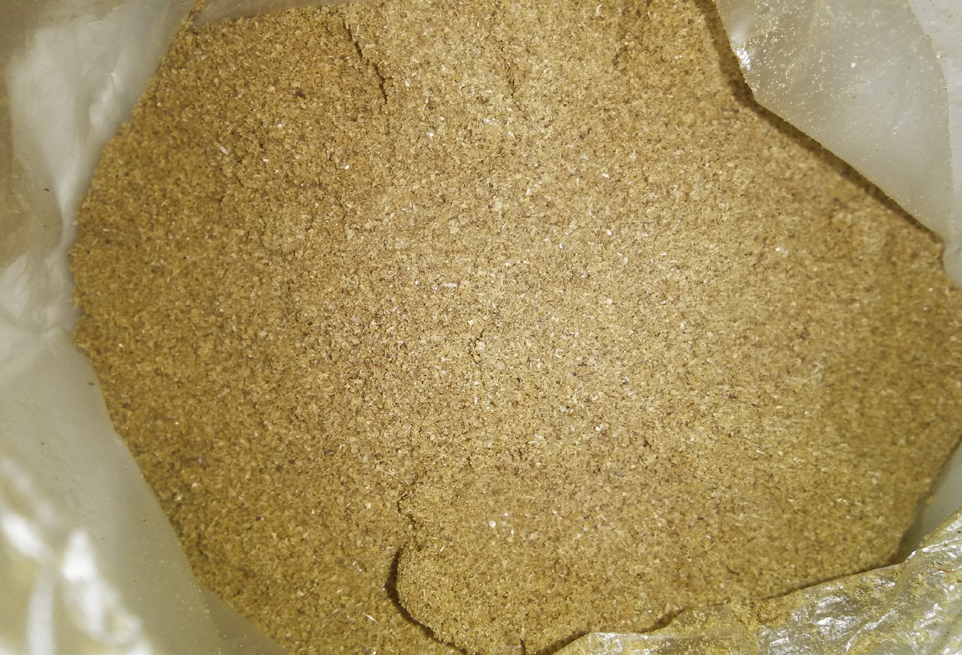
Fishmeal was obtained as a product combination of different fish species. Fishes were collected from the market and subdued under heating conditions to dryness. Heating was done under exposure to sunlight. The dried fishes were then grinded to dust or powdered form.
Preparation of Test Feed
Soybean and spirulina were used to formulate the test feed. Soybean was the highest inclusion. Soybean has been tested to replace animal source proteins [70, 71]. It was heated to 300C to avoid potential anti- nutritional factors [72]. Spirulina is important in improving and maintaining nutritional value, palatability, wholesomeness and flavor. They also impart desired color. The nutritional composition of spirulina is shown in Table 3.1 below:
| Composition of spirulina / 7g | |
|---|---|
| Variables | Quantity |
| Calories | 20 |
| Protein | 4.02 g |
| Carbohydrate | 1.67 g |
| Fat | 0.54 g |
| Calcium | 8 mg |
| Iron | 2 mg |
| Magnesium | 14 mg |
| Phosphorus | 8 mg |
| Potassium | 95 mg |
| Sodium | 73 mg |
| Vitamin C | 0.7 mg |
Table 1: 1 below:
Spirulina is also known to contain thiamin, riboflavin, niacin, folate, and Vitamins B-6, A and K.
The test feed was offered daily to the fish and frequency of feeding was three times per day for a month in powder form depending on the stage of larvae. The amount of the feed was adjusted based on the body weight of the fish on sampling day.
Steps of Preparing the Test Feed before Feeding the Larvae:
- Literature review
- Collection/ purchase of soybean in nearby market
- Dry soya bean and remove unwanted stuffs
- Heat soybean to 300C , then grind the soybean
- Sieve with 0.25 - 0.3 mm sized mesh
- Mix soybean with spirulina
- Store in a dry place Spirulina was obtained by means of importation from outside the country.
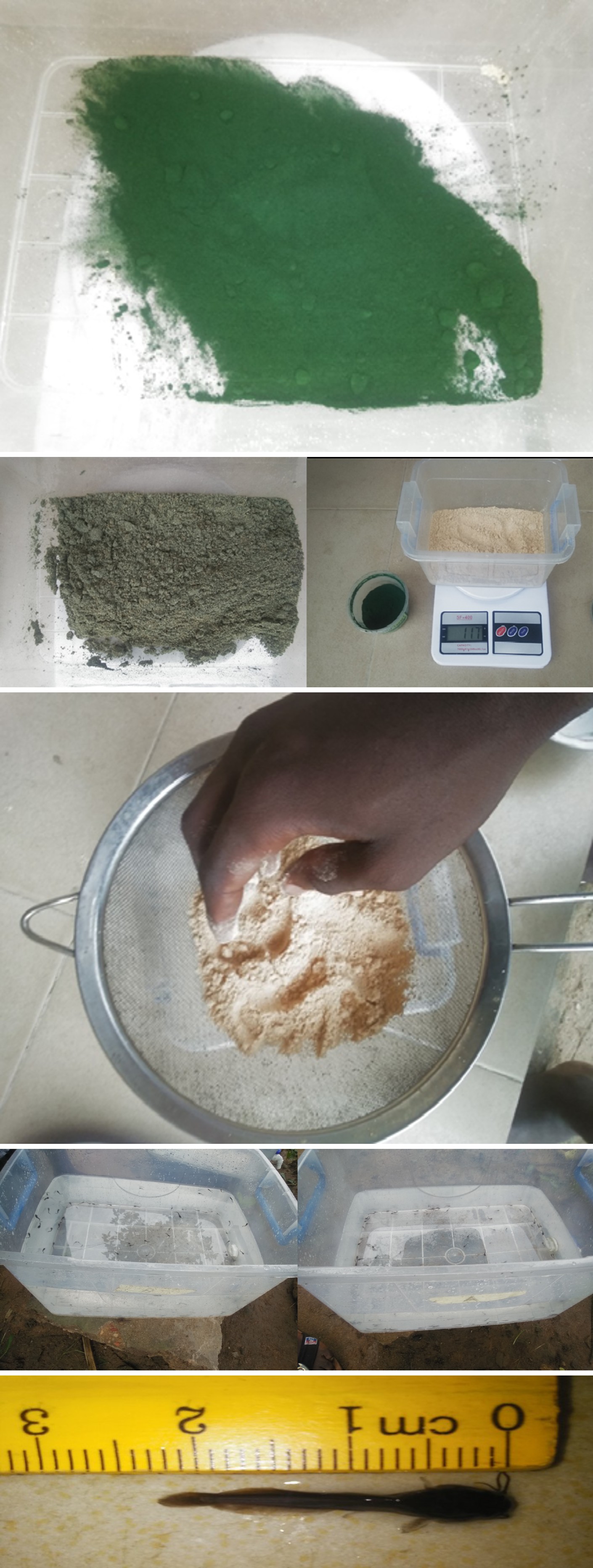
(a) (b) (c) (d) Figure 3.2: (a) sieving of soybean (b) spirulina powder (c) test feed after mixture (d) weighing of feeds.
Constituents of test feed/ 44g
| Diet | Spirulina | Soybean | Protein Content |
|---|---|---|---|
| Test feed | 22.73% | 77.27% | 24.53% |
Experimental Set up
The experiment was conducted in two treatment tanks. A rectangular transparent container was used to run the experiment. A total of 50 larvae were assigned to each experimental tank.
Measurement of Growth and Survival Rate of Larvae
Each of the 2 experimental tanks contains 50 larvae. They were subjected to a commercial feed (COPPENS) at the 2nd day after hatching. The larvae were fed three times daily for about two weeks in the nursery before being transferred to the experimental tanks. Weight measurements were conducted five times in the experimental period. The first larvae weight measurement was taken before the start of the experiment, subsequent measurements were taken in an interval of a week. The fifth and last measurement took place at the end of the experiment.
During each sampling, fish measurements were fairly uniformed within treatments. They were starved for an average six hours prior to measurement in order to avoid misleading values. Wet weight and length of larvae was measured to the accuracy 0.1g sensitive balance and graded ruler respectively.
Data was recorded daily and dead larvae were removed daily. At the end of the experiment, the numbers of surviving fish was first recorded, and then used for survival rates and cannibalism calculation.
Specific growth rate was calculated using
1) (Log W2 – Log W1)
No. of days Where; W2 = Final weight W1 = Initial weight No. of days = the duration of the experiment in days Survival rates were calculated according to Florence and Harrison [73].
Survival rate = 100 x no. of survivals No. of initial fish Condition factor (k) was calculated according to Arimoro [74] and Davies [75].
2) K = W * 100 L^3
Statistical Analysis
Data management was done in Excel. Data was subjected to one-way analysis of variance (ANOVA) followed by the Tukey’s multiple comparison test for the means at a significance level (P<0.05). All data were analyzed using the SPSS- 18 and Excel 2007.
Results and Discussion
Results
The result explanation starts by showing how the growth response of larvae’s, focusing on the difference and similarities between treatments and finally on survival rate.
Growth Performance of Clariasgariepinus Larvae
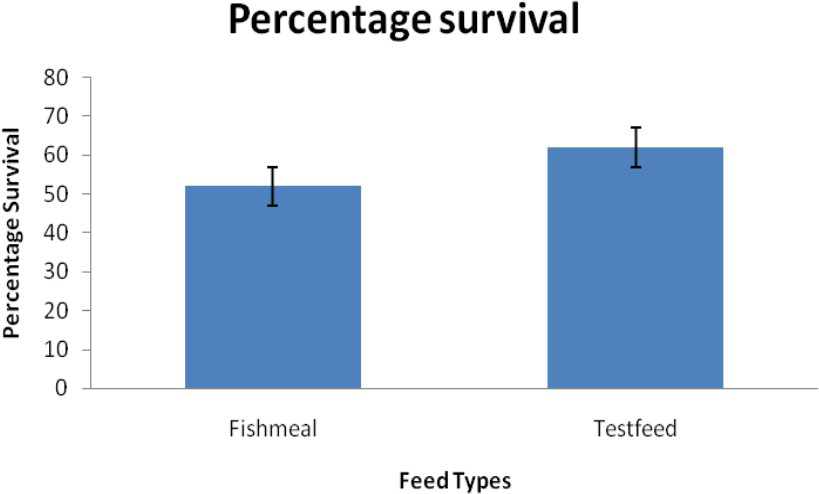
The growth and survival performances of Clarias gariepinus Larvae in response to different meals treatment are presented in table 4.1 below. The results are presented as combination of their mean and standard error over a 4 weeks period trial period.
| Parameters | Fishmeal | Test feed |
|---|---|---|
| Initial mean body weight (g) | 0.18±0.055a | 0.18±0.095 a |
| Final Mean Body Weight (g) | 1.46±0.023 a | 2.60±0.097 a |
| Mean Weight gain (g) | 1.28±0.050 a | 2.42±0.073 a |
| Initial Mean Body length (cm) | 1.87±0.051 a | 1.87±0.053 a |
| Final Mean Body length (cm) | 5.93±0.029 a | 6.56±0.070 a |
| Mean Length Gain (cm) | 4.06±0.043 a | 4.69±0.067 a |
| Condition factor | 0.61±0.001 a | 0.86±0.007 a |
| % survival | 52±0.00 a | 62±0.00 a |
| Specific growth rate | 3.21±0.001 a | 4.11±0.002 a |
Table 3: 1 below. The results are presented as combination of their mean and standard error over a 4 weeks period trial period.
a, b, c, d mean values in the same row with different superscript are significantly different (P<0.05) Table 4.1: Growth performance of Clarias gariepinus Larvae fed with fishmeal and Test feed.
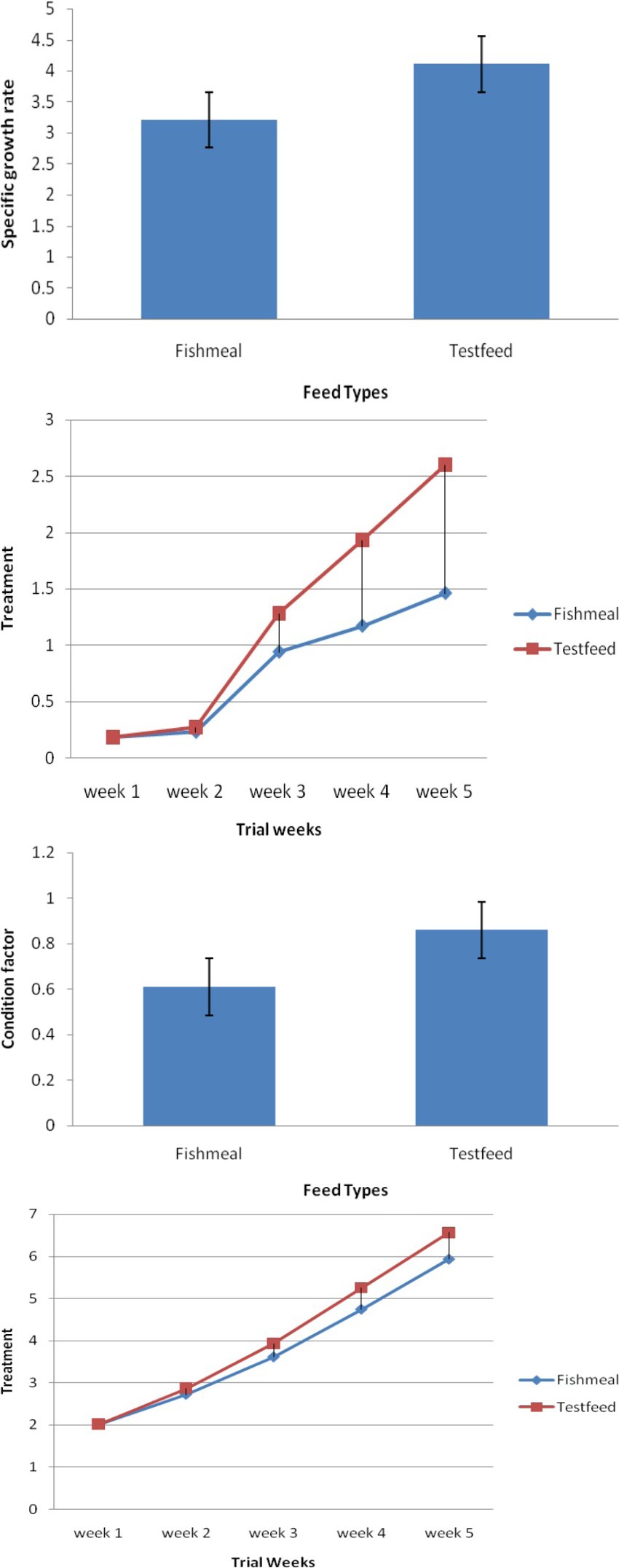
In all parameters analysed, it is clearly evident in table 4.1 that the test feed enabled better growth performance of Clarias gariepinus Larvae during the 5 weeks trial period. There were significant differences (P<0.05) in the initial body weight (IBW), final body weight (FBW), mean weight gain, Initial Mean Body length (cm), Final Mean Body length (cm), Mean Length Gain (cm) , Condition factor, percentage (%) survival and Specific Growth Rate (SGR) (Table 4.1). The highest weight gain and SGR were found in fish fed with the test feed during the last week of the trial. The highest and least percentage (%) survival was recorded in fish fed also with the test feed while the least weight gain and SGR were observed in fish fed with the fishmeal.
| Fishmeal | Test feed | |
|---|---|---|
| 1 | 2.01 | 2.01 |
| 2 | 2.72 | 2.87 |
| 3 | 3.61 | 3.93 |
| 4 | 4.74 | 5.25 |
| 5 | 5.93 | 6.56 |
Table 4: 2 presents the weight performances of Clarias
| Weeks | Fishmeal | Test feed |
|---|---|---|
| 1 | 0.18 | 0.18 |
| 2 | 0.23 | 0.27 |
| 3 | 0.94 | 1.28 |
| 4 | 1.17 | 1.93 |
| 5 | 1.46 | 2.60 |
| Fishmeal | Testfeed |
Table 5: 3 shows the Length trend of Clariasgariepinus
| Weeks | Fishmeal | Test feed |
|---|---|---|
| 1 | 2.01 | 2.01 |
| 2 | 2.72 | 2.87 |
| 3 | 3.61 | 3.93 |
| 4 | 4.74 | 5.25 |
| 5 | 5.93 | 6.56 |
Discussion
Due to Shortage in world production of fish meal, the conventional protein feed source, coupled with increased demand for fish meal in feeds for livestock and poultry is likely to reduce the dependence on fish meal as a single protein source in aqua-feeds. In all over the world, the efficiency of various alternative protein sources as partial or complete dietary replacements for fish meal has been evaluated in fish diets [76, 77, 78]. On the other hand there is little or no work on alternative protein sources for fish feed in developing countries such as Nigeria. The West Africa sub- region and several developing countries continue to rely on imported fish meal. Therefore, the need for this study to source and observe the effectiveness of plant protein as an alternative to fishmeal.
The overall study aims to explore and compare the effect of two different feeds which are fishmeal and test feed, the latter being a combination of Spirulina and Soybean. The main goal was to develop suitable diets for an improved and sustainable C.gariepinus larvae production for Nigerian domestic implementation. Attempts were made to focus on factors that may improve or inhibit the growth and survival rate of larvae. Specifically on the feed quality that concerns palatability, digestibility, and anti-nutrition factors.
When alternative food sources such as plant protein are used as fish diets, one of the common problems encountered is the acceptability of the feed by fish, and this frequently relates to the palatability of the feed.
In this study of C. gariepinus larval nutrition, test feed (combination of Spirulina and Soybean) gave the best growth performance (2.42g weight gain and 4.69 length gain) and highest survival rate (62%) i.e. low mortality, when compared to fishmeal.
The fishmeal gave the least performance in terms of growth performance (1.28g weight gain and 4.06 length gain) and survival (52%). It was observed that the feed was not easily accepted by the fry.
The survival rate of the larvae fed on test feed was not significantly higher than that fed on test feed. Although survival has never been a major concern in the culture of C.gariepinusbecause of its resistant to water quality stress as well as common diseases [79], use of poor feeding strategies are major sources of mortalities in larval stages of this species. Various reasons adduced for the poor performance of the fishmeal include nutritional status of diet which is inferior to the test feed, the fishmeal not being well adapted for the larvae [80].
This study illustrated successful rearing of Catfish larvae with the test feed when compared to fishmeal. The final mean body weight recorded for fishmeal (1.46g) and test feed (2.60g) suggests that the latter is much more suitable for rearing Clariasgariepinuslarvae. The best growth observed with the test feed diet could be due to the nutritional quality of the test feed associated with its good digestibility by Clariasgariepinuslarvae.
Summary, Conclusion and Recommendation
Summary
This research study was carried out to evaluate the effect of plant protein on the growth and survival rate of Clarias gariepinus larvae and to also find an alternative form of protein source for fish feed. 50 fish larvae each were fed with fishmeal and a test feed respectively. Administration of feeds was done three times a day during an experimental period of 5 weeks interval.
Growth measurements were taken once every week throughout the experimental period while the survival rate was calculated at the end of the experimental period. Findings of this study show that the test feed which comprises of plant protein is a better feed diet than fishmeal.
Conclusion
It has been established that the potential of the test feed is high in aquaculture. From the catfish larvae that was studied, the growth performances and survival rates were best when fed with this test feed. The results of this study showed that diet types play important roles in the feed utilization, growth and survival of C.gariepinuslarvae. Generally, the larvae fed with the test feed have a bit high feed intake and utilization. In the result this group demonstrates outstanding weight gain that significantly separates itself from the other group fed with fishmeal. The highest survival rate of larvae was recorded within the group that was fed the test feed. Fishmeal was not readily consumed due to low digestibility and palatability. It had a relatively low growth performance and or survival rate. The result shows that larvae do not require high amounts of feed. However, the older the fish, the higher the quantities of feed needed.
Recommendations
It is recommended that the test feed is a better diet than fishmeal for the larval stages. Part of the study result shows similarity with other studies, but it needs a fair amount of further supporting research in the future. The important factors that should be considered are
- To conduct supporting experiments on the palatability and digestibility of the test feeds with possible introduction of some extra ingredients, feeding rates and feeding frequencies.
- More future work needs to be done on the production of the test feed since it has shown promising results and to develop estimation methods for the quantity of the test feed.
References
-
FAO (2002) Proceedings of the Workshop on Rural Radio and Food Security.
-
Adron JW, Blair A, Cowey CB (1974) Rearing of Plaice (Pleuronectes Platessa) Larvae to Metamorphosis Using an Artificial Diet. Fish Bull 72: 353-357.
-
Verreth J, Storch V, Segner H (1987) A Comparative Study on the Nutritional Quality of Decapsulated Artemia Cysts, Micro-Encapsulated Egg Diets and Enriched Dry Feeds for Clariasgariepinus (Burchell) Larvae. Aquaculture 63(1-4): 269-282.
-
Reddy CM, Bhat VB, Kiranmai G, Reddy MN, Reddanna P, et al. (2000) Selective Inhibition of Cyclooxygenase-2 by C-Phycocyanin, A Biliprotein from Spirulina Platensis. Biochem Biophys Res Commun 277: 599-603.
-
Lin W, Pan B, Sheng J, Xu J, Hu Q (2007) Antioxidant Activity of Spirulina Platensis Extracts by Supercritical Carbon Dioxide Extraction. Food Chemistry 105(1): 36- 41.
-
Vonshak A (1997a) Spirulina Platensis (Arthrospira): Physiology Cell-biology and Biotechnology. Taylor and Francis Ltd, London, pp: 214.
-
Cohen Z (1997) The Chemicals of Spirulina. In: Vonshak A (Ed.), Spirulina Platensis (Arthrospira): Physiology, Cell-biology and Biotechnology. Taylor and Francis, London, pp: 175-204.
-
Qureshi MA, Kidd MT, Ali RA (1995) Spirulina Platensis Extract Enhances Chicken Macrophage Functions after _In Vitro_ Exposure. J Nut Immunol 3(4): 35-44.
-
Glombitza KW, Koh M (1989) Secondary Metabolites of Pharmaceutical Potentials. In: Cresswell RC, Rees TAV, Shah N (Eds.), Algaland Cyanobacterial Biotechnology, Harlow, UK, pp: 161-238.
-
Kim SS, Rahimnejad S, Kim KW, Lee KJ (2013) Partial Replacement of Fish Meal with Spirulina Pacifica in Diets for Parrot Fish (Oplegnathus Fasciatus). Turkish J Fish Aquat Sci 13(4): 197-204.
-
Goos HJ, Richter CJJ (1995) Internal and External Factors Controlling Reproduction in the African Catfish, Clarias Gariepinus. Aquat Living Resour 9: 45-58.
-
Pillay JVR (1993) Aquaculture: Principles and Practices. John Wiley, New York, pp: 330.
-
Ling SW (1977) Aquaculture in Southeast Asia: A Historical Overview. A Washington Sea Grant Publication, Contributions, College of Fisheries, and University of Washington 465: 108.
-
De Silva SS (2012) Aquaculture: A Newly Emergent Food Production Sector and Perspectives of Its Impacts on Biodiversity and Conservation. Biodiversity and Conservation 21(12): 3187-3220.
-
El-Sayed A (2006) Tilapia Culture in Salt Water: Environmental Requirements, Nutritional Implications and Economic Potentials. VIII Simposium Internacional deNutricion, pp: 95-106.
-
FAO (2008) World Fisheries and Aquaculture. Aquaculture.
-
FAO (Food and Agriculture Organization) (2012) The State of World Fisheries and Aquaculture.
-
Ojutiku RO (2008) Comparative Survival and Growth Rate of Clariasgariepinus and Heteroclarias Hatchlings fed Live and Frozen Daphnia. Pakistan J Nutrit 7(4): 527- 529.
-
Food and Agriculture Organization (FAO) (2009) The State of World Fisheries and Aquaculture 2008. Fisheries and Aquaculture Department, United Nation, Rome.
-
Federal Department of Fisheries (FDF) (2007) Fisheries Statistics of Nigeria. 4th (Ed.), pp: 49.
-
Graaf G de, Janssen H (1996) Artificial Reproduction and Pond Rearing of the African Catfish Clariasgariepinus in Sub-Saharan Africa. FAO Fisheries Technical Paper, pp: 362.
-
Haylor G, Muir J (1998) A Fish Hatchery Manual for Africa. Pisces Press Ltd. Stirling, Scotland, pp: 198.
-
Spataru P, Viveen WJAR, Gophen M (1987) Food composition of Clarias gariepinusin Lake Kinneret (Israel). Hydrobiologia 144: 77-82.
-
Bruton MJN (1979) The food and feeding behavior of Clariasgariepinus (Pisces: Clariidae) in Lake Sibaya, South Africa, with emphasis on its role as a predator of cichlids. The Transactions of the Zoological Society of London 35(1): 47-114.
-
Bruton MN (1978) The habitats and habitat preferences of Clariasgariepinus (Pisces: Clariidae) in a clear coastal lake (Lake Sibaya, South Africa). Journal of the Limnological Society of Southern Africa 4(2): 81-88.
-
Wudneh T (1998) Biology and management of fish stocks in Bahir dar Gulf, Lake Tana, Ethiopia, pp: 1-150.
-
Dadebo E (2009) Filter-feeding habit of the African catfish 8(1): 15-30.
-
Dadebo E, Aemro D, Tekle GY (2014) Food and feeding habits of the African catfish (Clariasgariepinus) (Burchell, 1822) (Pisces : Clariidae) in Lake 52(4): 471- 478.
-
FAO, Fisheries W (2014) The State of World Fisheries and Aquaculture 2014, pp: 1-243.
-
Graaf GJ de, Galemoni F, Banzoussi B (1995) Artificial reproduction and fingerling production of the African catfish, Clarias gariepinus (Burchell 1822), in protected and unprotected ponds. Aquaculture Research 26(4): 233-242.
-
Omoruwou P, Edema (2011) Growth Response of Heteroclarias Hybrid Fingerlings Fed on Maggot Based Diet. Omoruwou and Edem 7(1): 58-62.
-
Ghan D, Sprules WG (1993) Diet, Prey Selection, and Growth of Larval and Juvenile Burbot Lota Lota (L.). J Fish Biol 42(1): 47-64.
-
Yilmaz E, Bozkurt A, Gökçek K (2006) Prey Selection by African Catfish Clariasgariepinus (Burchell, 1822) Larvae Fed Different Feeding Regimes. Turkish J Zoolo 30(1): 59-66.
-
Truemper HA, Lauer TE (2005) Gape Limitation and Piscine Prey Size- Selection by Yellow Perch in the Extreme Southern Area of Lake Michigan, with Emphasis on Two Exotic Prey Items. J Fish Biol 66(10): 135-149.
-
Sánchez-Hernández J, Cobo F (2015) Adaptive Flexibility in the Feeding Behaviour of Brown Trout: Optimal Prey Size. Zoological Studies 54: 26.
-
Lee CK, Kawamura G, Senoo S, Ching FF, Luin M (2014) Colour Vision in Juvenile African Catfish. Clarias Gariepinus. Int Res J Biological Sci 3(1): 36-41.
-
Dabrowski K (1984) The Feeding of Fish Larvae: Present « State of the Art » and Perspectives. Reprod Nutr Develop 24: 807-833.
-
Riley KL, Binion SM, Overton AS (2012) Estimating the Food Requirements and Prey Size Spectra of Larval American Shad. Marine and Coastal Fisheries 4(1): 228- 238.
-
Ponzoni RW, Nguyen NH (2008) Proceedings of a Workshop on the Development of a Genetic Improvement Program for African Catfish Clarias gariepinus. World Fish Center, Malaysia.
-
Food and Agriculture Organization (FAO) (2011a) World Aquaculture 2010. Aquaculture Service, Rome. FAO (2011b) Technical Guidelines on Aquaculture. 29th Session of Committee on Fisheries (COFI) Rome, Italy.
-
Adewumi AA, Olaleye VF (2011) Catfish culture in Nigeria. Progress prospects and problems 6(6): 1281- 1285.
-
Ataguba GA, Annune PA, Ogbe FG (2009) Induced breeding and early growth of progeny from crosses between two African clariid fishes, Clariasgariepinus(Burchell) and Hetero branchus long ifilis under Hatchery Conditions. Journal of Applied Biosciences 14: 755-760.
-
Baras E, Jobling M (2002) Dynamics of intracohort cannibalism in cultured fish. Aquaculture Research 33(7): 461-479.
-
Marimuthu K, Umah R, Muralikrishnan S, Xavier R, Kathiresan S (2011) Effect of different feed application rate on growth, survival and cannibalism of African catfish, Clariasgariepinus fingerlings. Emir J Food Agric 23(4): 330-337.
-
Musa SM, Aura CM, Ngugi CC, Kundu R (2012) The Effect of Three Different Feed Types on Growth Performance and Survival of African Catfish Fry (Clariasgariepinus) Reared in a Hatchery. ISRN Zoology 2(1): 1-6.
-
Martins CIM, Aanyu M, Schrama JW, Verreth JAJ (2005) Size distribution in African catfish (Clariasgariepinus) affects feeding behaviour but not growth. Aquaculture 250(1-2): 300-307.
-
Yong Sulem S, Tchantchou L, Nguefack F, Brummett RE (2006) Advanced nursing of Clarias gariepinus (Burchell, 1822) fingerlings in earthen ponds, through recycling of tilapia recruits. Aquaculture 256(1-4): 212-215.
-
Matsiko SD, and Mwanja MT (2008) The current status of catfish culture and research in Uganda. Proceedings of a Workshop on the Development of a Genetic Improvement Program for African Catfish Clariasgariepinus.
-
Van de Nieuwegiessen PG, Boerlage AS, Verreth JAJ, Schrama JW (2008) Assessing the effects of a chronic stressor, stocking density, on welfare indicators of juvenile African catfish, Clarias gariepinus Burchell. Applied Animal Behaviour Science 115(3-4): 233-243.
-
Williams SB, Olaosebikan BD, Adeleke AO, Fagbenro OA (2008) Status of African catfish farming in Nigeria. In: Ponzoni RW, et al. (Eds.), Proceedings of a Workshop on the Development of a Genetic Improvement Program for African catfish Clarias gariepinus. The World Fish Center, Malaysia, pp: 130.
-
Ninavewe AS, Khedkar GD (2009) Nutrition in aquaculture. In: Abdelwahed H, et al. (Eds.), Scvmj 16(2): 213-222.
-
Ogello EO (2013) Feed nutrition in fish farming. African Journal of Food, Agriculture, Nutrition and Development 13(4): 8058-8076.
-
Almazán Rueda P, Schrama JW, Verreth JA (2004) Behavioural responses under different feeding methods and light regimes of the African catfish (Clarias gariepinus) juveniles. Aquaculture 231(1-4): 347-359.
-
Trushenski JT, Kasper CS, Kohler CC (2006) Challenges and Opportunities in Finfish Nutrition. North American Journal of Aquaculture 68(2): 122-140.
-
Giri SS, Sahoo SK, Sahu BB, Sahu AK, Mohanty SN, et al. (2002) Larval survival and growth in Wallago attu (Bloch and Schneider): Effects of light, photoperiod and feeding regimes. Aquaculture 213(1-4): 151-161.
-
Wang C, Xie S, Zheng K, Zhu X, Lei W, et al. (2005) Effects of live food and formulated diets on survival, growth and protein content of first-feeding larvae of Plelteobagrus fulvidraco. Journal of Applied Ichthyology 21(3): 210- 214.
-
FAO (2010) The state of world fisheries and aquaculture. Food and Agriculture Organization of the United Nations pp: 218.
-
Conceição LEC, Yúfera M, Makridis P, Morais S, Dinis MT (2010) Live feeds for early stages of fish rearing. Aquaculture Research 41(5): 613-640.
-
Verreth J (1994) Nutrition and Related Ontogenetic Aspects in Larvae of the African Catfish, Clarias Gariepinus.
-
Potongkam K (2006) Catfish Hatchery and Production Manual 1-30. In: Refstie, S, et al. (Eds.), Differing nutritional responses to dietary soybean meal in rainbow trout (Oncorhynchus mykiss) and Atlantic salmon (Salmo salar). Aquaculture 190(1-2): 49-63.
-
Osman AGM, Wuertz S, Mekkawy IA, Verreth J, Kirschbaum F (2008) Early development of the African catfish Clariasgariepinus (Burchell, 1822), focusing on the ontogeny of selected organs. Journal of Applied Ichthyology 24(2): 187-195.
-
Uys W, Hecht T (1985) Evaluation and preparation of an optimal dry feed for the primary nursing of Clarias gariepinus larvae (Pisces: Clariidae). Aquaculture 47(2- 3): 173-183.
-
Oyedapa AF (1998) Short communication apparent digestibility of various legume seed meals in Nile tilapia diets. Aquaculture International 6(1): 83-87.
-
Appelbaum S, Van Damme P (1988) The feasibility of using exclusively artificial dry feed for the rearing of Israeli Clariasgariepinus (Burchell, 1822) larvae and fry. Journal of Applied Ichthyology 4(3): 105-110.
-
Hecht T, Uys W, Britz PJ (1988) The culture of sharp tooth catfish, Clarias gariepinusin southern Africa. South African National Scientific Programmes Report No. 153 pp: 133.
-
Olurin KB, Oluwo AB (2010) Growth and Survival of African Catfish (Clarias gariepinus) Larvae Fed Decapsulated Artemia, Live Daphnia, or Commercial Starter Diet. The Israeli Journal of Aquaculture - Bamidgeh 62(1-4): 50-55.
-
Cahu C, Infante JZ (2001) Substitution of live food by formulated diets in marine fish larvae. Aquaculture 200(1-2): 161-180.
-
Freund F, Hörstgen Schwark G, Holtz W (1995) Seasonality of the reproductive cycle of female Heterobranchus longifilis in tropical pond culture. Aquatic Living Resources 8(4): 297-302.
-
Legendre M, Linhart O, Billard R (1996) Spawning and management of gametes, fertilized eggs and embryos in Siluroidei. Aquatic Living Resources 9: 59-80.
-
Kikuchi K (1999) Use of defatted soybean meal as a substitute for fish meal in diets of Japanese flounder (paralichthys olivaceus). Aquaculture 179: 3-11.
-
Robinson ED, Menghe HL, Hogue CD (2006) Catfish Nutrition: Nutrient Requirement. Act of Congress.
-
Peres H, Lim C, Klesius PH (2003) Nutritional value of heat-treated soybean meal for channel catfish (Ictaluruspunctatus). Aquaculture 225(1- 4): 67-82.
-
Florence ON, Harrison TO (2012) Impact of stocking density on the polyculture of clarias gariepinus and oreochromis niloticus. Journal of Agricultural Science and Technology 2: 1018-1023.
-
Arimoro F (2007) First Feeding in the African Catfish Clarias angulaaris Fry in Tanks with the Freshwater Rotifer Brachionus calydflorus Cultured in a Continuous Feed Back Mechanism in Comparison with a Mixed Zooplankton Diet. Journal of Fisheries and Aquatic Science 2(4): 275-284.
-
Davies OA, Tawari CC, Kwen K (2013) Length- Weight Relationship, Condition Factor and Sex Ratio of Clarias gariepinus Juveniles Reared in Concrete Tanks. International Journal of Scientific Research in Environmental Sciences 1(11): 324-329.
-
Wee KL, Shun Sen Wang (1987) Nutritive value Leucaena leaf meal in pelleted feed for Nile tilapia. Division of Agricultural and Food Engineering, Asian Institute of Technology, Bangkok, Thailand. Aquaculture 62(2): 97- 108.
-
Abdel Fattah M El Sayed (1999) Alternative dietary protein sources for farmed tilapia, Oreochromi ssp. Aquaculture 179(1-4): 149-106.
-
Ali A, Al Asgah NA, Al Ogaily SM, Ali S (2003) Effect of feeding different levels of Alfalfa Meal on the growth performance and body composition of Nile Tilapia (Oreochromis niloticus) Fingerlings. Asian Fisheries Science 16: 59-67.
-
Ngugi C, Chepkirui Bolt V, Bowman J, Oyoo Okoth E, Rasowo J, et al. (2011) Growth performance, survival, feed utilization and nutrient utilization of African catfish (Clarias gariepinus) larvae co-fed Artemiaand micro-diet containing freshwater atyid shrimp (Caridinanilotica) during weaning. Aquaculture Nutrition 17(2): 82-89.
-
(2002) Food Insecurity: When People Must Live with Hunger and fear starvation. The State of Food Insecurity in the World. Food and Agriculture Organisation of the United Nations.
- Lessons to Learn: Trees are More than the Lungs of the World
- Community Forestry Enterprises as a Model for Sustainable Forest Development: The Case Of The "Baja Tarahumara" in Chihuahua, Mexico
- Ecological and Socio-Economic Impacts of Chromolaena odorata and Mesosphaerum suaveolens, Two Invasive Alien Species in Central and Southern Benin, West Africa
- Epigenetic Sustainability: Modeling the Human Factor as a Natural Resource through Science 4.0 and the NR3C1 Biological Pilot
- Growth-at-Risk: A Framework for Assessing Economic Vulnerability
- The Rural Territory as a Socioecological System for the Management of Public Policy for Sustainable Rural Development