
Single-Use Plastic in the Lebanese Restaurants: Awareness and Environmental Impacts during the Economic Crisis: A Case Study of Touristic Regions
In recent years, single-use plastics have attracted increasing interest, mainly because they are suspected of accumulating in the environment and thus also in biota. Although they have been studied by researchers to investigate their impact on health, the economy, society and the environment, plastics have become the most important material used in our daily lives. They are present in the catering industry due to their durability, low cost and ease of use in construction, replacing many other materials. However, the same properties that make plastics so advantageous also make them undesirable for the environment, especially as most plastic are designed to be thrown away immediately after a single use. The aim of this study is to assess the awareness and environmental impact of single-use plastic in Lebanese restaurants in order to investigate the lifespan of plastic and the potential to replace it with sustainable and biodegradable products. The results show that despite their responses indicating a strong environmental awareness, managers are still in favor of using single-use plastic.
Introduction
The contemporary world is profoundly intertwined with plastic, making it akin to a ‘plastic planet’ [1]. Visualizing a global landscape devoid of this synthetic material is a daunting task, humans activities currently produce more than 350 million metric tons of plastic waste per year [2]. Without changes to current policies, global plastic waste generation is projected to triple by 2060, to a staggering one billion metric tons [3]. Regrettably, human oversight contributes to an extensive discharge of plastic waste into marine ecosystems [4, 5]. Packaging applications stand as the primary driver of global plastic demand, and within this domain, single-use plastic (SUP) emerges as the predominant constituent [6, 7].
Plastics, as synthetic or semi-organic polymers, boast traits such as bio-inertness, durability, low thermal conductivity, high strength-to-weight ratio, adaptability to varying temperatures, and, notably, cost-effectiveness. Renowned for their versatility and manifold applications, present an array of advantages across diverse industries [8, 9]. However, within this multifaceted spectrum there are a subset of plastics specially engineered for single-use scenarios [10]. SUP, despite their short-term design intent, possess an inherent tenacity attributed to their chemically inert composition. This chemical inertness, a result of their molecular structure, make them resistant to biodegradation and natural decay processes [11]. As a consequence, these plastics exhibit an extended lifecycle, remaining intact for substantial periods even after their intended use has ceased [12].
The escalating ubiquity of SUP has been driven by their convenience and cost-effectiveness [13]. Throwaway plastics, encompassing items such as cutlery, packaging materials, and beverage containers, contribute to modern lifestyles characterized by consumerism and time constraints, leading to a preference for disposable plastics over reusable alternatives [14]. Nevertheless, this apparent convenience hides intricate ecological effects that could have long-lasting impacts on our planet [15, 16]. The harmful effects of SUP on the environment are complex and significant, affecting both land and water ecosystems. When compared to their reusable counterparts, single-use plastics exhibit a shorter lifespan in human use, but paradoxically persist in the environment for extended durations [17].
Upon entering the environment, SUP embark on a complex behavior that encompasses terrestrial and aquatic domains. These plastics have been detected ubiquitously, infiltrating not only marine or transitional ecosystems but also terrestrial landscapes, including less densely inhabited regions [18, 19, 20, 21, 13]. Once introduced to marine environments, these plastics become vulnerable to physical and chemical forces, ultimately culminating in their fragmentation into microplastics [22, 23]the accumulation of microplastics in mussels and fishes, and the toxicological effects associated with the ingestion of microplastics. These findings confirm the serious problem of slowly degrading plastics (which rarely degrade fully. The degradation process, instigated by atmospheric oxidation, hydrolysis in seawater, and the relentless agitation of waves, gives rise to a spectrum of plastic sizes [24, 25]; from macroplastics (>25 mm) to mesoplastics (5-25 mm), microplastics (<5 mm), and even nanoplastics (<0.1 mm) [26, 27]. The cumulative impact of these fragmenting processes results in a pervasive distribution and these minute particles, barely visible to the naked eye, infiltrate diverse marine habitats, from the open ocean to coastal environments. Their dimensions enable ingestion by a range of marine organisms, from zooplankton to larger vertebrates, thus initiating an insidious journey into the food web [28]. The bioaccumulation of microplastics presents risks that extend beyond physical ingestion, potentially leading to detrimental impacts on organism health, reproductive capabilities, and ecosystem functioning [29, 30]. Much remains to be understood about the potential harm that microplastics could inflict on human health [13, 31].
The versatility of plastics has contributed to their extensive utilization within the realm of restaurant services, where they continue to play a significant role due to its aforementioned attributes [32]. Both commercial establishments and individuals rely heavily on plastic, particularly in its disposable form, encompassing a range of items such as bottles, utensils, cutlery, cups, nylon gloves, and a diverse array of single-use plastic products [33, 7]. These conveniences facilitate streamlined operations, enhancing the efficiency of local management. In this context, the preference for disposable plastics aligns with the expeditious pace of restaurant operations. Unlike reusable alternatives, single- use plastics eliminate the need for water-intensive and time- consuming cleaning processes, thus serving as a practical solution to the demands of the hospitality industry [34, 17]. Additionally, the cost-effectiveness of disposable materials, in comparison to their reusable counterparts, contributes to their prevalence in the restaurant sector [35, 36]. While the restaurant industry may have less significant climate impacts compared to certain sectors, it still exerts its own influence on the climate [37]. Policies aimed at limiting or regulating single-use plastic usage are not yet fully effective and are especially not universally implemented [38, 39].
In the Lebanese context, the cumulative Municipal Solid Waste production for 2013 approximated 2,040,000 tons [40]. This assemblage of waste is characterized by a preponderance of organic matter, alongside paper/ cardboard, glass, metal, and a substantial influx of plastics [40]. The distribution of waste generation fluctuates between rural and urban settings, as well as across seasonal variations. Lebanon’s predicament is underscored by its staggering rate of tap water contamination with plastic fibers, a close second to the United States, registering a contamination rate of 93.8% [41].
This study employs surveys administered across diverse tourist-centric restaurants. The utilization of questionnaires in survey methodologies serves as an efficacious conduit for elucidating managerial perspectives on single-use plastic consumption within restaurants. These surveys encompass multifaceted environmental concerns [27], spanning domains like ocean literacy [42, 43], sustainable development, and climate change [44, 45].
The main goal of this research is to assess how much people know and understand about single-use plastics in Lebanese restaurants, and to understand the effects on the environment. The study also aims to investigate what happens to plastic once it’s used and see if there are better options that are environmentally friendly. We are doing this research because plastic can be harmful to our health, especially when tiny bits of it end up in the food we eat. It also contributes to problems like climate change and ocean pollution. Additionally, we want to help restaurant managers become more aware of the risks linked to using single-use plastics. This research has two important goals: to encourage taking care of the environment and to encourage changes in how restaurants operate.
Materials and methods
Geographical area
Lebanon is one of the smallest countries in the world, covering an area of 10,452 km2. It is situated in the Levantine basin of the Mediterranean Sea, positioned between latitude 33°53’19.0680’’N and longitude 35°29’43.7280’’E [46]. Lebanon is characterized by four distinct geographic regions that vary in terms of topography and climate. Generally, Lebanon experiences a typical Mediterranean climate, featuring two highly contrasting seasons: a cold and rainy winter, and a long, hot, and dry summer with two intermediate seasons (spring and autumn) [47].
The population is estimated at 5.59 million in 2021, showing a decline compared to previous years (5.78 million in 2019, 6.4 million in 2015; [48]. This positions Lebanon as the 122nd most populous country globally [49]. Beirut, serving as both Lebanon’s capital and its largest city, boasts a population of nearly two million residents, resulting in an urban population density exceeding 3,500 individuals per square kilometer. The second largest city, Tripoli, situated in the northern part of the country, hosts approximately 230,000 inhabitants, while Sidon, the third-largest city, accommodates 163,554 residents. The cities of Tyre and Nabatîyé el Tahta are the only other urban centers in Lebanon with a population over 100,000 [50].
The coastal area extends for 220 km from Arida in the north to Ras Al Naqoura in the south covering 16% (180000 hectares) of Lebanese territory. Over 80% of the coastline (within a stretch of 500 m) is dominated by economic activities (urban and agricultural areas), while natural areas represent less than 20% of the total cost [51].
Questionnaire
The data were collected using a questionnaire adapted from [27], and subsequently modified to cater specifically to restaurant managers. The questionnaire consists of 9 sections and is outlined in Table A1: the first section determines the awareness of the managers towards environmental protection, while the second one determines their overall knowledge about plastics, and the third section concerns their access to waste disposal bins and collective actions. The fourth one examines the use of plastic products inside restaurants, the fifth section examines the managers’ attitudes toward single-use plastic, and the sixth section examines their attitudes toward reusable products. The seventh section examines the use of biodegradable packaging, and the eighth section examines the product’s cost and tax policy. Finally, the managers’ plastic consumption, before and after the economic crisis, is examined.
Collection method
The questionnaire was placed in Google Form. Interviews were conducted with each restaurant manager on-site and face-to-face to ensure the veracity of their responses. The selection of restaurants was randomized, and samples were collected across different cities at various times of the day, over multiple days.
Statistical Analysis
The statistical evaluation of the questionnaire data was performed using RStudio [52]. The responses provided by restaurant managers were subjected to descriptive statistical analysis, including frequency analysis (percentages), means and standard deviation (SD). To assess the mean responses for the survey data collected, a weighted average approach was employed, considering the scaled values ranging from 1 to 5 [27]. This method enabled the calculation of a MEAN %, representative of the participants’ perceptions across the response categories [53]. In the same way, the standard deviation (SD) was calculated to assess the dispersion of the data from the mean percentage. The differences between each percentage value and the mean percentage were squared, weighted based on response frequencies, summed, and divided by the total number of participants minus one. The square root of the resulting value represents the standard deviation, which indicates how much the data are dispersed around the calculated mean percentage [54]. A chi-square (χ²) test was conducted to identify statistically significant associations between survey responses and restaurant attributes [55]. Correlations were deemed statistically significant if the p-value was less than 0.05. Additionally, measures of association, such as Cramér’s V correlation index, were employed to quantify the strength of association between categorical variables [56]. The coefficient of contingency was also utilized to assess the extent to which one variable could predict another within the dataset [57].
Results
Representations of samples
A cartographic representation of the selected study areas is shown in Figure 1. The exact number of restaurants in each location was as follows: Northern Lebanon (Batroun (2), Jounieh (4), Byblos (8)), Central Lebanon (Beirut (14), Bekaa (1)), and Southern Lebanon (Saida (2), Tyre (6)). The largest samples were obtained from the capital city, Beirut. A total of 37 questionnaires were collected for this research from a pool of 50 restaurants that were invited to take part in the survey. Several factors contributed to this: In the Jounieh area, the minister of tourism had enforced closures on restaurants and cafes without proper operating permits. As a result, only four samples were gathered from this region. Additionally, certain restaurants declined to engage in the survey due to concerns about privacy, lack of interest in the study, or for unspecified reasons. Nevertheless, a notable 74% of restaurant owners actively participated in the survey.
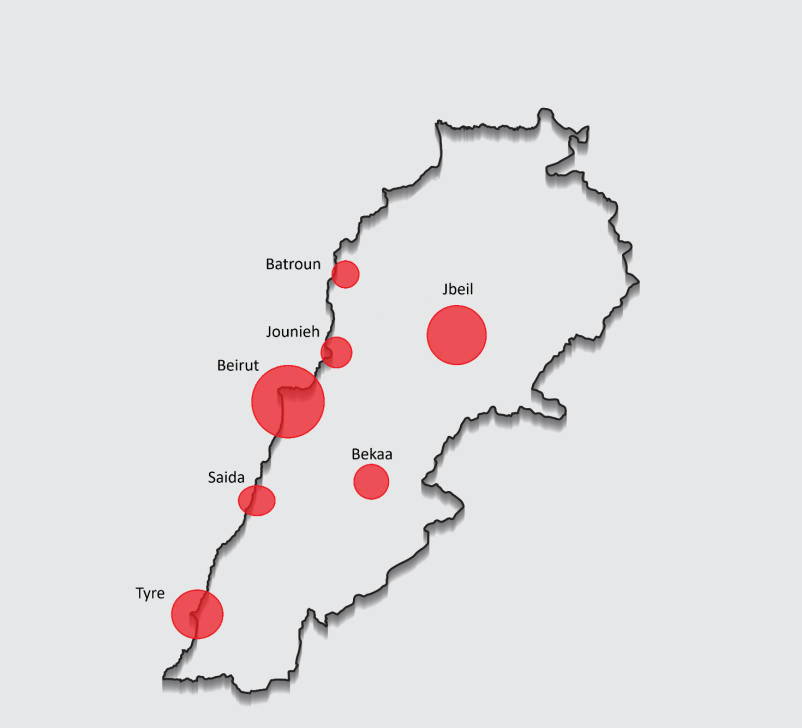
Restaurants Approach to SUP and Plastic Packaging
In this section, the socio-demographic, socioeconomic, environmental, and geopolitical effects of the survey are described. All responses are recorded on a scale from 1 to 5. The questionnaire structure is delineated in the following subsections:
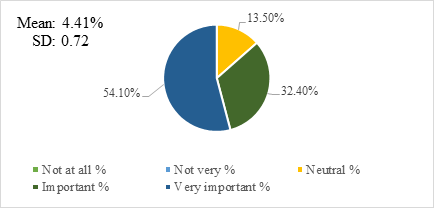
Awareness of environmental protectionThe initial general question assesses the significance of environmental protection for restaurant managers (Figure 2). Most of the results indicate a substantial commitment to environmental protection as a significant factor. 54.10% consider it very important, 32.4% deem it important and 13.5% are neutral, meaning they neither consider environmental protection important or unimportant. No negative responses were recorded for this survey.
Awareness of Plastic and Recycling: In this section, the survey was directed toward fundamental considerations concerning plastics and recycling. As illustrated in Table 1, a substantial number of restaurateurs possess limited familiarity with the domains of bioplastics and microplastics. Conversely, 16.2% and 21.6% exhibit proficient comprehension of MPs and bioplastics, respectively, where they showed a particular interest in the environment. A notable number of restaurant owners believe that SUP have harmful effects on the environment, with 32.4% expressing moderate concern and 54% indicating a high level of concern. Moreover, 75% regard plastic pollution as one of Lebanon’s foremost environmental problems.
Managers are not sufficiently aware about the existence of a national legislative framework to ban single-use plastic. Specifically, 44.4% responded with “not at all,” 16.7% remained neutral, 27% expressed some awareness, and merely 5.6% exhibited substantial familiarity with SUP prohibition regulations.
Turning to restaurateurs’ perceptions regarding the general recyclability of plastics, as shown in Table 2, a diverse spectrum of viewpoints emerges. Notably, a consensus on the complete recyclability of all plastic materials is absent; 43.2% express disagreement, mirroring the 43.2% in agreement.
A predominant answer, however, prevails that all bioplastics are biodegradable (54.1% in agreement), in contrast to 21.6% who believe not all bioplastics to be biodegradable. Regarding the comprehensive elimination of Single-Use Plastic on restaurants, no definitive trend is observed within the responses.
| Not at all (%) | Not very (%) | Neutral (%) | Fairly (%) | Very well (%) | Mean (%) | SD | |
|---|---|---|---|---|---|---|---|
| Average | 27 | 10.8 | 16.2 | 29.7 | 16.2 | 3.0 | 1.5 |
| Average | 32.4 | 16.2 | 10.8 | 18.9 | 21.6 | 2.8 | 1.6 |
| Average | 0.0 | 8.1 | 5.4 | 32.4 | 54.0 | 4.3 | 0.9 |
| Average | 5.6 | 0.0 | 5.6 | 13.9 | 75.0 | 4.5 | 1.0 |
| Average | 44.4 | 8.3 | 16.7 | 25.0 | 5.6 | 2.4 | 1.4 |
Table 1: Awareness of Plastic.
| Strongly disagree (%) | Disagree (%) | Neither agree nor disagree (%) | Agree (%) | Strongly agree (%) | Mean (%) | SD | |
|---|---|---|---|---|---|---|---|
| Average | 24.3 | 18.9 | 13.5 | 32.4 | 10.8 | 2.9 | 1.4 |
| Average | 10.8 | 10.8 | 21.6 | 54.1 | 2.7 | 3.4 | 1.1 |
| Average | 10.8 | 24.3 | 10.8 | 35.1 | 18.9 | 3.3 | 1.3 |
Table 2: Awareness of recyclability of plastics.
Main issues related to Waste Disposal Bin and Collectives Action: This section directs us toward the access to waste disposal bin, within a separate collection policy. Figure 3a show that 56% of restaurants have easy access to a bin for a separate collection of waste near their restaurants. However, these restaurants have a connection with private organizations to manage solid waste by recycling papers, plastic, glass, and others such as Jockey’s in Byblos, Manara palace café in Beirut, Arous al-Baher before the economic crisis, Nestle toll house, Meat and fries in Jbeil, restaurants of Zaytouna Bay in Beirut. The rest don’t have any connections.
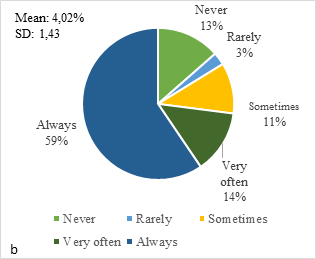
As shown in figure 3b most restaurant managers, 73%, believe that by reducing SUP, plastic waste can also be reduced, resulting in a better outcome. Only 13% do not consider this possible, while 3% and 11% respectively, believe it to be possible rarely or “occasionally.”
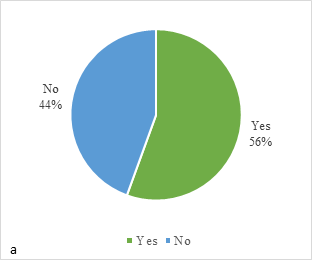
Figure 3: a: Accessibility of Recycling Facilities for Restaurants (Is There a Bin for Separate Collection of Waste near/in your restaurant, easily accessible?); b: Perception of Potential Impact: Reduction in Single-Use Plastic Usage and its Effect on Plastic Waste Reduction (Do You Think That if the restaurant reduced their use of single use-plastic can bring better results in Reducing the Amount of Plastic Waste?).
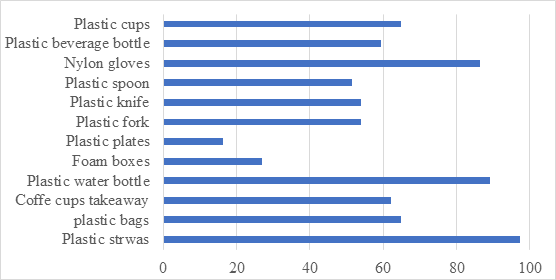
Type of plastic products used in restaurants: This section mainly focuses on type of plastic products used in restaurants. Figure 4 shows that a significant portion of restaurants use SUP: 97.3% utilize plastic straws, 89.2% use plastic bottles, 86.5% nylon gloves, and about 64-62% use respectively plastic bags and cups. A significant amount of plastic is produced by restaurants every day. Part of restaurants has a Lebanese tradition of utilizing reusable products all the time except straws and nylon gloves.
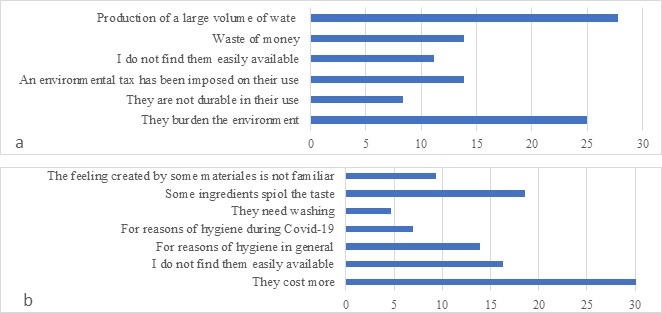
Factors influencing the use of SUP, reusable products, and biodegradable packaging: Factors emerged that could potentially discourage the utilization of single-use plastic are shown in Figure 5a. Primarily, concerns over environmental
impact were prevalent, with 42.9% of restaurateurs indicating that SUPs burden the environment. An additional 71.4% raised the issue of a substantial waste volume resulting from their usage. Respondents also expressed reservations about the non-durability of these items (14.3%), the imposition of environmental taxes (23.8%), their limited availability (19.0%), and monetary wastage (23.8%).
Similarly, in Figure 5b, the survey revealed deterrents to the adoption of reusable products. The cost factor stood out, with 76.2% of restaurant managers expressing concerns about their higher prices. Accessibility was also a noted hindrance (42.9%), alongside hygiene-related apprehensions both generally (28.6%) and during the Covid-19 pandemic (14.3%). Additional reservations included the need for frequent washing (9.5%), potential taste alteration due to certain ingredients (38.1%), and unfamiliar sensations arising from reusable products (19.0%). These insights provide a comprehensive view of the factors influencing choices between single-use and reusable products in restaurant settings.
The influence of biodegradable packaging on restaurant managers’ choices is shown in Table 4. For coffee takeaway packaging, a notable 24.3% of managers were significantly influenced, while 18.9% expressed a strong consideration. The impact was less pronounced for food takeaway packaging, where 29.7% indicated a significant influence and 24.3% showed a very strong consideration. The biodegradability of water packaging was found to affect a substantial 27% of managers significantly, with 21.6% considering it very influential. Similarly, for other types of packaging, 30% expressed a very strong consideration for biodegradability, and 21.6% considered it influential. It is evident that the degree of influence varies across different packaging categories. This insight sheds light on the potential impact of sustainable packaging choices on restaurant operations.
| Not at all (%) | Not very (%) | Neutral (%) | Fairly (%) | Very much (%) | Mean (%) | SD | |
|---|---|---|---|---|---|---|---|
| Average | 27.0 | 10.8 | 18.9 | 18.9 | 24.3 | 3.0 | 1.5 |
| Average | 13.5 | 18.9 | 13.5 | 29.7 | 24.3 | 3.3 | 1.4 |
| Average | 10.8 | 21.6 | 21.6 | 27.0 | 19.0 | 3.2 | 1.3 |
| Average | 13.5 | 14.0 | 21.6 | 21.6 | 30.0 | 3.4 | 1.4 |
Table 3: Preference of managers in choosing biodegradable packaging.
Price and Tax policy of biodegradable packaging Table 5: illustrates the main issue related to the prices of packaging made with biodegradable materials, as well as the necessity of reducing the tax on items with biodegradable packaging. Regarding the willingness to pay more for products in biodegradable packaging, a considerable 24.3% of managers show a strong inclination, while 27% express reluctance. Similarly, in the context of tax reduction, a substantial 29.7% of managers agree with the notion of lowered taxes on items with biodegradable packaging, with a robust 24.3% closely aligned in favor. Conversely, 13.5% express disagreement. The outcomes of this survey demonstrate that the majority of samples agree with reducing tax on biodegradable materials, except Lakki’s farm in Bekaa, Latte and Art and Petit Café in Beirut were willing to pay more for biodegradable products, because of health insurance and caring about the environment.
| Responses | Not at all (%) | Not very (%) | Neutral (%) | Fairly (%) | Very much (%) | Mean (%) | SD | |
|---|---|---|---|---|---|---|---|---|
| Are You Willing to Pay More for a Product in a Package Made of Biodegradable Materials than Plastic? | ||||||||
| Average | 27.0 | 10.8 | 18.9 | 18.9 | 24.3 | 3.0 | 1.5 | |
| Do You Agree That There Should Be a Reduced Tax on Items with Packaging Made from Biodegradable Materials Compared to Plastic? | ||||||||
| Average | 13.5 | 18.9 | 13.5 | 29.7 | 24.3 | 3.3 | 1.4 |
Behavior of managers before and during the economic crisis: Table 6 shows the result of restaurant manager behaviors before and during the economic crisis. The issues manage concern the utilization of metal and biodegradable straws, plastic bottles, and environmental products. Metal straws were never used by managers before and during the economic crisis (86.5% and 78.4% respectively), the same results can be said about biodegradable straws (86.5% and 62.2% respectively). Some restaurants like Jokey’s in Jbeil have biodegradable straws but don’t use them, because their ingredients spoil the taste, and it was the same compliment for several restaurants, as Petit café mentioned “if there is another alternative, I will buy it even if it is expensive”. Finally, Nestlé toll house changed its behavior during the economic crisis from biodegradable straws to plastic straws. Regarding plastic bottles, their use before the crisis as well as during the crisis didn’t change. For Temple in Batroun, Petit Café in Beirut, and Khan Jbeil in Byblos, they use glass bottles of water. Arous al-Baher in Beirut, changed the glass bottle and beverage cans to plastic during the crisis because it is less expensive. For Meat Fries in Batroun and many other restaurants, the use of plastic products increased during the economic crisis mainly because of prices. Concerning eco-friendly products, almost all restaurants couldn’t afford them during the economic crisis (78.4% never used environmentally friendly options before crisis), except Lakkis Farm in Bekaa, Petit café in Beirut, J1 in Jounieh, and a few other restaurants that cared enough about the environment to overcome their costs. But those who used ecological options before the crisis (21.6%) continued to use them even after the crisis (21.6%).
| Never (%) | Rarely (%) | Often (%) | Very often (%) | Always (%) | Mean (%) | SD | |
|---|---|---|---|---|---|---|---|
| To what extent do you use metal straws? | |||||||
| Before the crisis | 86.5 | 0.0 | 0.0 | 0.0 | 13.5 | 1.5 | 1.4 |
| During the crisis | 78.4 | 5.4 | 5.4 | 2.7 | 8.1 | 1.6 | 1.2 |
| To what extent do you use biodegradable straws | |||||||
| Before the crisis | 86.5 | 0.0 | 0.0 | 0.0 | 13.5 | 1.5 | 1.4 |
| During the crisis | 62.2 | 8.1 | 8.1 | 16.2 | 5.4 | 2.0 | 1.4 |
| To what extent do you use plastic water bottle? | |||||||
| Before the crisis | 40.5 | 0.0 | 0.0 | 0.0 | 59.5 | 3.4 | 2.0 |
| During the crisis | 10.8 | 13.5 | 10.8 | 2.7 | 62.2 | 3.9 | 1.5 |
| To what extent do you choose environmentally friendly for your restaurants? | |||||||
| Before the crisis | 78.4 | 0.0 | 0.0 | 0.0 | 21.6 | 1.9 | 1.7 |
| During the crisis | 13.5 | 16.2 | 24.3 | 24.3 | 21.6 | 3.2 | 1.3 |
Table 5: Behavior of managers before and during the economic crisis.
Statistical Correlations: Association between restaurant attributes and survey responses related to environmental concerns, education level, and waste segregation accessibility are shown in Table A2.
The Chi-squared tests indicated no statistically significant correlations between restaurant Size, Location, Branches, or Category and responses to survey. The obtained p-values exceeded 0.05, signifying the absence of noteworthy connections. These findings highlight the absence of strong correlations between examined restaurant characteristics and survey responses, suggesting other influences on respondents’ views on plastic usage and environmental considerations.
For further investigations, we excluded the restaurant descriptors and analyzed potential relationships and influences among some of the questions: Environmental Protection Importance (A), Awareness of Microplastic (B), Awareness of Bioplastic (C), Waste Collection Accessibility (L), and Waste Sorting (M). The results of the association tests shown in Table A3 provide insights into the relationships between the surveyed variables. Notably, variables A and B exhibit a moderate association with a Contingency Coefficient of 0.43 and a Cramer’s V of 0.336. However, the p-value suggests that this association could be due to chance. Similarly, variables B and C display a strong association (Contingency Coefficient: 0.755, Cramer’s V: 0.575), indicating a potential interdependence. On the other hand, variables A and C, A and L, and A and M show weaker associations, with Contingency Coefficients of 0.291, 0.372, and 0.413, respectively. These associations may not be statistically significant due to higher p-values. Variables B and L, B and M, as well as C and L demonstrate weak to moderate associations. The strongest association is observed between variables L and M (Contingency Coefficient: 0.674, Cramer’s V: 0.645), suggesting a substantial relationship between waste collection accessibility and waste sorting practices.
Discussion
Analysis of the results shows that the strongest statistical associations were found between sensitisation to microplastics and sensitisation to bioplastics (those who were sensitised to some degree to microplastics were also sensitised to bioplastics) and between the accessibility of waste collection points (bins) and actual waste separation. This suggests that people who have access to adequate waste collection sites are more likely to separate their waste. The result supports the findings of previous studies that had traced the relationship between social status and environmental awareness [58, 59]. Another study that found a proportional relationship concerns awareness of the bioplastics concept and education [60].
Managers also show a strong awareness of environmental issues. However, they frequently use single-use plastic such as plastic straws, plastic water bottles and foam boxes, as well as plastic spoons, knives, forks, and takeaway cups. Although awareness of the environmental impact of plastic is high and despite all the benefits of plastic and consumer habits, situational factors have continued to drive managers to act casually [61]. In Lebanese restaurants (but also globally), this behaviour is related to the cost of plastic items and the ease of use. In this case, it is better to find alternatives in collaboration with the industry and suppliers, especially for the catering sector [62].
The survey also examines restaurants’ access to separate waste collection in order to reduce the amount of plastic produced. According to ACTED, plastic pollution is considered a particular problem in Lebanon due to the country’s heavy reliance on imported products and the presence of large plastic processing industries that contribute positively to the economy and create employment opportunities, but do not apply the concept of recycling, which can also contribute positively to the economy, albeit on a small scale [41]. The lack of waste management in Lebanon has many reasons, starting from the population growth, the increase of Syrian refugees since 2012 until today, the lack of a legal framework and the excessive opening of restaurants in urban and rural areas [40]. In our case, some restaurants collaborated with a private organisation to collect waste and recycle plastic, paper and canned food. Furthermore, analysing the results reveals the extent to which the participants were affected by the provision of biodegradable packaging. It is noteworthy that more than half of the respondents cannot afford to pay more for biodegradable packaging. In addition, the surveys analysed the use of single-use plastic before and during the economic crisis. It became clear that many restaurants have changed their behaviour and use single-use plastic instead of biodegradable materials, as these are more expensive. According to ACTED, the banks that keep the economy running in Lebanon are paralysed in the current situation [41]. Customers have either been denied access to their dollar accounts or can only access their services with a fraction of the original value. In addition, the prices of goods have increased by 45% and the cost of imports has changed with the devaluation of the local currency. For these reasons, restaurateurs do not believe that they should pay more to protect the environment. They trust that the government bears the main responsibility for environmental issues.
Conclusion
Over the last 50 years, plastics have become an indispensable component of products and packaging. Due to their key properties - plasticity, durability, low cost and ease of construction - they have replaced many other materials. However, they pose a significant threat to the environment, oceans and climate when they end up as waste. Due to their durability, they contribute to pollution of the spheres (atmosphere, hydrosphere and biosphere) and other elements of life. The study investigated the current use of single-use plastics, their end-of-life (recycling) strategies and scenarios, and their potential for replacement with more sustainable and biodegradable materials in Lebanese restaurants to understand the environmental behaviour and awareness of managers during the economic crisis and their attitudes towards plastic use. The results show that although the managers surveyed have a strong environmental awareness, they limit the use of plastics such as plastic straws, nylon gloves, plastic water bottles, foam containers, plastic bags, plastic forks, knives, spoons and takeaway cups, and plastic beverage bottles. This is mainly because they are cheap and readily available, do not spoil the flavour and do not need to be washed. Moreover, reusable products are more expensive, they need to be washed, which is a waste of time, and they are not easy to find, except in the restaurants that have a traditional Lebanese character and are therefore obliged to use reusable products such as glass cups and plates, metal spoons, knives and forks.
Moreover, similar products made of ecological materials, such as bags made of corn, are not widely known, they are not easily available in the market, suppliers do not offer similar materials to managers, they are very expensive and some managers avoid them because they do not care about changing their behaviour towards the environment. Managers can increase their environmental awareness if biodegradable products have similar prices to plastics or are less expensive than before the crisis. The use of plastics is generally high in Lebanese restaurants and the use of single-use plastics has increased during the economic crisis. Before the crisis, managers were buying biodegradable or reusable products for their restaurants, but now they are replacing them with plastic products because they no longer wanted to pay for ecological materials. Environmental awareness has increased, but the current economic crisis is preventing managers from realising their concerns in their restaurants.
This work confirms that it is necessary to increase the environmental awareness of restaurant managers and employees by improving environmental education and the economic situation of the country. The government also has a responsibility to ban the use of single-use plastic. At the same time, it should find solutions to reduce the prices of biodegradable products and alternatives during the economic crisis.
Finally, it is possible to reduce plastic pollution and encourage restaurants to support the environmental issue. This can be achieved through information and awareness raising so that they adopt more environmentally friendly products and practises.
References
-
Hamilton LA, Feit S (2019) Plastic & Climate: The hidden costs of a plastic planet.
-
Plastic Europe & UNEP (2022) Plastics-The Facts 2022.
-
OECD (2022) Global Plastics Outlook: Policy Scenarios to 2060. OECD.
-
Boucher J, Billard G, Simeone E, Sousa J (2020) The marine plastic footprint. IUCN, International Union for Conservation of Nature.
-
Fok L, Cheung PK (2015) Hong Kong at the Pearl River Estuary: A hotspot of microplastic pollution. Marine Pollution Bulletin 99(1): 112-118.
-
Chen G, Li Y, Wang J (2021) Occurrence and ecological impact of microplastics in aquaculture ecosystems. Chemosphere 274: 129989.
-
Geyer R, Jambeck JR, Law KL (2017) Production, use, and fate of all plastics ever made. Science Advances 3(7): e1700782.
-
Andrady AL, Neal MA (2009) Applications and societal benefits of plastics. Philosophical Transactions of the Royal Society B: Biological Sciences 364(1526): 1977- 1984.
-
Van Cauwenberghe L, Devriese L, Galgani F, Robbens J, Janssen CR (2015) Microplastics in sediments: A review of techniques, occurrence and effects. Marine Environmental Research 111: 5-17.
-
Chen Y, Awasthi AK, Wei F, Tan Q, Li J (2021) Single- use plastics: Production, usage, disposal, and adverse impacts. Science of the Total Environment 752: 141772.
-
Idris SN, Amelia TSM, Bhubalan K, Lazim AMM, Zakwan NAMA, et al. (2023) The degradation of single-use plastics and commercially viable bioplastics in the environment: A review. Environmental Research 231: 115988.
-
Teuten EL, Saquing JM, Knappe DRU, Barlaz MA, Jonsson S, et al. (2009) Transport and release of chemicals from plastics to the environment and to wildlife. Philosophical Transactions of the Royal Society B: Biological Sciences 364(1526): 2027-2045.
-
Veidis EM, LaBeaud AD, Phillips AA, Barry M (2022) Tackling the Ubiquity of Plastic Waste for Human and Planetary Health. The American Journal of Tropical Medicine and Hygiene 106(1): 12-14.
-
Dey A, Dhumal CV, Sengupta P, Kumar A, Pramanik NK, et al. (2021) Challenges and possible solutions to mitigate the problems of single-use plastics used for packaging food items: a review. Journal of Food Science and Technology 58(9): 3251-3269.
-
Miller SA (2020) Five Misperceptions Surrounding the Environmental Impacts of Single-Use Plastic. Environmental Science & Technology 54(22): 14143- 14151.
-
Van Rensburg ML, Nkomo SL, Dube T (2020) The ‘plastic waste era’; social perceptions towards single-use plastic consumption and impacts on the marine environment in Durban, South Africa. Applied Geography 111: 102132.
-
Fetner H, Miller SA (2021) Environmental payback periods of reusable alternatives to single-use plastic kitchenware products. The International Journal of Life Cycle Assessment 26(8): 1521-1537.
-
Ambrosini R, Azzoni RS, Pittino F, Diolaiuti G, Franzetti A, et al. (2019) First evidence of microplastic contamination in the supraglacial debris of an alpine glacier. Environmental Pollution 253: 297-301.
-
Bergmann M, Collard F, Fabres J, Gabrielsen GW, Provencher JF, et al. (2022) Plastic pollution in the Arctic. Nature Reviews Earth & Environment 3(5): 323-337.
-
Bruschi R, Pastorino P, Barceló D, Renzi M (2023) Microplastic levels and sentinel species used to monitor the environmental quality of lagoons: A state of the art in Italy. Ecological Indicators 154: 110596.
-
Patti TB, Fobert EK, Reeves SE, Burke da Silva K (2020) Spatial distribution of microplastics around an inhabited coral island in the Maldives, Indian Ocean. Science Total Environment 748: 141263.
-
Bajt O (2021) From plastics to microplastics and organisms. FEBS Open Bio 11(4): 954-966.
-
Julienne F, Delorme N, Lagarde F (2019) From macroplastics to microplastics: Role of water in the fragmentation of polyethylene. Chemosphere 236: 124409.
-
Liu L, Xu M, Ye Y, Zhang B (2022) On the degradation of (micro)plastics: Degradation methods, influencing factors, environmental impacts. Science of The Total Environment 806(3): 151312.
-
Weinstein JE, Crocker BK, Gray AD (2016) From macroplastic to microplastic: Degradation of high- density polyethylene, polypropylene, and polystyrene in a salt marsh habitat. Environmental Toxicology and Chemistry 35(7): 1632-1640.
-
Bermúdez JR, Swarzenski PW (2021) A microplastic size classification scheme aligned with universal plankton survey methods. MethodsX 8: 101516.
-
Gareiou Z, Chroni C, Kontoleon K, El Bachawati M, Saba M, et al. (2022) Awareness of Citizens for the Single-Use Plastics: Comparison between a High- Income and an Upper-Middle-Income Economy of the Easter Mediterranean Region, Greece and Lebanon. Sustainability 14(3): 1912.
-
Wesch C, Bredimus K, Paulus M, Klein R (2016) Towards the suitable monitoring of ingestion of microplastics by marine biota: A review. Environmental Pollution 218: 1200-1208.
-
Jewett E, Arnott G, Connolly L, Vasudevan N, Kevei E (2022) Microplastics and Their Impact on Reproduction- Can we Learn From the C. elegans Model? Frontiers in Toxicology 4: 748912.
-
Koelmans AA (2015) Modeling the Role of Microplastics in Bioaccumulation of Organic Chemicals to Marine Aquatic Organisms. A Critical Review. Marine Anthropogenic Litter: 309-324.
-
Vethaak AD, Legler J (2021) Microplastics and human health. Science 371(6530): 672-674.
-
Yani I, Rosiliani D, Khona’ah B, Almahdini FA (2020) Identification and plastic type and classification of PET, HDPE, and PP using RGB method. IOP Conference Series: Materials Science and Engineering 857(1): 012015.
-
Cózar A, Sanz-Martín M, Martí E, González-Gordillo JI, Ubeda B, et al. (2015) Plastic accumulation in the Mediterranean Sea. PloS one 10(4): e0121762.
-
Cottafava D, Costamagna M, Baricco M, Corazza L, Miceli D, et al. (2021) Assessment of the environmental break- even point for deposit return systems through an LCA analysis of single-use and reusable cups. Sustainable Production and Consumption 27: 228-241.
-
Coelho PM, Corona B, ten Klooster R, Worrell E (2020) Sustainability of reusable packaging–Current situation and trends. Resources, Conservation & Recycling 6: 100037.
-
Nikiema J, Asiedu Z (2022) A review of the cost and effectiveness of solutions to address plastic pollution. Environmental Science and Pollution Research 29(17): 24547-24573.
-
Freeman EM (2011) Restaurant industry sustainability: Barriers and solutions to sustainable practice indicators. Arizona State University.
-
Clayton CA, Walker TR, Bezerra JC, Adam I (2021) Policy responses to reduce single-use plastic marine pollution in the Caribbean. Marine Pollution Bulletin 162: 111833.
-
Xanthos D, Walker TR (2017) International policies to reduce plastic marine pollution from single-use plastics (plastic bags and microbeads): A review. Marine pollution bulletin 118(1-2): 17-26.
-
Rizkallah M, Sabbagh B (2014) Country report on the solid waste management in Lebanon. Réseau régional d’échange d’informations et d’expertise dans le secteur des déchets dans les pays du Mashreq et du Maghreb. Deutsche Gesellschaft für Internationale Zusammenarbeit (GIZ) GmbH, pp: 66.
-
ACTED (2020) Towards a circular economy in Lebanoon.
-
DEFRA (2021) Ocean Literacy in England & Wales. Defra Project ME5239.
-
Markos A, Boubonari T, Mogias A, Kevrekidis T (2017) Measuring ocean literacy in pre-service teachers: Psychometric properties of the Greek version of the Survey of Ocean Literacy and Experience (SOLE). Environmental Education Research 23(2): 231-251.
-
Papoulis D, Kaika D, Bampatsou C, Zervas E (2015) Public Perception of Climate Change in a Period of Economic Crisis. Climate 3(3): 715-726.
-
Singh V (2022) Sustainable Development and Climate Change: In I. R. Management Association (A c. Di), Research Anthology on Measuring and Achieving Sustainable Development Goals. IGI Global, pp: 944-964.
-
Collelo T (1987) Lebanon: [A] country study. Federal Research Division; Library of Congress Federal Research Division.
-
Abboud Abi Saab M, Fakhri M, Hassoun A (2013) Inter- annual variations of water and air temperatures in Lebanese coastal waters (2000-2012). Oceanography & Sustainable Marine Production. A Challenge of Managing Marine Resources in a Changing Climate-ICOSMaP Kuantan-Malaysia: Inter-Islamic Science and Technology Network on Oceanography.
-
DESA-EN (2022) World Population Prospects 2022: The 2022 Revision. United Nations Department of Economic and Social Affairs.
-
Worldometers.info. (2023) Countries in the world by population.
-
World Population Review (2019) Lebanon Population. WorldAtlas. (s.d.). Maps of Lebanoon.
-
CDR (2005) National physical master plan for the Lebanese territory. Council for Development and Reconstruction.
-
RStudio Team (2020) RStudio: Integrated Development for R. RStudio, PBC, Boston, MA [Software].
-
Pearson K (1957) The grammar of science.
-
Martinez MN, Bartholomew MJ (2017) What does it “mean”? A review of interpreting and calculating different types of means and standard deviations. Pharmaceutics 9(2): 14.
-
Janes J (2001) Categorical relationships: Chi‐square. Library Hi Tech 19(3): 296-298.
-
Cramér H (1991) Mathematical methods of statistics. Princeton university press.
-
Association between Two Categorical Variables: Contingency Analysis with Chi Square (2009) In Cynthia Fraser, Business Statistics for Competitive Advantage with Excel 2007. Springer New York, pp: 171-199.
-
Kakadellis S, Woods J, Harris ZM (2021) Friend or foe: Stakeholder attitudes towards biodegradable plastic packaging in food waste anaerobic digestion. Resources, Conservation and Recycling 169: 105529.
-
Sonenshein S, DeCelles KA, Dutton JE (2014) It’s not easy being green: The role of self-evaluations in explaining support of environmental issues. Academy of Management Journal 57(1): 7-37.
-
Leal Filho W, Salvia AL, Bonoli A, Saari UA, Voronova V, et al. (2021) An assessment of attitudes towards plastics and bioplastics in Europe. Science of the Total Environment 755: 142732.
-
Heidbreder LM, Bablok I, Drews S, Menzel C (2019) Tackling the plastic problem: A review on perceptions, behaviors, and interventions. Science of the total environment 668: 1077-1093.
-
Woldemar d’Ambrières (2019) Plastics recycling worldwide: Current overview and desirable changes. Field Actions Science Reports. The Journal of Field Actions 19: 12-21.
- Lessons to Learn: Trees are More than the Lungs of the World
- Community Forestry Enterprises as a Model for Sustainable Forest Development: The Case Of The "Baja Tarahumara" in Chihuahua, Mexico
- Ecological and Socio-Economic Impacts of Chromolaena odorata and Mesosphaerum suaveolens, Two Invasive Alien Species in Central and Southern Benin, West Africa
- Epigenetic Sustainability: Modeling the Human Factor as a Natural Resource through Science 4.0 and the NR3C1 Biological Pilot
- Growth-at-Risk: A Framework for Assessing Economic Vulnerability
- The Rural Territory as a Socioecological System for the Management of Public Policy for Sustainable Rural Development