
Insight on Acacia nilotica (L.) Tree through Pharaohs History as a Valuable Medicinal and Holy Plant Species in Egyptian Ecosystem
Acacia nilotica is a popular medicinal plant that grows throughout Africa, the Middle East, and the Indian subcontinent. This is because the plant, from its roots to its leaves, comprises a wide variety of compounds that have been used for ages in traditional medicine. Timber had a religious importance in the civilizations of the ancient Near East and was a major source of materials that had been utilized in buildings in addition to its uses in traditional medicine. In ancient Egypt, the timbers and trees were presented on paintings of the tombs and the archaeological remnants. The current review mainly focuses on the significance of the Acacia nilotica tree in the religious and funerary context as well as its distribution, history, uses and benefits in the ancient Egyptian diet, industry, and medical treatments from ancient Egyptian ages up to date. This will be achieved through the available archaeobotanical, textual and iconographical evidence.
Abdelraouf A Moustafa*, Menna Khalaf, Yasmin S Khalil and Samira R Mansour
Keywords: Acacia nilotica; Ancient Egyptians; Biological Activities; Chemical Constituents
Abbreviation
DMBA: 7,12-dimethylbenz(a)anthracene.
Introduction
Egypt’s natural flora is represented by a wide variety of trees, plants, and herbals, which reveal valuable insights into many aspects of the ancient Egyptian life, society, and culture. Timber had a religious importance in the civilizations of the ancient Near East and was a major source of materials that had been used in buildings. In ancient Egypt, the timbers and trees were showed on paintings of the tombs and the archaeological remains. The depictions provided some additional information about trees, however the ancient Egyptian names for many present trees are still unknown [1]. Egypt was never a country covered in forests. There have never been many trees, making wood a valuable resource. By the looks of tomb paintings and substantial finds, ancient Egyptian trees were essentially the same as they are today [2].
Some species like the sacred Shoab-tree, Mimusops schimperi, are no more cultivated. There are also trees that are growing up to the present time. A tree which has always been intimately connected with the Egyptian landscape is the Nile-acacia, Acacia nilotica [2]. It has yellow flower balls and constricted rosary-like pods, which we may recognize also among the Hieroglyphic signs. This species and another acacia, A. albida, with spiked flowers and bumpy fleshy curved pods, are growing along the Nile shores up to the present time and have been one of the main timbers from Predynastic times onwards [2]. Ancient Egyptian trees played a role in doctrine, magic, as well as medicine, were among those sacred trees was Acacia nilotica which were local trees and its wood was used in Many purposes, including the manufacture of boats and ship masts.
The study of the ancient Egyptian flora is based mainly on a variety of different Egyptological sources including scenes in tombs, texts, and archaeobotanical remains of plants found in ancient settlements and burials. Egyptian Archaeo-botany or the study of plant remains in ancient contexts has greatly contributed to our knowledge and understanding of the ancient Egyptian, environment, ecology, daily life activities, diet, economy, trade, as well as religion [3]. These remains further provide important information about the various tree species that were planted in ancient Egypt [4]. Although trees are frequently depicted on tomb and temple walls, they are usually drawn in so conventional a manner that only very few can be identified with certainty. The main trees that grew in Egypt in Pharaonic times of which the wood was used in carpentry and joinery were the acacia, the sycomore- fig, and the tamarisk. The wood of other trees, however, was also sometimes used, particularly that of the date- palm, the dum-palm, the sidder, the persea and the willow.
Acacia first described in 1773 by the Swedish botanist Carl Linnaeus. Acacia is a genus of shrubs and trees belonging to the subfamily Mimosoideae of the family Fabaceae or Leguminosae [5]. It is a complex species with nine subspecies, six are native to the African tropics and the others are native to the Indian subcontinent [6]. Acacia nilotica (L.) is a species of Acacia native to Africa and the Indian subcontinent [7]. Acacia nilotica has different English names: like Tomentose Babool, Black piquant, Black babul, Gum arabic, Egyptian mimosa, Egyptian thorn, Prickly Acacia, Nile acacia, Scented thorn, and Scented-pod acacia; and different Arabic names: as Ummughilan, Usarequrz and kaarad [8]. It is commonly known as babul, kikar or Indian gum Arabic tree, has been recognized worldwide as a multipurpose tree [9].
Several different varieties of acacia grow in Egypt and the wood was certainly used as far back as the Predynastic period (prior to c. 3200 b.c) [10]. It is mentioned in Egyptian texts as having been obtained from Middle Egypt during the Sixth Dynasty and from Wawat in Lower Nubia. It was used for the construction of boats and war- ships, and Herodotus, who was travelling in Egypt during the fifth century b.c., refers to the use of acacia wood not only for boat building but also for masts. Another Greek writer, the botanist Theophrastus, states that acacia was used for roofing and for the ribs of ships.
In other side, Acacia nilotica is an important ornamental and medicinal plant of tropical and sub-tropical regions belongs to family Fabaceae of genus Acacia, is a source of many active secondary metabolites which may serve as potential candidates for drug development with greatest possibility of success in near future [11]. It has an inspiring range of medicinal uses with potential antioxidant activity.
This plant contributes a number of groups among which are alkaloids, volatile essential oils, phenols and phenolic glycosides, resins, oleosins, steroids, tannins, and terpenes [12]. Different parts of this plant such as the leaves, roots, seeds, bark, fruits, flowers, gum, and immature pods act as anti-cancer, antimutagenic, spasmogenic, vasoconstrictor, anti-pyretic, anti-asthamatic, cytotoxic, anti-diabetic, and are also engaged for other several activities [13]. The current review mainly focuses on the significance of Acacia nilotica tree in the religious and on text as well as its distribution, history, uses and benefits in the ancient Egyptian diet, industry, and medical treatments from ancient Egyptian ages up to date.
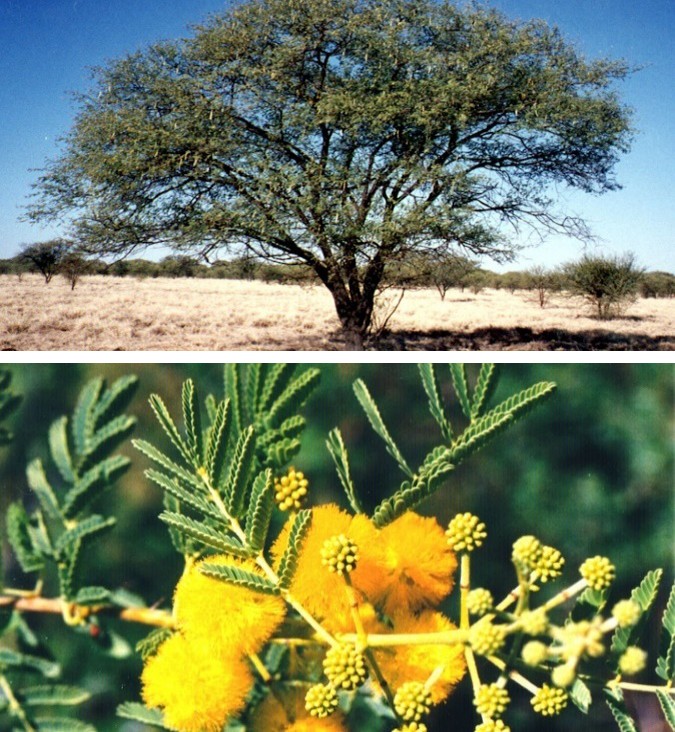
Source: Brisbane city council https://weeds.brisbane.qld.gov.au/weeds/prickly-acacia. Figure 1: Graphical representation of A. nilotica (flowers- pods- seeds).
Botanical Description
Acacia nilotica (L.) Wild ex. Del. belongs to family Fabaceae (subfamily: Mimosoideae) of genus Acacia comprising an excess of 1350 species [14] is a medium sized tree, 15–18 m tall, with a stem diameter range from 2–3 m and it is nearly symmetrical crown. Barkis fissured, dark brown to blackish in color with profound vertical groove sex posing inner gray– pinkish slash, exuding a reddish low-quality gum [15]. Young trees possess paired thorns at the nodes of stem which are roughly straight, slightly pointing backwards, 3–12 pairs in number and 5–7; 5cm in length. The leaves are of compound type with 3–6 pairs of pinnae; 4.5–7 cm long and 10–30 pairs of leaflets [16]. Bright golden–yellow flowers are located at the end of branches in globulous heads, 1.2–1.5 cm in diameter setup either auxiliary or whorly on 2–3 cm long ped-uncles [17]. Hairy, thick, and strongly constricted pods are white grayish in color [18].
Distribution
A. nilotica is naturally widespread in the drier areas of Africa, from Senegal to Egypt and down to South Africa, and in Asia from Arabia eastward to India, Burma, and Sri Lanka as shown in Figure 2. The largest tracts are found in Sind.
It is distributed throughout the larger part of India in forest areas, roadsides, farmlands, tank shores, agricultural fields, village grazing lands, wastelands, bunds, along the national highways and railway lines. Mostly it occurs as an isolated tree and rarely found in patches to a limited extent in forests [15]. It has been widely planted on farms throughout the plains of the Indian subcontinent. It is a species of Southern Tropical dry deciduous forests and Southern Tropical thorn forests as distinguished by Champion HG, et al. [19].
In Egypt, the plant grows on the banks of canals crossing the Delta and the Nile Valley. It was cultivated in the past, though cultivation has stopped. The relicts of this species are occasionally seen along the canals near the Nile River. Acacia groves growing in the Nile region in Egypt were replaced centuries ago by the date palm groves [20, 21, 22]. Despite this, the tree was reputed for its value as a source for agricultural tools such as the hoe, plough, etc. With the mechanization of agriculture, the plant was neglected. Moreover, the need of the land occupied by the trees, caused them to be removed [23]. Nowadays, the tree isn’t as common as before. It might be considered as endangered, especially due to its geographical scarcity.
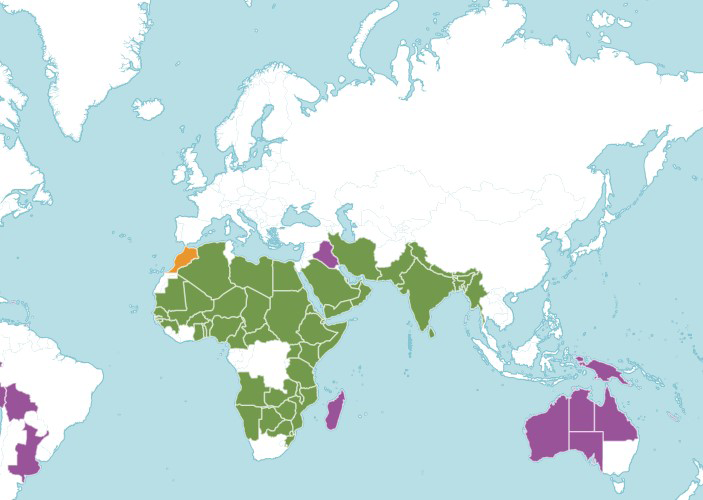
Source: Plants of the world online https://powo.science.kew.org/taxon/urn:lsid:ipni.org:names:77089275-1#distributions. Figure 2: Map shows Acacia nilotica distribution that have a widespread range in the drier areas of Africa, native species represented by green color, introduced species represented by purple color, and doubtful species represented by orange.
Ecology
There is some evidence that A. nilotica is a weed in its native habitat e.g. South Africa [24], but in other areas it is planted for forestry or reclamation of degraded land [25, 26]. The ecological implication of using A. nilotica as a browse source while maintaining in appropriate stocking rates is land degradation. It grows well in two types of soils i.e. riverian alluvial soil and black cotton soil. This species grows on saline, alkaline soils, and those with calcareous pans. A. nilotica can be grown in both moist and arid areas because of the fact that it can withstand to extremes of temperatures (>50°C) and moisture stress. Micro propagation and symbiotic relationship with rhizobium and mycorrhizal fungi makes it one of the important species for increasing soil fertility [27, 28] and is said to be a possible way for reproducing many plants for conventional breeding, reforestation, and mass propagation. It is frost tender when young and trees of age classes are adversely disturbed by conditions of severe frost. It is fire tender and both seedlings and saplings are adversely disturbed by fire. The average annual rainfall varies from 250-1500 mm [15].
In the wet season, A. nilotica germinates after rain. Some seeds may still germinate up to 15 years after seed drop, even though 95% of seeds die after two years. When seeds are disturbed, such as by fire or going through an animal’s digestive system, germination is improved. In open grasslands, seedlings grow more slowly, but close to water, they grow quickly. Trees can flower and fruit two to three years after germination, and more quickly after high rainfall years. Pods form between July and December, and it flowers between March and June. The majority of leaf fall occurs during this arid month of June through November [15].
The Acacia Tree among Ancient Egyptians
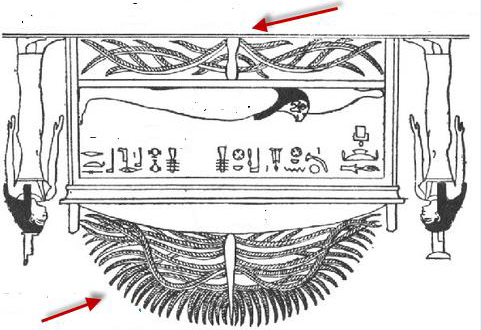
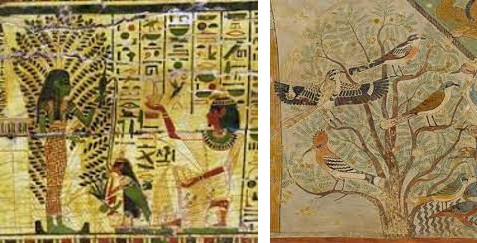
Acacia nilotica has great importance on two levels the religious and worldly levels, on the religious level it is considered one of the sacred trees, it was associated with Osiris, so the texts mentioned that when Osiris died, and he was placed in a coffin that was made of acacia wood, and that the tree grew around his body to hide it as in Figure 3a [29]. It was also mentioned in the Pyramid Texts that the acacia tree was a sacred tree to God Hur, the tree was also associated with a number of goddesses, such as Izeh, Nephthys, and Sekhmet, who were known as acacia goddesses, it was also mentioned in some religious books such as the Pyramid Texts and the texts of the coffins, and the Book of Dead. The acacia tree had a structure that played an important role in religion, especially in burial rituals [30]. Some women’s groups used acacia tree in offering sacrifices and performing funeral dances [31]. The acacia tree played an important role in protection, as it was mentioned in paragraph 436 of the Pyramid Texts that the acacia tree was a sacred tree for the god Hur and that he took it shelter from lions [32].
The acacia tree has been used in many industries, such as the manufacture of statues, paintings (Figure 4), chairs, and coffins. The acacia tree was used to make a large number of statues, as a painted wooden statue made of acacia wood dating back to the Fourth Dynasty was found depicting a person and his wife as in Figure 3b [33]. A statue of “Merit” made of acacia wood and was found in his tomb at Saqqara, which back to the Fifth Dynasty [34]. Wood of Acacia nilotica is used in the manufacture of coffins due to its hardness and resistance for fungi, it has been used throughout the ancient Egyptian periods and was widely used in the family Sixth to Twelfth Dynasty [35].
The bark of the Acacia nilotica tree was also used for tanning, and it was found in the town of Al-Jabalain in Upper Egypt on a leather tanned with the juice of the horns of the acacia tree, which contains tannins, at a rate of about 30%, which is used in tanning, it was back to Pre-dynastic era, preserved in the Turin Museum [36]. The ancient Egyptians also knew how to color tanned leather in different colors, the most common of which was red, yellow, and green color [37]. The acacia tree was an important source to obtain the yellow and blue colors, it also used some mordants to fix color or dye, such as alum, vinegar, urine, as well as the infusion of some plants [38]. The acacia tree was also an important source of gum, and a statue depicting the god Osiris was found, it was back to the late era and acacia glue also was used in statues to fix the colors [39]. Its gum was used in the textile industry and leather adhesives, as well as in medicine [40].
The Use of Acacia nilotica Tree Products in Ancient Egyptian Medicine
Acacia nilotica tree products were used in different purposes. Modern medicine has proven that the acacia tree is generally a medicinal tree that has antimicrobial properties and perhaps the ancient Egyptian realized this and made it a container to store mummified entrails [41]. Acacia was mentioned in the Ebers Papyrus for killing a belly worms, expel pus from the abdomen, and treatment of hemorrhoids and anal diseases, As also stated in the Edwin Smith Papyrus, if you examine a person who complains about his anus while standing or sitting, and he is in a lot of pain from contractions: Treatment includes a very protective ointment made from acacia leaves. Seeds and leaves of acacia also were used in treatment of women’s diseases, as Ebers’s papyrus says that “To cause a woman to stop being pregnant, be it one, two or three years: part of acacia, colocynth, dates, finely ground in a hin of honey, fibers are moistened therewith, introduced into her vagina.
Chemical Composition of Different Parts of Acacia nilotica
Leaves: Phytochemical screening of ethanolic extracts revealed that the leaves of Acacia nilotica contain tannins, alkaloids, sterols; and there are no glycosides, saponins, resins or flavonoids substances were detected [42]. Ethyl gallate was isolated from the ethanol leaves extract of A. nilotica through se-quential extraction procedure completed by TLC and HPLC analysis [43]. The qualitative and quantitative GC/ MS and HPLC analyses showed presence of γ- Sitosterol from leaves extract [44]. Mrityunjoy D, et al. [45] indicated the presence of alkaloids, saponins, cardiac glycosides, tannins, and flavonoids in leaves. Root: A screening study of the ethanolic extracts of the roots of Acacia nilotica indicated the presence of sterols and tannins; and the aqueous extract contains tannins, saponins, flavonoids, terpenes, sterols, phenols, alkaloids and anthraquinones; and Lukman, et al. indicate the presence of saponins, flavonoids, terpenes, tannins, phenols, alkaloids, and anthraquinones [42, 46]. Pods: Sabah EE, et al. [47] used a different solvent to indicate the presence of alkaloids, flavonoid, saponins, tannin, cardiac glycoside, sterol, and carbohydrate. They used ethanol, water, and petroleum ether extracts. water and ethanol showed positive results of alkaloids, flavonoids, tannins, saponins and carbohydrate; and sterol was indicated by ethanol and petroleum ether extracts; and no saponins or carbohydrate were indicated by using of petroleum ether. In addition, Oladosu P, et al. [36] indicated the presence of alkaloids, saponins, tannins, and carbohydrate by using an aqueous methanol extract. Anti-uveal melanoma activity- guided fractionation of the methanol pods extract resulted in the isolation of 1-O-galloyl-β-D-glucose, 1,6-di-O-galloyl- β-D-glucose, digallic acid, and gallocatechin-5-O-gallate [48]. Bark: Phytochemical analysis of ethanol and petroleum ether extract of the stem bark of Acacia nilotica exposed that the plant comprises terpenoids, tannins, alkaloids, saponins, and glycosides [49, 50]. The carbohydrates and anthraquinone were detected in ethanol extract by Deshpande N [50]; while the results described by Okoro, et al. [42] revealed that, the ethanolic extracts of Acacia nilotica possess sterolsm and tannins; no alkaloids, saponins or glycosides.
Biological Activity of Acacia nilotica
Antimicrobial Activity: According to Unani traditional medicine, A. nilotica fruit is used to treat venereal diseases, diarrhea, dysentery, leprosy, colds, bronchitis, pneumonia, ophthalmia, and sore throats. The decoction of the bark is largely utilized as an astringent douche in sozak (gonorrhea), waram al-mathana (cystitis), waram-al-mahbil (vaginitis), sayalan al-rahim (leucorrhoea) [51]. A study was investigated the in vitro antibacterial activity of Acacia nilotica methanolic fruits extract against clinical isolates performed by cup-plate agar diffusion method against five gram-negative bacteria (E. coli, S. flexneri, Salmonella typhi, Pseudomonas aeruginosa, and Klebsiella pneumonia) and 2 grampositive bacteria i.e., (Listeria monocytogenes and Bacillus cereus) [52]. Anti-inflammatory Activity: Traditionally, A. nilotica is used in numerous inflammatory conditions like bronchitis, pharyngitis, vaginitis, and conjunctivitis as it possesses (anti- inflammatory) property. The decoction of the bark is locally useful in cystitis, and vaginitis [53]. The juice of bark mixed with breast milk is dropped into the eye in conjunctivitis [53, 54]. The ointment of the young leaf around the eyes is beneficial in Ashob-ichashm harr (Acute conjunctivitis) [55]. It is used in ophthalmia, tender leaf fried in ghee and wrapped around the eyes in chronic ophthalmia and subconjunctival haemorrhage [54]. The bruised leaves are useful to sore eyes in children [55]. The tender leaves growing tops rubbed into a paste with sugar and water and given two times a day are useful in cough [52]. The bark is also utilized in asthma and bronchitis [55]. Anticancer Activity: Cancer is a multifactorial disease and a major worldwide health problem. According to earlier research, plants and their components can modulate cellular proliferation, tumor suppressor genes, apoptosis, and other processes to exhibit inhibitory effects on the growth of malignant cells, etc. It contains flavonoids and various other components that play an important function in the inhibition of cancer development. The experiment was made to assess the anticancer activity of aqueous extracts of gum, flower, and leaves of A. nilotica in 7,12-dimethylbenz(a)anthracene (DMBA) induced skin papallomegenesis in Swiss albino mice. The results showed a significant reduction in the values of tumour burden, tumour incidence [56]. Antioxidant Activity: One of the primary factors in the development of many diseases is reactive oxygen species, also known as free radicals. Free radicals are neutralized by antioxidants, frequently before they reach their target cells. There have been reports of antioxidant activity in medicinal plants. An important investigation was conducted to assess the in vitro antioxidant activity of eight distinct crude extracts from A. nilotica pods. The outcomes clearly showed that A. nilotica green pods are a significant natural antioxidant source [57]. Other results indicate that umbelliferone a coumarin derivative studied in vitro and exhibited a higher antioxidant activity [17]. Antimalarial Potential: A study was performed to investigate the anti-plasmodium activity of aqueous and methanolic root extract of Acacia nilotica in Plasmodium Berghei infected mice. The results revealed significant activity against chloroquine-sensitive strains [58]. Ethyl acetate extract of its root exhibited the highest activity against P. falciparum. Another in vitro study evaluates the antimalarial activities of leaves, pods and bark extracts of A. nilotica. The results revealed that it had an antimalarial effect as all extracts inhibited the development of mature schizont indicating schizonticide activity against P. falciparum [59]. Analgesic and Antipyretic Activity: A. nilotica has traditionally been found to be a strong analgesic when used to treat ocular discomfort. The young leaves are cooked in ghee and wrapped over the eyes in cases of chronic ophthalmia and subconjunctival hemorrhage [60]. Modern study has also shown that it possesses analgesic and antipyretic properties. One study investigated the antipyretic and analgesic properties of an aqueous root extract of A. nilotica in Wistar albino rat models. The extract was tested for antipyretic and analgesic efficacy in comparison to acetaminophen. At 200 and 400 mg/kg body weight, the extract reduces rats’ rectal temperature significantly in a dose-dependent manner. Significant analgesic activity was also noted, compared to acetaminophen [61, 62, 63, 64].
Conclusion
Acacia nilotica is an important ornamental and therapeutic trees in tropical and subtropical areas. It was an attractive plant to the ancient Egyptians because of its wood and chemical components. It was used to build boats and warships, according to Herodotus, who was traveling in Egypt in the fifth century B.C. It is also a source of numerous active secondary metabolites, which might give viable candidates for therapeutic development with the best chance of success in the near future. Acacia nilotica has been used in traditional medicine for thousands of years to cure a variety of ailments. Antibacterial, antifungal, antioxidant, antidiabetic, antihypertensive, antispasmodic, antiviral, anti plasmodial analgesic, antipyretic, and galactagogue properties have been shown in experimental research. Several scientific research supported the theories of the old medical system.
References
-
Mohamed MH, Ahmed NM (2021) The aS-Tree in Ancient Egypt. Journal of the Faculty of Tourism and Hotels- University of Sadat City. 5(2/1).
-
Tackholm V (1976) Ancient Egypt, landscape, flora, and agriculture. In The Nile, biology of an ancient river 29: 51-68.
-
Malleson C (2020) Flora of ancient Egypt. In: Shaw I, Bloxam E (Eds.), The Oxford Handbook of Egyptology, Oxford Handbooks, Oxford, pp: 1312.
-
Elshiwy R (2023) The Nbs-Tree in Ancient Egypt: Significance and Uses. Scientific journal of the Faculty of Tourism and Hotels, Alexandria University 20(1): 1-24.
-
Farzana MUZN, Tharique IA, Sultana A (2014) A review of ethnomedicine, phytochemical and pharmacological activities of _Acacia nilotica_ (Linn) wild. Journal of Pharmacognosy and Phytochemistry 3(1): 84-90.
-
Raj A, haokip V, Chandrawanshi S (2015) _Acacia nilotica_: a multipurpose tree and source of Indian gum Arabic, South Indian Journal of Biological Sciences 1(2): 66-69.
-
Abd El-Aziz AM, Awad NE, Seida AA, El-khayat Z (2013) Biological and chemical evaluation of the use of _Acacia_ _nilotica_ (L.) in the Egyptian traditional medicine. Int Bull Drug Res 3(5): 1-19.
-
Kaushal K (2017) Review of Pharmacological Activities of _Acacia nilotica_ (Linn) willd W. S. R to Osteoporosis. J Adv Res Ayur Yoga Unani Sidd Homeo 4(1&2): 3-7.
-
National Academy of Sciences (1980) Firewood crops; shrubs and tree species for energy production. National Academy Press, USA 2: 237.
-
Abdel-Ghany G, Zalat S, Abo-Ghalia A, Semida F (2007) Seed Infestation and Insect Damage of _Acacia tortilis_ Pods inWadi Mandar, Saint Catherine Protectorate, South Sinai, Egypt. Catrina: The International Journal of Environmental Sciences 2(2): 125-132.
-
Moustafa A, Wahab AER, Seleem T, Zaghloul M, Hamid AA (2015) Spatial variation in long-term population changes detection of _Acacia tortilis_ subsp. raddiana in arid environment using RS and GIS. Catrina: The International Journal of Environmental Sciences 14(1): 67-75.
-
Jame R (2018) Phytochemical and Pharmacological Uses of Acacia Nilotica-A Review. International Journal of Bioorganic Chemistry 3(2): 6-10.
-
Saeedi R, Sultana A, Rahman K (2020) Medicinal properties of different parts of _Acacia nilotica_ linn (babul), its phytoconstituents and diverse pharmacological activities. International Journal of Pharmacy and Pharmaceutical Sciences 12(2): 8-14.
-
Seigler DS (2003) Phytochemistry of Acacia—sensu lato. Biochem Syst Ecol 31(8): 845-873.
-
Bargali K, Bargali SS (2009) _Acacia nilotica_: a multipurpose leguminous plant. Nature and Science, 7(4): 11-19.
-
Ali A, Akhtar N, Khan BA, Khan MS, Rasul A, et al. (2012) _Acacia nilotica_: a plant of multipurpose medicinal uses. J Med Plant Res 6(9): 1492-1496.
-
Singh R, Singh B, Singh S, Kumar N, Kumar S, et al. (2010) Umbelliferone – An antioxidant isolated from _Acacia_ _nilotica_ (L.) willd. ex. del. Food Chem 120(3): 825-830.
-
Baravkar AA, Kale RN, Patil RN, Sawant SD (2008) Pharmaceutical and biological evaluation off or mulated cream of methanolic extract of _Acacia nilotica_ leaves. Res J Pharm Technol 1(4): 481-483.
-
Champion HG, Seth SK (1968) A revised survey of the forest types of India. The manager Govt of India press Nasik.
-
Moustafa AA, Zaghloul MS, Mossad DF (2019) Plant diversity in Saint Catherine, South Sinai, Egypt, Global Scientific Journal 7(8): 1416-1433.
-
Batanouny KH (1999) Wild Medicinal Plants in Egypt (With contribution of Abortable E, Shabana M & Soliman F). With support of the Swiss Development Co-operation (SDC). Academy of Scientific Research and Technology, Egypt. The World Conservation Union (IUCN), Switzerland, pp: 98-101.
-
Boulos L (2000) Flora of Egypt. Al Hadara Publishing, Cairo, Egypt, 1: 168-170.
-
Al-Alfy NS, Moustafa ARM, Alotaibi MO, Mansour SR (2019) Impact of Climate Change on Pistacia khinjuk as a Medicinal Plant in Egypt and Saudi Arabia. Appl Sci Res Rev 6(1): 1-8.
-
Holm LG, Pancho JV, Herberger JP, Plucknett DL (1979) A Geographical Atlas of World Weeds. John Wiley and Sons, New York.
-
Puri DN, Khybri ML (1995) Economics of Chambal ravine afforestation. Indian Forester 101(8): 448-451.
-
Shetty KAB (1977) Social forestry in Tamil Nadu. Indian Farming 26: 82.
-
Dhabhai K, Batra A (2012) Physiological and phylogenetic analysis of rhizobia isolated from _Acacia nilotica_ L. Afr J Biotechnol 11: 1386-1390.
-
Rajendren K, Mohan E (2014) Tree species with potential of nitrogen fixation in agroforestry system adopted by farmers in semi-arid region of Southern India Biores. Bull 3: 1-4.
-
Shanon B (2008) Biblical Entheogens: a Speculative Hypothesis Time and Mind. The Journal of Archaeology Consciousness and Culture 1(1): 51-74.
-
Edel E Das (2006) Acacia house and its role in the funerary rites of ancient Egypt. In: Hannig R, Handwörterbuch G, et al. (Eds.), pp: 893.
-
Fischer HG (2000) Egyptian Women of the old kingdom and of the Heracleopolitan Period. In: 2nd (Edn.), New York, pp: 27.
-
Buhl ML (2005) The Goddesses of the Egyptian Tree Cult. Chicago Journal 6(2): 80-97.
-
Hassaan GA (2016) Mechanical Engineering In ancient Egypt Part XXXI: Human Wooden Statues (predynastic to 13th dynasty). World Journal of Engineering Research and Technology 2(6): 109 -124.
-
Batten KE (2011) Restoration Earth. Journal for the Study of Nature Civilization 1: 65.
-
Lacau MP (1906) Sarcophagi Before the New Kingdom. CG Le Caire, pp: 36.
-
Oladosu P, Samuel BB, Okhale SE, Ibrahim K, Okogun JI (2007) Antitubercular activity of the dried fruits of _Acacia_ _nilotica_. Journal of Phytomedicine and Therapeutics 12: 76-79.
-
Walter Emery (1963) Egypt in the Antique Era. In: Rashid N, Muhammad KD (Eds.), Egypt, pp: 220-221.
-
William Nazir (1962) Livestock among the Ancient Egyptians, pp: 192
-
Casadio F (2005) From the Molecular to the Spectacular. A Statue of Osiris through the Eyes of a Scientist, a Conservator, and a Curator, Art Institute of Chicago Museum Studies 31(2): 10.
-
Baumann (1960) The Botanical Aspects. pp: 99.
-
Verma S (2016) A review on ethnomedicinal plant _Acacia nilotica_ (Linn.) wild. Journal of Pharmacognosy and Photochemistry 5(2): 242.
-
Okoro SO, Kawo AH, Arzai AH (2014) Phytochemical Screening, Antibacterial and Toxicological Activities of _Acacia nilotica_ Extracts. Bayero Journal of Pure and Applied Sciences 7(1): 105-115.
-
Kalaivani T, Rajasekaran C, Mathew L (2011) Free radicals cavenging, cytotoxic, and hemolytic activities of anactive antioxidant compound ethyl gallate from leaves of _Acacia nilotica_ (L.) Wild. ex Delile Subsp. Indica (Benth) Brenan. J Food Sci 76(6): 1144-1149.
-
Sundarraja S, Thangama R, Sreevania V, Kaverib K, Gunasekaranb P, et al. (2012) γ-Sitosterol from _Acacia_ _nilotica_ L. induces G2/M cell cycle arrest and apoptosis through c-Myc suppressionin MCF-7and A549 cells. J Ethnopharmacol 141(3): 803-809.
-
Das M, Rahman S, Maniruzzaman, Uddin MB (2016) evaluation of phytochemical, in vitro antibacterial and cytotoxic properties of ethanol extract of _Acacia nilotica_ (L) leaves. Indo American Journal of Pharmaceutical Sciences 3(12): 1492-1497.
-
Alli LA, Adesokan AA, Salawu OA, Akanji MA, Tijani AY (2011) Anti-plasmodial activity of aqueous root extract of _Acacia nilotica_. African Journal of Biochemistry Research 5(7): 214-219.
-
Sabah EE, Mustafa B, Jalal EM, Mekaiel AI (2017) Phytochemical screening and antibacterial activity of _Acacia nilotica_. European Journal of Biomedical and Pharmaceutical Sciences 4(8): 906-912.
-
Osman MAEN, Emil CR, Franz FR, Franz S, Ute E, et al. (1992) Antimicrobial activity of _Acacia nilotica_ (L.) Willd. ex Del. var. nilotica (Mimosaceae). Journal of Ethnopharmacology 37(1): 77-79.
-
Banso A (2009) Phytochemical and antibacterial investigation of bark extracts of _Acacia nilotica_. Journal of Medicinal Plants Research 3(2): 082-085.
-
Deshpande SN (2013) Preliminary Phytochemical Analysis and in vitro investigation of antibacterial activity of _Acacia nilotica_ against clinical isolates. Journal of Pharmacognosy and Phytochemistry 1(5): 23-27.
-
Din MKA (2007) Ilmul Adwiya Nafeesi. India: I’jaz Publishing House, pp: 645.
-
Gmaraldeen SM, Magzoub AA, Badri AM, Garbi MI, Saleh M (2016) Antibacterial activity of _Acacia nilotica_ fruits extract against pathogenic bacteria. Int J Appl Res 2: 103-106.
-
(2009) Indian Materia Medica. In: Nandkarni KM (Eds.), Mumbai: Saurabh Printers, 1: 9-10.
-
Ghani N, Khazainul Advia (2001) New Delhi: Idarae Kitabus Shifa. pp: 339-41.
-
Kirtikar KR, Basu BD (2012) Indian medicinal plants. 2nd (Edn.), Dehradun: International Book Distributors, pp: 922-924.
-
Meena PD, Kaushik P, Shukla S, Soni AK, Kumar M, et al. (2006) Anticancer and antimutagenic properties of _Acacia nilotica_ (Linn.) on 7, 12-dimethylbenz (a) anthracene-induced skin papillamagenesis in swiss albino mice. Asian Pac J Cancer Prev 7(4): 627-632.
-
Singh BN, Singh BR, Singh RL, Prakash D, Sarma BK, et al. (2009) Antioxidant and anti-quorum sensing activities of green pod of _Acacia nilotica_ L. Food Chem Toxicol 47(4): 778-786.
-
de Souza NB, Carmo AM, da Silva AD, Franca TC, Krettli AU (2014). Antiplasmodial activity of chloroquine analogs against chloroquine-resistant parasites docking studies and mechanism of drug action. Malar J 13: 469.
-
Sadiq MB, Tharaphan P, Chotivanich K, Tarning J, Anal K (2017) _In vitro_ antioxidant and antimalarial activities of leaves, pods and bark extracts of _Acacia nilotica_ (L.) del. BMC Complement Altern Med 17(1): 372.
-
Khan A (2012) Muhit-i-Azam (Urdu Trans). In 1st (Edn.), New Delhi: Central Council of Research of Unani Medicine, pp: 583-584.
-
Alli LA, Adesokan AA, Salawu OA, Akanji MA, Tijani AY (2011) Anti-plasmodial activity of aqueous root extract of _Acacia nilotica_. African Journal of Biochemistry Research 5(7): 214-219.
-
Dixon DM (1974) Timber in ancient Egypt. The Commonwealth Forestry Review 53(3): 205-209.
-
Naguib MI (1959) Egypt and the Ancient Near East. In: 4th (Edn.), Ancient Egyptian Civilization. Modern Publications Foundation, pp: 273.
-
Allen JP (2005) The Ancient Egyptian Pyramid Texts. In: Manuelian PD (Ed.), Atlanta: Society of Biblical Literature, pp: 149.
- Lessons to Learn: Trees are More than the Lungs of the World
- Community Forestry Enterprises as a Model for Sustainable Forest Development: The Case Of The "Baja Tarahumara" in Chihuahua, Mexico
- Ecological and Socio-Economic Impacts of Chromolaena odorata and Mesosphaerum suaveolens, Two Invasive Alien Species in Central and Southern Benin, West Africa
- Epigenetic Sustainability: Modeling the Human Factor as a Natural Resource through Science 4.0 and the NR3C1 Biological Pilot
- Growth-at-Risk: A Framework for Assessing Economic Vulnerability
- The Rural Territory as a Socioecological System for the Management of Public Policy for Sustainable Rural Development