
Art Therapy & Authority: Anger, Rebellion and Resilience
For centuries, authorities have been patriarchal and vertical, following the law of the strongest in a binary vision of world, life and human being. If limitless and unquestionable, authority inevitably collapses into abuse and destruction. Facing the danger of authoritarianism, the democratic society moves to develop more humanistic organisation by exploring the possibilities of the distributed leadership. Art offers a specifically deep response to inner and outer conflicts. Based on the creative process, arts therapies address either individual and community violence and dictatorship. When the therapeutic relationship is collaborative and inclusive, art therapy contributes to the evolution of current forms of authority to new ones. Resisting and preventing power abuse is a main object if in therapy and education. Art and art therapy use positive anger to help treating trauma, enhance resilience and globally support mental and physical health.
Preamble
Questions on authority are difficult to ask and to answer, yet essential. For centuries, authority has been vertical and almost exclusively male, applying the law of the strongest as a « natural » force. Following a binary vision of world, life and human being, the law of the strongest certainly exists - but so do the laws of numbers and of the adaptive intelligence.
A major anthropological evolution is underway. The archaïc patriarcal world is proving its limits and destructiveness either inside the human society and in dealing with the living and the non-living world. In going forward, humans are actors/makers as much as designers/ theorists, both beneficiaries and potential victims. But the future is not yet done [1].
The complexity of current phenomena makes our thinking necessarily creative, digressive, sometimes transgressive. And also our actions – because, in times of crisis, dissent becomes opposition, opposites go into conflict, polarities get radical, potential rifts breed deep cleavages... War is here. Our world is shaking, cracking, flooding, overflowing, collapsing... So do we chose to moan about a prestigious past identity that is definitively over - and sometimes try to impose it by brutality and violence? Or to face an unknown future promising new - and hopefully better-perspectives? The response might seem obvious… unfortunately, more often than not, human individuals and communities are stuck in fateful mental attitudes. Education and therapy are meant to help positive evolution - and art therapy is part of help.
Art, Therapy & Authority
For more than a century by now, art went beyond its traditional regulating function of individual and social experience, to one of revolutionary focus on expressive insight and/or subversive message. Not only in systems that still use reeducation camps, psychiatric-political asylums, forced educational work colonies and oriented university courses… but as well in democratic countries, art is supporting rebellion [2]. Various forms of crude authority- which do not conceal their intentions and methods yet disguising the reality by propaganda - as well as more subtle manipulations are flourishing. But we also hear from many people whose physical and mental courage compels our admiration.
If well guided through art therapy, the expressions of anger, imprecations, creative transgressions help reacting to fear and sideration, thus enhancing resistance and rebellion. Most important, the art therapeutic relationship explores new ways to deal with hierarchy and authority issues. It implements a collaborative/inclusive working style contributing to the research on theory and practice of the distributed leadership.1 The art therapeutic relationship is also healing by offering the experience of creating the ME- Space2 to everyone.
1 For distributed leadership, see the references at the end of the article.
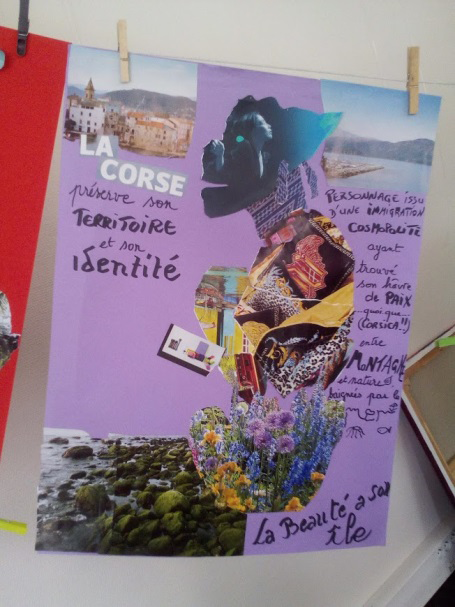
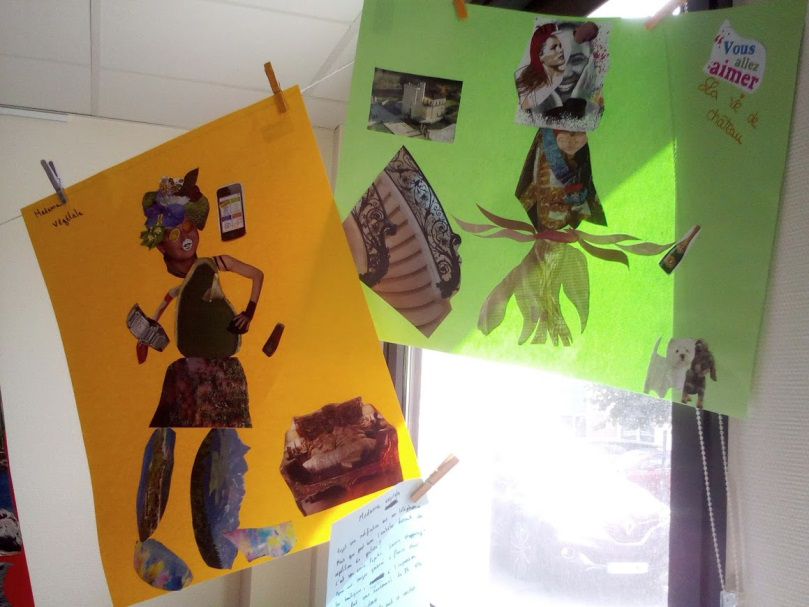
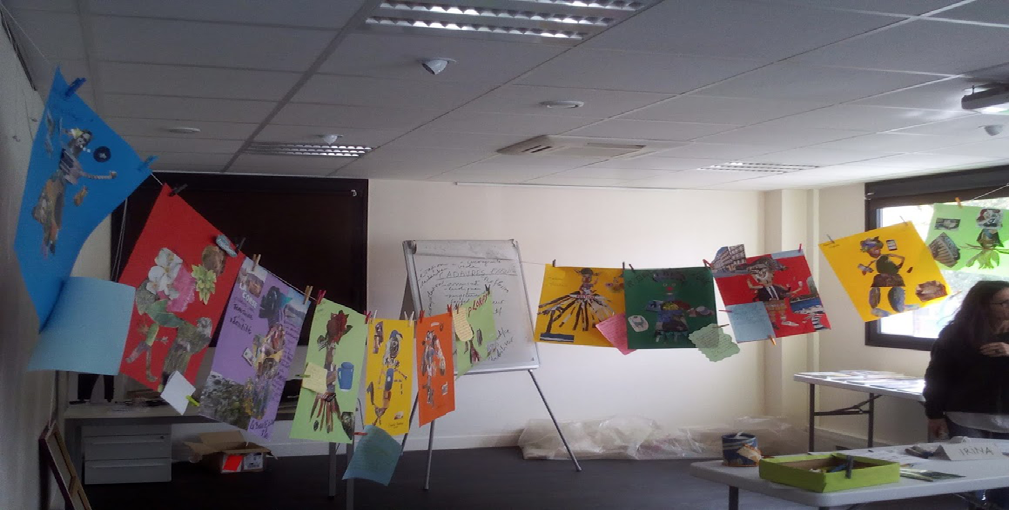
2 Creating « ME » Space-Space and the Flow of Ink, Prof. Rainbow Ho and Joanna To, The Body-Mind-Spirit of Self-care Series by IACAET, June An interesting experience of leadership, authority and resilience through art therapy is the Exquisite Corpses group protocol3. A group of 5 work with images choosen in magazines. Each person has a big colored sheet of paper. The common theme is the body scheme. There are 6 steps in this collage creative proces:
- Realizing a head/Starting,
- Realizing the upper half of the body/Continuing,
- Finishing the body with the lower part/Ending,
- Adding an «essential object » to the created character/ Attachement,
- Adding some elements of space and time/Location,
- Finding a name and writing a short story/Identity.
The sheets of paper are travelling from each participant to the neighbouring one at each step. So each person starts one group work and gets it back at the end of the process for completing the 7th step, which is an essential re- appropriation [3, 4, 5]. The last part of the workshop offers time for showing and sharing. The main objective of this creative playing is to exercise the capacity of giving and receiving, as well as of accepting loss. It is a visual reminder of the necessity of negociation, tolerance and distributed leadership, a pertinent tool for family and systemic art therapy, for staff self-care and for education. Different variants of this protocol can be adapted related to the age and the condition of clients.
19, 2022.
3 Peut-on faire parler les cadavres ? Oui, s’ils sont « excquis »!, Irina Katz-Mazilu, Silences subis, silences choisis, 14ème revue annuelle de la FFAT, 2014.
Positive Anger In Art & Art Therapy
Scaring demographic, climatic, economic and sanitary dangers put us on edge, but there is nothing like fear to arouse the spectacular adaptive intelligence of the human species. Let us put it to work without getting overwhelmed by paralysing catastrophism. We also can revisit the concept of resilience. Individual resilience needs to be seen as part of wider strata. Dr. Contamin E [6] describes five levels of relisience : personal, familial, collective, national and eco- systemic. It is also important to reconsider the issues of adaptive behaviors. They might result in resignation [7].
As the individuals need to cope with social life and sometimes even have to undergo inacceptable abuse, art therapy offers the opportunity to express deep and authentic feelings. Negative feelings such as anger, fear or despair may turn in positive creative energy before being evacuated. For example, one day in a workshop a woman has been sitting for more than one hour in silently painting a colorful and beautiful image. Suddenly, in the last five minutes of the session, she stood up, took another sheet of paper, mixed all the remaining gouache material, put it furiously on the whole surface, took a painting knife and scarified the image…then she said : This is my true state of mind today ! I replied: both are needed, first calming down and only then let go out the anger - without being yourself destroyed by its violence…
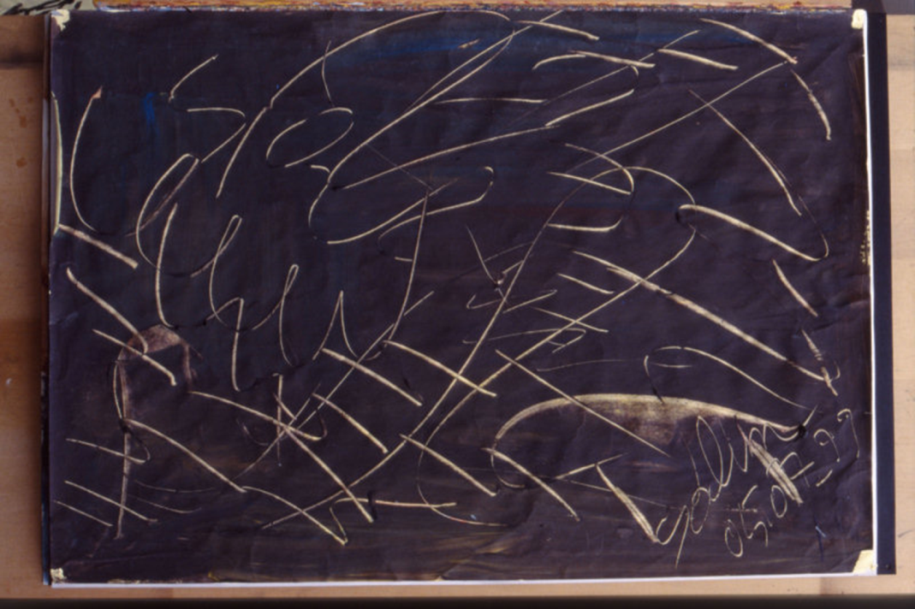
Sometimes the opposite happens, the anger bursting previously to a new and more balanced state of mind.
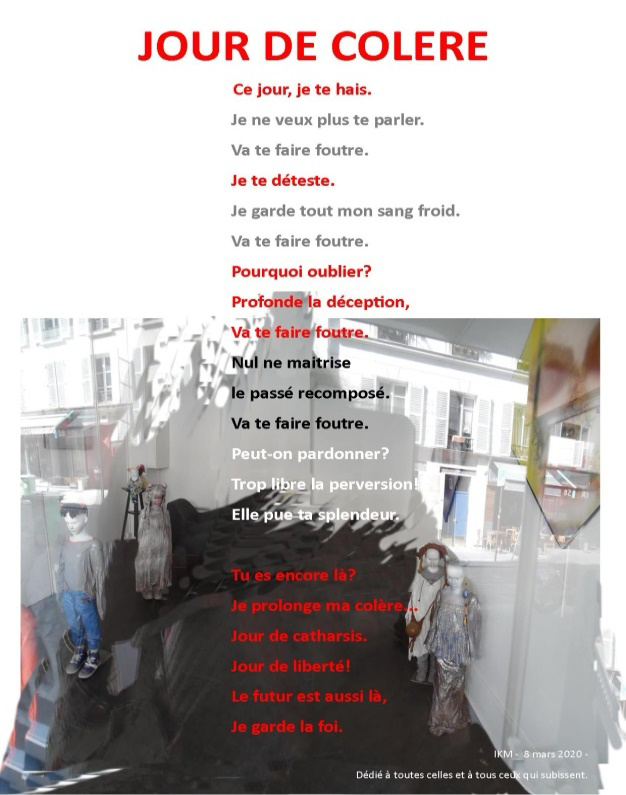
The basic fear of not surviving, of perishing from hunger, thirst, cold, absence… is intertwined with the psychic correlates of dependence and attachment: abandon, oblivion, voluntary or involuntary deprivation and abuse… This is our Achilles’ heel, our essential fragility, but also the most powerful «search engine». It is legitimate and drives us forward to better understanding and acting. Only too often this motor happens to be perverted by narcissic distortions driving to authoritarian domination, abuse and dictatorship, fakes and manipulation.
Conclusion: Art Therapy is Directed to Future
Major changes are underway in current views on gender, race, culture, age, ethnicity, religion, in science, art and philosophy. Important upheavals challenge us to balance destabilising environmental-both natural and socal- evolutions with our need of stabilising rationality and order. We are facing un unbelievable challenge from technology, from artificial intelligence potential excess, from scientific and technical findings transformed in weapons…Facing the constantly increasing risks, ethical balance is more and more essential. Art making, either in self-care or in therapy, helps enhance personal and social balance. The end of absolute patriarchal order-givers would be a great step in the history of humanity. Blind obedience enhances the extreme cruelty of humans when they feel either liable to authority or in fusion with the crowd. But sooner or later, dictators and empires collapse. Art, education and therapy are three major levers for a pacified future.
References
-
Jones S (2014) Distributed leadership: A critical analysis. Sandra Jones RMIT University, Australia, Leadership 10(2) : 129-141.
-
Developing Distributed Leadership through Arts- Based and Embodied Methods : An Evaluation of the Romanian Action Research Trials of Narrative Writing and Expression, Romania-University of Iasi, Ligia Boca, Elena Seghedin, Ovidiu Gavrilovici, ENABLES Project.
-
Developing Distributed Leadership through Arts-Based and Embodied Methods: An Evaluation of the Austrian Action Research Trials of Vignettes and Design Thinking Method, Austria-University of Innsbruck, Livia Jesacher- Roessler, Petra Buhl, ENABLES Project.
-
An Organizational Perspective of Distributed Leadership: A Portrait of a Middle School, Micki M. Caskey, Ph.D., Editor Portland State University Portland, RMLE 3(5).
-
Tian M (2018) A Conceptual and Methodological Framework of Arts-based Approach for Investigating Distributed Leadership. In European Conference on Educational Research (ECER).
-
Contamin E (2021) The 5 circles of resilience. Larousse.
-
Ribault T (2021) Against resilience. L’échappée.
- Systematic Review and Meta-analysis Investigating the Prevalence of Depression, Anxiety, Loneliness and Help seeking among International Students
- Family Experiences and their Interpretations as a Source of Adaptive Behaviour in Young Adults: A Qualitative Model of Adaptive Behaviour
- The Development of Responsibility in Teenage Mothers: A Qualitative Model
- Post-Truth Reality: Worldwide Infodemia and Mental Health Concerns during and Post COVID-19 Pandemic Scenarios
- Psycho-Emotional Rehabilitating Means of Overcoming Extreme and Stressful Impact
- The Paradox of Humbleness, Arrogance and the Concept of Fluid Individuality