
Therapeutic Interventions- Potential of Phytochemicals against Coronavirus-Associated Pulmonary Disease
In the meantime, the epidemic of the Covid-19 virus (COVID-19) in December 2019, cases of infection and death rates are constantly increasing. So far, no effective treatment for Covid Covid-19 has been identified, so thus efforts are being made to search for a treatment extracted from natural sources such as plants to reduce the side effects of chemical drugs. A lung infection as a result of a severe and intensive respiratory disease called Covid-2 is one of the consequences produced by infection with the Covid-19 virus (SARS-CoV-2). Similarly, data from throughout the world shows that these phytochemicals have antiviral effects, comprising anti-SARS-CoV activity that might clear the ways by providing appropriate combinations suitable for Coronavirus therapy. In the current investigation, the applicant’s phytochemicals and associated activity components emerged in the treatment/insurance of lung wounds caused by various techniques. Regarding the pharmacological component, phytochemicals have demonstrated possible inhibitory impacts on inflammatory and oxidative pathways, associated with the pathogenesis of lung damage during Coronavirus disease. This review highlighted a brief summary of phytochemicals that shows potential against SARS-CoV-2 and associated pulmonary diseases.
Introduction
The multifaceted pathophysiological components of overdue viral illnesses, as well as related outcomes of current mainstream drugs, encourage the need for elective drug presentation. Among viral contaminations, the extreme extremely intense respiratory condition Covid, the most recent Human Corona Virus (HCoVs) associated with the episode of Covid illness results in severe respiratory distress [1]. Inflammatory cytokines/flagging pathways cause aspiratory edema and, subsequently, pulmonary damage in Coronavirus coronavirus patients, according to recent findings [2]. As a result of infection with viral diseases, many infections occur that result in the secretion of some compounds such as cytokines, which may cause pulmonary edema that affects the lung and appears simultaneously with in patients infected with the Covid COVID-19 virus. Phytochemicals plays play an important role against various proinflammatory and oxidative mediators such as reactive oxygen species (ROS), inducible nitric oxide synthase (iNOS) Cyclooxygenasecyclooxygenase-2 (COX-2) mitogen activated nitrogen-activated protein kinase (MAPK), TNF-, interleukin (IL.) IL-1, IL-6, IL-8, nuclear factor kappa B (NF-B) [3].
Relationship between Lung Injury and Covid-19
From the diagnostic examination, many studies showed that there is a relationship between Covid 19 and lung injury. SARS-CoV, MERS-CoV, and SARS-CoV-2 causes cause respiratory infections in addition to acute respiratory distress syndrome (ARDS). Human COVID-19 consists of single-stranded, polycistronic RNA genomes. Non-structural proteins (ORF1a and ORF1b) and structural proteins (E, N, M, S) were produced from the viral genome [4].
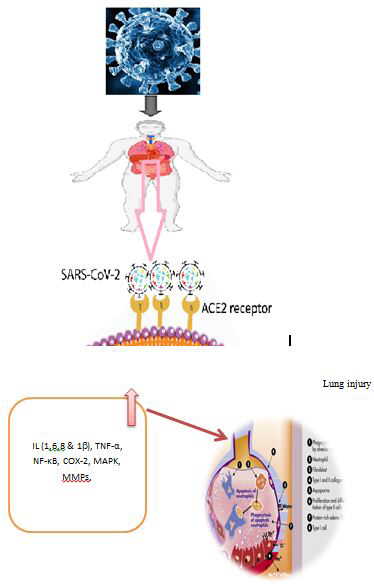
The physiology of the relationship between SARS-CoV-2 and lung injury is not clearly understood, but it may depend on inflammatory markers such as COX-2, MAPK, MMps, NF- κB, IL (1,6,8,β) and TNF-α. Receptor Receptors of angiotensin converting angiotensin-converting enzyme 2 (ACE2) were found on in epithelial cells of COVID-19 patients. And the presence of these receptors is a major cause of lung injury and permeability of blood vessels as well as complications in the heart as well as lungs (Figure 1) [5].
COVID-19 Treatment with phytochemical compounds
Scientific research has proven the effect effectiveness of many phytochemical compounds on COVID-19, the most important of which are quercetin, myricetin, kaempferol, resveratrol, and flavonoids. These substances have the ability to resist the effect of the COVID-19 virus by inhibiting the papain-like protease enzyme that prevents the spread of COVID-19; in addition, the flavonoid inhibits SARS- CoV-2 RNA-dependent RNA polymerase, that which helps prevent virus replication. In addition to hesperidin, it has an inhibitory effect on the ACE2 enzyme, and alkaloids have an antiviral effect [6].
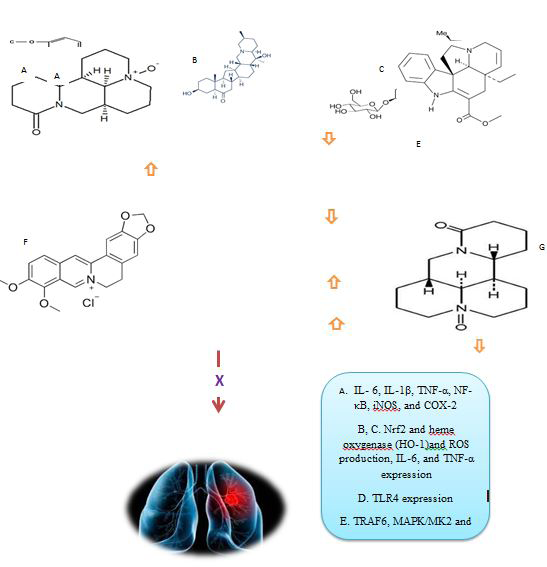
Alkaloids: Alkaloids are one of the most important phytochemical compounds found in abundance in medicinal plants. These compounds are characterized by the presence of a nitrogen atom. These compounds are very important in reducing lung injuries. Some of the important types of alkaloids and their role as protective markers are shown in (Figure 2) [7].
- Sinomenine, which is extracted from the rhizome and stem of Sinomenium acutum plant which plays a role in controlling lung injuries by producing lipopolysaccharides (LPS) by inhibiting the production of IL IL-(1, 6) TNF-α, iNOS, NF-B, and COX-2. It is also useful in increasing the production of an anti-inflammatory substance like adenosine A2A receptor and also cause an increase in superoxide dismutase (SOD) and a reduction in malondialdehyde levels (MDA) that help in the inhibition of Escherichia coli (E. coli). Injection of sinomenine significantly increased the production of Nrf2 and autophagy-related molecules (Atg5, Beclin-1, LC-3II) in induced lung damaged lung-damaged rats [8].
- Imperialine and imperialine-3-β-D-glucoside are derived from Fritillaria cirrhos, and studies have shown that these chemicals protect rats from lung damage by boosting the synthesis of heme oxygenase (HO-1) and Nrf2, as well as, lower ROS, IL-6, and TNF-expression [9].
- Quinolizidine, an alkaloid derived from the seeds of Sophora alopecuroides L., protects the lungs by decreasing TLR4 expression which causes lung damage when it increases [10].
- Tabersonine is a monoterpenoid (indole alkaloid) obtained from Catharanthus roseus (L.) root. Usage of this alkaloid reduces p38MAPK-activated protein kinase 2 (MAPK/MK2), TNF receptor-associated factor 6 (TRAF6), and NF-Kb gene expression which protects against lung damage [11].
- Berberine is an isoquinoline alkaloid extracted from Berberis vulgaris L. and Coptis chinensis Franch. It promotes the expression of HO-1 and protects against lung injury by Nrf2 [12].
- Oxysophoridine is an alkaloid that has an anti-lung effect by regulating proinflammation mediators and oxidative markers [13].
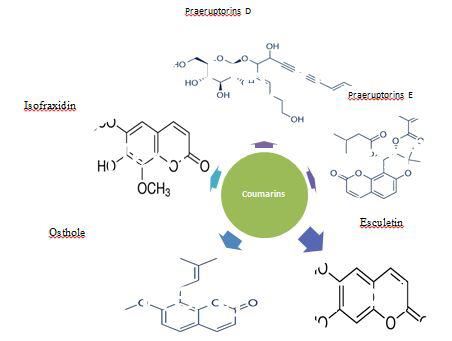
Coumarins: Coumarins are heterocyclic phytochemicals ubiquitous in medicinal plants. They are separated from the family Apiaceae. It exhibits multiple medicinal properties like anticoagulant, anticancer, and antiviral, etc. It is due to the mechanism of action of coumarin by inhibition of the NF-B, TNF-, iNOS, and MAPKs MAPK pathways, as well as oxidative agents such as reactive oxygen species (ROS) (Figure 3) [14]. • Praeruptorins D and E are pyranocoumarins extracted from Kitagawia praeruptora (Dunn); they prevent lung injury through the inhibition of NF-Κb, IL-6, and TNF-α [15].
- Esculetin is a hydroxycoumarin found abundantly in Fraxinus spp. It reduces lung injury by inhibiting RORγt and IL-17 [16].
- Osthole Cnidium monnieri is used to extract prenylated coumarins (L.). By suppressing IL IL-(1 &6) and TNF-α and obstructing the NF-B, ERK, and Akt signalling signaling pathways, it protects against lung damage [17].
- Isofraxidin The mechanism of action of hydroxycoumarin, which is extracted from Fraxinus spp., is to reduce the synthesis of IL-6, TNF-, and prostaglandin E2 (PGE2) [18].
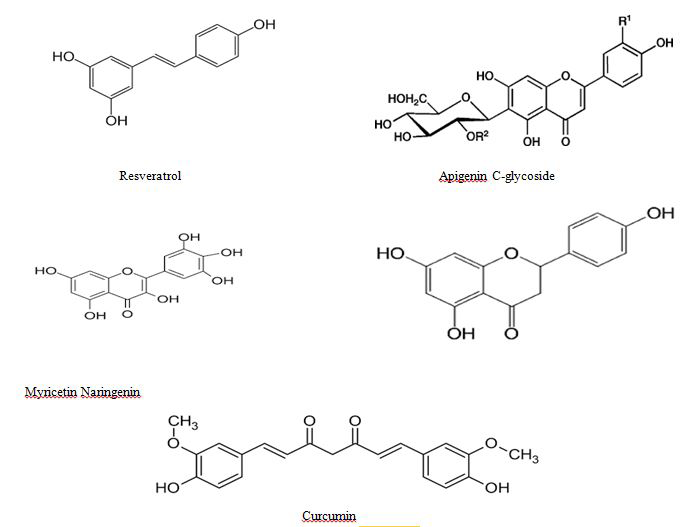
Flavonoids and Polyphenol Compounds: Flavonoids, phenolic acids, and tannins are the different types of polyphenols. The MAPKs cascade, which includes (PI3K)/ Akt, Src, Nrf2/HO-1, myeloid differentiation factor 88-TLR4, and NF-B, is inhibited by these drugs, which reduce reduces lung damage. Inflammatory receptors such as proteins 1 and 2, IL IL-(1&6) and TNF-, as well as ROS and iNOS, are all present. SOD activity and MDA levels are also reduced [19].
- Resveratrol is a flavonoid found in the Vitis vinifera L. grape vine. By boosting the activities of Nrf-2, HO-1, p-Akt, IL-10, SOD, and caspase-3, it protects against lung damage [20].
- Microcos paniculata L. produces a trihydroxy flavone called apigenin C-glycoside. It works by blocking the NF-B signalling signaling pathway, which protects the lungs from injuries [21].
- Myricetin, a hexahydroxy flavone prevalent in black tea, protects against cancer by blocking the TLR4/MyD88/ NF-B signalling signaling pathway [22].
- Naringenin, a trihydroxy flavanone, inhibits the PI3K/ Akt and MAPK pathways in rats to treat induced lung damage [23].
- Curcumin is a phenolic acid derivative obtained from Curcuma longa L. It is also used against lung distress, especially in diabetic patients (Figure 4) [24].
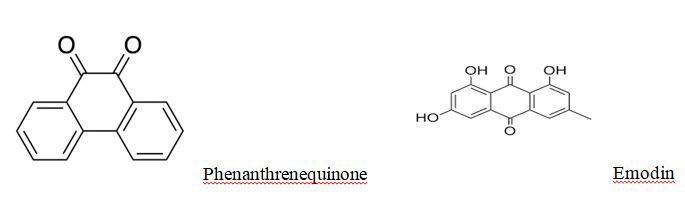
Quinones: Quinones are a group of phytochemical compounds that are cyclic compounds. These compounds have a protective effect against lung injury and this is done by different mechanisms (Figure 5) [25].
Phenanthrenequinone is isolated from Salvia miltiorrhiza bunge Bunge and inhibits the NLRP3 pathway [26].
Emodin is an anthraquinone extracted from Rheum rhabarbarum L. It acts to prevent lung injury by stimulating the autophagy mechanism [27].
Saponins and Terpenoids
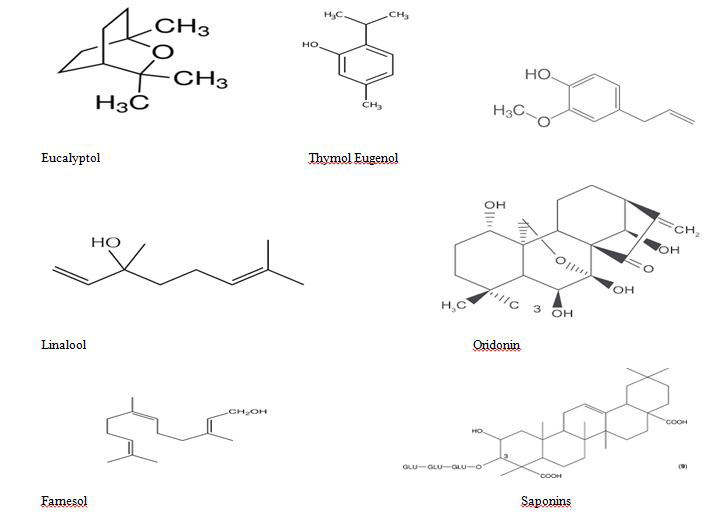
Terpenoids are naturally occurring carbohydrate molecules that are classified into 7 types, depending on the number of carbon atoms in each group. (Figure 6) [28]. These compounds have pharmacological effects as they have antimicrobial, antiviral, antidiabetic, and anticancer effects [29].
- Eucalyptol, Thymol, Linalool, and Eugenol are biologically active monoterpenes isolated from many plants. By blocking TLR4/NF-B and MAPKs MAPK pathways and lowering the Bax/Bcl-2 ratio, and these drugs protect against lung damage [30].
- Oridonin is a diterpenoid, extracted from Isodon rubescens, that inhibits the NLRP3 pathway [31].
- Farnesol extracted from Cymbopogon commutatus and it activate activates the Nrf2/HO-1 pathway and suppress suppresses the MAPKs pathway, which in turn protects the lungs against injury [32].
- Saponins are natural terpenoids that improve lung injury by inhibiting Neutrophils, proteins, and infiltrating M2 macrophages infiltrate [33].
Conclusion
Thenceforth, the World Health Organization (WHO) has declared a pandemic of Coronavirus illness. no convincing therapy or antibodies have been known to treat this illness. Moreover, to eradicate SARS-CoV-2, regular drugs fizzled out or were used taking them in portions above their curative test results. Phytochemicals, on the other hand, have always been the go-to choice for identifying therapeutic units to treat perplexing ailments, including viral illnesses and their complications, due to their multi-target nature. However, pulmonary damage is the most common Coronavirus complication associated with SARS-CoV-2 inflammatory falls. In this review, we evaluated the emergence of various phytochemicals which have protective effects on lung wounds induced by various causes as well as their pharmacological components. We also shownhave also shown that several phytochemicals like apigenin, betulinic cepharanthine, chicoric corrosiveacid, chlorogenic corrosiveaid, emodin, epigoitrin, eucalyptol, isofraxidin, kaempferol, myricetin, oridonin, osthole, quercetin, resveratrol, thymoquinone hasand shown prominent antiviral activity. Again, despite the viability of normal auxiliary metabolites in battling viral sicknesses, giving novel medication conveyance frameworks serves to disadvantage their pharmacokinetics. Such reports could prepare for the search for elective drugs hostile to Coronavirus impacts and the potential to control its difficulty. Further investigations are expected to uncover the exact liberated pathways in the Coronavirus and explicate the likely impact of phytochemicals on people.
References
-
Malin JJ, Suarez I, Priesner V, Fätkenheuer G, Rybniker J (2020) Remdesivir against COVID-19 and Other Viral Diseases. Clin Microbiol Rev 34(1): e00162-20.
-
Ye Q, Wang B, Mao J (2020) The pathogenesis and treatment of the Cytokine Storm in COVID-19. J Infect 80(6): 607-613.
-
Merza MY, Hwaiz RA, Hamad BK, Mohammad KA, Hama HA, et al. (2021) Analysis of cytokines in SARS-CoV-2 or COVID-19 patients in Erbil city, Kurdistan Region of Iraq. PLoS One 16(4): e0250330.
-
Cascella M, Rajnik M, Aleem A, Dulebohn SC, Napoli RD (2021) Features, Evaluation, and Treatment of Coronavirus (COVID-19). In: StatPearls. Treasure Island (FL): StatPearls Publishing.
-
Yuki K, Fujiogi M, Koutsogiannaki S (2020) COVID-19 pathophysiology: A review. Clin Immunol 215: 108427.
-
Sohail MI, Siddiqui A, Erum N, Kamran M (2021) Phytomedicine and the COVID-19 pandemic. Phytomedicine, pp: 693-708.
-
Dey P, Kundu A, Kumar A, Gupta M, Lee BM, et al. (2020) Analysis of alkaloids (indole alkaloids, isoquinoline alkaloids, tropane alkaloids). Recent Advances in Natural Products Analysis, pp: 505-567.
-
Yu WY, Gao CX, Zhang HH, Wu YG, Yu CH (2021) Herbal Active Ingredients: Potential for the Prevention and Treatment of Acute Lung Injury. Biomed Res Int 2021: 5543185.
-
Lee D, Song M, Kim E (2021) Role of Oxidative Stress and Nrf2/KEAP1 Signaling in Colorectal Cancer: Mechanisms and Therapeutic Perspectives with Phytochemicals. Antioxidants 10(5): 743.
-
Li S, Liu X, Chen X, Bi L (2020) Research Progress on Anti-Inflammatory Effects and Mechanisms of Alkaloids from Chinese Medical Herbs. Evid Based Complement Alternat Med 2020: 1303524.
-
Guang Li, Gaeng N, Piemontesi C, Wang Q, Zhu J (2021) Enantioselective Total Synthesis of (+)‐Alstilobanine C, (+)‐Undulifoline, and (−)‐Alpneumine H, Angewandte Chemie 60(22): 12392-12395.
-
Xinmei X, Huan Yi, Jiasi Wu, Tingting K, Jing Z, et al. (2021) Therapeutic effect of berberine on metabolic diseases: Both pharmacological data and clinical evidence. Biomedicine & Pharmacotherapy 133: 110984.
-
Javier C, Josep M (2020) Airway Redox Homeostasis and Inflammation Gone Awry: From Molecular Pathogenesis to Emerging Therapeutics in Respiratory Pathology. Int J Mol Sci 21(23): 9317.
-
Küpeli E, Genç Y, Karpuz B, Sobarzo-Sánchez E, Capasso R (2020) Coumarins and Coumarin-Related Compounds in Pharmacotherapy of Cancer. Cancers Basel 12(7): 1959.
-
Tang Y, Liu J, Zhang D, Xu Z, Ji J, et al. (2020) Cytokine Storm in COVID-19: The Current Evidence and Treatment Strategies. Frontiers in Immunology 11: 1708.
-
Liang C, Ju W, Pei S, Tang Y, Xiao Y (2017) Pharmacological Activities and Synthesis of Esculetin and Its Derivatives: A Mini-Review. Molecules 22(3): 387.
-
Sun Y, Yang AWH, Lenon GB (2020) Phytochemistry, Ethnopharmacology, Pharmacokinetics and Toxicology of Cnidiummonnieri (L.) Cusson. International Journal of Molecular Sciences 21(3): 1006.
-
Majnooni MB, Fakhri S, Shokoohinia Y, Mojarrab M, Kazemi-Afrakoti S, et al. (2020) Isofraxidin: Synthesis, Biosynthesis, Isolation, Pharmacokinetic and Pharmacological Properties. Molecules 25(9): 2040.
-
Merecz-Sadowska A, Sitarek P, Śliwiński T, Zajdel R (2020) Anti-Inflammatory Activity of Extracts and Pure Compounds Derived from Plants via Modulation of Signaling Pathways, Especially PI3K/AKT in Macrophages. International Journal of Molecular Sciences 21(24): 9605.
-
Uddin MJ, Kim EH, Hannan MA, Ha H (2021) Pharmacotherapy against Oxidative Stress in Chronic Kidney Disease: Promising Small Molecule Natural Products Targeting Nrf2-HO-1 Signaling. Antioxidants (Basel) 10(2): 258.
-
Zheng S, Geng D, Liu S, Wang Q, Liu S, et al. (2019) A newly isolated human intestinal bacterium strain capable of deglycosylating flavone C-glycosides and its functional properties. Microb Cell Fact 18: 94.
-
Taheri Y, Suleria H, Martins N, Sytar O, Beyatli A, et al. (2020) Myricetin bioactive effects: moving from preclinical evidence to potential clinical applications. BMC Complement Med Ther 20: 241.
-
Chen Z, Chen P, Wu H, Shi R, Su W, et al. (2020) Evaluation of Naringenin as a Promising Treatment Option for COPD Based on Literature Review and Network Pharmacology. Biomolecules 10(12): 1644.
-
López-Malo D, Villarón-Casares CA, Alarcón-Jiménez J, Miranda M, Díaz-Llopis M, et al. (2020) Curcumin as a Therapeutic Option in Retinal Diseases. Antioxidants 9(1): 48.
-
llah A, Munir S, Badshah SL, Khan N, Ghani L, et al. (2020) Important Flavonoids and Their Role as a Therapeutic Agent. Molecules 25(22): 5243.
-
Akkol EK, Tatlı II, Karatoprak GŞ, Ağar OT, Yücel Ç, et al. (2021) Is Emodin with Anticancer Effects Completely Innocent? Two Sides of the Coin. Cancers 13(11): 2733.
-
Dwi S (2021) Terpenoids: Lycopene in Tomatoes, Terpenes and Terpenoids - Recent Advances, ShaguftaPerveen and Areej Mohammad Al-Taweel, IntechOpen.
-
Sun N, Huang S, Chang T, Chao C (2018) Tlr4 and NFκB signaling is critical for taxol resistance in ovarian carcinoma cells. J Cell Physiol 233(3): 2489-2501.
-
Atanasov A, Zotchev S, Dirsch V, Claudiu T Supuran (2021) Natural products in drug discovery: advances and opportunities. Nat Rev Drug Disco 20(3): 200-216.
-
Abdelhakim B, Fatima-Ezzahrae G, NasreddineEi, Nawal E, Balahbib A (2021) Anti-inflammatory and analgesic properties of Moroccan medicinal plants: Photochemistry, in vitro and in vivo investigations, mechanism insights, clinical evidences and perspectives. Journal of Pharmaceutical Analysis 12(1): 35-57.
-
Li X, Zhang C, Ma W, Xie X, Huang Q. Oridonin: (2021) A Review of Its Pharmacology, Pharmacokinetics and Toxicity .Frontiers in Pharmacology 12: 1642.
-
Carvalho D, Fox E, Santos D, Sousa J, Freire D, et al. (2019) Fire Ant Venom Alkaloids Inhibit Biofilm Formation. Toxins 11(7): 420.
-
He YQ, Zhou CC, Yu LY, Wang L, Deng JL, et al. (2021) Natural product derived phytochemicals in managing acute lung injury by multiple mechanisms. Pharmacol Res 163: 105224.
- Psychogenic Erectile Dysfunction in Late Adulthood: A Case Report on Clinical Intervention and Intimacy Restoration
- Clinical Trials on COVID-19 in 2025: A New Chapter in Global Health Research
- Innovations and Challenges in Contemporary Medical Clinical Trials: An Editorial Perspective
- Innovations and Challenges in Contemporary Medical Clinical Trials: A Critical Perspective
- Reimagining Clinical Trials: The Power of Continuous Feedback from Medical Reports
- Factors Influencing Brain Drain: Perspectives from a Medical School in Turkey