
Can India Let Go The Opportunity to Minimize Million Shingles Cases Annually As India Launches Shingrix Zoster Vaccine in April 2023
Chickenpox is an incredibly uncomfortable common viral disease, rarely coming to the notice for the health system. After experiencing chickenpox or exposure to the varicella zoster virus, the virus stays dormant in the human body for life. When the immune system naturally weakens due to aging or chronic diseases like cancer, cardiac failures, chronic kidney diseases and immunodeficiency disease like HIV/AIDs etc., inactive virus reactivates, causing Shingles. Commonly seen among persons over 50 years though it can occur at any age. Most people have only one episode of the illness in their lifetime, second episodes are not uncommon, and third episodes are very rare and multiple episodes are also possible. In India, we see about a million cases of Shingles each year giving an incidence of 705 per million population per year. In USA approximately 1 out of 3 people develop herpes zoster during their lifetime Shingles, and about half of people over age 80 have had shingles. Most people with shingles in every episode start with Itching, Tingling, Burning and Pain over one or two dermatome areas to be followed by rashes on 3-5th day. Associated symptoms of fever and body ache are short lived. the blisters and pimples dry, form scabs and heal in 2-3 weeks not leaving any scar, but if get infected may take longer time of 4-5 weeks. But the tingling or a pins-andneedles feeling, itching, burning, and a deep pain due to the post-herpetic neuralgia, a severe painful condition may persist for months. The rashes often follow the distribution of nerves in the skin, a pattern called a dermatome. The most common dermatome affected are on the chest and back, around one side of the waistline but can involve any area like neck, face, butts, arms, and legs. There is no cure for shingles, but treatment with antivirals to shorten the length and severity of the illness, antihistamines NSAIDS and analgesics are used to provide comfort. Fortunately, shingles is not communicable to others. This article is based on primary cases seen by the in the context of. India has 260 million adults above 50 years of age at risk of shingles and its complications and this vaccine given in 2 doses becomes a boon for such population providing protection for 10 years. Materials and Methods: Three (including autobiographical) cases author managed since 2010 to March 2023 print media message of the launch of Shingrix Zoster Vaccine Recombinant, Adjuvanted vaccine in India on Monday the 16 April 2023 for the persons over 50 years and review of the literature.
Introduction
Chickenpox is an incredibly uncomfortable common viral disease, coming to the notice of the health system mostly in urban India. Reported annual outbreaks of chickenpox are in the range of 250-300 and about 20-25 cases in each outbreak. Individual and rural cases mostly go un-recorded as they don’t reach any allopathic health facility. Varicella (Chicken pox) affects nearly all children worldwide and about 90 million cases estimated to occur annually. However, in India around 2,000 cases and nine deaths were reported in 2022. Between January 2015 & May 2021, 27,257 cases and 31 (19 states did not report any) deaths in 1269 chickenpox outbreaks were reported [1]. According to the seasonally adjusted trend, there were outbreaks in all months of 2022, the number of outbreaks was highest numbers of 8 & 9 during the months of February and March, and the least being 1 in 19th week and an unusual rise of 9 outbreaks in 25th week (19-25 June) of 2023. The trend indicates that there were about 90 outbreaks in 2020, only 10 in 2021, 50 in 2022 and more than 120 outbreaks in first half of 2023 by 25th June [2].
After experiencing chickenpox or exposure to the varicella zoster virus, the virus stays dormant in the human body for life. When the immune system naturally weakens due to aging or chronic diseases like cancer, cardiac failures, chronic kidney diseases and acquired immunodeficiency diseases like HIV/AIDs etc., the inactive virus reactivates, causing Shingles. While anyone who has had chickenpox already has the virus and some people exposed it due to a case in the home or neighbourhood may not even remember or realise as they feel healthy. Since the immune system naturally weakens with age, people after age 50 are not only at a higher risk, but also at increased risk of Post-herpetic Neuralgia (PHN). Most people get Shingles once in a lifetime, but it is possible to get infected more than once [1, 3].
Studies using varied methods and conducted in different populations in the United States, Canada, South America, Europe, Asia, and Australia revealed a median zoster incidence of 4-4.5 per 1,000 person-years [2]. The age- adjusted incidence of zoster is increasing, Overall zoster rates increased 28% over 5 years, from 3.2 per 1,000 person-years in 1996–1997 to 4.1 in 2000–2001, probably due to changes in age distribution or the prevalence of immunocompromised persons [3]. As per a report, hospitals in India record more than 1 million cases of shingles every year [4]. Each Shingles infection episode starts with Itching, Tingling, Burning and Pain over one or two dermatome areas to be followed by rashes on 3-5th day. Associated symptoms of fever and body ache are short lived. the blisters and pimples dry, form scabs and heal in 2-3 weeks not leaving any scar, but if get infected may take longer time of 4-5 weeks. But the tingling or a pins- and-needles feeling, itching, burning, and a deep pain due to the post-herpetic neuralgia, a severe painful condition may persist for months. The rashes often follow the distribution of nerves in the skin, a pattern called a dermatome. The commonly affected dermatomes are on the chest and back, around one side of the waistline, though areas like neck, face, butts, arms, thighs, legs, and head including in the eyes or ears can be involved. [4, 5, 6].
Post-herpetic Neuralgia (PHN) is a health complication that affects up to 25% of people with Shingles, characterised by nerve pain that continues for months or years after the Shingles rash is healed [6].
Case Reports
Shingles in Common Site
Kusuma Joshi a 68-year-old lady, complained of Itching, Tingling, Burning and Pain over the base of the back of the neck right side, and around the chest over 3 & 4 rib spaces in April 2020. She had developed on day four rashes at the site where itching and burning was observed. She consulted a lady doctor, who diagnosed it as Herpes on clinical examination and put her on Acvirall (200 mg- antivirals) twice daily and Crocin SOS. She sought my second opinion in the second week when the pain was severe, with complaints of itching though initial fever had subsided. It looked like a single stripe of blisters that wraps around the left side of her torso. I advised her to complete the antiviral drugs for 10 days and added an antihistamine (Allegra 180 mg daily for first three days and on alternate days for another 5 days and to put simple talcum powder and explained the pain will recede slowly over next 4-6 weeks. Shingles blisters started scabbing over next 7-10 days and disappeared completely in four weeks, leaving no scars. However, the pain and itching continued for 3 months (Figure 1).
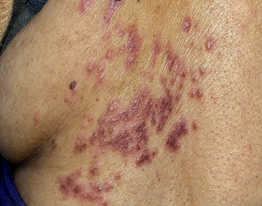
Shingles in an Unusual Site
Veena a 63-year-old lady developed shingles in May 2021 while recovering from a recent episode of Sciatica. The (herpes Zoster) painful rashes were on Left buttock, lower back, and upper thigh lateral side. It started as red patches of skin covered in bumps that turned into fluid- filled, oozing blisters, and the blisters dried up, crusted over, and the scabs cleared up in 4 weeks. However, the neuralgia persisted and declined slowly over 3 months. As a precursor of this episode, she was diagnosed as an early case of Breast cancer and treated with left sided mastectomy, and radiotherapy in one of the best Cancer Hospital in Bangalore. She had faced the entire episode positively and was doing well leading almost a normal life, for six months before she had Shingles. For shingles she was treated with antiviral medications (400 mg daily) to reduce the severity and duration and minimize the risk of post- herpetic neuralgia (PHN). She was also given ibuprofen and acetaminophen tablets and Happn - Anti-Itch Lotion (a topical cream) for the first 5 days to relieve pain and itching respectively (Figure 2).
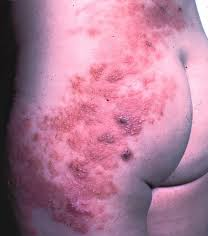
My Own Case
After having undergone CABG operation in June 2005, and recovered in September 2005 I also had developed shingles on my left chest dermatome and treated by a dermatologist with standard antivirals, antihistaminic and analgesics and topical applications. Fortunately, I didn’t have much of PHN and recovered in just 4 weeks fully (Figure 3).
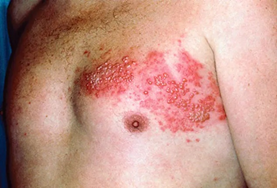
Discussions
Epidemiology
Herpes zoster develops when VZV is reactivated in the dorsal ganglia and migrates to adjacent sensory dermatomes, causing a rash, following a course like that of chickenpox, the rash starts as maculopapular lesions, which evolve into vesicles and form scabs within 10-14 days. Complete healing of the vesicles may take up to 1 month [1]. The course of the disease is usually accompanied by unilateral pain that follows a dermatome. This pain may precede the eruption and may persist for weeks or months. Because the development of herpes zoster is normally suppressed by the immune system, reactivation tends to occur in people whose immunity is weakened, such as older or immunocompromised individuals [3, 4, 6].
It is estimated that more than 90% of adults in the U.S. carry VZV and are at risk for the development of herpes zoster. Over the last 3 decades, the rate of VZV infection has been around 3 cases per 10,000 population. VZV reactivation increases with age. While one study reported a 0.3% rate of VZV reactivation in the overall population, compared with 1.0% in persons older than age 80. In another population- based study, the incidence of VZV reactivation was 0.5% in people older than age 75. In a third study, the incidence exceeded 1% in persons older than 65 years of age. A second onset of disease occurs in 6% of older individuals, often after an interval of more than a decade [1, 3].
A systematic review of 130 studies conducted in 26 countries reported in BMJ, the incidence rate of HZ ranged between 3 and 5/1000 person-years in North America, Europe, and Asia-Pacific. The risk of developing PHN varied from 5% to more than 30%, More than 30% of patients with PHN experienced persistent pain for more than 1 year. The risk of recurrence of HZ ranged from 1% to 6%, with long-term follow-up studies showing higher risk (5–6%).
Hospitalisation rates ranged from 2 to 25/100 000 person- years, with higher rates among elderly populations [6].
The rate of PHN is almost 30% higher in people older than age 50 compared with younger individuals. In addition to advanced age, other conditions like lymphatic neoplastic disease, diseases that require corticosteroids, immunosuppressive therapy, & organ transplantation.
Herpes zoster Ophthalmicus (HZO)
Herpes zoster ophthalmicus is a variation of herpes zoster that can cause a variety of ocular complications like conjunctivitis, uveitis, episcleritis, keratitis, and retinitis and therefore requires urgent treatment. It is characterized by a unilateral painful skin rash in one or more dermatome distributions of the fifth cranial nerve (trigeminal nerve), shared by the eye and ocular adnexa. Symptoms include pain and tingling of the forehead, blisters on the forehead and nose, eye ache and redness, light sensitivity, and eyelid swelling. The diagnosis of the herpes zoster ophthalmicus is based on evidence of a shingles rash and involvement of the eye. If a patient is seen within 72 hours of the onset of the blisters, they must be given a course of oral acyclovir tablets- 800 mg, five times daily for 7-15 days to minimize new ocular involvement. Few studies suggested that valacyclovir or famciclovir are superior to acyclovir in resolving pain and accelerating cutaneous healing. Most bouts of eye herpes last about 1-2 weeks but can be longer if the treatment is not started withing first 72 hours. Though the improvement is seen within 5 days of treatment it must be continued for 2 weeks. Eye herpes can’t be cured, but well-managed outbreaks reduce the risk of damage to the eyes of the elderly [7] (Figure 4).
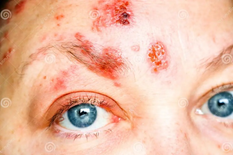
VZV reactivation is more common in individuals with human immunodeficiency virus (HIV) infection than in the rest of the population. In one study, VZV reactivation was found in 3.0% of HIV-seropositive patients compared with 0.2% of seronegative patients. In HIV patients, the symptoms of herpes zoster often precede those of clinical HIV infection [2, 6].
Reactivation of the virus is significantly more common in women than in men, especially among the elderly as was seen in my experience. In addition, the presence of psychological stress or a dramatic life event may contribute to zoster flare- ups. VZV reactivation has been linked to physical, emotional, and sexual abuse. Other contributing factors include financial stress, inability to work, decreased independence, inadequate social-support environment.
VZV can be isolated in the pustules of patients with herpes zoster for 7 days after pustule formation or for longer periods in immunocompromised individuals. In India, incidence of Herpes zoster has not been assessed. A Systematic review 27 studies, published between January 2011 and May 2020, reporting 3124 HZ clinical cases, with high proportions in older adults (>50 years of age: 81.3%). Thoracic dermatome was consistently reported as the most frequent site affected by HZ (38.9–71.0%). Post-herpetic neuralgia and secondary bacterial infections were the two most frequent complications respectively [8]. All available evidence indicate that the disease causes an important burden to older adults in India, and the need and urgency for promoting preventive strategies, including vaccination.
India’s 260 million adults above 50 years of age at risk of shingles and its complications [9, 13]. Some people can still get shingles after getting the shingles vaccine, but it has milder symptoms and a shorter duration illness. A seroprevalence study in Indian subjects showed that by the age of 40, more than 90% had virus and were vulnerable for Shingles [9, 13].
A cross sectional clinic-epidemiological study (detailed history, examination, HIV screening and Tzanck smear were carried out in all cases) on all consecutive cases of herpes zoster reporting to the Dermatology Outpatient Department at a Tertiary Care Hospital in Bangalore from 01 Jun 2013 to 31 May 2014. The results showed 84 cases of herpes zoster with a mean age of 30 years. Majority (39%) of cases were seen in the 21–30-year age group. Thoracic segments were involved in 65.4%, cervical in 11.9%, cranial in 11.5%, lumbar in 8.3% and sacral segments in 3.5%. 63% of cases had zoster associated pain. One case had motor involvement.3.57% of the patients were HIV positive [10]. In another study around 20% of herpes zoster patients were diabetics at presentation, mostly in the age group >65 years in both male and female as is our case reports. Undiagnosed diabetes mellitus was common in HZ patients [11].
Nationwide community-based data are sparse for India; however, a few studies have shown HSV-2 seroprevalences among sexually transmitted diseases clinic attendees ranging from 43% to 83%, and lower prevalence in population- based cross-sectional studies from 7.9% to 14.6% [12]. A longitudinal population-based survey in Andhra Pradesh, India, in two rounds: 2004–2005 and 2010–2011, that collected Sociodemographic and behavioural, and dried blood spots tested for HSV-2 and Treponema pallidum IgG. The results 12 617 adults participated at baseline with 8494 at follow-up showed an Incidence of HSV-2 and syphilis per 1000 person-years was 25.6 and 3.00. Incidence of HSV-2 was higher in women vs men (31.1 vs 20.2) and in rural vs urban residents (31.1 vs 19.0) (p<0.05 for both). STI sero- incidence increased in a stepwise fashion with age and was associated with spousal seropositivity for both sexes (incidence rate ratio (IRR) 2.59 to 6.78). Within couples the rate of transmission per 1000 couple-years from men to women vs women to men was higher for HSV-2 (193.3 vs 119.0) compared with syphilis (27.6 vs 198.8), p<0.05 for both [13].
- Diagnosis: Usual diagnosis is done by clinical examination by the dermatologists. Rarely A herpes test is done to confirm diagnosis.
- Infectivity: The virus that causes Shingles is already present in the body from when specific individual was infected with chickenpox. It remains dormant until reactivated, and therefore the patient cannot pass it on to another. However, it could infect another if they haven’t had chickenpox or aren’t protected against it. The virus could be transmitted if the person comes into direct contact with the blisters of someone with Shingles to develop chickenpox.
- Treatment: The treatment aims to reduce the severity and duration of illness and depending on individual’s symptoms a combination antiviral drugs to weaken the virus and/or pain relief. Antiviral medicines (Acyclovir or Xovirax, Valtrex and Famciclovir) are used to shorten the period of the disease and provide relief. General advice for managing symptoms include i) Keeping the rash clean and dry to reduce the risk of secondary infection ii) wear loose-fitting clothing iii) use a cool compress a few times a day.
- Prevention: Shingles can be prevented by taking proper vaccine. Shingrix was approved by the US Food and Drug Administration (FDA) for the prevention of shingles in adults 50 years of age or older in 2017, followed by the European Commission in 2018 for the same age cohorts [9].
GlaxoSmithKline Pharmaceuticals Ltd. (GSK) announced the launch of Shingrix Zoster Vaccine Recombinant, Adjuvanted) in India on Monday the 16 April 2023 for the same age cohorts [9]. Shingrix is the world’s first non-live, recombinant subunit vaccine to be given intramuscularly in 2 doses and manufacturer claims the vaccine can protect for
10 years.
Conclusion
After experiencing chickenpox or exposure to the varicella zoster virus, the virus stays dormant in the human body for life. When the immune system naturally weakens due to aging or chronic diseases like diabetes, CCF and acquired immunodeficiency diseases like HIV/AIDs etc., inactive virus reactivates, causing Shingles. Commonly seen among persons over 50 years though it can occur at any age with women being at higher risk.
There is no cure, but cases are managed by antivirals, antihistamines, NSAIDs and local topical smoothening powders. The launch of GlaxoSmithKline Pharmaceuticals Ltd. (GSK) Shingrix Zoster Vaccine Recombinant, Adjuvanted in India on Monday the 16 April 2023, gives a great hope for Indians over 50 years. Will Govt. of India take up the cause of the elderly suffering? And provide vaccine free of cost to at least BPL families?
References
-
Minhas A, Singh M, Nerella SNP (2015) Geospatial Epidemiology of chicken-pox disease in India between 2015-2021: A GIS based analysis l 34(1).
-
Weekly outbreak report, through IDSP, week no 25.
-
Barbara PY, Gilden D (2013) The global epidemiology of herpes zoster. Neurology 81(10): 928-930.
-
Cohen KR, Salbu RL, Frank J, Israel I (2013) Presentation and Management of Herpes Zoster (Shingles) in the Geriatric Population. P T 38(4): 217-224.
-
Kawai K, Gebremeskel BG, Acosta CJ (2014) Systematic review of incidence and complications of herpes zoster: towards a global perspective 4(6).
-
Minor M, Payne E (2023) Herpes Zoster Ophthalmicus.
-
Patki A, Vora A, Parikh R, Kolhapure S, Agrawal A, et al. (2021) Herpes zoster in outpatient departments of healthcare centres in India: a review of literature. Hum Vaccin Immunother 17(11): 4155-4162.
-
GSK launches anti-shingles vaccine in India, www. healthworld.com 16 April 2023.
-
Aggarwal SK, Radhakrishnan S (2015) A clinico- epidemiological study of herpes zoster. Medical Journal Armed Forces India 72(2): 175-177.
-
Sudina R, Lama L, Karki A, Shrestha R (2022) Hospital based study on association of herpes zoster with diabetes mellitus. Med Phoenix 6(2): 35-39.
-
Madhivanan P, Krupp K, Chandrasekaran V, Karatc K , Arun A, et al. (2007) The Epidemiology of Herpes Simplex Virus Type-2 Infection Among Married Women in Mysore, India. Sex Transm Dis 34(11): 935-937.
-
Hochberg CH, Schneider JA, Dandona R, Lakshmi V, Kumar GA, et al. (2023) Population &dyadic-based seroincidence of herpes simplex virus-2 and syphilis in southern India. Annals of the American Thoracic Society 91(5): 375-382.
- Psychogenic Erectile Dysfunction in Late Adulthood: A Case Report on Clinical Intervention and Intimacy Restoration
- Clinical Trials on COVID-19 in 2025: A New Chapter in Global Health Research
- Innovations and Challenges in Contemporary Medical Clinical Trials: An Editorial Perspective
- Innovations and Challenges in Contemporary Medical Clinical Trials: A Critical Perspective
- Reimagining Clinical Trials: The Power of Continuous Feedback from Medical Reports
- Factors Influencing Brain Drain: Perspectives from a Medical School in Turkey