
Valvulopathies of Rheumatic Origin: Management and Complications
Objective: The objective of this study is to gather information and studies about valvular heart disease of rheumatic origin and its clinical repercussions, management and complications. Methods: Integrative review, carried out between August 2024, using the digital library Scientific Electronic Library Online (SciELO), the Virtual Health Library (VHL) and PUBMED in the databases using the Boolean operators: AND and OR. The results were obtained through management with the Rayyan 16 QCRI application and were structured in PRISMA flowcharts. Results: With the search in the databases, 219 articles were found, of which 122 were selected for reading and, according to the objective of the present work, 7 articles were included in the research. Conclusion: In the studies observed, it is concluded that rheumatic valvular disease is a high-impact condition on the quality of life of patients who suffer from them and who influence in one way or another in the development of a country, as many manifest themselves in ages at which the person is economically active and the onset and exacerbations of symptoms translate into frequent work incapacity, hospitalizations and even more so if a surgical intervention is planned. It is important that the identification of clinical patterns by health professionals, with the early diagnosis and timely treatment.
Abbreviations
VHL: Virtual Health Library; MeSH: Medical Subject Heading; DeCs: Health Sciences Descriptors; SciELO: Scientific Electronic Library Online; CAFe: Federated Academic Community; DeCS: Descriptors in Health Sciences; MESH: Medical Subject Headings; RHD: Rheumatic Heart Disease; PRISMA: Reporting Systematic Reviews and Meta-Analyses; REMEDY: Global Rheumatic Heart Disease Registry.
Introduction
Rheumatic valvular heart disease is the main cause of mitral stenosis in developing countries. It can be present since the patient’s birth, being called congenital valvulopathy. However, it is also possible for it to appear throughout life due to factors such as: Degeneration and calcification of the valves. Rheumatic fever, also called rheumatic valvulopathy. Specifically, the disease of rheumatic origin manifests itself after recurrent infections with Streptococcus pyogenes. There are two theories that explain this condition. The first is based on molecular mimicry, consisting of the molecules of this agent that present antigenic similarity with the tissues of the affected person. The other more recent possible explanation consists of the neoantigen theory and suggests that Streptococcus pyogenesaccesses the subendothelial collagen matrix, subsequently inducing an autoimmune response. The inflammation caused in the valve tissue generates long-term anatomical and functional changes. With appropriate treatment, the prognosis tends to be effective and successful.
Valvular heart disease is a rapidly growing cause of global cardiovascular morbidity and mortality with diverse and evolving geographic distribution. The prevalence of rheumatic heart disease, the most common valvular heart disease (affecting approximately 41 million people), has been rising in developing nations, likely due to the expansion of the young adult population and the decrease in premature mortality that has resulted from improved access to antibiotics, microbiological testing, and echocardiography. Rheumatic heart disease has also been rising among the impoverished and, often, indigenous populations of developed nations, spurring public health initiatives that are aimed at alleviating healthcare disparities [1].
The global burden of rheumatic heart disease remains significant, although it is largely limited to poor and marginalized populations. In most endemic regions, affected patients experience heart failure [2].
Its main cause is acute rheumatic fever, which continues to be an important public health problem, especially in socioeconomically underdeveloped countries. Carditis, which develops in approximately half of patients, is responsible for both early-stage mortality and late-stage surgical treatment due to heart valve insufficiency or stenosis. The most frequent and severe valve involvement is the mitral valve, while the aortic valve has the second highest incidence of involvement. The pulmonary and tricuspid valves are rarely involved. This study aims to review the available literature to evaluate the main therapeutic interventions and complications of valvular heart disease of rheumatic origin, highlighting early diagnosis and timely management.
Methods
This study is characterized as an integrative review, which allows the search, evaluation and synthesis of evidence on a given phenomenon [3]. To construct this study, the theme was first chosen and the guiding question defined: “What is the clinical and laboratory profile of Hellp Syndrome?” We sought to answer the main guiding question based on the PICO strategy (acronym for Patient, Intervention, Comparison and Result), that is, in view of this, PICO corresponds, respectively, to P= Patients with Valvular Heart Disease; I= Complications and management; CO= Valvular heart disease of rheumatic origin. The established inclusion criteria: primary research article published in Portuguese, English or Spanish, with a time limit in the last 4 years (2020-2024). Letters to the editor, expert opinions, reviews, books, book chapters, experience reports, case studies, theoretical reflections, theses, dissertations, monographs and summaries published in event annals were excluded. The search was carried out in August 2024. At this stage, terms in Portuguese were chosen through the Health Sciences Descriptors (DeCs) and terms in English through the Medical Subject Heading (MeSH). The locations where the search would take place were established, as well as the inclusion and exclusion criteria for studies.
The articles were selected via online access through the digital library Scientific Electronic Library Online (SciELO), the Virtual Health Library (VHL), in addition to the following health database: PUBMED, available on the Periodicals portal of the Coordination of Improvement of Higher Education. Personnel (CAPES) obtained through the Federated Academic Community (CAFe). To search the databases, the following Boolean operators were used: AND and OR, to improve the search in the databases. To this end, we will use the following descriptors in Health Sciences (DeCS) and Medical Subject Headings (MESH): Valvular heart disease OR rheumatic AND management OR complications AND diagnosis, which were performed in different combinations. To manage the results, Rayyan16 QCRI (http://rayyan.qcri.org/) was used to exclude duplicate articles, identify those that were related to the guiding question and applicability of the exclusion and inclusion criteria. Studies were identified from information sources selected by an independent researcher, previously trained to evaluate titles and abstracts, through a free single- version web review program called Rayyan Qatar Computing Research Institute (Rayyan QCRI) [4].
For better understanding and transparency in the selection method, it was decided to present the flowchart of scientific articles through the Main Items for Reporting Systematic Reviews and Meta-Analyses (PRISMA) guide.
Results and Discussions
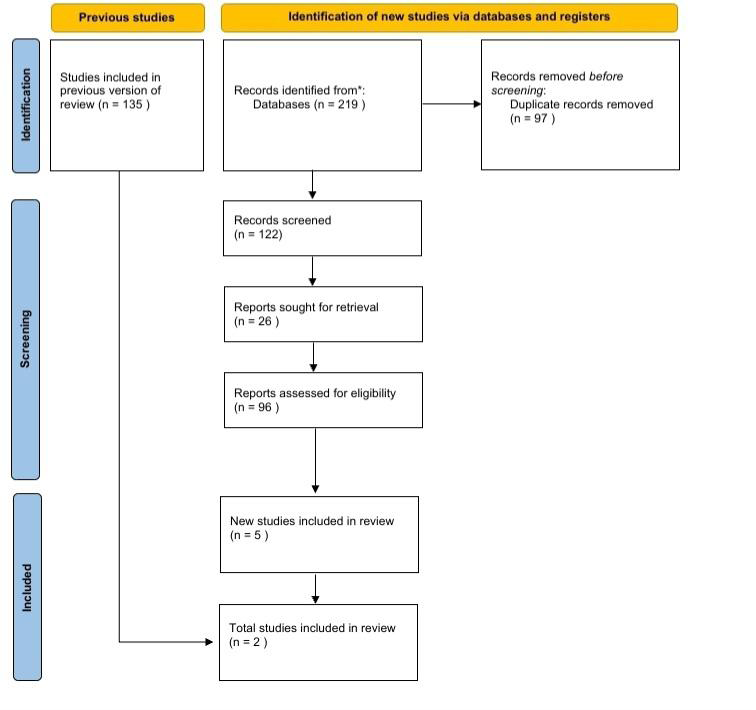
According to the results found in the study, for better understanding and transparency in the selection method, the flowchart of scientific articles was used through the Main Items for Reporting Systematic Reviews and Meta- Analyses (PRISMA) guide (Figure 1). The first phase consisted of searching the databases, totaling 219 articles. In the second phase, repeated articles were excluded, which were 97. In the third, titles and abstracts were read, 122 articles were selected. In the last phase of construction, an exploratory, selective and analytical reading of all studies and stratification of excerpts that answered the guiding question was carried out, totaling 7 articles that make up the sample. The data are presented in a descriptive way, aiming to gather and organize knowledge on the topic investigated. Table 1 presents an overview of the articles selected for the study and a summary of the main conclusions reached.
| Title | Authors | Objectives | Main results |
|---|---|---|---|
| Valvular Heart Disease Epidemiology [1] | Aluru JS, et al. [1] | Valvular heart disease is a rapidly growing cause of global cardiovascular morbidity and mortality with diverse and evolving geographic distribution. | Infective endocarditis prevalence has also grown in developed nations, likely due to population aging and the increased utilization of transcatheter valve replacement and prosthetic valves as interventions against the previously discussed valvular pathologies. |
| Contemporary Diagnosis and Management of Rheumatic Heart Disease: Implications for Closing the Gap: A Scientific Statement From the American Heart Association [2] | Kumar RK, et al. [2] | In most endemic regions, affected patients present with heart failure. This statement will seek to examine the current state-of- the-art recommendations and to identify gaps in diagnosis and treatment globally that can inform strategies for reducing disease burden. | This set of works forms the basis on which a complementary document on the defense of rheumatic heart diseases was developed. Ultimately, the combination of expanded treatment options, research and advocacy based on existing knowledge and science provides the best opportunity to address the burden of rheumatic heart disease. |
| Rheumatic heart disease: current status of diagnosis and therapy [5] | Peters F, et al. [5] | Rheumatic heart disease (RHD) is the only preventable cardiovascular disease which causes significant morbidity and mortality particularly in low- and middle-income countries. | As we are already more than a year from the historic 2018 World Heart Organization Resolution against Rheumatic Fever and Rheumatic Heart Disease, we advocate strongly for renewed efforts to prioritize this disease across the endemic regions of the world. |
| The occult rheumatic scourge: A clinicopathological analysis of missed rheumatic heart disease [6] | Daga P, et al. [6] | To study the clinical and pathological manifestations of missed cases of rheumatic heart disease (RHD) and postulate possible reasons behind a missed diagnosis. | Our study indicates that mortality and morbidity due to RHD are underdetermined. The patients remain undiagnosed due to either insignificant valvular involvement, clinically silent in the presence of significant valvular deformity, presence of other overwhelming diseases or misdiagnosis partly due to the resemblance with the other pathologies. |
| Histopathological Characterization of Mitral Valvular Lesions from Patients with Rheumatic Heart Disease [7] | Gomes NFA, et al. [7] | The present study evaluated the histopathological changes in mitral valves (MV) seeking an association between the pattern of predominant valvular dysfunction and histopathological findings. | Despite an intense degree of fibrosis, the inflammatory process remains active in the rheumatic mitral valve, even at late disease with valve dysfunction. Calcification predominated in stenotic valves and in patients with right ventricular dysfunction. |
| Rheumatic heart disease: An assessment of the incidence of hospitalizations and its challenges for public health [8] | Chitolina BC, et al. [8] | Hospitalization for rheumatic heart disease is a topic of significant importance in the health sector, especially in regions where socioeconomic conditions can impact access to adequate medical care. | While we have seen advances in the understanding and treatment of rheumatic heart disease over the past few decades, the persistence of these hospitalizations highlights significant gaps in primary prevention, early diagnosis, and access to appropriate healthcare, especially in underserved communities. |
| Rheumatic Heart Disease in the Developing World [9] | Simpson MT, et al. [9] | Despite recent public policy initiatives, rheumatic heart disease (RHD) remains a major source of morbidity worldwide. Rheumatic heart disease occurs as a sequela of Streptococcus pyogenes(group A streptococcal [GAS]) infection in patients with genetic susceptibility. | The cardiac surgical community has attempted to improve the availability of surgery in RHD-endemic areas with some success, and operative techniques and outcomes of valve repair continue to improve, potentially offering patients a safer, more durable operation. Innovation offers hope for a more scalable solution with improved biomaterials and transcatheter delivery technology; however, cost remains a barrier. |
Table 1: Studies selected for sample, according to rayyan identification, title, authors, objectives and main results.
Results
- Valvular Heart Disease Epidemiology Aluru JS, et al. [1] Valvular heart disease is a rapidly growing cause of global cardiovascular morbidity and mortality with diverse and evolving geographic distribution. Infective endocarditis prevalence has also grown in developed nations, likely due to population aging and the increased utilization of transcatheter valve replacement and prosthetic valves as interventions against the previously discussed valvular pathologies.
- Contemporary Diagnosis and Management of Rheumatic Heart Disease: Implications for Closing the Gap: A Scientific Statement From the American Heart Association, Kumar RK, et al. [2]. In most endemic regions, affected patients present with heart failure. This statement will seek to examine the current state-of-the- art recommendations and to identify gaps in diagnosis and treatment globally that can inform strategies for reducing disease burden. This set of works forms the basis on which a complementary document on the defense of rheumatic heart diseases was developed. Ultimately, the combination of expanded treatment options, research and advocacy based on existing knowledge and science provides the best opportunity to address the burden of rheumatic heart disease.
- Rheumatic Heart Disease current status of diagnosis and therapy Peters F, et al. [5]. Rheumatic heart disease (RHD) is the only preventable cardiovascular disease which causes significant morbidity and mortality particularly in low- and middle-income countries. As we are already more than a year from the historic 2018 World Heart Organization Resolution against Rheumatic Fever and Rheumatic Heart Disease, we advocate strongly for renewed efforts to prioritize this disease across the endemic regions of the world.
- The occult rheumatic scourge: A clinicopathological analysis of missed rheumatic heart disease DAGA P, et al. [6]. To study the clinical and pathological manifestations of missed cases of rheumatic heart disease (RHD) and postulate possible reasons behind a missed diagnosis. Our study indicates that mortality and morbidity due to RHD are underdetermined. The patients remain undiagnosed due to either insignificant valvular involvement, clinically silent in the presence of significant valvular deformity, presence of other overwhelming diseases or misdiagnosis partly due to the resemblance with the other pathologies.
- Histopathological Characterization of Mitral Valvular Lesions from Patients with Rheumatic Heart Disease Gomes NFA, et al. [7]. The present study evaluated the histopathological changes in mitral valves (MV) seeking an association between the pattern of predominant valvular dysfunction and histopathological findings. Despite an intense degree of fibrosis, the inflammatory process remains active in the rheumatic mitral valve, even at late disease with valve dysfunction. Calcification predominated in stenotic valves and in patients with right ventricular dysfunction.
- Rheumatic Heart Disease: An assessment of the incidence of hospitalizations and its challenges for public health Chitolina BC, et al. [8]. Hospitalization for rheumatic heart disease is a topic of significant importance in the health sector, especially in regions where socioeconomic conditions can impact access to adequate medical care. While we have seen advances in the understanding and treatment of rheumatic heart disease over the past few decades, the persistence of these hospitalizations highlights significant gaps in primary prevention, early diagnosis, and access to appropriate healthcare, especially in underserved communities.
- Rheumatic Heart Disease in the Developing World Simpson MT, et al. [9]. Despite recent public policy initiatives, rheumatic heart disease (RHD) remains a major source of morbidity worldwide. Rheumatic heart disease occurs as a sequela of Streptococcus pyogenes (group A streptococcal [GAS]) infection in patients with genetic susceptibility.
The cardiac surgical community has attempted to improve the availability of surgery in RHD-endemic areas with some success, and operative techniques and outcomes of valve repair continue to improve, potentially offering patients a safer, more durable operation. Innovation offers hope for a more scalable solution with improved biomaterials and transcatheter delivery technology; however, cost remains a barrier.
Aortic valve stenotic disease is the most commonly occurring valvular pathology in developed nations (afflicting 9 million people worldwide) and its prevalence has been increasing with population aging and the increased prevalence of atherosclerosis. Aortic regurgitation is associated with diastolic, but not systolic, hypertension and it has likewise seen a rise in the developed world. Mitral regurgitation affects 24 million people worldwide, with great variability between and among nations. Primary mitral regurgitation arises as a consequence of myxomatous degeneration and mitral valve prolapse, which is largely due to genetic predispositions, while secondary mitral regurgitation accounts for 65% of cases and arises secondary to dilation and heart failure. Tricuspid regurgitation has become more prevalent in developed nations due to the increased usage of intracardiac pacemakers [1].
Patients with isolated mitral stenosis often benefit from percutaneous mitral balloon valvuloplasty. Timely heart valve surgery can mitigate progression to heart failure, disability, and death. Valve repair is preferable to replacement for rheumatic mitral regurgitation, but is not available for the vast majority of patients in endemic regions. . Ultimately, the combination of expanded treatment options, research and advocacy based on existing knowledge and science provides the best opportunity to address the burden of rheumatic heart disease [2].
RHD typically affects left-sided valves, with greater affinity and consequence for the mitral valve. Characteristic acute mitral valvulitis shows mitral annulus dilatation, chordal elongation, and anterior leaflet prolapse, with varying degrees of MR and rarely chordal rupture. Isolated aortic disease occurs in 2% of cases. Right-sided valve disease is not infrequent, typically affects the tricuspid valve (as primary valvulitis or as the result of deleterious hemodynamic consequences of left-sidedvalve disease), and rarely affects the pulmonic valve. Acute rheumatic valvulitis manifests as valvular regurgitation, but over time, chronic inflammation leads to valve stenosis from commissural fusion with or without associated regurgitation in a subset of patients. MS from commissural fusion, with variable degrees of involvement of other parts of the mitral valve apparatus, is the hallmark lesion of the later stages of RHD. The more malignant fulminant course of RHD, linked to recurrent bouts of ARF, occurs in the most endemic regions of the world [2].
The key to the diagnosis of valvular dysfunction requires integration of typical morphological abnormality with evidence of pathological valvular regurgitation. Echocardiography can also be utilized to identify pericardial effusion as well as focal or global left ventricular dysfunction which are other supportive manifestations of carditis. Contemporary data from the Global Rheumatic Heart Disease Registry (REMEDY) revealed that the most common valve lesions encountered were mixed left sided lesions with multivalvular involvement occurred in almost two- thirds of subjects. Once a diagnosis of ARF has been made definitive therapy to eradicate Strep A in the pharynx with penicillin is required. This can be either an intramuscular dose of benzathine penicillin or oral penicillin for 10 days. In patients who present with heart failure, the use of diuretics, ACE inhibitors, digoxin and beta blockers are used to stabilize patients prior to definitive corrective surgery or as definitive therapy when surgery is not available, or patients are deemed surgically inoperable. In patients with RHVD and AF, restoration of sinus rhythm maybe beneficial for selected patients with either amiodarone, cardioversion or even catheter ablation although definitive surgical correction of the primary valve lesions often offers the greatest predictable success [5].
In a study conducted on patients with clinical and pathological manifestations of undiagnosed cases of rheumatic heart disease (RHD) and postulating possible reasons behind an undiagnosed diagnosis, it was observed that: our study indicates that mortality and morbidity due to RHD are underdetermined. The patients remain undiagnosed due to either insignificant valvular involvement, clinically silent in the presence of significant valvular deformity, presence of other overwhelming diseases or misdiagnosis partly due to the resemblance with the other pathologies [6].
Studies indicate that the autoimmune process involved in DCR begins when reactive antibodies bind to the valve endothelium, leading to inflammation and cellular infiltration. Once activated, the valve endothelium increases the expression of adhesion molecules, which facilitates the binding and infiltration of T cells. After the initial valve insult, the process triggers a cascade that leads to the recognition of additional epitopes, leading to progressive damage of the valve. Evidence that the continuous presentation of autoantigens at the site of injury contributes to an amplification of the immune response is reinforced by the significant reduction in autoantibody levels after surgical removal of the affected leaflets [7]. Hospitalizations for rheumatic heart disease reflect not only the clinical challenges faced by patients, but also the complexities of the healthcare system in meeting the needs of these individuals [8].
Rheumatic heart disease (RHD) remains an underrecognized health issue globally, despite initiatives introduced over the last several decades that have helped decrease the global number of cases during this time. This is in part due to the highly effective public health policies put forth in industrialized nations in the last half-century to prevent, recognize, and treat group A streptococcal (GAS) infections. However, worldwide RHD cases number over 15 million and contribute to over two hundred thousand deaths per year.1 Progress has been made over the last 2 decades as several nations in the developing world with high disease prevalence have prioritized its treatment and global health organizations have pursued the elimination of RHD with renewed vigor. The effects of RHD are disproportionately felt by school-aged children and young adults in their most economically productive years. The cost of premature deaths due to RHD is estimated to be on the order of trillions of US dollars annually.6 Effects on children and adolescents include increased school absence and rates of dropout, which have a downstream impact on the ability of children to eventually support their own families independently. At the same time, young adults sick with RHD will have decreased capacity to work, impairing their ability to provide for themselves and their families. The impact of disability caused by RHD accounts for nearly 0.5% of worldwide disability adjusted life years [9].
Conclusion
Although the incidence of rheumatic fever has declined in many developed countries, it is still common in low- income regions, especially developing countries. Rheumatic valvulopathy, a consequence of rheumatic fever, is a significant cause of morbidity and mortality in such areas. Involvement of the heart valves (especially the mitral and aortic valves) are important causes that can progress to stenosis or valve insufficiency. Increasing the risk of heart failure, arrhythmias and favoring the emergence of thromboembolic events. Understanding the pathophysiology of Rheumatic Valvular Disease helps identify ways to prevent acute rheumatic fever and manage its complications, such as using antibiotics to prevent new streptococcal infections and prevent disease progression, as many patients not treated correctly may require interventions surgical procedures, such as valve replacement or repair. Studying the condition allows healthcare professionals to understand the appropriate times for interventions and the associated risks, as well as developing effective preventive, diagnostic and therapeutic approaches to reduce the impact of this potentially serious illness.
References
-
Aluru JS, Barsouk A, Saginala K, Rawla P, Barsouk A (2022) Valvular Heart Disease Epidemiology. Med Sci (Basel) 10(2): 32.
-
Kumar RK, Antunes MJ, Beaton A, Mirabel M, Nkomo VT, et al. (2020) Contemporary diagnosis and management of rheumatic heart disease: Implications for closing the gap: A scientific statement from the American heart association. Circulation 142: 20.
-
Behrens M (2020) Transformative Education. Portuguese Education Magazine.
-
Mendes KS, Pereira RCC, Maria GC (2019) Use of the bibliographic reference manager in the selection of primary studies in integrative reviews. Texto & Contexto- Enfermagem 28(4): 1-3.
-
Peters F, Karthikeyan G, Abrams J, Muhwava L, Zühlke L (2020) Rheumatic heart disease: current status of diagnosis and therapy. Cardiovasc Diagn Ther 10(2): 305-315.
-
Daga P, Vaideeswar P, Goyal A, Marathe SP, Bhargav R (2022) The occult rheumatic scourge: A clinicopathological analysis of missed rheumatic heart disease. Indian J Pathol Microbiol 65(4): 766-771.
-
Gomes NFA, Pascoal-Xavier MA, Passos LSA, Paula TMN, Aguiar JMS, et al. (2021) Histopathological Characterization of Mitral Valvular Lesions from Patients with Rheumatic Heart Disease. Arq Bras Cardiol 116(3): 404-412.
-
Chitolina BC, de Souza RJV, Santana AH, Rosado AB, Vieira LM, et al. (2024) Cardiopatia reumática: Uma avaliação Da Incidência De internações E Seus Desafios Para a Saúde Pública”. Brazilian Journal of Implantology and Health Sciences 6(5): 2365-2376.
-
Simpson MT, Kachel M, Neely RC, Erwin WC, Yasin A, et al. (2023) Rheumatic Heart Disease in the Developing World. Struct Heart 7(6): 100219.
- Anomalous Origin of the Left Coronary System from the Right Coronary Cusp: A Rare Coronary Anomaly in a Patient Undergoing Aortic Stenosis Workup
- Optimizing the Therapeutic Potential of Sacubitril/Valsartan: The Promise of Co-Crystal Engineering
- Association between Mortality and Topography of Peripheral Arterial Disease due to Atherosclerosis Obliterans
- Mitral Valve Replacement vs Mitral Valve Repair
- Characteristics and Evolution of Patients with Heart Failure Hospitalized in the Cardiology Department of Dalal Jamm Hospital
- Distribution of Association between Basic Knowledge of Chest Pain and Myocardial Infarction (Heart Attack) and Demographic Variables: A Survey-Based Study