
Survival of Women with Breast Cancer at Pointe Noire (Congo Brazzaville)
Introduction: Breast cancer is the leading cancer and the leading cause of cancer death in women worldwide. While the 5-year survival of patients with local breast cancer varies around 98.8%, this survival rate drops to around 26.3% for metastatic patients. The objective of this study was to determine the survival of patients with breast cancer in resourcelimited settings. Patients and Methods: It was a cross-sectional descriptive study performed in the cancer ward at Pointe Noire General Hospital from 1 January 2013 to 31 December 2018, for duration of 6 years. 70 records of patients over 18 years of age with histological evidence and an extension assessment involving a thoraco-abdominal CT or chest X-ray and / or abdominal ultrasound. The treatments received included: surgery, chemotherapy, radiotherapy and hormone therapy targeted therapy. The variables studied were: age, level of education, delay of consultation, histological type, histological grade, stage of extension, type of treatment and survival. Survival was calculated by Kaplan Meier method. The chi-square test was used to search for a correlation between the variables. Results: The average age was 51±12 years old. The extremes were 27 years and 79 years old. The most represented level of education was the primary level in 63 % of cases. The most represented stage was locoregional stage in 57 % of cases and metastatic stage in 33 % of cases. The most represented histological type was invasive ductal carcinoma in 97 % of cases. The most represented histological grade was Scharff grade III Richardson bloom in 68 % of cases. The treatment Anthracycline-based chemotherapy was more used in 74 % of cases. Surgery was used in 49 % of cases; radiation therapy was use in 26 %. Bivariate analysis revealed the lack of correlation between delay to consultation and stage of extension p˃0.05. There was no correlation between age and the stage of extension, p <0.05. The mean patient follow-up time was 22 ± 15.45 months. The overall survival was 39 months. The median survival of local, locoregional and metastatic stage was respectively 25 months, 29 months, 29 months, P> 0.05. Patients treated with anthracyclines were greater than that of patients treated with taxanes in combination was 48 months, p˂ 0.05, results significant. Research. Conclusion: Breast cancer remains an incurable disease, its survival remains low despite diagnostic and therapeutic advances that remain difficult to access for our resource-poor developing countries. Patients are treated with conventional surgery, chemotherapy (anthracyclines and taxanes), radiation therapy, hormone therapy and targeted therapy are not used in optimal way in our context.
Nkoua Mbon JB
Medicine, Loandjili General Hospital and Faculty of Health Sciences Brazzaville,
Congo, Tel: 00242066764164; Email: christianngatali2003@yahoo.fr
limited settings.
test was used to search for a correlation between the variables.
Conclusion: Breast cancer remains an incurable disease, its survival remains low despite diagnostic and therapeutic advances that remain difficult to access for our resource-poor developing countries. Patients are treated with conventional surgery, chemotherapy (anthracyclines and taxanes), radiation therapy, hormone therapy and targeted therapy are not used in optimal way in our context.
Keywords: Breast Cancer; Survival; Black Point
Introduction
Breast cancer is a real public health problem world wide. It is the first cancer and the leading cause of cancer death in women worldwide [1, 2, 3, 4]. In 2018 its frequency was 24.2% and was responsible for nearly 15% of deaths [1]. In developing countries, breast cancer is the first cancer diagnosed and the leading cause of cancer death in women [5]. In these low incomes countries, breast cancer is often diagnosed at advanced stages and has a poor prognosis [2]. Breast cancer affects both men and women [6, 7]. Although more than half of all new cases of breast cancer are diagnosed in industrialized countries (ie North America, except Mexico and Western Europe), more than three Four quarters of breast cancer deaths occur in developing countries. This discrepancy in terms of incidence and survival is largely related to the lack of organized mammographic screening in developing countries, at advanced stage of diagnosis (more than 60% of patients are diagnosed with stage III / IV breast cancer in women in developing countries), poor access to care and substandard regimens [8, 9]. Cancer survival statistics from developing countries are rare. The reasons for the paucity of information on cancer survivorship are quite understandable. Cancer registries are a recent phenome- non in some developing countries, and do not exist at all in many others. Death registration in developing countries is often incomplete, and the cause of death may be inaccurate, or missing [10]. While the 5-year survival of patients with local breast cancer varies around 98.8%, this survival rate drops to around 26.3% for metastatic patients. To our knowledge, few studies on the survival of breast cancer have been conducted in the Congo. The purpose of our study was to determine the survival of breast cancer patients at loandjili general hospital in Black Point.
Patients and Methods
This was a cross-sectional descriptive study that took place in department of oncology of the loandjili general hospital in Pointe Noire during the period from January, 2013 to December 31 ,2018, for a duration of 6 years.
Included in our study were all women over 18 years of age. All the patients having a complete file that is to say having a histological diagnosis and an extension assessment carried out thanks to an thoracic and abdominal CT scan and/with chest X ray and ultrasonography. The Treatments (alone or in association) used were: surgery (radical mastectomy or conserving breast surgery), chemotherapy and radiation therapy, hormone therapy, targeted therapy. Chemotherapy was neoadjuvant or adjuvant based on anthracyclines (FAC protocol = 5 fluorouracil, dose 500 mg / m2, doxorubicin 50 mg / m2 cyclophosphamide 500 mg / m2) and taxanes (docetaxel protocol dose 100 mg / m2). Patient information was collected from the medical and the hospilization register of the oncology department. All patients with no histological diagnosis, aged less than 18 years and all men with breast cancer were excluded from our study. The variables studied were:
- Sociodemographic parameters: age, level of study, delay of presentation.
- Clinical parameters: tell-tale sign, extension stage.
- Histological type and histological grade.
- The type of treatment.
- The survival.
The delay was long when it was greater than 6 months and short when it was less than 6 months. The stage of extension was grouped in local stage (stage 0 and I), locoregional or advanced stage (stage II and III) and metastatic stage IV stage.
Survival was calculated by Kaplan Meier method. The initial date was the date of diagnosis; the point date was the end date of the study. The final event was the occurrence of death. Patients were followed throughout the study period, ie from January 1, 2013 to December 31, 2018, ie for a period of 6 years. The data collection was done from a survey sheet, comprising the different variables studied.
Data entry was done using the Excel version 2016 software. Qualitative variables were represented in numbers and percentage. Quantitative variables were represented in numbers and average. The statistical analysis and the data processing were carried out by the Excel 2016 software and the graph pad software version 5. The statistical test used was the KHI2 test for the search for the correlation between the variables. The comparison of the curves was done by the log rank test. The results were statistically significant for p <5%.
Results
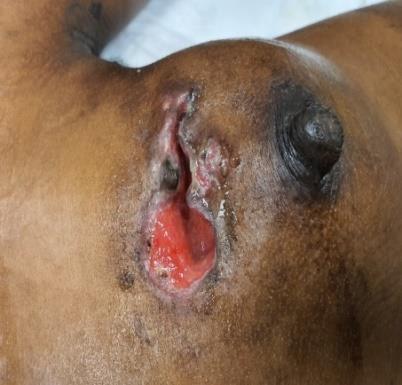
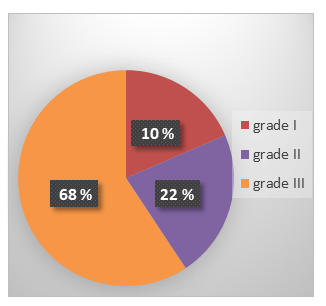
180 women cancer patients were records during our study. Of the 180 files, 70 files had met the inclusion criteria. So, the frequency of breast cancer in women was 39%. The patients were followed by the date of diagnosis of the end of the study, from January 1, 2013 to December 31, 2018 for a period of 6 years in the oncology department (Figure 1). The average age of the patients was 51 ± 12 years. The extremes were 27 years and 79 years old. The most represented age group was the age group from 37 to 46 years with 24 cases or 34% (Table 1). The most represented level study in our study was the primary level 63 %, followed by secondary level 23 % and the upper or superior level 14% (Table 1). The average time to presentation at the consultation was 7 ± 1.2 months. 67% of patients had a long delay, 33 % of patients had a short delay in our study. The most frequent telltale sign was the breast nodule in 67 cases, or 97% of cases. The most common histological type has been invasive ductal carcinoma, the most common histological type was represented by a case of wide, purulent and necrotic ulceration of the breast, a case of ulcerate budding and a case of inflammatory breast with an appearance of orange skin. The histological type most represented was invasive ductal carcinoma in 96% of cases and a case of breast sarcoma and a case of lobular carcinoma. The most represented histological grade was grade III of Scarff Bloom Richardson (68%), followed by grade II 22% and grade I in 10% of cases (Figure 2). On the immunohistochemical level, only 3 patients had positive hormone receptors. The majority of patients presented at locoregional stage in 57% of cases, local stage was represented in 10% of cases while the metastatic stage was represented in 33% of cases (Table 1). The most represented treatment was chemotherapy (74 %) using anthracyclines drugs, followed by surgery in 49 % of cases, radiation therapy 26 % of cases; 3 patients had been treated with hormone therapy (Table 2).
| Characteristics | Number (70) | Percentage (%) | |
|---|---|---|---|
| Age groups | |||
| 27-36 | 10 | 14 | |
| 37-46 | 24 | 34 | |
| 47-56 | 15 | 21 | |
| 57-66 | 12 | 17 | |
| 67-76 | 8 | 11 | |
| 77-86 | 1 | 1 | |
| Study Level | |||
| Primairy | 44 | 63 | |
| Secondary | 16 | 23 | |
| Superior | 10 | 14 | |
| Delay to Presentation | |||
| Short | 23 | 33 | |
| Long | 47 | 67 | |
| Stage of Extension | |||
| Local | 7 | 10 | |
| Locoregional | 40 | 57 | |
| Metastatic | 23 | 33 | |
| Treatment | Yes | No | |
| Surgery | 34(49%) | 36(51%) | |
| Chemotherapy | 52(74%) | 18(26%) | |
| Radiation therapy | 18(26%) | 52(74%) | |
| Hormone therapy | 3(4%) | 67(96%) | |
| Targeted therapy | 2(3%) | 68(96%) | |
Table 1: Distribution of patients according to sociodemographics and clinical characteristics.
Patients who had a long presentation time had a local stage in 12 % of cases, locoregional stage in 58 % of cases and metastatic stage in 30 % of cases while patients who had a short time of presentation had more local stages in 7 % of cases, 56 % of cases of stage locoregional and 37 % stage cases metastatic. The correlation was not found between the delay of presentation and the stage of extension of the disease (p˃0.05) (Table 3). Comparison of patients younger than 40 years old to patients over 40 years old has allowed to note that breast cancer incidence was highest at all stages in the women over than 40 years old. There was no correlation between age and stage of extension (p> 0.05) (Table 3).
| Stage of extension | |||||||
|---|---|---|---|---|---|---|---|
| Age | Local | Loco regional | Metastatic | Total | |||
| Age <40 | 2 (13 %) | 10 (67%) | 3(20 %) | 15 | P ˃5 % | ||
| Age >40 | 5 (36 %) | 30 (55 %) | 20 (9 %) | 55 | |||
| Delay of Presentation | |||||||
| Short | 2 (7 %) | 15 (56 %) | 10 (37 %) | 27 | P ˃5 % | ||
| Long | 5 (12 %) | 25(58 %) | 13 (30 %) | 43 |
Table 2: Distribution of patients according to age, delay of presentation and extension stage.
Table 3: Distribution of patients according to age, delay of presentation and extension stage. Non significant result This result was statistically significant (Figure 3). The median survival of patients receiving anthracycline chemotherapy was greater than that of chemotrapy regimens with docetaxel (48 months vs 25 months) results was statistically significant (Figure 5).
150 age<40 age>40 Percent survival
100
50
0 50 100 150 0 months Figure 4: Representation of survival curves according to age.
Discussion
A total of 180 cancer patients were collected during our study. Of the 180 patients, 70 patients had breast cancer and met all the inclusion criteria of our study. Thus, the incidence of breast cancer in women during our study was 39%. Breast cancer was the first cancer of the woman in our study as several studies [1, 5]. The mean age of the patients in our study was 51 ± 12 years, the extremes were 27 years and 79 years. Breast cancer affects women at a relatively young age. The average age was relatively young, this average age of the patients in our study was found by most authors in Africa with averages of 47.5 ± 12.36; 47.97 respectively described by Ngowa J, et al. [11]. Cameroon and Mensah, et al. [12]. On the other hand, in developed countries in the USA, for example, the average age of breast cancer patients was 61 years with the extremes of 55 years and 64 years [13]. In Saudi Arabia the average age found was also relatively young 47.16 ± 12.15 [14]. The age group most represented in our study was 37 to 46 years of age, followed by the age group 47 to 56, the younger age groups. These age groups were close to the age groups of the majority of African countries [11, 12]. In the US, the most affected age group was 54 at age 65 [13]. The age groups of patients in both developed and US countries are quite high age groups, unlike age groups in African countries, especially those in developmental pathways. This could be explained on the one hand by the composition of the African population which is a young population and on the other hand by the probable increase of the incidence of breast cancer in this age group but also by the development diagnostic and therapeutic techniques. In fact, the population of developed countries is aging and age is a risk factor for breast cancer. The level of study in our study was primary in our study in 63% of cases, followed by the secondary level 23% of cases. In developing countries, patients had a primary level of education or were illiterate [15]. In developed countries, particularly in the US, the highest level of education is the highest level [16, 17]. The delay to presentation in our study was long in the majority of cases 67%, with an average of 7 ± 1.2 months. Other studies also found a long delay with an average delay of 13 ± 8 months [18]. This could be explained on the one hand by a primary level of study in our study thus generating a weak knowledge of the cancer pathology and the clinical signs of beginning; on the other hand, the socioeconomic level may be considered as a barrier to consultation since access to a health center and cancer treatment remains very expensive [19, 20]. The most prominent revealing sign was a breast nodule in the majority of cases (97% of cases), the rest was represented by a large, purulent and ulcerated (1 case) and an inflammatory breast aspect (1 case) and ulcerate and necrotic. The predominance of the breast mass or breast nodule has been found in the literature [11, 18, 21]. The most represented histological type in our study was infiltrative ductal carcinoma 98%. These results are identical to those of the literature [14, 21]. The histological grade III according to Bloom Richardson’s scarf grading was the most represented in our study with 59% of cases. The literature has also revealed a predominance of grade III [14, 21]. The breast cancers seen in our study appeared to be aggressive and therefore of poor prognosis. The majority of patients were seen in advanced stages II and III (locoregional) with a percentage of 57% and metastatic or 23% of cases, the local stages accounted for 10% of cases in our study. Several studies in the developing countries have similar results to those of our study [11, 15]. The work of Al.Isawi et al in Saudi Arabia, found a predominance of advanced stages [14]. Percentages between 31% and 75% were found in Nigeria, Peru, Libya, Brazil [22]. If in our study, and in most developing countries, patients present themselves in advanced or metastatic stages, in developed or industrialized countries, such as Canada, Norway, Great Britain and Sweden, patients present themselves at stages local. Only 8 to 22% of patients are diagnosed at advanced stages [22]. The most used treatment in our study was chemotherapy in 74% of cases, followed by surgery in 49% of cases and it was a radical mastectomy in 100% of cases. The presentation at the advanced or metastatic stages of the disease would be a factor favoring the use of chemotherapy in neo-adjuvant situation when the tumor was not operable immediately or in an adjuvant situation when the tumor had pejorative prognostic factors. is the case of the histological grade in our study which was grade III. According to the work of Yes et al in Cameroon, surgery was used at 64.70%, the chemotherapy was used in neo-adjuvant (53.39%) or adjuvant (35.74%) [11]. As radiation therapy was not available in the Congo, only 26% of patients were able to benefit abroad in our study. 4% of patients were able to receive hormone therapy because they had benefited from immunohistochemistry for hormone receptor research abroad, but this low rate could be explained by the fact that the technique was not available at this time in Congo but also by the socio- economic level which is generally low in our context of limited resources. The bivariate analysis between the delay of presentation and the stage of extension in our study made it possible to note that the longer the delay was the more the stage was advanced. This results was not significant. Long presentation delay are associated with poor prognosis [23]. Breast cancer affects both young and old women, and age is a risk factor. As you get older, the risk of developing breast cancer increases [24]. In our study we found 15 cases of breast cancer in patients under 40 years of age and 55 cases of breast cancer in patients over 40 years of age. As the age increases, the risk of cancer also increases. In our study, women over the age of 40 tended to present themselves at advanced stages. This result was not statistically significant. Although small in size with a sample of 70 patients representing the female population of Black Point suffering from cancer and being hospitalized, our study suffered from a few limitations. Indeed, many studies were based on a number of features that could not be realized in totality in our context of resource-limited countries. It has been the hormonal status, the expression of the Her2 receptor, which have been compared with other factors, especially when they are prognostic and predictive factors apart from other factors such as the performance status of WHO. The hormonal status and expression of Her 2 receptors are still widely used in the therapeutic decision of breast cancer [25, 26, 27, 28]. Our study was based on the median of overall survival, the median survival of patients according to metastatic age, stage and treatment of chemotherapy based on anthracyclines and association of anthracyclines (fac) and docetaxel. This study, based on a cohort of breast cancer patients and followed up at the loandjili General Hospital in Black Point, Congo, revealed that the 5-year overall survival rate is 39%. Our results are worse compared to the survival rate of breast cancer patients treated in developed countries: 90% in the United States [29] and 84% in 5 years in France [30]. This low survival rate of our is similar to that reported in Nigeria (25.6%), Tunisia (50.5%), Uganda (46%) and The Gambia (12%) at age 5 [10, 31, 32]. The low survival rate of breast cancer in developing countries compared with some developed countries has been suggested as being related to advanced stage of diagnosis and limited availability of adequate balance and treatment [33]. The late stage of the disease at the time of diagnosis in developing countries may be due to multiple factors such as poverty, lack of screening programs, reduced accessibility to diagnostic facilities, cultural beliefs as a barrier at an early presentation [33]. The late stage of breast cancer (stages III, IV) accounted for 90% in this study, and this result is identical to data from the literature [11, 14, 15]. The comparison of the survival of patients aged under 40 to that of patients over the age of 40 showed a statistically significant difference between the 12-month and 60- month survivals respectively. Women under 40 are more likely to develop breast cancer with worse clinicopathological characteristics and a more aggressive subtype. This has often been associated with derogatory results. Recently, it has been shown that the prognostic significance of age <40 years differed according to the subtype of breast cancer, that it was associated with the worst survival without recurrence and the overall survival of luminal breast cancer [34, 35, 36]. There was no statistically significant difference between the median survival of local, locoregional and metastatic patients, probably because of the sample size. Survival medians were, respectively, for local, locoregional and metastatic stages of 25 months, 29 months and 29 months. Several studies have shown a difference in survival between locoregional and metastatic stages. Survival was higher in patients treated with anthracyclines compared to patients treated with anthracycline and docetaxel. This results was statistically significant.
Conclusion
Breast cancer remains a public health problem in the worldwilde. It is the leading cancer in women and the leading cause of cancer death among women. Despite the limitations of our study, the survival of patients with breast cancer remains low. Several factors (age, stage of extension and treatment) determine the survival of breast cancer in our context of limited resources. The various diagnostic and therapeutic advances of recent years in the management of breast cancer are currently difficult to access in developing countries. Conflicts of Interest: There was no conflict of interest during this work
References
-
Bray F, Ferlay J, Soerjomataram I, Siegel RL, Torre LA, et al. (2018) Global cancer statistics: Globocan estimates of incidence and mortality worldwilde for 36 cancers in 185 countries. Cancer J clin 68(6): 394- 424.
-
Lauby-Secretan B, Scoccianti C, Loomis D, Benbrahim-Tallaa L, Bouvard V, et al. (2015) Breast- Cancer Screening-Viewpoint of the IARC Working Group. The New England Journal of Medicine 372(24): 2353-2358.
-
Assi HA, Khoury KE, Dbouk H, Khalil LE, Mouhieddine TH, et al. (2013) Epidemiology and Prognosis of Breast Cancer in Young Women. Journal of Thoracic Disease 5(S1): S2-S8.
-
Diana Ly, David Forman, Jacques Ferlay, Louise A Brinton, Michael B Cook (2013) An international comparison of male and female breast cancer incidence rates. Int J Cancer 132(8): 1918-1926.
-
Jemal A, Bray F, Center MM, Ferlay J, Ward E, et al. (2011) Global cancer statistics. CA Cancer J Clin 61(2): 69-90.
-
Siegel R, Naishadham D, Jemal A (2012) Cancer statistics 2012. CA Cancer J Clin 62(1): 283-298.
-
Hill TD, Khamis HJ, Tyczynski JE, Berkel HJ (2005) Comparison of male and female breast cancer incidence trends, tumor characteristics, and survival. Ann Epidemiol 15(10): 773-780.
-
Porter P (2008) “Westernizing” Women’s Risks? Breast Cancer in Lower-Income Countries. New England Journal of Medicine 358(3): 213-216.
-
Anderson BO, Shyyan R, Eniu A, Smith RA, Yip CH, et al. (2006) Breast Cancer in Limited-Resource Countries: An Overview of the Breast Health Global Initiative 2005 Guidelines. The Breast Journal 12(S1): S3-S15.
-
Sankaranarayanan R, Black RJ, Swaminathan R, Parkin DM (1998) An Overview of Cancer Survival in Developing Countries. IARC Scientific Pubications 145: 135-173.
-
Jean Dupont Kemfang Ngowa, Jean Marie Kasia, Jean Yomi, Achile Nkigoum Nana, Anny Ngassam, et al. (2015) Breast Cancer survival in Cameroun: Analysis of a cohort of 404 patients at Yaoundé General Hospital. Advances in Breast Cancer Research 4(2): 44-52.
-
Mensah A, Yarney J, Nokoe, Opoku S, Clegg-Lamptey J (2016) Survival Outcomes of Breast Cancer in Ghana: An Analysis of Clinicopathological Features. Open Access Library Journal 3(1): 1-11.
-
Hope S Rugo, Melanie Majure, Meredith Buxton, Laura Esserman (2017) Neoplasme of breast, Cancer Medecine 9: 1368-1438.
-
Al-Isawi A (2016) Breast Cancer in Western Iraq: Clinicopathological Single Institution Study. Advances in Breast Cancer Research 5(2): 83-89.
-
Gueye M, Gueye S, Diallo M, Thiam O, Mbodji A, et al. (2017) Sociodemographic Factors Associated with Delays in Breast Cancer. Open Journal of Obstetrics and Gynecology 7(4): 455-463.
-
Dieterich M, Stubert J, Reimer T, Erickson N, Berling A (2014) Influence of life style factors on breast cancer risk. Breast cancer 9(6): 407-414.
-
Cuzick J (2008) Assessing risk for breast cancer. Breast Cancer Res 10(4): S13.
-
Mayi-Tsonga S, Belembaogo E, Meyé J, Ngou-Mvé- Ngou J, Nguizi-Ogoula S, et al. (2009) Les cancers du sein au Gabon: aspects epidemiologiques, diagnostiques et therapeutiques. J Afr Cancer 1: 11- 15.
-
Abulkhair OA, Al Tahan FM, Young SE, Musaad SM, Jazieh AR (2010) The First National Public Breast Cancer Screening Program in Saudi Arabia. Annals of Saudi Medicine 30(5): 350-357.
-
Mukem S, Sriplung H, McNeil E, Tangcharoensathien V (2014) Breast Cancer Screening among Women in Thailand: Analyses of Population Based Household Surveys. Journal of the Medical Association of Thailand 97(11): 1106-1118.
-
Sano D, Cisse R, Dao B, Lankoande J, Traore SS, et al. (1998) Le cancer du sein problème diagnostics et thérapeutiques au CHU de Ouagadougou. Médecine d'Afrique Noire 45(5).
-
Unger-Saldana K (2014) Challenges to the Early Diagnosis and Treatment of Breast Cancer in Developing Countries. World Journal of Clinical Oncology 5(3): 465-477.
-
Olivotto IA, Gomi A, Bancej C, Brisson J, Tonita J, et al. (2002) Influence of Delay to Diagnosis on Prognostic Indicators of Screen-Detected Breast Carcinoma. Cancer 94(8): 2143-2150.
-
Dia JM, Touré M, Yao I, Bohoussou E, Saki C (2017) Breast Cancers in Young Woman under 40 Years in Sub-Saharan Africa: Experience of the Gynecology Department of the University and Hospital Center of Treichville (Abidjan-Cote d’Ivoire). Journal of Cancer Therapy 8: 714-725.
-
National Comprehensive Cancer Network (2016) NCCN Clinical Practice Guidelines in Oncology: Breast Cancer, Version 2.
-
Cardoso F, Costa A, Senkus E, Aapro M, André F, et al. (2017) 3rd ESO-ESMO international consensus guidelines for advanced breast Cancer (ABC 3) Ann Oncol 28(1): 16-33.
-
Colombo PE, Milanezi F, Weigelt B, Reis-Filho JS (2011) Microarrays in the 2010s: the contribution of microarray-based gene expression profiling to breast cancer classification, prognostication and prediction. Breast Cancer Res 13(3): 212.
-
Parise CA, Caggiano V (2014) Breast cancer survival defined by the ER/PR/HER2 subtypes and a surrogate classification according to tumor grade and immunohistochemical biomarkers. J Cancer Epidemiol.
-
Bossard N, Velten M, Remontet L, Belot A, Maarouf N, et al. (2007) Survival of Cancer Patients in France: A Population-Based Study from The Association of the French Cancer Registries (FRANCIM). European Journal of Cancer 43(1): 149-160.
-
American Cancer Society (2011) Breasts Cancer Facts Figures 2011-2012, Atlanta. American Cancer Society Inc.
-
Ahmed B (2002) Pronostic du cancer du sein chez les femmes tunisiennes: Analyse d’une série hospitalière de 729 patientes. Santé Publique 14: 231-241.
-
Popoola AO, Ogunleye OO, Ibrahim NA, Omodele FO, Igwilo AI (2012) Five Year Survival of Patients with Breast Cancer at the Lagos State University Teaching Hospital, Nigeria. Online Journal of Medicine and Medical Science Research 1: 24-31.
-
Hortobagyi GN, de la Garza Salazar J, Pritchard K, Amadori D, Haidinger R, et al. (2005) The Global Breast Cancer Burden: Variations in Epidemiology and Survival. Clinical Breast Cancer 6(5): 391-401.
-
Ribnikar D, Ribeiro JM, Pinto D, Sousa B, Pinto AC, et al. (2015) Breast cancer under age 40: a different approach. Curr Treat Options Oncol 16(4): 16.
-
Holli K, Isola B (1997) Effect of age on the survival of breast cancer patients. Eur J Cancer 33(3): 425-428.
-
Nada Bennani Mechita, Mohammed Adnane Tazi, Abdelouahed Er-Raki, Mustapha Mrabet, Asma Saadi (2016) Survie au cancer du sein à Rabat (Maroc) 2005-2008. Pan Afr Med J 25: 144.
- Cancer Diagnosis from RNA Sequence of Blood Cells by Using AI
- Field Cancerization in Oral Cavity, Case Report and Review of Literature. Oncologic Program Salud Integral Hospital, Managua, Nicaragua
- Identification of B Lymphocytes in Cancer Patient’s Blood
- A Case Report of a Breast Cancer Patient Developing Pneumonitis as a Result of Abemaciclib Therapy
- Immune Checkpoint Therapeutics for Today’s Fight and Beyond
- The Amalgamated Sophomore-Gonadoblastoma