
Antihyperlipidemic and Antibacterial Activities of Baccaurea Courtallensis Leaves
The present study evaluated the antihyperlipidemic and antibacterial activities of B. courtallensis extract. The antihyperlipidemic effect of B. courtallensis methanol extract was studied in Triton WR-1339 and high fat diet–induced hyperlipidemic rats. In Triton WR-1339 and high fat diet-induced hyperlipidemic rats, B. courtallensis (200 and 400 mg/kg) exerted a significant (P ≤ 0.05, P ≤ 0.01, P ≤ 0.001) alteration in serum levels of total cholesterol (TC), triglycerides (TG), high-density lipoprotein cholesterol (HDL-C), and low-density lipoprotein cholesterol (LDL-C) to near normal. The antibacterial activity of B. courtallensis was evaluated by agar-well diffusion method against selected gram negative bacteria: Bacillus subtilis, Pseudomonas aeruginosa and gram positive bacteria: Staphylococcus aureus, Escherichia coli. B. Courtallensis extract exhibited pronounced activity against all the bacterial strains tested and the activity was comparable to the standard drug Amoxicillin (100 µg/ml). The results of the present study demonstrate that the methanolic extract of B. courtallensis possess antihyperlipidemic and antibacterial activities
Introduction
Hyperlipidemia (high level of fat in blood) results from deformity in lipid metabolism or plasma lipid transport or a disorder in the synthesis and deprivation of plasma lipoproteins [1, 2, 3]. Rise of serum total cholesterol (TC), low-density lipoprotein (LDL), triglyceride (TG) and a decrease in the high-density lipoprotein (HDL) levels [4, 5, 6] indicates hyperlipidemia. The expanded level of cholesterol alter the oxidation of LDL, protein glycation, glucose-auto oxidation with abundance creation of free radicals and lipid peroxidation items [7], which speak to real hazard components for ischemic heart illnesses [8]. The current antihyperlipidemic specialists like statins, fibrates and so forth have been appeared to have reactions [9]. Hence clinical authority of the herbal drugs in assistance of hyperlipidemia has received enormous attention in different years [10]. Different restorative results of home grown beginning have been accounted for to have hypolipidemic and hypocholesteremic properties [11, 12]. WHO likewise prescribed the utilization of indigenous plants as an option solution for hyperlipidemia particularly in creating nations [13]. Antimicrobial agents are the substances of innate, semi dreadful or synthetic descent that kills or inhibits the success of microorganisms. They are broadly classified as bacteriostatic (i.e., agents that interfere mutually the riches and counter script of the microorganisms, for all that do not revoke them) and bactericidal (lethal) agents [14]. Antibiotics are one of the most important weapons in fighting bacterial infections and have significantly profited the wellbeing related nature of human life since their launch. However, over the last few a long time, these wellbeing benefits are beneath risk as many commonly used antibiotics have become much less and not more mighty against specified illnesses not, most effective considering that lots of them produce toxic reactions, but additionally because of emergence of drug-resistant bacteria. Therefore it is fundamental to examine newer drugs with lesser resistance. Drugs derived from common sources play a tremendous role in the prevention and healing of human ailments [15, 16]. Since olden times, plants have been used by several communities to deal with a tremendous number of diseases, including infections. Countless studies on the pharmacology of restorative plants have been refined. They represent a competencies supply for the production of latest drugs and enhance the outcomes of traditional antimicrobials, which decreases costs and recuperate the treatment status [17]. New antimicrobial medicines of plant origin were developed in contemporary years, in particular due to the steady emergence of microorganisms resistant to standard antimicrobials. It appears, bacterial species have the genetic ability to accumulate and transmit resistance against presently accessible antibacterial due to the fact there are generic studies on the isolation of micro organism which are recognized to be irritable to routinely used drugs and became multiresistant to different drugs on hand available on the market [18, 19]. Baccaurea courtallensis (weight) mull. Arg. is an evergreen tree belongs to the family of Euphorbiaceae. They are found in the Western Ghats-South Sahyadri to Central Sahyadri (up to Coorg region). Diverse elements of plant are extensively used within the folklore medicinal exercise in Kerala. Its roots are used for treating diabetes. The roots and leaves of B. courtallensis are taken internally to deal with pile [20]. Fruits are used for barrenness problems, mouth and stomach ulcers [21] and for controlling serum cholesterol degree [22]. The pericarp of tender fruit is consumed as antipyretic [23]. The fruit and bark posses antibacterial recreation [24, 25].
Materials and Methods
Plant Material
Baccaurea courtallensis leaves were collected during the months of January-February, 2015, from Kulathupuzha, Kerala. The plant was taxonomically identified and authenticated by Dr. M. Palanisamy, Scientist ‘D’-In-Charge, Botanical Survey of India, Coimbatore (Voucher no. BSI/SRC/5/3/2015/Tech/1571). Preparation of methanolic extract Leaves were washed thoroughly with water to remove the soil particles, shade dried and grounded. 1kg of powder was defatted using petroleum ether and soaked in methanol for 72 h at room temperature. The extract was filtered and concentrated using rotary evaporator at 40°C. The yield of methanol extract was 6.1 w/v. The extract was dissolved in normal saline and used for animal studies.
Experimental Animals
Healthy male Wistar rats (180-200 g) were obtained from the Animal house of Gov. Veterinary College, Mannuthy. They were housed in polypropylene cages at the temperature of 22 ± 2oC, humidity of 45 ± 5oCand 12 h of dark and light cycle. The animals were fed with normal laboratory chow standard pellet diet. The animals were allowed to acclimatize for 7 days before commencing the experiments. All the studies were conducted in accordance with the animal ethical committee of St. Joseph’s college of pharmacy, Cherthala. (IAEC, proposal no. SJCP/IAEC/21/03/15/01)
Experimental Design
Acute toxicity study: To evaluate the toxicity of B. courtallensis extract, the acute toxicity study was performed based on Irwin test [26]. Four groups of fasted healthy rats (six per group) were orally administered the extract at a dose of 1-4 g/kg; the control group was given distilled water. The rats were observed for 1 h continuously and then hourly for 4 h and finally after every 24 h up to 14 days for any physical signs of toxicity, such as writhing, gasping, palpitation and decreased respiratory rate or mortality. The extract was non toxic up to 1200 mg/kg and extract did not produce any mortality. Pre-screening investigation with 1/6th and 1/3rd of 1200 mg/kg, i.e. 200 and 400 mg were done. The doses 200 and 400 mg/kg were found to be effective against antihyperlipidemic activity. Evaluation of Antihyperlipidemic Activity Triton induced hyperlipidemia: Hyperlipidemia was induced in wistar rats using Triton WR-1339 (200 mg/kg) by the methodology of Sunil et al. (2013). The hyperlipidemic animals were divided into 5 groups of 6 rats each and they were administered with normal saline, B. courtallensis extract (200 and 400 mg/kg) and fenofibrate (65 mg/kg). One group of normal animals was administered with normal saline. After 18 h from treatment, the rats were euthanized and blood was collected from tail vein and immediately centrifuged at 2500 rpm for 10 min. Serum samples were analyzed for serum TC, TG, HDL-C, LDL-C and VDL-C levels [27]. High fat diet induced hyperlipidemia: Wistar rats weighing 180-200g were used for the study. The high fat diet induced hyperlipidemia was induced by the methodology of Sunil, et al. (2012). They were divided into 5 groups of 6 rats each. They were administered with normal saline, B. courtallensis extract (200 and 400 mg/kg) and fenofibrate (65 mg/kg). One group of normal animals was administered with normal saline. The treatments were given once daily continuously for 28 days, orally. On days 1, 7, 14, 21 and 28 the blood samples were collected, TC, TG, HDL-C, LDL-C and VDL-C levels were measured [28]. Evaluation of Antibacterial Activity Microbial organisms: The following Gram negative and Gram positive bacteria were used for the experiment. Gram negative bacteria: Bacillus subtilis, Pseudomonas aeruginosa; Gram positive bacteria: Staphylococcus aureus, Escherichia coli. All the cultures were obtained from the Department of Microbiology, Lisie Hospital, Ernakulam, India. Antimicrobial assay: Preparation of nutrient agar medium a total of 1000 mL of nutrient agar medium is prepared by dissolving all the ingredients except agar by dissolving in distilled water and filtered through cotton fiber. The pH was adjusted between 7.8 and 8. The agar was dissolved in the solution by stirring on a water bath and transferred in test tubes (5 mL in each), plugged with cotton and sterilized in an autoclave at 120°C for 15 minutes.
Procedure
Antibacterial activity was carried out using agar-well diffusion method by using DMSO as the solvent and nutrient agar was employed as culture media. The glass petridishes were cleaned and sterilized petri plates were prepared with 35 ml of sterile molten nutrient agar. Previously liquefied medium was inoculated with requisite quantity of suspension of microorganism and the suspension to the medium at a temperature between 40°C to 50°C and immediately poured the inoculated medium into petri-dishes to give a depth of 3 to 4 mm. The media was allowed to solidify at 29°C. A sterile borer was used to prepare 4 wells in agar medium. By using sterile micropipettes, 50, 100, 150, 200 μl of the test sample at specific concentrations were added to the wells.
Amoxicillin (100 μg/ml) was used as the standard drug. The plates were then incubated at 40°C for 4 hr for cold diffusion at 37 ± 1°C for 24 hr. The antibacterial activity is indicated by the appearance of zone of inhibition. Diameters of the zones of inhibition were measured and the average diameter for each sample was calculated. The diameter obtained for test sample is compared with that produced by standard Amoxicillin [29].
Statistical Analysis
The results were expressed as mean ± SEM. Statistical
analyses of all the data obtained were evaluated using one-way ANOVA followed by Dunnett’s post – hoc multiple comparison test with SPSS Program; Version 20. All the results were also expressed as graph by Graph Pad Prism software (v.5). P values ≤ 0.05 were considered as statistically significant.
Results
B. Courtallensis Extracts on Triton-Induced Hyperlipidemia
The serum lipid level of normal control group, hyperlipidemic control group and drug treated groups are shown in table 1. Serum TC level of triton induced group, triton + fenofibrate group, triton + extract 200 mg/kg and triton + extract 400 mg/kg groups were 167.05 ± 2.54, 111.25 ± 2.54, 127.87 ± 2.54, and 125.80 ± 2.54 mg/dl respectively. The results showed that fenofibrate and B. courtallensis extract (200 and 400 mg/kg) treated groups decreased serum TC level significantly at P ≤ 0.001 when compared to TC level of triton induced group. Serum TG level of triton induced group, triton + fenofibrate group,triton + extract 200 mg/kg and triton + extract 400 mg/kg groups were 239 ± 2.56, 123.59 ± 2.56, 189.02 ± 2.56 and 185.02 ± 2.56 mg/dl respectively. The results showed that when compared to hyperlipidemic control group, fenofibrate and B. courtallensis extract (200 and 400 mg/kg) decreased serum TG level significantly at P ≤ 0.001. Serum HDL level of triton induced group, triton + fenofibrate group, triton + extract 200 mg/kg and triton + extract 400 mg/kg groups were 28.89 ± 1.89, 39.84 ± 1.89, 33.75 ± 1.89 and 34.51 ± 1.8 mg/dl respectively. The results showed that when compared to hyperlipidemic control group, fenofibrate and B. courtallensis extract (200 and 400 mg/kg) increased the serum HDL level significantly at P ≤ 0.05. Serum VLDL level of triton induced group, triton + fenofibrate group, triton + extract 200 mg/kg and triton + extract 400 mg/kg groups were 47.91 ± 0.51, 24.71 ± 0.51, 37.98 ± 0.51 and 37.05 ± 0.51 mg/dl respectively. The results showed that when compared to hyperlipidemic control group, fenofibrate and B. courtallensis extract (200 and 400 mg/kg) decreased serum VLDL level significantly at P ≤ 0.001. Serum LDL level of triton induced group, triton + fenofibrate group, triton + extract 200mg/kg and triton + extract 400 mg/kg groups were 90.24 ± 3.11, 46.68 ±
3.11, 56.12 ± 3.11and 54.28 ± 3.11 mg/dl respectively. The results showed that fenofibrate and B. courtallensis extract (200 and 400 mg/kg) treated groups decreased serum LDL level significantly at P ≤ 0.001 when compared to LDL level of triton induced group.
| Treatment groups | TC (mg/dl) | TG (mg/dl) | HDL (mg/dl) | VLDL (mg/dl) | LDL (mg/dl) | ||||||||||||
| Normal control | 88.48 ± 2.53 | 84.34 ± 2.56 | 46.86 ± 1.88 | 16.86 ± 0.51 | 24.75 ± 3.11 | ||||||||||||
| Triton 200 mg/kg | 167.05 ± 2.54 | 239 ± 2.56 | 28.89 ± 1.89 | 47.91 ± 0.51 | 90.24 ± 3.11 | ||||||||||||
| Triton + fenofibrate 65 mg/kg | 111.25 ± 2.54*** | 123.59 ± 2.56*** | 39.84 ± 1.89*** | 24.71 ± 0.51*** | 46.68 ± 3.11*** | ||||||||||||
| Triton + B. courtallensis extract 200 mg/kg | 127.87 ± 2.54*** | 189.02 ± 2.56*** | 33.75 ± 1.89* | 37.98 ± 0.51*** | 56.12 ± 3.11*** | ||||||||||||
| Triton + B. courtallensis extract 400 mg/kg | 125.80 ± 2.54*** | 185.02 ± 2.5*** | 34.51 ± 1.8* | 37.05 ± 0.51*** | 54.28 ± 3.11*** |
Table 1: Effect of methanolic leaf extract of B. courtallensis on serum lipid level in triton induced hyperlipidemic model.
All the values are expressed as mean ± SEM for six animals in each group using one- way ANOVA followed by Dunnett’s test. *P ≤ 0.05, P ≤ 0.01, *P ≤ 0.001- compared to hyperlipidemic control. Table 1: Effect of methanolic leaf extract of B. courtallensis on serum lipid level in triton induced hyperlipidemic model.
Effect of Methanol Extract of B. Courtallensis on High Fat Diet-Induced Hyperlipidemia The methanolic extract of B. courtallensis (200 and 400 mg/kg) showed significant alteration in serum lipid levels after treatment for 28 days. The normal rats were fed with high fat diet for 15 days showed increased serum TC, TG, LDL-C and decreased HDL-C levels. B. courtallensis treatment significantly (P ≤ 0.01) reducedthe serum levels of TC, TG and LDL-C and significantly (P ≤ 0.01) increased the HDL-C levels.
Antibacterial Activity
The antibacterial activity of methanolic extract has shown in figure 1. The extract exhibited pronounced activity against all the bacterial strains tested. The activity of extract against S. aureus at the concentration 200 µg/mL was comparable with that of standard drug amoxicillin.
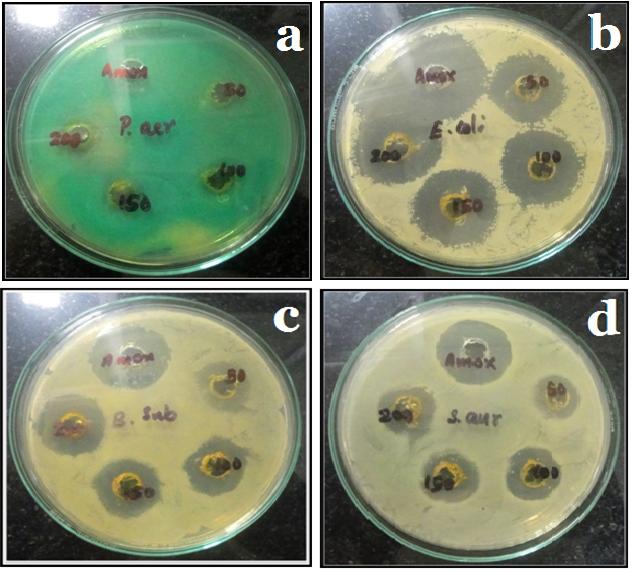
Figure 1: Antibacterial activity of various concentration of methanolic extract of B. courtallensis leaves against (a) Escherichia coli, (b) Pseudomonas aeruginosa, (c) Bacillus subtilis and (d) Staphylococcus aureus The minimum inhibitory concentration (MIC) of B. courtallensis leaves extract against S. Aureus, B. Subtilis, E. coli and P. aeruginosa were found to be 2.36µg/ml,
1.6µg/ml, 4.68µg/ml and 37.5µg/ml respectively which were comparable with that of the standard, Amoxicillin (table 3).
| Microorganism | Methanolic extract of B. courtallensis | MIC | |||||
| Microorganism | Zone of inhibition (mm) | ||||||
| Microorganism | 50 μg/ml | 100 μg/ml | 150 μg/ml | 200 μg/ml | Amoxicillin100 μg/ml | Amox μg/ml | BC μg/ml |
| E. coli | 19.5 | 21 | 21.5 | 22.5 | 29 | 2.36 | 4.68 |
| P. aeruginosa | 15.5 | 17.5 | 18.5 | 20.5 | 24.5 | 37.5 | 37.5 |
| B. subtilis | 28 | 29 | 30 | 30.5 | 36.5 | 1.6 | 2.36 |
| S. aureus | 25.5 | 28 | 27 | 29.5 | 31.5 | 1.6 | 1.6 |
Table 2: In vitro antibacterial activity of methanolic extract of leaves of B. courtallensis.
Discussion
Hypolipidemic effect of B. courtallensis was evaluated on Triton WR-1339 and high fat diet-induced models to experimentally assess the folklore use of B. courtallensis. The non-ionic detergent, Triton WR-1339, has been broadly used to hinder the uptake of triacyl glycerol-rich lipoproteins from plasma by means of peripheral tissues as a way to produce acute hyperlipidemia in animal models which can be traditionally used for a number of pursuits, in distinctive for screening common or chemical hypolipidemic medicinal drugs [30]. The methanolic extract of B. Courtallensis decreased the TC, TG, VLDL-C, and LDL-C and elevated the HDL-C phases tremendously compared to the hyperlipidemic manage rats. The hypolipidemic exercise of B. Courtallensis may be as a result of the accelerated elimination of triglycerides and lipoproteins from blood circulation, prompting reduction in flowing serum lipids. High fat diet significantly increases the TC levels. High cholesterol or LDL-C concentrations are risk explanations for coronary heart diseases and the progress of atherosclerosis [31]. Hypercholesterolemia is a consequence of extended fatty acid oxidation to acetyl CoA which is the essential substrate for cholesterol synthesis. When LDL-C phases are too excessive, they tend to attach to the liner of artery wall and they're oxidized and brought up foam cells in a process that leads to the progression and progress of atherosclerosis. Elevated LDL cholesterol has been known as bad cholesterol [32]. In high fat, triggered hyperlipidemic observe, oral administration of the methanolic extract of B. courtallensis treated rats indicated huge decrease in the plasma total cholesterol. When LDL cholesterol levels are too high, they tend to glue to the lining of the artery wall where they are oxidized and taken up by foam cells in a process that leads to the development and progression of atherosclerosis. So, an elevated LDL cholesterol level is a major risk factor for heart disease and stroke. This is why LDL cholesterol has been called ‘‘bad’’ cholesterol [32]. Hence the cholesterol-reducing activity of B. courtallensis is by enhanced LDL-C catabolism via hepatic receptors. HDL functions as good cholesterol; it opposes atherosclerosis specifically, by means of transferring cholesterol and triglycerides from the peripheral tissues to the liver where it is catabolised and excreted out of the physique by means of hepatic receptors [33]. In this study administration of methanolic extract of B. courtallensis extensively elevated the HDL-C ranges by improving the activity of lecithin cholesterol acyltransferase (LCAT) and reducing the hepatic triglyceride lipase (HTL) on HDL-C [34]. LCAT assumes a key part in consolidating free cholesterol into HDL and exchanging back to VLDL or IDL which is reclaimed by the liver cells [35]. Triglycerides regulate the lipoprotein interactions to maintain the lipid metabolism. The increased levels of triglycerides increase the coronary artery disease. The determined serum hypotriglyceridemic impact on management of methanolic extract of B. courtallensis leaves may be because of the enhanced catabolism of triglyceride. The restoration of the catabolic metabolism of triglycerides could be because of an improved stimulation of the lipolytic activity of plasma lipoprotein lipase (LPL). In the present study, the antibacterial activity of the methanolic concentrate of B. courtallensis was assessed against both gram positive and gram negative organisms. In the antibacterial study B. courtallensis showed professed activity against all the bacterial strains tested. The minimal inhibitory concentration (MIC) of B.
courtallensis leaves extract in opposition to S. aureus, B. subtilis, E. coli and P. aeruginosa were found to be 1.6, 2.36, 4.68 and 37.5 µg/ml respectively which have been comparable with that of the standard, Amoxicillin. Gram positive bacterial strains were discovered to be barely greater sensitive than Gram negative bacterial strains. It is usually as a result of the absence of lipopolysachride layer in gram positive bacteria that would operate as a barrier to the phytochemical supplies which might be in charge for antibacterial activity [36, 37].
| Parameter | Groups | Day 0 | Day 7 | Day 14 | Day 21 | Day 28 |
| TC | Normal Control | 77.97±1.01 | 77.52±1.41 | 77.41±1.25 | 76.18±0.92 | 75.78±0.75 |
| TC | HC | 143.44±1.37 | 152.04±1.47 | 156.7±2.19 | 163.67±1.44 | 168.2±1.3 |
| TC | HC+F(65mg/kg) | 130.23±1.77 | 119.67±1.36** | 106.69±1.68** | 98.26±0.7** | 90.66±0.37** |
| TC | HC+BC(200mg/kg) | 142.61±1.46 | 140.8±2** | 131.1±2** | 103.72±1.32** | 98.86±0.42** |
| TC | HC+BC(400mg/kg) | 140.84±1.8 | 138.62±1.86** | 129.58±3.75** | 99.17±1.11** | 96.94±0.75** |
| TG | Normal Control | 94.39±0.71 | 93.45±1.02 | 92.24±1.43 | 92.47±1.25 | 91.22±0.92 |
| TG | HC | 206.15±1.38 | 212.82±2.31 | 242.46±2.26 | 254.37±1.86 | 247.18±16.83 |
| TG | HC+F(65mg/kg) | 208.61±1.24 | 203.87±1.27 | 200.13±1.37 | 187.72±0.71** | 165.41±0.81** |
| TG | HC+BC(200mg/kg) | 211.45±1.6 | 210.29±1.25 | 188.29±13.78** | 191.96±1.04** | 181.88±0.75** |
| TG | HC+BC(400mg/kg) | 208.55±1.73 | 208.43±1.3 | 202.05±2 | 192.92±0.72** | 180.25±0.93** |
| HDL | Normal Control | 38.31±0.47 | 34.91±0.69 | 33.93±0.78 | 33.53±0.73 | 33.4±0.66 |
| HDL | HC | 30.6±1.04 | 30.1±1.09 | 26.26±1.09 | 22.9±0.59 | 17.05±0.56 |
| HDL | HC+F(65mg/kg) | 32.12±1.08 | 33.21±1.36 | 33.7±1.15** | 37.07±1.12** | 39.73±0.46** |
| HDL | HC+BC(200mg/kg) | 30.01±0.83 | 30.74±0.81 | 31.95±0.92** | 33.44±1.33** | 34.57±1.1** |
| HDL | HC+BC(400mg/kg) | 33.47±2.05 | 32.31±1.94 | 35.43±1.12** | 36.72±1.16** | 38.54±0.75** |
| VLDL | Normal Control | 18.88±0.14 | 18.69±0.2 | 18.45±0.29 | 18.49±0.25 | 18.25±0.18 |
| VLDL | HC | 41.23±0.28 | 42.57±0.46 | 48.49±0.45 | 50.88±0.37 | 49.44±3.36 |
| VLDL | HC+F(65mg/kg) | 41.72±0.25 | 40.78±0.25 | 40.03±0.28 | 37.55±0.14** | 33.08±0.16** |
| VLDL | HC+BC(200mg/kg) | 42.29±0.32 | 42.06±0.25 | 38.66±2.76** | 37.39±0.21** | 36.37±0.15** |
| VLDL | HC+BC(400mg/kg) | 41.71±0.35 | 41.69±0.26 | 40.41±0.4 | 38.59±0.14** | 36.05±0.19** |
| LDL | Normal Control | 20.79±0.99 | 23.92±1.55 | 25.04±1.48 | 24.16±1.24 | 24.14±1.23 |
| LDL | HC | 76.61±1.36 | 84.38±1.78 | 86.95±2.36 | 94.9±1.86 | 101.71±3.88 |
| LDL | HC+F(65mg/kg) | 66.39±1.65 | 60.69±1.56** | 42.96±1.85** | 23.64±1.67** | 18.85±0.38** |
| LDL | HC+BC(200mg/kg) | 70.31±1.5 | 70±1.86** | 63.49±2.69** | 33.89±2.54** | 23.92±1.13** |
| LDL | HC+BC(400mg/kg) | 65.66±2.12 | 64.62±2.58** | 53.74±3.43** | 23.87±1.75** | 21.35±0.89** |
Table 3: Effect of methanolic leaf extract of B. courtallensis on serum TC, TG, HDL-C, VLDL-C and LDL-C level in high fat All the
Table 2: Effect of methanolic leaf extract of B. courtallensis on serum TC, TG, HDL-C, VLDL-C and LDL-C level in high fat All the values are expressed as mean ± SEM for six animals in each group using one- way ANOVA followed by Dunnett’s test. *P ≤ 0.05, P ≤ 0.01, *P ≤ 0.001- compared to hyperlipidemic control. Table 2: Effect of methanolic leaf extract of B. courtallensis on serum TC, TG, HDL-C, VLDL-C and LDL-C level in high fat induced hyperlipidemic model.
Conclusion
The methanolic extract of B. courtallensis possesses antihyperlipidemic and antibacterial activities.
References
-
Ducharme N, Radhamma R (2006) Hyperlipidemia in the elderly. Clin Geriatr Med 24(3): 471-487.
-
Jacobson MS (1998) Heart healthy diets for all children: no longer controversial. J Pediatr 133(1): 1-2.
-
Mungall M, Gaw A, Shephard J (2007) Statin therapy in the elderly. Does it make good clinical and economic sense? Drugs Aging 20(4): 263-275.
-
Grundy SM, Cleeman JI, Rifkind BM, Kuller LH (1999) Cholesterol lowering in the elderly population. Coordinating Committee of the National Cholesterol Education Program. Arch Intern Med 159(15): 1670-1678.
-
Ahmed SM, Clasen ME, Donnelly JF (1998) Management of dyslipidemia in adults. Am Fam Phys 57(9): 2192-2204.
-
Mahmood ZA, Ahmed SW, Sualeh M, Saad Bin ZM (2009) Hyperlipidemia development and consequences. Medical Channel 15(3): 14-17.
-
Yang RL, Shi YH, Hao G, Li W, Le GW (2008) Increasing oxidative stress with progressive hyperlipidemia in human: Relation between malondialdehyde and atherogenic index. J Clin Biochem Nutr 43(3): 154-158.
-
Vandewoude MF, Vandewoude MG (1987) Vitamin E status in normal population: The influence of age. J Am Coll Nutr 6(4): 307-311.
-
Robert WM, Thomas PB (2006) Drug therapy for hypercholesterolemia and dyslipidaemia. In: Laurence LB (ed)The pharmacological basis of therapeutics. McGraw Hill, New Delhi. Pp: 933.
-
Nocentini S, Guggiari M, Rouillard D, Surgis S (2001) Exacerbating effect of vitamin E supplementation on DNA damage induced in cultured human normal fibroblasts by UVA radiation. PhotochemPhotobiol 73(4): 370-377.
-
Patil UK, Saraf S, Dixit VK (2004) Hypolipidemic activity of seeds of Cassia tora Linn. J Ethnopharmacol 90(2-3): 249-252.
-
Shukla R, Gupta S, Gambhir JK, Prabhu KM, Murthy PS (2004) Antioxidant effect of aqueous extract of the bark of Ficusbengalensisinhypercholesterolaemic rabbits. J Ethnopharmacol 92(1): 47-51.
-
WHO (2002) Traditional medicine strategy. WHO Publications: 38.
-
Dandiya PC, Kulkarni SK (2008) Introduction to Pharmacology. Vallabh Prakashan New Delhi; 432- 433
-
Farnsworth NR (1993) Ethno pharmacology and future drug development: The North American experience. J Ethnopharmacol 38(2-3): 145-152.
-
Houghton PJ (1995) The role of plants in traditional medicine and current therapy. J Alter Complement Med 1(2): 131-143.
-
Silva NCC, Fernandes JA (2010) Biological properties of medicinal plants: a review of their antimicrobial activity. J Venom Anim Toxins incl Trop Dis 16(3): 402-413
-
Nascimento GGF, Locatelli J, Freitas PC, Silva GL (2000) Antibacterial activity of plant extracts and phytochemicals on antibiotic-resistant bacteria. Braz J Microbiol 31(4): 247-256.
-
Sakagami Y, Kajimura K (2002) Bactericidal activities of disinfectants against vancomycin- resistant enterococci. J Hosp Infec 50(2): 140-144.
-
Devi PAG, Shyma TB, Raghavendra MP (2013) Plants used by the tribes for the treatment of digestive system disorders in Wayanad district, Kerala. JAPS 3(8): 171-175.
-
Divya VV, Karthick N, Umamaheswari S (2013) Ethnopharmacological Studies on the Medicinal Plants Used by KaniTtribes of Thachamalai Hill, Kanyakumari, Tamilnadu, India. IJABR 3(3): 384- 393.
-
Jayakumar S. Karshakan (2015) Rashtradeepika Publications; 10-11.
-
John De Britto A, Mahesh R (2007) Evolutionary medicine of Kani tribal’s botanical knowledge in agasthiayamalai biosphere reserve, South India. Ethnobotanical Leaflets 11(1): 280-290.
-
Abhishek RU, Aswin R, Mahesh TP (2011) Phytochemical analysis and antibacterial efficacy of fruit rind of BaccaureacourtallensisMuell. Arg. Medicinal Plants 3(4): 327-330.
-
Sujatha ML, Yadav CN, Jain SH, Mohan S, Kekuda TRP (2009) Investigation on phytochemical screening and antibacterial potential of methanol extract of Baccaurea courtallensis Muell. Arg and Prosopis Juliflora DC. BTAIJ 3(3): 161-164.
-
Roux S, Sable E, Porsolt RD (2004) Primary observation (Irwin) test in rodents for assessing acute toxicity of a test agent and its effect on behavior and physiological function. Curr Protoc Toxicol 10: 1-23.
-
Sunil C, Irudayaraj SS, Duraipandiyan V, Ignacimuthu S (2013)In vitro antioxidant and antihyperlipidemic activities of Toddaliaasiatica (L) Lam. Leaves in Triton WR-1339 and high fat diet inducedhyperlipidemic rats. Food Chem Toxicol 60: 135-140.
-
Sunil C, Ignacimuthu S, Kumarappan C (2012) Hypolipidemic activity of Symplocos cochinchinensis S. Moore leaves in hyperlipidemic rats. J Nat Med 66(1): 32-38.
-
Iwalokun BA, Ogunledum DO, Ogbolu SB, Bamiro Jimi, Omojola (2004) In vitro antimicrobial properties of aqueous garlic extract against multidrug resistance bacteria and candida species from Nigeria. J Med Food 7(3): 327-333.
-
Schurr PE, Schultz JR, Parkinson TM (1972) Triton induced hyperlipidemia in rats as an animal model for screening hypolipidemic drugs. Lipids 7(1): 68- 74.
-
Woo MN, Bok SH, Lee MK, Kim HJ, Jeon SM, et al. (2008) Anti-obesity and hypolipidemic effects of a proprietary herb and fiber combination (S&S PWH) in rats fed high-fat diets. J Med Food 11(1): 169- 178.
-
Chen Q, Reis SE, Kammerer C, Craig W, McNamara DM, et al. (2011) Association of anti-oxidized LDL and candidate genes with severity ofcoronary stenosis in the women’s ischemia syndrome evaluation study. J Lipid Res 52(4): 801-807.
-
Wilson PW, Abbott RD, Castelli WP (1988) High density lipoprotein cholesterol and mortality, TheFramingham heart study. Arteriosclerosis 8(6): 737-740.
-
Anila L, Vijayalakshmi NR (2002) Flavonoids from Emblica officinalis and Mangifera indica effectiveness for dyslipidemia. J Ethnopharmacol 79(1): 81-87.
-
Rajlakshmi D, Sharma DK (2004) Hypolipidemic effect of different extracts of Clerodendron colebrookranumin normal and high-fat diet fed rats. J Ethnopharmacol 90(1): 63-68.
-
Inouye S, Takizawa T, Yamaguchi H (2001) Antibacterial activity of essential oils and their major constituentsagainst respiratory tract pathogens by gaseous contact. J Antimicrob Chemoth 47(5): 565-573.
-
Delaquis PJ, Stanich K, Girard B, Mazza G (2002) Antimicrobial activity of individual and mixed fractions of dill, cilantro, coriander and eucalyptus essential oils. Int J Food Microbiol 74(1-2): 101-109.
- Acido Labile or Gastro Irritant Apis and Enteric Release in Galenic Practice: An Overview
- A Study on Knowledge, Attitude and Practice of Hand Hygiene among Healthcare Professionals at a Tertiary Care Hospital, India
- Influence of Inoculum Concentration on In Vivo Incubation Period of Emmia lacerata, Pathogenesis and Management of Wilt in Pepper (Capsicum annuum L.)
- Vanilla’s Chemistry
- Marine Anti-Cancer Compounds and Adverse Effects of Global Warming on Oceans: An Overview
- Serological Investigation of Chikungunya Virus Antibody among Malaria-Suspected Febrile Patients in Some Healthcare Facilities in Rivers State