
Application of Plant Based Natural Polymer in Drug Delivery System: A Critical Overview
Several natural polymers have been used for a variety of biomedical applications including drug targeting, pharmaceutical preparations, drug delivery systems, prosthetics, and tissue engineering scaffolds. Natural polymers can be classified into three classes like polysaccharides, proteins, and polyesters on the basis of chemical structures. Natural polymers are widely used because they are readily accepted by the body and possess high bioactivity and biocompatibility. Many researched are going on and novel natural polymers are to be expected in future. Applications of natural polymers derived from plants have been extensively explored in different drug delivery systems. This review article will be useful to upcoming scientists who are working on different delivery systems using natural polymers.
Introduction
In macromolecular terms, a polymer is a large molecule composed of covalently linked repeating polymeric unit cells. Polymers often include carbohydrates, proteins, and muscle fibres. It is possible to classify carbohydrates as monosaccharide, disaccharide, or polymeric based on the number of sugar units they contain. A polysaccharide is a compound with more than 20 monosaccharide units that are repeated throughout the compound. To be classified as either homopolysaccharides (containing only one repeating monomeric unit, such as cellulose), or heteropolysaccharides (containing two or more distinct polymers), polysaccharides must include one or more of the following: (e.g., peptidoglycan bacterial cell walls and glycosaminoglycans) [1]. Biocompatible and biodegradable non-toxic entities may be created by chemically altering these ecological processes, and as a result, drug delivery agents based on these materials are becoming more popular in the pharmaceutical business. For this reason, plant-based monomers have already been considered as well. Different liquid ophthalmic suspensions, buccal films and film-coating agents have also been shown to be effective, as have microspheres and film-coating compounds [2, 3].
Polymers have made considerable progress in drug treatment since silicone rubber was first used as a carrier in the design and development of long-term drug delivery systems. More than a dozen scientific publications have written about the use of polymer as drug delivery vehicles, including Advanced Drug Delivery Reviews, which has citations from the Web of Science core collection as of 2014 [4].
| Subject | Year | Rank | Citation |
|---|---|---|---|
| Block copolymer micelles | 2001 | 3 | 1620 |
| Thermosensitive Hydrogels | 2002 | 14 | 695 |
| Nanoparticle targeting | 2004 | 13 | 712 |
| Thermo and pH responsive polymers | 2006 | 12 | 771 |
| Drug release from HPMC delivery systems | 2001 | 11 | 772 |
| Dendrimers | 2005 | 10 | 788 |
| Peptide and protein PEGylation | 2002 | 9 | 803 |
| Hydrogels | 2002 | 7 | 1083 |
| Nanoparticles | 2002 | 6 | 1213 |
| Environment sensitive Hydrogels | 2001 | 5 | 1221 |
| Biodegradable nanoparticle | 2003 | 4 | 1230 |
Table 1: Top polymer related reviews cited in Advanced Drug Delivery Reviews according to Web of Science core collection in 2014.
Cross excipients are frequently used in modern pharmaceutical dosage forms because they can perform a variety of functions, including modifying the release of an active ingredient, improving its stability and bioavailability, increasing patient acceptability, and simplifying the manufacturing process. For contemporary medication delivery systems, excipients are constantly being refined and improved upon to meet the needs of the patients [5].
As well as being helpful in the formulation of solid, liquid, and tractor trailer pharmaceutical formulations, polymer have also been studied and the results and used in the creation of new drug delivery systems. For this, experts have thoroughly examined synthetic compounds polymers [6]. Toxic, costly, environmentally problematic, and requiring extensive development time for synthesis, synthetic polymers outperform naturally occurring polymers in all these areas. To be sure, natural polymers for pharmaceutical applications are appealing because they are cheap, widely accessible, nontoxic, and chemically modifiable, possibly biodegradable, and with just a few outliers also permeable. They are all these things.
Today, a wide range of plant-based pharmaceutical excipients are on the market for various pharmaceutical applications. The use of plant-based materials as pharmaceutical excipients has been investigated by a number of scientists. Since natural polymers may be made into a broad variety of materials depending on their characteristics and molecular weight, they have been a focus of many studies on drug delivery methods. It is possible to modify natural gums to suit the needs of drug delivery systems, making them a viable alternative to synthetic excipients already on the market [7].
Natural plant-based products are becoming more important since plant resources are renewable and may offer a steady supply of raw materials if grown or harvested sustainably. Plant-derived compounds, on the other hand, may provide several difficulties, including the need to synthesise tiny amounts and complicated combinations, which can vary depending on the location of the plants and other factors like the season. Therefore, the isolation and purification procedure may be lengthy and costly. The importance of intellectual property rights has also risen in recent years.
It has been proven that plant-based polymers can be used in various pharmaceutical dosage forms like matrix- controlled systems, film coating agents, buccal films, microspheres, nanoparticles, viscous liquid formulations like ophthalmic solutions, suspensions, or implants, and that their applicability and efficacy have been studied in this regard. All of the aforementioned dosage forms have also used them as viscoelastic agents to increase viscosity, stabilisers, disintegrants to solubilize and emulsifiers to emulsify [8].
Sustained drug delivery systems have been shown to significantly enhance the therapeutic efficacy of medications in clinical trials. Natural, semi-synthetic, and synthetic polymers have been proven to be the most successful in long-acting drug delivery systems, which may be made from a range of natural, semi-synthetic, and synthetic polymeric materials. Apart from that, a number of polymers are often employed in the development of novel drug delivery systems, such as those that carry medicine to a specific region of the gastrointestinal tract or that release medication in response to external stimuli. Synthetic polymers such as ethyl cellulose, hydroxypropyl methylcellulose, and eudragit are the focus of the majority of polymer research in the field of novel drug delivery. These are polymers that have been synthesised. Researchers have tried a variety of various combinations in order to get the desired drug release patterns, including ethyl cellulose and hydrogenated castor oil, eudragit and the same, and polyamide/hydroxypropyl methylcellulose, to name a few. In the long term, it has been shown that these combinations make the process more difficult and increase the cost of formulation. Since there is a current trend toward the usage of vegetarian and nontoxic products, it is necessary to utilise natural components in place of synthetic ones. These tablets may include a broad variety of natural polymeric components, such as cellulose. Guar gum, isapghula husk, pectin, galactomannon from Mimosa scabrella and Gleditsia triacanthos Linn (honey locust gum), Sesbania gum, mucilage from Hibiscus esculenta pods, tamarind seed gum, gum copal, and other kinds of gums and mucilages may all be found in nature. Guar gum is a type [9].
Gums and mucilage derived from natural sources include a diverse range of ingredients. The polysaccharides, resins, or polyphenols in the gum are often accountable for the tablet form’s release retardant characteristics. There are many plant sections from which to harvest gums. Most gums get their supply as from soil’s epidermal, while others get it from the leaf or the bark.
Here we look at some of the newer plant-based drug release-delaying materials that have been investigated as carriers for traditional sustained release dosage forms and buccal drug delivery systems, gastro retentive systems, and microcapsules, among other delivery mechanisms. Specifically, the utilisation of natural polymers in developing new dosage forms and drug delivery methods is mentioned. This is currently being investigated.
Polysaccharides and Application
Tamarind Gum
It’s made from the endosperm of tamarind tree seeds (Tamarindus indica), which is part of the evergreen family. Tamarind xyloglucan comes from it. The seeds of the tamarind tree are used to make tamarind gum, which is also known as tamarind kernel powder (TKP). Seed selection, seed coat removal, separation, hammer milling, grinding, and sieving are all steps in the gum-making process. Gum from tamarind has glucosyl: xylosyl: galactosyl in a 3:1:1 ratio, making it a polysaccharide. Higher plants’ main cell walls include a significant amount of the structural polysaccharide xyloglucan. Its O-6 glucopyranosyl residues are partly replaced with D-Xylo pyranose in tamarind xyloglucan’s D-glucan backbone. It’s fairly uncommon for 22 xylose residues to be modified at O-2 by adding -D-galactosyl groups.
Application There are no organic solvents that can dissolve it and hot water disperses it to create a gel with a high viscosity, similar to a mucilaginous solution. It has a wide pH tolerance and is extremely sticky. Unlike other starches, tamarind gum has a greater viscosity at the same concentration. The food and pharmaceutical sectors have turned to it as a stabiliser, thickening, gelling agent, and binder. Tamarind seed polysaccharide (TSP) has lately been shown to have a number of additional beneficial characteristics. This includes not being carcinogenic, mucoadhesive, biocompatible, and having a high drug-holding capacity. Excipient in hydrophilic drug delivery system has been used as a result of this.
Hibiscus rosa-sinensis
Red Hibiscus of the Senegal China rose, and Chinese hibiscus are some other names for the Malvaceae genus Linn (also known as the shoe-flower plant, or linn). Hibiscus rosa- sinensis Linn fresh leaves are gathered, cleaned with water to remove dirt and debris, and dried. Leaves are soaked for 5-6 hours, and then cooked for 30 minutes before being set aside for 1 hour so that all of the mucilage may be released into the water. To remove the marc from the solution, the material is squeezed out of an eight-fold muslin fabric bag. To precipitate the mucilage, acetone is added to the filtrate in a volume three times larger than the entire filtrate. Using a sieve (number 80), the mucilage is sieved and dried in an oven at a temperature of 50°C before being stored in 34 desiccators for future use.
Cyclopropanoids, methyl sterculate, 2-hydroxysterculate malvate, and -rosasterol are all found in the plant. For example, L-rhamnose, D-galacturonic acid, and D35 glucuronic acid are all found in the mucilage of Hibiscus roses sinensis. The roots are used as emollients and aperients in traditional therapies to cure burning, skin illness, and constipation, respectively.
Application Its mucilage was shown to be useful in the creation of 34 long-acting tablets, according to one research. Using direct compression methods, a matrix tablet comprising dried mucilage as well as diclofenac sodium (DS) was created. For a period of 12 hours, mucilage may be employed as a release- delaying agent when the medication to mucilage ratio is 1:1.5.
Okra gum
Okra gum was tested as a binder in 39 different paracetamol tablet formulations and found to be effective. In comparison to formulations using gelatin, those using okra gum as a binder exhibited a quicker start and a greater quantity of plastic deformation during testing. As the binder content was raised, the crushing strength and disintegration time of the tablets improved but their friability declined.
Okra gum generated tablets with longer disintegration durations than those containing gelatin, even though gelatin had greater crushing strength. Okra gum may be helpful as a hydrophilic matrixing ingredient in long-term drug delivery systems, according to the study’s findings.
Another research used paracetamol as a model drug to compare Okra gum to sodium carboxymethyl cellulose (NaCMC) and hydroxypropylmethyl cellulose (HPMC) as a controlled release agent in modified release matrices. Using okra gum matrices, we found that paracetamol was released slowly over a period of 6 hours, following time-independent kinetics. There was a correlation between medication concentration and release rate. Okra gum out performed Na-CMC in terms of release of paracetamol from the matrix tablet, while the combination of Okra gum and Na-CMC, or on additional addition of HPMC, led in near zero order release. According to the findings, Okra gum matrices may be helpful in the development of long-acting tablets with a release time of up to 6 hours.
Application Okra gum, a polysaccharide produced from Hibiscus esculentus fruits, is composed of D-galactose, L-rhamnose, and L-galacturonic acid. In these recipes, okra gum acts as a binder.
Guar gum
Guar gum is made from the endosperm of the Cyamopsis tetragonoloba seed. It is a polysaccharide composed of repeated galactose and mannose units. Every other mannose residue is linked to a galactose residue by a 1, 6-link, resulting in a short side branch that forms the backbone. Guar gum maintains its temperature and acidic pH stability (range 5-7). When exposed to strong acids (pH 3 or below) or temperatures over 50° C, guar gum hydrolyzes and loses viscosity in Figure 1.
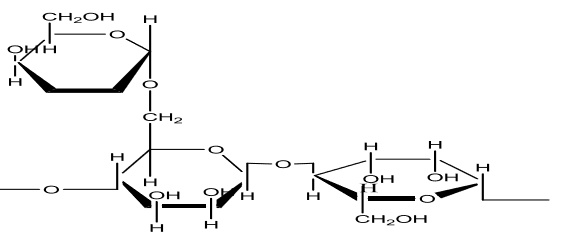
Application A thickening in cosmetics, Guar gum is used as a disintegrant in tablets, and as an ice cream additive to prevent the formation of ice crystals.
The Need for Natural Polymers
Natural polymers have been studied for their helpful characteristics, particularly in the delivery of hazardous medicinal compounds to the target area. By increasing the medication availability at the target tissues, natural polymers and derivatives may also be a safe delivery method. Natural polymers have a few unique properties that make them appeal:
Biodegradability: They have no negative impact on the environment, and they’re completely biodegradable.
Lack of toxicity: they are non-toxic.
Economy: They are low-cost and readily available in huge numbers.
Safety: Their readily available nature, they provide the necessary security without posing any negative risks.
Availability: They are abundantly available all throughout the world; for example, huge amounts of cellulose may be easily harvested [10].
Uncontrolled hydration rate due to variations in availability and the presence of various species are a few of the drawbacks of being exposed to the outside environment Classification of Natural Polymers Plants, microbes, algae, and fungi are all sources of natural polymers, particularly polysaccharides. Some groups have a positive charge, whereas others, like carboxylate and sulphate, have a negative charge. At this time, only chitosan is known to be a cationic polysaccharide (Figure 2).
• Plant origin Cellulose, agar, glucomannan, pectin, guar gum, and locust bean starch, gum tragacanth, bean gum, gum acacia, and psyllium.
• Microbial origin Gellan, xanthan, curdlan.
• Algal origin Carrageenan and alginate.
• Fungal origin
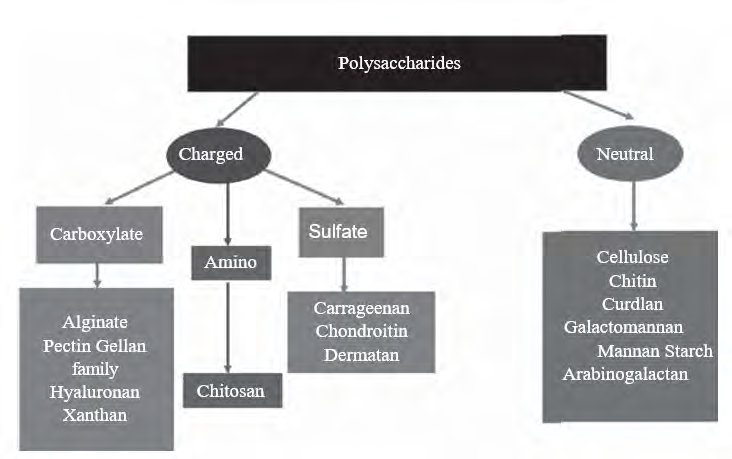
Pullulan, chitin, and scleroglucan Figure 2: Classification of polysaccharides used in drug delivery.
Application of Natural Polymers
Tablet adjuvant formulations
Since polysaccharides have an intrinsic sticky property, they have been used in tablet formation. To function as disintegrants, they absorb and retain huge amounts of water, which causes them to expand dramatically. The powder formulations are more cohesive because of their inclusion, and the tablets or granules may be formed more readily (e.g., guar gum and acacia).
Mucoadhesive agents
One of their primary goals is to regulate the timing at which the medicines are released. Because they stay in the gut and stoma longer, they aid in medication absorption more effectively (e.g., karaya gum and sodium alginate).
Emulsifying and suspending agents
The surface adsorption of biopolymers makes emulsions more stable. As well as forming strong films, they are capable of resisting coalescence between droplets (e.g., xanthan gum and acacia gum).
Gelling agents: When mucilage and gums are combined with other gums, they create gels. A three-dimensional network of molecular connections leads to gelation, which in turn may trap enormous quantities of water. Chemical treatments, such as altering pH and temperature, or physical techniques, such as adding appropriate reagents, may be used to create these formulations. Carrageenan and locust bean gum are two examples. Coating agents: Coating agents prevent medicines from deterioration and enable controlled release when certain biopolymers are used (e.g., pectin and sodium alginate). Sustaining agents in dosage form: Matrix tablets are the most prominent oral drug delivery systems because of their sustained re- lease and easy formulation properties (e.g., locust bean gum and karaya gum). The main purpose of developing drug delivery systems casting polymers is to abolish any toxic product accumulation inside the body. This is quite feasible as natural polysaccharides do not generate any unusual products inside the body. Instead, they are eliminated easily as carbohydrate units during the regular metabolic processes, and so the polysaccharide disappears after serving its purpose. The biodegradation proceeds with bond breakage within the monomers leading to erosion of the bulk polymer. Various routes cause polymer degradation:
- Hydrolysis
- Photolysis
- Structural weakening
- Biodegradation
- Brittleness
- Solubilising nature
- Thermo-degradation
Polymer Drug Release Mechanism
Different methods allow the therapeutic chemicals linked to the polymers to be released from the polymeric matrix at a regulated pace. Polymer characteristics are used to distribute a medication to tissues over a predetermined period of time. For instance, polymers that release drugs only when the pH or temperature changes are known as stimuli- sensitive polymers [11].
Degradation: The body’s natural physiological and bio- logical processes breakdown some biodegradable polymers. Additionally, they may be engineered to break down when hydrolysed, resulting in shorter, more controllable chains with no negative consequences.
Diffusion: Often, a reservoir device is utilised to store the medication, which is housed in the tablet’s core or polymeric network’s polymer network and protected by a shell. The drug’s rate of diffusion from the core will be controlled by the polymer used in the shell. Water diffuses into the centre of the device, dissolving the medication, which is subsequently released. Depending on the polymer, the shell may swell or degrade. Diffusion systems may be divided into two categories: 1. Only the dissolved substance in the centre is used. There is a reduction in drug load over time as the central concentration decreases. 2. The initial concentration of the medication in the core is greater than the concentration of aqueous solubility. Drug load remains stable for a longer length of time as the dissolved substance diffuses outwards more rapidly.
Swelling: Another governing factor in medication distribution is swelling. As it fills up, the matrix former may regulate the pace at which the medication is released. As a result of increased polymer swelling, diffusion paths become longer, decreasing the gradient of drug concentration. So the medication is released into the bloodstream over a longer period of time. Swelling of the polymer, on the other hand, may speed up the release by increasing molecular mobility.
Diffusion-controlled systems and drug release formulations triggered by solvents have made enormous development overall. With the use of hydrogels and other polymeric carrier systems, therapeutic drugs may be delivered safely and more effectively to difficult-to-reach physiological areas, such as the brain and liver. A polymer’s molecular architecture may be precisely regulated such that it reacts in a particular way when exposed to an external stimulus. The polymer-conjugated therapeutics have demonstrated better drug release kinetics by avoiding carrier buildup, according to the research. Polymer drug conjugates assist to extend the half-life of medicines delivered to the cytoplasm by increasing the blood flow.
Natural Polymers in Drug Delivery
It started with the introduction of polymeric carriers, which elicited spatiotemporal drug release in implanted reservoir systems, that modern drug delivery systems evolved hierarchically. Traditional medication delivery methods have unquestionably contributed significantly to the treatment of illness. As a result, new delivery methods and mechanisms are required to meet the increasing need for specialized drug administration protocols that are precise and powerful. Recent developments have also shown the need of medication delivery system feedback regulation. A lot of challenges need to be solved before intelligent delivery systems can be used to target delivery. As a result, not only could better intracellularly drug transport pathways be developed, but also more precise targeting and identification could be achieved via feedback control systems [12].
Collagen: The extracellular matrix of connective tissue contains collagen, a most common molecule in the animal world. Glycine–proline–hydroxyproline repetitions give it a distinctive triple helical shape. Around 19 distinct collagen systems are now being used in pharmaceutical and medical applications, with type I, type II, and type III accounting for 80–90% of all collagen use. Because of collagen’s high biocompatibility, low immunogenicity, and excellent degradability, it is widely used (Harkness, 1961).
When therapeutic chemicals are enclosed and bonded with gelatin, a scaffold or gel is created that not only extends the release of the medication but also improves its treatment efficacy. Japan uses monolith machines for collagen pellets and tablets, which are specialised 1 mm diameter and 15 mm long rods. To treat periodontitis, they are injected with syringes and pump to administer minocycline and cell lysis locally. Smaller version cutaneous injections of IL-2 were also made with the granules [13].
The invention of the collagen corneal shield, a kind of ophthalmic lens, is another example of collagen’s usage in the pharmaceutical sector. After scratched cornea and surgery, gelatin, which is a structural protein, offers protection and support for the eyes and cures a wide range of eye problems. Procaine and bovine collagen are used to make collagen shields, and the dissolving times vary. The Bausch & Lomb Pharmaceuticals BioCora collagen shields are collagen contact lenses created by the company. Corticosteroids and other conjunctivital antibiotics may be delivered to the eye with these devices in the future. Antibiotics and steroids that are water-soluble, such as Vancomycin, Metronidazole, pilocarpine, and Fluconazole, are used with collagen shields to reduce eyelid rubbing. MediLenso, Biocora, Uci, ProshieldO, and Chiron are just a few of the collagen shields on the market. They act as a short-term bandage for wounds and allow for the oxygen transfer needed for metabolism of the eye to take place. These shields disintegrate in the cornea and keep the eye well lubricated.
Conclusion
Recent years have seen a significant increase in the amount of research being done on natural biodegradable polymers owing to their use in areas such as environmental protection and health maintenance. As a result of the debate, it can be stated that natural polymers and their modified derivatives are highly attractive candidates for the administration of mucosal, colonic and various targeted protein/peptide, gene/vaccine and anticancer drugs. There are many research papers that have been consulted for this study, and the findings from each have been summarised. The information in this article will be useful to upcoming scientists when they do further study. It is with great pleasure that I express my gratitude to all the authors who have contributed reviews that reflect the most recent research on natural polymers, as well as new aspects of these materials’ potential applications in controlled drug delivery, gene therapy, and tissue engineering scaffolds.
References
-
Pérez S, Mulloy B (2005) Prospects for glycoinformatics. Current Opinion in Structural Biology 15(5): 517-524.
-
Pandey R, Khuller GK (2004) Polymer based drug delivery systems for Mycobacterial infections. Current Drug Delivery 1(3): 195-201.
-
Chamarthy S, Pinal R (2008) Plasticizer concentration and the performance of a diffusion-controlled polymeric drug delivery system. Colloids and Surfaces A: Physicochemical and Engineering Aspects 331(1-2): 25-30.
-
Folkman J, Long D (1964) The use of silicone rubber as a carrier for prolonged drug therapy. Journal of Surgical Research 4(3): 139-142.
-
Raymond CR, Paul JS, Siân CO (2006) Handbook of Pharmaceutical Excipients. 5th (Edn.), London (UK): The Pharmaceutical Press.
-
Varshosaz J, Tavakoli N, Eram SA (2006) Use of natural gums and cellulose derivatives in production of sustained release Metoprolol tablets. Drug Deliv 13(2): 113-119.
-
Bhardwaj TR, Kanwar M, Lal R, Gupta A (2000) Natural gums and modified natural gums as sustained-release carriers. Drug Dev Ind Pharm 26(10): 1025-1038.
-
Guo J, Skinner GW, Harcum WW, Barnum PE (1998) Pharmaceutical applications of naturally occurring water-soluble polymers. Pharm Sci Technol Today 1(6): 254-61.
-
Efentakis M, Kouttis A (2001) Release of Furosemide from multiple unit and single unit preparations containing different viscosity grade of sodium alginate. Pharm Dev Tech 6(1): 91-98.
-
Prajapati VD, Jani GK, Moradiya NG, Randeria NP (2013) Pharmaceutical applications of various natural gums, mucilages and their modified forms. Carbohydrate Polymers 92(2): 1685-1699.
-
Kaur A, Kaur A, Kaur VP, Kaur M, Murthy RS (2014) Polymeric drug delivery approaches for colon targeting: a review. Drug Delivery Letters 4(1): 38-48.
-
Langer R, Peppas N (2003) Advances in biomaterials, drug delivery, and bionanotechnology. AIChE Journal 49(12): 2990-3006.
-
Alonso-Sande M, Teijeiro-Osorio D, Remuñán-López C, Alonso M (2009) Glucomannan, a promising polysaccharide for biopharmaceutical purposes. European Journal of Pharmaceutics and Bio- pharmaceutics 72(2): 453-462.
- Acido Labile or Gastro Irritant Apis and Enteric Release in Galenic Practice: An Overview
- A Study on Knowledge, Attitude and Practice of Hand Hygiene among Healthcare Professionals at a Tertiary Care Hospital, India
- Influence of Inoculum Concentration on In Vivo Incubation Period of Emmia lacerata, Pathogenesis and Management of Wilt in Pepper (Capsicum annuum L.)
- Vanilla’s Chemistry
- Marine Anti-Cancer Compounds and Adverse Effects of Global Warming on Oceans: An Overview
- Serological Investigation of Chikungunya Virus Antibody among Malaria-Suspected Febrile Patients in Some Healthcare Facilities in Rivers State