
A Brief Review on Different Chromatographic Techniques
Chromatography is a separation process used to separate components in a mixture. The components of the mixture are dispersed in a liquid solution known as the mobile phase, which holds it through a structure containing another substance known as the stationary phase. Component separation requires differential partitioning between the mobile and stationary phases. The analytical goal of chromatography is to determine the qualitative and quantitative chemical makeup of a sample and its primary purpose is to purify and extract one or more components of a sample. This paper will discuss the history and basics of what chromatography is meant and the main principles of how we can run it. In this review, we have briefly mentioned and focused on principle, types, schematic diagram and applications for each chromatographic type such as Column chromatography, Ion-exchange chromatography, Gel-permeation (molecular sieve) chromatography, Affinity Chromatography, Paper Chromatography, Thin-layer chromatography, Gas chromatography, Dye-ligand Chromatography and High-pressure liquid chromatography
Introduction
The term “chromatography” comes from the Greek terms “Chroma,” which means “colour,” and “graphien,” which means “to write.” Russian botanist M. S. Tswett invented the method at the beginning, in 1903. It is a method of analytical analysis used to separate, identify and purify mixture’s constituents. It operates on the theory of differential interaction between solutes in the stationary and mobile phases, which are two separate phases. To address issues with analysis time and the variety of substances that might be detected, many changes were made to the chromatography procedures. Pumps were used to practice applying pressure in order to shorten the run duration. To improve detection, tools including spectroscopy and electrochemical techniques were included [1].
The work of Archer John Porter Martin and Richard Laurence Millington Synge during the 1940s and 1950s, for which they were awarded the 1952 Nobel Prize in Chemistry, greatly advanced the technology of chromatography. Their work promoted the quick development of various chromatographic techniques, including paper chromatography, gas chromatography and what would later be known as high-performance liquid chromatography. They pioneered the fundamental concepts and procedures of partition chromatography. Since then, technological development has accelerated. The various types of chromatography mentioned below were developed as a result of researchers discovering that the fundamental ideas behind Tsvet’s chromatography could be utilised in numerous different ways. Chromatography’s technical performance is always being improved, enabling the separation of molecules that are getting closer in similarity [2].
Definition
Chromatography is a method used in laboratories to separate mixtures. The combination is dispersed in a liquid known as the mobile phase, which transports it through an apparatus holding a different substance known as the stationary phase. The components of the mixture separate because they move at different rates. Based on differential partitioning between the mobile and stationary phases, the separation is achieved. Differences in retention on the stationary phase due to small variations in a compound’s partition coefficient have an impact on the separation [3]. The components to be separated are divided between two phases in chromatography, one of which is stationary (stationary phase) and the other of which is mobile (mobile phase), which moves in a specific direction [4]. Chromatography can be analytical or preparative. Preparative chromatography is a type of purification since its goal is to separate the components of a mixture for later use. Analytical chromatography is typically used with smaller amounts of material to determine the presence of analytes in a mixture or to measure their relative proportions. The two do not preclude one another [5].
Principle of Chromatography
The foundation of chromatography is the idea that mixtures of molecules applied to surfaces or solids and fluid stationary phases (stable phases), separate from one another while moving with the help of a mobile phase. The molecular features related to adsorption (liquid-solid), partition (liquid-solid) and affinity or differences among their molecular weights are the factors that have an impact on this separation process. These variations lead some combination components to spend more time in the stationary phase and travel more slowly through the chromatographic system, while others pass quickly into the mobile phase and leave the system more quickly.
Three components thus form the basis of the chromatography technique.
- Stationary phase: This phase is always composed of a “solid” phase or “a layer of a liquid adsorbed on the surface a solid support”.
- Mobile phase: This phase is always composed of “liquid” or a “gaseous component”.
- Separated molecules: The type of interaction between the stationary phase, mobile phase and substances contained in the mixture is the basic component effective on the separation of molecules from each other. The primary factor in effecting the separation of molecules from one another is the sort of interaction between the stationary phase, mobile phase and substances present in the mixture. Partition-based chromatography techniques are highly effective at separating and identifying small molecules such as amino acids, carbohydrates and fatty acids.
Affinity chromatography or ion-exchange chromatography are more successful at separating macromolecules like proteins and nucleic acids. Gas- liquid chromatography is used to separate alcohol, esther, lipid and amino groups as well as to observe enzymatic interactions. Molecular sieve chromatography is specifically used to determine the molecular weights of proteins. Paper chromatography is used to separate proteins and in studies pertaining to protein synthesis. Viruses, DNA and RNA particles are purified using agarose-gel chromatography [6].
A solid phase or a liquid phase coated on the surface of a solid phase is referred to as the stationary phase in chromatography. A gaseous or liquid phase is the mobile phase, which is moving over the stationary phase. Liquid chromatography (LC) is used when the mobile phase is liquid and gas chromatography is used when the mobile phase is gaseous (GC). For gases, mixtures of volatile liquids and solid materials, gas chromatography is used. Particularly for thermally unstable and non-volatile samples, liquid chromatography is used [7].
The goal of using chromatography, which is also used for quantitative analysis, is to achieve a sufficient separation within a reasonable amount of time. To that goal, numerous chromatographic techniques have been created. Some of these are column chromatography, affinity chromatography, gas chromatography, thin-layer chromatography (TLC), paper chromatography, ion exchange chromatography, gel permeation chromatography and high pressure liquid chromatography [8].
Types of Chromatography Following are the types of chromatography
- Column Chromatography
- Ion-Exchange Chromatography
- Gel-Permeation (molecular sieve) Chromatography)
- Affinity Chromatography
- Paper Chromatography
- Thin-Layer Chromatography
- Gas Chromatography
- Dye-Ligand chromatography
- High-Pressure Liquid Chromatography (HPLC)
- Size Exclusion Chromatography
Column Chromatography
Each of these distinctive components can be isolated using chromatographic techniques since proteins differ in their size, shape, net charge, stationary phase utilised and binding ability. The most common application of these techniques is column chromatography. Using this method, biomolecules can be made pure. The material to be separated is put to a column first (stationary phase), followed by wash buffer (mobile phase) (Figure 1). Their flow via the inside column material, which is supported by fibre glass, is ensured. The samples are gathered at the device’s base in a time- and volume-dependent way [9].
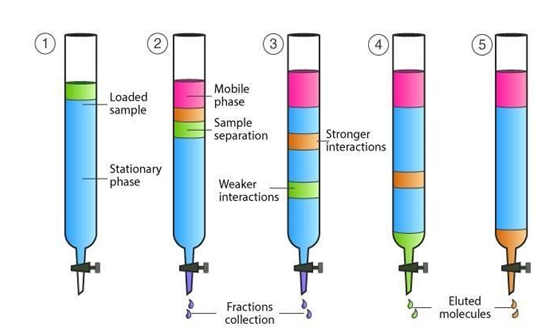
Principal of Column Chromatography
The movement of the various parts of the mixture move at various speeds when the mobile phase and the mixture that needs to be separated are introduced from the top of the column. Compared to components with greater adsorption and affinity to the stationary phase, those with lower adsorption and affinity move more quickly. The elements that move quickly are eliminated first, while the elements that move slowly are eliminated last [10].
Types of Column Chromatography 1. Adsorption Column Chromatography: Adsorption is the underlying principle of this method. When a mixture of materials (adsorbate) dispersed in the mobile phase (eluent) passes through a column of stationary material (adsorbent), they move in accordance with their respective affinities towards stationary material. The chemical that has a stronger attraction for stationary phase’s moves more slowly and the compound with a weaker affinity phases travel more quickly. The compounds are divided in this manner. 2. Partition Column Chromatography: This technique uses partition as its underlying premise. A combination of solutes will be distributed according to their partition coefficient when there are two immiscible liquids present. The component that is more soluble in the stationary phase travels slower and the component that is more soluble in the mobile phase travels faster when a mixture of compounds that have been dissolved in the mobile phase is transported through a column of liquid stationary phase. Liquids are not permitted to be the stationary phase. In order to create a thin film or coating of a liquid that serves as a stationary phase, a solid support is employed. Simple solvent extraction techniques requiring only a few (one to three) extractions can completely separate substances with significant differences in their partition coefficients. 3. Ion-exchange Column Chromatography: Ionizable compounds are separated using ion-exchange chromatography according to their overall charge. Because the charge carried by the target molecule can be easily controlled by altering buffer pH, this technique makes it possible to separate comparable sorts of molecules that would be challenging to separate by other techniques [11]. 4. Gel Column Chromatography: In analytical chemistry, gel chromatography, also known as gel filtering, is a technique for separating chemical compounds by taking advantage of the variations in the rates at which they pass through a bed of a porous, semisolid substance. The technique is particularly helpful for separating proteins, peptides, amino acids, enzymes and other molecules of low molecular weight from one another. By using gel chromatography, the components of a mixture can be separated based on the variations in their molecular sizes. Large molecules are unable to enter the pores and tend to flow unimpeded, whereas small molecules tend to disperse into the inside of the porous particles, restricting their flow [12].
Applications of Column Chromatography The most effective method for separating active principles from plant components is column chromatography.
- To remove contaminants from the critical components.
- Separating key components’ metabolites.
- Utilised to measure the presence of phytomenadione in pills and injections.
- Flucinolone, acetonide and betamethasone concentrations in formulations.
- Used to separate inorganic ions such the ones from copper, cobalt, and nickel.
- Calculating the w/w ratio of strychnine in iron phosphate syrup with quinine and strychnine.
- Quinine concentration in ethanolic solution determination.
- Helpful for separating carbs from their derivatives.
- To separate mixtures of natural compounds, such as glycosides and alkaloids.
- Phenothiazine determination when diphenylamine and carbazole are present.
Ion-Exchange Chromatography
The electrostatic interactions between charged protein groups and solid support material are the foundation of ion- exchange chromatography (matrix). Ionic ties are used to bind the protein to the column since the matrix has an ion load that is the opposite of that of the protein to be separated. By altering the buffer solution’s pH, ion salt concentration, or ionic strength, proteins can be removed from the column [13]. Anion-exchange matrices are positively charged ion- exchange materials that bind negatively charged proteins. Cation-exchange matrices, on the other hand, bind to negatively charged groups and adsorb positively charged proteins [14].
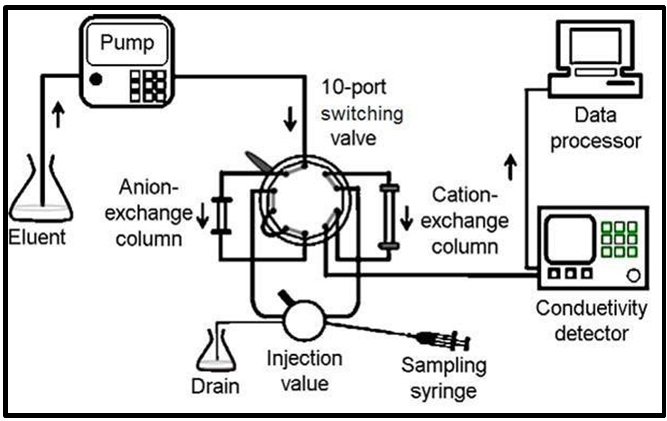
Principle of Ion-Exchange Chromatography
Based on the charged groups that each molecule has, ion-exchange chromatography separates the molecules. Ion-exchange chromatography uses coulombic (ionic) interactions to keep analyte molecules on the column. Ions with opposite charges make up the matrix used in ion exchange chromatography [15]. Essentially, on the stationary phase matrix, molecules engage in electrostatic interactions with opposite charges. The immobile matrix that comprises charged, ionizable functional groups or ligands makes up the stationary phase [16]. Ionic functional groups (R-X) that interact with analyte ions of the opposite charge can be seen on the stationary phase surface.
These inert charges pair with the exchangeable counter ions in the solution to become electro neutral. These exchangeable counter ions compete with the ionizable molecules that need to be purified for binding to the immobilised charges on the stationary phase. Depending on their charge, these ionizable molecules are either kept or eluted. First to wash away are molecules that either does not bind to the stationary phase or just weakly bind to it. The molecules that bind to the stationary phase must be eluted under different circumstances. It is possible to alter the pH or the concentration of exchangeable counter ions, which compete with molecules for binding. The charge on the specific molecules is impacted by pH, which changes binding.
Based on the alterations to their charges, the molecules subsequently begin to elute out.
The desired protein can be released with additional such changes. In order to separate ionised molecules, the concentration of counter ions can also be gradually changed. Gradient elution is the name given to this kind of elution. As an alternative, step elution can be utilised, in which the counter ion concentration is changed in a single step [17]. Cation exchange chromatography and anion- exchange chromatography are further divisions of this type of chromatography. Cation exchange resins bind positively charged molecules, while anion exchange resins bind negatively charged molecules [18].
Types of Ion-Exchange Chromatography 1. Cation-exchange Chromatography: A negatively charged functional group in the matrix of cation exchange chromatography has an attraction for positively charged compounds. The positively charged analyte attaches to the matrix in place of the reversible bound cation. The positively charged analyte that is coupled to the matrix elutes when a strong cation (like Na) is present in the mobile phase. 2. Anion-exchange Chromatography: A positively charged functional group in the matrix of anion exchange chromatography has an attraction for negatively charged compounds. The reversibly bound anion is replaced by the negatively charged analyte, which then attaches to the matrix. The negatively charged analyte that is bound to the matrix elutes in the presence of a strong anion (like Cl) in the mobile phase.
Applications of Ion-Exchange Chromatography Protein-DNA Interaction: Ion-exchange columns are a useful tool for investigating DNA-protein interactions. Due of its negative charge, DNA is highly compatible with anion exchange chromatography. This method involves allowing the DNA to attach strongly while being incubated with an anion exchange matrix. The column is cleaned of extra DNA. Following a wash with buffer to remove unattached proteins, the pure protein is now run through the DNA-bound beads. Now, either a high salt concentration is added or denaturing conditions are used to elute the DNA from the matrix. Protein and DNA levels are now being checked in the fractions. DNA is evaluated in agarose and eluted protein is examined in SDS- PAGE. To rule out the possibility of protein binding directly to the matrix, protein is additionally introduced to the matrix without DNA as a control. If a protein and DNA have a strong attraction for one another, they will elute from the column simultaneously and display a comparable pattern in the elution profile. High salt levels have the potential to disrupt the relationship between DNA and proteins; in such a case, DNA will emerge first and protein second.
1. Softening of Water: Numerous metals, including Ca2+, Mg2+ and other cationic ions, are present in ground water. In industrial settings, hard water problems are caused by the presence of metal. By exchanging matrix-bound Na+, ion-exchange chromatography is used to extract metals from water. 2. Protein Kinase Assay: The phosphate group on the substrate molecule is transferred by a class of enzyme known as a protein kinase. In the protein kinase experiment, non-radioactive ATP, MgCl and a radioactive substrate (preferably one on carbon) were all mixed together. A negative control is also present, in which the assay combination contains no enzyme protein kinase. In order to bind un-phosphorylated substrate from the reaction mixture while phosphorylated radioactive substrate is present in the flow through, reaction mixture from the negative control and experimental will be loaded on two distinct cation exchange chromatography columns. A liquid scintillation reagent was used to measure the flow through radioactive count. 3. Purification of Rare Earth Metals: Uranium and plutonium are examples of rare earth metals that are isolated and purified using an ion- exchange matrix. Frank Spedding created the first procedure to extract uranium in significant amounts. Ion exchange beads have also been proven to be effective at recovering uranium from nuclear power plant water. Through ion- exchange, uranium binds to the matrix. The uranium- bound bead is brought to the processing area, where the uranium is separated from the beads to create “yellow cake,” which is then kept in a drum for later processing. The ion-exchange facility allows for the reuse of the ion- exchange beads.
Gel-Permeation (Molecular Sieve) Chromatography
The fundamental idea behind this technique is to use materials containing dextran to segregate macromolecules according to how differently their molecules are sized. Basically, this process is used to calculate the molecular weights of proteins and reduce salt concentrations in protein solutions [19]. The stationary phase of a gel-permeation column is made up of inert molecules with tiny holes. A steady flow rate is used to continually circulate the solution, which contains molecules with various sizes, across the column. Molecules that are larger than pores cannot enter gel particles; instead, they are trapped between particles in a small space. Larger molecules can travel quickly through the column because they can pass through the gaps between porous particles. As molecules get smaller, they diffuse into the pores and have proportionally longer retention durations when they leave the column.
Principle of Gel-Permeation Chromatography
It is a method where components are separated based on differences in molecular weight or size. The mobile phase’s solvent is fully dissolved in the pores of the stationary phase, which is a porous polymer matrix. Pumping the sample’s molecules through specialised columns with this type of microporous packing material (gel). The separation is based on the fact that molecules larger than a particular size are completely barred from the pores, whereas smaller molecules have partial or complete access. Therefore, bigger molecules will travel down the column unimpeded and without penetrating the gel matrix as a result of the mobile phase’s flow, whereas smaller molecules will experience a delay depending on how deeply they penetrate the gel [21].
Applications of Gel-Permeation Chromatography
The distribution of molecular weights and the relative molecular weight of polymer samples are frequently assessed using GPC. The molecule volume and shape function as determined by the inherent viscosity is what GPC actually measures. This relative data can be used to calculate molecular weights with an accuracy of 5% if comparable standards are applied. For GPC calibration, polystyrene standards with dispersities of less than 1.2 are commonly utilised. It is only appropriate to compare polystyrene as a benchmark to other polymers that are known to be linear and roughly the same size since, regrettably, polystyrene tends to be a fairly linear polymer [22].
Affinity Chromatography
According to a highly precise macromolecular binding contact between a biomolecule and another material, affinity chromatography is a technique for extracting a biomolecule from a mixture. The biomolecule of interest determines the specific type of binding relationship, which may be between an antigen and an antibody, an enzyme and a substrate, a receptor and a ligand, or a protein and a nucleic acid [23]. For the isolation of different biomolecules, binding interactions are widely used. Due to its great selectivity and resolution of separation, affinity chromatography is beneficial [24, 25].
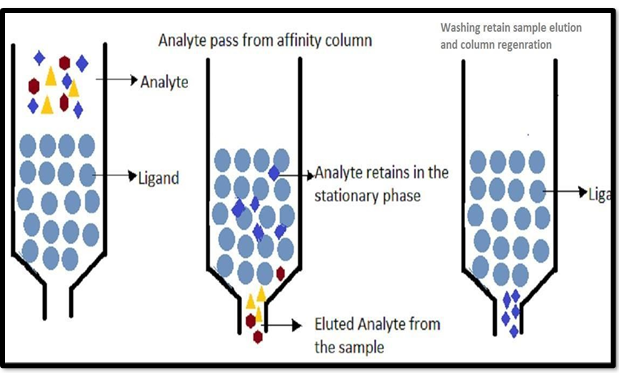
The benefit of affinity chromatography is that the analyte of interest, which is typically dissolved in the mobile phase, and a binding partner or ligand have particular binding interactions (immobilized on the stationary phase). A typical affinity chromatography experiment involves attaching the ligand to a solid, insoluble matrix, typically a polymer like agarose or polyacrylamide that has been chemically altered to create reactive functional groups that the ligand can react with to generate stable covalent connections [23]. The molecular weight, charge, hydrophobicity, or other physical characteristics of the target analyte need not be known for affinity chromatography, though they can be helpful in designing a separation process [24].
Principle of Affinity Chromatography
The benefit of affinity chromatography is that the analyte of interest, which is typically dissolved in the mobile phase, and a binding partner or ligand have particular binding interactions (immobilized on the stationary phase). A typical affinity chromatography experiment involves attaching the ligand to a solid, insoluble matrix, typically a polymer like agarose or polyacrylamide that has been chemically altered to create reactive functional groups that the ligand can react with to generate stable covalent connections [25]. The mobile phase is inserted after the stationary phase has been loaded into a column. The stationary phase will continue to be linked with molecules that bind to the ligand. The non- target biomolecules are subsequently removed using a wash buffer, which breaks up their weaker connections with the stationary phase while leaving the attached biomolecules in place. Then, by using an “elution buffer,” which shatters the bonds between the bound target biomolecules and the ligand, target biomolecules may be eliminated. As a result, the target molecule is found in the eluting solution. The molecular weight, charge, hydrophobicity, or other physical characteristics of the target analyte need not be known for affinity chromatography, though they can be helpful in designing a separation process [26].
Types of Affinity Chromatography 1. Immuno-affinity Chromatography: The process is also used to remove antibodies from blood serum using affinities. The affinity purification of an antigen can be done using a serum if it is known to contain antibodies against that antigen (for instance, if the serum is from an organism that has been immunised against the relevant antigen). Immuno-affinity chromatography is another name for this. An organism will likely create antibodies against the fusion protein and perhaps antibodies against the GST tag if it is immunised, for instance, against a GST-fusion protein. The protein can then be utilised as an affinity ligand in the purification of antibodies from immunological serum by being covalently attached to a solid substrate, such as agarose. The GST protein and the GST-fusion protein can each be linked independently for thoroughness’ sake. At first, the serum is permitted to bind to the GST affinity matrix. By doing so, antibodies to the GST portion of the fusion protein will be eliminated. After that, the serum is removed from the stable support and given a chance to bind to the GST-fusion protein matrix. This enables any antibodies to be caught on the solid support that recognise the antigen. The most common method for eluting the target antibodies is to use a buffer with a low pH, such as glycine pH 2.8. The low pH elution solution is neutralised by collecting the eluate into a neutral tris or phosphate buffer, which prevents any further degradation of the antibody’s activity. When proteins are released under relatively benign circumstances, monoclonal antibodies can also be chosen to bind them with high specificity. Future study may benefit from this in the future [27]. 2. Lectins Affinity Chromatography: In lectin affinity chromatography, components within the sample are separated from one another using lectins. Lectins are proteins that can bind particular alpha-D-mannose and alpha-D glucose carbohydrate molecules. One such lectin is concanavalin A. Con A Sepharose and WGA-agarose are two typical carbohydrate compounds used in lectin affinity chromatography [28]. 3. Metal Chelate Chromatography: Metal ions that have been immobilised, such as Cu2+, Zn2+, Mn2+, and Ni2+, are used in a specific type of chromatography. 4. It is employed to clean up proteins that have imidazole or indole groups. Typically, imino-diacetate or tris (carboxymethyl) ethylenediamine substituted agarose is used to attach metal ions and immobilise them. 5. Dye Ligand Chromatography: Employs many triazine dyes as ligands. Cibracron Blue F3G-A is the most widely used colour. It is used to purify coagulation factors, lipoproteins, interferons, and other molecules. 6. Covalent Chromatography: specifically made to separate thiol containing proteins. The most common ligand is a 2-pyridyl group that is enough. Numerous proteins are purified using it, but its use is limited by its high cost and challenging regeneration [29].
Applications of Affinity Chromatography
- It is used to isolate and purification of all biological macromolecules.
- It is used to purify nucleic acid, antibodies, enzymes, etc.
- To determine which compounds in the biological world are bound to a specific substance.
- To decrease the amount of substance present in a mix.
- Utilized for Genetic Engineering for nucleic acid purification.
- Utilized for the Production of Vaccines-antibody purification from blood serum.
- It is used for Basic Metabolic Research such as the purification of enzymes or proteins from cells free extracts [29].
Paper Chromatography
In analytical chemistry, paper chromatography is a technique used to separate dissolved chemical compounds by taking advantage of their differing rates of migration through paper sheets. It is a cheap yet effective analytical tool that only needs very little raw material. The procedure entails applying the test substance or sample as a spot close to a filter paper sheet’s corner. To establish a stationary liquid phase, a suitable solvent is first used to permeate the paper.
The components of the combination are soluble to variable degrees in another solvent, which is subsequently applied to a paper edge near the test location. Through capillary action, the solvent permeates the paper and, as it passes over the sample spot, carries the various components of the sample with it. Depending on how soluble each component is in the stationary and moving solvents, the components move with the flowing solvent at different speeds.
If the components respective solubilities in the two solvents differ, separation of the components results. Both solvents evaporate before the flowing liquid reaches the farther end of the paper, and the separation of the components is then recognised by applying reagents that produce coloured compounds with the separated substances. On the solvent’s journey, the divided components can be seen as distinct patches. It is possible to spin the paper 90 degrees and restart the operation with a different solvent if the solvent running in one direction is unable to adequately separate all the components.
For the separation of complicated combinations of amino acids, peptides, carbohydrates, steroids, purines, and a lengthy list of simple chemical compounds, paper chromatography has evolved into a common procedure. On paper, inorganic ions can also be easily separated. Thin layer chromatography is compared [30].
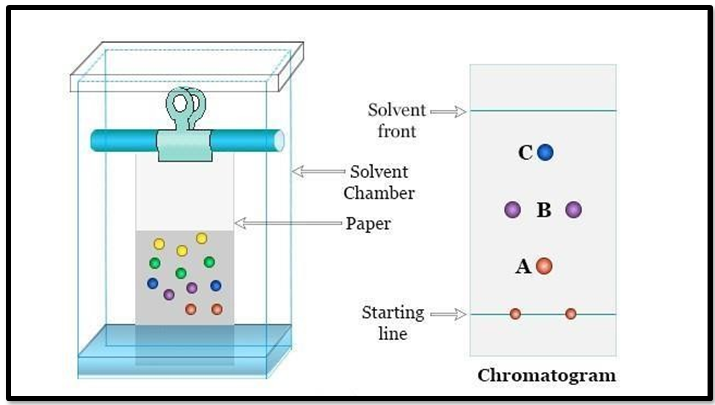
Principle of Paper Chromatography
Partition, in which the constituent components are spread or partitioned between liquid phases, is the fundamental idea behind paper chromatography. Aqueous solvent is used, acting as the stationary phase and being kept in the pores of filter paper, while the mobile phase moves over the paper [29, 30]. The compounds in the mixture are separated through capillary action of the paper’s pores because of variations in their affinity toward water (in stationary phase solvents) and mobile phase solvents. The components can also be separated using the principle of adsorption between solid and liquid phases, where the stationary phase is a liquid solvent and the mobile phase is the solid surface of the paper. Despite partitioning being the basic operating concept of paper chromatography, it is used in numerous therapeutic applications [31].
Types of Paper Chromatography 1. Descending: By letting the solvent to go down the paper, the chromatogram is developed. Mobile phase is put in the solvent holder at the top of this picture. The solvent pours down the paper from above, keeping the spot at the top. 2. Ascending: The chromatographic paper is raised by the solvent in this area. For the separation of organic and inorganic compounds, paper chromatography in both ascending and descending directions is employed. Both the sample and the solvent rise. 3. Ascending-Descending: This is a combination of the two methods mentioned above. To allow the paper to become descending after passing the rod, the upper portion of ascending chromatography can be folded over the rod. 4. Chromatography: The sample is placed in the center of a circular filter paper that has been taken. After the spot has dried, the filter paper is connected horizontally to a Petri dish filled with solvent, allowing the paper’s wick to be submerged in the solvent. The components are divided into concentric rings when the solvent rises through the wick. 5. Two-Dimensional: Paper that is square or rectangular is utilised for this technique. In this instance, the sample is put to one of the corners, and development is carried out perpendicular to the first run’s direction [32].
Applications of Paper Chromatography
Paper chromatography has a wide range of uses. The following is a discussion of some of the applications for paper chromatography in several fields:
- Diversification of drug brews
- Separation of proteins, vitamins, antibiotics and carbs
- Drug identification
- Determining impurities
- Analysis of drug metabolites in blood and urine
- To research the ripening and fermentation processes
- To verify the medications purity
- To examine cosmetics
- To identify adulterants
- To identify food and drink pollutants
- For the purpose of inspecting the reaction mixtures in biochemical labs
- To identify narcotics and dopes in both people and animals.
Thin Layer Chromatography (TLC)
Non-volatile mixtures can be separated using the chromatography technique known as thin layer chromatography (TLC) [33]. A sheet of an inert substrate, such as glass, plastic, or aluminium foil, is used for thin- layer chromatography. This substrate is coated with a thin layer of an adsorbent material, typically silica gel, aluminium oxide (alumina), or cellulose. The stationary phase refers to this adsorbent layer. A solvent or solvent combination (referred to as the mobile phase) is dragged up the plate by capillary action after the sample has been placed on the plate. Separation is accomplished because various analytes ascend the TLC plate at various speeds [34].
It can be carried out on an analytical scale to track the development of a reaction or on a preparative scale to purify minute quantities of a chemical. Because of its simplicity, comparatively low cost, great sensitivity, and rapid separation, TLC is an extensively used analytical method. Similar to all chromatography, TLC works on the premise that a chemical will have varying affinities for the mobile and stationary phases, which will influence how quickly it migrates. TLC aims to produce well-defined, well- separated spots. The stationary phase’s characteristics are distinct from those of the mobile phase. Nonpolar mobile phases, such heptane, are utilised, for instance, with the extremely polar material silica gel. The possibility of a combination in the mobile phase gives chemists more control over the material’s bulk properties.
The spots are seen after the experiment. The sheets are frequently treated with a phosphor, and dark patches form on the sheet when chemicals absorb the light impinging on a given location. Often, this can be accomplished by simply projecting ultraviolet light onto the sheet. Spots can also be seen by chemical reactions; anisaldehyde, for instance, produces colourful adducts with numerous substances, and sulfuric acid will burn the majority of organic substances, leaving a dark spot on the sheet.
The retardation factor (Rf), also known as the retention factor in some contexts, is a ratio used to calculate the findings. It is calculated by dividing the distance travelled by the material under consideration by the total distance travelled by the mobile phase. The solvent absorption must be halted before the mobile phase reaches the end of the stationary phase in order for the result to be quantitative. In general, a material with a structure similar to the stationary phase will have a low retardation factor (Rf), whereas a substance with a structure similar to the mobile phase would have a high Rf. Although retardation factors are typical, they can vary depending on the precise state of the mobile and stationary phases. For this reason, in addition to the unknown samples, chemists typically apply a sample of a known substance to the sheet. Thin-layer chromatography can be used to assess a substance’s purity, identify the compounds present in a particular combination, and track the development of a reaction.
These applications can be used to analyse ceramides and fatty acids, detect pesticides or insecticides in food and water, identify medicinal plants and their active ingredients, assay the radiochemical purity of radiopharmaceuticals, or analyse the colour composition of textiles in forensics [35]. The original technique can be improved in a number of ways to automate the various phases, boost TLC’s resolution, and enable more precise quantitative analysis. HPTLC, short for “high performance TLC, is the name of this technique.
Smaller sample sizes and thinner stationary phase layers are usual in HPTLC, which minimizes the loss of resolution from diffusion [36].
![Figure 6: Development of a TCL plate purple spot separates into a red and blue spot. Principle of Thin Layer Chromatography Thin-layer chromatography (TLC), like other chromatographic methods, is based on the separation principle. The relative affinity of chemicals for the two phases is what drives the separation. The substances in the mobile phase pass over the stationary phase’s surface. The compounds that have a stronger attraction for the stationary phase move slowly whereas the other compounds move quickly during the movement. As a result, the mixture is successfully separated. After the separation procedure is complete, the mixture’s constituent components show up as spots at the appropriate levels on the plates. Suitable detecting techniques are used to determine their nature and character [37].](/fulltextimages/11799/fig_6.png)
Figure 6: Development of a TCL plate purple spot separates into a red and blue spot. Principle of Thin Layer Chromatography Thin-layer chromatography (TLC), like other chromatographic methods, is based on the separation principle. The relative affinity of chemicals for the two phases is what drives the separation. The substances in the mobile phase pass over the stationary phase’s surface. The compounds that have a stronger attraction for the stationary phase move slowly whereas the other compounds move quickly during the movement. As a result, the mixture is successfully separated. After the separation procedure is complete, the mixture’s constituent components show up as spots at the appropriate levels on the plates. Suitable detecting techniques are used to determine their nature and character [37].
Applications of Thin Layer Chromatography
- TLC does qualitative testing on a variety of drugs, including sedatives, local anaesthetics, anticonvulsant tranquillizers, analgesics, antihistamines, steroids, and hypnotics.
- In biochemical analysis, such as the separation or isolation of biochemical metabolites from blood plasma, urine, bodily fluids, serum, etc., TLC is incredibly helpful.
- It is possible to detect natural compounds using thin layer chromatography, such as volatile or essential oils, fixed or fixed oils, glycosides, waxes, alkaloids, etc.
- It is frequently employed to separate complex medicinal compositions.
- It is employed to clean samples, and a direct comparison between the sample and the original sample is made. To distinguish and identify colours, sweeteners, and preservatives in the food sector. It is employed in the cosmetics sector.
- It is used to study if a reaction is complete [38].
A popular method of chromatography used in analytical chemistry for separating and studying substances that may be evaporated without decomposing is gas chromatography (GC). GC is frequently used to determine a substance’s purity or to separate the various ingredients in a mixture. By injecting a gaseous or liquid sample into a mobile phase, which is frequently referred to as the carrier gas and passing the gas through a stationary phase, gas chromatography is a method for separating chemicals in mixtures. An inert gas or an unreactive gas, such as helium, argon, nitrogen, or hydrogen, typically makes up the mobile phase.
The glass or metal column that the gas phase travels through is housed in an oven where the temperature of the gas may be adjusted and a computerised detector keeps track of the eluent that exits the column [39]. GC can be used to separate out pure substances from a mixture in preparative chromatography. Other names for gas chromatography include vapor- phase chromatography (VPC) and gas liquid partition chromatography (GLPC). Scientific literature regularly uses these alternate names as well as their corresponding acronyms [40]. An inert or nonreactive gas continuously flows down a small tube known as the column, which is the foundation of a gas chromatograph, carrying the vaporized sample through it. Depending on their chemical and physical characteristics and the interactions they have with the stationary phase, the filling or lining of the column, different components of the sample move through it at different rates. Typically, a temperature-controlled oven surrounds the column. Chemicals are electronically detected and recognised as they leave the column’s end [39].
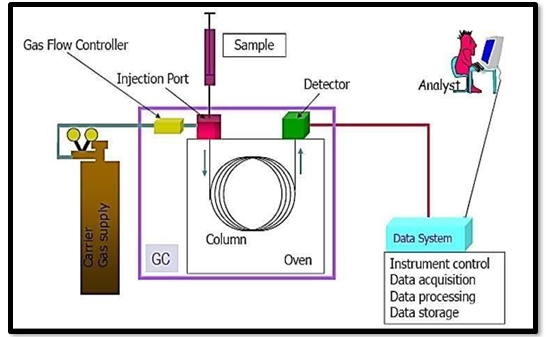
Figure 7: Schematic Diagram of Gas Chromatography. Principle of Gas Chromatography “Partition” is the separation tenet in general counsel. The mixture of the separated components is heated to vapour and then combined with the gaseous mobile phase. The more soluble components in the stationary phase move more slowly and elute later. First to elute out is the component that is less soluble in stationary phase. No two components have the same conditions for the partition coefficient. As a result, the components are divided based on their partition coefficient. The definition of a partition coefficient is the ratio of a substance’s solubility in two immiscible liquids at a fixed temperature.
Types of Gas Chromatography 1. Gas-solid Chromatography: A chromatographic method known as gas solid chromatography uses a stationary phase that is solid and a mobile phase that is gaseous. The substance used to separate components in a mixture using chromatography is known as the stationary phase. Vaporizing components in a combination are separated using gas solid chromatography. Both the mixture and the mobile phase are in the gaseous state when using this method. The mixture that needs to be separated and the mobile phase are combined. The solid stationary phase is then passed through this combination. The chromatographic column, a tube with an inner wall, receives the stationary phase. The molecules in the mobile phase and the molecules in the stationary phase can interact. Gas solid chromatography has benefits over gas liquid chromatography. The low volatility and great stability of the gas solid chromatography allow its usage at high temperatures. 2. Gas-liquid Chromatography: In the chromatographic process known as gas liquid chromatography, the stationary phase is a liquid and the mobile phase is a gas. A nonvolatile liquid serves as the stationary phase Applications of Gas Chromatography
- Qualitative Analysis: By comparing the sample’s retention time or volume to the standard, or by gathering the various elements as they leave the chromatograph and identifying these substances using additional techniques like UV, IR, or NMR.
- Quantitative Analysis: The quantity of the detected component and the detectors’ response factor are inversely correlated with the area under a single component elution peak.
- Pharmaceutical Applications: Drug goods such as antibiotics (penicillin), antivirals (amantidine), general anaesthetics (chloroform, ether), sedatives/hypnotics (barbiturates), etc. are subject to quality control and analysis.
Dye-Ligand Chromatography
One of the affinity chromatography methods used to separate proteins from a complicated mixture is dye-ligand affinity chromatography. Pseudo-affinity refers to general chromatography with the addition of dyes to the stationary phase of a column that serves as a support matrix for a variety of proteins with related active sites [42]. In order to target more precise proteins, synthetic dyes are utilised to simulate substrates or cofactors binding to the active regions of proteins.
After washing, which involves getting rid of unrelated molecules, target proteins are eluted by adjusting the pH or the salt concentration. Due to the durability of immobilised dyes, the column can be reused numerous times. It can be used in high performance liquid chromatography (HPLC) columns or in a conventional manner by utilizing a packed column [42]. The blue dye blue dextran was used as the accidental dye- ligand discovery. A gel filtration column’s void volume (V0) is indicated by the blue dye. It has been demonstrated that the dye has the ability to bind to specific proteins, such as pyruvate kinase, and then elute out with the empty volume. Later, it was discovered that the connection with the proteins is caused by “cibacron blue FG3-A,” a reactive dye linked to dextran [42, 43]. In the 1970s, affinity chromatography was expected to transform the processes involved in protein purification.
The approach is not as widely used as one might assume for a variety of reasons, and the aim of purification to homogeneity in a single step is rarely realized. For instance, a 1980 review of the Biochemical Journal shows that only approximately half of newly reported purification techniques really included an affinity phase. What characteristics, then, have prevented affinity chromatography from being used more widely? In addition to natural conservatism and a historical reliance on “standard” purification methods, it may take some effort to find a suitable ligand.
Furthermore, the chemistry required for its specified immobilization is frequently intricate. Large-scale purifications are hampered by the high cost and finite capacity of ready-made affinity resins. The breakdown of biological ligands by enzymes found in unprocessed tissue extracts is another issue. Despite being in its infancy, dye- ligand chromatography solves a number of these drawbacks and offers a great deal of versatility in the purification of macromolecules [43].
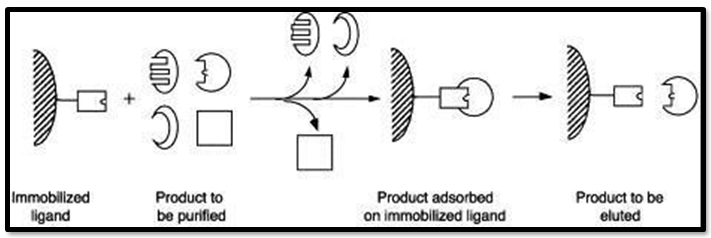
Principle of Dye-Ligand Chromatography
One of the affinity chromatography methods used to separate proteins from a complicated mixture is dye-ligand affinity chromatography. Pseudo affinity refers to general chromatography with the addition of dyes to the stationary phase of a column that serves as a support matrix for a variety of proteins with related active sites [47]. In order to target more precise proteins, synthetic dyes are utilised to simulate substrates or cofactors binding to the active regions of proteins. After washing, which involves getting rid of unrelated molecules, target proteins are eluted by adjusting the pH or the salt concentration. Due to the durability of immobilised dyes, the column can be reused numerous times. It can be used in high performance liquid chromatography (HPLC) columns or in a conventional manner by utilising a packed column [44].
Applications of Dye-Ligand Chromatography
- Dye-ligand affinity chromatography is one of the
- Affinity chromatography techniques used for protein purification of a complex mixture.
- The serendipity discovery of dye-ligand ability is from a blue dye called blue dextran.
- The dyes used in this type of chromatography are inexpensive and generally available as they are from textile industries called reactive dye.
High-Performance Liquid Chromatography (HPLC)
The analytical chemistry method of high-performance liquid chromatography (HPLC), formerly known as high-pressure liquid chromatography is used to separate, recognise, and quantify each component in a mixture. It uses pumps to move a column of solid adsorbent material through a pressured liquid solvent containing the sample combination. The adsorbent material and each component in the sample interact slightly differently, resulting in various flow rates for the various components and their separation as they exit the column.
HPLC has been used for manufacturing (such as during the production of pharmaceutical and biological products), legal (such as detecting performance enhancing drugs in urine), research (such as separating the components of a complex biological sample, or of similar synthetic chemicals from each other), and medical (such as determining the levels of vitamin D in blood serum) purposes [45].
Chromatography can be thought of as an adsorption- based mass transfer procedure. In HPLC, the sample components are separated by pumping a pressurized liquid and a sample combination through a column that is loaded with adsorbent. The adsorbent, or active component of the column, is typically a granular substance comprised of solid particles that range in size from 2 to 50 m, such as silica or polymers. The varying levels of interaction between the components of the sample mixture and the adsorbent particles cause them to be segregated from one another.
The pressurized liquid, also known as the “mobile phase,” is often a blend of solvents (such as water, acetonitrile, and/or methanol). HPLC differs from conventional (“low pressure”) liquid chromatography in that operational pressures are much greater (50-350 bar), whereas in conventional liquid chromatography the mobile phase is normally passed through the column by the force of gravity. The average column dimensions for analytical HPLC are 2.1–4.6 mm in diameter and 30-250 mm in length due to the limited sample amount that is separated. Additionally, smaller adsorbent particles (2–50 m in average particle size) are used to create HPLC columns. This makes HPLC a popular chromatographic technique by giving it higher resolving power (the capacity to discriminate between substances) when separating mixtures.
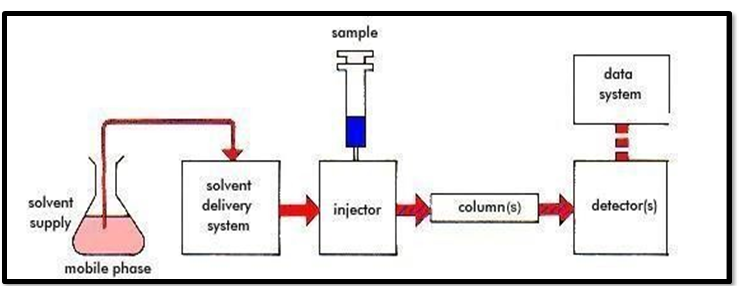
A degasser, sampler, pumps, and detector are frequently shown on an HPLC instrument’s diagram. The sample combination is introduced by the sampler into the mobile phase stream, which then transports it to the column. The pumps push the mobile phase through the column at the correct flow and composition. It is possible to analyse the sample components quantitatively since the detector produces a signal proportional to the amount of sample component emerging from the column. The HPLC apparatus is controlled by a digital microprocessor, and user software provides data analysis. In some HPLC equipment models, the mechanical pumps can combine various solvents in ratios that change over time, creating a composition gradient in the mobile phase [46].
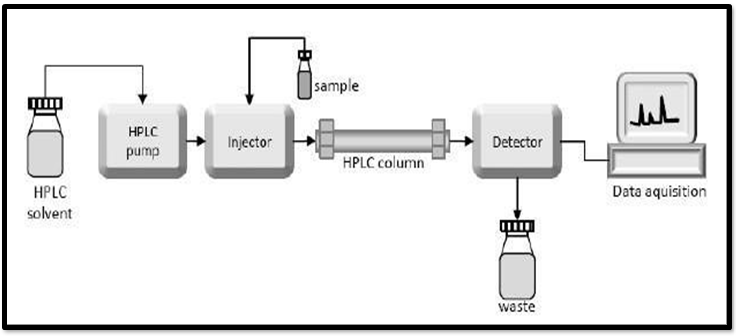
Principle of High-Performance Liquid Chromatography
High performance chromatography has replaced the previous word for liquid chromatography, High Pressure Liquid Chromatography, which is preferable since it more accurately characterizes the chromatography’s features and dispels the idea that high pressure is required to conduct analysis. Column chromatography, which is used in use all over the world, relies on gravity or operates at low pressure. As a result, band broadening via diffusion events takes longer to complete.
The disadvantage in this situation is that a quicker flow rate cannot be used because of the back pressure buildup that occurs at higher flow rates. This damage to the stationary phases’ matrices impairs their ability to resolve their constituents. Massive advancements in column chromatographic methods over the past ten years have made a variety of stationary phases and pumping systems that can sustain these pressures available. These advancements produced a variety of separation techniques that allowed for quicker analysis using HPLC, leading to its emergence as the most widely used, potent, and adaptable form.
Types of High-Performance Liquid Chromatography 1. Normal-phase Chromatography: One of the first forms of HPLC created by chemists was normal-phase chromatography. This technique also referred to as normal-phase HPLC (NP-HPLC), divides analytes based on their affinity for a polar stationary surface like silica; consequently, it is based on analyte capacity to engage in polar interactions (such as hydrogen-bonding or dipole- dipole type of interactions) with the sorbent surface. The non-polar, non-aqueous mobile phase used in NP-HPLC, such as chloroform, is effective at separating analytes that are easily soluble in non-polar solvents. The polar stationary phase associates with and retains the analyte. As analyte polarity increases, adsorption strengths rise. In addition to the functional groups found in the analyte molecule’s structure, steric variables also have a role in the interaction strength [47]. 2. Reversed-phase Chromatography: A non-polar stationary phase and an aqueous, moderately polar mobile phase make up reversed phase HPLC (RP-HPLC). Silica that has been surface-modified using RMe2SiCl, where R is an alkyl group with a straight chain, such C18H37 or C8H17, is one frequent stationary phase. The basis for RP-operation HPLC’s is the hydrophobic interaction theory, which derives from the dipolar water structure’s high degree of symmetry and is fundamental to all activities in life science. The measurement of these interaction forces is possible with RP-HPLC. The contact surface area surrounding the non-polar part of the analyte molecule after interaction with the ligand on the stationary phase determines the amount of binding of the analyte to the stationary phase [47].
Applications of High-Performance Liquid Chromatography The HPLC technique has advanced to the point where it can now be used in practically every field of chemistry, biochemistry, and pharmacy.
- Examination of medications
- Examination of artificial polymers
- Pollutant analysis in environmental analytics
- Drug detection in biological matrices
- Isolation of priceless goods
- Controlling the purity and quality of delicate chemicals and industrial items
- Biopolymer separation and purification, such as those of enzymes or nucleic acids
- Purifying of water
- Trace component pre-concentration
- Exchange of ligands in chromatography
- Protein ion-exchange chromatography
- Chromatography of oligosaccharides and carbohydrates at high pH [48].
Size Exclusion Chromatography
Molecular sieve chromatography, another name for size- exclusion chromatography, is a chromatographic technique that separates molecules in solution according to their size and, occasionally, molecular weight. Large molecules or macromolecular complexes, such proteins and industrial polymers, are typically the target of its use. Gel-filtration chromatography is the term typically used to describe the process when an aqueous solution is used to move the sample through the column, as opposed to gel permeation chromatography, which is the term used when an organic solvent is used as a mobile phase. Fine, porous beads, usually made of polyacrylamide, agarose or dextran, are put into the chromatography column. Macromolecule dimensions are estimated from the pore diameters of these beads.
Applications of Size Exclusion Chromatography
While gel permeation chromatography is used to examine the molecular weight distribution of organic- soluble polymers, size-exclusion chromatography is mostly utilized for the separation of proteins and other water- soluble polymers. It is important to distinguish between these two methods and gel electrophoresis, which use an electric field to “pull” molecules through the gel according to their electrical charges. The length of time a solute stays in a pore is influenced by its size. A smaller volume will be accessible to larger solutes and vice versa. Because of this, a smaller solute will stay in the pore longer than a bigger solute does.
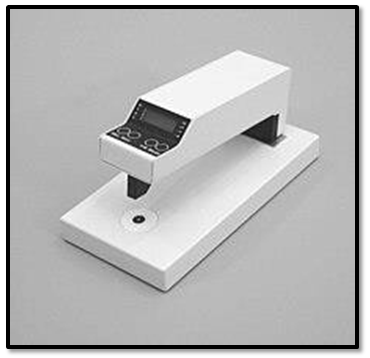
Densitometer is a tool used to quantify the optical density, or degree of blackness, of a reflecting surface or a photographic or semitransparent material. In essence, the densitometer is a light source directed toward a photoelectric cell. Using variations in the data, it calculates the density of a sample positioned between the photoelectric cell and the light source. The same parts are used in modern densitometers, however for improved readings, electronic integrated circuitry is included.
Types of Size Exclusion Chromatography 1. Transmission densitometers that measure transparent materials. A transmission densitometer used to measure transparent surfaces measure color transparencies. Film & transparent substrates are some examples of common transparent surface measures. 2. Reflection densitometers that measure light reflected from a surface of any state.
Uses of Size Exclusion Chromatography
- Measuring color saturation by print professionals
- Calibration of printing equipment
- Quantifying the radioactivity of a compound such as radiolabeled DNA as one of the molecular tools for gene study
- Making adjustments so that outputs are consistent with the colors desired in the finished products.
- Ensuring x-ray films are within code-required density ranges and comparing relative material thicknesses in industrial radiography
- Process control of density dot gain, dot area & ink trapping.
- Densitometer readings will be different for different types of printing process & substrates.
Conclusion
The analytical goal of chromatography is to determine the qualitative and quantitative chemical makeup of a sample and its primary purpose is to purify and extract one or more components of a sample. This paper will discuss the history and basics of what chromatography is meant and the main principles of how we can run it.
In this review, we have briefly mentioned and focused on principle, types, schematic diagram and applications for each chromatographic type such as Column chromatography, Ion-exchange chromatography, Gel permeation (molecular sieve) chromatography, Affinity Chromatography, Paper Chromatography, Thin-layer chromatography, Gas chromatography, Dye-ligand Chromatography and High- pressure liquid chromatography.
References
-
Ravali R, Phaneendra M, Bhanu JK, Ramya SL, Sushma K (2011) Recent Trends in Analytical Techniques for the Development of Pharmaceutical Drugs. J Bioanal Biomed.
-
Award ceremony speech (2022).
-
Murry J (2011) Organic Chemistry with Biological Applications 2nd (Edn.), Brooks/Cole Cengage Learning Belmont Calif.
-
Alan DM, Andrew W (1997) Compendium of Chemical Terminology 2nd (Edn.), Blackwell Scientific Publications, Oxford.
-
Hostettmann K, Maryse H, Andrew M (2013) Preparative Chromatography Techniques Applications in Natural Product Isolation 2nd (Edn.), Springer Berlin Heidelberg.
-
Gerberding SJ, Byers CH (1998) Preparative Ion- Exchange Chromatography of Proteins from Dairy whey. J Chromatogr A 808(1-2): 141-151.
-
Engel RG, George S, Gary ML, Pavia DL (2010) Introduction to Organic Laboratory Techniques: A Small- scale Approach 2nd (Edn.), Chemicke Listy pp: 950-953.
-
Harwood LM, Moody CJ, Cranwell PB (2017) Experimental Organic Chemistry. Blackwell Scientific.
-
Das M, Dasgupta D (1998) Pseudo-affinity Column Chromatography based Rapid Purification Procedure for T7 RNA Polymerase. Prep Biochem Biotechnol 28(4): 339-348.
-
Column-Chromatography (2020) Chemistry, byjus.
-
Shawn A (2013) An Introduction to Ion Exchange Chromatography, Bio-Rad.
-
Gel chromatography (2017) chemistry Encyclopedia Britannica.
-
Karlsson E, Ryden L, Brewer John (1998) Ion exchange chromatography. In Protein purification. Wiley-VCH pp: 145-205
-
Uppsala (1991) Ion Exchange chromatohgraphy: Principles and methods, Amercham Pharmacia Biotech SE-751.
-
Ion Exchange Chromatography Principles and Methods (2004) General Electric Company pp: 11-20.
-
Jungbauer A, Hahn R (2009) Ion-Exchange Chromatography. Methods in Enzymology 463: 349-371.
-
Ninfa AJ, David PB, Marilee B (2009) Fundamental Laboratory Approaches for Biochemistry and Biotechnology General Chemistry.
-
Duong KC, Gabelli SB (2014) Using Ion Exchange Chromatography to Purify a Recombinantly Expressed Protein. Methods Enzymol 541: 95-103.
-
Walls D, Loughran ST (2011) Protein Chromatography Methods and Protocols. Humana Press.
-
Helmut D (1969) Gel Chromatography Gel Filtration Gel Permeation Molecular Sieves: a Laboratory Handbook 2nd (Edn.), Springer-VB and Heidelberg GmbH & Co K.
-
Aryal S (2022) Gel Permeation Chromatography- Definition, Principle, Parts, Steps, Uses. Microbe Notes.
-
Sandler SR, Karo W, Bonesteel J, Pearce EM (1998) Polymer Synthesis and Characterization: A Laboratory Manual 2nd (Edn.), San Diego Academic Press.
-
Introduction to Affinity Chromatography (2020) Bio- Rad.
-
Michael Z (2008) Affinity Chromatography: Methods and Protocols 2nd (Edn.), Humana Press.
-
Bonner, Philip LR (2007) Protein Purification 2nd (Edn.), Taylor & Francis Group.
-
paper chromatography (2023) Science & Tech. Encyclopedia Britannica.
-
Richard RB, Murray PD (2009) Guide to Protein Purification 2nd (Edn.), Methods in Enzymology 463: 475-494.
-
Freeze HH (2001) Lectin Affinity Chromatography. Curr Protoc Protein Sci pp: 9
-
Affinity chromatography Principle, Types, Steps, Applications (2023) Instruments. Microbiology note.
-
Thompson NE, Foley KM, Stalder E, Burgess RR (2009) Identification, Production, and Use of Polyol- responsive Monoclonal Antibodies for Immuno affinity Chromatography. Methods Enzymol 463: 475-494.
-
Eigsti NW (1967) Paper Chromatography for Student Research. The American Biology Teacher 29(2): 123- 134.
-
Coskun O (2016) Separation Techniques: Chromatography. North Clin Istanb 3(2): 156-160.
-
Zweig G, Sherma J (1973) Paper Chromatography-Past, Present and Future. Journal of Chromatographic Science 11(6): 279-283.
-
Tatchell AR, Furnis BS, Hannaford AJ, Smith PWG (1989) Practical Organic Chemistry 5th (Edn.), John Wiley & Sons.
-
Reich E, Schibli A (2007) High-performance Thin-layer Chromatography for the Analysis of Medicinal Plants. Georg Thieme.
-
Fair JD, Kormos CM (2008) A Flash Column Chromatograms Estimated from Thin-layer Chromatography Data. Journal of Chromatography 1211(1-2): 49-54.
-
Thin Layer Chromatography (2020) Chemistry. Byjus.
-
Berlin (1987) Reports of the German Botanical Society. Biodiversity Heritage Library 24(1906).
-
Bartle KD, Myers P (2002) History of gas chromatography. Trends in Analytical Chemistry 21(9): 547-557.
-
Madhu (2018) Difference between Gas Solid Chromatography and Gas Liquid Chromatography.
-
Gettrick AF, Worrall MD (2004) Dye-Ligand Affinity Chromatography. Methods Mol Biol 244: 151-157.
-
Hsu TJ, Boyer MP (1993) Protein Purification by Dye- Ligand Chromatography. Adv Biochem Eng Biotechnol 49: 1-44.
-
Dean PD, Watson DH (1979) Protein purification using immobilised triazine dyes. J chromatography 165: 301- 319.
-
Karger BL (1997) HPLC: Early and Recent Perspectives. J Chem Educ 74(1): 45.
-
Karger BL, Berry LV (1971) Rapid Liquid- chromatographic Separation of Steroids on Columns Heavily Loaded with Stationary Phase. Clin Chem 17(8): 757-764.
-
Ettre S (2001) The Birth of Partition Chromatography. LCGC Milestones in Chromatography 19(5): 506-512.
-
Snyder, Lloyd R, Dolan, John W (2007) High-Performance Gradient Elution: The Practical Application of the Linear- Solvent-Strength Model. Wiley Inter science.
-
Sagar A (2023) High-performance Liquid Chromatography or Commonly known as HPLC, is an Analytical Technique used to Separate, Identify or Quantify each Component in a Mixture. Microbe Notes.
- Acido Labile or Gastro Irritant Apis and Enteric Release in Galenic Practice: An Overview
- A Study on Knowledge, Attitude and Practice of Hand Hygiene among Healthcare Professionals at a Tertiary Care Hospital, India
- Influence of Inoculum Concentration on In Vivo Incubation Period of Emmia lacerata, Pathogenesis and Management of Wilt in Pepper (Capsicum annuum L.)
- Vanilla’s Chemistry
- Marine Anti-Cancer Compounds and Adverse Effects of Global Warming on Oceans: An Overview
- Serological Investigation of Chikungunya Virus Antibody among Malaria-Suspected Febrile Patients in Some Healthcare Facilities in Rivers State