
A Review on: Formulation and Evaluation of Herbal Medicated Chewing Gum
One portable method of medicine delivery is chewing gum. It may be used to provide medications orally, either systemically or locally. In recent years, significant progress has been made in research and technology related to the oral medication administration route. Medicated chewing gum has gained international attention throughout the year due to its ability to promote patient compliance in both pediatric and geriatric patients as well as the general population. The Mayan Indians used to clean their teeth and refresh their breath by chewing tree resin from the sapodilla tree a thousand years ago. Over the course of the year, herbal chewing gum has been more widely accepted as a medication delivery method. Herbal chewing gum today contains a number of substances. A variety of characteristics, including color, stickiness, hardness, and in vitro drug release, are assessed for the prepared product. Chewing gum can be utilized as a portable medication delivery mechanism for oral drug administration, both systemic and local. The majority of people find chewing gum to be enjoyable. Medicated gum preparations frequently require organic solvents to solubilize the active ingredients, and it can be challenging to remove these organic solvents from the finished product.
Introduction
Definition of Chewing Gum
“Medicated chewing gum contains one or more active ingredients that are released by chewing; it is a solid, single- dose preparation that must be chewed and not swallowed” [1]. Since humans discovered the enjoyment of chewing a variety of substances in ancient times; chewing gum has been utilized worldwide. The Mayan Indians used to clean their teeth and refresh their breath by chewing tree resin from the sapodilla tree a thousand years ago. The World War II shortage of natural gum bases aided in the creation of the synthetic gum bases that are still in use today [2].
Herbal chewing gum is a unique medication delivery product that is designed to be either systemically absorbed through the oral mucosa or used locally to treat oral ailments. It contains a gum base with pharmacological active component. Herbal chewing gum is thought to be a medicine delivery mechanism or a vehicle for delivering active ingredients that enhance nutrition and overall health [3]. The majority of people find chewing gum to be enjoyable.
Chewing gums are portable medication administration devices. The gum core of a chewing gum typically has one coating or none at all. Chewing gum has relatively little water content and doesn’t need any preservatives. Chewing gum is typically made up of a gum base—a water-insoluble phase— as well as other components. Gum that is meant to be chewed but not swallowed is a cohesive, soft substance. Gum base, sweeteners, softeners/plasticizers, flavors, colors, and, usually, a hard or powdery polyol coating make up modern chewing gum [4].
These include different softeners, food coloring, preservatives, flavorings, and powdered sugar, the amount and grain size of which determine how brittle the resulting gum will be; corn syrup and/or glucose, which act as humectants and coat the sugar particles to stabilize their suspension and keep the gum flexible; etc [5]. In his 1999 analysis of chewing gum and dental health. To get the active ingredient into the systemic circulation and produce a systemic impact, there are two alternative absorption mechanisms. When a drug is immediately absorbed through the buccal membrane, it skips the G.I. tract’s metabolism and the liver’s first-pass action; as a result, chewing gum may require a lower dosage than other oral delivery methods [6].
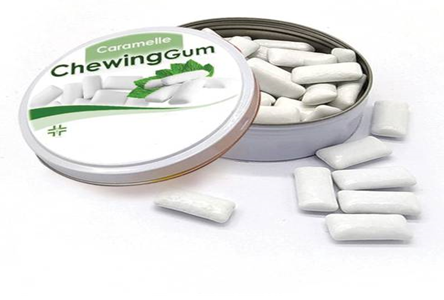
Advantages of Chewing Gum
- High bioavailability and quick onset of effect.
- High level of kid acceptance [7].
- The bioavailability of medications is enhanced by circumventing hepatic first-pass metabolism [8].
- Chewing gum is a common treatment for oral conditions such as fungal infections, mouth ulcers, bad breath, and dental plaques [9].
- Simple administration in the absence of water encourages better patient compliance.
6. Less adverse effects. 7. Systemic impact. 8. Local impact. 9. Chewing gum causes the mouth to bite frequently, which improves facial blood flow and trains the muscles used for biting and chewing. 10. Chewing gum may lessen foul breath and protect your teeth [10].
Disadvantages of Chewing Gum
- Children who chew gum for extended periods of time may get earache and ocular muscle pain [11].
- Chewing gum makes you swallow more air than you should, which can aggravate bloating and pain in the abdomen which are symptoms of irritable bowel syndrome (IBS).
- Gum chewing can harm the materials used in dental fillings.
- Chewing gum, particularly mint-flavored gum, lowers a person’s consumption of nutrient-dense foods like fruits and vegetables.
- Allergies and headaches can also result from chewing gum abuse.
- Indigestion and heartburn may also result from this.
- When chewing gum, the sugar stays in the oral cavity for a long period. Bacteria in the oral cavity then convert the sugar to acid, which erodes the enamel of your teeth and damages them.
- Chewing gum’s artificial sweeteners, like sorbitol and mannitol, irritate the intestines [7].
Health Benefits of Chewing Gum
- Gum helps with memory.
- Gum chewing lessens stress-related symptoms.
- Gum assists with weight management.
- Gum helps with digestion.
- Gum chewing promotes dental health.
- Chewing gum helps avoid bad breath and maintain better oral hygiene.
- Gum helps people stop smoking.
- Address halitosis [7].
Types of Chewing Gum
Mint, peppermint, spearmint, wintergreen, cinnamon, licorice, sour apple, cherry, grape, orange, watermelon, strawberry, lemon, and blueberry are among the most often consumed tastes. Chewing gum is available in a range of sizes, forms, and flavors. Gum comes in a variety of forms, but it is typically in the form of a little stick or wad. In essence, chewing gum is created by mixing a water-soluble phase of flavors, sweeteners, and food coloring with a water-insoluble phase. Chewing gum comes in a variety of forms that are intended for oral hygiene. Gums are used to clean teeth, whiten teeth, and provide a fresh breath [12].
- Medicated gum
- Bubble gum
- Tube gum
- Ball gum
- Tab gum
- Nicotine gum
- Wrap gum
- Sugar free gum
Composition of Medicated Chewing Gum
Chewing gum with medicinal properties is a concoction of natural or synthetic gum, resins, tastes, coloring agents, and sweeteners. Chewing gum is composed of two elements. 1. Water insoluble gum base part 2. Water soluble bulk portion [13].
Water insoluble gum base parts are: a) Elastomers: The preparation uses a polymer with a high elongation characteristic to control the gluey texture and provide the chewing gum flexibility [14]. b) Fillers or texturizers: (2–60% by weight of gum base): They facilitate mixing and other operations and give the overall appearance more texture [15]. C) Plasticizers: (3–20% by weight of gum base): This ingredient adds softness and convenience to chewing gum formulations. By softening elastomers, decreasing brittleness, and increasing flexibility, it enhances gum quality [16, 17]. Water soluble bulk portion are: a) Flavoring agents: For instance, artificial oils and essential oils such as citrus, clove, anise, peppermint, and spearmint oils [18]. b) Softeners and Emulsifiers: Two immiscible phases are mixed with the use of emulsifiers, and the softness and bubble-forming capacity are enhanced by softeners [19]. Softeners that are frequently utilized include glycerin, lecithin, and fatty acids such as stearic acid, palmitic acid, oleic acid, and linoleic acid [20]. c) Coloring agents: In addition, the chewing gum’s formulation contains natural culinary pigments and hues [21]. d) Sweetening agents (50-65% of gum base): Prescription formulations employ these substances to enhance flavor [22].
Materials and Methods of Preparation of Chewing Gum
Materials
Gum base: Waxes, softeners, and food-grade polymers combine to form a gum base. The edible and soluble chewing gum (sugar and flavoring ingredient) is supported by gum base, an inert and insoluble nonnutritive substance. As in gum ghatti and resin gum. Honey: Honey has several applications, including being a nutritive, soothing, mild laxative, sweetener, antibacterial, and bactericidal. It is also a key ingredient in cough mixes and linctus’s. In addition, it serves as a delivery system for pills in Ayurvedic and Unani medicines. Lately, it has also been utilized in the manufacturing of lotions, creams, soft beverages, and candies. It serves as a sweetening agent as well [23]. Sweeteners: Large Polyol While intense sweeteners are designed to extend the sweetness effect, sweeteners are responsible for the initial sweetness. The most significant of them are that the added sugar in chewing gum serves as a bulking agent, flavoring and coloring agent, texture modifier, preservative, and sweetener.
Active Pharmaceutical Ingredient
The bacteria that cause the majority of tooth decay, streptococcus mutants, are more susceptible to the antibacterial effects of cinnamon oil. However, oral tissue becomes irritated by cinnamon oil. It serves as a mouth freshener, analgesic, antifungal, antidepressant, carminative, antibacterial, astringent, antiseptic, immuno-stimulant, detoxifying agent, improves brain function, toothache, decreases ulcer, soothes sore throat, and relieves headaches. Such as cinnamon oil Flavoring Agent: A variety of flavoring agents are used to improve flavor in chewing gum. Carminative, Flavoring agent, Aromatic and Stimulant e.g., cardamom [24]. Coloring Agent: It has been shown that reddish chewing gum can be effectively colored with P. cruentum algal biomass. Stable coloration acquisition is a significant advance for these kinds of goods [25].
Method of Preparation of Chewing Gum
Every component was precisely weighed in accordance with formulation (Table 1). In the mortar and pestle, crush the gum base. Pour in a sufficient amount of distilled water, combine the honey thoroughly, and carefully swirl the ceramic dish. The dish was held at a temperature of between 35 and 45 degrees Celsius in a water bath. Next, the medication cinnamon oil was added to the bulk that was above. The aforementioned mixture was stirred continuously for 30 minutes while the appropriate amounts of sugar, coloring agent, and flavoring agent were added. After pouring the bulk into the mold, it was left to cool at ambient temperature. The gum fragments were taken out [26].
Formulation of Herbal Chewing Gum
| Sr. No. | Ingredients | Quantity | Role |
|---|---|---|---|
| 1 | Gum resin | 1gm | Flexibility |
| 2 | Honey | 1gm | Antioxidants |
| 3 | Cinnamon Oil | 0.1gm | Antibacterial agent |
| 4 | Sugar | Q.S. | Sweeteners |
| 5 | Elaichi | Q.S. | Fresheners |
| 6 | Salt | 0.1gm | Flavor |
Table1: Formula for Chewing Gum.
Evaluation Parameters of Chewing Gum
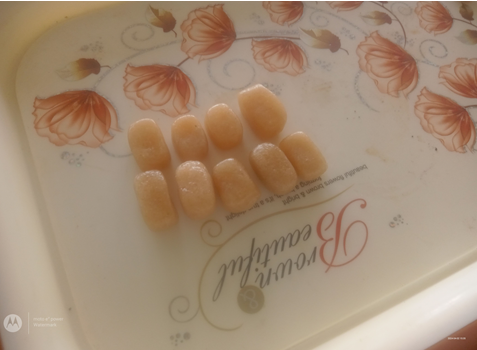
Evaluation of Gum Base: Physical appearance, we visually inspect the product in multiple batches to check for organoleptic qualities like color, taste, smell, and appearance. In order to conduct the texture research, the gum is physically pushed between the thumb and finger, and its quality is assessed [27]. Color: The color of the gum base is pale yellow color. Stickiness: The chewing gum made of herbs was put on a level surface. After pounding a 250-gram mass on it for ten minutes, the bulk began to attach to the hammered surface [28]. Hardness: Using a Monsanto hardness tester, the average hardness and standard deviation of chewing gum’s hardness were recorded. Elasticity Study: One of the most significant characteristics of chewing gum is its suppleness. Both improved patient compliance and the appropriate release of the active component from the product depend on elasticity [29]. In-Vitro Drug Release Study: The medicinal chewing gum’s active ingredients are released via a mechanical chewing mechanism, a self-made contraption that simulates human chewing. The mechanism consists of a chamber to hold the releasing medium and a piston that strikes the gum in an erratic manner. The chamber is kept at a constant temperature by moving warm water around it. A 60 beats per minute piston strike rate is applied to the gum [30]. Chewing gum testing equipment, which was a self-made device that was a modification of a disintegration unit, is used for in vitro drug testing. This stiff basket rack system, which was previously holding six cylindrical glass tubes, has been replaced with a detachable stainless steel still road with a Teflon bead that moves vertically up and down in a glass cylinder with a capacity of 900ml at a rate of 50 cycles per minute. The adjusting screw, which is placed on top of the stainless still road and serves to secure the road to the disintegration equipment, allows you to change the length of the road [31]. Stability Study: Since chewing gum is less reactive than other oral components and has low moisture content, it is considered to be a very stable product. The shelf life, storage circumstances, and the ingredients included in the chewing gum all affect how stable the product is [32]. The chewing gum formulation contains antioxidants to stop the active therapeutic ingredients from oxidizing. Preservatives do not need to be added because the formulation has low water content and will not develop microbiologically. With the use of appropriate materials, certain of the formulation’s components can be coated or encapsulated to reduce unintended contact between the parts and to a greater extent within the compounds [33]. Weight Variation Test: Every batch of chewing gum was independently weighed using an analytical balance. After computation, the average weight and standard deviation were determined to be in an acceptable range.
Problem associated with the manufacturing of chewing gum in chewing gum formulations, the most frequent processing problems are sticking, laminating, picking, and capping. Chewing gum products tend to taste or smell unpleasant due to the bad taste of most pharmaceutically active compounds. Some of the active ingredients cause irritation to the mucosal barrier, while others break down fast and are therefore not appropriate to employ in the formulation. In the above-mentioned processes, the gum base is heated to facilitate easier ingredient mixing. At high temperatures, the thermo-labile chemicals, flavors, and active ingredients break down. Medicated gum preparations frequently require organic solvents to solubilize the active ingredients, and it can be challenging to remove these organic solvents from the finished product. Even in minute quantities, these chemical solvents can be harmful to your health [33].
Pharmaceutical Significance of Chewing Gum
- Sugar-free chewing gums are beneficial to your teeth. The study found that using sugar-free chewing gum after meals helps to remove plaque. Dental caries development is significantly influenced by the pH of the mouth. In order to prevent dental cavities, sugar- free chewing gum has been suggested as an addition to brushing after meals.
- As an oral drug delivery method, medicated chewing gum is very helpful in treating and preventing nausea and motion sickness [32].
- It has been demonstrated that chewing gum helps alleviate dental habits and sudden cravings. There is hence a justification for the active moiety to be present in chewing gums that tend to help with weight management.
- It has been shown that chewing gum formulations absorb more quickly than pill formulations, which leads to quicker pain alleviation.
- Only a small portion of the released nicotine is absorbed by the buccal mucosa; instead, it is eaten and goes through first-pass metabolism, according to a pharmacokinetic study of nicotine gum.
The study found that the buccal route only absorbs about 80% of the nicotine generated [33].
Result
The drug concentration of all the formulations made using the standard method was found to be in the range of %, which is satisfactory. The formulations are all light yellow in color, soft in nature, and exhibit good consistency, but they are also sticky. The amount of cinnamon oil in every mixture is also crucial.
Conclusion
For ailments including motion sickness, nausea, allergies, discomfort, headaches, and infections that need for a rapid initiation of action, chewing gum has the potential to become the preferred means of delivering medication. We can conclude that chewing gum will become more widely accepted by patients in the future, including geriatric, pediatric, and general populations, in light of the benefits of medicated chewing gum as a novel drug delivery system, such as protection against acids and enzymes, increased alertness and cognitive functions, low first pass metabolism, taste masking of many drugs, smoking cessation, dental caries, mouth ulcers, and so on.
Acknowledgement
The authors are thankful to the Department of Pharmacognosy as well as pharmaceutics, Matoshri Institute of Pharmacy College, Dhanore, Maharashtra, India for their kind support and guidance for this review article.
References
-
Anand SS (2010) Chewing Gum: A Friendly Oral Mucosal Drug Delivery System. International Journal of Pharmaceutical Sciences Review and Research 4(2): 12.
-
Medicated Chewing Gum – A Novel Approach to improve Patient Compliance International. Journal of Research in Pharmaceutical and Biomedical Science.
-
Chanale AM, Mishra RP (2016) formulation and evaluation of herbal Antibacterial chewing gum containing Neem extract 5(1): 8-13.
-
Sabera K, Kumar B, Sutradhar (2012) Medicated chewing gum: An unconventional drug delivery system International Current Pharmaceutical Journal 1(4): 86- 91.
-
Mohan AU, Suraj R, Abhishek DD, Rahul M, Kshitij B (2012) Medicated Chewing Gum: Modern Approach to Mucosal Drug Delivery. AJPSci 2(4): 150-159.
-
Swamy NGN, Zaheer A, Shilpa P (2012) Formulation and Characterization of Medicated Chewing Gums of Dextromethorphan Hydrobromide. Indian Drugs 49(12): 29-35.
-
Pagare PK, Satpute CS, Jadhav VM, Kadam V (2012) Medicated chewing gum: A novel drug delivery system. Journal of applied pharmaceutical science 2(7): 40-54.
-
Shah KR, Mehta TA (2014) Medicated chewing gum-A mobile oral drug delivery system. Int J Pharm Tech Res 6(1): 35-48.
-
Vasudha LS, Hemant KSY, Mahesh KP, Abhay R, Navya M, et al. (2014) Medicated Chewing Gum: An Overview. Research & Reviews Journal of Dental Sciences 8(5): 132-140.
-
Prerna K, Deepak K (2010) Medicated chewing gums- updated review. In J Pharm Res Dev 13(3): 184-101.
-
Asija R, Patel S, Asija S (2012) Oral dosages forms: Medicine containing chewing gum: A review. J Drug Delivery Ther 2(6): 90-95.
-
Bumrela SB, Kane RN, Dhat SP (2005) Medicated chewing gum: A new reformulation technique. Pharma news 3: 1-7.
-
Gadhavi AG, Patel BN, Patel DM, Patel CN (2011) Medicated Chewing Gum-A 21st Century Drug Delivery System. International journal of pharmaceutical sciences and research 2(8): 1961-1967.
-
Nagasamy VD, Toprani PS, Mukherejee S, Tulasi K (2014) Medicated chewing gums - A review. Int J Pharm Sci 4: 581-586.
-
Patel MM, Reed MA, Yatka RJ (1990) Environmentally Stable Chewing Gum Composition Containing Xylitol. Int J Health Sci 4: 931-294
-
Jacobsen J, Christrup LL, Jensen NH (2004) Medicated Chewing Gum: Pros and Cons. Am J Drug Deliv 2(2): 75- 88.
-
Christrup LL, Rasmussen SN, Rassing MR (1988) Chewing gum as a drug delivery system. Farmaci Sci 16: 44-47.
-
Khatun S (2012) Medicated chewing gum: An unconventional drug delivery system. International Current Pharmaceutical Journal 1(4): 86-91.
-
Zyck DJ, Greenberg MJ, Barkalow DG, Marske SW, Schnell PG, et al. (2003) Method of making coated chewing gum products containing various antacids. Int J Health Sci 3(4): 68-75.
-
Eisenstadt B, Cash PA, Bakal AI (1998) Chewing gum containing cough suppressing agent. Advanced biomedical research 4(2): 32-37.
-
Konar N, Palabiyik I, Toker OS, Sagdic O (2016) Chewing gum: production, quality parameters and pppurtinities for delivering bioactive compounds. Trends in Food Science & Technology 55: 29-38.
-
P Patel (2011) medicates chewing gum: A review 1(1): 111-128.
-
Shete RB, Muniswamy VJ, Pandit AP, Khandelwal KR (2015) Formulation of eco-friendly medicated chewing gum to prevent motion sickness. Pharm sci tech 16(5): 1041-1050.
-
Koppula R, Yamsani MR (2019) Formulation and evaluation of medicated chewing gum of chlorpheniramine malelate by melting method. 5(5): 1322-1329.
-
Desai TR, Dedakiya AS, Bandhiya HM, Patel VPA (2011) medicated chewing gum: A review. Int. J. Univ. Pharm Life Sci 1: 111-128.
-
Morjaria Y, Irwin WJ, Barnett PX, Chan RS, Conway BR (2014) In Vitro Release of Nicotine From Chewing Gum Formulations. Dissolution Technologies 12-15.
-
Lakshmi SV, Yadav HKS, Mahesh KP, Uniyal S, Ayaz A, et al. (2014) Formulation and evaluation of medicated chewing gum as antiplaque and antibacterial agent. Journal of Young Pharmacists 6(4): 3-10.
-
Aslani A, Rafiei S (2012) Design, formulation and evaluation of nicotine chewing gum. Advanced Biomedical Research 1: 76-83.
-
Mehta F, Trivedi P (2011) Formulation and texture characterization of medicated chewing gum delivery of dimenhydrinate hydrochloride. Pharmacia Lett 3(6): 179-192.
-
Cherukuri SR, Bikkina K (1988) Tabletted Chewing Gum Composition and Method of Preparation, U.S. Patent No. 4753805.
-
Mehta FF, Rajagopalan R, Trivedi P (2017) Formulation and characterization of caffeine biodegradable chewing gum delivery system for alertness using plasticized poly (D, L-lactic acid) as gum base. Tropical Journal of Pharmaceutical Research 16(7): 1489-1496.
-
Behfarnia P, Aslani A, Jamshidian F, Noohi S (2016) The efficacy of green tea chewing gum on gingival inflammation. Journal of Dentistry 17(2): 149-154.
-
Pathan JA, Nitalikar MM (2014) Formulation and evaluation of medicated chewing gum containing antibacterial agent. Journal of Current Pharma Research 4(4): 1291-1299.
- Acido Labile or Gastro Irritant Apis and Enteric Release in Galenic Practice: An Overview
- A Study on Knowledge, Attitude and Practice of Hand Hygiene among Healthcare Professionals at a Tertiary Care Hospital, India
- Influence of Inoculum Concentration on In Vivo Incubation Period of Emmia lacerata, Pathogenesis and Management of Wilt in Pepper (Capsicum annuum L.)
- Vanilla’s Chemistry
- Marine Anti-Cancer Compounds and Adverse Effects of Global Warming on Oceans: An Overview
- Serological Investigation of Chikungunya Virus Antibody among Malaria-Suspected Febrile Patients in Some Healthcare Facilities in Rivers State