
Environmental Impact Perspective Sustainable Online Textile Retailing: Harnessing Augmented Reality-Based Digital Twins in Bangladesh
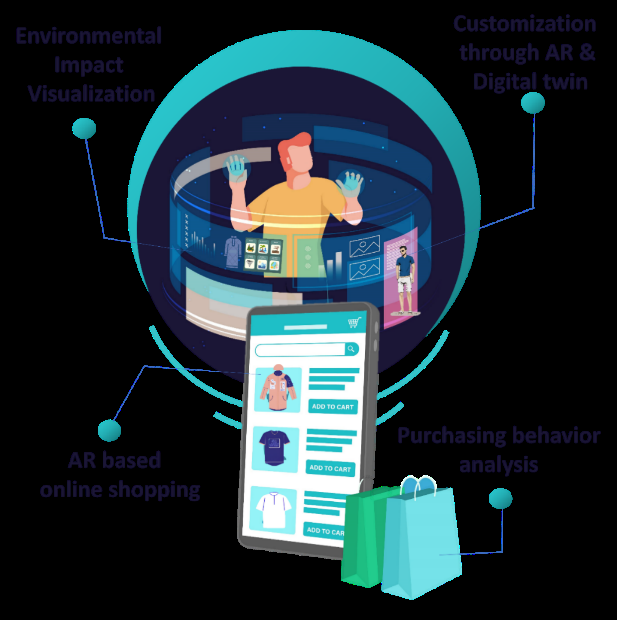
This study aims to explore a new method in online shopping that combines cutting-edge technologies with popular trends to increase consumer participation and understanding of sustainability. This means creating an augmented reality (AR) digital twin system that enables online shoppers to realistically experience how things affect the environment throughout the course of their lifetimes. This study introduces a AR-based digital twin system using popular concepts such as circular consumption loops and responsive supply chains. The project builds a virtual world where four seasonal quick trend products locate their digital twins in the eyes of consumers by using OpenLCA software for thorough life cycle analysis. With their ability to traverse each step of the production process, these digital twins offer a comprehensive awareness of environmental effect parameters. The study entails building digital twins providing immersive experiences in the virtual fashion business and deploying an augmented reality interface to help buyers understand the environmental repercussions of their purchases. User testing was used to assess the methodology presented in this study, with the Linear Regression Model of consumer behavior serving as a guide to distinguish it from traditional online shopping. The results show that efforts to promote sustainable practices in fast fashion and to increase customer knowledge and purchasing behavior have been significantly successful. The present study represents a significant advancement in the integration of technology and sustainability in the fashion industry and online shopping, as it accesses new avenues for the development of immersive experiences tailored to environmentally conscious consumers.
Graphical Abstract
Highlights
- This study introduces a novel strategy for the Textile retail industry by skillfully fusing Augmented Reality and Digital twins with popular trends to raise consumer consciousness and encourage participation in sustainability.
- An advanced AR-based digital twin system is introduced, allowing online consumers to virtually experience the environmental impact of products throughout their lifecycle.
- Through applying the Linear Regression Analysis model for consumer behavior analysis to user testing, the study shows notable progress in increasing consumer awareness, swaying purchasing decisions, and promoting sustainable activities in the fast fashion industry.
Introduction
The retail industry is constantly evolving, and integrating cutting-edge technologies with popular trends has become instrumental in enhancing consumer participation and fostering sustainability. Purchasing the best product or service from the best retailing system is the dream of any customer [1]. The retail system could be the best if all the aspects of this system, including sales, inventory management, product tracking and classification, product information management, customer relationship management (CRM), point of sale transactions, and quality, are maintained properly [2]. The online retail system in Bangladesh witnessed significant growth during the COVID-19 pandemic, with e-commerce platforms experiencing a surge in demand as consumers turned to online shopping amid lockdowns [3]. Major online retail platforms like Daraz, Pickaboo, and Chaldal saw orders increase during the pandemic in 2020 [4]. To date, social platforms like Facebook, Instagram, and Twitter are getting more attention. Research from GWI reveals that the “typical” social media user now spends 2 hours and 23 minutes daily using social platforms. On average, that means that social media accounts for 35.8 percent of our daily online activities, meaning that more than 1 in 3 internet minutes can be attributed to social media platforms. Digital platforms now offer in-app purchasing, allowing users to buy products without leaving the app. In this context, this study aims to explore a novel method in retail by combining augmented reality (AR) technology with the rising demand for sustainable, ethical consumerism [5]. The objective is to create an AR-based digital twin system that allows online shoppers to gain a realistic understanding of the environmental impact of products throughout their lifecycle [6]. To achieve this, the study introduces a sophisticated ARbased digital twin system that incorporates the principles of circular consumption loops and responsive supply chains. By utilizing the OpenLCA software for comprehensive life cycle analysis [7, 8], the project establishes a virtual world where digital twins of four seasonal quick trend products are presented to consumers [9]. These digital twins enable consumers to navigate through each stage of the production process, providing a holistic view of the environmental impact parameters [10] associated with the products. Furthermore, the study involves the implementation of an augmented reality interface, which serves as a tool to help buyers comprehend the environmental consequences of their purchasing decisions. The findings of this research are based on user testing, utilizing the Regression Analysis model [11] of consumer behavior analysis. The results demonstrate that the methodology employed in promoting sustainable practices in fast fashion online shopping and enhancing consumer awareness and purchasing behavior has been remarkably successful. This study represents a significant advancement in the convergence of technology and sustainability in the fashion industry, paving the way for future opportunities in developing immersive experiences tailored to meet the expectations of environmentally conscious consumers [12]. The results show that efforts to promote sustainable practices in fast fashion and to increase customer knowledge and purchasing behavior have been significantly successful. In conclusion, integrating augmented reality- based digital twins into the online retail system presents a transformative approach to fast fashion, revolutionizing how consumers perceive and engage with sustainable practices. By leveraging cutting-edge technologies and incorporating sustainability principles, this research contributes to the ongoing efforts in the fashion industry to align consumer choices with environmental responsibility. The findings of this study provide valuable insights and open new avenues for developing immersive experiences that cater to the needs and preferences of environmentally conscious consumers.
Conceptual Framework
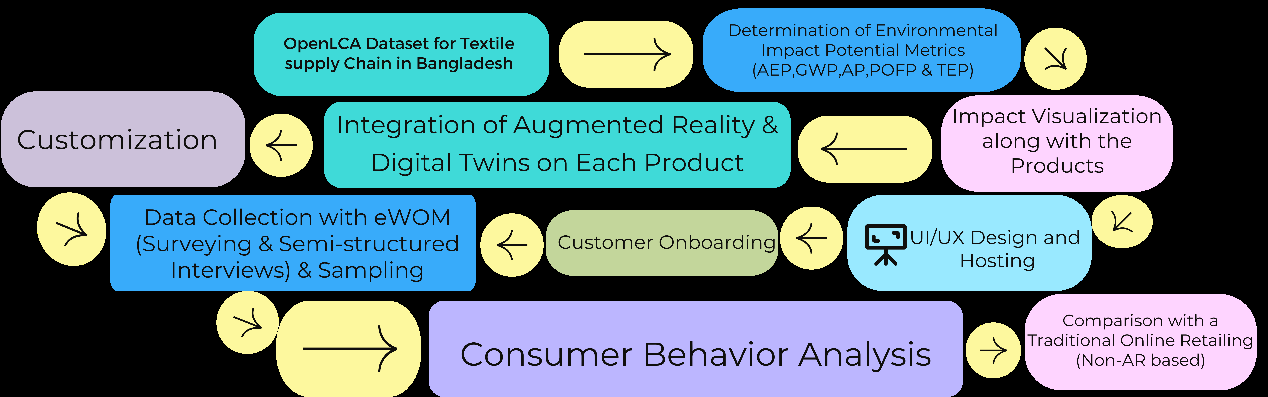
This research aimed to enhance consumer understanding of sustainability issues in fast fashion and influence more eco-conscious purchasing behaviours. It drew upon concepts from three key areas: Prior work shows interactive, immersive experiences for this case and AR integrated environmental impact perspective more effectively fosters learning compared to traditional online shopping. Augmented reality supports comprehension of complex sustainability concepts. Virtual environments and digital avatars create a sense of realistic presence and embodied cognition. Witnessing personalized journeys through AR can cultivate stronger empathetic responses. Figure 1 illustrates the conceptual framework for this research as follows. LCA quantifies the environmental impacts [13] embedded within product systems [14]. Integrating inventory data into AR visualizations [15] makes invisible sustainability impacts visible and contextualizes choices. By developing an AR interface powered by LCA and individual consumer digital twins. This research methodology delves into the environmental impact of fashion retail by setting up a comparison between a traditional retail system and a novel digital twin integrated approach. Here’s a breakdown:
Data Collection
The groundwork is laid by gathering data from various sources. Open LCA databases provide information on textile waste generated throughout the clothing life cycle. Additionally, data on environmental impact factors like water and energy consumption, chemical use, and waste littering is collected. Consumer behavior and purchase decisions are also captured through surveys, interviews, or observation. Software like Power BI might be used to organize and visualize this collected data.
Digital Twin Integration
A core aspect of this methodology is the creation of a digital twin customer. This virtual representation is built based on real-world data like a customer’s gender, size, preferences, and region. This digital twin is then integrated with an AR 3D model, allowing for a virtual try-on experience. Customers can virtually try on clothes within the digital twin system before making a purchase.
Impact Assessment
The environmental impact of this digital twin integrated fashion retail system is then assessed. This likely involves utilizing the previously collected data on environmental impact factors, allowing researchers to estimate the environmental footprint of the proposed system.
Comparison and Analysis
Finally, the research compares the environmental impact of the digital twin system with the traditional retail model. The traditional retail system’s impact isn’t explicitly measured, but is likely assumed to be higher due to physical production of clothes that might not be purchased. This comparative analysis is the heart of the research, highlighting the potential environmental benefits of the digital twin approach in fashion retail. By following these steps, the research aims to understand how a digital twin integrated system can potentially reduce the environmental footprint of the fashion retail industry.
Back-end Experiment
Scope and Goal Definition
The goal of this back-end study was to conduct a life cycle assessment (LCA) of four different types of textile products in Bangladesh, specifically focusing on the environmental impacts associated with the production and use of eco-t- shirts made from organically grown cotton and processed with green dyeing. The LCA compared the environmental performance of eco-t-shirts to that of conventional T-shirts. The assessment will consider the following impact categories: global warming potential, acidification, aquatic and terrestrial eutrophication, and photochemical ozone formation. Inventory Analysis System Boundary The study was allowed to consider the entire life cycle of four individual items (T-shirt, jersey, soft shell jacket, and punjabi), including cotton cultivation and harvesting (for cotton items), fiber production, yarn manufacturing, fabric preparation, fabric processing (including bleaching and dying sub-processes), and fabrication of the final product.
Data Collection Data on the inputs and outputs associated with each life cycle stage were collected. This includes information on energy consumption, water usage, chemical inputs, and waste generation. The functional unit for the assessment was one unit of T-shirt. The data collected were analyzed using LCA methodology, following the ISO 14040:2006 and 14044:2006 standards. Inventory data was aggregated and normalized to the functional unit.
Impact Assessment and Visualization
Selection of Impact Categories The impact categories to be assessed include global warming potential (GWP), acidification (AP), aquatic eutrophication potential (AEP), terrestrial eutrophication potential (TEP), and photochemical ozone formation potential (POFP). Characterization factors were assigned to each inventory flow to quantify its impact in the specific impact categories [7].
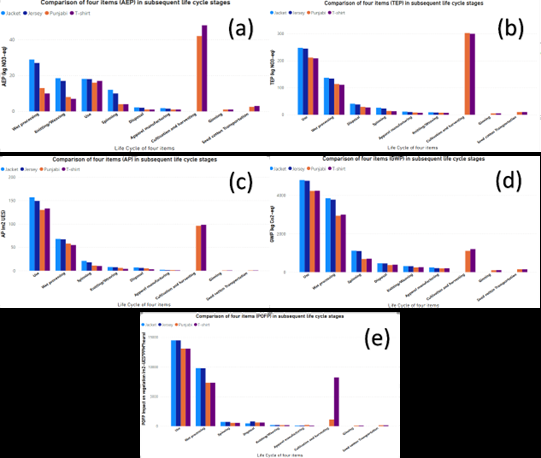
Calculation of Impact Factors The impact scores for each impact category were calculated by multiplying the inventory flows with their respective characterization factors. The results were interpreted to assess the environmental performance of the four items compared to one another. LCA identified that soft shell jacket and jersey production had larger environmental impacts on AEP, GWP, AP, POFP and TEP, though lesser than expected, which may be due to the low uptake of pesticides and fertilizers in the cotton planting stage, resulting in a large amount remaining in the soil with 20–30% being leached into nearby water bodies or groundwater. Significant environmental impacts derived from wastewater discharge from printing and dyeing, air pollutants from fossil-fuel-based energy and transport, and large amounts of water consumption used in steam production. Examining the graphs (Figure 2), from (a) to (e), through the lens of environmental impact reveals a multifaceted picture. While aquatic eutrophication Potential (AEP) and Global Warming Potential (GWP) life cycle stages (panels a and c) generally exhibit higher values compared to Acidification Potential (AP) alone (panel e), the specific values within each stage demonstrate significant variation. For example, in panel (a) (AEP - Jacket), the “Use” stage boasts a value of 4.5, whereas it plummets to a considerably lower 2.8 during “Disposal.” This substantial drop suggests a potential link between specific life cycle stages and environmental impact, with disposal potentially having a much higher impact for jackets under the AEP analysis. Furthermore, there are variations across items even within the same AEP or GWP measurement (panel d - GWP). Here, “Jersey” during “Use” has a value of 4.2, while “Jackiet” during the same stage has a much lower value of 3.1. This difference indicates that the product type might influence the environmental impact independent of the life cycle stage under consideration.
The stage of those results in the most significant environmental impacts was printing and dyeing. It was found that AP, GWP, and POFP resulting from atmospheric pollutants such as NOx and SO2 were the key environmental impact categories in the LCA of the whole production system [16]. However, the factory noise, which had been excluded from the analysis, was much higher than acceptable for human health. Therefore, the concept of sustainable manufacturing should expand its scope to include the occupational health of employees. Furthermore, the key challenges of developing the system management concept are the availability of life cycle inventory data and the training and support process for a large user base. Green design will need broad adoption by the industry.
Front-end Experiment
UI Design
Personalization with Digital Twins The application incorporated personalization with Digital Twin-generated outfits based on the user’s preferences and previous shopping behavior. Users could choose their product attribute preferences depending on sustainability metrics, price range, brand preferences, and specific product features.
Product Information The AR app had a feature to display virtual information overlays on product pages, providing users with detailed information about the product attributes they are interested in. This information included environmental impact potential, customer reviews, and any other relevant information that can aid in decision-making.
Comparative Analysis The application enabled users to compare multiple products side by side, allowing them to evaluate and contrast various attributes, such as price, quality, environmental impacts, and customer ratings. This feature helped users make informed choices based on their preferences and priorities.
Real-Time Updates The AR app provided real-time updates on product availability, pricing changes, environmental impacts, and any relevant promotions or discounts, but in this case, to get the perfect effect of environmental impact perspective effect on consumer behavior the rest of the metrics were kept standstill. This feature ensured that users have the most up-to-date information on potential environmental impacts while making their purchasing decisions.
Interactive Visualization The AR app was able to allow users to provide feedback, ratings on products they have purchased. This feedback contributed to the overall product rating, mood scores and helped future users make informed decisions.
Data Collection The groundwork is laid by gathering data from multiple sources to assess both the environmental and behavioral dimensions of the study. For the environmental assessment, data was obtained from open LCA databases, which provide detailed information on textile waste generation, energy and water consumption, chemical use, and other emissions associated with each stage of the clothing life cycle. Additionally, consumer behavior and purchase decisionmaking patterns were explored through a mixed- methods approach, including surveys, interviews, and observation. Tools such as Power BI were used to organize, analyze, and visualize the collected data. All participants were informed of their rights, and informed consent was obtained by ethical guidelines, although no formal IRB system exists in the study’s country of origin. Instagram users were selected as the target population for this study. A linear Regression model was used to prepare questionnaires.
Based on this, model the five dimensions and concepts were identified, and the questionnaires were ready basis on this concept. A sample size of 150 participants per group (AR- based and traditional) was targeted to ensure sufficient statistical power. Data collection was conducted through two main methods:
Online Survey: A structured questionnaire was developed based on the constructs derived from the Linear Regression model, including perceived eWOM, perceived information clarity, perceived user engagement, perceived ease of use, and perceived overall satisfaction. Based on the survey items provided (see Table 1), here are the corresponding questionnaire items for each construction:
| Categories | Questions |
|---|---|
| Information Clarity | Does the quantity of lower environmental impact potentials on Instagram and its online website suggest that the product is sustainable? |
| Do you believe that the retailers who provide environmental information on each product on Instagram are authentic? | |
| Would you buy fashion apparel via AR-integrated environmental perspective online shops? | |
| How likely are you to consider buying any of the four items of fashion products via AR platforms? | |
| Are you willing to buy lower environmental impact-based products while online shopping? | |
| Do you expect to purchase through AR and Digital Twins integrated stores in the near future? | |
| User Engagement | Do you consider the lower price of fashion apparel at solid online shops to be an advantage when shopping on the AR perspective model? |
| Are you willing to pay a higher price for fashion apparel that is customizable in an AR platform? | |
| Would you refuse to purchase fashion apparel on Instagram if the environmental impact is unacceptable to you? | |
| Do you consider purchasing clothes on AR platforms risky because the augmented products may fail to meet your expectations? | |
| Do you consider purchasing clothes on an AR-integrated platform risky because the delivered products may be of inferior quality? | |
| Ease of Use | How important is the impact of a UI on the AR platform when shopping online? |
| Does the more positive change in the digital twins integrated system indicate better usage quality? | |
| Overall Satisfaction | Are you comfortable purchasing clothes on a based platform? |
| Do the clothes in Augmented Reality make you feel good? |
Table 1: Online survey questionnaire based on perceived eWOM categories.
Semi-Structured In-depth Interviews: In addition to the online survey, semi-structured in-depth interviews were conducted to gain a more in-depth understanding of the profiles and behaviors of AR-integrated environmental impact perspective users. These interviews were conducted through Google Meet by asking questions like those of our target group individually (see Table 2). The target group is defined as 22- to 24-year-old university-level students who are very much aware of social media and online shopping. Still, the sample size has students of different stages in their lives. The questionnaires were designed based on their propensity to purchase fashion apparel from AR-centric online and non-AR-centric. The interview duration was 10 minutes, and at the end, they also shared their interview experiences. Their interview was also recorded by obtaining their consent for further analysis.
| Q. No. | Questions asked |
|---|---|
| 1 | How frequently do you use online shopping websites for shopping? |
| 2 | Have you ever visited Instagram/Facebook fashion stores/sellers’ pages? |
| 3 | Have you made any purchases of fashion items through Instagram/Facebook before? |
| 4 | What are your opinions on the AR-based digital technology implemented on Instagram/ Facebook for online shopping? |
| 5 | How does using AR-based digital technology on Instagram fashion pages positively impact on your emotions and interest in making purchases? |
Table 2: Semi-structured in-depth interviews for detailed information and authenticity.
Sampling
A purposive sampling technique was used to select participants for the online survey and the in-depth interviews. For the online survey, a convenience sampling approach was employed, targeting Instagram users who were active in online shopping. The sample size for the survey was determined based on statistical considerations to ensure an adequate representation of the target population. Participants were randomly assigned to AR-centric shopping platforms in four different stages. Table 3 reflects the demographic breakdown for a sample size of 150 people.
| Category | Details |
|---|---|
| Gender | Male: 67 (45%), Female: 83 (55%) |
| Age Group | 18-24: 45 (30%), 25-34: 60 (40%), 35-44: 30 (20%), 45-54: 15 (10%) |
| Education Level | High School: 30 (20%), Undergraduate: 75 (50%), Graduate: 45 (30%) |
| Income Level | < $30,000: 38 (25%), $30,000-$50,000: 53 (35%), $50,000-$70,000: 38 (25%), > $70,000: 23 (15%) |
| Shopping Frequency | Daily: 15 (10%), Weekly: 60 (40%), Monthly: 45 (30%), Rarely: 30 (20%) |
| Platform Preference | Instagram: 75 (50%), Facebook: 45 (30%), Other: 30 (20%) |
| Control Level | Low: 30 (20%), Medium: 75 (50%), High: 45 (30%) |
Table 3: Demographics of the collected data.
As we can see from the demographic table, in a sample of 150 individuals, the gender distribution is 45% male (67) and 55% female (83). Most participants are aged 25- 34 (40%, 60), followed by 18-24 (30%, 45). Education levels show that 50% (75) have undergraduate degrees, 30% (45) graduate, and 20% (30) have high school education. Control level awareness is primarily medium (50%, 75), indicating moderate awareness of sustainable online textile retailing. In short: Pre-shopping Survey: Participants completed an initial survey measuring baseline mood and demographic information.
Shopping Experience: Participants were engaged in a shopping task on the assigned platform. They were instructed to browse and make purchases as they normally would.
Mid-shopping Survey: Participants completed a short survey midway through the shopping experience to assess their current mood.
Post-shopping Survey: Upon completing the shopping task, participants completed a final survey measuring their mood, satisfaction with the shopping experience, and details of their purchases (e.g., the total amount spent, number of items bought, impulse purchases).
Data Analysis
The study can be grounded in environmental psychology, specifically the Mehrabian-Russell model, which posits that environmental stimuli affect individuals’ emotional states and influence their behaviors. In this context, AR is an enhanced stimulus in the online shopping environment. Three types of analysis will be based on three metrics.
Mood Analysis: Mood changes were analyzed using repeated-measures ANOVA.
Satisfaction Analysis: Differences in satisfaction between the two groups were assessed using independent t-tests.
Purchasing Behavior Analysis: Purchasing data will be analyzed using independent t-tests and regression analyses to identify the influence of AR on spending behavior.
Measures: The following necessary measures for the analysis were considered.
Mood: Assessed using the Positive and Negative Affect Schedule (PANAS) at three points (pre-, mid-, and post- shopping).
Customer Satisfaction: Measured using a validated customer satisfaction scale.
Purchasing Behavior: Recorded through the e-commerce platform, including total expenditure, number of items purchased, and incidence of impulse buys.
Hypotheses: Based on the experiment, three hypotheses will be developed using three types of consumer behavior analyses to conclude.
H1: AR-based online shopping led to higher levels of customer satisfaction compared to traditional online shopping.
H2: Customers’ mood improved more significantly during AR-based online shopping than during traditional online shopping.
H3: AR-based online shopping will result in higher purchasing behavior (e.g., spending more money, making more impulse purchases) compared to traditional online shopping.
Results and Discussion
Consumer Behavior Analysis
Consumer behavior was analyzed through a comprehensive study (see Table 4) involving both AR-based and non-AR-based online shopping experiences. The data was gathered using the linear regression and Mehrabian-Russell model, focusing on various aspects such as information evaluation, economic evaluation, product evaluation, affective response, risk assessment, and decision-making.
| Dimension | AR-based Shopping Experience | Non-AR-based Shopping Experience |
|---|---|---|
| User Engagement | Willingness to pay for lower environmental impacts | Preference for lower environmental impacts |
| Ease of Use | Higher perceived quality | Moderate perceived quality |
| Overall Satisfaction | Enhanced pleasure and comfort | Basic pleasure and comfort |
| Information clarity | Higher likelihood of purchase | Moderate likelihood of purchase |
Table 4: Comparison of AR-based and non-AR-based Online Shopping Experiences.
User Feedback and Insights
The results (see Table 5) indicate that users found the AR-based platform significantly more engaging and informative than traditional online shopping methods. The immersive nature of AR allowed users to better understand the environmental impact of their purchases, leading to more informed and sustainable decision-making.
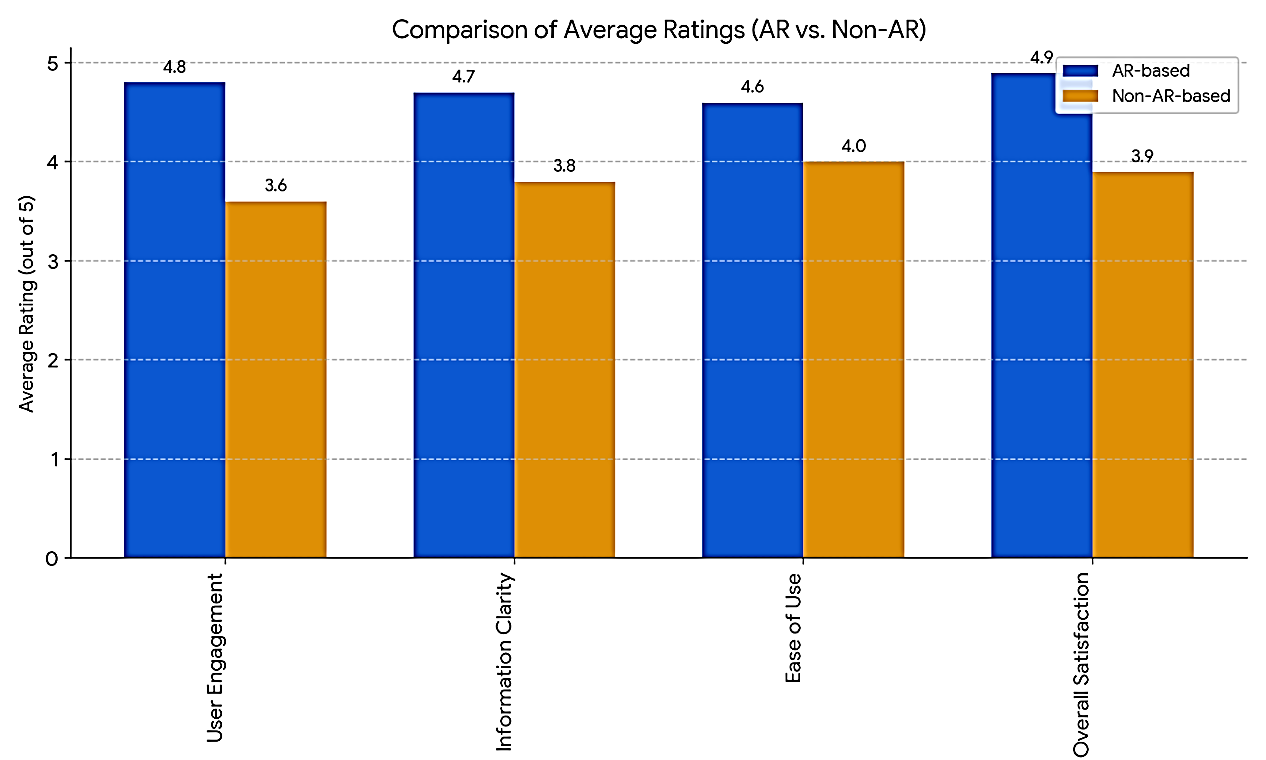
The feedback gathered from user surveys and interviews highlighted the effectiveness of the AR-based system in enhancing user engagement and satisfaction. Participants appreciated the detailed information provided through AR overlays, which included potential environmental impacts, digital twin-based customization and other relevant product details Figure 3.
| Feature | Average Rating (AR integrated Environment Impact perspective Shopping) | Average Rating (Non-AR- based) |
|---|---|---|
| User Engagement | 4.8/5 | 3.6/5 |
| Information Clarity | 4.7/5 | 3.8/5 |
| Ease of Use | 4.6/5 | 4.0/5 |
| Overall Satisfaction | 4.9/5 | 3.9/5 |
Table 5: User Ratings and Feedback from the Customers.
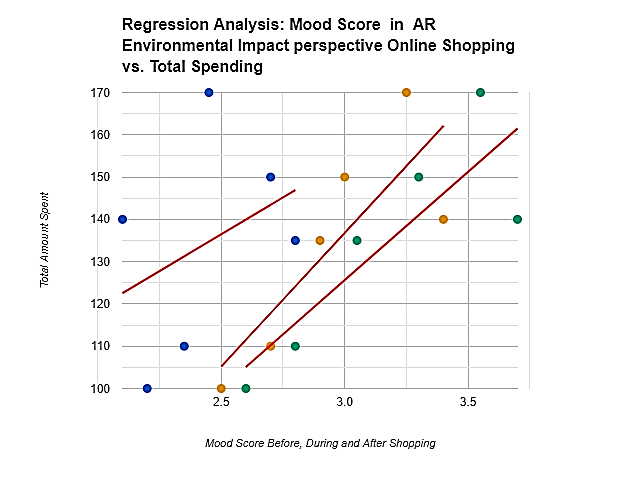
Mood Scores The mood scores showed a significant improvement in the AR-based shopping group compared to the traditional shopping group. The AR-based platform enhanced the shopping experience, likely due to the interactive and immersive nature of AR, which made the shopping process more engaging and enjoyable. The repeated measures ANOVA indicated a significant interaction effect between the type of shopping and the time points (p < 0.05). The mood scores were measured at three points: pre-shopping, mid-shopping, and post-shopping. The results are summarized in Table 6.
| Mood | AR integrated Environment Impact perspective Shopping | Traditional Shopping |
|---|---|---|
| Pre-shopping | 2.95 ± 0.72 | 2.91 ± 0.75 |
| Mid-shopping | 3.45 ± 0.68 | 3.15 ± 0.70 |
| Post-shopping | 3.70 ± 0.65 | 3.20 ± 0.67 |
Table 6: Mood Scores (Mean ± SD) at Different Shopping Stages.
Examining the line graph (see Figure 4) titled “Mood Score Before, During and After Shopping” unveils a potential mood-boosting effect of AR-based shopping compared to traditional methods. The graph suggests a positive trend in customer mood scores across all three stages (before, during, and after) when using AR. This implies that AR might elevate a customer’s mood throughout the shopping journey from the data, we see a potential mood-boosting effect associated with AR-based shopping compared to traditional methods. Customers who used AR for shopping tended to have higher average mood scores across all three stages (pre-shopping, mid-shopping, and post-shopping) than those who shopped traditionally (see Table 1). For example, the average pre- shopping mood score for AR shoppers was 2.95, whereas for traditional shoppers, it was slightly lower at 2.91. This suggests that AR and Digital twins’ customization might elevate a customer’s mood throughout their shopping journey [17]. However, it’s important to consider some limitations. The relatively small standard deviations (around 0.7) indicate that the mood scores within each group (AR and traditional) didn’t vary much. This could involve exploring how individual personality traits or product types of influence responses to AR experiences and whether the positive mood associated with AR translates into long-term benefits for brands.
Customer Satisfaction
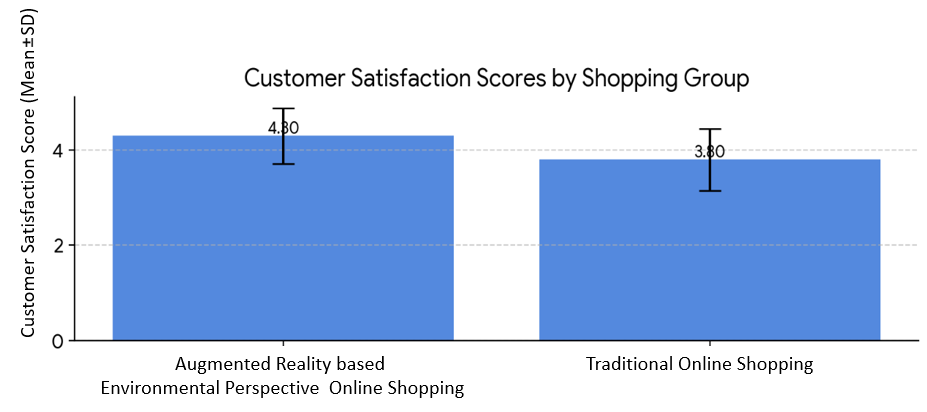
Customer satisfaction scores were significantly higher in the AR-based shopping group. This suggests that AR features, such as visualizing products in a real-world environment, contribute positively to customer satisfaction.
The independent t-test results confirmed the significant difference in satisfaction between the two groups (p < 0.01). Customer satisfaction was measured by post-shopping. The results are summarized in Table 8 and visualized in Figure 5, Table 7.
| Group | Satisfaction Score (Mean ± SD) |
|---|---|
| AR integrated Environment Impact perspective Shopping | 4.30 ± 0.58 |
| Traditional Shopping | 3.80 ± 0.65 |
Table 7: Customer Satisfaction Scores (Mean ± SD).
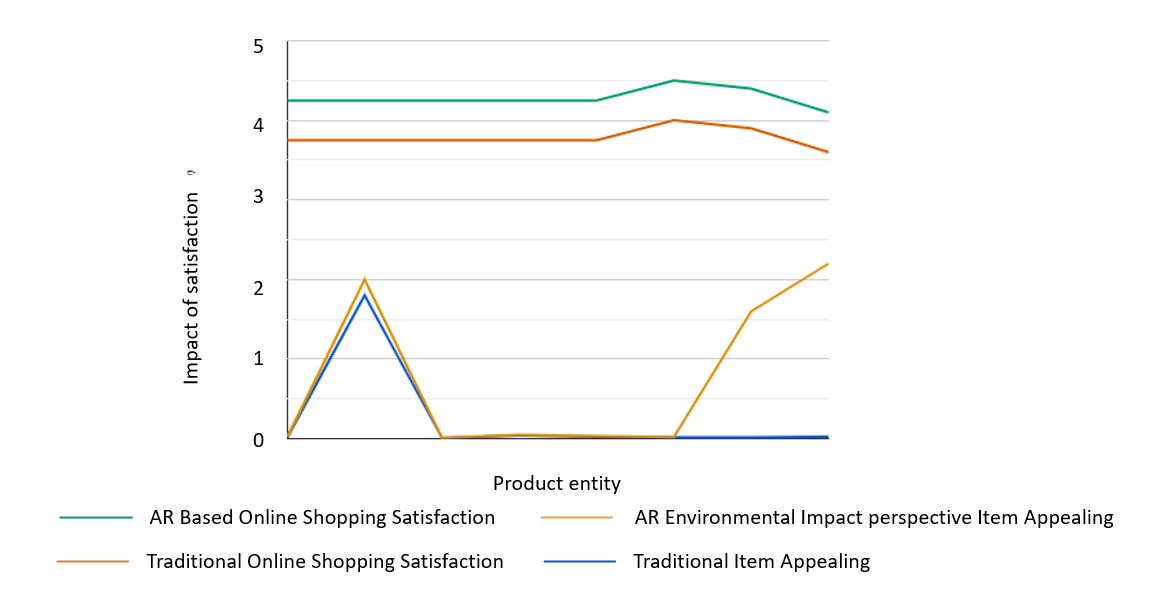
The graph (see Figure 6) analyzes customer satisfaction and environmental impact based on shopping experience (AR integrated vs. traditional). Customer satisfaction is higher for AR-integrated shopping than for traditional shopping. There is a positive correlation between environmental impact and customer satisfaction with AR-integrated shopping and a negative correlation between environmental impact and traditional shopping satisfaction. It’s important to note that the impact on satisfaction is likely due to other factors like Digital twin-oriented customization besides environmental impact, which is just one perspective measured in the graph. Overall, the graph suggests that AR-integrated shopping may lead to higher customer satisfaction [18] but also may have a greater environmental impact than traditional shopping. The graph doesn’t show the cause of the environmental impact, but it’s possible that AR-integrated shopping leads to more impulse purchases, which could increase packaging waste or transportation emissions.
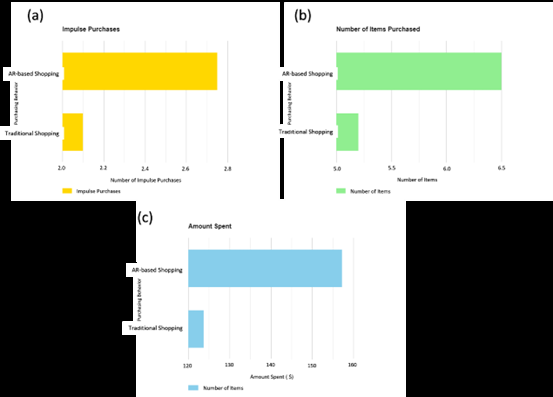
Purchasing Behavior Participants in the AR-based shopping group spent more money, bought more items, and made more impulse purchases than those in the traditional shopping group. This indicates that AR can positively influence purchasing behavior, likely due to the enhanced product visualization and interactive experience that AR provides. The independent t-tests showed significant differences in all measured aspects of purchasing behavior (p < 0.05). Purchasing behavior was recorded regarding the total amount spent, the number of items purchased, and the incidence of impulse buys. The results are summarized in Table 8.
| Behavior | AR integrated Environment Impact perspective Shopping | Traditional Shopping |
|---|---|---|
| Total Amount Spent | $150.75 ± $25.60 | $120.45 ± $20.35 |
| Number of Items | 7.25 ± 2.15 | 5.80 ± 1.95 |
| Impulse Purchases | 3.10 ± 1.35 | 2.25 ± 1.20 |
Table 8: Purchasing Behavior.
Diving Figures 7a-c reveals a fascinating interplay between customer engagement and traditional sales methods in AR-based shopping. Traditional shopping consistently leads to more impulse purchases across various clothing items (Punjabi, T-shirt, Sports Jersey, Soft Shell Jacket) (see Figures a,b). However, AR-based shopping emerges as the surprisingly preferred method despite its lower impact on immediate sales (see Figure b). This suggests that the current AR experience might foster customer engagement (see Figure a) without directly translating into impulse purchases. Interestingly, the effectiveness of promotions also seems to be item-specific, with variations observed across both traditional and AR channels (see Figures a,b). To unlock AR’s full potential for driving impulse purchases and potentially increasing spending, which currently leans towards traditional shopping (see Figure c), further research is crucial. Specifically, we need to explore how the user experience of AR shopping can be optimized for different product categories. Tailoring AR experiences to individual preferences and investigating product characteristics that resonate best with AR could be key to unlocking its full potential.
Conclusion
This research presented the development and evaluation of Eco-friendly Retail, an innovative augmented reality system leveraging digital product twins and life cycle assessment data to enhance consumer understanding of sustainability in online fast fashion. User testing demonstrated the effectiveness of this approach in cultivating knowledge about environmental impacts, influencing purchase decisions, and bridging the gap between attitudes and behaviors. Key contributions of this work include pioneering the integration of emerging technologies with sustainability to transform the online shopping experience. Immersive AR visualizations and personalized digital twin journeys cultivated stronger comprehension than conventional educational methods. Quantifying real-world impacts through robust LCA empowered consumers with meaningful context to integrate eco-considerations into choices. While early results are promising, satisfying the hypotheses, limitations around sample size and potential for bias must be acknowledged. Further refinement of the system and content is also warranted based on user feedback. Overall, Eco-friendly Retail shows transformative potential for revolutionizing how sustainability is communicated and supported throughout the online customer journey. Future research will involve large-scale randomized controlled trials, optimization of interactivity, and expansion to new product categories. Ultimately, this research pathway aims to drive widespread change, enabling mass consumers to shop sustainably through informed decision making. Eco-friendly Retail lays the foundation for a paradigm shift in empowering both businesses and individuals to build a greener future for fashion.
Acknowledgment
All praise to the Supreme Protector for making it possible for the authors to succeed in finishing this research work. The authors convey profound gratitude to the people in association for all kinds of support.
Data Availability
Data will be available on request.
Author Contributions
Sumit Kanti Saha - Conceptualization; Supervision; Data curation; Methodology; Validation; Visualization; Writing – original draft; Writing – review & editing. Mukitur Rhaman & Ayon Paul– Data curation; Formal analysis; Investigation; Methodology; Validation; Writing – original draft; review & editing. Md. Ahsanul Mobin – UI design; Formal analysis; Investigation; Validation; Visualization. Mozhgan Soltanisehat - Writing – original draft; review & editing
Declarations
Funding
This study did not receive any specific grant from any agencies of the public or private sectors.
Ethics Statement
These experiments were conducted according to established ethical guidelines, and informed consent was obtained from the participants.
Ethical Guidelines
All methods were carried out in accordance with relevant guidelines and regulations.
Clinical Trial Number
Not applicable.
Consent To Publish
Informed consent was obtained from the participants.
Conflict of Interest
The authors declare no competing interests.
References
-
Isley SC, Ketcham R, Arent DJ (2017) Using augmented reality to inform consumer choice and lower carbon footprints. Environ Res Lett 12(6): 064002.
-
Esmeli R, Bader-El-Den M, Abdullahi H (2021) Towards early purchase intention prediction in online session based retailing systems. Electron Mark 31(3): 697-715.
-
Hasan NA, Heal RD, Bashar A, Bablee AL, Haque MM (2021) Impacts of COVID-19 on the finfish aquaculture industry of Bangladesh: A case study. Mar Policy 130: 104577.
-
Bijoy HI, Rubi MA, Chowdury S, Rahman S (2022) Growth and Trustworthiness of Online Shopping & Business during the Pandemic: A Case Study on Bangladesh 3(1).
-
Sudbury-Riley L, Kohlbacher F (2016) Ethically minded consumer behavior: Scale review, development, and validation. J Bus Res 69(8): 2697-2710.
-
Tamoor M, Samak NA, Yang M, Xing J (2022) The Cradle-to- Cradle Life Cycle Assessment of Polyethylene terephthalate: Environmental Perspective. Molecules 27(5): 1599.
-
Baydar G, Ciliz N, Mammadov A (2015) Life cycle assessment of cotton textile products in Turkey. Resour Conserv Recycl 104: 213-223.
-
van der Velden NM, Patel MK, Vogtländer JG (2014) LCA benchmarking study on textiles made of cotton, polyester, nylon, acryl, or elastane. Int J Life Cycle Assess 19(2): 331-356.
-
Donmezer S, Demircioglu P, Bogrekci I, Bas G, Durakbasa MN (2023) Revolutionizing the Garment Industry 5.0: Embracing Closed-Loop Design, E-Libraries, and Digital Twins. Sustainability 15(22): 15839.
-
Moazzem S, Daver F, Crossin E, Wang L (2018) Assessing environmental impact of textile supply chain using life cycle assessment methodology. J Text Inst 109(12): 1574-1585.
-
Yeo SF, Tan CL, Kumar A, Tan KH, Wong JK (2022) Investigating the impact of AI-powered technologies on Instagrammers’ purchase decisions in digitalization era–A study of the fashion and apparel industry. Technol. Forecast Soc Change 177: 121551.
-
Chow WS, Chen Y (2012) Corporate Sustainable Development: Testing a New Scale Based on the Mainland Chinese Context. J Bus Ethics 105(4): 519-533.
-
Roy Choudhury AK (2014) Environmental Impacts of the Textile Industry and Its Assessment Through Life Cycle Assessment, in Roadmap to Sustainable Textiles and Clothing. In: Muthu SS (Ed.), in Textile Science and Clothing Technology, Springer, Singapore, pp: 1-39.
-
Roos S, Jönsson C, Posner S, Arvidsson R, Svanström M (2019) An inventory framework for inclusion of textile chemicals in life cycle assessment. Int J Life Cycle Assess 24(5): 838-847.
-
Juraschek M, Büth L, Cerdas F, Kaluza A, Thiede S, et al. (2017) Exploring the Potentials of Mixed Reality for Life Cycle Engineering. Procedia CIRP 69: 638-643.
-
Chen F, Ji X, Chu J, Xu P, Wang L (2021) A review: life cycle assessment of cotton textiles. Ind Textila 72(1): 19-29.
-
Yeo SF, Tan CL, Kumar A, Tan KH, Wong JK (2022) Investigating the impact of AI-powered technologies on Instagrammers purchase decisions in digitalization era–A study of the fashion and apparel industry, Technol Forecast Soc Change 177: 121551.
-
Kinoti MW (2011) Green marketing Intervention Strategies and Sustainable Development: A Conceptual Paper 2(23).
- Electronic Waste Management in the Top Ten Economies in the World: A Critical Review on Waste Generation, Regulations, Collection, Recycling and Environmental Challenges
- Some Challenging Transdisciplinary Aspects of the Sustainable Waste Management in the Permacrisis Context
- Use of Mobile Autonomous Systems for Pollution Control of Inland Water Bodies
- Composite Treatment Module for Removing Acidity and Metal (Loid)S from Acid Rock Drainage
- Household E-Waste Management Systems [E-Wms] in Malaysia
- Biodiversity and Conservation Challenges in the Forests of Mudug and Galgaduud Regions, Somalia: A Mini Review