
Bacteriological Study of Some Sachet Water Sold in Ogbomoso Metropolis and its Public Health Significance
The introduction of sachet water to consumers was to provide safe, hygienic and affordable instant drinking water to the public. Although this is a laudable idea, current trends seem to suggest that sachet drinking water could be a route of transmission of diseases. The objective of this study was to check the bacteriological safety or otherwise of some sachet water packaged in Ogbomoso metropolis. Using a simple random procedure, fifteen brands of sachet water were bought from vendors at different locations. The samples were analyzed using multiple tubes methods and biochemical assays. Results were recorded as Most Probable Number (MPN) of coliform per 100ml of water. The bacteriological quality of the samples was assessed based on the World Health Organization (WHO) classification system for drinking water. Zero (0%) of the sample was Excellent, two (2) (13.3%) were Satisfactory, one (1) (6.7%) was Suspicious and twelve (12) (80%) were Unsatisfactory using the MPN values recorded. The samples were contaminated with faecal coliform. Escherichia coli was detected in some of the samples which could have caused diarrhea, cramps, nausea and other symptoms in the consumers. The level of contamination could be due to inadequate treatment of water samples by the producers, improper use of filters or post-production contamination. The findings suggest the need to enforce the laws that govern the operation of such production outfits as well as educating consumers on the need to purchase sachet water from manufacturers that have been licensed to produce water and whose product bears the stamp of the National Agency for Food and Drugs Administration and Control (NAFDAC). And producers should ensure proper purification of water and maintain hygienic environment for producing the sachet water.
Introduction
Water is one of the most important as well as one of the most abundant compounds on earth, and is vital to the survival of any organism [1]. Water in nature is seldom totally pure. Rainfall is contaminated as it falls to earth [2]. Microbiological safety and quality of drinking water is of great health concern to all people owing to the potential of drinking water as carrier of microbial pathogens and cause of subsequent illness in both developed and emerging economies of the world [3]. Water-related diseases continue to be one of the major health problems globally, with an estimated 3.4 million water-related deaths per year (which represent 4% of all deaths) and 5% of health loss to disability. The most common and widespread health risk associated with drinking is contamination, either directly or indirectly, by human or animal excreta and the microorganisms contained in faeces [4, 5]. Water related diseases continue to be one of the major health problems globally [6]. The safety of drinking water in poor and deprived communities has in the last decade been in jeopardy as a result of the introduction of refuse and sewage into sources of water supply [7, 8]. The intake of unwholesome water could have devastating effects on our health as unsafe drinking water is a key determinant of many microbial diseases with serious complications in immune competent and immune-compromised individuals [9].
The high prevalence of diarrhea among children and infants, even currently, the outbreak of cholera in Nigeria can be traced to the use of unsafe water and hygienic practices [10, 11]. The most dangerous form of water pollution occurs when fecal contaminants like Escherichia coli enter the water supply and also through the fecal-oral routes of transmission. Microbial contaminants in water supply are the sources of many diseases such as typhoid fever, cholera, bacillary dysentery and so on. Examples of such microbial contaminants are Salmonella spp, Shigella spp, Vibrio cholerae, Escherichia coli [1, 12]. Therefore, maintaining safe drinking water remains critical to human health as contamination by bacteria may have implication well beyond a period of acute self-limiting disease. The bacteriological quality of water is of paramount importance and monitoring must be given highest priority. This is so because studies have attributed several disease outbreaks to untreated or poorly treated water containing bacterial pathogen that have been isolated from sachet water [13]. Objectives of The Study are to examine the microbiological quality and evaluate the bacteriological safety of sachet water sold in Ogbomoso metropolis.
Materials and Methods
Study Area
The study area for this research work will be within Ogbomoso city, Oyo state, south-western, Nigeria. Nigeria is on latitude 8.142165 and longitude 4.245186 with GPS coordinates of 8°8‘ 31.7940‖N and 4°14‘42.6696 E.
Study Design
This study is an experimental study. A comprehensive physical and bacteriological analysis was carried out on the water samples.
Study Site
Sample analysis was done at the Medical Laboratory Complex, Ladoke Akintola University of Technology Teaching Hospital, Ogbomoso, Oyo state.
Ethical Clearance
Ethical approval was obtained from the Ethical Review Committee, College of Health Science, Ladoke Akintola University of Technology, Ogbomoso, Oyo state.
Sample Collection
Fifteen (15) brands of sachet water were purchased for the purpose of the research. Each sample was purchased randomly from markets and street vendors in Ogbomoso metropolis. They were transferred in sterile bags to the Medical Microbiology Laboratory, Ladoke Akintola University Teaching Hospital (LTH) Ogbomoso.
Laboratory Investigation
Physical Analysis of the water sample: The physical examination of the water samples was done immediately after the samples got to the laboratory. The physical examinations include odor, taste and color.
Chemical Analysis of the water sample: The pH of each water sample was determined with pH meter and the color and turbidity of each sample was measured with digital spectrophotometer.
Bacteriological analysis: Triplicates (three sachets of each water brands) was used.
Total Coliform and Faecal Coliform Test The Most Probable Number (MPN) method MPN method was used to determine the total coliform and faecal coliform counts.
Procedure for Most Probable Number
Ten (10) ml of single strength MacConkey broth and double strength MacConkey broth was transferred into all test tubes. Durham tubes were put invertedly into all the tubes and sterilize by autoclaving. Test tubes in five rows were set up in a tube rack. 10ml of the sample was inoculated into the first set of five tubes using sterile syringe for each water brand, 1ml of water sample was inoculated into the next set of five tubes using sterile syringe for each water brand 0.1ml of the sample into the next row using sterile syringe for each water brand. The test tubes were incubated at 37 ̊C for 24hours for the estimation of total coliforms and at 44.5 ̊C for 48hours in a water bath for faecal coliforms. Acid productions were determined by colour change and gas production was checked by gas formation in the Durham tubes. The MPN was then estimated from the MPN table (McCrady) for the test tubes. Following incubation, aliquots from the- cultured positive tubes were aseptically streaked on MacConkey agar for total coliform and Eosin Methylene Blue agar (EMB) for faecal coliform and incubated at 37 ̊C and 44 ̊C respectively [14].
Biochemical Test
Biochemical tests were carried out on colonies formed on the agar plates after incubation as described by Monica Cheesbrough (2006) to determine the identity of the bacteria isolate.
Gram Reaction
A thin smear of each isolated organism (both aerobic and anaerobic) was made on dry, grease free slide, it was air dried and heat fixed. The smears were flooded with gential violet and rinsed with water after 1 minute. It was flooded with Lugol‘s iodine and rinsed with water after 1 minute. It was decolorized briefly with acetone and rinsed with water. It was counterstained with safranin and rinsed with water after 1 minute. Each slide was blotted, dried and examined microscopically using ×100 objective lens [15].
Oxidase Test
An oxidase reagent was used. Oxidase producing organisms e.g. Pseudomonas species oxidize phenylenediamine present in the oxidase reagent to a deep purple color when a colony of the test organism was smeared on the filter paper soaked in oxidase reagent. Purple coloration indicated oxidase positive. A piece of filter paper was soaked with a few drops of oxidase reagent, a colony of organism was smeared on the filter paper. Oxidase producing organism would produce oxidase and phenylenediamine in the reagent would be oxidized to a deep purple color [15].
Motility Test
A ring of plasticine was made at the center of a slide, a loop full of overnight broth culture was transferred to the center of a neat cover slip. The ring of plasticine on slide was gently pressed against the cover slip ensuring that the drop did not come in contact with the slide. With a quick movement the slide was inverted so that the cover slip is upper most, the drop was then examined microscopically using the ×10 objective and confirmed with ×40 objective [15].
Indole Test
About 3 ml of peptone was dispensed in a bijou bottle, pure culture isolate was inoculated into it and incubated at 37⁰C for 24 hours. Then few drops of kovac‘s reagent was added into the tubes and shake gently. A red colored ring indicated a positive result for indole test [15].
Citrate Utilization Test
This test is one of several techniques used occasionally to assist in the identification of enterobacteria. The test is based on the ability of an organism to use citrate as its only source of carbon. Simmon‘s citrate agar was used to prepare slants in bijou bottles and sterilized at 121℃ for 15 minutes. After solidification, the slants were aseptically inoculated with test isolates with the aid of a flame sterilized straight wire and incubated at 37℃ for 24 hours. Slants were examined for color change; citrate utilizing organisms turn the medium blue while medium remains green for non-citrate utilizing organisms [15].
Urease Test
Testing for urease enzyme activity is important in differentiating enterobacteria. The test organism was inoculated in a medium which contains urea and the indicator phenol red; it was incubated at 37℃ for 24 hours. When the strain is urease producing, the enzyme will break down the urea (by hydrolysis) to give ammonia and carbon dioxide. With the release of ammonia, the medium becomes alkaline as shown by a change in colour of the indicator to pink-red [15].
Catalase Test
This test is used to differentiate those bacteria that produce the enzyme catalase, such as Staphylococci, from non-catalase producing bacteria such as Streptococci and Enterococci. Catalase acts as a catalyst in the breakdown of hydrogen peroxide to oxygen and water. Isolates were tested for catalase production by pouring 2ml of hydrogen peroxide into a test tube, sterile wire loop was used to remove several colonies of the test organism and immersed in the hydrogen peroxide solution. It was checked for immediate bubble formation [15].
Coagulase Test
This test is used to identify S. aureus which produce the enzyme coagulase. Coagulase causes plasma to clot by converting fibrinogen to fibrin. A drop of distilled water was placed on each end of a slide or on two separate slides. A colony of the test organism (previously checked by Gram staining) was emulsified in each of the drops to make two thick suspensions. A loopful (not more) of plasma was added to one of the suspensions, and mixed gently. It was checked for clumping of the organisms within 10 seconds [15].
Results and Interpretation
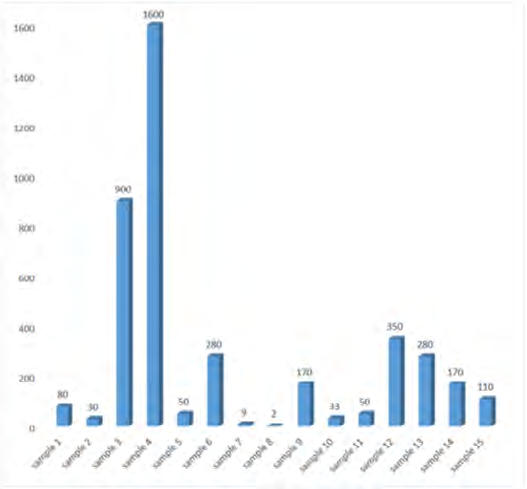
Table 1 Showed the MPN Index and 95% Confidence limits for various combinations of positives when five tubes are used per dilutions (10ml, 1.0ml, 0.1ml portions of samples). The different brands of pure water sachets examined had a Multiple Probable Number (MPN) per 100ml as follows: Sample 1 (80), Sample 2 (30), Sample 3 (900), Sample 4 (1600), Sample 5 (50), Sample 6 (280), Sample 7 (9), Sample 8 (2), Sample 9 (170), Sample 10 (33), Sample 11 (50), Sample 12 (350), Sample 13 (280), Sample 14 (170), Sample 15 (110) Tables 2-4.
Table 3 showed the safety status of the sachet water examined and their classification was determined by comparing their MPN index with WHO guidelines for drinking water. All except Ifesowapo and Joess were unsatisfactory. While Ifesowapo (9) was classified as suspicious Joess (2) was considered satisfactory.
| No. of tubes giving positive reaction | 95% Confidence Interval | |||||
|---|---|---|---|---|---|---|
| Pure water Brand | 5 of 10ml | 5 of 1ml | 5 of 0.1ml | MPN per 100ml | Upper | Lower |
| Sample 1 | 5 | 3 | 0 | 80 | 30 | 250 |
| Sample 2 | 5 | 1 | 0 | 30 | 10 | 120 |
| Sample 3 | 5 | 5 | 3 | 900 | 300 | 2900 |
| Sample 4 | 5 | 5 | 4 | 1600 | 600 | 5300 |
| Sample 5 | 5 | 2 | 0 | 50 | 20 | 170 |
| Sample 6 | 1 | 1 | 0 | 2 | 1 | 11 |
| Sample 7 | 2 | 1 | 1 | 9 | 3 | 24 |
| Sample 8 | 1 | 0 | 0 | 2 | 1 | 11 |
| Sample 9 | 5 | 4 | 1 | 170 | 70 | 480 |
| Sample 10 | 4 | 3 | 1 | 33 | 15 | 77 |
| Sample 11 | 5 | 2 | 0 | 50 | 20 | 170 |
| Sample 12 | 5 | 4 | 4 | 350 | 160 | 820 |
| Sample 13 | 5 | 4 | 3 | 280 | 120 | 690 |
| Sample 14 | 5 | 3 | 3 | 170 | 80 | 410 |
| Sample 15 | 5 | 3 | 1 | 110 | 40 | 300 |
Table 1: MPN Index and 95% Confidence limits for various combinations of positives when five tubes are used per dilutions (10ml,
| Grade | Presumptive count (per 100ml) | |
|---|---|---|
| 1 | Excellent | 0 |
| 2 | Satisfactory | 1-3 |
| 3 | Suspicious | 4-10 |
| 4 | Unsatisfactory | >10 |
| Pure water Brand | MPN/100ml | Safety Status |
| Sample 1 | 80 | Unsatisfactory |
| Sample 2 | 30 | Unsatisfactory |
| Sample 3 | 900 | Unsatisfactory |
| Sample 4 | 1600 | Unsatisfactory |
| Sample 5 | 50 | Unsatisfactory |
| Sample 6 | 2 | Satisfactory |
| Sample 7 | 9 | Suspicious |
| Sample 8 | 2 | Satisfactory |
| Sample 9 | 170 | Unsatisfactory |
| Sample 10 | 33 | Unsatisfactory |
| Sample 11 | 50 | Unsatisfactory |
| Sample 12 | 350 | Unsatisfactory |
| Sample 13 | 280 | Unsatisfactory |
| Sample 14 | 170 | Unsatisfactory |
| Sample 15 | 110 | Unsatisfactory |
Table 2: Classification of the samples according to WHO guidelines for drinking water (1985).
| Pure water Brand | Organisms isolated |
| Sample 1 | Escherichia coli |
| Sample 2 | klebsiella spp. |
| Sample 3 | klebsiella spp. |
| Sample 4 | Pseudomonas spp. |
| Sample 5 | Proteus spp. |
| Sample 6 | Proteus spp. |
| Sample 7 | No bacteria growth |
| Sample 8 | No bacteria growth |
| Sample 9 | Escherichia coli |
| Sample 10 | Pseudomonas spp. |
| Sample 11 | Pseudomonas spp. |
| Sample 12 | Pseudomonas spp. |
| Sample 13 | Pseudomonas spp. |
| Sample 14 | Pseudomonas spp. |
| Sample 15 | Pseudomonas spp. |
Table 3: Showing the Pure water brands and the organisms isolated from them.
Discussion
All humans require an adequate supply of clean water in order to survive, and a lack of this resource is known to significantly decrease the quality of life [16]. When water supplies contain coliform bacteria in levels greater than one per 100ml of water, the water may also contain pathogens that cause acute intestinal illness. While generally considered a discomfort to health, these infections may be fatal for infants, the elderly and those who are sick [17] (Figure 1).
The presence of faecal coliform observed in packaged water has been reported to be due to poor hygienic practices of producers, failure to wash hands, ignorance about good hygienic practices as well as the presence of animals in the vicinity of the factory [18]. The coliform-positive samples were also tested for faecal coliform. Faecal coliform is considered more as an indicator of faecal contamination because whereas coliform can exist in the environment, faecal coliforms are non-disease causing organisms which are found in the intestinal tract of warm-blooded animals hence its presence is indicative of pollution with animal or human waste [19, 20]. They are primarily used to indicate the presence of bacterial pathogens such as Salmonella spp., Shigella spp., Vibrio cholerae, Campylobacter jejuni, Campylobacter coli, Yersinia enterocolitica and pathogenic Escherichia coli. These organisms can be transmitted via the faecal/oral route by contaminated or poorly treated water and may cause diseases such as gastroenteritis, salmonellosis, dysentery, cholera and typhoid fever [21]. Sachet water is not completely sterile; it may not be entirely free of all infectious microorganisms. The potential danger associated with sachet water is contamination, which is a factor of the source of the water itself, treatment, packaging materials, dispensing into packaging materials and closure [10]. Water that has been treated for the purpose of drinking should not be contaminated with coliform; if present then the source of the contamination must be located. Sachet water is sold to the public for direct consumption hence is supposed to undergo treatment. In the case of sachet water, the sources of contamination could be the main water source because it is reported that some unscrupulous producers just bag and seal pipe water without any form of treatment [22].
Poorly maintained filter systems are also a possible source of contamination because bacteria can grow on filters if these are not changed regularly, and thereafter enter the water supply [21, 23]. It has been shown that charcoal filters used in removing unpleasant odors from drinking water can support large bacterial numbers [24]. The rubbers used in packaging the water if not properly sterilized and the generally unhygienic manners in which some of these products are hawked in the streets may also be sources of contamination [21]. From the study, Escherichia coli was isolated, which could imply that the water may have passed through a purification stage but not well purified to kill all the bacteria in the water [25].
Conclusion
The study was carried out to assess the bacteriological study of sachet water in Ogbomoso metropolis, Oyo state. A total of fifteen sachet water samples were analyzed in the department of Medical Microbiology Laboratory, Ladoke Akintola University of Technology, Ogbomoso Oyo state. From the results of this bacteriological study, only 13% brands of sachet water samples analyzed was satisfactory for drinking. The bacteriological analysis of coliform count showed that all the samples are biologically not satisfactory based on WHO standard. Since the biological quality of water is a hidden attribute that impacts seriously on public health, it is pertinent to note that the various sachet water packaged in the study area could have some health implications depending on the type of coliform found and there is therefore the need to improve on their biological treatment.
The analysis reveals that the water sources need some degree of treatment before consumption and also need to be protected from perils of contamination. The sachet water brands should adequately be improved in the treatment processes. Good quality packaged water can also be produced by ensuring that packaging materials are of good grade properly handled, stored and distributed in clean and hygienic condition.
The possible health hazard of drinking contaminated or poorly treated water is tremendous as water related diseases continue to be one of the major health problems domestically and globally, therefore maintaining a safe drinking water remains critical to human health. Most households in Nigeria now rely on sachet water as their main source of drinking water; therefore, there is need for bacteriological analysis of sachet water to ascertain if they are fit for human consumption. Sachet water is affordable from the perspective of consumers and for producers is a lucrative business but the results from the many studies raise public health concerns that need to be addressed.
References
-
Tortora JG, Funke RB, Case LC (2002) An Introduction. 7th (Edn.), Daryl Fox Pub. pp: 258-260.
-
Ajewole IA (2005) Water an Overview, Food Forum, A Publication of the Nigerian Institute of Food Science and Technology 4(1): 15.
-
Moe CL, Rheingans RD (2006) Global challenges in water, sanitation and health. Journal of water and health 4(1): 41-57.
-
Suthar S, Chhimpa V, Singh S (2008) Bacterial contamination in drinking water: a case study in rural areas of northern Rajasthan, India. Environ Monit Assess 159(1-4): 43-50.
-
Olaoye OA, Onilude AA (2009) Assessment of microbiological quality of sachet-packaged drinking water in Western Nigeria and its public health significance. Public Health 123(11): 729-734.
-
Gleick PH (2002) Dirty-water: estimated deaths from water-related diseases 2000-2020 pp: 1-12. Oakland: Pacific Institute for Studies in Development, Environment, and Security.
-
Kwakye Nuako G, Borketey PB, Mensah Attipoe I, Asmah RH, Ayeh Kumi PF (2007) Sachet drinking water in Accra: the potential threats of transmission of enteric pathogenic protozoan organisms. Ghana Med J 41(2): 62-67.
-
Adewoye AO, Adewoye SO, Opasola OA (2013) Microbiological examination of sachet water experimentally exposed to sunlight. International Journal of Pure and Applied Sciences and Technology 18(1): 36.
-
Ezeugwunne IP, Agbakoba NR, Nnamah NK, Anahalu IC (2009) The prevalence of bacteria in packaged sachets water sold in Nnewi, South East, Nigeria. World J Dairy Food Sci 4(1): 19-21.
-
Omalu ICJ, Eze GC, Olayemi IK, Gbesi S, Adeniran LA, et al. (2010) Contamination of Sachet Water in Nigeria: Assessment and Health Impact. Online J Health Allied Sci 9(4): 15.
-
Onilude AA, Adesina FC, Oluboyede OA, Adeyemi BI (2013) Microbiological quality of sachet packaged water vended in three local governments of Oyo State, Nigeria. African Journal of Food Science and Technology 4(9): 195-200.
-
Edema MO, Omemu AM, Fapetu OM (2001) Microbiology and Physico- Chemical Analysis of Different Sources of Drinking Water in Abeokuta, Nigeria. Niger J Microbiol 15(1): 57-61.
-
Oladipo IC, Onyenike IC, Adebiyi AO (2009) Microbiological analysis of some vended sachet water in Ogbomoso, Nigeria. African Journal of Food Science 3(12): 406-412.
-
Anyamene NC, Ojiagu DK (2014) Bacteriological analysis of sachet water sold in Awka Metropolis, Nigeria. International Journal of Agriculture and Bioscience 3(3): 120-122.
-
Cheesbrough M (2006) District Laboratory Practice in Tropical Countries Part 2 2nd (Edn.), Update.
-
WHO/UNICEF Joint Monitoring Programme for Water Supply and Sanitation (JMP) (2011) Drinking Water Equity, Safety and Sustainability; Thematic report on drinking water.
-
Olowe OA, Ojurongbe O, Opaleye OO, Adedosu OT, Olowe RA, et al. (2005) Bacteriological quality of water samples in Osogbo Metropolis. African Journal of Clinical and Experimental Microbiology 6(3): 219-222.
-
Coroler L, Elomari M, Hoste B, Gillis M, Izard D, et al. (1996) Pseudomonas rhodesiae sp. Nov., a new species isolated from natural mineral waters. Systematic and applied Microbiology 19: 600-607.
-
Khaniki GRJ, Zarei A, Kamkar A, Fazlzadehdavil M, Ghaderpoori M, et al. (2010) Bacteriological evaluation of bottled water from domestic brands in Tehran markets, Iran. World Applied Sciences Journal 8(3): 274-278.
-
Venkatesan KD, Balaji M, Victor K (2014) Microbiological analysis of packaged drinking water sold in Chennai. International Journal of Medical Science and Public Health 3(4): 472-476.
-
Addo KK, Mensah GI, Bekoe M, Bonsu C, Akyeh ML (2009) Bacteriological quality of sachet water produced and sold in Teshie-Nungua suburbs of Accra, Ghana. African Journal of Food, Agriculture, Nutrition and Development 9(4).
-
Nwosu JN, Ogueke CC (2004) Evaluation of sachet water samples in Owerri metropolis. Nigerian Food Journal 22(1): 164-170.
-
Hunter PR, Burge SH (1987) The bacteriological quality of natural mineral waters. Epidemiol Infect 99(2): 439- 443.
-
Obiri Danso K, Okore Hanson A, Jones K (2003) The microbiological quality of drinking water sold on the streets in Kumasi, Ghana. Lett Appl Microbiol 37(4): 334-339.
-
American Public Health Association (APHA) (2015) Standard Methods for the Analysis of Water and Wastewater 18th Edition. Washington D.C.
- Origin, Evolution, and Functional Impact of Short Insertion- Deletion Variants in Human Genomes: A Review
- Harnessing Molecular Glues for Next-Generation Vaccine, Cancer and Cardiovascular Disease Drug Development: A Comprehensive Review
- Lateral Cervical Epidermal Inclusion Cyst in a Paediatric Patient: A Rare Case Report
- Malarial Plasmodium Falciparum with Hepatitis B and C Virus Infections among Blood Donors in Ife Central Local Government Area, Ile Ife, Osun State, Nigeria
- Withanolides and Withaferin A- What’s next in Ashwagandha Research
- Designing of Dual Pulse Photoacoustic Tomography for Imaging of Drug-Response and Tumor Growth