
Study the Effect of Using Levofloxacin with Azithromycin with Oseltamivir in the Treatment of Covid 19 Omicron
Background: A study was conducted to investigate the use of levofloxacin, azithromycin, and oseltamivir in the treatment of COVID-19 Omicron. The results showed that this combination therapy reduced hospital stays, improved survival rates, cleared lung pathological changes faster, and reduced the need for invasive mechanical ventilation. Omicron is a highly infectious variant of the coronavirus that has caused a global surge in cases. The WHO is currently assessing the effectiveness of various medications against Omicron, including monoclonal antibody therapy and antiviral drugs. The choice of oseltamivir in this study was based on its success in managing COVID-19. Levofloxacin and azithromycin were included in the treatment protocol due to their effectiveness in treating pneumonia caused by COVID-19. Many hospitals have adopted this treatment protocol. Results: Analysis of forty patients included time spent in the hospital, survival rate, enhanced clearance of lung pathological changes, and requirements for invasive mechanical ventilation. Conclusions: combination therapy significantly improved patient outcomes, evidenced by shorter hospital stays (average of 6.05 days for the treated group vs. 33.68 days for the control group), faster clearance of lung pathology within 1 to 2 months, and increased survival rates. The treatment also reduced the need for invasive mechanical ventilation.
Introduction
Rationale and Background
Coronavirus disease 2019 (COVID-19) first discovered in Wuhan city in December 2019 and causing overwhelmed infections all over the world [1, 2]. The coronavirus is continually changing due to genetic mutations, like other viruses, which have created new difficulties for patients trying to recover. Numerous investigations are being made into Omicron’s symptoms, transmission, and risk of reinfection, severity, and propensity to elude immune responses. Omicron caused streaming of infection throughout the world [3, 4].
Patient infected by Omicron had classified according to clinical manifestations in to: Asymptomatic infection with COVID-19: The proportion of persons who become infected with COVID-19 and remain asymptomatic remains to be better understood detected by positive PCR (Apolymerase chain reaction test) [5].
Severity classification: In those patients that do become symptomatic, most people with COVID-19 develop mild to moderate and severe disease that requires oxygen support, and have critical disease with complications such as respiratory failure, acute respiratory distress syndrome (ARDS), sepsis and septic shock, thromboembolism, and/or multi-organ dysfunction, including acute kidney injury and cardiac injury which may lead to organ dysfunction [6].
The alarming increase of Omicron cases poses a threat to healthcare systems that haven’t yet fully recovered from the physical and financial harm brought on by the initial viral pandemic [7, 8]. To gather and synthesize data regarding the potential effects of the emergence of Omicron on the efficacy of medications now in use or being studied, the WHO established its Joint Advisory Group on COVID-19 [9].
There is currently insufficient data to determine if monoclonal antibody therapy using bioequivalences, such as Sotrovimab, Casirivimab, Imdevimab, and Bamlanivimab are efficacious against Omicron [10]. Early research suggests that Casirivimab and Imdevimab alone do not effectively neutralize Omicron in vitro [9]. However Sotrovimab still effectively neutralizes Omicron when used alone [10, 11]. The genetic investigation has led to the presumptive belief that Remedisivir’s effectiveness against Omicron may still exist, although laboratory confirmatory study results are required [9]. There are currently no clinical or laboratory data on the efficacy of more recent oral antivirals against Omicron. Due to genetic modifications, the variation may respond to some treatments now in use but may not to others that are successful against the original virus. More data must be analyzed to determine the impact on the three monoclonal antibody treatments currently available (Sotrovimab, Bamlanivimab and Etesevimab, and REGEN- COV) [11]. Acute, uncomplicated influenza in patients 2 weeks of age and older who have been symptomatic for no more than 2 days is treated with the influenza neuraminidase inhibitor OSELTAMIVIR [12], because that scientific base that antiviral drugs only should be used to manage viral infection so in this study, we employ oseltamivir, levofloxacin, and azithromycin for the treatment of omicron coronavirus. The choice of Levofloxacin, Azithromycin, and Oseltamivir was based on their previously demonstrated efficacy in managing COVID-19 and pneumonia symptoms [13].
Protocols from institutions like Newark, New Jersey University Hospital, which included these drugs for treating COVID-19, influenced their selection for this study. So choice of this protocol is based on that these drugs had been good effect on treatment of corona viruses [14, 15, 16] and many hospitals put this one or two of these drugs in the protocol for treatment of COVID but in this study we use all three drugs to get better results. Influenza vaccination for individuals aged one year and older [12].
Study Objective and Design
The study aimed to evaluate the efficacy of a combination therapy consisting of Levofloxacin, Azithromycin, and Oseltamivir in treating patients with mild to moderate COVID-19, specifically targeting the Omicron variant. Ethical license had been taken from Al-Azhar University Hospital study had done between December 2021 and March 2022, it involved 80 participants divided into a treated group receiving the combination therapy and a control group given symptomatic treatment without these drugs.
Procedure
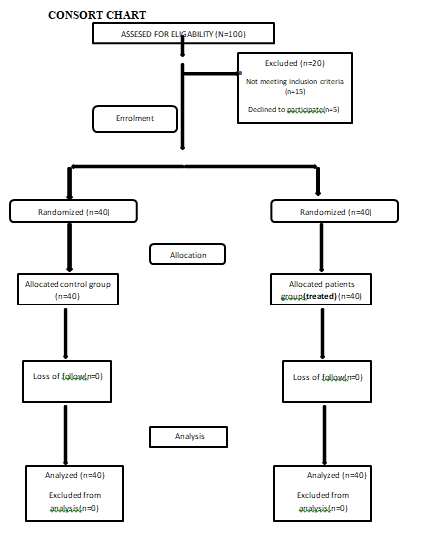
(PCR) test and computerized tomography scan (CT) chest was used to diagnose the Omicron coronavirus infection in 80 patients of both sexes, whose ages ranged from 20 to 60 years old. They mild to moderate disease according to classification for COVID [6, 14] and were scheduled for treatment with oseltamivir, levofloxacin, and azithromycin. 80 patients were randomly assigned to two groups using a computer-generated randomization table to control group and patients group.
Control Group 40 Patients
Received symptomatic such as (paracetamol for fever an antitussive [benzonate] for cough and analgesic [diclofenac] for pain and broncho dilator [salbutamol] for bronchitis treatment not included oseltamivir, levofloxacin, and azithromycin. Treated Group 40 patients each had received OSELTAMIVIR 75 MG twice daily for 5 days [13] AZITHROMYCIN 500 MG once daily for 3 days [15] LEVOFLOXACINE 750 MG once daily for 10 days (renally dose in CrCl <30) [16]. Another drug is PARACETAMOL 500mg one or two tablets for the treatment of fever. All patients received face mask oxygen and bronchodilator (salbutamol) inhaler for treatment of hypoxia in moderate cases according to symptoms in each case. Monitor for vital signs for all patients in hospital ward (pulse oximeter, blood pressure monitor an ECG).
Exclusion Criteria
Severe disease according to classification for COVID 19 [5, 6] medication allergies, ICU patients, patients receiving mechanical ventilation, patients with cardiac conditions, patients with long QT syndrome, patients on steroid, chemotherapy or radiotherapy patients aged older than 60 years and under 20 years.
Inclusion Criteria
Patients with mild to moderate corona disease, age from 20 to 60 years vaccinated or not vaccinated patients. The history, clinical examination, investigations positive [(PCR) TEST) and CT chest (ground glass opacities) were all part of the patients’ evaluation. Table (1) provided demographic information as age, sex, height, and weight.
Primary Outcome
Symptoms improve and fever stops and bone ache and cough start to decrease by clinical examination.
Secondary Outcome
All symptoms of disease finished by clinical examination and (PCR) test negative and discharge from hospital to home.
Methods of Randomization
Apart from the researchers doing the treatment, all other researchers, and nurses were kept in the dark regarding each subject’s randomization using computer-generated randomization and sealed opaque envelopes.
Sample Size Justification
The sample size, statistical calculator based on a 95% confidence interval, and power of the study were calculated using the MedCalc® version 12.3.0.0 program “Ostend, Belgium” A recent study Zhao, et al. [13] revealed that the survival rate was increased. In this study, the sample size was calculated based on this supposition, and the findings yielded a minimum sample size of 30 instances, which was sufficient but will be expanded to 40 to demonstrate the intended results.
Statistical Analysis
Recorded data were analyzed using the statistical package for social sciences, version 23.0 (SPSS Inc., Chicago, Illinois, USA). The quantitative data were presented as mean± standard deviation and ranges. The qualitative variables were classified in to number and percentages. These tests were done as: Independent-samples t-test of significance to be used when comparing between the two objects of means. The Comparison between groups with qualitative data was done by using Chi-square test; Kaplan-Meier Survival Analysis: is a descriptive procedure for examining the distribution of time-to-event variables & Log rank test to compare time-to- event variables by levels of a factor variable. The confidence interval was set to 95% and the margin of error accepted was set to 5%. So, the p-value was significant as the following: Probability (P-value): P-value <0.05 was positive significance; P-value <0.001 was highly positive significant; P-value >0.05 was negative insignificant.
Results
In terms of age, sex, weight, and two types of corona patient’s mild or moderate disease admitted to hospital general ward, there was no statistically significant difference as shown in Table 1.
| Baseline characteristics | treated group (n=40) | Control group (n=40) | Test value | p-value |
|---|---|---|---|---|
| Age (years) | ||||
| Range | 20-60 | 20-60 | ||
| Mean±SD | 41.15±13.68 | 42.38±12.09 | t:0.426 | 0.671 |
| Sex | ||||
| Male | 29 (72.5%) | 27 (67.5%) | ||
| Female | 11 (27.5%) | 13 (32.5%) | x2:0.060 | 0.807 |
| Weight (kg) | ||||
| Range | 60-85 | 62-86 | ||
| Mean±SD | 75.80±6.96 | 76.07±7.17 | t:0.171 | 0.865 |
| Height (cm) | ||||
| Range | 165-185 | 167-182 | ||
| Mean±SD | 175.03±14.14 | 177.06±12.92 | t:0.670 | 0.505 |
| Classification | ||||
| Mild | 23 (57.5%) | 21 (52.5%) | ||
| Moderate | 17 (42.5%) | 19 (47.5%) | x2:0.051 | 0.822 |
| Duration of hospital stay (days) | Treated group (n=40) | Control group (n=40) | p-value | |
| 4 days | 15 (37.5%) | 0 (0%) | <0.001** | |
| 6 days | 15 (37.5%) | 0 (0%) | <0.001** | |
| 7 days | 10 (25.0%) | 0 (0%) | <0.001** | |
| 15 days | 0 (0%) | 10 (25%) | <0.001** | |
| 30 days | 0 (0%) | 18 (45%) | <0.001** | |
| 60 days | 0 (0%) | 12 (30%) | <0.001** | |
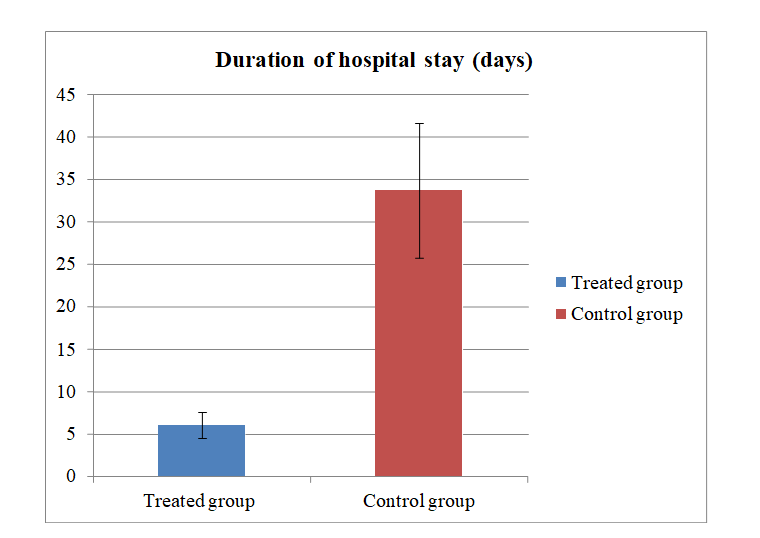
| Mean±SD | 6.05±1.53 | 33.68±7.92 | <0.001**# |
Table 1: Comparison between treated group and control group according to duration of hospital stay “days”. Using: Fisher’s Exact
The fact that oseltamivir, levofloxacin, and azithromycin are effective treatments for shortening hospital stays is significant, as shown in Table 2.
Table 2: Comparison between treated group and control group according to duration of hospital stay “days”. Using: Fisher’s Exact test and #t-Independent Sample t-test p-value >0.05 is insignificant; *p-value <0.05 is significant; **p-value <0.001 is highly significant. There was a highly statistically significant long mean value of duration of hospital stay “days” in control group was 33.68±7.92 compared to treated group was 6.05±1.53, with p- value (p<0.001).
All groups were positive PCR test and ground glass in CT). According to presented symptoms on admission the stay on hospital.
Treatment with oseltamivir, levofloxacin, and azithromycin can alleviate lung pathology caused by COVID in around 1 to 2 months in mild or moderate chest manifestations as shown in Table 3.
| Clearance of lung pathology | treated group (n=40) | Control group (n=40) | p-value |
|---|---|---|---|
| 1 month | 13 (32.5%) | 0 (0.0%) | <0.001** |
| 1.5 month | 11 (27.5%) | 0 (0.0%) | <0.001** |
| 2 months | 16 (40.0%) | 7 (17.5%) | 0.027* |
| 4 months | 0 (0.0%) | 17 (42.5%) | <0.001** |
| 6 months | 0 (0.0%) | 16 (40.0%) | <0.001** |
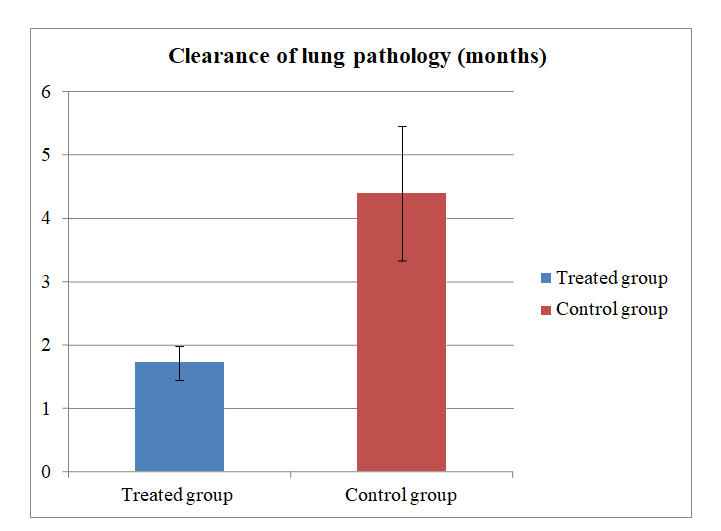
| Mean overall duration ±SD | 1.72±0.27 | 4.40±1.06 | <0.001**# |
Table 2: Clearance of lung pathology distribution among study group (n=40). Comparison between treated group and control group ac
There was a highly statistically significant short mean value of clearance of lung pathology “months” in treated group was 1.72±0.27 compared to control group was 4.40±1.06, with p-value (p<0.001).
This table shows that there was 13 patients (32.5%) were 1 month, 11 patients (27.5%) were 1.5 month and 16 patients (40%) were 2 months among clearance of lung pathology, was ranged 1-2 months with mean 1.72±0.27.
Clearance of lung pathology according to CT chest (clearance of ground glass appearance) The figure shows how treatment with oseltamivir, levofloxacin, and azithromycin increases survival rates Figures 1-3.
Discussion
The study offers valuable insights into treating Omicron infections by testing a mix of drugs—levofloxacin, azithromycin, and oseltamivir—for mild to moderate COVID-19. Over December 2021 to March 2022, involving 80 participants, the therapy showed promise, shortening hospital stays, improving survival rates, and speeding up lung recovery. Future research should include more diverse groups, look at long-term effects, compare treatments, explain how they work, deal with new variants like Omicron, consider what patients say, and make findings useful for doctors. These efforts aim to make COVID-19 treatment better, especially with new variants. While more confirmation is needed, the study suggests this drug mix could help with Omicron, giving hope in fighting the pandemic. The article would be easier to read and understand if it had a structured abstract. This would provide a brief and concise summary of the study’s objectives, methods, results, and conclusions. Additionally, it would be helpful if the article had a more in- depth and critical discussion of the study’s limitations and potential biases. Suggestions for addressing these limitations in future research would also be beneficial to gather and analyze data about the potential effects of the emergence of Omicron on the efficacy of medications now in use or being studied, the WHO (world health organization) established its Joint Advisory Group on COVID-19 in (French and Aggrawal 2021) [8, 9, 10, 11].
Currently, there is little information available regarding the efficacy of human neutralizing monoclonal antibody therapy using bioequivalences, such as (Sotrovimab) in the treatment of Omicron (Aggarwall 2021) [11]. In this investigation, we examine the efficacy of levofloxacin, azithromycin, and oseltamivir against Omicron. According to clinical and laboratory findings, the combination of triple medication oseltamivir, levofloxacin, and azithromycin that we produced for this investigation is effective against Omicron and it is clear in clearance of lung pathology and all manifestations of lung symptoms. Remedisivir may still be effective against Omicron, according to certain research based on genetic analysis, although more laboratory- confirmatory study data are required (Cameroni 2021) [10, 11]. Based on clinical usage, the combination of triple medications oseltamivir, levofloxacin, and azithromycin used in this analysis is efficacious against Omicron. In (Zhao 2022) study, basic peptide (Fusion-inhibition peptid FBP) and an antiviral drug (oseltamivir) were effective in treating influenza virus and Omicron) [13]. In this study, levofloxacin and azithromycin were added to oseltamivir to treat omicron as they improve pneumonia caused by Omicron. In (Genentech 2022) study thy use oseltamivir as treatment for SARS viruses and influenza [12]. But in this study we concern that using of oseltamivir, levofloxacin, and azithromycin in treatment of Omicron. In New York, New Jersy university hospital in March 2020 put in protocol of treatment of COVID-19 oseltamivir, levofloxacin, and azithromycin. In Gautret P study use Hydroxychloroquine and Azithromycin as a treatment of COVID-19 [15]. In this study, levofloxacin and azithromycin and oseltamivir used to treat Omicron and this drug has more specific good result on treatment of Omicron. [16] Use these drugs to improve outcomes of critically ill patients with SARS-CoV-2 pneumonia in Wuhan, China. All this give our study good evidence that using of oseltamivir, levofloxacin, and azithromycin in treatment of Omicron has good results.
Conclusion
The study concluded that the combination of Levofloxacin, Azithromycin, and Oseltamivir could be an effective treatment strategy for COVID-19 Omicron variant infections. This regimen has the potential to reduce hospitalization duration, improve survival rates, hasten the resolution of lung pathologies, and minimize the need for invasive mechanical ventilation, offering a promising management option for COVID-19.
Limitations and Recommendations
The study acknowledged limitations such as the short duration of follow-up and the limited scope of data regarding the treatment’s effectiveness against the Omicron variant. It recommended further research to validate and expand on the findings.
Ethics Approval and Consent to Participate
This was a prospective study and was granted permission by the ethics committee of Al-Azhar University for males between December 2021 to March 2022 and obtaining informed written consent approval to participate in the study. This prospective randomized trial was registered at Al-Azhar University for males as a prospective trial with the identification number (0000235).
Consent for Publication
Not applicable.
Declarations
Availability of Data and Materials
The data of this article is available from the corresponding author.
Competing Interests
The authors declare that they have no competing interests.
Funding
This research was supported by authors, no funding institute or company.
Author’s Contributions
Ayman Esmail Hussien and Osama Allam Mandour conceived the study and share in its design. Ayman undertook data collection, data capturing, and handling. Osama coordinate data analysis. Ayman Esmail Hussien and Osama Allam Mandour drafted the manuscript. All authors read and approved the manuscript.
Acknowledgements
The authors would like to acknowledge all technical staff of lab and nurse and all members of Alhussien Hospital and the patients who gave consent for enrolment for the study.
References
-
CDC (2019) Centers for Disease Control and Prevention Transmission of Coronavirus Disease 2019 (COVID-19).
-
Wax RS, Christian MD (2020) Practical recommendations for critical care and anesthesiology teams caring for novel coronavirus (2019-nCoV) patients. Can J Anesth 67(5): 568-576.
-
Liu L, Iketani S, Guo Y, Chan JFW, Wang M, et al. (2022) Striking Antibody Evasion Manifested by the Omicron Variant of SARS-CoV-2. Nature 602(7898): 676-681.
-
Mohiuddin M, Kasahara K (2022) Investigating the aggressiveness of the COVID-19 Omicron variant and suggestions for possible treatment options. Respir Med 191: 106716.
-
Wang X, Cao R, Zhang H, Liu J, Xu M, et al. (2020) The anti-influenza virus drug, arbidol is an efficient inhibitor of SARS-CoV-2 in vitro. Cell Discov 6: 28.
-
Garcia DB, Egli-Gany D, Counotte MJ, Hossmann S, Imeri H, et al. (2020) Occurrence and transmission potential of asymptomatic and presymptomatic SARS-CoV-2 infections: A living systematic review and meta-analysis. PLoS Med 17(9): e1003346.
-
Mohiuddin M, Kasahara K (2022) Investigating the aggressiveness of the COVID-19 Omicron variant and suggestions for possible treatment options. Respir Med 191: 106716.
-
French G, Hulse M, Nguyen D, Sobotka K, Wedster K, et al. (2021) Impact of Hospital Strain on Excess Deaths during the COVID-19 Pandemic-United States, July 2020– July 2021. MMWR Morb Mortal Wkly Rep 70(46): 1613-1616.
-
WHO (2021) WHO Joint Advisory Group on COVID-19 Therapeutics Prioritization for COVID- 19. World Health Organization.
-
Cameroni E, Saliba C, Bowen JE, Rosen LE, Culap K, et al. (2022) Broadly neutralizing antibodies overcome SARS- CoV-2 omicron antigenic shift. Nature 602(7898): 664- 670.
-
Aggarwal A, Stella AO, Walker G, Akerman A, Milogiannakis V, et al. (2021) SARS-CoV-2 Omicron: Evasion of potent humoral responses and resistance to clinical immunotherapeutics relative to viral strains of concer. medRxiv.
-
Genentech, Inc. Gilead Sciences, Inc. A Member of the Roche Group Foster City, California, USA.
-
Zhao H, Meng X, Peng Z, Lam H, Zhang C, et al. (2022) Fusion-inhibition peptide broadly inhibits influenza virus and SARS-CoV-2 including Delta and Omicron variants: Fusion inhibitor against influenza virus and SARS-CoV-2. Emerg Microbes & Infect 11(1): 926-937.
-
Zhang Y (2020) Vital Surveillances: The epidemiological characteristics of an outbreak of 2019 Novel Coronavirus diseases (COVID-19)-China 2020. China CDC weekly 2(8): 113-122.
-
Gautret P, Lagier JC, Parola P, Hoang VT, Meddeb L, et al. (2020) Hydroxychloroquine and azithromycin as a treatment of COVID- 19: results of an open label non- randomized clinical trial. Int J Antimicrob Agents 56(1): 105949.
-
Yang X, Yu Y, Xu J, Shu H, Xia J, et al. (2020) Clinical course and outcomes of critically ill patients with SARS- CoV-2 pneumonia in Wuhan, China: A single-centered, retrospective, observational study. Lancet Respir Med 8(5): 475-481.
- Editorial on Multimodal Analgesia
- Surgical Incision Site Local Anaesthetic Infiltration and Superior Hypogastric Plexus Block in Total Abdominal Hysterectomy Under General Anaesthesia- A Placebo-Controlled, Randomized Clinical Trial
- Supraglottic Airway Insertion in Semi Fowler Position Due to Severe Thoracic Hyperkyphosis: A Case Report
- Anaesthetic Management of Cardiac Myxoma Patient with Systemic Involvement: A Case Report
- Current Problems in Pulmonary Respiratory Distress Syndrome (Literature Review)
- Evolution of Perioperative Hemodynamic Monitoring from the Hand on Pulse to Hypotension Prediction Index