
Natural Co-Occurrence of Aflatoxins, Cyclopiazonic Acid, and their Production by Aspergillus Flavus Isolates from Corn Grown in Egypt
<p style="text-align: justify;">Mycotoxins are metabolites of fungi that can adversely affect animal and human health. Mycotoxins can be produced incorn during storage or processing, but are most frequently associated with fungal infection that occur before harvest.Sixty corn samples were purchased from retail markets from Cairo and Giza Governorates in summer and winter seasonsfrom Egypt. The samples were examined for dominants fungi and mycotoxins Aflatoxins (AFS) and cyclopiazonic acid(CPA) and their Aspergillus flavus production. AFS and CPA were determined by high performance liquid chromatography(HPLC). The results indicated that, the dominants fungi genra were Aspergillus, Fusarium, Penicillium and Alternaria inall corn samples in summer and winter seasons. From 239 of Aspergillus genus isolates 63.7% was identified as A. flavus,they were tested for AFS and CPA production. The results were showed that only 96 out from 151 A. flavus isolates(63.6%) were positive to AFS and CPA toxins production. The results indicated that 64.6 % from A. flavus isolates wereproduced both of AFS and CPA. The averages of AFS and CPA production were 9.4 and 12.56 mg /L in YES mediumrespectively. For natural co-occurrence of AFS and CPA in corn samples, the results indicated that 9 samples out from 30(30.0%) and 7/30 (23.3%) from corn grain samples collected from Cairo Governorate in winter season werecontaminated with both of AFS (B1, B2 ,G1 and G2 ) and CPA , respectively. On the other hand, in summer season 11samples out from 30 (36.3%) and 8/30 (26.6%) were contaminated with both of AFS (B1, B2 ,G1 and G2 ) and CPA,respectively. The results also indicated that 7 out from 30 (23.3%) and 6/30(20 %) of corn samples collected from GizaGovernorate were contaminated with AFs and CPA respectively in winter season. While, 10 samples out from 30 (33.3 %)and 10/30 (33.3 %) samples were contaminated with AFS and CPA in Giza Governorate in summer season respectively.These represent 23.3% and 33.3 % AFS positive samples for corn grain samples collected from Giza Governorate in bothseason. The concentration of both AFS (B1, B2, G1 and G2) and CPA were ranged from (0.93 -45.5, 0.10- 19.0, 0.20-23.0 and0.22-18.0) and 1.2-56.0μg/kg in the corn samples were collected from Cairo and Giza Governorates in summer andwinter seasons respectively. Our study try to resolve this problem by modification a novel incubating the CPA spotsdetection with indirect apparel color reagent which giving stable spots color on TLC an obvious detection and an accuratequantitative determination by using the densitometric procedure .This is the first report of natural co-occurrence of AFsand CPA and there fungi production in Egypt.</p>
Introduction
Mycotoxins are secondary metabolites produced by specific filamentous fungi that contaminate agricultural commodities. They are toxic to humans and animals, cause significant reductions in crop yield and cause economic losses [1, 2]. Their occurrence in various countries has been well documented [3]. A number of fungal species associated with corn, belonging mainly to the genera Aspergillus, Fusarium and Penicillium, have been reported to produce Mycotoxin [4]. Aspergillus flavus and Aspergillus parasiticus are important contaminants of certain foods and animal feeds because of their ability to produce Aflatoxins [5]. When these fungi invade and grow in commodities such as peanuts, corn and cottonseed, the resulting contamination with Aflatoxins often makes the commodities unfit for consumption [6]. Maize is ranked second to wheat among the world cereal crops and is often invaded before harvest by A. flavus and A. parasiticus that produc mycotoxins [8]. Aflatoxins are considered the most carcinogenic, mutagenic, teratogenic, cytotoxicity and genotoxicity, substances found naturally in foods and feeds [7, 8, 9]. These metabolites cause liver damage to humans and to most experimental animal species tested [10]. Consumption of mycotoxin- contaminated foods has been associated with several cases of human poisoning, or mycotoxicosis, sometimes resulting in death [3]. AF outbreaks affecting a large geographical area and causing over 123 deaths were reported in Kenya in 2004 and 2005. Epidemiological studies from this case showed a relationship between the outbreak and the local methods of harvesting, storing and preparing maize. Contamination of maize with AF was found up to 1000 ng/g [11]. Recently, have demonstrated that consumption of maize is an important source of aflatoxin exposure in young children in West Africa. AF have been found as contaminants in agricultural and food products especially in cereals and cereal products and animal feeds [12, 13, 14, 15, 16, 17, 18, 19]. In the European Union, the maximum tolerable levels for AFB1 and total AF in cereals for human consumption are 2 and 4 ng/g, respectively and 20 ng/g for total AF in poultry feeds [20, 21]. Cyclopiazonic acid (CPA) is another toxic secondary metabolite produced by A. flavus [2]. It causes necrosis of liver or gastrointestinal tissue and necrotic changes in skeletal muscle and kidney. However, there are suggestions that the teratogenic potential of CPA is low [22]. Isolates of A. flavus have been reported to co- produce Aflatoxins and CPA, as well as other toxins in different amounts [23]. The present study was carried out to determine Aflatoxins, CPA and their A. flavus isolates production from Egyptian corn.
Materials and Methods
Survey Samples Study
Sixty samples (½ kg for corn) of local corn were collected from different markets in Cairo and Giza Governorates during winter and summer season.
Isolation of Fungi Associated With Local Corn
Fungi associated with corn were isolated according to methods of Lichtwardth, et al. [24, 25]. All corn samples were immersed in sodium hypochlorite solution (3%) as a sterilizer, for 3 minutes, rinsed 3 times in sterile distilled water then dried between sterile filter paper. Isolation of fungi was made by randomly taking 100 disinfested grains from samples of each location and directly plated in 20 Petri-dishes (5 grains per a dish) on Czapek's agar medium, then incubated at 25oC for 4 day's. Then, the percentage of the infected grains were determined and the fungal colonies that developed from the infected grains were counted, isolated, purified and maintained on a slant potato dextrose agar (PDA) medium for identification trials.
Identification of the Fungal Isolates
All the isolated fungi were identified by studying the cultural characteristics, as well as the microsocial structures on Gzapek's agar medium, according to the procedures of Numbers of the species of Aspergillus were classified according to the key published by Raper and Fennell, while for species of other isolated fungi the "Manual of clinical mycology" by Count, et al. was used [26, 27, 28, 29].
Production of AFs and CPA by Isolated A. flavus Strain
The media used for examining mycotoxin production of the strains were YES medium (2% yeast extract and 15% sucrose (Merck) /liter distilled water) YES (Difco) [30].
Preparation of AFs and CPA Standards
Chemical and reagents: Acetonitrile, acetone, ethanol, diethyl ether, hexane, methanol and chloroform were supplied by Merck (Darmstadt, Germany) HPLC-grade. Stock standard solutions of Aflatoxins with concentrations of 100 μg/ml were prepared in benzene– acetonitrile (98:2, v/v), wrapped in aluminum foil to prevent gradual break down of Aflatoxins under UV light and kept under protected conditions at-20 °C. All other inorganic chemicals and organic solvents were of reagent grade or higher. Aflatoxin standard: Preparation of aflatoxin standard was carried out according to the association of Official Analytical Chemists, AOAC [31]. The crystals of Aflatoxins B1, B2, G1 and G2 were diluted using benzene-acetonitrile (98: 2 v/v) to obtain a concentration of 8 to 10 µg/ml (stock solution). Cyclopiazonic acid standard
- Stock solution Pure solid CPA (Sigma) was dissolved in methanol (liquid chromatography grade) at 1 mg /ml and stored at 0 °C in the dark.
- Working solution Stock solution was diluted with methanol (liquid chromatography grade) with a CPA concentration of 40, 100, 500 ng/ml and 10, 100, 200 µ g/ ml.
Extraction of both Myctoxins ( AFs & CPA) According the Method of Gqaleni, et al. [2]
Sixty samples were extracted in a warring blender with methanol/ dicholoromethan (DCM) (1:1) and blended for 2 min. The mixture was filtered and the filtrate was evaporated to dryness. The residue was partitioned between 200 ml n-hexane and methanol (1:1), the n-hexane layer was discarded and the methanol layer was evaporated to dryness. The residue was partitioned between 200 ml di-chloromethane (DCM) and distilled water (1:1) and the DCM layer was extracted three times with saturated sodium hydrogen carbonate solution (100 mL).The (DCM) extract layer was concentrated, and containing aflatoxins , was rotary evaporated and concentrated under a gentle stream of nitrogen . The aqueous layer was carefully acidified to pH 2 (with 0.5 N hydrochloric acid) and extracted three times with (DCM) (100 ml). The (DCM) extract was concentrated and contained of cyclopiazonic acid.
Derivatization for Aflatoxins
Added 200ul hexane to residue from dry film and added 50 µl Trifluroacetic acid (TFA), cap vial, and their mixed by vortex vigorously for 30 s. Let mixture stand 5 min. By pipet was added 1.950 ml Water- acetonitril (9 +1) vortex mix vigorously for 30 s, and at let layers separate 10 min. filter through 0.45 µm microfilter into 5 ml screw –cap vial for subsequent HPLC analyses AOAC [31].
TLC Plates Aluminium Sheets
TLC plates aluminium sheets (20 x 20 cm) precoated with silica gel G 60 without Fluorescence indicator, No 1.05553, Layer thickness 0.2 mm, were obtained from Merck, 64271 Darmstadt, Germany. Thin Layer Chromatography (TLC) for Detection and Separation of Myctoxins: The TLC procedure for detection and separation of mcotoxins according to Vaamonde et al. as follow: Mycotoxin (AFs and CPA) detection were performed using thin layer chromatography on silica gel G60 plates with and without oxalic acid impregnation for individual of CPA and AFs separation ,respectively. For CPA the plates were activated for 2 h at 110°C. To produce oxalic acid- impregnated TLC plates, precoated plates were dipped in a 2% methanolic solution of oxalic acid for 2 min and air dried overnight. The TLC plates were developed in toluene-Ethylactate-90% formic acid (6:3:1,v/v) for Aflatoxins but toluene-ethyl acetate-90% formic acid (5:4:1, v/v) for cyclopiazonic acid . CPA in daylight after spraying treatment of the plates with Erlich’s reagent (1 g of 4-dimethylaminobenzaldehyde in 75 ml ethanol and 25 ml concentrated HCl), with subsequent development of blue spots. The plate was dried at room temperature until the excess of solvent disappeared. Aflatoxins were visualized under long wave UV light (366 nm). The suitable concentration used for TLC was 0.5 µg/ml aflatoxin B1 and G1 while that of B2 and G2 was more diluted (about 0.1 µg/ml).Dilution was carried out using benzene-acetonitril mixture (98:2, v/v) in preparation of TLC .
Determination of AFs A by HPLC
High performance liquid chromatography (HPLC) was used to Aflatoxins determination. A mobile phase consists of Water: Acetonitril: Methanol (240:120:40) [32, 9, 33]. The system equipped with ( Waters 600) delivery system . HPLC column a reverse phase analytical column packed with C18 material (Spherisorb 5 µm ODS2, 15cm×4.6nm). The detection was performed using The fluorescence detector was operated at an excitation wave length of 360 nm and an emission wave length of 440 nm .The separation was performed at 40°C temperature at a flow rate of 1.0 ml/ min. Data were integrated and recorded using a Millennium Chromatography Manger Software 2010 (Waters, Milford MA 01757).
Determination of CPA by HPLC
Mobile phase solvents consists of Solvent A: Methanol: water (85:15, v/v) Solvent B: 0 Methanol: 4 mM zinc sulfate (85:15, v/v) Solvent A and B were used in a linear gradient from mobile phase A to mobile phase B in 10 min at a flow rate of 1 ml/min. Apparatus High performance liquid chromatography (HPLC) was used to CPA determination. The system equipped with (Waters 600) delivery system. HPLC column Reverse phase hyper clone 5µ ODS C18 column (2.5mmX30cm); The detection was performed using U.V detector (waters
486) at 279 nm wavelength, oven temperature 40 °C, using linear program of 25 min period and 1 ml / min constant solvent flow rate . Data were integrated and recorded using a Millennium Chromatography Manger Software 2010 (Waters, Milford MA 01757). A calibration curve correlating peak-area and concentration was constructed for quantification purposes, using toxin standards. Confirmation of CPA in the sample was achieved using (UV) detector.
Results and Discussion
Isolation and Identification of Fungi Associate with Corn.
Fungi isolation on Czapek's Agar Medium: Data in Table 1 represent the fungi isolated on Czapek's agar medium from corn purchased from retail markets in Cairo and Giza Governorates during the winter and summer seasons, respectively. The results in Table 1 showed that the percentage of fungal infected grains in both seasons winter and summer were 97, 100 , 100, and 98% in local corn grains were obtained from retail markets in Cairo and Giza Governorates, respectively. The highest rate of infected was found in corn samples (100%) in winter season which stored in shops in Giza Governorate while, in summer season the sample were infected 100 % in corn grains were collected from Cairo Governorate, this may be due to the bad storage conditions in these Governorates. Followed by samples (98%) from shops in Giza Governorate, while the lowest infection rate was recorded from the corn samples, (97%) in the winter season from Cairo Governorate.
| No of samples | % Infections | Total fungal Counts | % Isolated Fungi | |||||
|---|---|---|---|---|---|---|---|---|
| Aspergilluss | Fusarium | Penicillum | Alternaria | Rhizopus | ||||
| Corn | ||||||||
| Cairo | ||||||||
| Winter | 30 | 97 | 110 | 52 | 25 | 13 | 10 | - |
| Summer | 30 | 100 | 190 | 63 | 22 | 11 | 4 | - |
| Giza | ||||||||
| Winter | 30 | 100 | 130 | 53 | 15 | 27 | 5 | - |
| Summer | 30 | 98 | 163 | 57 | 17 | 20 | 6 | - |
Table 1: Fungi isolated of corn samples collected from Cairo and Giza governorates.
Concerning the different fungal genera which were found on and in corn grain, sample the genera of Aspergillus, Penicillium, Fusarium, and Alternaria, were found in all samples were collected from Cairo and Giza Governorates. However, the Rhizopus genus was not recorded in both seasons in corn grain samples. The frequency of occurrence of Aspergillus, Pencillum, Fusarium, and Alternaria were 50, 35.5, 14.5, and 10 % on corn samples in Cairo Governorate in winter season, and it was 63.3,24, 30.6 9.0 and 1.2 % during summer season of 2004.However, in the corn samples were collected from Giza governorate were found 53.8, 15.4, 353, and 5.5 %, in winter season, while in summer season were found 58.8, 23.8,33.8, and 6.3 %. The results also indicated that the dominant fungi genera were Aspergillus, Fusarium, Penicillium and Alternaria in all corn and peanut samples in both seasons Vaamonde, et al. [34] found that the incidence of Aflatoxigenic A. flavus strains was higher in peanuts (69%) than in wheat (13%) or soybeans (5%) while the ratio of CPA producers A. flavus isolated from all substrates was very high (94% in peanuts, 93% in wheat and 73% in soybeans). Isolates of A. flavus able to produce simultaneously Aflatoxins type B and CPA were detected in all substrates, suggesting the possibility of co- occurrence of these toxins.
Natural Occurrence of Mycotoxic Fungi Isolated from Corn
Mycotoxins are a poison produced by an active growing mold. Molds may be activity growing without Mycotoxin formation. Therefore, this study was carried out to isolate mycotoxic fungi namely A. flavus producing Aflatoxins, and Cyclopiazonic acid. Data in Table 2 indicate that, out of 239 Aspergillus spp. isolates which isolated from corn samples collected from Cairo and Giza Governorates, Concerning the frequency distribution of 98 isolates of A. flavus were tested for isolation of A. flavus 64.5 producing Aflatoxins isolated from corn. The results indicated that 64.5 of the isolates were A. flavus producing both of Aflatoxins and Cyclopiazonic acid form samples of corn. Regarding A. flavus, considerable variability in their mycotoxin-producing potential was found in concordance with others. The results showed that averages of 9.4 mg Aflatoxins /L of the YES medium were produced by A. flavus isolates from corn samples .On the other hand, the results showed that averages of 12.56 mg cyclopiazonc acid /L of the YES medium were produced by A. flavus isolates from corn. Resnik, et al. [35] found that 33 of 34 A. flavus isolates from corn produced CPA and only 5 of these strains produced AflatoxinsB1 simultaneously. Cyclopiazonic acid (CPA) has been found as a natural contaminant of corn and peanuts, often occurring together with the discovery of CPA production by A. flavus, 54 isolates of A. flavus were investigated for production of CPA and Aflatoxins [36]. Isolated 96 strains of Aspergillus Flavus from samples of stored grain [37]. They found that the Five strains produced Cyclopiazonic acid in the range of 0.5-30 mg/kg and 9 produced Aflatoxins B1 (0.1-14.8 mg/kg) but none of them produced both Cyclopiazonic acid and Aflatoxins . It was found that 28 of the 54 (52%) produced CPA whereas only 18 (33%) produced Aflatoxins. Isolates of A. flavus have been reported to co-produce Aflatoxins and CPA, as well as other toxins in different amounts. Mphande, et al. screened of 32 isolates for Mycotoxin production of A [25, 38]. Flavus, were found that 11 did not produce detectable Aflatoxins , 8 produced only Aflatoxins B1 and B2, and 13 produced all four Aflatoxins B1, B2 G1 and G2) in varying amounts. Only 6 of the A. flavus isolates produced Cyclopiazonic acid at concentrations ranging from 1 to 55 µg/ kg. The one A. parasiticus isolate screened also produced all the four Aflatoxins (1,200µg/kg) but did not produce Cyclopiazonic acid. When the raw peanut samples (n = 120) were analyzed for total Aflatoxins, 78% contained Aflatoxins at concentrations ranging from 12 to 329 µg/kg.
- Cyclopiazonic acid concentration
- Isolates of
- Isolates o f
- Isolates o f
- Isolates of
- Aspergillus tested (No.)
- Isolates of
- Aspergillus flavus (No.)
- A.flavus producing
- Aflatoxins (No.)
- A.flavus producing
- Aflatoxins (%)
- A.flavus producing CPA
- Source (mg/L)
- (%)
- Range Mean ± SE Range Mean ±
- Corn
- 239
- 1520
- 98
- 64.5
- 64.5
- 0.4-
- 32.50 12.56 ± 0.89 1.10 -
Table 2: Natural occurrence of Aspergillus flavus isolated from raw corn t samples collected from Cairo and Giza
Natural Co-occurrence of Aflatoxins and Cyclopiazonic Acid (CPA) in Corn
It is worthy to mention that the current investigation to detect the Aflatoxins (B1, B2 G1 and G2) and cyclopiazonic acid (CPA) levels and /or frequencies in the Egyptian corn. Hundred and twenty samples of corn (60 from Cairo and 60 from Giza Governorates) were collected from retail markets in Cairo and Giza Governorates during winter and summer seasons. The data in Tables 3 & 4 showed the natural occurrence of Aflatoxins and cyclopiazonic acid in corn grain samples in the winter and summer season during 2004/2005
collected from Cairo and Giza Governorates. The results in Table 3 indicated that 9 samples out from 30 (30.0%) of both Aflatoxins (B1 and B2 ),7/30 (23.3%) of both AFG1and CPA, and 6/60 (20.0 %) of AFG2 from corn grain samples collected from Cairo Governorate in winter season were contaminated with both of Aflatoxins (AFB1, AFB2 ,AFG1 and AFG2 ) and CPA . While in summer season, 11 samples out from 30 (36.3%) of AFB1, 10/30 (20.0%) AFB2 8/30 (26.6) of CPA and of both AFG1 AFG2 6 samples out from 30 were contaminated with both Aflatoxins (AFB1, AFB2, AFG1 and AFG2) and CPA. The concentrations of both Aflatoxins (AFB1, AFB2, AFG1 and AFG2) and CPA were ranged from (0.02 -22.0 , 0.10- 12.0, 1.10-12.50 and 2.20-13.0) and 0.93-35.0 µg/kg in the corn samples were collected from Cairo Governorate in the winter season, while in the summer season were found ranged of concentrations (1.23- 45.5, 1.10 – 19.0, 2.20 -23.0 , 3.0- 10.0 and 2.0-56.0), for Aflatoxins and CPA , respectively.
- Aflatoxins and Cyclopiazonic Acid in Corn Samples
- Seasons
- Winter
- Summer
- Type of toxins
- AFB1 AFB2 AFG1 AFG2
- Total
- CPA
- AFB1
- AFB2
- AFG1 AFG2 Total
- Minimum concentration
- (µg/kg)
- 0.02
- 0.1
- 1.1
- 2.2
- AFS
- 0.93
- 1.23
- 1.1
- 2.2
- 3
- 6.23
- 2
- Maximum concentration
- (µg/kg)
- 22
- 12
- 12.5
- 13
- 3.42
- 35
- 45.5
- 19
- 23
- 10
- 78.3
- 56
- Mean ± SE
- 18.7 ±
- 8.6 ±
- 9.7 ±
- 9.81±
- 57 ±
- 42.47
- 21.70±
- 20.52 ±
- 10.56
- 11.36 ±
- 6.75
- ±1.04
- 2.35
- 1.2
- 1.56
- 1.56
- 4.08
- 3.79
- ±1.8
- 2.93
- 6.5
- Total No. of sample
- 30
- 30
- 30
- 30
- 5.65
- 30
- 30
- 30
- 30
- 30
- 30
- No of positive samples
- 9
- 9
- 7
- 7
- 6
- 11
- 10
- 6
- 6
- 8
- % of positive samples
- 30
- 30
- 23.3
- 23.3
- 20
- 36.6
- 33.3
- 20
- 20
- 26.6
Table 3: Natural occurrence of Aflatoxins and cyclopiazonic acid in corn samples collected from Cairo Governorate during
- Table 3: Natural occurrence of Aflatoxins and cyclopiazonic acid in corn samples collected from Cairo Governorate during winter and Summer Seasons.
- Aflatoxins and Cyclopiazonic Acid Concentrations (µg/kg)
- Seasons
- Winter
- Summer
- Type of toxins AFB1
- AFB2
- AFG1
- AFG2 Total AFS CPA
- AFB1
- AFB2
- AFG1
- AFG2
- Total
- Minimum
- 2.23
- 1.1
- 2.2
- 1
- 6.53
- 2
- 0.93
- 2.1
- 1.2
- 2
- 6.23
- 2.7
- Maximum
- 30.5
- 17
- 14
- 13
- 60
- 51
- 35.5
- 17
- 20
- 18
- 75
- 46
- Mean ± SE
- 19.67±
- 10.37 ±
- 9.53 ±
- 8.87 ±
- 54.47±
- 25.3 ±
- 20.19±
- 11.23 ±
- 11.9 ±
- 9.64 ±
- 46.49 ±
- 3.21
- 2.04
- 1.67
- 1.97
- 7.12
- 6.7
- 2.96
- 1.93
- 2.67
- 2.25
- 7.47
- 5.15
- Total No. of sample
- 30
- 30
- 30
- 30
- 30
- 30
- 30
- 30
- 30
- 30
Table 4: Natural occurrence of Aflatoxins and cyclopiazonic acid in corn sample collected from Giza Governorate during
The results in Table 4 show the natural occurrence of Aflatoxins and cyclopiazonic acid in corn grain samples in the winter and summer seasons collected from Giza Governorate. The results indicated that 7 samples out from 30 (23.3%) of each aflatoxin (B1, B2) while, 6/30(20 %) of each AFG1, AFG2 and CPA were contaminated with Aflatoxins (AFB1, AFB2, AFG1 and AFG2) and CPA respectively in winter season from corn samples collected from Giza Governorate. On the other hand, 10 samples out from 30 (33.3 %) of each aflatoxin (AFB1 and B2) and 7/30 (23.3 %) of both AFG1 and AFG2 and 10/30 (33.3%) of CPA were contaminated with aflatoxin (AFB1, AFB2, AFG1 and AFG2) and CPA in the Giza Governorate, in summer season respectively. This represent 23.3% and 33.3% aflatoxin (AFB1) positive samples for corn grain samples collected from Giza Governorate in both season. The concentration of both aflatoxin (AFB1, AFB2 ,AFG1 and AFG2) and CPA were ranged from (2.23 -30.5 , 1.10- 17.0, 2.20-14.0, and 1.0-13) and 2.0-51.0 µg/kg in the corn samples, in the winter season, whereas in the summer season the concentrations of both Aflatoxins (AFB1, AFB2, AFG1 and AFG2) and CPA were ranged from (0.93-35.5, 2.10-17.0, 1.20-20.0 and 2.0-18.0) and 2.7-46.0 µg/kg, for Aflatoxins and CPA, respectively. In a survey of peanut products in North America, 19% of 1416 samples examined were contaminated with an average level of 1
µg/kg AFB1 [39]. In Thailand 49% of 216 samples contained AFB1 at an average level of 424µg/kg [40]. In parts of India 100% of maize samples have been found contaminated with aflatoxin in the range of 6,250-15,600 ìg/kg [41]. Aflatoxins are present in food chain Consumption of aflatoxin in many parts of the world varies from 0 to 30 000 ng/kg/day [42]. The factors such as high temperature and low moisture can result in cracks in the seed and subsequent invasion by the fungus. Temperature and moisture are the dominant factors that affect aflatoxin contamination of corn. Environmental conditions most favorable for maximum growth and aflatoxin production by A. flavus are temperatures greater than 30ºC, maximum relative humidity of greater than 85%, and water activity of 0.98 to 0.99 [43]. Thus, A flavus can infect with proper moisture/temperature conditions during storage almost any stored product [44]. Regional differences in aflatoxin contamination of crops may be attributable to climatic conditions and to agricultural practices that increase susceptibility of plants to invasion by A. flavus [45]. Aflatoxin formation in groundnut is favored by prolonged end of season drought and associated elevated temperature [46].
In general, the TLC technique is simple and does not require special equipment, but most of the published methods suffer from the excessive time needed for analysis and / or inaccuracy of the obtained results. It had been shown previously that spray reagents may lead to variable results because the intensity of fluorescent color is dependent on many difficult-to-control factors such as time, amount of reagent applied to the sample spot, and development of background color.
It had been shown that the CPA detection by the direct spraying of the apparel (Figure 1) Ehrlich's reagent on the separated CPA spots using the TLC technique resulted in a weak-unstable developed color intensity giving unobvious detection and inaccurate quantitative determination by densitometric procedure.
Thereupon, the current study try to resolve this problem by modification a novel incubating the CPA spots detection with indirect apparel color reagent which giving stable spots color an obvious detection and an accurate quantitative determination by using the densitometric procedure, as shown in the Figure 2.
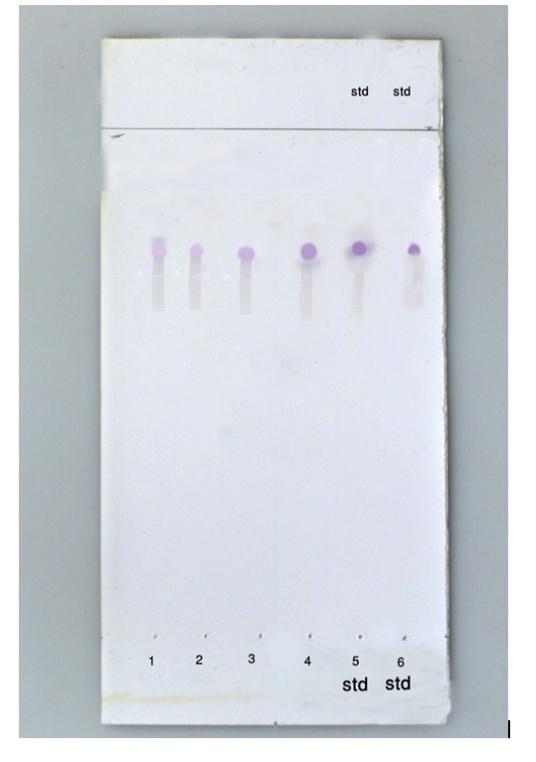
1,2,3,4 = Random samples of corn ,and spot of 5; 6 standard of CPA. Figure 2: Thin Layer Chromatography of Cyclopiazonic Acid separation of samples and standard by the new method of indirect apparel Ehrlich's reagent.
In this technique, covered surface of TLC plate free of CPA was sprayed with an apparel Ehrlich's reagent and dried. Then, it adhered together to the other covered surface of the other TLC plate on which the spotting of CPA in the tested sample extract or the CPA standard solution was developed in toluene-Ethylactate-90% formic acid (6 : 3 :1, v/v) and incubated 2 hours at 35°C to give a purple spots in Figure 2.
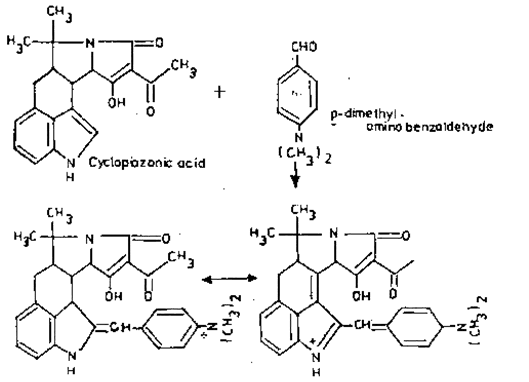
The color reaction of Erlich’s reagent (ρ- dimethylaminobenzaldehyde) with the indol group present in the CPA structure. The reagent ρ- dimethylaminobenzaldehyde reacts with α,β-unsaturated indoles, preferentially in the β-position, in presence of HCl to give colored cations, the condensation may be taking place at the α-position to give a purple cation, as illustrated in Figure 3.
References
-
Gourama H, Bullerman LB (1995) Antimycotic and antiaflatoxigenic effect of lactic acid bacteria-a review. Journal of Food Protection 58(11): 1275- 1280.
-
Gqaleni N, Smith JE, Lacey J (1996) Co-production of Aflatoxins and cyclopiazonic acid in isolates of Aspergillus flavus. Food Addit Contam 13(6): 677- 685.
-
Bathnagar D, Garcia S (2001) Aspergillus. In: Labbe RG, et al. (Eds.), Guide to Foodborne Pathogens. John Wiley and Sons, New York, pp: 35-49.
-
Gonzalez HHL, Resnik SL, Boca RT, Marasas WFO (1995) Mycoflora of Argentinian corn harvested in the main production area in 1990. Mycopathologia 130(1): 29-36.
-
Farr DF, Billis GF, Chamuris GP, Rossman AY (1989) Fungi on plans and plant products in the United States. American Phytopathological Society Press St Paul MN pp: 1-152.
-
Vardon PJ (2003) Mycotoxins: risks in plant, animal and human systems, potential economic costs of mycotoxins in the United State. Cast Task Force pp: 136-142.
-
Goodman M (1995) Maize. In: Smartt J, (Eds.), The Evolution of Crop Plants. John Wiley and Sons, New York, pp: 193-202.
-
Ellis WO, Smith JP, Simpson BK, Oldman JH (1991) Aflatoxins in food: occurrence, biosynthesis, effects on organisms, detection and methods of control. Crit Rev Food Sci Nutr 30(4): 403-439.
-
Deabes MM, Darwish HR, Abdel-Aziz KB, Farag IM, Nada SA, et al. (2012) Protective effects of Lactobacillus rhamnosus GG on Aflatoxins -induced Toxicities in male Albino Mice. J Environmental & Analytical Toxicology 2(3): 2-9.
-
Gradelet S, Astorg P, Le AM, Berges R, Suschetet M (1997) Modulation of aflatoxin B1 carcinogenicity, genotoxicity and metabolism in rat liver by dietary carotenoids: evidence for a protective effect of CYP1A inducers. Cancer Letters 114(1-2): 221-223.
-
CDC (2004) Centers for Disease Control and Prevention. Outbreak of Aflatoxins poisoning-eastern and central provinces, Kenya, January-July 2004. MMWR. Morbidity and Mortality Weekly Report 53(34): 790-793.
-
Abbas HK, Cartwrihgt RD, Wie W, Shier WT (2006) Aflatoxin and fumonisin contamination of corn (maize, Zea mays) hybrids in Arkansas. Crop Protection 25(1): 1-9.
-
Bankole SA, Mabekoje OO (2004) Occurrence of Aflatoxins and fumonisins in pre-harvest maize from south-western Nigeria. Food Addit Contam 21(3): 251-255.
-
Blesa J, Soriano JM, Moltó JC, Mañes J (2004) Limited survey for the presence of Aflatoxins in foods from local markets and supermarkets in Valencia, Spain. Food Addit Contam 21(2): 165-171.
-
Pietri A, Bertuzzi T, Pallaroni L, Piva G (2004) Occurrence of mycotoxins and ergosterol in maize harvested over 5 years in northern Italy. Food Addit Contam 21(5): 479-487.
-
Dalcero A, Magnoli C, Luna M, Ancasi G, Reynoso MM, et al. (1998) Mycoflora and ;naturally occurring mycotoxins in poultry feeds in Argentina. Mycopathologia 141(1): 37-43.
-
Sassahara M, Pontes Netto D, Yanaka EK (2005) Aflatoxin ccurrence in foodstuff supplied to dairy cattle and Aflatoxin M1 in raw milk in the North of Paraná state. Food Chem Toxicol 43(6): 981-984.
-
Schweitzer SH, Ouist CF, Grimes GL, Forest DL (2001) Aflatoxin levels in corn available as wild turkey feed in Georgia. J Wild Dis 37(3): 657-659.
-
Vlachou S, Zoiopoulos PE, Drosinos EH (2004) Assessment of some hygienic parameters of animal feeds in Greece. Animal Feed Science and Technology 117(3-4): 331-337.
-
European Commission (1998) Commission Regulation (EC) No. 1525/98 of July 1998, amending Regulation (EC)194/97 of 31 January 1997 setting maximum levels for certain contaminants in foodstuffs. Official Journal of the European Communities L 201: 43-46.
-
FAO (1995) Edible nuts. Non-wood forest products. No. 5. Food and Agriculture Organization of the United Nations, Rome.
-
Morrisey RE, Cole RJ, Dorner JW (1984) The effects of cyclopiazonic acid on pregnant and fetal development of Fischer rats. J Toxicol Environ Health 14(4): 585- 594.
-
Martins ML, Martins HM (1999) Natural and in vitro coproduction of cyclopiazonic acid and Aflatoxins . Journal of Food Protection 62(3): 292-294.
-
Lichtwardth RW, Basrn GL, TiffangLH (1958) Fungus growth in shelled corn as affected by moisture. J Agr Res 56: 291-307.
-
Ichinoe ME, Kurata HA, Sugtura YB, Uemo YS (1983) Chemotaxonomy of Gibberella zea with special reference to production of trichothecenes and zeralenone. Applied and Environmental Microbiology 46(6): 1364-1369.
-
Gilman JE (1957) "A manual of soil fungi" low state college press, Anes, Iowa USA pp: 392.
-
Barnnett HL, Hunter BB (1972) Illustration genera of imperfect fungi. Burgess Publishing Company, Minn- Eapolis 15 min USA pp: 225.
-
Raper JP, Fennell DT (1965) The genus Aspergillus williams and Wilkins. Baltimorr, USA.
-
Count NF, Martin FS, Smith DT, Baker RF, Gallaway JL (1954) Manual of clinical mycology, WB Saunders Company, Philadelphia.
-
Singh K, Frisbad JC, Thrane U, Mathur SB (1991) An illustrated manual on identification of some seed- borne Aspergilli, Fusaria, Penicillia and their mycotoxins. Danish government. Insitute of Seed Pathology for Developing Countries. Hellerup pp: 8- 12.
-
H William (2000) AOAC Official methods of analysis of the Association of Analytical Chemists, 17 th (Edn.), Vol 4, Association of Official Analytical Chemists, Arlington VA.
-
Deabes MM, Aboelsoud NH, Taha L (2011) In vitro Inhibition of growth and aflatoxin B1 production of Aspergillus flavus strain (ATCC 16872) by various medicinal plant essential oils. Macedonian J Medical Sciences 4(4): 345-350.
-
Deabes MM, Wagdy KB, Attallah KAG, El-Desouky TA, Khayria Naguib (2018) Impact of silver Nanoparticles on gene expression in Aspergillus flavus producer aflatoxin B1.Open Access Macedonian Journal of Medical Sciences 6(4): 600-605.
-
Vaamonde G, Patriarca A, Fernandez Pinto V, Comerio R, Degrossi C (2003) Variability of aflatoxin and cyclopiazonic acid production by Aspergillus section flavi from different substrates in Argentina. Int J Food Microbiol 88(1): 79-84.
-
Resnik SL, Gonzalez HHL, Pacin AM, Viora M, Caballero GM, et al. (1996) Cyclopiazonic acid and Aflatoxins production by Aspergillus flavus isolated from Argentinian corn. Mycotoxin Res 12(2): 61-66.
-
Gallagher RT, Latch SM (1977) Production of the termorgenic mycotoxin verruelulogen and fumitremorgin B by Penicillium piscarium Westling. Applied and Environmental Microbiology 33(3): 730- 731.
-
Cvetnic Z, Pepeljnjak S (1998) Production of cyclopiazonic acid by aflatoxigenic and non- aflatoxigenic strains of Aspergillus flavus. Nahrung 42(5): 321-323.
-
Mphande FA, SiameBA, TaylorJE (2004) Fungi, Aflatoxins , and cyclopiazonic acid associated with peanut retailing in Botswana. J Food Prot 67(1): 96- 102.
-
Stoloff L (1977) Aflatoxins - an overview. In Mycotoxins in Human and Animal Health (Eds.), Rodricks JV, et al. Park Forest South, Illinois: Pathotos Publishers pp: 7-28.
-
Shank RC, Gordon JE Wogan GN, Nondasuta A, Subhamani B (1972) Dietary Aflatoxins and human liver cancer. III Field survey of rural Thai families for ingested Aflatoxins. Food Cosmet Toxicol 10(1): 71- 84.
-
Krishnamachari KAVR, Bhat RV, Nagarajan V, Tilak TBG (1975) Investigations into an outbreak of hepatitis in parts of Western India. Indian J med Res 63: 1036-1048.
-
Denning DW (1987) Aflatoxin and human diseases, In Davies DM, et al. (Eds.), Adverse drug reactions and acute poisoning reviews, Oxford University Press, Oxford, United Kingdom 4: 175-209.
-
Payne GA, Hagler WM, Adkins CR (1988) Aflatoxin accumulation in inoculated ears of field-grown maize. Plant Dis 72: 422-424.
-
Payne GA (1992) Aflatoxin in maize. Crit Rev Plant Sci 10(5): 423-440.
-
Pildaina MB, Vaamonde G, Cabral D (2004) Analysis of population structure of Aspergillus flavus from peanut based on vegetative compatibility, geographic origin, mycotoxin and sclerotia production. Int J Food Microbiol 93(1): 31-40.
-
Rachaputi NR, Wright GC, Kroschi S (2002) Management practices to minimise pre-harvest aflatoxin contamination in Australian groundnuts. Austr J Exp Agric 42(5): 595-605.
-
Rathinavelu A, Shanmugasundaram ER (1984) Simple colorimetric estimation of cyclopiazonic acid in contaminated food and feeds. J Assoc off Anal Chem 67(1): 38-40.
- Evaluation of Skin Aging Preventive Effects of Cherry Blossom Petal Extracts Through Antioxidant and Anti-Glycation Activities
- Is Cell Death Responsible for False Positive Results of In Vivo Comet Assay?
- Pattern of Gonadal Hormones in Oral Testosterone-Supplimented Male Wistar Rats with Diabetes-Induced Hypogonadism
- Re-Evaluation of the Genotoxicity of Currently Used Food Dyes in Mouse Multiple Organs Via Continuous Administration by Drinking Using the Comet Assay
- Pharmacogenetics of Type 2 Diabetes Mellitus: Linking Genetic Variability to Drug Efficacy and its Cardiovascular Outcomes
- Exploratory Proteomic Profiling of SARS-CoV-2 Infected THP-1 Macrophages Reveals Alterations in Inflammatory Response and Cellular Metabolism