
Advances in Clinical Toxicology depend on Ecotechnology
The oldest enriched habitat of the Banka-Siphon-Dam (BSD) of Banka River (BR) attached to Eden Canal (EC) of Damodar River (DR), Kanchannagar, Burdwan, West Bengal India, covering a 3-5 sq km area with different flora- and faunal diversity with agricultural fields and dense vegetation forty-five years ago. But it was decreasing gradually up to December 2019 due to massive visitors or tourists, picnic parties with large sound systems, irregular fishing, killing wild animals, cutting the trees, disturbing and catching different animals including migratory birds, unethical human behaviors, and urbanization nearby badly affected on ‘Advances in Clinical Toxicology’. On the other hand, the Covid-lockdowns also impacted the ecosystem health during the pandemic coronavirus-disease (COVID-19), it has also faced social and economic challenges among the communities, and health systems-“the invisible patients”, due to hampering truism and education, and suspicious killing or catch or death of grey-coloured water monitor lizards, fishing cats, civet cats, and barn owls, and even migratory birds also. And has lost the ecological balance of water, land and vegetation (micro bio-climate) with an increased viper snake, rodent population, etc. And adversely affect the environment (Water, Sanitation and Ecology) and societal problems. To overcome, it is therefore, augments and confirms that propagation of the artificial nests, awareness, plantation of different fruits plants, and cultivations would be beneficial to do away with the rodent menace primarily, and inhibit the damage and economic losses, without putting any severe implications on the sustainability of pisciculture-fishery agro-ecosystems of the “Banka-Siphon Eden-Canal of Damodar May be Develop as ‘Biodiversity-Biomedicines-Hub for Advances in Clinical Toxicology Depend on Eco-technology’ Improving World Policy”. And the perfect ecological balance of water, land and vegetation may develop any ‘Future-Socioeconomically-Ecological-Tourist-Hub with Advances in Clinical Toxicology Eco-Technology Hub’.
Introduction
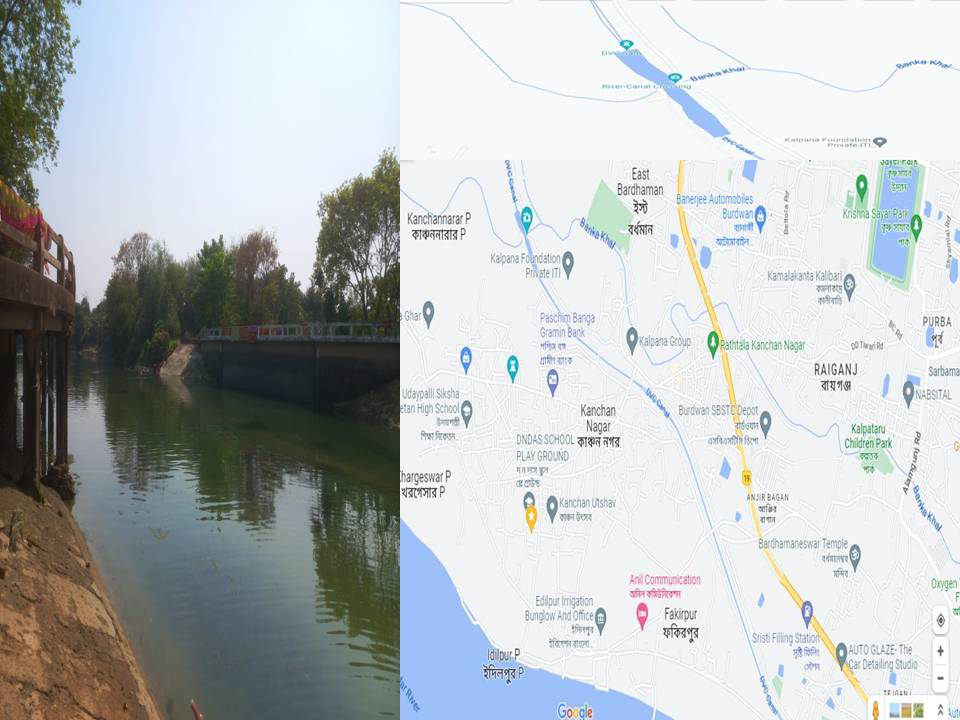
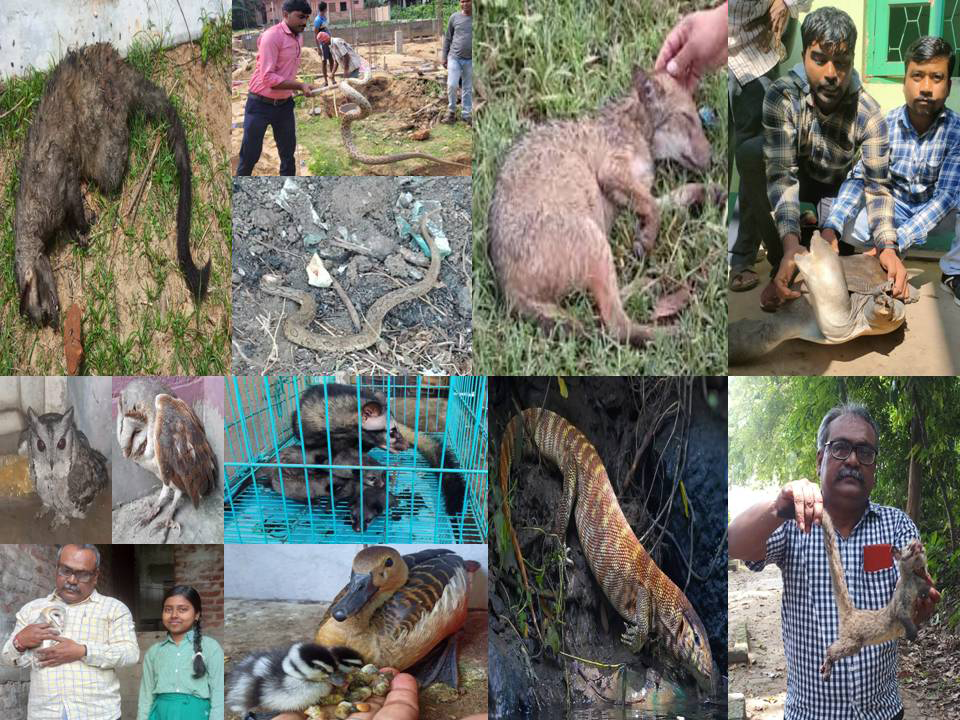
The oldest enriched flora and fauna of the ‘Damodar River Based Kanchannagar’ (Figure 1); the Banka-Siphon- Dam (BSD) of Damodar Valley Corporation (DVC) attached Eden Canal (EC) of Banka River (BR) was decreasing gradually due to massive different human activities [1, 2, 3]. The Covid-lockdowns also impacted the ecosystem during the pandemic coronavirus-disease (COVID-19), it has faced social and economic challenges among the communities, and health systems, due to the killing or catch or death of animals also (Figure 2) losing the ecological balance of water, land and vegetation that adversely affect the environment and societal problems for the ‘Advances in Clinical Toxicology’ [4, 5, 6, 7].
The main aims and objectives to overcome and confirm the situation are to make people aware of communities through advances in biodiversity conservation, ‘Clinical Toxicology’, and the benefit of the human health economy led to happier and more fulfilling lives, and creating the ‘Eco- Technology’-researcher entrepreneurs of tomorrow.
Materials and Methods
Study Area and Weather
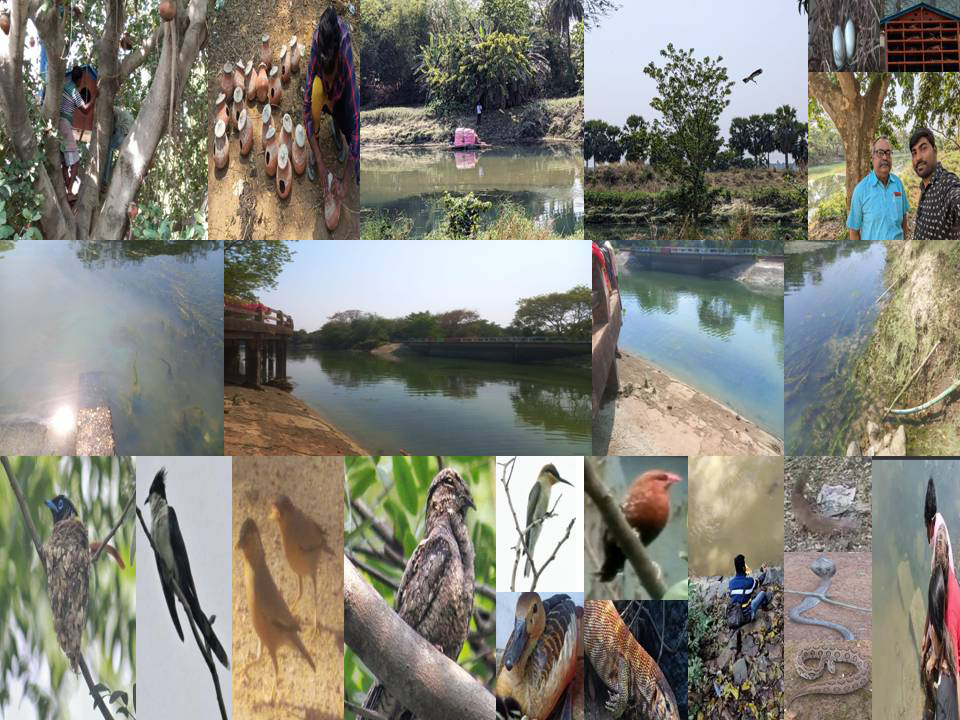
The main study area (from 22o56’ to 23o53’ North latitude and from 86o48’ to 88o25’ East longitudes) with an average rainfall of 150 millimeters was Figure 1; the Banka-Siphon (BS) attached Eden Canal (EC) of Damodar connecting with Banka River through lock gates, covering a 3–5sq km area with dense vegetation, bushes and grass cover enriched with different birds (including migratory birds), grey colored water monitor lizards, fishing cats, civet cats, rats/mice, bats, moles, squirrels mongooses, owls, toads, etc. Figures 2 and 3 in Kanchannagar, Barddhaman, Purba Bardhaman-713102, West Bengal, India, besides the Damodar river and Renaissance Township, and is surrounded by ponds- and agriculture- fields with good balanced of water, land and vegetation the ‘Location-Wise an Ideal Place’ for keeping- and-caring of ‘Wild Animals’, with the average rainfall was 150 millimeters, and it was the locality as ‘Study Area’ for “Sustainable Green Ecology” [4, 5, 6, 7, 8, 9, 10, 11, 12, 13, 14, 15, 16, 17, 18, 19, 20, 21, 22, 23, 24]. Study Samples The ‘Study Samples’ Figure 2 were mainly the different wild animals, water bodies, agricultural land, vegetation, visitors, photographer, and local community [2, 3, 4, 7, 8, 9, 11, 12, 13, 14, 15, 16, 17, 18, 19, 20, 21, 22, 23, 24].
Duration of Study
The duration of the study was December 20 to June 2023, and up-to-date [2, 3, 4, 5, 6, 7, 8, 9, 11, 12, 13, 14, 15, 16, 17, 18, 19, 20, 21, 22, 23, 24].
Planning and Division of Work
Here, the different teams; visitors, photographers, local community, NGOs, and students observer OR work as ‘Nature Loving Scientists’ frequently randomly block designs in the early morning, afternoon, and dusk with good vision, proper understanding, problems, and all have identified patterns, trends and problems in lockdowns based on main observation- and interaction based -a survey among communities, experience old worker/labour, fisherman, farmer, etc., and observe the biodiversity during the pre-and post- Covid informing all directly to the guide Dr Subhas Chandra Datta, Nature Scientist, Or indirectly through Sri Arnab Das, Animal Lover Social Worker [2, 3, 4, 5, 6, 7, 8, 9, 10, 11, 12, 13, 14, 15, 16, 17, 18, 19, 20, 21, 22, 23, 24, 25, 26]. Recently, Datta [27] highlighted in the 9th International Conference on Environment and Ecology, “High-Diluted-Biomedicines- Ecology on ‘Global Pathogens and Immunity’: Focused Safety Agro-Technology Food-Security Enriched Environment” and Filho, et al. [28] showed, “COVID‑19: the Impact of a global crisis on sustainable development teaching. Environment, Development and Sustainability”.
Typical Work Done
Mainly the students, NGOs, and different volunteers organized some social awareness virtual camps (SAVC) among the local communities and tourists regarding the benefit of biodiversity, biomedicines, fishery, agriculture, horticulture, socioeconomic, ecology education tourism, health, etc. and planted fruits trees with hanging artificial nests [2, 3, 4, 5, 6, 7, 8, 9, 10, 11, 12, 13, 14, 15, 16, 17, 18, 19, 20, 21, 22, 23, 24, 25, 26, 27].
Observation and Sampling of Data
An interaction-and photography-based survey/physical- study on questions was developed on the contents, randomly asked and interacted to collect answers with qualitative and quantitative ecological data on the biodiversity of water, land, vegetation, and infrastructure for sustainable development during the COVID-19 pandemic, focusing mainly on personal views, opinions, and perceptions of the various respondents on the COVID-19 impacts, and collecting data mainly from the frequent and regular visitors, tourists, photographers, local community, NGOs, teachers and students also [2, 3, 4, 5, 6, 7, 8, 9, 10, 11, 12, 13, 14, 15, 16, 17, 18, 19, 20, 21, 22, 23, 24, 25, 26, 27, 28].
Covid Protocols
The visitors, tourists, photographers, local community, students, NGOs, and different volunteers use masks mandate, clean their hands with soap, maintain physical distance, and avoid touching eyes-nose-mouth, etc. [2, 3, 4, 5, 6, 7, 8, 9, 10, 11, 12, 13, 14, 15, 16, 17, 18, 19, 20, 21, 22, 23, 24, 25, 26, 27, 28].
Ecology of Biodiversity Science Technology Communication
The visitors, tourists, photographers, local community, students, NGOs, different volunteers, scholars, researchers, artists, teachers, staff, community, different scientists, academicians, clinicians, administrators, institutions, farmers, media personnel, and visitors make the news of ‘Sustainable Future Green Biodiversity Ecology’, and published it in different medical journals [2, 3, 4, 5, 6, 7, 8, 9, 10, 11, 12, 13, 14, 15, 16, 17, 18, 19, 20, 21, 22, 23, 24, 25, 26, 27, 28].
Collection of Data
The collection of various types of data based on observation and interaction-survey, and reported reference data were noted down in the ‘Logbook’ and were authenticated by the guiding teacher Datta SC [2, 3, 4, 5, 6, 7, 8, 9, 10, 11, 12, 13, 14, 15, 16, 17, 18, 19, 20, 21, 22, 23, 24, 25, 26, 27, 28].
Analysis of Data
Here with the help of Dr Subhas Chandra Datta, an experienced scientist, and biologist cum educationalist, with the different photographers, all the data were analyzed were done [2, 3, 4, 5, 6, 7, 8, 9, 10, 11, 12, 13, 14, 15, 16, 17, 18, 19, 20, 21, 22, 23, 24, 25, 26, 27, 28].
Results
Here, Tables 1 and 2 show some typical biodiversity complex ecosystem hubs of the Banka-Siphon and Eden- Canal regions of Kanchannagar results depend on the physical typical photographs-based observation-survey interaction.
| NBH | Item Hub | Biodiversity Hub Formation: observation/ survey/ awareness, etc. |
|---|---|---|
| 1 | Clinical Biodiversity Hub | Enrich flora, fauna, wildlife, soil, water, and land, the rescue of different animals, fishery, health safety, and food security with sustainable tourism. |
| 2 | Clinical Medicinal Hub | Understanding eco-system for health and well-being, Biomedicines, biodiversity, and fostering education, health, nutrition, and well-being. |
| 3 | Fruit Trees Clinical Hub | Different old- and tall- trees of the fruits-tree for biomedicines with other trees for nutrition, shelter, wildlife biodiversity conservation ecology sustainability, health safety, and food security. |
| 4 | Clinical Eco-Nests Technology Hub | Technological innovation for the ecosystem, biodiversity, health, and impact to projection school children, neighborhoods’ community ecology forming the ‘Ideal-Common- Activity-Based-Eco-friendly-Complex-Nest-Ecosystem-Model’ that prevents any future pandemic also. |
| 5 | Clinical Wildlife Hub | Different types of wild Hubs; fishing-cats, bats, barn/bared owls, squirrels, rats, mongoose, mice, reptiles, toads, pigeons, birds, and insects, grey-colored water monitor lizards, and biodiversity conservation wildlife for a joyful environment with treatment clues against diseases. |
| 6 | Clinical Fishery Hub | Improve socio-economy, release fish seeds, and biodiversity conservation typical ecology sustainability, health safety, food security, and complex eco-system environment with treatment clues against diseases. |
| 7 | Manure Hub | Making a pollution-free environment with wetlands, litter, and nutrients of plants for enriching faunal diversity that will encourage the community to find local-level ecology. |
| 8 | Clinical Breeding Hub | Small indigenous fishes, tortoises, migratory birds, etc. breed safely. |
| 9 | Clinical Research Hub | Easily availability and accessibility of biodiversity ecology help scientists. |
| 10 | Tourist Hub | Good communication, green habitat, high density, easily visible, demarcation and preservation, calm and mild environment, enrich tourist. |
Table 1: Key observation on advanced eco-technology clinical biodiversity hub.
Table1: Typical eco-technology biodiversity hub of Banka-Siphon, and Eden-Canal. ‘NBH’= Numbers of biodiversity hub.
| Serial Number | Name of the Main Components of Biodiversity Hub | Average Populations in the Biodiversity Hub of Kanchannagar | |||
|---|---|---|---|---|---|
| 2007 | 2015 | 2023 | Remarks | ||
| 1 | Plants (Flora) | High | Low | Medium | Fruits- and medicinal- plants increasing in number due to plantation. |
| 2 | Wild Animals | Medium | Low | Large | Increasing due to awareness and peace. |
| 3 | Small Fishes | High | Low | Medium | Increasing due to awareness and calm. |
| 4 | Migratory Birds | High | Low | High | Increasing due to proper breeding place. |
| 5 | Monitor lizard’s | High | Medium | Low | Decreasing due to sufficient food. |
| 6 | Fishing/civet cats | High | Medium | Low | Decreasing due to sufficient food. |
| 7 | Fox | High | Medium | Low | Decreasing due to sufficient food. |
| 8 | Owls | Medium | Low | High | Increasing due to hanging nests and foods. |
| 9 | Viper snake | Medium | Low | High | Increasing due to lowering the monitors. |
| 10 | Ordinary Birds | High | Medium | High | Increasing due to breeding place and food. |
| 11 | Mongoose | High | Medium | High | Increasing due to breeding place and food. |
| 12 | Medicinal Plants | High | Low | Medium | Increasing in number due to plantation. |
Table 2: Key observation on advanced eco-technology clinical biodiversity hub.
Discussion
The different ‘Typical Biodiversity Hub’ of the ecosystem on Banka-Siphon and Eden-Canal may be conserved as follows [1, 2, 3, 4, 5, 6, 7, 8, 9, 10, 11, 12, 13, 14, 15, 16, 17, 18, 19, 20, 21, 22, 23, 24, 25, 26, 27, 28].
Clinical Biodiversity Hub- It is formed due to enrich flora, fauna, wildlife, soil, water, land, biodiversity conservation, the rescue of different animals, fishery, health safety, and food security with sustainable tourism. Clinical Bio-Medicinal Hub- It is formed due to enriching sources of bio-medicinal plants and animals that understand the ecosystem for health and well-being, biomedicines, biodiversity, and fostering education, health, nutrition, and well-being. Clinical Fruit Trees Hub- It is focused due to plantation of different old- and tall- trees of the fruits-tree for biomedicines with other trees for nutrition, shelter, wildlife biodiversity conservation ecology sustainability, health safety, and food security. Clinical Eco-Technological Nests Hub- It is focused due to hanging ‘Artificial Nest’, the technological innovation cum natural shelter of animals for the ecosystem, biodiversity, health, and impact to projection school children, neighbourhoods community ecology forming the ‘Ideal-Common-Activity-Based-Eco-friendly-Complex- Nest-Ecosystem-Model’ that prevents any future pandemic also. Clinical Wildlife Hub- It is formed due to enrich increasing sources of different types of wildlife; fishing cats, bats, barn/bared owls, squirrels, rats, mongoose, mice, reptiles, toads, pigeons, birds, insects, grey-coloured water monitor lizards, and biodiversity conservation wildlife for a joyful environment with treatment clues against diseases. Clinical Fishery Hub- It is formed due to enrich increasing natural sources of different types of indigenous water bodies/ life with a fishery or release fish seeds that improve socio- economy, and biodiversity conservation typical ecology sustainability, health safety, food security, and complex eco- system environment with treatment clues against diseases by increasing natural immunity. Manure Hub- It is formed due to enrich increasing natural clay in settlement growth its successive decays, making a pollution-free environment with wet-land, litter, and nutrients of plants and animals for enriching faunal diversity that will encourage the community to find local- level economic ecology. Clinical Breeding Hub- It is formed due to an increase in natural safe breeding habitats of small indigenous fishes, tortoises, migratory birds, etc. Clinical Research Hub- It is developed due to the easy availability and accessibility of biodiversity ecology that helps scientists, community, students, photographers, visitors, researchers and staff lead happier and more fulfilling lives, and create the academic entrepreneurs of tomorrow. Tourist Hub- It is focused due to heritage siphon- and canal- founded by the eminent Councilor of Burdwan Municipality, Life-Time-Contractor, Social Reformer, and Doctor during the British period, Reverent Dinno Nath Das (Karmakar) of Kanchannagar, for the safe health and hygienic drinking water during a flood, and irrigation of agriculture land, and good communication, green habitat, high density, easily visible, demarcation and preservation, calm and mild environment, enrich tourist.
Figures 1-3 and Tables 1 and 2 depend on the physical typical photographs-based observation-survey interaction on Banka-Siphon. Eden-canal in complex ecosystem wildlife biodiversity conservation sustainability, health safety, and security of Kanchannagar communities for improving problems of any future COVID-19 pathogens addressing the issues relating to the environment where we live, is essential in order to ensure proper living conditions for the larger section of the population. The organization has developed a suite of technologies that intend to address the common man’s problems in the area of Water, Sanitation, Land, Vegetation Ecology, etc [2, 3, 4, 5, 6, 7, 8, 9, 10, 11, 12, 13, 14, 15, 16, 17, 18, 19, 20, 21, 22, 23, 24, 25, 26, 27, 28].
So, the oldest heritage habitat; the Banka-Siphon- Dam (BSD) of Banka River (BR), and Eden Canal (EC) of the ‘Damodar-River-Based-Kanchannagar’, covering a 3-5 Sq Km area, have enriched different flora- and faunal diversity with agricultural fields and dense vegetation from January 2020 due to undisturbed by the tourists, visitors, picnic parties, and for the awareness and environmental consciousness. And it has increased different wild animals like grey-colored water monitor lizards, fishing cats, civet cats, viper snakes, foxes, barn owls, and even migratory birds, rodent populations, etc. It has also maintained the ecological balance of water, land and vegetation (micro bio- climate) that enrich the Environment (Water, Sanitation and Ecology), and solves societal clinical problems [2, 3, 4, 5, 6, 7, 8, 9, 10, 11, 12, 13, 14, 15, 16, 17, 18, 19, 20, 21, 22, 23, 24, 25, 26, 27, 28]. It is primarily noted that awareness, artificial nesting, plantation of biomedicine plants, cultivation, releasing of fish seed, the rescue of different animals, and eco-friendly calm and quiet environments enrich the biodiversity conservation for future ‘Clinical- Toxicology Socio-Economic Eco-Technology Biodiversity Research Hub’.
Future Prospect
It is worth mentioning that the government may be focused on or considered as an advanced protective different ‘Clinical Biodiversity Bio-Medicines Eco-Technology Hubs’ for restricted tourist spots, future research, future biodiversity- green environments for human health, preventing future epidemics, future fishery, pisciculture, agriculture, and biomedicines, future socio-economy and ecology economy, local technology, management of public and private green biodiversity space and nature, focuses future complex relationships between biodiversity hub, ecosystem service and human health economy, ultimately provide scientific healthcare, and skill development with job facilities where we live is important in order to ensure proper living conditions for the ‘Future India as well as the Whole World’ [2, 3, 4, 5, 6, 7, 8, 9, 10, 11, 12, 13, 14, 15, 16, 17, 18, 19, 20, 21, 22, 23, 24, 25, 26, 27, 28]. And the Banka-Siphon Linked with Eden-Canal of Damodar May be Developed as a ‘Clinical- Toxicology Eco-Technology Biodiversity-Biomedicines-Hub’ Improving Clinical World Policy.
Conclusion
The Banka-Siphon-Dam linked with Eden Canal of the ‘Damodar-River-Based-Kanchannagar’, the oldest heritage habitat, covering a 3-5 Sq Km area, may be developed as a different ‘Clinical Socio-Economic Eco-Technology Biodiversity Bio-Medicine Toxic Research Hub’ focusing and improving the world policy. Every government should have to be considered this type of ‘Siphon-Dam-Canal’ as a ‘Protective Clinical Socio-Economic Zone’ for different ‘Biodiversity Clinical Bio-Medicine Eco-Hubs’. It will be a maintained and fascinating site for tourists, ornithologists, nature lovers, bird watchers and wildlife photographers, and future researchers and scientists. And these future biodiversity-green environments; the ‘Eco-Technologies Hubs’ improve human health by preventing future epidemics, enriching future fishery, pisciculture, agriculture, biomedicines, future socio-economy and ecology economy, and local technology. And the management of public and private green biodiversity space and nature focuses on future complex relationships between biodiversity hub, ecosystem service and human health economy, which ultimately provide scientific healthcare, and skill development with job facilities where we live is important in order to ensure proper living conditions for the ‘Future India as well as the Whole World Community’ that minds, helping our students, researchers and staff lead happier and more fulfilling lives and creating the academic entrepreneurs of tomorrow. And it may develop /focus any ‘Future-Socioeconomically-Ecological-Tourist- Hub with Advances in Clinical Toxicology Eco-Technology Hub’. And the ‘Eco-Technologies’ are not only environment- friendly, cost-effective, and local-indigenous technology but also easily applicable and available technology that prevents any toxic effects improving natural immunities highlighting the main research question, “Use Eco-Technologies Save World”.
Conflict of Interest
The authors declare no conflicts of interest here and the manuscript is written by the author itself.
Acknowledgement
I am thankful to Mr Arnab Das, Animal Lover, Social Worker, Researcher, and Member of the Burdwan Society for Animal Welfare, Burdwan for his intensive research help. And all the student doctors, scientists, NGOs, photographers, nature lovers, regular visitors, teaching staff, tourists, and local communities as well as aged people, are the main acknowledgeable personalities.
References
-
Peterson JCK (2006) Bengal District Gazetters, Burdwan. Bengal Secretariat Book Depot. Calcutta, 1910.
-
Datta SC, Datta B (2022) Biomedicines-Meal (BMM) and Ultra-High-Diluted-Biomedicines-Turmeric (UHDBMT) Treat as ‘Community-Booster-Vaccine Standard-Model’ (CBVSM), The ‘God-Particle’ (GP) of ‘Future-X-Pandemic’ (FXP): Enriched Family-Medicine-Agriculture- Environment-Science-Technology-Communication- Issues. International Journal of Family & Community Medicine 6(1): 1-9.
-
Datta SC, Das A (2023) Banka-Siphon Attached Eden- Canal of Damodar May be Develop as ‘Biodiversity- Biomedicines-Hub’ Improving World Policy. Journal of World Policy and Development Studies.
-
Datta SC (2023) Sustainable Future Green School Ecology: Prevents Future-Pandemic Improving Biomedicines- Physiology Health Technology Biodiversity World Policy Development Studies. International Journal of World Policy and Development Studies 9(1): 1-10.
-
Datta SC (2023) Physiology of High-Diluted Plant-And Animal-Biomedicines Prevent Pathogens of Callus, Plants and Animals Enriching Medical Research and Allied Sciences. MISJ-Journal of Medical Research and Allied Sciences 1(1): 19-48.
-
Datta SC (2023) Only Traditional Biomedicines Preventing ‘Omicron’: Steady Future Reopening: Focused Bio-Medical-Research-Scientific-Information- Technology-Communication-Wildlife-Global-Health. International Journal of AAYUSH and Traditional Medicine 3(1): 1-16.
-
Datta SC (2023) Confirming Forensic Bio-Medicine ‘Pm-Poshan’ Prevent Criminal Activity Improving Pathology-Mental Health-Hygiene Science-Technology- Communication Biodiversity-Wildlife-Conservation- Socioeconomic-Ecology. J Forensic Med Path 2(1): 1-13.
-
Datta SC (2020) Improved Science and Technology Communications: Barn Owl Act as Social Vaccine against COVID-19. International Journal of Latest Research in Science and Technology 9(3): 6-13.
-
Datta SC (2020) Artificial-Nest Rainwater-Harvesting with Fishery and Floating-or-Rooftop-Gardening Act as 21st Century Civil-Engineering COVID-19 Epidemic-Model: Improved Biodiversity Agriculture Socio-Economic Environmental-Sciences Technology- Communication. Journal of Civil Engineering and Environmental Sciences 6(2): 022-036.
-
Datta SC (2020) NGO Act as Potential-Policy-Developer Social-Vaccine-COVID-19 Epidemic-Model until Discovery-of-Medical-Vaccine: Achieved Green-Socio- Economic Welfare Science Technology Innovations. Arch Community Med Public Health 6(2): 225-232.
-
Datta SC (2021) Dinna Nath Das-Middle English School and –Dispensary Act As a Model: The 21st-Century-Coronavirus-2 Resistance- Futuristic-Common-Ecofriendly-Complex-Green- Digital-School-Health-Ecosystem by Bio-Medicine- Vaccine-Nationalism-Equity-Passport. SunText Rev Arts & Social Sci 2(1): 117-224.
-
Datta SC (2021) Sustainable Reopening of School Preventing Reinfection-Coronavirus 2 in New-Normal by Vaccine-Nationalism-Equity-Passport with Ginger- Drinks-Bio-Medicinal-Mid-Day-Meals. International Journal of Research-Granthaalayah 9(5): 165-170.
-
Datta SC (2021) Only Environmental Science Act as Natural Bio-medicine Preventive Epidemic Model of 21st Century Pandemic Diseases. Environ Sci Indian Journal 17(1): e177.
-
Datta SC (2021) Owls and Bats Act as Future ‘Wild X-Disease’ Preventive COVID-19 Non-Medicated Vaccine: Improved Global Health Forestry Agriculture Environment Science Technology Communication! Global Journal of Science Frontier Research: C Biological Science (GJSFR-C) 21(5).
-
Datta SC (2021) Bats Act as a Natural-Booster- Family-Vaccine-Immunization Against COVID-19: Provide Preventive-Family-Health-Care-Health- Risk-Services-Healthy-Lifestyle Enriched-Wildlife- Conservation-Agriculture-Forestry-Science-Technology- Communication-Application-Issues. Journal of Family Medicine 8(9): 1-9.
-
Datta SC (2021) Bats Act as a Natural-Booster- Community-Vaccine Against COVID-19. IASR Journal of Medical and Pharmaceutical Science (IJMPS) 1(2): 13- 25.
-
Datta SC (2021) Wildlife Conservation May Be Future Preventive Epidemic COVID-19 Model: Enriched Forestry-Horticulture-Agriculture-Environment- Health-Biodiversity-Science-Technolog Communication- Application-Issues. Horticulture International Journal 6(1): 6-9.
-
Datta SC (2021) Wildlife-Owl-Conservation May be Immunized-Community Against ‘Future-Disease-X’: Provide Clue Clinical-Biomedical-Research Global- Health-Enriched-Biodiversity-Forestry-Agriculture- Environment-Science-Technology-Communication- Issues! Aditum Journal of Clinical and Biomedical Research 3(2).
-
Datta SC (2021) Wildlife Conservation Act as Future Clinical-Medical Images-Case Reports of COVID-19 Model: Enriched Forestry-Horticulture-Agriculture- Environment-Health-Biodiversity-Medical-Science- Technology-Communication-Application-Issues! Journal of Clinical and Medical Images, Case Reports 1(1): 1033.
-
Datta SC (2021) Students Act as 21st Century Preventive- Pandemic-COVID-19 Model: Improved Advance-Clinical- Toxicology Biomedicine Green-Socio-Economy Science- Technology-Innovations. Advances in Clinical Toxicology 6(1): 6.
-
Datta SC (2021) 21st Century Preventive Non-Medicinal- COVID-19-Students-Model: Improved Med Life Clinics Sciences Technology Communication Med Life Clinic 3(1): 12-13.
-
Datta SC (2022) Only Pharmacy-and-Drug-Innovations Can Steady-Reopen Different Research-Educational- Institutions Immunization Against ‘Future A to Z Diseases’: Advanced Scientific-Community-Global- Health-Ecology-Agriculture-Environment-Science- Technology-Communication-Applications-Socio- Economy. J Pharmacy and Drug Innovations 3(3): 1-10
-
Datta SC (2022) Preventing 21st-Century-Diseases By Medical-Research On Physiology of Biomedicine- Meals improving Stadey-Opening-Quality-Care- Medical-Knowledge-Public-Health-Science-Technology- Environment-Wildlife-Issues. Canadian Journal of Medical Research CJM 1(1): 18-26.
-
Datta SC (2022) Only wildlife conservation may be future omicron-like-preventive-epidemic- covid-19-model enriched forestry-horticulture- agricultureenvironment-health-biodiversity-science- technology-communication-application-issues. Horticulture International Journal 6(1): 6-9.
-
Datta SC, Das A (2023) Transform Kanchannagar as A Biodiversity-Conservation Socio-Economic Food- Security Zone Improving World-Policy. 9th International Conference on Environment and Ecology.
-
Datta SC (2023) Additional ‘PM Poshan’ Ecology Enriched Joyful Learning Environment Health Hygiene Improving Immunity Against ‘X’-Pathogens. 9th International Conference on Environment and Ecology.
-
Datta SC (2023) High-Diluted-Biomedicines-Ecology on ‘Global Pathogens and Immunity’: Focused Safety Agro- Technology Food-Security Enriched Environment. 9th International Conference on Environment and Ecology.
-
Filho WL, Price E, Wall T, Shiel T, Azeiteiro UM, et al. (2020) COVID‑19: the impact of a global crisis on sustainable development teaching. Environment, Development and Sustainability 23(8): 11257-11278.
- Pattern of Gonadal Hormones in Oral Testosterone-Supplimented Male Wistar Rats with Diabetes-Induced Hypogonadism
- Re-Evaluation of the Genotoxicity of Currently Used Food Dyes in Mouse Multiple Organs Via Continuous Administration by Drinking Using the Comet Assay
- Pharmacogenetics of Type 2 Diabetes Mellitus: Linking Genetic Variability to Drug Efficacy and its Cardiovascular Outcomes
- Exploratory Proteomic Profiling of SARS-CoV-2 Infected THP-1 Macrophages Reveals Alterations in Inflammatory Response and Cellular Metabolism
- Study of Genotoxicity of Hepatocarcinogens in Multiple Organs in Mice by Feeding and Drinking Using the Comet Assay
- Spirulina Polypeptides Inhibit the Growth of Human Lung Tumor (H460) Cells