
Cultural and Traditional Life of Baiga Tribes in the State of Madhya Pradesh, in India: A Brief View
This paper is related to primary data and secondary data based to understand the way in which a baiga tribe is viewed culturally and developmentally, as a social group existing before the development of, or outside states. In this view, culture is used to refer to the totality of a people’s “way of life†The Baiga is one of the aboriginal tribes of India who have various traditional features. These traditional features are so distinct that they vary from other various tribes of India. They follow various traditional methods and techniques to work out their different needs in life. The Baiga tribe in Madhya Pradesh is known for its unique culture. They do not interact even with other tribal’s like the Gonds, believe in a hand-to-mouth existence, and do not try to access education, eat outside their community, or associate with others. After a death in the family, the Baigas just leave the house and build another. They are totally dependent on the jungle, they do not engage in tendu patta collection, which is a major livelihood provider in M.P. Although, now-a-days, the body tattooing is became a fashion round the world, but still it has some cultural significance in the tribal world. Body tattooing is very much essential and a community marker for some of the tribal groups of central India. It is related to their religion, belief system, health care practice, body decoration, social status, wealth etc. The tribes of central India usually like to tattoo various symbols related to their totem, god and goddess. It is a common believe among them that, these deities and ancestors protect them from different natural calamities, evil spirits, black magic, enemies, wild animals etc.
Introduction
The Baiga tribes of Madhya Pradesh are the scheduled tribes as per the prerequisite of the Constitution of India. The Baiga tribes of Madhya Pradesh have been positioned in the top terms of the tribal population. These tribes of Madhya Pradesh constitute over 20% of the state population and are mainly concentrated in southern part of the state [1]. The life style, culture & customs of baiga community mostly resemble the Hindu religion though they still strongly believe in orthodox traditions. The social customs prevalent among these tribes vary more due to variations in their habitat & surroundings. As per geographical conditions for earnings they depend upon agriculture, forest produce & local craft. With improved communications and growth in the economy, the baiga tribe’s way of living has changed from their original hunting and gathering existence to one near the mainstreams. The Baiga have been the forest-dwelling aboriginals from central India who claim to be harbingers of the human race and history in India, as it originated from the conjugation of the Nanga (nude) Baiga as the Indian Adam and the Nangi (nude) Baigin (female Baiga), as the Indian Eve, who were the rightful progenitors of Indians. Baigas .They always believed that they were the chosen few who were hand- crafted by the God Himself and hence were the kings and rulers of the whole earth. They called God the Bhagwan or Bada Dev (big deity). They may have lived in Central India at least for 20,000 years. They practiced Bewar i.e. a method of doing cultivation, in which shifting, slash and burn method of growing crops is used. And hence the non-Baigas called them Bewadias, the practitioners of Bewar. It seems over the years, by the medieval period, Bewadia got its name distorted and was called by its derogatory name of Baigadia [2].
Baiga tribes are divided into various sub-caste are: Narotias, Binjhwars, Barotias, Nahars, Rai Bhainas, Kadh Bhainas and Kath Bhainas. It is found that Narotias, Barotias and Bhainas account for 80% of all the Baigas from Madhya Pradesh (MP) and Chhattisgarh states. There are three versions of the origin of the Baiga tribal community. One school of thought suggests that they actually emerged from the ancient stock of the Santhal tribe. The second says that they emerged independently, but their ancestors had been the close kin of the Gonds. The third does not accept Baigas’ proximity either to the Santhals or the Gonds, but calls them an independent tribe that emerged from the jungles of present day Rewa district of MP state in ancient times [3].
The Baiga are true inhabitants of forests, retaining customs and traditions handed down by their ancestors. Genetically, it appears that they are linked to the Indo- Australian aboriginal group. Recent anthropological studies have found mitochondrial DNA shared only between these tribes and Australian Aborigines. They spoke in a dialect similar to Indo-Australian dialect with links to the Australian Aboriginal population. Over the last few centuries, this language has disappeared and the dialect currently spoken by the Baiga is a form of Hindi. The Baiga are fierce protectors and worshippers of the forest and Mother Nature. Their sacred beliefs prohibit them from ploughing the land as this is perceived as traumatizing Mother Earth. They therefore adopt the slash and burn form of shifting agriculture, constantly remaining on the move. Deaths in families lead to abandonment of their dwelling and the building of a new one. The Baiga seldom interact or intermarry with other tribes, often avoiding formal settlements, formal education and formal trades or work. The Baiga often tattoo themselves in very elaborate and colourful manners using elements and materials from the forests they live in [4].
The Baigas have been placed under primitive tribe. The changes that have come about in their life style and beliefs are comparatively negligible. The Baigas mainly live in dense forest and hilly regions of Mandla, Dindori, Shahadol, Umaria, Balaghat and Amarkantak in Madhya Pradesh. They are considered as an off shoot of the Bhumias of Chhota Nagpur. The Baigas consider themselves to be servant of the earth and the king of the forests. Systematic Baiga villages came into existence much later. Earlier, they used to practice shifting cultivation without using the plough by clearing forests. After some year, they used to shift to some other nearby area. Even today, the forests are the first love and choice of the Baigas. According to a Baiga origin myth, there existed a black hillock amidst surrounded by water on all sides, from which a cluster of bamboo emerged. Baiga was born on one hollow end of a Bamboo and the Baigin from the other end of it. The Baigin saw the Patalwasi Dharti or the earth in her dream. Next day the Baiga sent Kariman crow to locate the earth. The crow brought the earth and the Baiga sprinkled seeds of earth on water. Meanwhile the Baiga couple was blessed with a son and a daughter. They came down from the Bamboo on the earth, but it was shaking. The Baiga couple realized that the earth will not be stable without propitiation with worship. With the intention of sacrificing their children they put them in the Dhuti of Bamboo and moved away. On the way they first came to see a hen and cock, goat and a she goat and then a boar couple. On knowing their intention they all gifted their children to them for sacrifice, for survival of humans on earth. The Baiga couple got made the nails of iron, copper and brass. After invoking the nails, they drove them in nau khand Dharti (earth). Then Naga Baiga-Nagar Baigin made offerings to the earth and the earth became stable on the water surface [5].
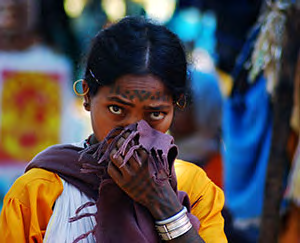
Objectives under Study
The purpose of the study is the assessment of the cultural and traditional life style of Baiga tribes.
Methodology
Mandla district of Madhya Pradesh is a Baiga tribal dominated district. Mandla district is situated, 220 35’ 00”
North Latitude 800 21’ 00’’ East Longitude. This District is located in hilly and forest areas of Maikal hill range of the Satpuras, in mostly scattered habitation. The District situated in the east- Central part of Madhya Pradesh lies almost entirely in the catchment of river Narmada and its tributaries. A systematic methodology is an important step to any research because it directly influences the validity of the research findings.
Cultural and Traditional Life Style of Baiga Tribe
The Baiga is one of the aboriginal tribes of India who have various traditional features. These traditional features are so distinct that they vary from other various tribes of India. They follow various traditional methods and techniques to work out their different needs in life. Thus, in this study, some of the traditional features of the Baiga tribes are given below:
• Traditional Practice of Shifting Cultivation and Cropping: The Baiga’s tribe farming system is called Bewar. It is a shifting cultivation mostly practiced on hilly slopes, where contour bonding cannot prevent soil erosion. The practice involves cutting bushes and branches of trees and laying them out on slopes for drying. The branches are then burnt, leaving behind a layer of ash on which seeds of crops are broadcasted a week before the rains are expected. The Baigas do not plough the earth. They believe that the lands are like mother’s breast and they are not supposed to scratch their mother’s breast again and again by ploughing the earth. Therefore, they practice broadcasting of seeds on and leave the land fallow for several years to ensure recycling of the land productivity. Therefore, the practice of Benwar also has a strong relation with Baiga tradition and faith [6].
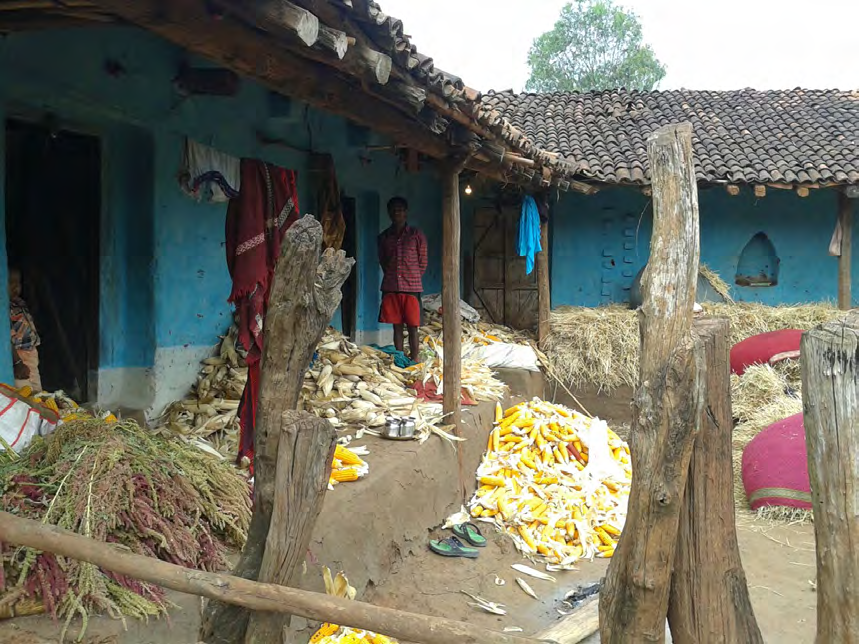
- Tradition of Folk Medicine among Baiga Tribe: The tradition of folk medicine is still followed by the Baigas. The Baiga men are experts having in depth knowledge about medicines. Various parts of plants are used as herbal medicines for any type of body ailments i.e. body pain, headache, cough, stomach pain, cold, fever, cut or small accident etc. The Baigas treat them with their own medicines.
- Tattooing Tradition amongst Baigas: Among the women tattooing is an integral part. They decorate different parts of their body with different tattoo marks. Long strips of parallel lines are made on the face, especially on the fore head. Different types of marks are made like moon, triangles, crosses, dots and others. Dots or small lines are also made on the cheek or chin, below the neck and on the back. The women who specialize as tattooing artists are called Godparents and they belong to the Ojha, Badni and Dewar tribes of M.P. They are well aware about the different types of tattoos favoured by various tribes. Tattooing amongst the tribes begins from the winter season and continues until summer.
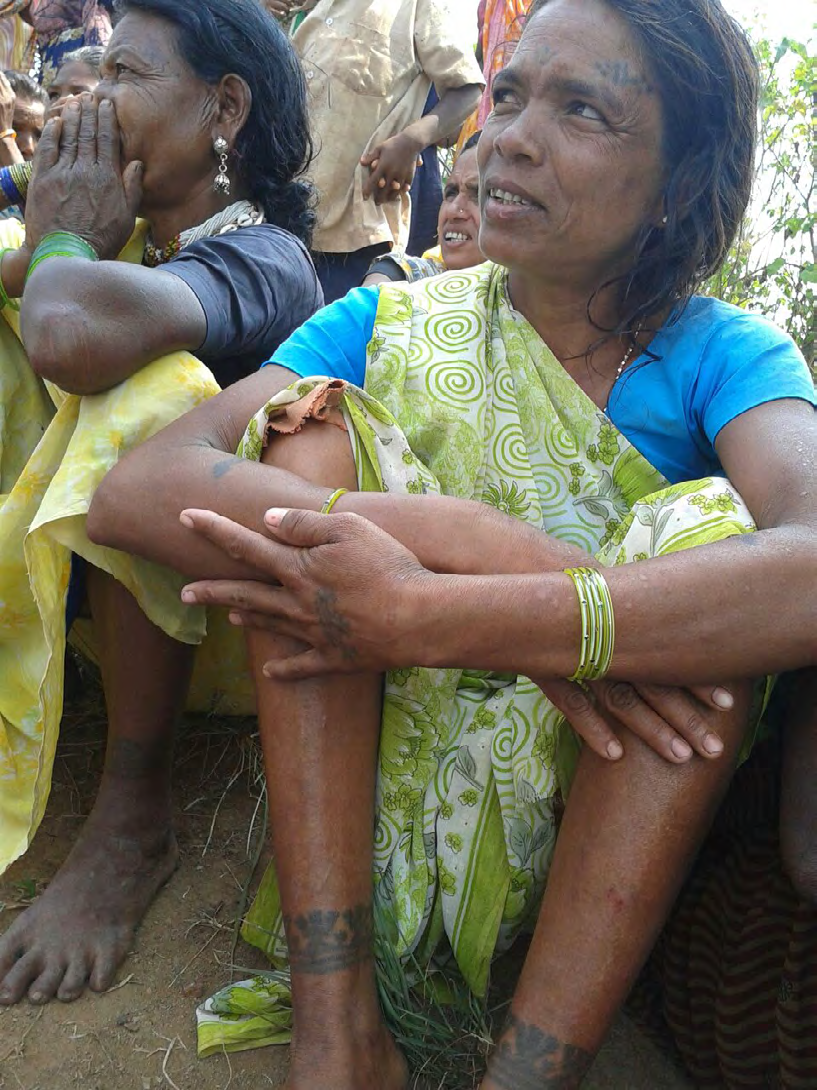
- Death and Afterlife: After death, the human being is believed to break down into three spiritual forces. The first (jiv) returns to Bhagavan (who lives on earth to the east of the Maikal Hills). The second (chhaya, “shade”) is brought to the deceased individual’s home to reside behind the family hearth. The third (bhut, “ghost”) is believed to be the evil part of an individual. Since it is hostile to humanity, it is left in the burial place. The dead are believed to live in the same socioeconomic status in the afterlife that they enjoyed while alive on earth. They occupy houses similar to those inhabited by them during their actual lifetimes, and they eat all of the food that they gave away when they were alive. Once this supply is exhausted, they are reincarnated. Witches and wicked persons do not enjoy such a happy fate. However, no counterpart to the eternal punishment of the wicked found in Christianity obtains among the Baiga.
- Social Life: Socially Baiga tribal women are treated respectfully by the male of their society. They have very good practices i.e. they sit together at the evening time and discuss their personal matter together. There is no discrimination on gender basis in their society and are treated in very respectful manner. They work very hard with their male partners and in some matter it is done more by them. They work in the field from morning to evening.
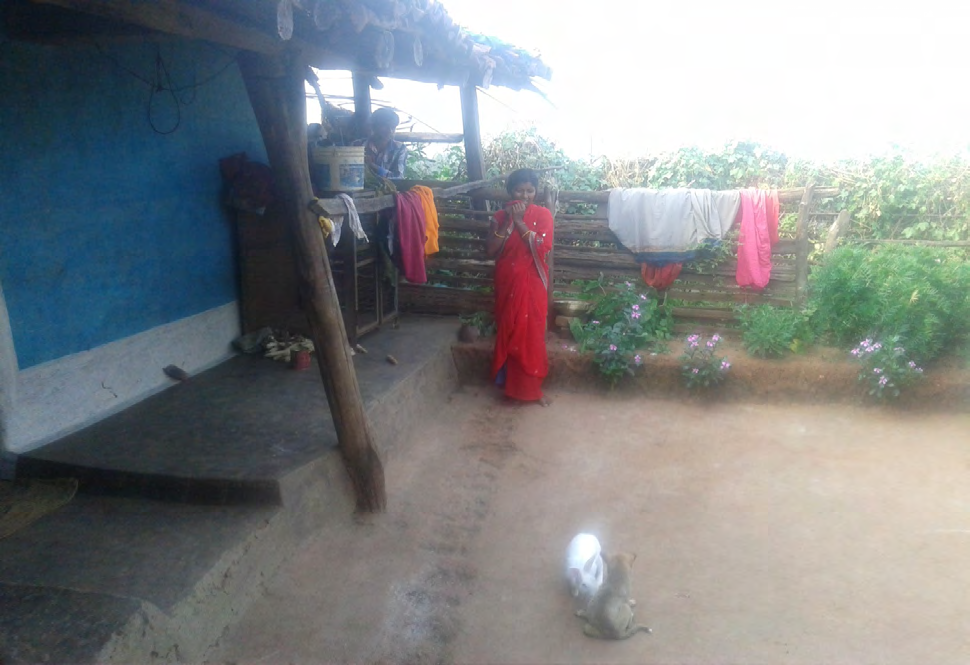
• Drink Mahua: Mahua liquor is very popular among baigas not only male but female as well. It was told by the female that they drink one cup mahua liquer at night because after doing hard work in day time they feel tired. At the night time both male and female sit together and have drink. During season time they use mahua leaves and make the Mahua liquor and in off season they buy Mahua liquor from the market. In their social life they are far further with the women of rest of the society they enjoy rights and participate in their decision making system and are respected in their family and society.
Conclusion
A custom is a ritual or other tradition that is an outward sign of the group’s cultural values. The group’s values aren’t always obvious right away - they run deep! Cultural values can be pieced together by observing the various customs that the people have passed down for generations. Culture is defined as all of a group’s guiding values and outward signs and symbols taken together as one big whole. The cultural value that the tribal man believes is to respect your ancestors and your gods. One of the customs that acts as an outward sign of this value is to allow cows to have a natural death, rather than slaughtering them. This custom, taken with all of the other customs that his community practices, represents a larger picture of tribe culture. Although, now-a-days, the body tattooing is became a fashion round the world, but still it has some cultural significance in the tribal world. Body tattooing is very much essential and a community marker for some of the tribal groups of central India.
References
-
Hoebel FA, Vidyarthi LP (1977) The Tribal Culture of India. Concept Publishing Company, Delhi, pp: 167.
-
Majumdar DN (1958) The Eastern Anthropologist, pp: 14-21.
-
Dube SC (1977) Tribal Heritage of India. Vikas Publications, New Delhi, pp: 24-25.
-
Vivelo FR (1978) Cultural Anthropology Handbook “A Basic Introduction”. McGraw-Hill Book Company, pp: 288.
-
Young FW (1967) Incest Taboos and Social Solidarity. American Journal of Sociology 72(6): 589-600.
-
Hammond PB (1971) An Introduction to cultural and social anthropology. Macmillan, New York, pp: 456.
- The Indispensable Role of Informal Caregivers in Supporting the Aging Population
- Socio-Religious Significance of Kamakhya Temple in Guwahati, Assam
- Is Anthropology Possible?
- A Contribution to the History and Paleobiology of Harput/Elazığ Türkiye and Its Surroundings
- A Study on the Cowrie Shells of the Dimasas in Assam
- The Significance of International Organizations Cooperation in the Efficient Resolution of Global Conflict