
Ethnographic Study of Indigenous Trees, Their Associated Taboos and Implications for Nature and Culture Conservation in Nsukka Culture Area, Nigeria
Covid-19 Lockdown Order by the Federal Government of Nigeria prompted a detailed ethnographic investigation into an aspect of Indigenous value system of Nsukka people. Observation revealed that Nsukka people are among the few groups in Nigeria that have held tenaciously to their indigenous value system. This scenario prompted a study on indigenous trees and their associated taboos in Nsukka culture area, with an extended focus on the implications for nature and culture conservation in the area. Covid-19 Lockdown Order facilitated a detailed ethnographic study in the study area with less obstruction. Key informant interview, focus group discussion and observation were very useful for the study. Five of the numerous indigenous trees were selected for the study. They include Palm tree (Elaeis guineensis), Kola nut (Cola acuminate), Native mango (Irvingia gabonesis), Oil bean (Pentaclethra macrophylla), and African breadfruit (Treculia africana). The study was able to deduce that taboos play significant roles in the preservation of these indigenous trees which has socio-cultural, religious, economic, ritual, and medicinal benefits to the people. And also their preservation has implications for nature and culture conservation in the area.
Introduction
One would wonder what informs the choice of this topic. There may be an atom of fecundity in every unpleasant circumstance. Actually the study is a product of Covid-19 Pandemic. Covid-19 (Corona virus) Pandemic is said to be an infectious disease that is caused by a deadly virus. The disease has ravaged the globe since 2019, and it has the capacity of wiping out an entire nation if not adequately checked. So many measures were designed to put the spread of this deadly virus on check. One of these measures is total lockdown of schools, markets, offices, religious activities, social activities, including travel restrictions. This total lockdown commenced in Nigeria on the 29th of March, 2020 as was announced officially by President Mohammadu Buhari, President, Federal Republic of Nigeria.
However, we live in the rural part of Nsukka, (having been restricted from travelling out of the area or do any official work) and were privileged to make observations on the indigenous value system and other habits of Nsukka people. Nsukka people are among the few groups in Nigeria that still hold tenaciously their indigenous value system irrespective of varying degrees of civilizations. For instance, they guard their indigenous trees zealously. This caught our attention on this aspect of their cultural life. We were able to lay hands on some literatures and observed that there is a study gap on the people’s indigenous trees and their associated taboos. However, the Covid-19 Lockdown as was imposed by the Federal Government of Nigeria enabled for a detailed ethnographic study among the people. The lockdown order and the associated difficulty and hunger pangs, drove the indigenous settlers back to their traditional economic activities to salvage the situation occasioned by Covod-19 in the area. Informants were readily available for key informant interview sessions, focus group discussion sessions and field observations. Although during this exercises, government policies on social distance, use of face mask and hand sanitizers were observed. Also movement within the Nsukka culture area with private cars was facilitated by the Lockdown as against the use of commercial road transport services. The road was much free.
Food production was said to have emanated as a result of domestication of plants and animals [1]. This is believed to have been motivated by the available resources within a given environment. For instance, abundance of natural resources in earlier times allowed man to maintain semi-permanent settlement and consequent involvement in domestication [2]. Also, ecological shift to food production was said to have occurred at roughly the same time in different parts of the world. Ecology determines the names people give to plants and animals. Botanists have used ecology to identify most plants as being of African origin, thus such plants with African attachment to their botanical names may have originated from Africa [3, 4, 5]. Such plants include palm tree (Elaesis guinnensis), bread fruit (Treculia africana), and native apple tree (Chrysophyilimn africanum) and so on. Moreover, most of the plants have tended to dominate African people’s proper names especially in Igbo land, Nigeria.
Such trees exist in Nsukka culture area like some other parts of Igbo Land. Unfortunately, much is not known about these indigenous trees in Nsukka and their associated taboos. There is also need to find out the implications of these indigenous trees for nature and culture preservation to boost their relevance in Nsukka culture area; hence much is not known as can be found in the existing literatures. This may have contributed to the misconceptions and indiscriminate felling of indigenous trees, coupled with social neglects. This background, however, motivated this research that was born out of Covid-19 Pandemic to study selected indigenous trees in Nsukka culture area and their associated taboos;
and also find out their implications for nature and culture conservation in the study area
Research Method
Because of the qualitative nature of the research, some qualitative research approaches like ethnographic study, key informant interview, focus group discussion, and observation were used to gather data. Multi-stage sampling technique was used. Communities in the study area were clustered into four clusters with one community selected from each of the clusters for the study. Thirty two key informants (eight from each of the clusters) were purposively sampled for key informant interview sessions. Convenience sampling technique was used to sample resource persons for four focus group discussion sessions; one for each of the clusters, to maintain social distance policy for checking possible Covid-19 spread. While an average of one hour was spent on each of the key informant interview sessions, an average of two hours fifteen minutes was spent for each of the focus group discussion sessions. A detailed ethnography was conducted in the four selected communities to understand their culture, attitudes and responses to their natural environment. Also during observations, digital recording gadgets like camera were very useful in having pictorial representations of some facts in the study. Data collected were descriptively analysed. As noted earlier, these processes were highly facilitated by Covid-19 Pandemic via a total lockdown by the Federal Government of Nigeria. COVID-19 control measures like keeping social distance, regular hand washing, zero contact with people, use of face mask hand sanitizers, and covering of nose while sneezing or coughing, were all observed during the field research. Conclusions were based on majority opinions, while minority opinions may still be subjected for further verification.
Definitions of Basic Concepts in the Study
A brief definition of some key concepts used in the study would guide the understanding of the discussion in the paper. They include:
Ethnographic Study
This is a research concept that has to do with a systematic study of a people’s culture, habits, attitudes, responses to environmental stimuli and other lifestyles in their traditional environment. During the study, the researcher is expected to stay with the subject to interact and make genuine observations from the point of view of the researched community. It is an anthropological concept that has been found useful in qualitative studies in humanities [6, 7, 8, 9].
Indigenous Trees
These have to do with those trees that are domesticated by a people due to their utility values. Although a particular tree may not have originated from a community, but it’s domestication and value attachment by the community may classify the tree as indigenous as well to the community. By this definition, indigenous tree does not imply that the tree must have originated from that particular place [10, 11] Taboo- This term is said to be of Polynesian origin but became an English language term in 18th Century [12]. Taboos can be said to be strong social norms which may be viewed as sacred by members of a group. Such norms are respected by every member of the community and there is a punishment for deviant individuals [13, 14, 15]. Some taboos are imbedded in the identity of a people hence anyone with the identity is circumscribed by such taboos. Nature Conservation- This concept is part of the central discussion in some disciplines like biology, geology, geography, meteorology, molecular genetics, biogeography, philosophy, ecology and landscape ecology, archaeology, tourism, forestry, policy development, sociology, anthropology, economics etc. It has to do with all the physical manifestations of the human environment that are naturally endowed without any effort of man in their makeup. Man on his own may modify some aspects of nature to suit his social reasoning or environmental desire as the case may be Nweke and Nwoye [16] sees nature as the total make up of the man’s environment without any assistance from man. However, nature conservation has to do with all attempts (be it natural or man-made, conscious or unconscious) that are put in place to preserve the existence of man’s natural environment for posterity, historical reconstruction, socio-cultural needs, economic needs, health reasons, environmental sustainability, tourism promotion and/or identity promotion. Culture Conservation- This is seen as systematic efforts to safeguard traditional knowledge, customs, lifestyles, tangible and intangible resources of a people, etc. This is basically done for posterity, culture continuity, identity promotion, social cohesion, and historical reconstruction, protection of indigenous value system, entertainment and tourism purpose. Culture conservation is also a process of encouraging environmental, socio-religious and socio- cultural sustainability in a given community. Furthermore, the conservation process is aimed at protecting cultural heritage assets to preserve their historical narratives. In this regard a series of specific actions, measures, norms, principles, systems, techniques and intervention methods are undertaken [17].
Previous studies
It will be pertinent at this juncture to briefly look at previous literatures that motivated this current study on Nsukka culture area. For instance, Okpoko and Emeafor [18] examined indigenous plants and their uses among Nsukka people, and discovered that plants have cultural significance among Nsukka people, but the knowledge of indigenous plants and their uses are fast sinking into oblivion, especially among the youths. Also Kamau [19] assessed indigenous trees species conservation in subsistence agricultural production system in Lari sub-country Kiambu country, and revealed that significance of indigenous trees are tied to their roles in the socio-economic lives of the people and soil conservation. Moreover, Esegu and Ondia [20] studied traditional uses of indigenous trees species in Uganda and discovered that deforestation and over-harvesting are the major challenges of indigenous trees in Uganda not minding their values to the people’s socio-economic and cultural life. In addition to this, in their work on economics of Irvingia excelsa ‘Agbono’ kernel production in Nsukka, Ugwumba, Wilox and Aniaku [21] informed that difficulty in harvesting and production processes are the major impediments to this indigenous tree in Nsukka.
More so, Adaigwe [22] worked on the uses of tree crops and edible plants in Orsu LGA of Imo State, and concluded that the people make frantic efforts to conserve their indigenous trees due to their socio-economic relevance. In line with this, Ajake [23] studied the role of forest trees in indigenous farming systems as a catalyst for forest resources management in the rural village of Cross River State, and discovered that there is an unconscious nature conservation techniques for forest trees among the people because of the numerous benefits of such trees. This result was supported by Agu and Okagu [24] who worked on the ethno-archaeological perspective on oil palm tree in old Nsukka division and informed that palm tree is among the respected indigenous trees among the people due to its numerous values.
In addition, Anene [25] carried out a research on the socio-cultural values of economic trees in Nnewi, Southeast Nigeria and informed that virtually all the economic trees in Nnewi have socio-cultural values hence their strict protection by the community through traditional sanctions. A similar study by Murtala [26] who worked on Indigenous trees inventory and their multipurpose uses in Dutsin-Ma area of Kastina State, noted that indigenous trees play vital roles in socioeconomic development through creation of opportunities for economic activities. Ampitan, Adelakun and Kareem [27] surveyed indigenous trees species used for domestic purposes in New-Bussa, Nigeria and note that indigenous trees supply the people with fuel, wood, pole, timber, soil fertility maintenance, shade and among others.
Moreover, in his study on kola nut in Igbo socio- cultural values and identity, Obineche [28] identified cola nut as a socio-cultural symbol of identity, social integration hospitality and unity among Igbos of Nigeria. In related study, Eze [29] studied the value of economic trees in food production practices in Obimo, Nsukka, and informed that indigenous trees have great socio-economic values and other values on the wellbeing of the people. Ogwu, Osawaru and Obayuwana [30] carried out a research on ‘diversity and abundance of tree species in the University of Benin, Benin city, Nigeria, and concluded that trees have multiplicity of values to mankind, notwithstanding the accompanying challenges. Also, Ijeoma and Ugwu [31] worked on the utilization of selected edible forest and wildlife resources in Nsukka zone of Enugu State and infer that many species of tree have both economic and socio-cultural values to the people. Finally, Armachius and Vumilla [32] conclude that valuable trees like moringa should be harnessed for their utility values in Sub-Saharan African countries.
In summary, these previous studies were able to make useful contributions to the current study by addressing some aspects of the study like indigenous trees, problems of indigenous tress, preserving indigenous tress, socio- economic and socio-cultural values of indigenous trees, among others. In line with this, this study tend to make useful contributions to the existing literatures by studying the taboos that are associated with these indigenous trees and the implication of this for culture and nature conservation in Nsukka culture area.
Brief Information on the Study Area
Nsukka culture area has its nucleus in Nsukka which is made up of three traditional set up of Nkpunano, Nru and Ihe/ owerre. The culture area spreads through neighbouring local governments and communities like Nsukka, Igboeze North, Igboeze South, Igboetiti, Udenu, Isiuzo, and Uzo-Uwani local government areas. They are referred to as Nsukka culture circuit which is the focus of this study (Figures 1 & 2). Nsukka is surrounded by great hills with each of them amounting to over a thousand feet above sea level. These notable hills (which are known with their traditional names) include ‘Ugwu Asho, Ugwu Ajiye, Ugwu Ataba, Ugwu Idike-iyi, Ugwu Orie, Ugwu Ojome and Ugwu Awarawa’ (Ugwu means Hill).
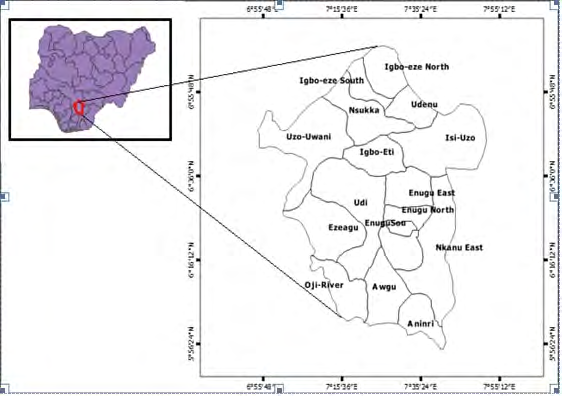
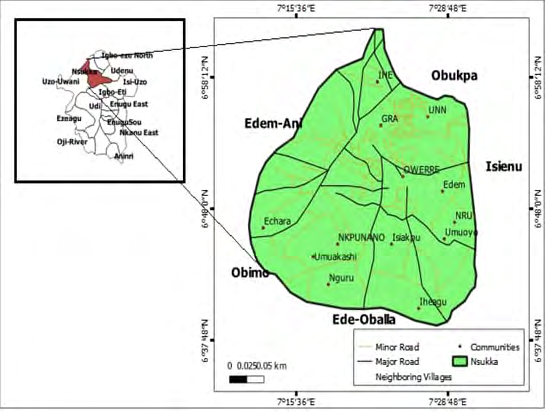
Historically, it was gathered that the progenitor of Nsukka, Ideke, was a very powerful and influential man who was able to conquer all the communities surrounding Nsukka in the ancient times [13, 33]. According to oral tradition, Ideke was a descendent from Attah Igala in the current Benue State of Nigeria and migrated to the current location, Nsukka.
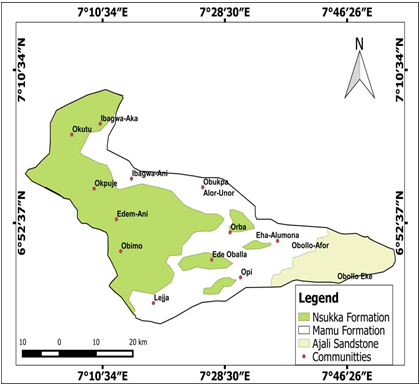
Dates obtained from the archaeological dating of finds by Hartle inform that Nsukka has been inhabited by humans as earlier as 2,555 B.C. Climate wise, Nsukka is in the tropics and characterised by two major seasons of rainy and the dry seasons, and the vegetation type is tropical forest (Figure 3).
Nsukka has beautiful traditional festivals that are celebrated among the communities that make up the culture circuit. These festivals include, Omabe, Onunu, Onwa-ise, Onwa-ato, Egorigo, Onwa-asaa, Akatakpa, Odoh, among others. These festivals have great traditional significance to the people. Nsukka people have notable traditional industries which include palm wine tapping, basket and mat making, broom making, palm oil processing, garri processing, among others. They cultivate agricultural crops like Yam (Dioscorea spp), cocoyam (Colocasia esculenta), cassava (manihot spp) maize (zea mays), among others. They also have some notable economic trees like palm tree (Elaise guineensis), kola nut (with different species such as Oji Igbo (kola acuminate, Oji Hausa kola nitida), Akuini (Garcinia kola), Nmimi (Kola tripetela), Ukwa (Treculia africana), Ukpaka (Pentaclethra macrophylla), African locust beans (Parki abiglobosa) etc. They also cultivate vegetable crops like green (Amarantus spp), fluted pumpkin (Telfera occidentalis) etc. Some of the crops are traditionally left in the ownership of women. Such crops include maize (Azizi oka), yam beans (Azam), Melon (Egusi), pepper (ose), Green (Inine), okro or okwuru (okra) and other vegetables.
Indigenous Trees, their Relevance and Associated Taboos in Nsukka Culture Area
During the ethnographic study, some indigenous trees were identified in the study area. These include Palm tree- Ukwu Nkwu (Elaeis guineensis), African breadfruit-Ukwa (Treculia africana), Kolanut-Oji (Cola acuminata), Iroko tree- Orji (Chlorophora excelsa), Native Mango-Ujuru (Irvingia gabonesis), Star apple-Udara (Chrysophyllum spp), and Oil bean tree-Ukpaka (Pentaclethra macrophylla), Native pear- Ubemkpuruaki or Ube Okpoko (Canarium schweinfuttii), among others. For the purpose of detailed study, only five of these were selected for this study and leaving the rest for future study. The selected trees include Palm tree (Ukwu Nkwu) Elaeis guineensis, Kola nut (Oji Igbo) Cola acuminate, Native mango (Ujuru) Irvingia gabonesis, Oil bean tree (Ukpaka) Pentaclethra macrophylla, and African breadfruit (Ukwa) Treculia africana. However, the selected indigenous trees and their associated taboos are illustrated in the table below:
| Indigenous Tree | Local name | Botanical name | Ownership pattern | Significance | Frequency |
|---|---|---|---|---|---|
| Palm tree | Ukwu-Nkwu | Elaeis guineensis | Inheritance, cultivation and natural process | Economic, cultural, medicinalsocial, nutritional and birth | 50% |
| Cola nut | Oji Igbo | Cola acuminate | Inheritance, cultivation and natural process | Economic, cultural, and nutritional | 10% |
| Native mango | Ujuru | Irvingia gabonesis | Inheritance, cultivation and natural process | Nutritional, economic | 12% |
| Oil bean tree | Ukpaka | Pentaclethra macrophylla | Inheritance and natural process | Nutritional, economic, medicinal and cultural | 5% |
| African bread fruit | Ukwa | Treculia africana | Inheritance, cultivation, and natural process | Economic, medicinal, and nutritional | 23% |
Table 1: A Tabular Illustration of the Sampled Indigenous Trees in Nsukka Area.
(Source: Field survey, 2020) Table 1: A Tabular Illustration of the Sampled Indigenous Trees in Nsukka Area.
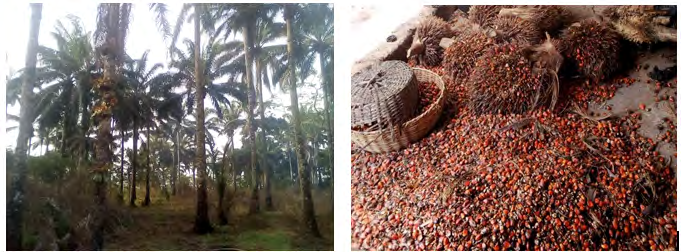
These indigenous trees are further discussed below for more understanding on their nature and significance among the Nsukka people. Palm Tree (Ukwu-Nkwu) Elaeis Guineensis The oil palm tree (Elaeis guineensis) (Figures 4 & 5) which is mostly acquired by inheritance is among the most cherished indigenous trees in Nsukka culture area. This may have informed the reason for the numerous norms and traditions that are associated with the tree in the study area [34]. Most of the time the umbilical cord of a baby is planted with the seed and the tree will be dedicated to the baby as he or she grows. Such palm trees are referred to as Nkwo- otuboro among the people. Also there is another norm and tradition which is literarily called Nkwu-Omugo in some parts of the study area. This is when a child is born, the father or any relation of the new born baby will go around if they see any ripened palm fruit within their own clan, they will cut it because it is believed that the palm fruit belongs to the new born baby for the period of one month. This is traditionally refrred to as Nkwu-Ochiri. When a young boy kills a species of bird known as Ochiri, a palm tree is being giving to the boy. This is because killing of Ochiri is traditionally translated as coming of age in Nsukka culture area.
Virtually every part of this tree is of either economic, social and/or health value for the people. Apart from palm oil, raw material for broom making, combustible material, local pomade (Ude-Elele), traditional soap-making (Ncha Ekete), palm wine (Nkwu-ocha), and palm kernel oil (Ude- aki) are all gotten from this tree. The traditional palm kernel oil can be used for the traditional treatment of convulsion in children with high fever. While the leaves are used to feed goats, the centre of the branches (traditionally known as Akpa) also has other utility values. Sometimes, it is used to construct Ulo-Avurivu (a local thatched-roof house). Also, the Akpa is used for making ceiling for mud houses. The Akpa can also be used in making local bed which is called Okpukpo. The Akpa can also be used to make local coffin for traditional burials. Also an aspect of the leaves is used in basket making. Apart from the numerous economic values of palm tree, it served some other socio-religious functions. For instance the tender part for the leaves is used as warning signals in shrines and in masquerade practices among the people. The Attama (chief priest) uses it for various incantations and communications with the spirit world.
Moreover, on the associated taboos, the numerous socio-cultural, economic and religious significance of palm tree made it to be special and central in the traditional life of the people. Some traditional sanctions in form of taboos were placed on the tree to preserve it for the community due its uncountable values to the people. For instance, it is an abomination for a woman to climb a palm tree let alone tapping of palm wine from the palm tree. A woman who does this is assumed to have committed sacrilege and should be punished accordingly in line with the tradition. It is also a taboo for any person to fall from the top of a palm tree and when occasionally this happens, that particular palm tree must be cut down after the burial of that person. This is a sign of bad omen that is beyond human comprehension. Also it is a taboo to steal any aspect of the palm tree. The culprit will not be treated as an ordinary thief but will be dealt decisively by the community. Most of the times, he is meant to be paraded naked within the village after strokes of whips by able bodied men in the community. Unlawful claiming of a palm tree as a kind of social intimidation attracts the wrath of the deity.
Kolanut (Oji Igbo) Cola Acuminate
Emphasis on kolanut is for the tree of cola acuminate (Figures 6 & 7) which is traditionally common to people in the study area. The kolanut tree is one of the economic trees valued in Nsukka culture area. Many of the kolanut trees found within the study area are not deliberately planted but they grow naturally. The tree is accorded with great respect by the people. Chinua Achebe infer that “The kolanut was a sacred fruit and had a very distinct and distinguished role to play in Igbo life and culture” [35]. Kolanut is seen as the king of all fruits among Nsukka people. It is a symbol of authority to communicate with the dead and invoke blessings or curses on the living. The Onyishis (Eldest men) and other traditional title holders will always have kolanuts with them.
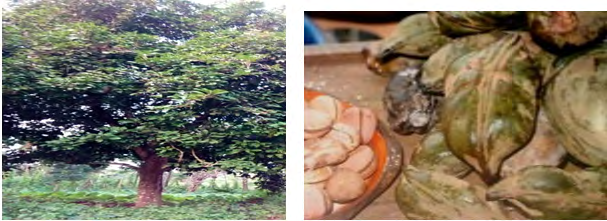
Figure 6: The Kolanut tree Figure 7: Kolanut seeds With all its significance within the study area, kolanut is demanded and presented in all traditional events, during which it is blessed, broken and eaten before progressing in the social activity [36]. Kola nut is one of the plants in Igbo land as well as in Nsukka which has become popular because of its use at various ceremonies. The kolanut signifies togetherness, unity and general love of one another and general co-existence of the people. Unlike in some other parts of the Igbo culture area, in Nsukka, kolanut is broken before being used to bless the people and the land. This is usually done by the eldest in age or by locality.
Kolanut is usually broken as a sign of affinity between the dead and the living during different ceremonies such as burial ceremonies, funeral ceremonies, marriage ceremonies, child naming, title taking, and traditional gatherings or visitations. They are also used in communicating to the gods during the early morning libations since the belief that one cannot talk to the gods without a kolanut. When used in ceremonies it shows good reception and acceptance. The diviners and medicine men use the kolanut along with other natural substances to invoke the spirits for communications and needful revelations.
There are some associated taboos that have been outlined to preserve this important socio-economic and religious tree of the study area. Kolanut tree has various protective sanctions and taboos associated with it which has enabled it to acquire the status it occupies today as a sacred tree among Nsukka people. For instance, it is an abomination for a woman to climb the kolanut tree and also to pluck the seed/pods or even to break the kolanut in any gathering where men, boys’ even young boys are present despite the age of the boy. This is because it is believed that the boy is older to that woman as far as kolanut is concerned and also that women are generally not clean. Women are forbidden to break kolanut in any traditional gathering. Even while presenting the kolanut to her husband, the woman must not be in her menstruation nor in Omugwo (postpartum period); hence women are seen as unclean during these periods.
Also it is a taboo for a person to defecate near or around a kolanut tree. This is because of the sacred nature of the tree. Stealing of kolanut from the tree is a great taboo hence the people’s belief that if one steals from a kolanut tree, the tree will cease to bear fruit. Also it is a taboo to fell kolanut tree because of the belief that they were planted by the spirits to be used as a unifying substance between the spirit and the living. Finally, it is a taboo to disrespect the hierarchy of traditional family tree when handling kolanut in social gatherings.
Native Mango (Ujuru)- Irvingia Gabonesis
This is one of the indigenous economic trees within the study area (Figures 8 & 9). The fruit which is locally referred to as Ujuru is a refreshing juice when ripened. The seed after consumption is dried under the sun, broken and later used in cooking draw soup which is locally known as Ofe-Ogbono. Due to the hardness of the tree, its wood is used in making mortar and pestle, and also in making the popular mortar for marching palm fruit known as Ikwe-Ekwu. Ikwe-Ekwu is a small canoe-like carved wood that is used in locally processing palm nuts to produce the popular palm oil used in cooking all kinds of food. Also the trunk of the tree is used as firewood in cooking likewise the shell from which the Ogbono is gotten, is also used as combustibles while cooking.
In addition, under the utilitarian purposes, the native mango (Ujuru) serves as local chewing sticks and is mostly obtained from the stem of plants. The leaves help in the replenishing of soil fertility when it falls, decays and becomes manure to the soil. Also the fruits of the native mango have immense health benefits for diabetic patients and the aged as well. Economically, the fruit, the seed, as well as the trunk of the native mango (ujuru) are good sources of income for the people. Also, the tree can be sold for timber production.
![Figure 6: The Kolanut tree Figure 7: Kolanut seeds With all its significance within the study area, kolanut is demanded and presented in all traditional events, during which it is blessed, broken and eaten before progressing in the social activity [36]. Kola nut is one of the plants in Igbo land as well as in Nsukka which has become popular because of its use at various ceremonies. The kolanut signifies togetherness, unity and general love of one another and general co-existence of the people. Unlike in some other parts of the Igbo culture area, in Nsukka, kolanut is broken before being used to bless the people and the land. This is usually done by the eldest in age or by locality.](/fulltextimages/7457/fig_6.png)
However, there are some taboos that are associated with this native mango. The tree (Ukwu-Ujuru) is much valued within the study area hence the existence of some protective sanctions and taboos associated to it in order to ensure its sustainability. For instance, the picking of the seed of the bush mango in the morning which is traditionally referred to as Ihuta Ujuru Ututu, by another person other than the owner, is a taboo within the study area. Apart from the owner, other persons can pick the seeds at other time except in the morning hours; otherwise it is referred to as traditional stealing. Also, persons are not allowed to pluck the seeds from the tree. The people believe that plucking the Ujuru fruit without allowing it to fall on its own will affect the tree, thereby making the tree not to bear fruit for the next succeeding year and would also make the unripe ones not The African oil bean tree (Pentaclethra macrophylla) (Figures Plates 10 & 11) is another notable indigenous tree in the study area. It is known to be among the earliest trees that are rarely domesticated. The tree is valued by the people for its numerous socio-economic functions. For instance it helps to improve soil nutrients (for improved farm produce) when decayed on the soil. The seeds of oil bean are collected, processed and used in cooking. The seed can also be chewed alone when prepared, as local snacks (Ugba).
to ripen on time. It is seen as sacrilege to default on these taboos in Nsukka culture area.
Oil Bean Tree (Ukpaka) Pentaclethra Macrophylla
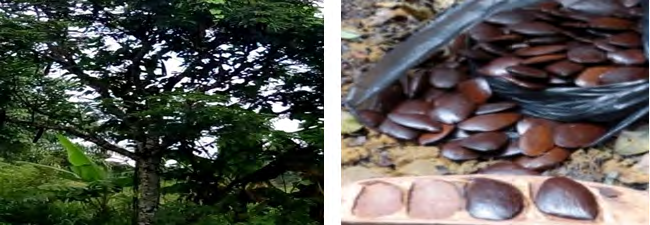
Also the dry pods of the tree as can be seen in Figure 11 above can be used as combustibles while cooking. The leaves from the tree help to build soil nutrients when fell on farm land. It serves as manure to crops. The Nku-Upkaka (the wood) is very good firewood for cooking. It is also worthy to note that ashes from the burnt woods and dry pods are good caustics for dying. This wood is also used by local sculptor in producing traditional mortars and pestles for domestic use; also heavy woods can be used by these local sculptors to produce Ugbo-Akwu (a canoe-like construction for local processing of palm oil). Farm implements like hoe, digger, axe and machete handles can also be produced from Pentaclethra macrophylla wood.
In addition, Pentaclethra macrophylla has great economic values to the people. Every part of the tree is found useful. The tree motivates the people into meaningful economic engagements in their localities. The leaves of the tree motivate bountiful harvest in agriculture due to its fertility values to the soil. It retains the soil moisture and prevents growing of weeds in the farm. From the medical point of view, the ripened fruit from Pentaclethra macrophylla heals wounds when applied on the surface. Some aspects of the tree like the seed, fruit pulp, leaf, and stem bark are claimed to have anti-inflammatory substances which is medically useful in the treatment of convulsions, sexually transmitted diseases like gonorrhoea. And can also be used as analgesic before traditional surgeries and so on. Another medicinal value of Pentaclethra macrophylla is that the root bark can be used to check excess body weight and obesity without visiting the modern hospital facility.
The taboos associated with the oil bean tree is that it is a taboo to harvest oil bean tree seed from the tree that is not your own. This is stealing of another person’s cash crop. But when the seed fells on its own, another person can pick them up from the ground. For the defaulter, when caught in the act of stealing, the defaulter will be paraded round the village naked after series of beatings. Also, there is a taboo that restricts harvesting of oil bean tree by trespassers. It is also a taboo to set fire in forests so as not to burn the tree and other economic trees. Defaulters are traditionally dealt with.
African Breadfruit (Ukwa) Treculia Africana
Treculia africana (Figures 12 & 13) is a multipurpose economic tree in the study area like some other indigenous trees discussed earlier. Both the seeds, leaves, stem, chaffs and roots are all useful in Nsukka culture area. This makes the tree of great economic value to the people. The seeds can be eaten in many forms by the people. For instance it can be dried, roasted, fried, and cooked as porridge or soup; or even be used as local snacks. The fruit has great nutritional values with good content of fats, protein, vitamins and carbohydrates [37]. Irvine [38] agreed with the informants that due to its (seed) low content of carbohydrates, it can be recommended to diabetic patients for the management of sugar level; and also that the seeds scan provide flavour for producing alcoholic drinks. Also, Enibe [39] supported the claim that it can be used as substitutes for some starchy foods like rice, yam, etc. Moreover, informants informed that grounded dried seeds can be used as floor for pastries (also see Keay [40]). The woods are put into some other domestic uses like roofing, charcoal production, firewood, timber production and so on.
The role of this economic tree in the traditional medicine cannot be overemphasised. Just like some other indigenous trees, Treculia Africana has cherishing medicinal values as noted by informants. For instance, the sap from the trunk can be used in treating burns; water used in boiling the roots can be used for children as worm expellers and as malaria syrup; water from the boiled bark can be used for the treatment of body rashes, neck swelling, cough and stomach disorder, among others. Economically, Treculia Africana tree has great value for the people mostly women who make a living out of the tree.
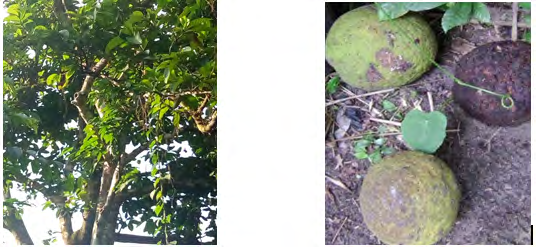
Some taboos are associated with this great economic tree in Nsukka culture area. For instance, there is a taboo restricting people from plucking the heads from the tree. Also when the heads fall on the ground, only the owner is culturally permitted to carry it for processing. Also persons are not expected to stand under the Ukwa tree that is carrying big head of Ukwa seeds because, it is a taboo for any of the heads to fall on any person. This is seen as bad omen in the whole of Igbo culture and tradition. Apart from the injury that will be sustained by this fall, the people of Nsukka also believe that it may lead to the death of the person and sometimes the head of the person may start growing big like the head of Ukwa. It is a taboo to steal any part of the tree. The defaulter is treated with disdain, and in the ancient times, such a person was usually banished from the community.
The Implications of Indigenous Tree Taboos for Nature Conservation in Nsukka Culture Area.
Virtually all the indigenous trees are forbidden by taboos to be cut down unnecessarily. Trees are significant to farmers within Nsukka community, because it provides fodder to livestock which are generally used during the dry season when little or no other fodder is available. The soil around the trees are sheltered from the hot sun by the tree and also enriched by the leaves that fall from the trees and livestock droppings which decomposes to enriches. The importance of trees in daily lives cannot be over emphasized. It is vital to mans existence because of the many ecological and economic functions it performs. It offers watershed protection, a regular supply of fresh water, and prevents flooding and siltation of river beds downstream. It also it lends stability to hydrological system. These trees prevent soil erosion, helps in maintaining the water, oxygen, carbon and nitrogen cycle; and help in the purification and improvement of air quality. Meanwhile, trees remain integral part of the people’s wellbeing through their numerous values in economic, medicinal, cultural, and traditional lives coupled with its tendencies for ecological sustainability.
In addition, the trees have considerable influence on the climate (temperature, wind, evaporation, humidity and rainfall) which in turn affects water supply, wildlife conservation, checking of erosion and aesthetic value which to a large extent contributes to the natural beauty of the tropics. Farmers protect these indigenous trees in their farms due to their great support to bumper harvest through provision of soil nutrients which is derived from the decomposition of leaves, barks, branches or fallen parts of these economic trees. The decomposition of the tree parts help to improve soil nutrients, soil infiltration, percolation and microorganisms activities. These trees also provide shade and protection during hot weather or windy period. This helps to reduce the effect of heat on the humans and animals thereby cooling the environment. So tree conservation can be said to be a good agent of climate change control in Nsukka culture area.
The Implications of Indigenous Tree Taboos for Culture Conservation in Nsukka Culture Area.
These indigenous trees are good agents of culture conservation in the study area no thanks to the activities of the various taboos that are attached to each of them. For instance, the palm tree perform significant traditional roles within the cultural setting in the study area. The palm wine (Nkwu-Enu) which is harvested from the palm tree is used in making libations during traditional ceremonies. It forms a greater part of traditional marriage ceremony and this informs the name Igba-Nkwu Nwanyi given to the ceremony by the people. Other traditional ceremonies like Iri-ji Ohuu (New yam festival), Ikwa-Onwu (burial/funeral ceremonies), masquerade festival, some others, are not celebrated without the presence of palm wine (a product from Elaeis guineensis) and kolanut (from Cola acuminate). Also the Omu (the tender palm frond) from the palm tree, is used in traditional religious and ritual practices in Nsukka area. For instance its presence in a place can signify sacrilege, out of bounds, sacredness, and so on. It also serves as conservation medium for various traditional practices among the people.
More so, the kolanut is regarded as a symbol of relationship and affinity between the living and the dead in Nsukka culture area, and also as a medium of communication with their god who is culturally referred to as Ezechitokike (God of creation). It aids in their ancestral worship and consultations during cultural, socio-religious and socio-economic activities. Kolanut has great influence on the people’s world view. They have some philosophical interpretations that are peculiar to Kolanut in Nsukka culture area. For instance there are some philosophical and cultural interpretations to number of cotyledons (halves) in a particular kolanut. For instance, a kolanut must have more than two cotyledons to send a good sign to the living. While a kolanut with seven cotyledons is seen as the mother of all kolanuts (with accompanied celebrations), the one with four cotyledons is seen as acceptance from the spirit word concerning any traditional matter, and such kolanuts signifies the traditional four market days (Eke, Orie, Afor, and Nkwo), etc. When breaking the kolanut a smaller portion is usually thrown to the ground as the share of the ancestors.
In addition, among the cotyledons in kolanut, there are females and males. During marriage ceremonies, kolanuts used for the blessing of the marriage is expected to have both male and female cotyledons to signify complete fruitfulness in that marriage. In addition, kolanut is used in oat taking ceremony, rain making, and cleansing of abomination and to invoke the ancestors, which is done through the mediators, or the officiating priest traditionally referred to as the Attamah-mma.
Moreover, some other indigenous trees like the native mango, oil bean and bread fruit signifies feminine in Nsukka cultural milieu. This explains why such trees are owned and processed by women alone. A woman’s socio-cultural and economic value is also measured by the number of such trees and /or their produce in her possession. Men are culturally forbidden from such trees. Culture demands that a woman can show her magnanimity and hospitality towards another by given out this produce or even the tree to another woman who may not have a particular tree among these three indigenous trees (oil bean, bread fruit and native mango).
The Challenges Faced in the Preservation of Indigenous Trees in Nsukka Culture Area
These indigenous trees are faced with some challenges not minding their various socio-economic, cultural and religious significances. For instance, regeneration rate for some of them seems inadequate as a result of indiscriminate felling for various construction uses. There is also difficulty in harvesting some of them manually by the local farmers. This makes the harvesting process so cumbersome and time-consuming for these local farmers. All the indigenous trees that were discussed in this work have this particular challenge. This does not only discourage the local farmers but also discourages the younger generation from upholding the culture and the economic relevance to ensure sustainability. Also the quest for white collar jobs and other materialistic lifestyles have made the younger ones not to show interest in these indigenous trees. Some of these trees sometimes are abandoned after the death of their aged parents, for some other economic activities.
In addition, civilization and modern religion are really factors against the efficiency of these taboos that were designed to protect these indigenous trees. Of recent these taboos have witnessed series of abuse and neglects. Penalties are now being overlooked to give room for more abuse of the efficacy of these taboos. Some of these indigenous trees grow very tall thereby making harvesting very cumbersome. Their heights look scary most of the time that their produce is abandoned by the owners. Sometimes, dangerous reptiles like snakes and the likes inhabit these trees (i.e. palm trees, etc,) making it more difficult to be climbed for harvesting. Moreover, some of these trees have stunted growth and take longer time before bearing fruits. Other times, their production rate is irregular that the owner may not be able to know when to expect the next produce form the tree.
Conclusion
This study is an ethnographic investigation of indigenous trees, their associated taboos and implications for nature and culture conservation in Nsukka culture area. The selected indigenous trees have a lot of uses ranging from economic, socio-cultural, religious and medicinal uses within the study area. In addition, they provide raw materials for the local industries [41, 18]. Also some of these indigenous trees have medicinal values for both humans and animals, and other body-building mechanisms. Further scientific researches may be necessary to confirm the medicinal values claim by informants concerning some aspects of these indigenous trees.
Taboos were discovered as among the protective measures for these indigenous trees. Taboos have great socio- cultural and economic relevance to traditional communities [42, 14]. The people designed these taboos to check unlawful use and abuse of these indigenous trees. These trees (with the help of the associated taboos) have proven to have great implications for nature and culture preservation in the area. They play significant role in the cultural life of the people and also in the environmental protection. They also help in the purification and improvement of air quality. Some impediments to their sustainability were outlined in the study. Such as stunted growth, irregular growth season, lack of interest from the growing generation, strenuous harvesting and processing procedures, abuse of peculiar taboos, among others.
However, to manage these impediments, traditional conservation practices should be encouraged and made to blend with modern conservation approaches. Harmful harvesting practices on these indigenous trees should be discouraged and there is need to encourage regeneration of these trees. Modern processing technologies need to be provided to ease strenuous harvesting and processing. There is also need for more agro-science research for these trees in the areas of seed types and life span. Media campaign activities (like radio jingles) are also recommended. More so, these taboos should be encouraged by the various traditional custodians of these communities to encourage conservation of these trees and biodiversity [43]. The people in the study area strongly believe that these indigenous trees have spiritual significance and should not be defiled hence they may vanish if defiled. This informs part of the reasons for the existence of taboos and other socio-cultural sanctions that are designed to preserve these indigenous trees which are believed to be special gifts from God. Some of them are celebrated with special festivals in the study area.
References
-
Atherton JH (1983) Ethnoarchaeology in africa. In: African Archaeological Review 1: 75-104.
-
Harris DR, Hilllman GC (1989) Foraging and Farming: The Evolution of Plant Exploitation. Unwin Hyman, London 95(3): 541-543.
-
Porteres R (1962) Berceaux Agricoles Primaries sur Le continent African. Journal of African History. 5(2): 195- 210.
-
Harlan JR (1989) Wild Grass-seed Harvesting in the Saharan of Africa. In: Harris DR, Hillman GC (Eds.), Foraging and farming. The Evolution of Plants Exploitation, Unwin Hyman, London, pp: 79-98.
-
Harlan, Stemler ABL (1976) The Race of Sorghum in Africa. In Harlan JR, de WET JMJ, Stanler ABI (Eds.), Origins of African Plants Domestication. The Hague: Mouton, pp: 465-478.
-
Hammersley M, Atkinson P (2007) Ethnography: Principles in practice. 3rd (Edn.), Taylor & Francis, London, pp: 288.
-
Fetterman D (2010) Ethnography: Step by step. 2nd (Edn.), Sage, London, 21(3): 389-390.
-
Denzin, Lincoln (2011) The Sage Handbook of Qualitative Research. Sage Publications, USA, pp: 992.
-
Reeves S, Kuper A, Hodges BD (2008) Qualitative research methodologies: ethnography. British Medical Journal 337: a1020.
-
Okafor JC (1985) Selection and Improvement of Indigenous Tropical Fruit Trees: Problems and Prospects. Journ.al of Tropical Forest Resourses 1(2): 87-95.
-
Okafor JC (1990) Indigenous Trees of the Nigerian Rainforest. A Paper Presented in a Symposium on the Potentials for Domestication and Rebuilding of Forest Resources. Yaounde, Cameroon, pp: 34-38.
-
Sigmund F (1955) Totem and Taboo: Some Points of Agreement between the Mental Lives of Savages and Neurotics. In: Strachey J (Eds.), The Standard Edition of the Complete Psychological Works of Sigmund freud. Hogarth Press, London, UK, 13: 1–255.
-
Isichei E (1976) A history of the Igbo people. Macmillian Press Ltd, London, 4(8): 169.
-
Young HP (2008) Social Norms. In new Palgrave Dictionary of Economics, ed. Steven N. Durlauf and Lawrence E. Blume. Palgrave Macmillian New york.
-
Meyer R, Victor B (2009) Food taboos: their origins and purpose. Journal of Ethnobiology and Ethnomedicine 5(18).
-
Nweke C, Nwoye C (2016) Igbo ideas of preserving nature and the globalizing world. Mgbkoigba Journal of African Studies 5(2): 104-115.
-
Nwankwo EA (2012) Sustainable heritage management in Nigeria for tourism development. Journal of the Humanities, Nsukka 20: 115-124.
-
Okpoko PU, Emeafor OF (2018) Indigenous plants and their uses among Nsukka people. Journal of Tourism and Heritage Studies 7(1): 40-57.
-
Kamau MW, Thuita T (2017) Assessment of indigenous trees species conservation in subsistence agricultural production system: a case study of Lari sub- country Kiambu country. Unpublished Undergraduate thesis, University of Nairobi, Kenya 1(2): 55-63.
-
Esegu JFO, Ondia RK, Byabashaija BD, Kidiya JM, Basoga M (2004) Traditional uses of indigenous trees species. Uganda Journal of Agricultural Sciences 9: 367-371.
-
Ugwumba CO, Wilcox GI, Aniaku CO (2013) Economics of Irvingia excelsa ‘Agbono’ kernel production in Nsukka local government area of Enugu state, Nigeria. ARPN Journal of Agricultural and Biological Science 8(5): 399- 404.
-
Adaigwe LC (2005) The use of tree crops and edible plants in Orsu L.G.A of Imo state. Unpublished Undergraduate Thesis, University of Nigeria, Nsukka.
-
Ajake AO (2012) The role of forest trees in indigenous farming systems as a catalyst for forest resources management in the rural village of Cross River State, Nigeria. Global Journal of Human Social Science Geography and Environmental Geosciences 12(12): 13- 24.
-
Agu SC, Okagu GO (2013) An ethno-archaeological prespective on oil palm tree (_Elaeis guineensis_ Jacq) in old Nsukka division of Enugu state. IKENGA International Journal of African Studies 15: 1-19.
-
Anene OC (2005) The socio-cultural values of economic trees in Igbo land: a case study of Nnewi Anambra state. Unpublished Undergraduate Thesis, University of Nigeria, Nsukka, Nigeria.
-
Murtala RU, Takur RU, Garba K, Adamu N, Abdulrashid I (2013) Indigenous trees inventory and their multipurpose uses in Dutsin-Ma area Kastina State. European Scientific Journal 9: 288-300.
-
Ampitan TA, Adelakun KM, Kareem SA (2017) A survey of indigenous tree species used for domestic purpose in New-Bussa, Nigeria. International Journal of Innovative Biosciences Research 5(1) 54-63.
-
Obineche JO (2017) Kola nut: revisiting the Igbo socio- cultural values and identity. International Journal of Arts and Humanities (IJAH) 6(2): 94-107.
-
Eze CC (1994) The value of economic trees in food production practices of Igbo land in Obimo. Unpublished Undergraduate Thesis, University of Nigeria Nsukka, Nigeria.
-
Ogwu MC, Osawaru ME, Obayuwana OK (2016) Diversity and abundance of tree species in the University of Benin, Benin City, Nigeria. Applied Tropical Agriculture 21(3): 46-54.
-
Ijeomah HM, Ugwu CC (2016) Utilization of selected edible forest and wildlife resources in Nsukka zone of Enugu state, Nigeria. Nigerian Journal of Agriculture, Food and Environment 12(1): 44-51.
-
Armachius J, Vumilla Z (2017) Moringa oleifera a potential tree for nutrition security in sub-Sahara Africa. American Journal of Research Communication 5(4): 1-14.
-
Onyishi S, Ozioko JO, Ezugwu C (2006) Origin and brief history of Nsukka people. Graduate Association Journal, Nsukka, pp: 6-7.
-
Nweze ID (2007) Traditional method of oil palm processing and marketing in Nsukka town in Nsukka L.G.A. of Enugu State. B. A. project of the Department of Archaeology and Tourism, U.N.N. (Unpublished).
-
Achebe C (2012) There was a country: A Personal History of Biafra London: Penguin Press, pp:333.
-
Ubesie TU (1975) Oji Akpa Uche (An anthology of Igbo verse) Ibadan: Oxford University Press.
-
Onyekwelu JC, Fayose OJ (2007) Effect of Storage Methods on the Germination and Proximate Composition of _Treculia africana_ Seeds. Paper Presented at the Conference on International Agricultural Research for Development, Tropentas, Germany.
-
Irvine JI (1981) Comparative Study of the Chemical Composition and Mineral Element Cotnent of Treculia africana Seeds and Seed Oils. Journal of Food Engineering, 40: 241-244.
-
Enibe DO (2007) Treculia africana Consumer Acceptability and Utilization for Food Security and Industrial Development. In: Olufajo OO, Omokore DF, Akpa GN, Sanni SA (Eds.), Proceedings of the 41st Annual Conference of the Agricultural Society of Nigeria (ASN) held at ABU, pp: 455-458.
-
Keay RWJ (1989) Trees of Nigeria: A Revised Version of Nigeria Trees. 1 and 2 (Vol.), American Journal of Plant Sciences, Stanfield DP, Clarendon Press, Oxford.
-
Ezike JN (1998) Ethnoloarchaeological investigation into the beginning of Agriculture in Nsukka Division. Ph.D. Thesis presented to the Department of Archeology, UNN.
-
Cole HL, George JM, Andrew P (1998) Class Systems and the Enforcement of Social Norms. Journal of Public Economics 70(1): 5–35.
-
Oji CC (2003) Archaeological Formation in Nsukka town Unpublished BA. Thesis of Archaeology department University of Nigeria Nsukka.
- The Indispensable Role of Informal Caregivers in Supporting the Aging Population
- Socio-Religious Significance of Kamakhya Temple in Guwahati, Assam
- Is Anthropology Possible?
- A Contribution to the History and Paleobiology of Harput/Elazığ Türkiye and Its Surroundings
- A Study on the Cowrie Shells of the Dimasas in Assam
- The Significance of International Organizations Cooperation in the Efficient Resolution of Global Conflict