
An Anthropological Investigation of Ethnomedicinal Plants Used in Cure of Skin Diseases among the Tribals of Bajag Forest Range of Central India
The present study focuses on a brief review on ethnomedicinal plants used for curing skin diseases among the tribals of Bajag forest range situated in Dindori district of Madhya Pradesh. The Bajag forest is plentiful in ethno medicinally important flora. The paper attempts to explain perception of tribals viz. Baiga, Gond and Kol etc. of Bajag forest range regarding various types of skin diseases and its mode of treatment. In order to collect authentic data, intensive Anthropological field work has been conducted by using various Anthropological tools and techniques. This study is based on empirical investigation and utilizes the first hand information and hence delineates medicinal plants traditionally used by tribal population of Bajag forest range of central India. Total thirty one plants are enumerated for this purpose. Study also advocates for preservation of indigenous knowledge system of tribals and strongly recommends for translating the old native concepts of healing in modern understanding.
Introduction
Anthropology is a unique discipline and a holistic science of Human which aims to study origins, variation, nature and human evolution. It has evolved historically, blending the biological and cultural facts and their perspectives. On one hand Anthropology links with natural sciences and life science, while on the other it shares common frontiers with social sciences and humanities. The traditional or core branches of Anthropology have developed as a distinct academic disciplines, such as Socio-Cultural, Physical, Archaeological and Linguistics. Applied and Action Anthropology, Ecological and Medical Anthropology are very important and useful sub branches of Anthropology. Different branches for anthropology and human studies amalgamates with other science disciplines, such as Ethnobotany, Ethnozoology Ethnophamacology, Ethnophysiology, Ethnomathematics and grouped together as Ethno- Science.
Medical Anthropology as a sub branch extensively deals with the management of health and provides information on the concept of health, hygiene, cure and medicine. Three sub- fields of Anthropology which are of direct relevance to health management include Medical Anthropology, Ecological Anthropology and Ethnomedicine.
Anthropologists in their study of different cultures of the world have also studied the health problems under broad headings of Ethnomedicine. The term ‘Ethnomedicine’ comprises of two words where ‘Ethnos’ has Greek origin which means group or a community of people or population and ‘Medicine’ derives its origin from Latin ‘Medicus’ which stands for a physician; in this way traditional use of medicines (bio-social) by a community is called traditional medicine / Ethnomedicine. Ethnomedical system deals with causes and prevention of illness; diagnosis and treatment such as ethnophysiology, ethnopsychiatry, practitioner- seeking behavior, and ethnopharmacology covered under Ethnomedical research.
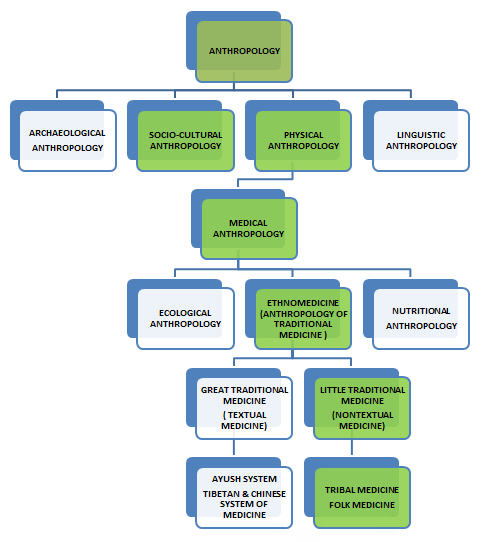
Ethnomedicine examines and translates health-related knowledge and theories that people inherit and learn by living in a culture. Each society has a particular medical culture or ‘’Ethnomedicine’’ [1]. The term Ethnomedicine may be described as the study of beliefs and practices relating to illness as well as hygienic, preventive and curing practices in the different ethnic populations. It includes the study of the cultural concept of the health, diseases and illness, as well as the nature of local healing system [2]. Therefore, it is not merely a topic of concern in Ethnobotany, medical science, or Cultural Anthropology, but a multidisciplinary perspective that includes Anthropology, Botany, Zoology, Chemistry, Pharmacology, Toxicology, Medicine, History, or even Linguistics.
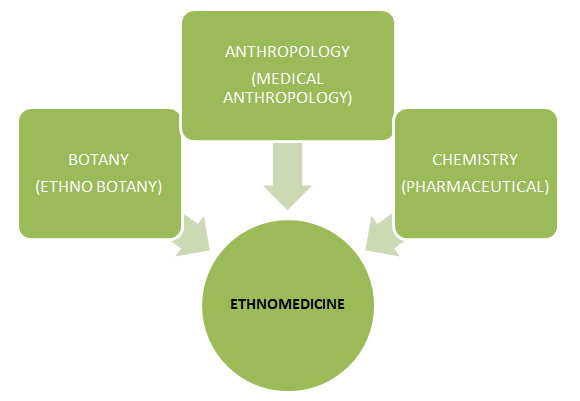
Ethnomedicine has been nourished by Anthropology on one hand and Botany on other. The main concern of the Anthropologists is to collect information about the traditional medical uses of plants or animal resources among simple or complex human societies and to provide new biological resources for the humankind. Botanists and Zoologists contribute in identification of flora-fauna, determination of correct nomenclature and procurement and utilization of the medicinal flora and fauna. While the objectives of biologists are mainly utilitarian, the Anthropologist mainly concerned with narration of the influence and adaptations of plants and animals on human culture and societies.
Tribal medicine is in fact mother of all other traditional medicine systems. The term ‘traditional’ though a recent coinage, the field of traditional medicine it not a new one and traces its origin since time immemorial, hence, creates confusion in many minds from lay men to professional. It is much desirable at the outset to explain clearly the meaning of the term and the logic behind the term to be called what it is today. WHO says that traditional medicine is the sum total of the knowledge, skills, and practices based on the theories, beliefs, and experiences indigenous to different cultures, whether explicable or not, used in the maintenance of health as well as in the prevention, diagnosis, improvement or treatment of physical and mental illness. W.H.O. has estimated that 80% of the people in the world believe in traditional medicine for primary health care needs. The traditional medicine is twin, centered on two traditional systems of medicine.
Little Traditional system of Medicine: That can be used by tribal and rural societies e.g. tribal medicine and folk system of medicine, Baiga medicine, Munda medicine, Santal and Gond medicines etc, they all are little traditional medicine.
Great Traditional system of Medicine: Medicine mentioned in various ancient and medieval texts e.g. Ayureveda, Unani, Siddha, Yoga and Naturopathy, Tibetan and Chinese system of medicine. This type of medicine called textual/text aided or great traditional medicine.
Indian tribal populations are the indigenous groups which inhabit widely hilly, forest, desert and costal area in different concentration. Tribal groups are homogeneous, culturally firm having developed strong magico-religious health care system of their own and they live and survive in their habitats. Although the concept of well-being and the notion of the disease varies between different tribal groups, yet in tribal habitat, if a person is usually considered to be afflicted with some diseases or if he/she is incapable of doing the routine work which is usually being expected to be carried out by that individual in the society, symptoms such as pains and ache, weakness, prolonged cough, mild fever, wounds etc. are not taken seriously as symptoms of diseases [3]. The incidence of various diseases is high among the tribals of India in certain parts of Himachal Pradesh, undivided Uttar Pradesh, Madhya Pradesh, Chattisgarh, Bihar, Jharkhand, Odisha, Andhra Pradesh and Maharashtra. Most of the studies made on tribal community have indicated the importance of understanding the socio-cultural dimensions of health and diseases. A number of deities are often associated with diseases as diseases are connected with the interference of the supernatural agency; the nature of treatment in such cases is also made accordingly. Among most of the tribal communities, numbers of specialist are there from whom services are taken at time of illness.
Health may be defined as a state or condition of physical, mental, social and spiritual well-being which enables a person to take proper care of his/her own self, to live happily and to perform the required social roles as a responsible member of society with commitment to promote the general well-being of others and to share their sufferings [4]. In different tribal societies the concept of health, fitness and diseases varies. They attribute any misfortune, including diseases and death, to the displeasure of their own ancestors, supreme supernatural being, or of other God. It is believed among them that the supernatural beings cause disease as a punishment for any immoral behavior or violation of social norms.
Health is one of the most important and common factor to consider along with other related factors for understanding a society. In fact every society, simple or complex, has their own concept of health, as part of their culture like if a person is usually incapable of doing routine work he or she might be suffering from any disease. In tribal society certain norms, values and ideals also exist regarding the health and diseases.
Today about 80% of the world’s population rely predominantly on plant part extracts for health care. According to data released by WHO, Ethno-medicine has maintained its popularity in all regions of the world and its use is rapidly expanding in the several countries, for example
- In China traditional herbal preparation account for 30- 50% of medicinal consumption.
- In Ghana, Mali, Nigeria and Zambia, the first leprosy treatment for 60% children with malaria is through the use of herbal medicines.
- In San Francisco, London and South Africa, 70% of people living with HIV/AIDS are using traditional medicine.
Four general types of herbal medicine exist which are Asian, European, Indigenous and Non-Western. Many like the Asian and European systems go back thousands of years, appear in the pharmacopoeia, and with such a tradition of use are better understood than those of indigenous origins that are often only orally or secondarily recorded. Indigenous medical systems are the most diverse and are still practiced where such cultures are intact, but are continuously evolving as contact with other cultures continuous. The knowledge may reside exclusively with traditional healers, or be generally known [5].
In 1820, extraction of Quinine from Cinchona used to treat malaria and babesiosis and treatment of malaria due to Plasmodium falciparum expanded the arena of Ethnopharmacology and ethnomedicine. Development of crude drug in the form of biologically active agents and their usage in medicine is an important part of the science of Ethnopharmacology and ethnomedicine. Both are treated as amalgam of knowledge arising out of various disciplines as well as very close to cultural construct. Elisabetsky and Etkin in their overview on Pharmacology opine that, “Rather than a discrete discipline whose practitioners share an intellectual vision and methodology, ethnopharmacology is an amalgam of perspectives, primarily those of pharmacology, pharmacognosy, anthropology, and botany. The uniquely biocultural perspective on ethnopharmacology offered by medical anthropology underscores that health and healing are culturally constructed and socially negotiated. Local, including Western, knowledge both emerges from and undergirds the complex relations among people, ideologies and material cultures, plants and other species, and the physical environment.” Ethnopharmacology is multidisciplinary while Ethnomedicine which is potentially used as an alternative healing system is an integral component and holistic. Ethnopharmacology is bioscientific study of indigenous drugs but does not explicitly address the issue of searching for new drugs. Medicinal plants are important elements of indigenous medical systems in many parts of the world, and these resources are usually regarded as a part of traditional knowledge of a culture [6]. But both are need of the day for better quality of life and enhancing status of human health and well-being. Masses are more inclined to ethnomedicine due to 3 ‘A’s viz. accessibility, associablity, and affordability in developing countries. However, this leads to a new debate between ethnomedicine and modern medicine. A more pertinent question arises regarding need on integration of western medicine, traditional knowledge and ethnopharmacology. One factor behind ethnomedicine/ traditional medicine receiving wider acceptance over western medicine is due to their availability in abundance in local environment. Many from developing countries believe that as the ethnomedicine is available in local biodiversity, so, why to pay much to pharmaceutical companies. As the cost of manufacturing is also very high in case of western medicine and it has side effects too, hence, people find it more appealing to go for ethnomedicine and as a better option.
The drug discovery process has become very complex and capital-intensive and companies with lead discovery as a greater bottleneck [7]. The usual distinctions between breakthrough and me-too drugs may not be very meaningful and today the pharmaceutical industry is technology intensive, not as innovative due to shortage of new lead structures with the strict regulatory processes adding more years to the discovery cycle and increasing cost due to postapproval or post-marketing withdrawals [8].
In developed countries, 70% and 80% population have used “alternative” or “complementary” medicine, (a term also applied for traditional medicine) because they believe that this type of treatment is more “natural” and therefore “risk-free”, or as an adjunct to treatment for a chronic, debilitating or incurable disease [9].
Moving ahead, in the above debate, Elisabetsky and Etkin (2011) eloquently explain on the choice of people regarding adaption of healing systems. Both say, “The choice between consuming medicinal plants or western pharmaceuticals cannot be reduced to a matter of availability and efficacy. Kutalek and Prinz (Ethnopharmacology and Health Care in the Developing World) discuss the role of ethnopharmacology in health care, and how inadequate drug use is associated with skepticism towards western pharmaceuticals. On the other hand, the question of adverse effects of plants used in indigenous medicine and their impact on public health is discussed by Heinrich (Safety Issues in Traditional Remedies), especially considering acute and chronic toxicity, drug interactions, adulterations and the quality of botanical products.” Discussing the interplay of culture and ethnomedicine/ indigenous knowledge, it is well understood by medical anthropologists that etiology and healing of diseases is well engrained in cultural system of traditional society and both cannot be observed in isolation. Medicine being part of culture, origin of disease and healing all result from human and environment interaction. Whenever there appears any imbalance in the interface between human and environment, the phase of disease arises. The most common perception of people in indigenous cultures is that if human- environment interaction is hampered due to one reason or another, then this will inflict pain, agony, suffering and this all will lead to disease. In most of the traditional societies, disease, illness and healing are perceived as imbalance between environment and society and culture is how we respond to such environmental balance. Hence, indigenous/ traditional knowledge is basically about how humans deal with environmental challenges and from that itself we have derived ethnomedicine and ethnopharmacological knowledge.
Ethnomedicine and Ethnopharmacological knowledge are so deeply embedded with culture that indigenous populations/ tribal societies are using such knowledge to establish their self-identity and self-assertion i.e. they are asserting their identity on the basis of indigenous knowledge and medical knowledge system. It can be very well correlated to the concept of ‘indignity’. In contemporary contexts traditional healing finds new interpretations by applying ancient cultural knowledge to address trauma and restore and sustain holistic wellbeing. Reinstating pride in cultural identity, connection to country, and involvement in community are critical elements of traditional healing systems. Many communities also still have access to traditional healing practices such as bush medicines and spiritual healing. Nationally, organisations are learning from and incorporating traditional healing methods into their healing work. ‘Healing gives us back to ourselves. Not to hide or fight anymore. But to sit still, calm our minds, listen to the universe and allow our spirits to dance on the wind … [and] drift into our dreamtime. Healing ultimately gives us back to our country. To stand once again in our rightful place, eternal and generational. Healing is not just about recovering what has been lost or repairing what has been broken. It is about embracing our life force to create a new and vibrant fabric that keeps us grounded and connected.’ According to Caruana nurturing a sense of ‘cultural distinctiveness’ is integral for spiritual, emotional, [and] social health and well being and is also an important part of strengthening communities. This can be facilitated through the recovery of language and traditions, art, dance, stories, traditional food and medicines. (https://healthinfonet.ecu.edu.au/learn/ health-topics/healing/traditional-healing/)
Skin Diseases
Skin diseases are very common and are reported in under developed, developing and developed nations. Skin diseases are occurring both due to bacterial and fungal infections due to poor hygienic practices, contaminated water and poor sanitation.
Skin diseases are one such common disorder, effecting people worldwide, particularly in rural areas of developing countries due to poor sanitation and inattentiveness to dietary food supplements [10].
It is found in all ages with an incidence of 34% of all occupational diseases [11].
Common skins ailments include eczema, leucoderma, ringworm, itching, wound, scabies, swelling and many others without distinct symptoms and are caused by a variety of microorganisms and uncomfortable environment [12].
Microorganisms responsible for skin infections can be bacterial, fungal, parasitic or viral in nature. Many allopathic drugs prescribed for skin diseases have adverse effects. Consequently, there is an increased interest and confidence in alternative therapies, like phytomedicine, in the treatment of skin ailments [13].
Currently, many natural products from plants have been used by various cultures all over the world to treat skin diseases or their symptoms caused by microorganisms [14].
The valuable traditional knowledge of herbal medicines requires more scientific researches to check the properties of plant and phytochemical analysis for the discovery of new drugs and compounds [15].
Several studies are reported on skin ailments, however, there is paucity of literature on such ailments on the populations of Bajag forest range and hence this extensive study was undertaken.
The skin is the largest organ of the body, accounting for about 15% of the total adult body weight. It performs many vital functions, including protection against external physical, chemical and biologic assailants, as well as prevention of excess water loss from the body and plays a role in thermo regulation. The skin is cutaneous; with the mucus membranes lining the body’s surface [16].
Skin disease refers to disorders of exclusively or predominantly the superficial layer of the skin. Skin disease is a common ailment. Skin problems are generally among the most common diseases seen in primary care setting in tropical areas. Skin complaints affects all ages from the neonate to the elderly and cause harm in number of ways. The physical examination of the skin and its appendages, as well as the mucous membranes, forms the cornerstone of an accurate diagnosis of cutaneous conditions. Skin diseases come in different forms, basically classified as non- contagious and contagious diseases, the primary which is bacteria, fungi, viral and parasites diseases [17].
The tribals of Bajag forest range viz. Baiga, Kol and Gond of central India are still dependent upon plants for their primary health care needs and treatment of diseases. They collect the medicinal plants from the forest and use as medicine and prepare drugs through traditional knowledge. They prepare drugs in various forms, like they use decoctions, infusion, maceration, bath, poultices and compresses. In the present study an attempt has been made to present traditional knowledge and uses of ethnomedicinal plants which are used by the tribals of the study area.
Research Methodology
Field work played an important and necessary role in this study entitled “An Anthropological Investigation of Ethnomedicinal Plants Used in Cure of Skin Diseases among the Tribals of Bajag Forest Range of Central India” The field work for the study was conducted in the year October 2013 to January 2015.
| S. No. | Number of field visits | Field work schedule |
|---|---|---|
| 01 | First visit | 05 October 2013 to 20 October 2013 |
| 02 | Second visit | January 2014 to March 2014 |
| 03 | Third visit | April 2014 to July 2014 |
| 04 | Fourth visit | October 2014 to January 2015 |
| 05 | Total visit | 11 Months 15 days |
Table 2: Field Work Schedule during the year 2013–2015.
For Anthropological fieldwork study, researchers visited to the field and spend a long time in the field staying with the tribal community of Bajag forest range and Bajag development block. Researcher observed all social-cultural phenomenon during the study and recorded them systematically. In the field, researcher took help of more than one technique for collecting data; involving personal interviews and focused group discussions, ethno botanical surveys and identification of plants with the help of local people, indigenous healers, botanist etc and skin ailments were identified with the help of Medical Officer and OPD Register of Primary Health Centre located at Jalda village in Bajag Block. The photographs of the skin ailments were taken and shown to the PHC doctors in order to identify and cross check them with claims of local healers. The photographs of various plants and herbs were taken and were identified with the help of Prof Y.K. Sharma, Head of the Botany department at University of Lucknow.
Demographic and Ethnomedicinal data of the study area was collected from villages of Bajag forest range of Dindori district. A detail interview schedule was developed for ethnomedicinal and health related investigations.
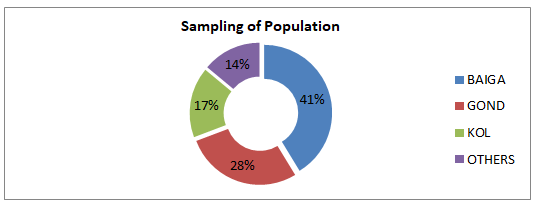
In order to receive a representative sample from the selected population, researchers had applied both probability and non-probability sampling techniques as the present study is a qualitative research work. Sample size for present study was 720 individuals including 300 Baiga, 200 Gond, 120 Kol and 100 others tribal persons. The Researchers have collected data from the tribal male and females, local traditional medical practitioners (Gunia), witch doctors (Panda), head of PHC-CHC and private health practitioners.
| S.No. | Name of community | Number of respondents |
|---|---|---|
| 01 | Baiga | 300 |
| 02 | Gond | 200 |
| 03 | Kol | 120 |
| 04 | Others | 100 |
| 05 | Total respondent -720 individual |
Table 1: Sample size.
The following techniques or methods were used during field work in data collection.
Interview: The interview method not only helps in collecting detailed information but also in-depth information. Direct or open ended interviews used by researchers. Interviews were conducted with the tribal male – female, traditional medical practitioner (Guniya, Vaidyas), Traditional birth attendant (Soon Mai) Panda and modern medical practitioners, local forest officers and guards etc. In depth interview were conducted to cover personal and family information, situation and status of health and health seeking behaviors, illness affecting the family of target population.
Observation: Observation is probably the oldest method used in scientific investigation. Researchers adopted participant, non-participant and quasi participant observation methods for present study. Some of the information collected through interviews was cross checked through observation and check lists were made to note the nature and condition of the house hold, environment and the way ill persons were receiving treatments. Observations were also made in Primary and Community Health Centers; also observed where the ill persons usually go for treatment, and most of the time these were Traditional Medical Practitioner’s places. This helped to understand the researchers the kind of treatment received by the tribals. Researchers also observed how and from where traditional healers utilize the plants and other derivatives to prepare drugs and the cost of treatment was also note down through observation.
Ethno – Botanical Surveys: Plant parts collected during the fieldwork. The plants were identified with the help of Department of Botany University of Lucknow and published secondary sources. Some photographs were taken during the field survey of the plants.
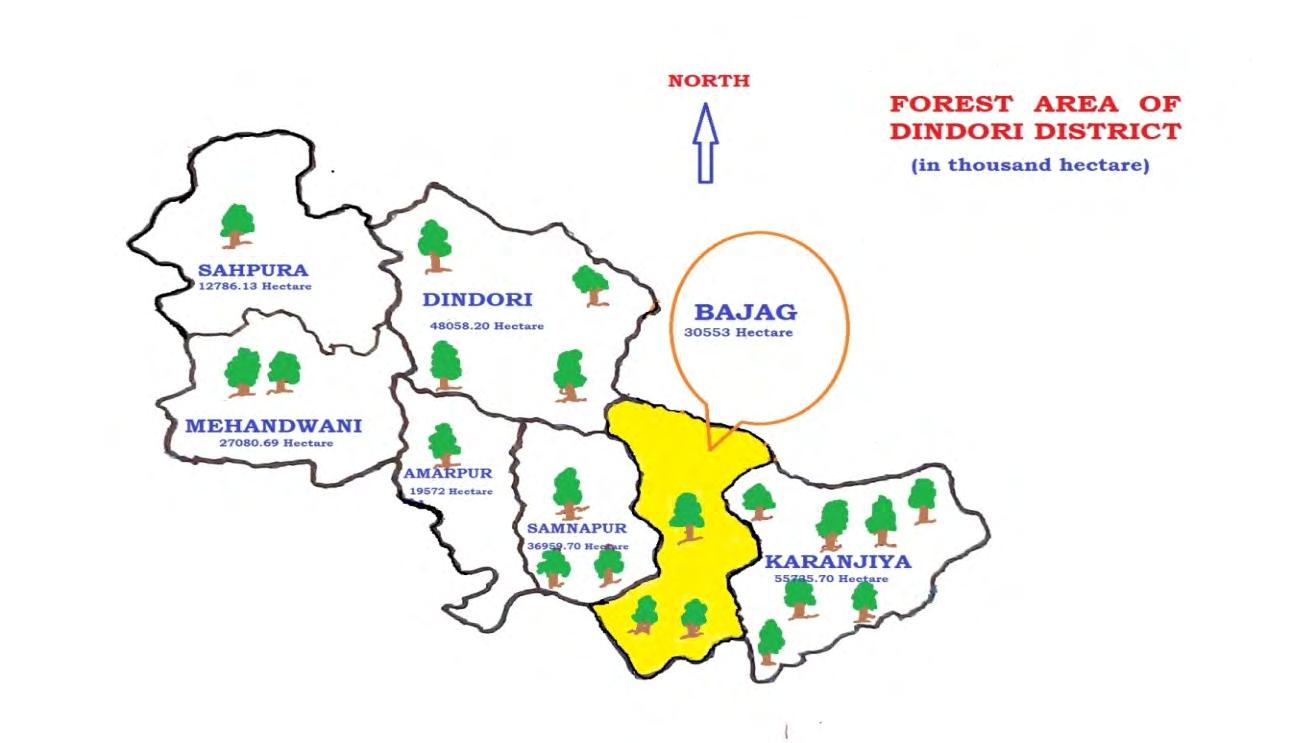
Study Areas: Present study is conducted among the tribal inhabitants of Bajag forest range Dindori district Madhya Pradesh India. Dindori district is situated at the eastern part of Madhya Pradesh bordering the state of Chattisgarh. It is surrounded Anuppur in the east, Mandla in the west, Umaria in the north and Mungeli district of Chattisgarh state in south. The holy river Narmada passes through the district. It is situated at a height of 1100 meter above sea level amongst herbal-rich Maikal and Satpuda mountain ranges. The district comprises of seven development blocks and forest ranges namely Dindori, Sahpura, Mehandwani, Amarpur, Bajag, Karanjia and Samnapur.
Bajag Forest Range
Bajag forest range is extended to eastern part of the Dindori district. It is 56 km. away from district headquarter and situated in Maikal hills at the side of Jabalpur – Amarkantak National highway. The height of the forest is 885 ft. minimum from msl and 1100 ft. maximum from msl. In the east of Bajag forest, there is Karanjiya range, in the west and south Samnapur range and in north Gadasarai (a part of Bajag range) range are situated. The Bajag forest range has extended between 22o to 22.50o North latitude and 81.15 to 81.20 longitude. The total area of Bajag forest is 30553 hectare. There are ten forest villages Jalda, Bona, Khapripani, Khamera, Sheetalpani, Chada, Silpidi, Tantar, Tarach and Pondi [18].
Vegetation of Bajag Forest
Bajag forest range is one of the parts of Maikal hill ranges. Most of the forest covers with Sal and miscellaneous one. The whole area is undulating and down fall towards the western region. Champion and Seth [19] have categorized them as follows- A. Sal Forest. B. Mixed Forest.
Sal forest can be distinguished into a. Moist Sal Forest. b. Dry Sal Forest. c. Moderate forest Bamboo is present in most of Sal forest area. There are no grass-meadows of any significant size in the Bajag forest range. The mixed forest constitutes mainly:
Saja (Terminaliya tomentosa), Dhaora (Anogeissus latifolia), Tendu (Diospyros melanoxylone), Salai (Boswellia serrata), Kosum (Schliechera oleosa), Jamun (Syzygiumcumuni), Gular (Ficus glomerata), Oomar (Ficus benghalensis), Bahera (Terminalia belerica), Harra (Terminaliya chebula), Kari (Saccopetelum tomentosum), Tinsa (Ougienea oojeinensis), Kumhi (Careya arborea), Bhilwa (Semecarpus anacardium), Amla (Emblica officinales), Achar (Buchanania lanzan), Amaltas (Cassia fistula), Mahua (Madhuca indica).
The Baiga, Kol and Gond are some of the important tribes of Bajag forest range. Baigas are included in Particularly Vulnerable Tribal Groups (PVTGs) and are traditional priest and medicine man. Baiga has been least affected by the modern and global civilization in comparison to ‘Gond’ and ‘Kol’. The Gonds are considered to be one of the most ancient tribes of India with a continuing history of several thousand years. The Gonds are second largest tribal group of India with a population of between 4 and 5 million. Kols are also important tribal community of Central India. Eastern Hindi or Chhattisgarhi is spoken by most of the tribals of the study area. They are below medium to short- stature with a long narrow head shape. Their diet consists of edible roots, fruits and tubers as well as rice and coarse grains, they are mostly non vegetarian. They are fond of drinking Mahua liquor. Polygamy is prevalent among Gonds and Baigas.
Findings
Tribals of the study area comprising of Bajag Forest Range in Dindori district of Madhya Pradesh are soulfully attached with their traditions, thoughts, rituals and religious beliefs. They rely on the flora-fauna of their forest for the livelihood. They have their own traditional medical system to treat their ailments, which chiefly involves tantra-mantra (occult arts) and herbs; this helps them cure incurable diseases. They have profound knowledge of the herbs obtained from the forest.
The healers of the study area have been treating many incurable diseases since ages with the herbs from their forest. Till date they treat their ailments with occult activities and herbal medicines (Jadi-Jantar) as they do not rely or less rely on modern medicines. Only few of them visit to the doctors in case of any illness, otherwise mostly prefer to go to Guniya (Shaman) for the treatment of illness. Guniya usually treat them based on the symptoms and conditions by suggesting sorcery, occult-arts along with herbal medicines. This knowledge of the traditional treatment is inherited by the tribals through their ancestors. The transmission of this traditional medical system has taken place and is taking place through generations among the tribals.
The researchers documented ethnomedicinal uses of plants and plant parts which were learned by interviewing the local traditional healers (Gunia and Vaidyas). A data base of 31 medicinal plants have prepared by Researchers during this study and the field work. Some secondary data were also used during this study.
Sometimes to treat an ailment plants are used with the spell and other rituals. Some healers give medicine for the treatment of ailment while others prescribe lotions and potions extracted from the same plant. They used variety of medicines for various ailments.
It has been observed that most of the time they seldom reveal their ways of treatment and healing to others specially outsiders. Still Researchers have tried the level best to prepare a database of diseases and their treatments along with medicinal plants used by the local people.
Prepared database include: 33 Medicinal Plants, More than 33 local names, More than 20 photographs, Reports from 5 villages of Bajag forest range of Dindori district M.P.
| S. No | Local NAME | Scientific Name | Family | Part Used | Ailments |
|---|---|---|---|---|---|
| 01 | Arandi (S) | Ricinus communis | Euphorbiaceae | Root , Seeds | Skin diseases, |
| 02 | Ban Lahsun (H) | Allium wallichii | Amaryllideceae | Tubers | Skin diseases |
| 03 | Bans (S) | Bambusabambos | Poaceae | Stem | Stem past on wound |
| 04 | Bokrenda (S) | Jatropha curcus | Euphorbiaceae | Stem , Seed oil | Skin diseases |
| 05 | Barr (T) Ficus benghalensis | Moraceae | Root, latex | Boils | |
| 06 | Chindi (S) | Phoenix acaualis | Arecaceae | Root | Boils |
| 07 | Chakoda (H) | Cassia tora | Caesalpiniaceae | Seed | Skin diseases. |
| 08 | Chirpoti (H) | Physalis minima | Solanaceae | Seed leaves | Skin diseases |
| 09 | Chitrak (H) | Plumbago zeylanica | Plumbaginaceae | Root, leaves paste | Skin diseases |
| 10 | Doodhi (S) | Euphorbia hirta | Euphorbiaceae | W.P. | Skin diseases |
| 11 | Dhatura (H) | Dhatura metal | Solanaceae | Leaf | Ring worm |
| 12 | Gulmohar (T) | Delonix regia | Caesalpiniaceae | Leaves, Bark | Ringworm, |
| 13 | Gokhroo (H) | Acanthospermum hispidum | Asteraceae | Leaves | Eczema and Ring worm |
| 14 | Hiranchari (H) | Emilia sonchhifolia | Asteraceae | W.P. | Skin diseases |
| 15 | Harsingri (T) | Nyctanthes arbor-tristis | Oleaceae | Bark, leaves paste | Skin burn |
| 16 | Kachnar (T) | Bauhinia varigata | Caesalpiniaceae | Leaves , Roots | Skin diseases |
Table 3: Enumerations of Medicinal Plants. Abbreviation- H- Herbs, S- Serbs, T- Tree, W.P.- Whole plant, NA- Not available. Ethno
- 17
- Karanj (S)
- Pongamia pinnata
- Fabaceae
- Leaves , Bark
- Itching,
- 18
- Kela (H)
- Musa acuminata
- Musaceae peels
- Useful in skin diseases
- 19
- Jata Shankri (H)
- Tectaria coadunate
- Aspidiaceae
- Root
- Skin diseases
- 20
- Karia Buchai (H)
- N.A.
- N.A.
- Root
- Eczema and raises
- 21
- Khunkhuniya (H)
- Crotalaria retusa
- Fabaceae
- Seeds
- Skin diseases
- 22
- Kosum (T)
- Schleichera oleosa
- Sapindaceae
- Seeds, Root
- Skin diseases.
- 23
- Katili (S)
- Argemone maxicana
- Papaveraceae
- Stem
- Skin diseases
- 24
- Khair (T)
- Acacia cattechu
- Mimosaceae
- Bark
- Skin diseases
- 25
- Mameera (T)
- Captis teeta
- Ranunculaceae
- Root
- Eczema and itching,
- 26
- Neem (T)
- Azadirachta indica
- Meliaceae
- Bark, Leaves &
- Seed
- Skin diseases,
- 27
- Oomar (T)
- Ficus glomerata
- Moraceae
- Latex, root sap
- Skin diseases
- 28
- Paras peepal (T)
- Ficus arnottiana
- Moraceae
- Seed, Bark
- Skin diseases.
- 29
- Pattali (H)
- NA
- Solanaceae
- Leaves
- Skin diseases
- 30
- Ramteela (H)
- Guizotia abyssinica
- Asteraceae
- Seed , Root
- Skin diseases.
- 31
- Sarai (T)
- Shorea robusta
- Dipterocarpaceae
- Resin
- Skin diseases.
- 32
- Sagone (T)
- Tectona grandis
- Verbenaceae
- Seed oil
- Use for the treatment of
- Scabies
- 33
- Tendu (T)
- Diospyros malanoxylon
- Ebenaceae
- Bark, flower
- Scabies
Table 4: Enumerations of Medicinal Plants.
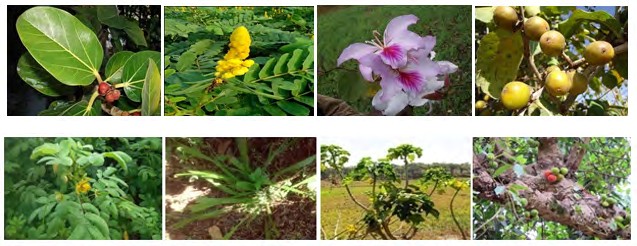
Barr (Ficus benghalensis) Dadmari (Senna alata) Kachnar (Bauhinia varigata) Tendu (Diospyros malanoxylon)
Chakoda (Cassia tora) Chindi (Phoenix acaualis) Bokrenda (Jatropha curcus) Oomar (Ficus glomerata)
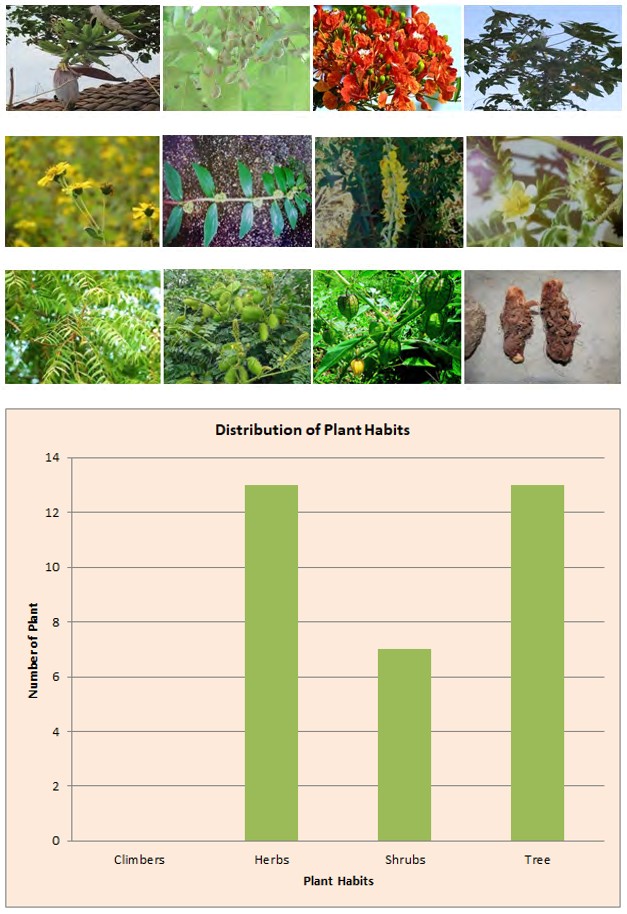
Kela (Musa acuminate) Kosum (Schleichera oleosa) Gulmohar (Delonix regia) Arandi (Ricinus communis)
Ramtila (Guizotia abyssinica) Dhudhi (Euphorbia hirta) Khunkhunia (Crotalaria retusa) Gokhru (Acanthospermumhispidum)
Neem (Azadirachta indica) Karanji (Pongamia pinnata) Chirpoti (Physalis minima) Jata Shankri (Tectaria coadunate) Plate 1: Showing Some Pictures of Medicinal Plants Used in the Treatment of Skin Diseases.
Structure of the data base is simple and will be useful to researchers, pharma companies, AYUSH practitioners and to all who are interested in Herbal cure.
The data analysis includes various aspects like habit, parts used, etc
| S. No. | Habit | No. of Plants | |
|---|---|---|---|
| 01 | Climbers | 00 | |
| 02 | Herbs | 13 | |
| 03 | Shrubs | 07 | |
| 04 | Tree | 13 | |
| 05 | Total | 33 | |
| S. No. | Name of Family | No. of Species | Rank |
| 01 | Asteraceae | 03 | 01 |
| 02 | Caesalpiniaceae | 03 | 02 |
| 03 | Euphorbiaceae | 03 | 03 |
| 04 | Moraceae | 03 | 04 |
| 05 | Solanaceae | 03 | 05 |
| 06 | Fabaceae | 02 | 06 |
| 07 | Amaryllideceae | 01 | 07 |
| 08 | Arecaceae | 01 | 08 |
| 09 | Aspidiaceae | 01 | 09 |
| 10 | Dipterocarpaceae | 01 | 10 |
| 11 | Ebenaceae | 01 | 11 |
| 12 | Miliaceae | 01 | 12 |
| 13 | Mimosaceae | 01 | 13 |
| 14 | Musaceae | 01 | 14 |
| 15 | Oleaceae | 01 | 15 |
| 16 | Papaveraceae | 01 | 16 |
| 17 | Plumbaginaceae | 01 | 17 |
| 18 | Poaceae | 01 | 18 |
| 19 | Sapindaceae | 01 | 19 |
| 20 | Ranunculaceae | 01 | 20 |
| 21 | Verbenaceae | 01 | 21 |
Table 5: Distribution of Plants Habits.
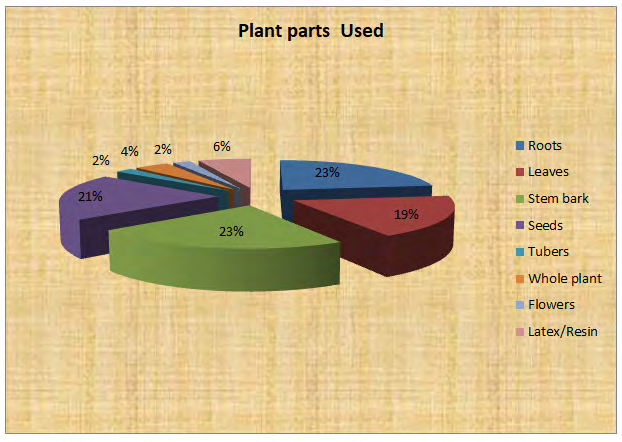
| S. No. | Name of Parts | No. |
|---|---|---|
| 01 | Root and root bark | 11 |
| 02 | Leaves | 09 |
| 03 | Stem bark | 11 |
| 04 | Seed | 10 |
| 05 | Tuber | 01 |
| 06 | Whole plant | 02 |
| 07 | Flower | 01 |
| 08 | Latex/Resin | 03 |
| 09 | Fruits | 00 |
Table 7: Frequency of Plant Parts used.
| S. No. | Name of Disease | No. of Plant |
|---|---|---|
| 01 | All type of skin diseases | 20 |
| 02 | Boils | 02 |
| 03 | Itching /Scabies | 04 |
| 04 | Eczema | 03 |
| 05 | Raises | 01 |
| 06 | Ring worm | 03 |
| 07 | Skin burn | 01 |
| 08 | Wound | 01 |
Table 6: Type of Skin diseases having higher number of plants.
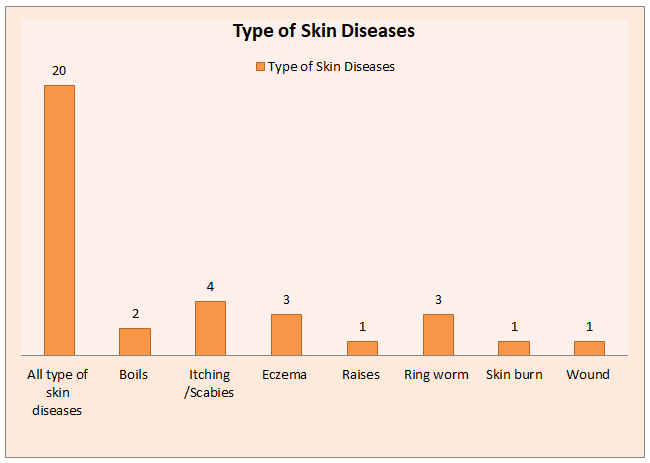
Perception of Baiga, Gond and Kol regarding Skin Diseases
Skin and skin disorders and ailments are believed to have spiritual and religious context along with empirical aspects of healing among the Baigas, Gonds and Kols. The local healers believe that the treatment of skin ailments is possible through spiritual means of healing like for example going in trance and altered state of consciousness. These tribal people have strong belief in both malevolent and benevolent spirits. They are of the view that malevolent spirits bring illness and diseases and many skin disorders are caused by such spirit world. On the other side, benevolent spirits bring good faith and happiness and help in alleviation of diseases and skin disorders. The modern Western approach to Altered State of Consciousness through hypnosis can be used to produce significant improvement or resolution of many skin disorders [20]. As Dr David Spiegel [21] has said, “It is not all mind over matter, but mind matters”. Spirit, mind, emotions, and body are one holistic unit and each aspect influences skin, skin disorders, and healing [22]. The Baigas and Gonds believe that propitiating malevolent spirits help to alleviate skin disorders on many occasions. They also believe that due to lack of hygiene, unhygienic habits and practices and malnutrition also causes skin disorders.
Baigas and Gonds also believe that in the pantheon of deities there are certain goddesses who are responsible for causation of skin diseases. Like for example, among the Baigas, ‘Disprit Mata’ is believed to be responsible for causing ‘Syphilis’ and ‘Rakshin Mata’ causes itching with sores and boils. Patel [23] and Patel and Upadhyay [24] have reported use of ethnomedicines for treating skin ailments among different tribes of India and thrown some light on spiritual aspects of healing along with empirical aspects of healing.
As Shenefelt & Shenefelt [22] have opined, “Skin coloring with makeup, paint, or tattooing has reflected spiritual aspects and dimensions. Currently, the Maasai paint their bodies with red ochre. This red paint on the skin has been associated with blood, power, fertility, life, and death, all of which have been further associated with spiritual and existential quests [25].
Dorfer [26] says that Skin tattooing can be performed by piercing the skin with a needle covered with pigment.
Scheinfeld [27] elaborates that in Tahitian mythology, one of the sons of the creator taught humans the art of tattooing. This was considered a sacred art form or “tapu” and was performed by shamans “tahua” who knew the religious ritual associated with tattooing, the meaning of the designs, and the methodology.
On comparing the findings of our study during fieldwork with that of Shenefelt & Shenefelt [22], Henshilwood et al. [25], Dorfer [26], Scheinfeld [27] it is revealed that Baigas are very much fond of tattooing their body. They practice the art of creating different kinds of tattoos on their skin with different symbols having typical context and symbols. Various magico-logical performances and rituals are also found to be associated with these various forms of tattoos created on their skin. It has very important spiritual aspects and dimensions of healing deeply embedded in their cultural practices. Various symbols found in different forms of tattoos among Baiga females have their unique religious meanings and contexts and in this way this study is very close to Clifford Geertz defining religion as a “system of symbols”.
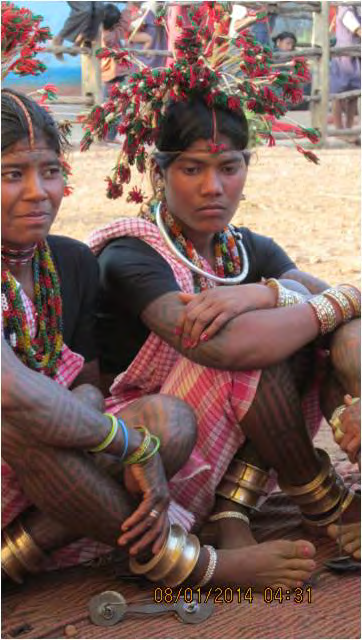
Baigas for tattooing their body, prepare the ink by burning together Guizotia abyssinica (Ram Til) and glue of Shorea robusta (Sarai/Sal) in a clay pot. Charcoal received after burning of both is mixed with extract of wood of Pterocarpus marsupium (Bija) and this preparation is used as ink in tattoo needles. For healing of tattoo scars, paste of CurcuFma longa (Turmeric/ haldi) and Brassica nigra (Indian Rai) oil is applied.
The Baigas also believe in mythology of ‘Naga Baiga’ where Naga Baiga is believed to be ‘the first healer on earth’. Baigas are also ardent supporter of the view that ‘Dhanantaar’, son of Naga Baiga is no one else but ‘Dhanvantari’ (Hindu God of Medicine/God of Ayurveda mentioned in Puranas).
Discussion
The present study demonstrated a picture of traditional knowledge of tribal India; especially in the context of central part of India. India is a treasure of indigenous knowledge system and traditional health care system. India is rich in biodiversity and has a large diversity of floral species. The Himalayan range to Vindhya and Satpuda of peninsular India are the chest of medicinal plant. Ethnomedicine has especial importance in the society and culture especially plant based ethnopharmacology. Ethnomedicine are the root of modern medical system. Ethnomedicinal knowledge and medicinal plants play a very important role in biological research and modern drug discovery. Plants based products are not only used directly for the cure but also use a lead molecules in the discovery of new drugs.
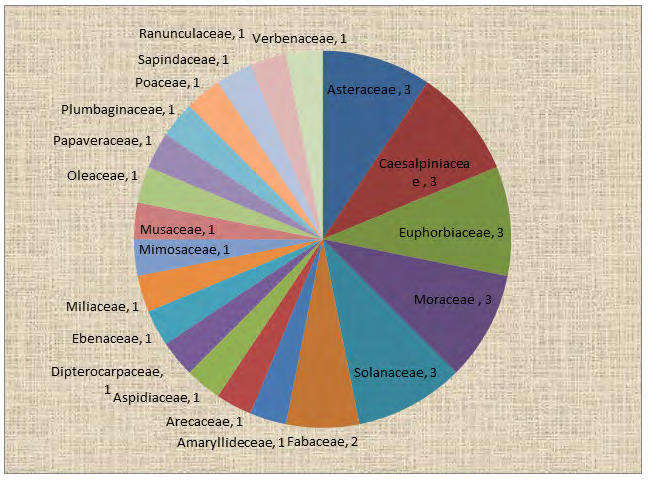
The study delineates many herbs and medicinal plants popular among the tribals of the study area. They perform several rituals and offerings to supernatural powers before using numerous ethnomedicines. They believe on these herbal remedies and are capable to cure not only diseases but also helps to get rid of ghost and evils. During the course of study, several plants were found which were ethno-medically important. They use total 33 plant species which come under 21 families for curing skin ailments and also for preparing drugs for the treatment of skin diseases. They used whole plant and parts like root, bark, seed, leaves etc. for treatment of skin ailments.
Mostly trees and herbs are frequently used for the treatment of skin diseases (Table 4); not any climbers reported in this study. According to table no.4, 13 herbs, 13 tree, and 7 shrubs are classified. According to table no.5 Asteraceae, Caesalpiniaceae, Euphorbiaceae, Moraceae and Solanaceae are top rank families of plant used in this purpose. Most of the time Medicine men use root (23%), stem bark (23%), seeds (21%) and leaves (19%) of the plantas (Table 6). Tubers and flower part are less used in compare to other plant parts. Such herbal remedies are frequently prescribed by the local healers for eradication of skin diseases among the Baigas, Gonds and Kols. The indigenous knowledge system of these tribals is very strong and highly precious for addressing the health ailments of local masses. It is also very important from another point of view that it will also help to ease pressure mounding on modern health delivery system. Hence, such indigenous knowledge system existing in Bajag Forest Range needs to be augmented, documented and preserved on priority basis.
Conclusion
The study shows that Ethnomedicine has great potential to cure various types of skin diseases among the tribals of Bajag forest range of Central India. Most of the time the tribal people depend on traditional health care system. The study revealed that there were diversity of indigenous knowledge and medicinal plants. Bajag forest, having a rich biodiversity of floral resources can be useful for traditional and modern health care practitioners. Therefore, documentation of these plants is very necessary for the preservation of ethnic knowledge of medicine. The forest area of Bajag need to be explored more to find the richness of the medicinal plant and traditional medical knowledge. Plants are largely used for the treatment of the variety of ailments. There is a need of detail study like phytochemical analysis and scientific validation of the medicinal plants used by the tribals of Bajag forest range.
Many Traditional preparations have been used for years and claimed to be the most potent and effective dosage forms but very few scientific studies are carried out on these products due to lack of communication amongst traditional healers, physicians and scientists. This gap can be filled by translating the old concepts in modern understanding providing possible explanation and hypothesis [28, 29, 30, 31, 32, 33, 34, 35, 36, 37, 38, 39, 40, 41, 42]. In recent years there is a growing genuine interest in the Ethnomedicine among the health behavioral scientist, modern or western medical practitioners, health planners, administrators and even people, to accept and practice the therapeutic aspects of Ethnomedicine, in managing the illness and diseases for maintaining positive health and total well-being. The ethnomedicinal knowledge which is essential part of every culture is necessity handed down orally from generation to generation, much of this is practical knowledge based on observation and experience but myth, magic and super natural beliefs are also preserved and may be mingled with empirical knowledge. The traditional medicines are beginning to find its due place and recognition in the society which is rightly deserved, but has temporarily lost under modernization. Modern medicine may have side effects, costly and beyond the reach of poor people. But Ethnomedicine is less toxic, effective and within the reach of poor people and less expensive. Indian traditional medical system (Great traditional and Little traditional) is a very effective alternative in health care sector. Government of India focused up on traditional health care system through ministry of AYUSH. W.H.O. has estimated that 80% of the people in the world rely on traditional medicine for primary health care needs, and of the 119 plant based drugs used today by modern medicine. Hence, the findings of present study on the basis of potential medicinal properties of 33 plant remedies reported, advocates the preservation of indigenous/ traditional knowledge of Bajag forest range in general and that of natives like Baiga, Gond and Kol in particular. Depletion and excessive exploitation of such plant species, needs to stop now with concrete efforts at the level of policy makers, government agencies etc. Such concerted efforts will help in income generation for tribals and strengthening their livelihood resources. At least we shall now gather strength to stand for nature and sustainable management of natural resources.
References
-
Quinlan MB (2011) Ethnomedicine. In: Merrill Singer, Pamela I Ericson (Eds.), A Companion to Medical Anthropology, Wiley-Blackwell, pp: 379-403.
-
Pieroni A, Limer Price LL, Vendebroek I (2005) Welcome to Journal of Ethnobiology and Ethnomedicine (editorial). Journal of Ethnobiology and Ethnomedicine 1: 1.
-
Kshatriya GK (2004) Tribal Health in India: Perspective in Medical Anthropology. In: Kalla AK, Joshi PC (Eds.), Tribal Heath and Medicines, Concept publishing Co., New Delhi, pp: 17-45.
-
Singh S, Mishra PD (2000) Health and Diseases: Dynamics and Dimensions, New royal book Co. Lucknow.
-
Elvine lewis M (2001) Should we be concerned about herbal remedies? J Ethnopharmacol 75(2-3): 141-144.
-
Heinrich M, Barnes J, Gibbons S, Williamson EM (2004) Fundamental pharmacognosy and phytotherapy. Churchill Livingstone, pp: 24-25.
-
Patwardhan B (2004) Ayurveda and Natural Products Drug Discovery. Curr Sci 86(6): 789-797.
-
Patwardhan B (2005) Ethnopharmacology and Drug Discovery. J Ethnopharmacol 100(1-2): 50-52.
-
(2013) Committee IB. Report of the IBC.
-
Policepatel SS, Manikrao VG (2013) Ethnomedicinal Plants Used in the Treatment of Skin Diseases in Hyderabad Karnataka Region, Karnataka, India. Asian Pac J Trop Biomed 3(11): 882-886.
-
Abbasi AM, Khan MA, Ahmad M, Zafar M, Jahan S, et al. (2010) Ethno Pharmacological Application of Medicinal Plants to Cure Skin Diseases and in Folk Cosmetics among the Tribal Communities of North-West Frontier Province, Pakistan. J Ethnopharmacol 128(2): 322-335.
-
Suresh M, Ayyanar M, Amalraj L, Mehalingam P (2012) Ethnomedicinal Plants Used to Treat Skin Diseases in Pothigai Hills of Western Ghats, Tirunelveli District, Tamil Nadu. India J Biosci Res 3: 112-121.
-
Saikia AP, Ryakala VK, Sharma P, Goswami P, Bora U (2006) Ethnobotany of medicinal plants used by Assamese people for various skin ailments and cosmetics. J Ethnopharmacol 106(2): 149-157.
-
Kumar P, Vidyasagar GM (2008) Traditional knowledge on medicinal plants used for the treatment of skin diseases in Bidar district, Karnataka. Indian Journal of Traditional Knowledge 7: 273-276.
-
Aadhan K, Anand SP (2019) Traditional remedial plants utilized in the Paliyar’s tribe handling of different skin diseases from Sadhuragiri hills, Tamil Nadu, india. Journal of Drug Delivery & Therapeutics 9(1-s): 275-285.
-
Kanitakis J (2002) Anatomy, histology and immunohistochemistry of normal human skin. European Journal of Dermatology 12(4): 390-399.
-
Kamal AH, Mahmoud AA, Eman RM (1999) Prevalence of skin disease in rural areas of Assiut Governorate, Upper Egypt. Tropical medicinal Journal 42: 887-892.
-
Parna IC (2008) Ecological and Ethnomedicinal studies of Bajag forest of Dindori district, Madhya Pradesh. APS University Rewa (M.P.).
-
Champion HG, Seth SK (1968) A Revised Survey of Forest Type of India. Delhi.
-
Shenefelt PD (2014) Hypnosis, Hypnoanalysis, and Mindfulness Meditation in Dermatology. In: Norman RA, Shenefelt PD, Rupani RN (Eds.), Integrative Dermatology, Oxford University Press, New York.
-
Spiegel D (2011) Mind Matters in Cancer Survival. J Am Med Assoc 305(5): 502-503.
-
Shenefelt PD, Shenefelt DA (2014) Spiritual and Religious aspects of Skin and Skin disorders. Psychology Research and Behavior Management 7: 201-212.
-
Patel R (2007) Indigenous System of Medicine among the Nicobarese of Car Nicobar (A & N Islands): A comparative study. The Asian Man 1(2): 79-85.
-
Patel R, Upadhyay S (2008) Traditional System of Medicine and Cure among the Jaunsarese of Jaunsar- Bawar (Uttarakhand). The Asian Man 2(1): 71-76.
-
Henshilwood CS, d’Errico F, van Niekerk KL, Coquinot Y, Jacobs Z, et al. (2011) A 100,000 year-old ochre- processing workshop at Blombos Cave, South Africa. Science 334(6053): 219-222.
-
Dorfer L, Moser M, Bahr F, Spindler K, Egarter Vigl E, et al. (1999) A medical report from the stone age?. Lancet 354(9183): 1023-1025.
-
Scheinfeld N (2007) Tattoos and Religion. Clin Dermatol 25(4): 362-366.
-
Aziz N, Gilani AH, Rindh MA (2002) Kushta(s): Unique Herbomineral Preparations used in South Asian Traditional Medicine. Med Hypotheses 59(4): 468-472.
-
Agrawal SC, Pati RN (2010) Folk Medicine, Folk Healers & Medicinal plants of Chhattisgarh. Sarup book pub.
-
Bhatnagar S, Panda PC, Mahapatra AK (2008) Pictorial guide: Medicinal plant germplasm conservation. Regional Plants Resource Center.
-
Geertz C (1993) Religion as a cultural system. In: Geertz C (Ed.), The Interpretation of Cultures: Selected Essays, Fontana Press, London.
-
Ghorbani A, Naghibi F, Mosaddegh M (2006) Ethnobotany, Ethnopharmacology and Drug Discovery. Iranian Journal of Pharmaceutical Sciences Spring 2(2): 109-118.
-
Gurumurthy KE (1990) Anthropology and management of health and hygiene: An Indian case study. In: Joshi PC (Ed.), Studies in Medical Anthropology, Reliance pub, New Delhi, pp: 21-39.
-
Khamkar AD, Motghare VM, Deshpande R (2015) Ethnopharmacology- A Novel Approach for Drug Discovery. Indian Journal of Pharmacy and Pharmacology 2(4): 222-225.
-
Korpenwar AN (2012) Ethnomedicinal Plants Used To Cure Skin Diseases In Ambabarwa Wild Life Sanctuary Area Of Buldhana District (M.S.), India. International Journal of Recent Trends in Science And Technology 2(3): 36-39.
-
Pal MC, Patel Rahul (2014) Ethnomedicinal plants used by tribes of Bajag forest range in Dindori district of Madhya Pradesh (India). The Social ion 3(2): 179-182.
-
Pal MC, Patel R (2016) Traditional System of Medicine and Cure among the Tribal Population of Dindori District Madhya Pradesh, India. In: Patel R, Mishra R (Eds.), Dimensions of Health: Divergent Worldviews, converging concerns, New Royal Book Company, Lucknow, pp: 373- 382.
-
Pal MC (2019) Ethnomedicinal Study among the Tribal Inhabitants of Bajag Forest of Dindori District of, M.P., India. Department of Anthropology, University of Lucknow.
-
Pal MC, Patel R (2018) Madhya Pradesh ki Aadim Janjati Baiga mein prachalit Godna pratha ka Manavvaigyanik Adhyayan. Manav 36(1): 65-72.
-
Patel R, Pal MC (2019) Magical World of Gunia: A Case of Traditional Healers among the Baiga Tribe. Our Heritage 67(2): 725-735.
-
Sanjeet K, Jena PK, Sabnam S, Kumari M, Tripathy PK (2012) Study of plants used against the skin diseases with special reference to Cassia fistula L. among the king (Dongaria Khandha) of Niyamgiri.India. International Journal Drug Development and Research 4(2): 256-264.
-
McKendrick J, Brooks R, Hudson J, Thorpe M, Bennett P (2013) Aboriginal and Torres Strait Islander healing programs: a literature review. The Healing Foundation.
- The Indispensable Role of Informal Caregivers in Supporting the Aging Population
- Socio-Religious Significance of Kamakhya Temple in Guwahati, Assam
- Is Anthropology Possible?
- A Contribution to the History and Paleobiology of Harput/Elazığ Türkiye and Its Surroundings
- A Study on the Cowrie Shells of the Dimasas in Assam
- The Significance of International Organizations Cooperation in the Efficient Resolution of Global Conflict