
The Repatriation: An Enigma of Anthropological Collections in Indian Scenario
Repatriation is the process of returning cultural property backs the country, community, family, or individual from which it was first acquired. Illegal or unethical means may have been used to seize some cultural property from its original owners. Many First Nations people were treated unfairly in the past, and repatriation of cultural property is a crucial component of recognising and healing these injustices. It is an emotional issue for First Nations people in Canada and Indigenous peoples around the world when it comes to repatriating cultural property. Politically and legally, repatriation must be viewed as part of Indigenous peoples’ historical and on going experiences with colonisation, as well as its ramifications. There was a time when many museums were actively involved in the collection and categorization of indigenous cultural property and knowledge, frequently without the active participation of indigenous people. Objects of this nature have been displayed in museums for many years, but their usage and meaning have been misinterpreted or misrepresented. Museums began partnering with First Nations on exhibits, education programmes and cultural property repatriation in recent years. Repatriation of artefacts from museums throughout the world has become a priority for many indigenous families and communities in recent years. Recognizing the complexity of the situation requires understanding that cultural property may have been either taken or appropriated. It may have been stolen or sold. The return of cultural property that has been unlawfully removed to its original communities is a vital task. Repatriation and reconciliation require acknowledging the historical events that resulted in First Nations losing their cultural property and addressing these challenges. It’s a way to acknowledge the history and future of indigenous peoples. Many museums in United States requests nowadays the repatriation of human remains and in other circumstances, it is up to the museum’s governing body to make a judgement which is more matter of concern. A brief historical examination of the colonial period’s repatriation is presented in this paper, with a special focus on the Indian situation and anthropological artefacts.
Introduction
The return of humans, material legacy, and/or associated knowledge to their place of origin is known as repatriation.
This term is widely used in anthropology to refer repatriation the return of artefacts gathered and stored in museums or other institutional collections to its original communities (Turnbull Paul and Pickering Michael, The Long Way Home: The Meaning and Values of Repatriation, Museums and Collections Book 2) [1]. Nation-states, Indigenous or ethnic groups, kin groups, cities or villages, and removal sites are all terms used to describe origins and originating societies. Anthropologists have long been active participants in scholarly debates over the repatriation of resources, whether ethnographic or otherwise. Anthropologists often find themselves dealing with Indigenous peoples today, who are trying to hold colonial and settler nations accountable for injustice, and who are claiming the viability and legitimacy of their cultural practises into the future, in the present. (James Clifford, Introduction to Writing Culture: The Poetics and Politics of Ethnography 1, 6-7 James C, et al. [2]. Restitution of ancestral remains and tangible legacy is a form of redress and a way for many nations and cultural groups to show their sovereignty. Anthropologists are now asking what role repatriation and museums are in general play in processes of decolonization, reconciliation, indigenization, and nation- building (Nick Stanley, The Future of Indigenous Museums: Perspectives from the Southwest Pacific Stanley N, et al. [3].When it comes to edited collections, many museum’s chapters give case studies from a variety of locales, and communities through different types of artefacts. For an overview of antiquities and cultural heritage, many museum anthropologists refer Greenfield 2013 and Nafziger and Nicgorski 2009. While the writers of Tythacott and Arvanitis, 2010 clarified from the perspective of a museum, in which they consider both human remains and artefacts. In anthropological volumes such as Forde C, et al. [4] Turnbull and Pickering (2010), Indigenous authors who have been active in shaping practises and thinking about repatriation without being university-based scholars or employees in museums or tribal repatriation officers. Repatriation study began with the subject of whether institutions should repatriate human remains and/or cultural property. Earlier edited volumes, such as Merryman 2006, tend to include both pro and con in his essays. But the second phase of repatriation the author tried to focus more on how repatriation occurs, its meanings, and its impact on the host country [1]. Repatriation is no longer the prominent question in anthropology; instead, it is viewed as a current cultural activity with associated values that merits investigation and understanding. Although the museum has been called ‘the institutional homeland’ of anthropology (Lurie, 1981: 184) it took a long time for anthropology to find that homeland, and its presence there. The 17th-century trend of collection led to the study of societies that manufactured objects for exhibition. A shift in focus from collections-based documentation to field research occurred in museum anthropology after the 1970s. As a result of declining resources and international and national regulations on cultural patrimony, it became more difficult to acquire things.
Anthropology in Museums and Curatorship
It is important to note that museum anthropology precedes the formalisation of anthropology as a university academic science now days. Museums of “folk culture” or, more commonly, natural history museums began integrating anthropology collections in the early 20th century, including the British Museum and the American Museum of Natural History in particular Bernard CS, et al. [5]. It was formed in 1866 that the Peabody Museum of Archaeology and Ethnology became a major anthropology and archaeology museum. It wasn’t long before these collections became the foundation for investigation and documentation of many civilizations’ life ways and material conditions. Anthropology has been focused on ethics and social policy since its inception. Edward B. Tylor concluded his survey of human culture with the remark that “the science of culture is essentially a reformer’s science” (1958[1871]:539). A.R. Radcliffe-Brown would claim that he was moved to initiate his studies of simpler peoples on the advice of the celebrated Russian anarchist, Prince Peter Kropotkin, for whom such peoples manifested a system of organization which could prove an exemplar in a world dominated by autocracy and nationalism (Srinivas 1958: xviii). In the period pre-World War I, this ideal of anthropology as an ethical calling above the petty rivalries of nationalism inspired Franz Boas to moral outrage when he suspected that the disciplinary role had been used to cloak espionage (1919:797). A study of Mc Kim Marriott and Ronald Inden, colleagues and students in a new type of cultural analysis classified as “ethnic sociology” in India [6]. The emphasis in ethnographic sociology was to collect and express indigenous categories and accident formats related to social relationships, people, towns, consciousness, medical care, etc. where these anthropological collections played a vital role to make the study success. Most of the ethnographic collections helped to prepare the pre-field study frame for a specific community. These above discussion emphasis converged on the distorted influence of colonial history and the Western Social Sciences category and on the reconstruction of the form and logic of Indian society. Over the past century, anthropologists in museums have organised collections by cataloguing and publishing them, as well as constructing public exhibits. In the 1980s, outside the museum walls, a significant critique of the portrayal of cultures began to emerge (Richard Handler, On the Valuing of Museum Objects, 16 MUSEUM ANTHROPOLOGY 21, 21 (1992) [7]. Among the complaints were that non-European civilizations were presented in a historical and evolutionary manner and that “first voice” was not included (the perspective of the peoples themselves).
![Figure 1: Director Reynolds and the Peabody Staff in 1930 during the peak collection era of the Peabody. ©Museum Collection. Courtesy of the Peabody Museum of Archaeology and Ethnology, Harvard University, PM2004.1.324.38 By Courtesy of the Peabody Museum of Archaeology and Ethnology [8].](/fulltextimages/7875/fig_1.jpeg)
A question was raised about the curator’s authority, as well as the imperialist viewpoints that were reflected in museum displays. Researchers with academic credentials as well as members of the communities whose cultures were portrayed in the exhibit offered criticism. It has been a transforming experience for the museum’s staff. To include the viewpoints of communities, curators devised new forms of representation that were more in touch with modern thought and began collaborating with them. It is still dominated by material culture and human ecology, but they are quite diversified and cover a wide geographic area. Similarly, outside of museums, material culture studies have become more popular. We have included a taste of this work in our selection. The core four domains of anthropology are covered by museum-based teaching programmes and publications aimed at the general audience [9]. Non-profit museums have a long and varied history within the United States. Evolving out of European cabinets of curiosities, these institutions continue to adapt to 21st century expectations, including new techniques for educational and entertainment value. However, as museums change, so too must their collections. Repatriation within museum collections, which is defined as the return of cultural heritage objects to source communities and countries. Museums’ acquisition and display of specific artefacts has been a more popular issue now. In recent years, the conventional role of museum curators has expanded in numerous areas, including collecting, caring for, investigating, and showing objects. Today’s curators not only collect, but also connect. In addition to the source communities, they also work with museum visitors and scholars. Their work is founded in material culture and museums, but they are increasingly interested in intangible cultural assets and digital expressions of culture. In the next section of curating work, the curators tried to separate it into subsections that explore philosophy, practise, and digital approaches to curatorial work. Recently some socio-cultural anthropologists have begun to steer ethnographic research toward the recognition of different ontological worlds through museums and away from the more conventional anthropological practice of using various social theories to describe, translate, and analyze other peoples’ systems of knowing, or epistemologies (i.e., Henare, Holbraad, and Wastell 2007; Viveiros de Castro 2003, 2005). As a necessary corrective to the trend and extension of this traditional work became decolonizing curatorial practise, which involves challenging museums’ colonial practises and including Indigenous people in conservation, interpretation, and display of their material culture and histories which was a necessary corrective and extension.
History
On the history of museum anthropology and of museums of natural history, a large amount of material is available. In terms of citations, Stocking’s 1985 paper is one of the most popular one. Sturtevant’s 1969 evaluation of the significance of museums in anthropology is likely the most frequently quoted. Nash and Feinman 2003, which comprises reprints and original essays on the history of anthropology at the Field Museum in Chicago, the world’s fourth-largest natural history museum, is a recent and essential contribution to the field’s history [10]. Murray (1904) and Mead and Bunzel (1960) were among the first to document the history of museums. Alexander 1997, Hodgen 1964, Kavanaugh 2000, and Pearce 1992 all explore the problematic link between the colonial roots of museum collecting initiatives and contemporary thinking and decolonizing movements in anthropology. This has led to an important shift in the practise and purpose of contemporary museology: legacy is no longer seen as a mere historical artefact but as a living cultural resource with a present significance. Community voices, perspectives, and thoughts on their collaborations are largely underrepresented in the current discourse on indigenous engagement in museum studies. Because of legal frameworks and rules such as NAGPRA and the 1970 UNESCO Convention, repatriation within museums continues to be a hotly debated topic among museum professionals. It was some time, however, before ethnographic objects began to be treated as a distinct category. When the British Museum, the first great national museum, was founded in 1753, its three departments were devoted to ‘Printed books, Maps, Globes and Drawings’, ‘Manuscripts, Medals and Coins’, and ‘Natural and Artificial Productions’; a fourth, added in 1807, was devoted simply to ‘Antiquities’ - although by that time the Museum’s ethnographic materials had been greatly augmented by the expeditions of Captain Cook (Alexander, 1979: 45). However, during the first part of the nineteenth century, a number of museums with a more obviously anthropological focus were founded, or evolved from existing collections, along a variety of lines. The anthropological dimension emerged as an aspect of an interest in the history of the nation itself in the case of the National Museum established in Denmark in 1816, where Christian Thomsen’s categorization of the contents of Danish burial chambers, kitchen middens, and bog-sites provided the basis for the ‘three-age’ system of archaeological periodization (Daniel 1943). Although the ‘Museum Period’ has been defined as spanning the 1840s to the 1890s (Sturtevant 1969: 622), the term appears to be out of date for the early part of that time period. The ‘Ethnological Society,’ formed in Paris in 1839, New York in 1842, and London in 1843, was probably a more representative institutional setting in three of the major national anthropological traditions [11, 12]. While ethnographic materials were already in museum collections in each of these countries at the time, the Peabody Museum of Archaeology and Ethnology was the first of these large anthropological museums to open in 1866, (c.f. Hinsley, 1985). The major foundation phase of museum anthropology spanned the rest of the nineteenth century around the world. Some museums followed the Peabody’s lead, focusing on prehistoric archaeology and ethnology and others, particularly in continental Europe, were Volkskunde-style museums of national and peasant culture were displayed. Anthropological exhibits were sometimes part of general national museums, (c.f. Chapman, Jacknis and Williams, 1985).
The Indian Scenario
There were many Europeans who saw India as a vast museum, its countryside littered with ruins, and its people as a living representation of past eras-biblical, classical, and feudal; it was a source of collectibles and curiosities to fill European museums, botanical gardens, zoos, and country houses [13]. A considerable portion of Indian antiquities knowledge its art, architecture, script, and textual traditions was generated by people and scholarly societies before the 1860s and came as a by-product of other research methods (Romila Thapar, Museums in India: past and future, Talk delivered at the bicentennial of the Indian Museum, Kolkata, January 2014). Indian artists migrated to India in search of commissions and patronage during the late 18th century. Printed works and drawings depicting oriental scenes or Indians were in high demand in Great Britain [14]. During colonial times, the ASI was primarily concerned with recording major locations based on topographical studies. Aside from that, the Survey was tasked with the preservation of historical places, and began to create on-site museums as well as a national collection of archaeological specimens (John Alan Cohan, An Examination of Archaeological Ethics and the Repatriation Movement Respecting Cultural Property (Part Two, VOLUME 28, FALL 2004, NUMBER 1). One of the significant events in the development of India’s heritage and culture is the history of the Indian Museum’s founding and growth. The Indian Museum, founded in 1814 at the cradle of the Asiatic Society of Bengal (at the Asiatic Society’s current location, 1 Park Street, Kolkata), is the world’s first and largest multidisciplinary museum, not only in the Indian subcontinent but also in the Asia-Pacific area. In fact, the movement, which began in 1814, marked the start of a crucial epoch in the country’s socio-cultural and scientific achievements. It is also known as the beginning of modernity and the end of the middle Ages [15, 16, 17].
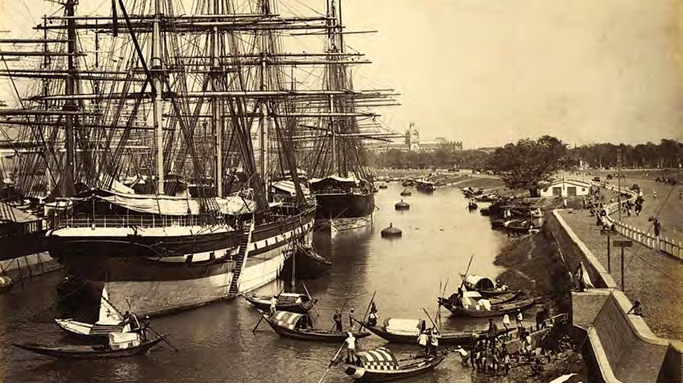
Historians and anthropologists were both directly implicated in colonialism, even if they didn’t identify themselves as such. Because of the European colonial experience, anthropology as a separate form of knowledge has its roots in colonial experiences. It was widely believed that throughout the colonial period, some anthropologists played an important role in mediating between colonial subjects and rulers. In the colonial history of India, there were explicit efforts made to construct an “official ethnography” at the moment that anthropology was beginning to be defined as a distinctive form of knowledge. Anthropologists developed practices through which they sought to erase the colonial influence by describing what they took to be authentic indigenous cultures [18]. The principal interpretative technique by which India was to become known to Europeans in the seventeenth and eighteenth centuries was through a development of a history for India. India was perceived by Europeans not only as exotic and odd but as a kind of living museum of the European past. Museums and material culture have been largely ignored in most discussions of anthropology’s societal role after World War II. Ethnographic exhibitions, on the other hand, have recently become a trendy topic [19]. It’s not that curators have grown bolder -the odd show has always elicited enthusiasm or controversy – but that displaying, particularly of or by cultural ‘Others,’ is more perceived as explicitly or implicitly political. Exhibitions, like museums, have come to be seen as hegemonic instruments used by cultural elites or governments [20]. India’s 18th century Annapurna idol will soon be returned to the country after being stolen over a century ago. He stole the statue in the early 20th century from a shrine on the riverside in Varanasi, where it had earlier been exhibited. A collection of McKenzie art has housed it since then at the University of Regina, Canada. Nevertheless, colonial looting was methodical and made to appear lawful in appearance. Plunder of this nature persisted after the country gained its independence but now became an act of crime. There are still people being investigated for smuggling millions of dollars’ worth of cultural property. The maritime museum record voyage indicates that during the colonial period, ships approached the Andaman and Nicobar Islands in the Bengal Sea, their main goal being to obtain collections that well represent the museum [21].
Currently the National Museum, Washington, USA and British Museum have the maximum number of ethnographic objects of Andaman sites and tribes [22, 23]. During the period when ships were particularly interested in trapping small mammals, which were the least known part of the island’s fauna, were the most interesting subjects of investigation. Sixteen new genera have been obtained from the Andamans
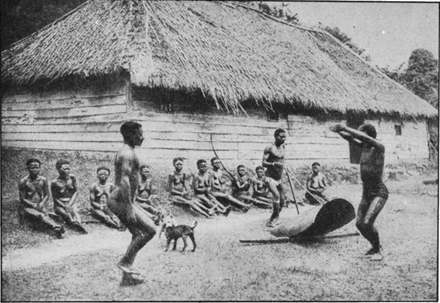
and Nicobars together, increasing the known fauna of these islands from 24 to forty individuals, while the collections also include ten species; birds have not been described before. All collections have been shipped to England and elsewhere and are kept in museums for display (C. Boden Kloss, In the Andaman and Nicobars, John Murray, Albemarle Street W.1903).
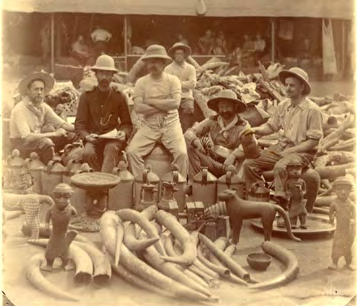
In terms of ownership, there’s a big distinction. When the colonisers were doing it before independence, there was victory rhetoric [24]. Indian cultural artefacts have been displayed in museums and exhibitions around the world for many years. The return of foreign treasures by international law expert Jeanette Greenfield estimates that more than
50,000 art artefacts were smuggled out of India between 1979 and 1989. Over the past few years, the practise of repatriating stolen artefacts has gained popularity and it has been able to rescue 40 artefacts between 2014 and 2020, according Archaeological Survey of India data. Another 75- 80 artefacts are in the pipeline for return. Other refugees remain in foreign places, bringing with them the scars of plunder and pillage from the past [25]. For a long time, extremely valuable and delightful archaeological articles uncovered from chronicled destinations have been snuck abroad and offered to historical centres and different authorities. Considerable parts of the assortments of the world’s extraordinary exhibition halls are the result of plundering during season of war or pilgrim occupation, for example, the Napoleonic control of Egypt and Britain’s provincial period in India (Marjorie Caygill, Treasures of The British Museum, 51-52 (1985) [26]. However, the plundering of social property happens in two assorted settings. The first includes capture of social property during war, military occupation or provincial standard. Under such conditions, property is taken as “goods,” through spoliation or loot, or it is moved compliant with capitulation arrangements that are regularly pressured by the victor. The second includes plundering during seasons of harmony when there is relative dependability and independence among countries and social gatherings. This subsequent setting includes the unlawful and undercover unearthing of ancient pieces without authorization from nations of beginning and the resulting carrying and offering to gatherers of social property by means of the global market [27, 28, 29, 30].
As the most public facets of museum practise, the protection and interpretation of cultural heritage are among the museum’s most important functions. Although museum displays have their limitations, indigenous people commonly point out that culture is a living process that encompasses both continuity and change. The smuggling of tribal art and artefacts of the communities, as well as archaeological artefacts discovered from historical locations, has been happening for decades, if not millennia. Significant portions of the collections of the world’s leading museums were looted from India during the colonial era, there is no doubt about that.
A huge number of demands from peoples, tribes, or states seeking to repatriate looted cultural artefacts have shook up the art world in the past several years. Public and private collections, most of which are found in the northern hemisphere of the world, are at odds with the stolen society in this new heritage war. They are often shown out of context and out of tradition because they have been purchased from all over the world, converting them into displays that symbolise exoticism. They are regarded as important cultural assets by the countries where they were collected in the past for their aesthetic value. The difficulty is how to strike a balance between the notion of universal heritage, which is typically promoted by ex-colonizers, and the ethical dilemma that repatriation poses. As far as repatriation and cultural sovereignty are concerned, the idea of universality of cultural property appears to pose a threat (Bonnie Burnham, The Protection of Cultural Property: Handbook of National Legislation, 35-6 (1974) [31]. In recent years, we’ve also witnessed a growing international awareness of indigenous rights, which has led to the development of a number of international treaties. This, in my opinion, is an integral part of the promotion and protection of indigenous peoples’ rights, as is the right to culture. Indigenous cultural artefacts are generating a growing amount of curiosity. As a result of this, can we clearly deduce from the human rights of culture a right to repatriation of cultural objects? Analyzing present regulations and current challenges to repatriating cultural artefacts will also be examined in this article. These concepts will be broken into three sections: “indigenous
people”; “cultural items”; and “repatriation”. Peter HW, et al. [32] after that, we’ll talk about the legal instruments that support international standards on the right to culture and repatriation, and how they’ve evolved over time. In conclusion, we will discuss the obstacles associated with repatriating cultural artefacts to their original countries of origin. Oxford Dictionary defines indigenous as “belonging to a particular place rather than having come from somewhere else”; it offers synonyms such as “native, original, aboriginal, home-grown”, and other similar definitions. Due to the diversity of indigenous cultures, there is no universally accepted definition of “indigenous people” in the United Nations Declaration on the Rights of Indigenous Peoples of 2007.
Discussion
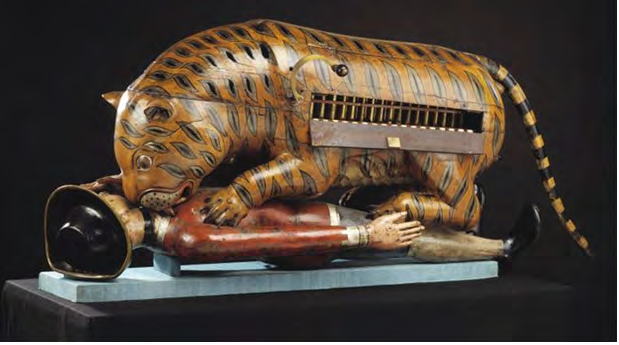
Many Indians remain sensitive to cultural relics that were stolen during the British conquest of India and have yet to be returned. After all, the British Empire was the largest colonial power at the time, and India was its largest colony and the “jewel” in its crown (Mike Toner, Past in Peril: America the Looted, ATLANTA J. & CONST., Feb. 13, 2000, at I C). Cultural relics confiscated, looted or taken away by the British as “gifts”. Starting with the “Koh-in-noor” diamond decorated on the Queen Victoria brooch, followed by the Queen Mother’s crown; the Buddhist altar at the Amaravati Monument in south-eastern India; and a wooden tiger, which was snatched by the British in the 18th century from Tipu Sultan when he defeated by Jeanette G, et al. [33]. Today, they are on display in museums such as the British Museum, the Pitt River Museum, and the Victoria and Albert Museum (V&A), which is also home to an impressive collection of Beninese bronze statues. Although repatriation has become a legal and practical reality for more than 20 years, disputes between anthropological scientists and supporters of repatriation often dominate professional and academic discussions about the fate of community related artefacts. The future of museums requires us to reconsider as museum facilities, especially on anniversaries. It’s not enough just to show the object. You have to think about how this is done and why it is going the way it is now. Is there any other more effective and appropriate way? The purpose of the museum has changed because it is tied to a shift in the notion of how we see the past and connects it to the society of the present and how we use the past. Museums, as well as historical writings, represent a middle ground between the past and us. And the past is not there, it is a part of us. We need to understand the past in context, not alone. Coming to the repatriation issues in museums of India “You took our lives. You took our natural resources. You took our heritage. You can’t give back our lives and natural resources. At least give back our heritage,” said Anuraag Saxena, who founded the India Pride Project (IPP) in 2014. Many Indians are still sensitive to artefacts stolen during the British conquest of India that have not yet been returned. After all, the British Empire was the largest colonial power at the time, India’s largest colony, and was the crown “jewel”. Artefacts confiscated, looted or taken as a ‘gift’ by the British. Starting with the ‘Koh-i-noor’ diamonds adorned with Queen Victoria’s brooches, the mother’s crown continues. Shrine of the Buddha at the Amaravati Monument in south-eastern India. A wooden tiger confiscated from Tipu Sultan after defeat by British forces in the 18th century. Today it is on display at the British Museum, Pitt Rivers Museum, Victoria and Albert Museum (V&A) and more, and the impressive collection of statues is also reviving historical artefacts brought from India. Over the years, we have seen the international community enact specific legislation to protect indigenous peoples with an interest in the rights of indigenous peoples David G, et al. [34]. We also pointed out that such international literature understands the importance of culture and the protection of cultural heritage for indigenous peoples. The repatriation of cultural properties, a component of culture, is seen as a resource for correcting past mistakes and preserving culture for future generations. However, despite increasing international recognition, only a few cases of repatriation are still present, and indigenous objects are believed to have been frequently found at commercial auctions. Initially, repatriation can be considered a solution for most international communities, but if repatriation does not occur naturally and leads to cultural conflicts when indigenous people refuse to repatriate for spiritual reasons. In addition, museums very often claim the universality of cultural heritage and continue to preserve valuable treasures. Finally, what prevents indigenous peoples from becoming independent in their repatriation requests beyond the lack of binding legal documents is lack of practice. In some cases, close cooperation with indigenous peoples and museums or the state is necessary [35]. Returning home is essential, but a cultural detour again. Western art galleries, for example, have traditionally been treasury of the past, and have therefore treated indigenous peoples as endangered. Instead, Mr. Aboriginal Museums and Cultural Centers are becoming “living places” and spaces for creation and enhancement of identity. The right to return objects of one’s own culture is a human right. The right to return and redistribute a highly symbolic cultural property should be regarded as an inherent human right [36]. The last thing that needs to be reconsidered the notion of a human corpse on display in an art museum is to be returned to the indigenous peoples concerned to restore the right to human dignity of their ancestors. The principles and methods developed by states in the course of this international collaboration may eventually offer lasting value as a future action paradigm to inform and promote the recovery of plundered property and address cultural property disputes. We have no choice but to repeat the often recurring feeling, that museums should be visible to the invisible. And we are all looking forward to the new dimension of museums of India.
References
-
Turnbull P, Pickering M (2010) The Long Way Home: The Meaning and Values of Repatriation. Berghahn Books, New york, pp: 224.
-
James C (1986) Introduction to Writing Culture: The Poetics and Politics of Ethnography. 2nd (Edn.), _In:_ James C, et al. (Eds.), University of California Press, United States, pp: 336.
-
Stanley N (2008) The Future of Indigenous Museums: Perspectives from the Southwest Pacific. Museums and Collections Book, pp: 272.
-
Anyon, R, Thornton R (2002) Implementing repatriation in the United States: issues raised and lessons learned. _In:_ Forde C, et al. (Eds.), The dead and their possessions: repatriation in principle, policy, and practice. 1st (Edn.), London: Routledge, pp: 190-198.
-
Bernard CS (1928) Colonialism and its forms of Knowledge, The British in India. Princeton University Press, pp: 216.
-
Buckland FT (1883) Log-book of a fisherman and zoologist. Chapman & Hal, London.
-
Richard H (1992) On the Valuing of Museum Objects. Museum Anthropology 16(1): 21-28.
-
Edwards E (1989) Images of the Andamans: the photography of E.H. Man. Journal of Museum Ethnography, pp: 71-78.
-
Goldsmith HA (2012) The fact and fiction of Darwinism: the representation of race, ethnicity and imperialism in the Sherlock Holmes stories of Arthur Conan Doyle. _In:_ Miller V, et al. (Eds.), Cross-cultural connections in crime fictions. Palgrave Macmillan, Basingstoke, pp: 24-40.
-
Alexandria S (2013) U.S. foundation buys Hopi masks at auction to return to tribe. Reuters.
-
Man EH (1883) The Aboriginal inhabitants of the Andaman Islands. Royal Anthropological Institute of Great Britain and Ireland, London 12: 327-434.
-
Cassell J, Sue-Ellen J (2021) Handbook on Ethical Issues in Anthropology: Introduction. American Anthropological Association.
-
Thomas W (1973) To See Ourselves: Anthropology and Modern Social Issues.
-
Stocking GW (1968) Race, Culture and Evolution. The Free Press, Glencoe, pp: 408.
-
Leeds A (1969) Ethics Report Criticized. Newsletter of the American Anthropological Association. Reprinted in 1973 To See Ourselves: Anthropology and Modern Social Issues. _In:_ Weaver T, et al. (Eds.), Glenview 10(6): 49-50.
-
Colson E (1985) Ethics and Codes of Ethics. Anthropology Newsletter 26(3): 20.
-
Aletha A, James C (2018) Tribal torture: royal navy explorer’s creepy sex pics of sentinelese tribe may have led to death of John Allen Chau. The Sun.
-
Ronald Bush (1998) Monstrosity and Representation in the Postcolonial Diaspora: The Satanic Verses, Ulysses, and Frankenstein. _In:_ Elazar B, et al. (Eds.), Borders, Exiles, Diasporas Stanford: Stanford Univ. Press, pp: 234- 256.
-
Keeler H (2014) A Guide To International Repatriation. Association on American Indian Affairs.
-
Mara V (2004) Museums and the Repatriation of Indigenous Human Rights Remains.
-
Barkan E, Ronald B (2002) Claiming the Stones/Naming the Bones: Cultural Property and the Negotiation of National and Ethnic Identity. The Getty Research Institute Publications Program, pp: 384.
-
Cheng VJ (1995) Joyce, Race, and Empire. Cambridge University Press, pp: 102-104.
-
Marjorie C (1985) Treasures of The British Museum, pp: 240.
-
Ferguson TJ, Anyon R, Ladd EJ (1996) Repatriation at the Pueblo of Zuni: diverse solutions to complex problems. American Indian Quarterly 20(2): 251-273.
-
Mihesuah D (2000) Repatriation reader: who owns American Indian remains? Lincoln: University of Nebraska Press, pp: 335.
-
Bernard SC, Nicholas BD (1988) Beyond The FringeThe Nation State, Colonialism, and the Technologies of Power. Journal of Historical Sociology 1(2): 224-29.
-
Kathleen SFD (2002) Grave injustice: the American Indian repatriation movement and NAGPRA. Lincoln: University of Nebraska Press, pp: 250.
-
Odegaard N, Sadongei A (2005) Old poisons, new problems: a museum resource for managing contaminated cultural materials. AltaMira Press, Walnut Creek, Newyork, pp: 1-46.
-
Chawkins S, Times LS (2012) Native American skulls repatriated to California from England. Los Angeles Times.
-
Sen S (2009) Savage bodies, civilized pleasures: M.V. Portman and the Andamanese. American Ethnologist 36(2): 364-379.
-
Bonnie Burnham (1974) The Protection of Cultural Property: Handbook Of National Legislation, pp: 203.
-
Peter HW (1992) Repatriation and Culture Repatriation and Cultural Preservation: Potent Objects, Potent Pasts. University of Michigan Journal of Law Reform 25(3-4): 837-865.
-
Jeanette G (1989) The Return of Cultural Treasures. Cambridge University Press, Newyork 2(1): 129- 133.
-
David G, Christopher C (2002) The Trade in Looted Antiquities and the Return of Cultural Property: A British Parliamentary Inquiry. Int’l J. of Cultural Prop 11(1): 50- 64.
-
Mouat FJ (1863) Adventures and researches among the Andaman Islanders. Hurst & Blackett, London.
-
Pandya V (2009) Through Lens and Text: Constructions of a Stone Age Tribe in the Andaman Islands. History Workshop Journal 67(1): 173-193.
- The Indispensable Role of Informal Caregivers in Supporting the Aging Population
- Socio-Religious Significance of Kamakhya Temple in Guwahati, Assam
- Is Anthropology Possible?
- A Contribution to the History and Paleobiology of Harput/Elazığ Türkiye and Its Surroundings
- A Study on the Cowrie Shells of the Dimasas in Assam
- The Significance of International Organizations Cooperation in the Efficient Resolution of Global Conflict