
Museum and Pandemics a Cautionary Tale from History: Impact, Innovations, Learning from Crises
The invisible virus created a terror among the most survived ‘Wise Man’ (human) who survived millions of year and seen uncountable epidemic challenges and now packed in a home with less facility. The question is now where we go from here and does this trauma will leave a permanent epidemic marks on our civilization like happened in history? The world don’t want to visit those dark areas happened in early. But now this Novel COVID-19 created a whole new ball game where the entire world came into the pitch and ultimately the entire community leading to psychiatric illness. The potential of museum personals is now has been challenged to create meaningful experiences for the civilizations to overcome from this pandemic situation which is central to their service as a champion tool to identify the social values of the communities. As agents of trusted institutions the museum personals specifically the museum anthropologists are facing challenges to overcome from these challenges of inclusion and diversity and the difficulty of navigating complex social issues in this isolation situation. The healing process of our societies after the COVID-19 crisis will be long and complex for many museums as places of meeting and learning for societies. Museums have important role to play now to repair and strengthening the social fabric of communities which are affected due to this pandemic. “Governments all over the world have taken necessary measures to stop the virus from spreading, by closing schools and public spaces, and especially Museums. Billions of people have been confined to their homes, and the number keeps growing. During this period many museums and museum personals are finding ways to keep engage the people with the museums and ICOM as representing the international museum community, calls on policy and decisionmakers to urgently allocate relief funds to salvage museums and their professionals, so they can survive the lockdowns and continue their vital public service mission once it is over, for the generations to come out from the situation,” the council announced in an statement on April 2. As Museum Anthropologist we used to study history, archeology and anthropology as Humanity and with this Humanity we study what makes us humans. Anthropology and history like a source has reminded us that humanity has faced lot of similar challenges in past and that this pandemic is really not unprecedented. Though these thing has been a part of culture since millennia and even only a hundred years ago similar challenges has been faced by our ancestors. Museums and Museum anthropologists needs support to make the humanity understand what collections means to you and what the collections may represent to the future anthropologists during such pandemic situations.
Introduction
This paper examines the relationship between the pandemics and curatorship and museums how explores the challenges occurred during pandemics and epidemics since from the beginning and museums how undertook the problematized situation. From the contextual view historically the curators have been responsible for researching and developing collections within institutions and exhibitions have been drawn and mounted from that context. If we don’t not discuss about the history the contemporary curators always try to create and contribute ideas and art strategies to address the world in all its complexities [1]. And from many other areas of exploration in society museums in the world confront the pandemics and epidemic’s impact on their short and long-term operations and community wellbeing. Some memories which is kept in the archival storage of museums should not be overlook, and our collective memories may helpful to come through this pandemic situation.
The Response of museums during pandemic and epidemics always applied a specific phased approach to ensure appropriate actions for the awareness of the society in all the times. These phases of preparedness since from the history are mostly specific to science and Arts museums envisioned to direct correspondence with the public in order to aware the guidelines [2].Turning the chapter of history one can see that how the museums has excelled a light not only challenges faced by the individuals in time and space.
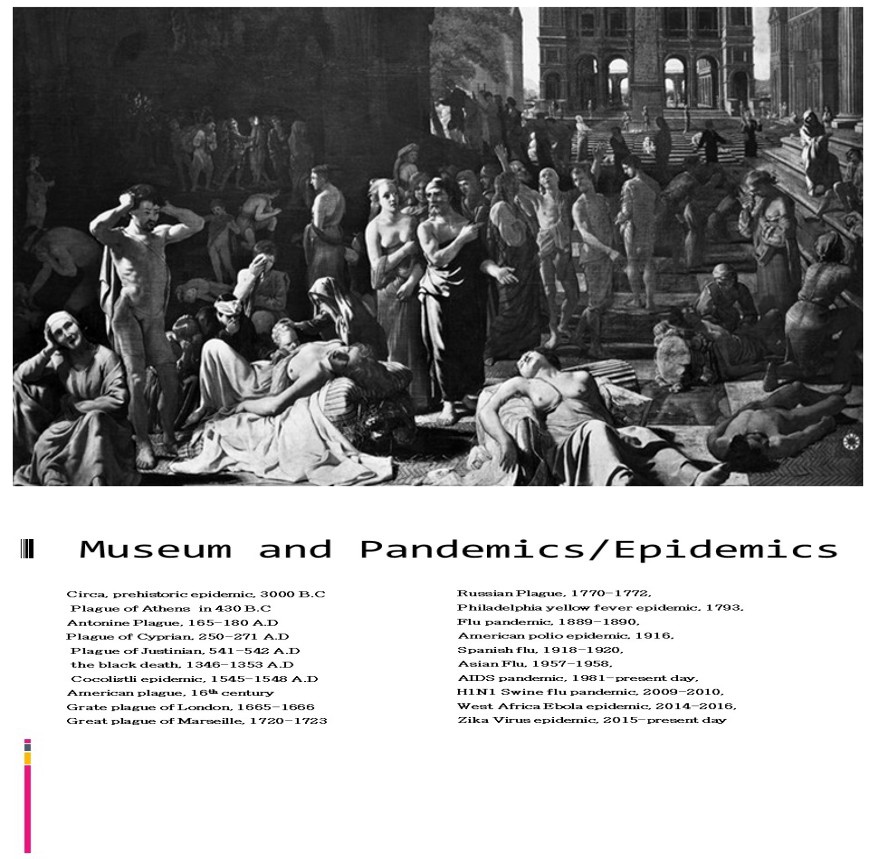
The worldwide spread of COVID-19 forced to review the historical chapter that how museums responded to major epidemics and pandemics in last 20th century such as tuberculosis, the Spanish flu and AIDS [3]. The museums in the United States always leaded to confront the impact of the epidemics on the society and their short-term operations such as museum exhibitions and outreach activities then for the community wellbeing were collective memory how to come through the situation.
The most primitive recorded pandemic which happened in 430 B.C in Athens during the Peloponnesian War and one third of the total population died when the disease passed through the Libya, Ethiopia and Egypt. The included symptoms of the disease such as fever, bloody throat and tongue, red skin and lesions were painted by many historic artists and preserved in the classical collections of Athens. The Great Plague of Athens wrote the first chapter in the humankind on epidemic in form of sculpture and paintings as and preserved the past as our instructor for the future (Figure 1) [4].
The horrible black pocks over the bodies of Romans in around 165 A.D. realized that their empire has been hited by small pox and 10 percent of 75 million people living in the Roman Empire never recovered. This Infectious disease was long part of Roman life and left a disfiguring scars among the people. The first smallpox of Romans was began as a terrifying rumor from the east, spreading through conversations that often simultaneously transmitted both news of the disease and the virus itself [5]. The Antonine Plague was far deadlier than COVID-19, and the society was less capable of saving the sick than we are now. But Romanians survived and this has been narrated in many art museums of Italy and giving a snooze bell in between to recall the dark period. The art and sculptures indicates that communities rebuilt and the survivors even came to look back on the time of plague with an odd nostalgia for what it showed about the strength of their society and its management.
The Leprosy Outbreak
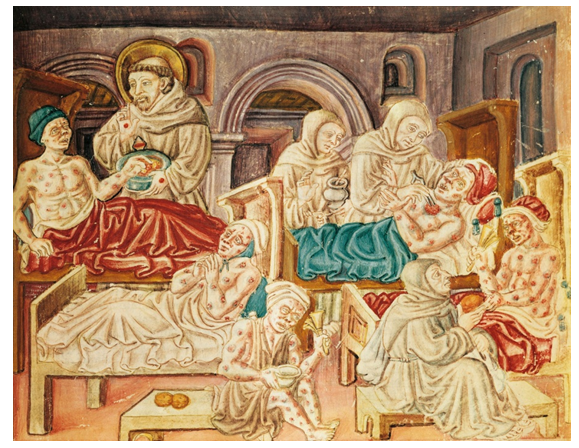
Leprosy has under attack humans throughout the recorded history as an epidemic and infected millions of people over a span of thousand years. The destructive effects on the body created a history of fear and segregation caused by misconceptions and rumor. In Europe, leprosy first appeared in the records of ancient Greece after the army of Alexander the Great came back from India and then in Rome in 62 B.C. Many scholars believe is leprosy appears in an Egyptian Papyrus document written around 1550 B.C. Around 600 B.C. In England and Scotland during the Middles Ages of 1050 to 1550 CE, leprosy reached its highest occurrence and 1.5 million cases were noted (Figure 2) [6].
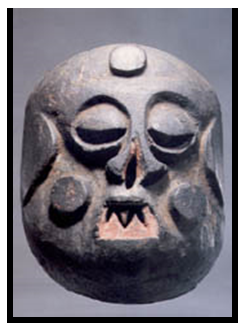
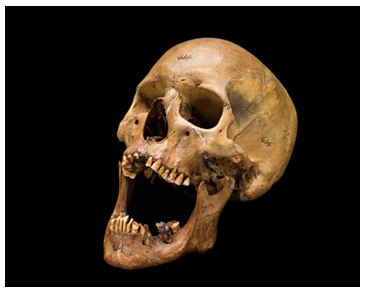
Leprosy throughout its history and in many contemporary societies misunderstood as curse, punishment from God and hereditary disease. The discovery of its biological causes failed too to make the patients free from stigmatized and shunned. The use of special clothing and use of separate utensils in India and use of ring bells to warn others that they were close and even walk on a particular side of the road, depending on the direction of the wind were common for many countries. But the special exhibits in the museums like National Museum of Health and Medicine, NIH’s National Library of Medicine multimedia exhibition, “Native Voices: Native Peoples’ Concepts of Health and Illness”, etc created awareness about the history, causes and cultural beliefs associated with Leprosy (Figure 3).
The Early 20th-Century: Museums and Epidemic
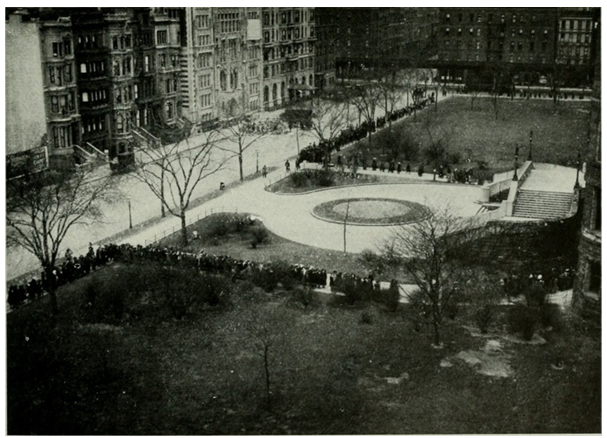
In the early 1900s, a diagnosis of tuberculosis led to the deadliest deaths and plagued societies for many years, especially new immigrants living in overcrowded conditions and was especially vulnerable. Since the disease was consuming lives of too many understanding and treatment over the century become more important. To fight the spread of the TB, public health workers knocked the doors of museums for help. To communicate effectively to the wide audience through vast displays with well researched materials on disease museums were found suitable for society. Providing the direct service to the society between 1905 and 1909, the American Museum of Natural History and the Smithsonian developed and hosted two blockbuster exhibitions about tuberculosis: its etiology, how it spread, and the damage it could cause in those who contracted it, supplemented by illustrated pamphlets about prevention and self-care in languages. The dioramas and panels with “Don’t Spit” message attracted huge audience over one million. The exhibition on “Tuberculosis” created a history US museum history (Figure 4) [7].
Spanish Influenza pandemic and Museum
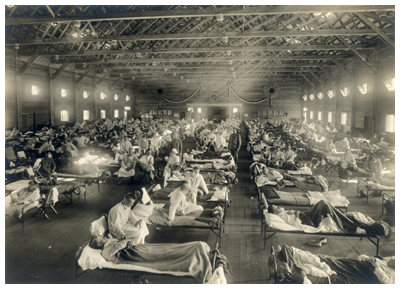
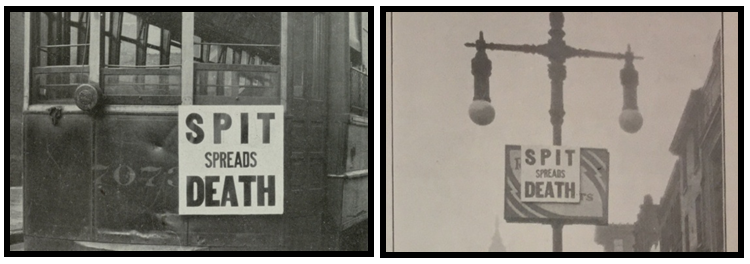
The Spanish Flu which wrapped 50 million people worldwide in its grip of death in 1918 was first observed in Europe, the United States and parts of Asia before quickly spreading around the world. The killer flu strain has no vaccine to treat and no drugs to cure. The outbreak Spanish flu was creating a terror among the people hence in Oakland, California, authorities took advantage of large buildings constructed during different city movements and converted into 80-bed emergency hospital. Later on these municipal auditorium and art galleries converted and stood up as Oakland Museum of California where the old visuals are narrating the history as witness [8]. “Spit Spreads Death,” the name of the exhibition was conceptualized by the Mütter museum during The Influenza Pandemic of 1918-19 in Philadelphia. The exhibition, however, was overshadowed by the influenza pandemic of 1918 in which Philadelphia experienced the highest mortality rate of any major American city and the pandemic came into town quickly, killed around 12,000 people in the first six weeks, and then slowly vanished (Figure 5).
Same as yellow fever of 1793 no one knew about the cause behind Influenza and what caused the disease or how it can be communicated to public. Spit Spreads Death: created Anti-spitting awareness and took measures included fining offenders and plastering the signs on lampposts, streetcars, local buses and other public places and the exhibition became a most ambitious exhibition to date. The Natural Museum of American History, Smithsonian’s collections of Influenza vaccines, related photographs and panels provide evidence of this history and the attempts of humankind as well as museums to understand and control this disease (Figure 6).
Late 20th-Century AIDS Epidemic and Museums
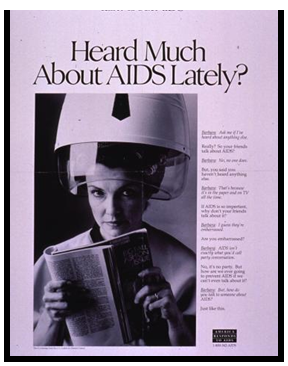
The blockbuster exhibition of 1908 on tuberculosis at the American Museum of Natural History was an attempt by the curators that how museums taking responsibility to deal with a critical public-health issue and their overwhelming response to concerned scared public. But when in the early phase of 1981-87 the HIV AIDS become the global pandemic, Science museums played crucial role by showing visitors that research-based information can be useful in making personal decisions [9]. The effect on the millions of visitors should be great and may enable museum visitors to adopt behaviors that reduce the risks of transmission of HIV and may foster compassionate, humane attitudes toward persons affected by the disease. The firm belief-that museums can enlighten visitors again about the biology of a dangerous virus-and thus forming of National AIDS Exhibit Consortium (NAEC) was planned by many museums as founding members like Museum of Science and Industry (Chicago) Museum of Science (Boston) California Museum of Science and Industry (Los Angeles) The Exploratorium (San Francisco) The Franklin Institute Science Museum (Philadelphia) Maryland Science Center (Baltimore) National Museum of Health and Medicine AFIP (Washington, DC) New York Hall of Science (New York City) American Medical Association (Chicago) Centers for Disease Control (Atlanta). As a result the travelling exhibition on AIDS, ‘Understanding AIDS epidemic’, ‘AIDS: Protect yourself’, ‘discovery box’, “real people’ like many big and small exhibitions were mounted by the American Museums and exhibited information related to biological as well as cultural context using stories. The research and development team of the curatorial wing tried to balance the exploration of the scientific as well as sentimental issues of the public essential to understanding the AIDS epidemic (Figures 7 & 8) [9, 10].
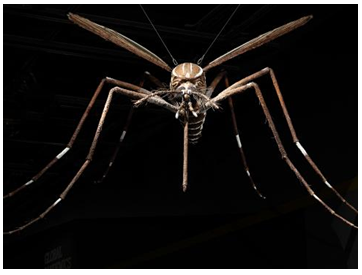
Keeping virus like Zika and future threats from our homeland single object exhibitions has been developed by National Museum of Natural History, Smithsonian exhibiting a replica of Ades aegypti mosquito and awering its viral infection and how transmitted primarily by bites from this mosquito (Figures 9 & 10).
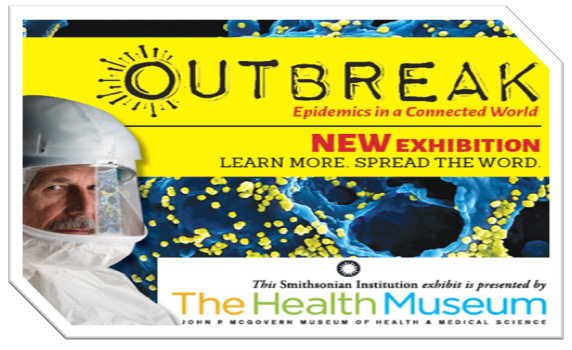
Today, COVID-19 pandemic is impacting societies worldwide all museums have a crucial role to play-now as it performed in the history and in early 19th century. Now with the same partnership of museum and society many progressive steps has been taken by museum staffs throughout the world and developed a deep understanding of pandemic and wanted to share their knowledge with the community. The exhibitions like Outbreak’ by Smithsonian, Lessons from History: Museums and Pandemics by American Alliance of Museums, “Pandemic! A Cautionary Tale” exhibition by St. Albert’s Museé Héritage are a new version of online exhibition which extending its chapter by submissions from public from different countries as stories and experience [11, 12]. Now Curators and educators are eager to prove the trust of society on the institution who is serving to the society since history as a civic leader where more than a dusty storehouse the collections plays a crucial role during the pandemic and epidemic situation as elite to a wide public (Figure 11).
Impact of COVID-19 on Post Pandemic Situation of Museums
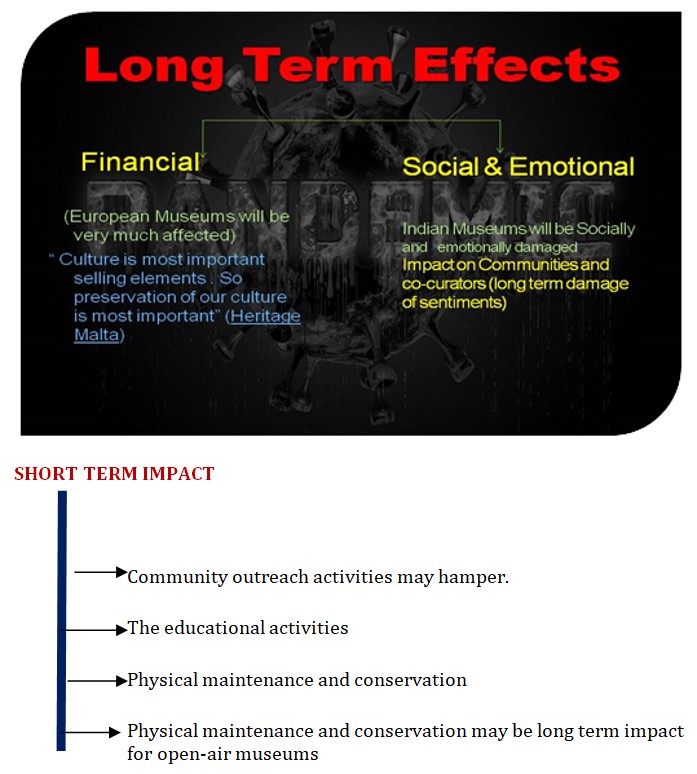
Cultural and creative sectors are among the most affected by the current corona virus (COVID-19) crisis, and museums are no exception. The COVID-19 pandemic has disrupted the activities of museums all over the world, threatening their financial survival and the livelihood of thousands of museum professionals. With the outbreak of COVID 19 and the world pandemic, many countries globally proceeded with population movement control practices or even complete lockdowns in an attempt to restrict the spreading of the virus. Cultural institutions were severely affected since many had to stop their activity or significantly alter it while trying to cope with the new reality that the virus has imposed in our lives [13, 14, 15]. In this climate, cultural institutions had to find alternative ways to reach their audience and even expand their clientele by organizing cultural activities online. For example, theatres organized online performances releasing numerous plays online (e.g. Greek National Theatre, https:// www.n-t.gr), music festivals were broadcasting live on the Internet (e.g. Prague Spring Festival, https://festival. cz), operas streaming on social media (e.g. Metropolitan Opera, https://www.metopera.org), visual arts openings were organized through ZOOM calls (e.g. https://www. acg.edu/the-kidsare-asking), all wishing to continue with their cultural activity and maintain operation as normal as possible.
Especially museums increased their online presence by 80% during the lockdown, offering more social media interactions, broadcasts, virtual tours and online exhibitions, and observed more than 40% increase in online visits [Network of European Museum Organizations. 2020. NEMO report on the impact of COVID-19 on museums in Europe. [https://www.ne-mo.org/fileadmin/Dateien/public/ NEMO_documents/NEMO_COVID19_Report_12.05.2020. pdf].
Online museum presence may take several forms, ranging from traditional online catalogues and digital exhibitions that include narratives and audio-visual content to virtual representations of the museum’s physical environment, in which online visitors may move and closely observe the exhibits on display, thus simulating the actual visiting experience (see for instance the Google Art Project, where several museum spaces have been represented, or custom applications such as the VR Museum of Fine Art, available on steam - https://store.steampowered.com/app/515020/ The_VR_Museum_ of_Fine_Art), or “Hold the World”, with David Attenborough virtually guiding remote visitors at the collections of London’s Natural History Museum (https:// www.factory42.uk/holdtheworld), among others). Despite the wealth of cultural resources that are currently accessible online and the remarkable diversity in the adopted experience design approaches, a close look at the most popular and most visited online museums during the lockdown (https:// www.theguardian. com/travel/2020/mar/23/10-of-the- worlds-best-virtual-museum-andart-gallery-tours) shows that cultural online visits are commonly designed as private, single-user experiences. However, museum studies have repeatedly highlighted the importance of the social context, suggesting that social interactions are key elements in the design of engaging cultural visits [14, 15, 16].
The advent of online leisure and edutainment at the beginning of the new millennium created a fierce competition for onsite museum experiences and brought about a significant response by museum professionals and researchers who rallied to highlight the advantages of physical visits and interactions with the curated content. As is evident in the museum research literature, apart from the unique and powerful features that make physical objects and places springboards for learning, engagement and authentic experiences, one of the most valued aspects of the museum experience is related to the socio-cultural characteristics of a visit. Social interaction is pervasive in museums and cultural heritage sites and enhances learning, even in cases lacking such a design intention or mandate [17, 18]. In this light, the first digital interactive applications that attempted to provide more rich and engaging visitor interpretation were heavily criticized for prioritizing the individual user while overthrowing the inherent social affordances of exhibits for co-participation and collaboration as processes of knowledge construction. This led to the growth of a promising research area looking at ways to enhance digitally aided social experiences in the context of museums and cultural heritage sites [13, 19].
Asynchronous interactions are typically accomplished through “content sharing”. Realizing the value of visitor participation, as insightfully elaborated in the definition of the “Participatory Museum”, several works have aspired to empower active visitor involvement by supporting the creation and public access to usergenerated content (e.g. comments or tags, personal stories, emotions, opinions etc), or even the authoring of personal digital collections and cultural exhibitions. These systems cultivate the concept of “museums as social places” and aim to promote social awareness, showcasing the presence of prior museum visitors and visualizing their contributions. This objective is addressed both in the scope of onsite and remote visits.
Some systems deployed for museum environments include Imprints, ArtLinks, MobiTags, and the Room of Opinion at the Hunt Museum [20]. In some cases, the user- generated content is also leveraged for improving public access and engagement with on-line cultural collections. See for instance the steve.museum project where online visitors are prompted to annotate the displayed artworks with free- form tags. The collected data is used to create folksonomies that indicate the social perception of the corresponding artworks and enable a socially derived retrieval mechanism for accessing online collections. In all the above approaches, visitor interactions are indirect; they are accomplished by providing shared access to objects and applications, which occur at different times and without prescribing direct communication between the parties involved. We believe that synchronous interaction is a key element that notably fosters the social context of cultural experiences. Previous work on the topic has experimented with systems that support museum co-visits between onsite and remote visitors suggesting that social presence is closely related to engagement and enjoyment and thus, an improved remote experience. When it comes to entirely online strategies, besides offering free access to digital resources, some institutions have opted for broadcasting at specific times.
Leaving aside the proprietary issues that may have motivated this approach; there is also a social side effect of the broadcasting scheme. But how will the users be aware of their common activity? In the broadcasting scheme, there is no shared environment of interaction between the spectators, yet we believe that its social dimension may be notably increased by digitally mediating the co-presence of other visitors: from indications of who or how many people are watching the same cultural content at the same time, to personalized notifications about acquaintances (obtained from social networking profiles) who are currently watching or now joining the same activity. The use of awareness supporting technologies that are traditionally applied in collaborative systems for a recent systematic literature review) may also benefit the design of cultural experiences to foster their social dimension, particularly when experienced remotely.
COVID 19 found cultural institutions unprepared, without an established and effective virtual presence for something other than dissemination of their on-site activities. Those few, on the other hand, offering digital products possibly lacked the approach to disseminate them under the right context and in the proper channels. One would argue that this critique is harsh. As discussed in, many institutions, going beyond a basic web presence with general information, offer different types of digitized content, available after the organized investment on the digitization of the past decades. Many museum websites offer access to hundreds of digitized artifacts through high-quality images and their relevant information. These offerings have, in theory, “opened up the museums to wider and more diverse user groups” and have led to an increase in the number of on-line visitors. A great percentage of these visitors, however, leave the website after looking at one or two pages, generally in less than 10 seconds. As regards onsite visits, during the times of COVID 19 museums are likely to face significant challenges that will influence social interaction design in the following areas:
- Visitor strategy and management policies,
- Spatial configurations and exhibition design and,
- Movement flow based on social distancing parameters.
Considering the above, will we witness a return to individual user interfaces? if so, will we still continue to design for social interactions? or is this something that due to the necessity of staying safe, keeping the numbers down and the curve flat, will be completely abandoned? Overall, cultural institutions need to re-invent the way they approach both their audience and technology, they need to transform their narratives from object-centric to people- centric. “Stories are about people, not things”, as discussed in and stories have always been the most basic method we communicated experiences, oral traditions and knowledge, always in a social context where the storyteller and their audience are involved in a dynamic and interactive process and often even exchange roles. This simple and fundamental truth, if applied in a museum context, would have the potential to create connection and engagement. Technology and the vast possibilities for digital experiences, on the other hand, should be put at the service of this principle instead of being an objective by themselves. We need to design for sociality, either onsite or in virtual spaces, and we need to place affective connection, perspective-taking and empathy at the center of this design.
Finally, it seems that the technology is there to support social experiences in cultural heritage, either onsite or online. The technology has been extensively tested and validated in many contexts, and for many years, from gaming applications to social media. The main challenge lies in the successful application of these approaches in defining concrete and relevant objectives and realizing them through an informed experience concept design. Cultural institutions are complex ecosystems and social experiences are important parts. The during and post-COVID museum experience should include carefully designed social interactions, respecting the social distancing requirements of different groups of visitors and users.
Conclusion
Today different experts are giving many visualizations, assumptions but what are the view points and role of museums since its socially and biologically created and involved by humans. Meanwhile human are capable of forgetting the strengths in the times of need and here the Museum Anthropologist can take the opportunity to remind the strength of unity and meaning of integrity to the society as a powerful tool. “The objective of International Museum Day is to raise awareness about the fact that, “Museums are an important means of cultural exchange, enrichment of cultures and development of mutual understanding, cooperation and peace among peoples.” Now the Museum anthropologists and Museums will have an important role to play to express our concern regarding the future of museums and the invaluable cultural heritage they hold as an essential part of the identity of the peoples and nations and a vital element for the communities they serve. We all are just like that if we know we have strength and focus on regaining them only then the entire community become powerful and may develop the faith of healing again with serving ideas because museums helping us to take world as global citizen perhaps realizing all the cultures that we are the survivors from the past and this pandemic and we have a very bright future.
References
-
Chung J, Wilkening S, Johnstone S (2009) “Coming Soon: The Future”. Museum, pp: 38-43.
-
Cartwright FC (2014) Disease and History.
-
Dobson M (2007) Disease: The Story of Disease and Mankind’s Continuing Struggle Against It.
-
Byrne JB (2008) Encyclopedia of Pestilence, Pandemics, and Plagues.
-
(1960) Source Book of Medical History, Logan Clendening.
-
Santoro G (1993)1908-1909 Curator. 36(1): 13-28.
-
La Motte EN (1906) The American Tuberculosis Exhibition. The American Journal of Nursing 6(5): 305- 311.
-
Humphreys M (2018) The influenza of 1918 Evolutionary perspectives in a historical context. Evol Med Public Health 2018(1): 219-229.
-
Parry MS (2009) AIDS and the Medical Museum Gaze: Collecting and Exhibiting Science and Society. On- curating 42.
-
Byerly CR (2005) Fever of War: The Influenza Epidemic in the U.S. Army during World War I. New York University Press, New York, USA.
-
Humphries MO (2013) The Last Plague: Spanish Influenza and the Politics of Public Health in Canada. University of Toronto Press, Toronto, Canada.
-
Vaughan VC, Vaughan HF, Palmer GT (1922) Influenza. In: Vaughan VC, Vaughan HF, et al. (Eds.), Epidemiology and Public Health. CW Mosby, St. Louis, USA, Volume 1, pp: 1297-1408.
-
Worobey M, Han GZ, Rambaut A (2014) Genesis and pathogenesis of the 1918 pandemic H1N1 influenza A virus. Proc Natl Acad Sci USA 111(22): 8107-8112.
-
Ewald PW (1994) Evolution of Infectious Disease. Oxford University Press, Oxford, England.
-
Perlman RL (2013) Evolution and Medicine. Oxford University Press, Oxford, England.
-
Alizon A, Hurford A, Mideo N, Baalen MV (2009) Virulence evolution and the trade-off hypothesis: history, current state of affairs and the future. J Evol Biol 22(2): 245-259.
-
Humphreys M (2013) Marrow of Tragedy: The Health Crisis of the American Civil War. Johns Hopkins University Press, Baltimore, USA.
-
Hughes SS (1977) The Virus: A History of the Concept. Heinemann Educational Books, London.
-
United States Census Bureau. History.
-
Karen W (2020) Museums in the Time of Covid-19: voices from the field ILR A Publication of Informal Learning Experiences, INC Informal Learning Review.
- The Indispensable Role of Informal Caregivers in Supporting the Aging Population
- Socio-Religious Significance of Kamakhya Temple in Guwahati, Assam
- Is Anthropology Possible?
- A Contribution to the History and Paleobiology of Harput/Elazığ Türkiye and Its Surroundings
- A Study on the Cowrie Shells of the Dimasas in Assam
- The Significance of International Organizations Cooperation in the Efficient Resolution of Global Conflict