
Tribal Tourism – Its Possibilities and Threats in Wayanad: An Anthropological Analysis
Tribal tourism is a kind of cultural tourism increasing its significance all around the world. Under tribal tourism, community gives a chance to the tourists to explore and experience the traditional and authentic way of living, heritage, history, handicrafts, and so on. The governments and communities put their share of interest in promoting tribal tourism, which helps to boost the economy of the communities and stimulate more opportunities to interact with the tourists and sometimes it helps them to maintain long-term relations. Wayanad a beautiful district of Kerala is home to nine indigenous communities. Hence in recent years the district has witnessed a rise in the new tribal tourism projects which aims to attract tourist to the local tribal customs and lifestyle. While tribal tourism projects help the indigenous population in multiple ways, it has also negatively impacted the traditional way of life of these communities. It has raised the threats of losing privacy, indigenous ownership, misrepresentation and misinterpretation of tribal culture, the dominating role of mediators, commercialization of tribal culture, and so on. This paper thus analyses the role of tribal tourism and its possibilities and threats in the Wayanad district, an attempt to address the significant impacts of tourism on the tribal communities of the district and to discuss how the indigenous people conceive the impact.
Introduction
The more modern, busy, and advanced the world becomes on one side, the human urge to go back to nature for a simple way of life is increasing on the other side. People with urban culture are more interested to the words such as traditional and organic which are largely getting commercialized nowadays, be it lifestyle, fashion, tourism, etc. The scope and significance of tribal tourism exists where the busy world wants to take a break from their hectic lifestyle.
Tribal tourism is a kind of cultural tourism that facilitates cultural exchange between the tribal communities and tourists and makes it easier to maintain tradition and livelihood at a time. Cultural tourism includes tourism in tribal areas, it can also include tourism in rural areas showcasing the traditions of indigenous cultural communities (i.e., festivals, rituals), and their values and lifestyles [1]. Tourism can have positive and lasting effects on our culture and natural heritage, on creativity and cultural diversity, and on the environment and balance of society [2]. Tribal tourism gives a wide opportunity to the indigenous communities for self-empowerment and to open their knowledge and skills to the world. The indigenous way of life, peculiarly the day- to-day life activities such as the way of collecting products from the forests and fields, the knowledge of how people differentiate edible and non-edible food, and the way of application of skills for making handicraft products are attractable to the tourists. It gives better opportunities to the community and tourists to interact with each other and share knowledge. Indigenous tourism is nowadays getting more prevalent in all around the world. Some of them are the San- based indigenous cultural tourism project in South Africa, Namibia, and Botswana noted by Rachel Giraudo, indigenous festivals in China which are getting a wide range of attention all around the world, and the National Indigenous Festival in Kirgizstan showcasing the old traditional costumes, weapons, and unique recipes. The seven indigenous festivals in Australia like the Parrtjima and the Karijini in April, the Taste of Kakadu in May, the Barunga festival- in June, the Garma festival, and the Darwin Aboriginal Art Fair in August [3], are the greatest examples of tribal tourism and its acceptance at the global level.
In India, indigenous tourism has a wide range of scope because of the diversifying indigenous culture. The tribes constitute about 8.5% of the total population of India; they have been indicated as historically disadvantaged communities. Although there are many attempts by the government to uplift them in different ways. Tourists from national and international platforms come to meet the people to understand culture and tradition. Tourists are essential to the country’s future growth, as they help feed its economy, restore its cultural heritage, and promote international harmony and understanding [4]. The Ministry of Tourism under the Central Government of India initiated the Swadesh Darshan Scheme funding to the state governments to maintain and develop new tourist destinations also influencing the tribal area, under the scheme, the government implemented tribal circuits in Chhattisgarh, and in Himachal Pradesh. Tourism Development Corporation formed tribal circuits and tribal tourism models like the examples Odisha and Telangana are also active in the country.
Review of Literature
Stephen Pratt, Dawan Gibson, and Apisalome Movono published a work titled “A Work on tribal tourism in Fiji: An Application and Extension of Smith’s 4Hs Indigenous Tourism. In this work authors specially focused on the application of Smith’s four Hs concept: Habitat, Heritage, History, and Handicrafts, and how the four Hs helps indigenous tourists to get Authenticity, Adventure, Education, and Interaction [5]. Blackstock’s in 2005 discusses the relevance of community- based tourism in a critical review on the basis of fieldwork in a North Queensland tour destination. As per the article, three falling elements from a community development perspective, one is to encourage the community for actively participate in the tourism sector, secondly, this is to create the host community as a homologous bloc and finally, it neglects the structural constraints to local control of the tourism industry [6].
Pierre G Walter’s in 2015 adopted a netnographic methodology to analyse online data from travellers. The study was mainly focused on how tourists experience authenticity and the ethics of hill tribes trekking in Northern Thailand [7]. Hsiao-Ming Chang, Cheng-Fun Chang, and Cheng-Lung Wu in 2013, in a collaborative work, mainly focused on the essentials to the success of the development of Aboriginal tribal tourism, mainly spotted that some Aboriginal communities in Taiwan have rich ethnic characteristics and cultural resources like traditional buildings, social systems, and crafts, which are more attractive to the tourists [8]. In 2018 a study was conducted among the Piranhas on the basis of critical discourse analysis and ethnographic research in Spa, North Vietnam. It focuses on how the tourists represent the tribal communities before, during, and after actual tour [9]. Anna Carr, Lisa Ruhanen, and Michelle Whitford in 2016, in a paper, focused on sustainable tourism development in the tourism sector, including indigenous control over the resource, which is more helpful in raising awareness about the collaboration between the values of tribal communities and the worldview of tourism development giving positive feedback [10].
Ryan R. Peterson, Rich Harrill, and Robin B. Dipietro in 2017, discussed an emic approach to the small island tourism economies in the Caribbean. This article examines the current status of tourism management and its impact on sustainability in small islands. According to the authors, the current tourism projects are incompatible with understanding sustainable tourism in small island economies [11]. Schutte Gerhard [12], gave a brief explanation about the role of tourism among indigenous communities and examined, how the social construction of indigenous people as tourist attractions in New South Africa. As per his observation, the cultural village is the central point of tourist attraction in that area. They are situated near the tourist resorts giving the visitors more opportunity to meet the community and the community represents fictional and re- creations of tribal lifestyles and activities, simultaneously Heather Hugher published an article on tribes, townships, and heritage. The study was conducted in South Africa since 1994. He tried to compare the changes in trends of South African Heritage during pre and since 1994, and to explore the changing pattern of priority. He coated Dick’s economic and political dimensions of contemporary heritage. The resource can be used to promote economic regeneration and it is an expression of relations between power and subordination, and in an economic sense, objects and places associated with the past is revitalized to enjoy a second life as display [13].
A collaborative work on sustainable water management of southwestern tribes by Karletta Chief, Alison Meadow and Kyle Wyte proves the importance of tribal knowledge in conserving water sources. The study was conducted on the North American indigenous people. Researchers noted that the major challenge is the indigenous way of the water management system as opposed to the commodification of water. Indigenous communities always keep an intimate relationship with their physical environment. Their culture, tradition, and identities are based on the eco-system and these sacred places shape their world. The study has to evaluate the level of application of indigenous knowledge on water conservation [14].
Research Objectives
- To identify the scope and significance of promoting tribal tourism in the district.
- To study the socio-cultural and economic impacts of tourism in the district.
Methodology
Data on the present article was collected qualitatively. Semi-structured and unstructured interviews were conducted with different tribal community members and government officials in person and over telephone. Formal interviews were conducted with the officials of the Tribal tourism development project named “En Ooru”, a tribal heritage village in Pookode near Vythiri town, Wayanad. This is a tourist destination where a replica of a tribal hamlet constructed aiming community-based tourism development in addition with the enhancement of tribal livelihood under the initiatives of Kerala government. Unstructured and open- ended questions were asked which mainly focused on how this particular tourism project gives assistance to indigenous economic development along with maintaining their cultural elements, possibilities of tribal tourism in the district, the expectations of the tourist during the visit and finally to examine what are the limitations of the organization.
Primary Data was collected from the field in 2019 among different tribal communities while the researcher was engaged with a “Tribal Education Methodology project”. One unique indigenous practice that the research team came across in the field was “Keni’’ an indigenous way of water conservation and management practiced among many tribal communities in the district. Also, the team visited Chekadi a tribal village practicing traditional customs related with the agricultural activities. Unstructured interviews were conducted with individuals from different tribal communities to collect data on the influence of tribal tourism within the community and their perspectives on it. Non- participant observation of tribal art forms like Gaddika and Kambala Nrutham among the Adiya community to evaluate the range of outside attention to the cultural program.
Present study aims to understand tribal tourism in Wayanad and what are the possibilities and threats faced by the communities of the district based on observation from the field, and content analysis of some articles YouTube documentary and webpages.
Tribal Tourism in Wayanad and its Possibilities
Wayanad is a beautiful hill district that stands in the northern part of Kerala consisting of hills, and valleys, and the most tribal-populated district in the state. Wayanad is home to 9 major tribal communities consisting of around 18% of the total population. Their traditional occupations include agricultural labour, shifting cultivation, collection of forest produces, and rearing of livestock. Geographically, the district stands on the southern tip of the Deccan plateau and comes under the Nilgiris Biosphere. The district is covered with hills and forests and rich in fauna and flora, which increases the possibilities of tribal and eco-tourism. The growth of social media and new tourism culture has made Wayanad a tourist’s paradise. A large number of tourists are coming to the district to explore the beauty and culture hence, the district has great potential to promote the culture and livelihood of its tribal communities through tourism. Growth of tribal tourism in Wayanad has the potential to improve the income and living standards of its tribal populations. Many small businesses have already emerged on the basis of indigenous knowledge of plant and herbal medicines, handicrafts, and ornament- making while showcasing their cultural heritage and unique way of life to tourists. The amount that the visitors spend will enhance the sale of tribal handicrafts and services and aid to preserve rich cultural practices.
The tribal population of the district has enticing skills in making distinctive handicraft products, traditional house constructions, and agricultural practices. Tribal rituals and customs provide a different experience to tourists. The host communities allow them to participate in the traditional activities like performing art forms, to experience agricultural activities, and to learn some basic information about nature and wildlife.
Wayanad is the native place of 9 tribes namely Paniyan, Kattunayikkan, Kurichya, Mullukuruman, Adiya, Thachanadan Moopan, Uralikuruma, Karimpalan, and Wayanad Kadar. Each group attracts the tourists one or the other way be it through their art forms, ethno-medicinal system, traditional way of life etc. The Ethno-medicinal system of the Kurichya community is getting wider acceptance nowadays. They are the experts in preventive therapy and fixing bone injuries. Likely, the Uralikuruman people are specialized in traditional ethno-medicine to treat themselves and provide access to outsiders. The major livelihood means of the Kattunayikkan community is the collection of forest minor produces like honey, bamboo, gooseberry, tubers etc. getting original products at a low cost will attract the tourist to the community. When it comes to the Adiya community, their traditional ritualistic performance Gaddhika is one of the elements that pay tourist’s attention.
The state promotes tribal tourism by putting their effort into initiating various projects. Wayanad Tourism Promotion Council which is an organization that functions under the Department of Tourism, Government of Kerala has initiated a tribal circuit to encourage tribal tourism and direct the tourists to tribal areas. The tribal circuit shows a way for tourists to the tribal settlements to explore the festivals and culture of the tribes of Wayanad. It helps to support the sale of tribal handicrafts, forest minor produce and encourage their traditional performances. It provides the tourist an opportunity to see the tribal life based on agriculture and forest gathering. It is contributing to the functioning of the tourism sector. The circuit in the district connects six tribal destinations from Nellarachal (paddy field) connected to Urav (Bamboo village, an institution for making bamboo products), Cheengeri (Making traditional musical instruments (Thudi)), Thrikaipatta (tribal paintings by tribal artists), Karappuzha earth reservoir, Ambalavayal (Kurichya archery expert), and its end with delicious tribal cuisine. Apart from these, there are real tribal settlements that are part of the circuit like Chekadi village, Kongad village and Noolpuzha village.
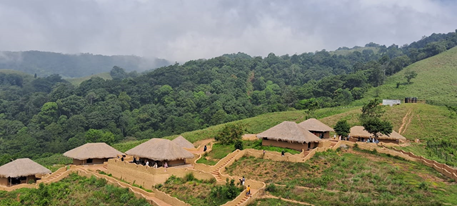
“En Uru” is a tribal heritage village in Pookode near Vythiri town, Wayanad district was set up by the Government of Kerala to introduce visitors to tribal life through a re- creation of a tribal hamlet. Through this venture, the government encourages tribal communities to actively participate in the tourism sector. The heritage village is built in the pattern of Paniya tribal huts. The total structure of the village resembles a tribal hamlet. It provides a platform for tribal communities to sell their products and showcase their art forms, cultural heritage and knowledge in constructing houses, food patterns, culinary skills, rituals, traditional musical instruments, and weapons. Tourists are facilitated to avail traditional tribal medicinal treatments here. Also, there is a cafeteria for serving indigenous food varieties.
One of the main tribal villages in the district that attracts the maximum number of tourists is Chekadi village of Thirunelli Panchayath. Chekadi is known as the rice bowl of the district. The village is mainly occupied by Adiyan, Uralikurumar Kattunayikkan, and Paniyan communities. They are mainly engaged in agricultural activities. Traditional rice varieties are the major attraction of this area. Tribes as a group, lease land from the land owners for one or two years for a fixed amount. Nanja and Punja is the major 2 seasons in a year for paddy cultivation. On the first day, they will start sowing the seed by performing their traditional dances in the paddy field. It has gained a lot of media attention hence the tourists. Another attraction of the Chekadi is the preservation of traditional tribal huts from the past. In each hamlet, the people are preserving and maintaining their traditional huts along with the new houses provided by the government schemes. Upholding the huts helps to demonstrate their traditional skills in construction to outsiders and, helps to preserve the indigenous culture.
Role of Community Participation in the Development of Tourism and Benefits to the Tourists
Tribes are the real inhabitants of a particular area. Have their own way of diversification by following peculiar way of subsistence which may be unknown to the outsiders. Tourist enthusiasm to explore it accelerates the scope of tribal tourism. Basically, community-based tourism is more of a sensitive edge. Disrespectful and ethnocentric behaviour by the visitors can ruin the community cooperation and thereby its growth. In the past, the community’s attitude towards the concept of tribal tourism was not welcoming because of the lack of awareness about opportunities as well as their isolated shy nature. As the time changes, unlike past, now the communities are also interested in interacting with the tourists and showcasing their lifestyle. They are putting effort into preserving their culture and thereby creating awareness among the people about indigenous culture and opportunities for tourism.
The tribal tourism should be a reciprocal process. Here both tourist and community are beneficial. The concept of cultural exchange is substantial in this context. The development of tourism on the Fijian island of Vorovoro has yielded diverse benefits for the indigenous community. Interacting with travellers has improved English proficiency. Recurring tourism has facilitated long-term cross-cultural relationships. For some community members it precipitated international travel. Exchanges with tribal tourists surpassed initial expectations, facilitating multidirectional social and cultural diffusion. However, sharing traditional cultural (Vulagi) remained primary motivation. In sum, advent of tourism brought educational and social returns, mobility prospects abroad, and interethnic appreciation-while also educating visitors on authentic customs. The mutual outcomes underscore tourism’s potential to dually empower hosts and enlighten guests regarding local lifeways through reciprocal cultural edification [5].
For instance, a farmer from Kurichya community Cheruvayal Raman, popularly known as Nellachan (father of paddy) is preserving more than a hundred rare and endangered traditional rice varieties. In 2023 nation honoured him awarding Padma Shri for his contribution in the field of agriculture. He is preserving his 150-year-old mud house to address the traditions and history of the community which is a tourist attraction. He shares his knowledge about land, crops, climate, and climatic changes with the tourists along with the opportunity to explore the traditional food varieties. Continuous interactions with tourists from inside and outside India gave him tremendous openings to travel across the country and abroad.
Another person who contributes to the popularity of tribal tourism in the district is a tribal Archer Govinthan Aashan (Trainer) from the Kurichya community. He has expertise in archery. Tourists from inside and outside India come to meet him to experience traditional archery. He provides lectures on the traditional methods of hunting practices, and their associated beliefs, and rituals. He has a collection of various hunting weapons in his home. Nowadays he started exporting bows and arrows to foreign countries for house interior decoration. Here the direct connection between tourists and tribal communities occurs which makes indigenous tourism more reliable.
The benefits of tribal tourism also depend on the attitude and interest of the tourists. Tourists can be in both categories where a group visits the tribes with a passionate mind for experiencing and exploring the indigenous culture, on the other hand, some are visiting with an ethnocentric mindset. Before the visit, tourists have been influenced by the Media and general notions about the tribal life which may not be true. Having a pre-conceived impression about the indigenous culture and life style leads the tourist to a disappointment when understand the real tribal life as those cultural aspects has deteriorated to the level that cannot be rejuvenated. Thus, to fulfil these expectations sometimes the host communities are being compelled display themselves in a particular way.
Tribal Tourism Its Possibilities of Threats to the Tribal Communities in Wayanad
Amidst of the numerous advantages, the repercussions of the tribal tourism also need to be addressed. The mismanagement and execution sometimes directly or indirectly affect the host communities. Lack of ethical approach and less awareness of tribal culture often led to the exploitation of indigenous communities. It can manifest in many ways like unfair economic practices where the communities sometimes receive inadequate remuneration for their goods and services be it their products, cultural manifestations, or services. Absence of indigenous representation in the executive level leads to less involvement in decision-making, lack of transparency, also an imbalance of power which puts the host communities in lower strata.
En-Uru, a tribal heritage village in Wayanad district is an experiment which attempts to showcase native tribal culture to the tourists in a way that benefits both tribes and tourists. While the project acts as a platform as well as a livelihood option, there are a few concerns which need to take into account. As mentioned above, minimal tribal representation in the executive level lacks community’s contribution to decision-making. Also fantasizing the tribal way of life impacts the authenticity of tribal culture.
Commercialization and commodification of indigenous cultures have a risk of losing authenticity and extinguishing its original form. While satisfying the tourist notions and expectations, there is a threat of distorting and diluting the tribal culture and traditions according to the favour of market. Which led to the inauthentic representation of indigenous traditions, customs, rituals, arts, etc? This can erode the cultural integrity and legacy of the host communities.
The Gadhika, a ritualistic art form practiced among the Adiya community to avoid and drive away from severe illnesses and diseases, which they believe that the illnesses are caused due to the deity’s dislike or anger towards them, in these situations people perform the rituals to endear the deity. It is a dance drama along with music, wearing red colour cloths. With the efforts of Late P.K. Kalan (Adiya community member who made a lot effort to popularise Gadhika) the art form got wider attention from academia, tourists, and art lovers. When the performance came out from the community, along with it, a lot of changes occurred in the structure in convenience of entertainment and better understanding of tourists. Certain portions were removed from the performance to make it simple for an outsider like a tourist. Of course, certain art forms have to be shortened to make it convenient for those tourists who don’t have much time when they might have planned multiple destinations in a single day. But the concern here is that, this path may compromise with the representation of the culture of the host community.
Increased tourism in a sense sometimes can also be an intrusion into the private life of the communities. It is encroaching on the privacy of the community when tribes have been treated as goods and showpieces. Tourist’s easy accessibility to their private spaces such as residential settlements and sacred spaces need to be reconsidered. Tribal cultures strongly relied on belief systems and spiritual life. Over exposure of their sacred spaces and ceremonies to the outside world may disrupt the spiritual connection and cultural significance in which they hold since centuries. As the visitors are not familiar with the value systems of the indigenous communities, at times some confusion or inappropriate, disrespectful behaviours of visitors will hurt host community’s sentiments which can lead to a sort of discomfort, attrition of traditions, and a sense of vulnerability.
The Keni from Wayanad district is an example of above discourse. It is a traditional water conservation method of water harvesting and purification. Locally people call it as Keni which means well or pit. The concept originated from the indigenous knowledge of a group of tribal communities of the district. Major tribal groups include Mullukuruman, Kurichyan, Kattunayikkan, and Paniyan were the people who mainly construct, protect, and preserve the watershed (Keni).
The Keni is located on the edge of or middle of paddy fields and near forests. This well is made of the locally available wood of Toddy Palm or Jackfruit tree in a cylindrical shape, diameters, and depth around four feet only. Bottom stem of the large palms is used to make wooden cylinders after getting them in water for a long time. With this technique, abundant water could be used even in the hottest summer. The water in Kenis remains transparent and pure and more than a thousand litres of water can be collected every day throughout the year.
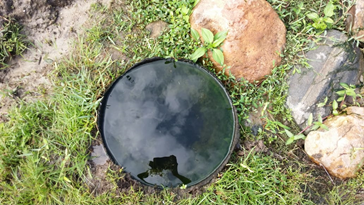
Among them, more than a water body, Keni is a part of their socio-cultural beliefs rooted in several years of experience. It is deeply connected with the magical fantasy of tribal belief and rituals. They believe that, water, air, and soil which is the essentials for life is a divine gift. Hence it required to be kept sacred and neat. They worshipped the water by keeping all “impure” things away. Communities hold the belief that they are responsible to protect it. It is a custom to confess before their deity if the water source gets polluted. Keni is a part of all the customary practices of tribes as they start it all with a cup of water taken from the Keni.
Today Keni is extinct due to the lack of maintenance and some of it has converted into wells. At present one of the remaining and well-maintained Keni is Thirumukham Keni situated in Pakkam, Pulpally. Since pulpally is already a known tourism destination, Thirumukham Keni also, became an attraction for obvious reasons. Though community is generally hospitable and welcoming to the visitors, they get uncomfortable at times when the visitors show sort of disrespect and ethnocentric view against the tribal culture. As the place is sacred for the community, they expect the same from the visitors. The value system and concept of hygiene in different cultures encounter with each other in this context. For instance, for the native tribes it a kind of taboo wearing footwears near keni as they consider it as sacred, but for the tourists from other cultures, it is part of personal hygiene. Here diverse social norms conflict with one another. Also, the frequent visitors affect the daily life and privacy of the community members. This could be avoided if a proper awareness might be given to the tourists as a part of the orientation program.
Loss of control over the indigenous knowledge is a major threat that coincides with the growth of tourism. Exhibition of tribal heritage, practices and skills helps the tourist to learn, adapt and use it without the consent and benefit sharing with the community.
Presently, tribal societies are undergoing through drastic changes. Tourism developments also attribute its share into the process. Continuous interactions with the tourists can impact the way of life, values, cultural dynamics, and the social control mechanism of the host communities. The process leads to conflicts within the community. The changing value system put the members in a dilemma which causes an identity crisis. Changes in cultural values, gender roles etc. will affect the existing cultural practices.
The visit of outsiders to the tribal settlements has the risk of contagious diseases. We are living in the era of pandemic and epidemic outbreaks where nobody can be excluded from the Covid-19, Nipah and other unknown diseases. However, while visiting the tribal communities, tourists need to be responsible in this aspect.
Findings
En-Uru the tribal village has definitely some potential when it comes to the lives of the people but this should be viewed and understood in terms of several factors. First whether the culture depicted in the village conforms to the original one. This means sometimes mere token representation can tarnish or adulterate the cultural image of tribal communities. Another factor is reducing the culture to the convenience of the tourists. As taken the example of Gaddhika it is difficult to portray the whole dance performance in 3 to 4 hours due to shortage of time. So, the time is being reduced, here what we can do is give a larger introduction to the art and the history of the art should be explained to the tourists. This could be done also to Keni water system where it should be thought to the tourists that such spaced are sacred. This should be the duty of the stakeholders, government and the community leaders who are part of the village.
Moreover, such steps can be tiring and maybe boresome for some regular tourists which lead to disruption the pattern mentioned above. But the board members or the committee of the village should always keep this in mind. What we meant by cultural exchange is not sharing the culture of host community to the tourist, but also finding “potential tourists” or researchers who can take these art forms, material culture worldwide and also who can create a platform for the community to represent their culture. Such steps can definitely improve the lifestyle of the people in the community as well as expand the research opportunities for other tourists. The question that should be asked is how this can be done through several steps. First the planning or board member should have more than 50% representation of tribal people who are well versed with the culture and have knowledge of art forms, preferably an elder person. The respective website then should separate potential tourist with other tourists. Potential tourist can be researchers, art lovers, philanthropist or any other who can actually benefit the community. Such tourists should be given preference for any kind of visit and also concessions should be provided to them. This can definitely improve the cultural exchange in between the community and the tourists. There should be instructions for the tourists with regard to the rules and regulations which should be followed while visiting each place. And a fine should be imposed on those who deny such rules. Fourth is about the products which should be brought by the tourist in such a way that marketing the products in international market should be encouraged. Also, its suitability should be maintained. For example, the medicinal plants should not go extinct being a prey of commodification.
Conclusion
Tribal-tourism can contribute to the economic upliftment of tribal people and the state through increased income. It can also help in preserving traditional culture in its authentic form and overcoming the social isolation of tribes by connecting them with outsiders. Since tribal culture is largely environment-friendly, ethno-tourism can promote eco-tourism as well. However, challenges remain in ensuring that ethno-tourism benefits local communities in an inclusive and sustainable manner. Besides its contribution in boosting day to day livelihood, it has obvious long run impacts. The process of cultural exchange is a by-product of tribal tourism. It can be in both manners where at times it would give incredible chances to the tribes in improving their language, skills, and give exposure to outside and so on. Also sometimes, tribal tourism risks indigenous culture to point eventually it forward some minor or major threats to the tribal communities directly or indirectly.
With proper planning and community participation, ethno-tourism has the potential to uplift tribal communities while preserving their unique culture and natural habitat. There is an urgency that to develop responsible tourism culture. Along with tourism development programmes, efforts must be taken for giving proper orientations to tourists before the tour. The government or the tour organizers must take up the responsibility. If manage properly, tribal tourism is likely to transform the tribal livelihood and tourism sector fruitful.
References
-
Barman A, Singh R, Rao YV (2010) Empowering Tribes through Cultural Tourism in India-A Dream Project on ICT Integration. SSRN.
-
Robinson M, Picard D (2006) Tourism Culture and Sustainable Development. UNESCO.
-
Braga B (2021) 7 Indigenous Festivals In Australia To Be Held In 2022 - Travel Noire.
-
Jain R, Agarwal T (2022) an Analytical Study of Sustainable Development of Tribal Tourism in Rajasthan. IJARIIE 8(2): 1132-1140.
-
Pratt S, Gibson D, Movono A (2013) Tribal Tourism in Fiji: An Application and Extension of Smith’s 4Hs of Indigenous Tourism. 18(8), 894-912.
-
Blackstock K (2005) A critical look at community-based tourism. Community Development Journal 40(1): 39-49.
-
Walter PG (2015) Travelers’ experiences of authenticity in “hill tribe” tourism in Northern Thailand. 16(2): 213-
-
Chang HM, Chang CF, Wu CL (2013) Aboriginal Tribal Tourism Development Critical Success Factors-Case by Smangus in Taiwan.
-
Bott E (2018) among the piranhas: the troubling lifespan of ethnic tropes in “tribal” tourism to Vietnam. Journal of Sustainable Tourism, pp: 1291-1307.
-
Carr A, Ruhanen L, Whitford M (2016) Indigenous peoples and tourism: the challenges and opportunities for sustainable tourism. 24(8-9): 1067-1079.
-
Peterson RR, Harrill R, Dipietro RB (2017) Sustainability and Resilience in Caribbean Tourism Economies: A Critical Inquiry. Tourism Analysis 22(3): 407-419.
-
Schutte G (2003) Tourists and Tribes in the “New” South Africa. Duke University Press 50(3): 473-487.
-
Hughes H (2007) Rainbow, renaissance, tribes and townships: tourism and heritage in South Africa since 1994. In State of the Nation, pp: 312-341.
-
Chief K, Meadow A, Whyte K. (2016). Engaging Southwestern Tribes in Sustainable Water Resources Topics and Management. Water 8(8): 350.
- The Indispensable Role of Informal Caregivers in Supporting the Aging Population
- Socio-Religious Significance of Kamakhya Temple in Guwahati, Assam
- Is Anthropology Possible?
- A Contribution to the History and Paleobiology of Harput/Elazığ Türkiye and Its Surroundings
- A Study on the Cowrie Shells of the Dimasas in Assam
- The Significance of International Organizations Cooperation in the Efficient Resolution of Global Conflict