
Sketch about the Hagiographic Universe in the Cult of San La Muerte in the Northeast of the Argentine Republic
The following article discusses the characterization of the cult of San La Muerte in the Northeast of the Argentine Republic, taking into account the following variables: denominations it receives, first records of the cult, possible origins and role of santero in the making of sacred art. In order to address the problem, in-depth interviews, observations with varying degrees of participation, analysis of literary, folkloric and anthropological sources, and records in various devices have been made. We record that the cult of San La Muerte condenses a complex warp of senses, meanings, modes of relationship and configurations of the world of the sacred that overflow the canons of the recognized as official and delves into the memory of the great time and the diachrony of complex processes of syncretism and re-signification, based on the previous worldview Hispanic and Roman Catholic.
On the Hagiographic World and the Passionate States of Faith
In proposing in the name of this presentation the notion of hagiography we intend to record its relevance in the daily life of the devotional universe. The bonds with the santoral are built in a polysiemic way: relations, dialogues and reciprocities are not limited to those legitimized by the Roman Catholic Church; but also strong links are built with popular sanctifications. We give account of how, to refer to the quartet Saints, Saints, Virgins and Miraculous Gauchos, the term Saint is used (which implies this broad hagiographic spectrum). The Saint can be San Onofre, San Marcos, San La Muerte, also usually referring to a Saint, such as Santa Barbara, Santa Librada, or a Gaucho Milagroso. When referring to the Virgin of Itatí or to the Virgin Mary the use of the concept Virgin is more frequent; there are those who call them Santas. Therefore, we consider that the Holy category condenses much of the perceptions that are possessed around these images of the sacred, also on the relationships that are built in this sphere of senses. In this way the Saints live with the families in the spaces of intimacy, they are part of the domestic group and have shared much of their history: the altars and chapels occupy a place. In terms of Bourdieu P [1] this place will be seen as the point in the physical space where they are situated, take place and exist. As semiotic condensates they have a place in the physical space and in the social space of the family and the community. We are also faced with a distinction of places: sacred/unholy - public/ private (domestic)-private saints on private/public saints on public altars. We use the notion of space as the indissociable unit -like the condensed one- between what subjects define as the physical (reified) and the social-symbolic-semiotized (without this involving the construction of borders, we simply make this distinction for analytical purposes).
In the experiences with the devotees we could recognize that most of the images of Saints are inherited inter/ generationally; the quality of having been inherited from generation to generation makes them carriers of memory, in that image is preserved -timelessly- the specificity of a relationship with parents or grandparents; it is very common to find in the altars and chapels photographs of the former owners of the images. The images not only carry history, but also many years of prayer, they have been “loaded” with prayer, prayers. This makes them more “powerful and effective”. The relationship with the saints is intimate and at the same time public, private and collective; in the intertwining of these relations a reciprocity with the sacred is built. The Saint is a giver of benefits, of material or symbolic goods, ranging from getting a job to forgiveness for some fault; often the search for this effectiveness is helped with certain sympathies: says Salas that the image of the Saint is usually submerged in cane, placed facing the wall, with heads or hung behind the door, these strategies would make the Saint grant immediate answers to requests. They are also protectors of their owners and relatives, recipients of bad omens or “works/witchcraft/ spells” that could affect the host family. The “works” made by the healers or clowns (wankers) often reverberate in the Saint; they often suffer accidents, fall from the altars and lose their heads or light themselves with candles. When this happens it is recommended that the Saint be deposited in the Major Cross of the Cemetery. A tour of the base of the Major Cross of several cemeteries has found Saints decapitated, broken, burned or tied with traces of colored ribbons and covered with melted wax.
This article, based on a bias of the hagiographic world, seeks to promote deconstruction, hand in hand with situated knowledge, of postulates that seek to divide human life into immeasurable polarities or strict divisions between ordinary and extraordinary spaces. Without denying this human particularity, we suggest that, in certain hemispheres of meaning, among some human groups, this distinction is not so stark, manifest or obvious. Splitting from daily life the relations with the Saints, their memory, history and significance reduces, if not denies, the holistic complexity of life. Saints are not kept in cubicles that are visited only on Sundays, where mediation with the sacred is sent by inviolable steps. On the contrary, the Saint is daily and is the “Saint of”: of a certain family, of someone in particular. The intentions of universality crumble, the pretensions to see the relations with the sacred outside of daily life are not an admissible logic in these significant contexts. The updating of the styles and aesthetics of veneration presented by these compositions are visible not only in the imaginary, but also in the expansion of the body space, open borders to different parts of Latin America sharing the journey with others sacralized by popular decision, in street processions, large chapels, oratorios on the roads. These styles and aesthetics have coapted elements that were typical of other mythical beings, enabling a greater externality in the calendar of hagiographic celebrations. This Songbook and Devotional contributes to the aforementioned variations and contributes to the reconstruction of features of a magical- religious worldview configured in a process filtered by inclusions and re-adaptations of symbols that summon particular passionate states of faith. From this broad hagiographic world we approach the Cult of San La Muerte. In the various meetings we have shared with the devotees of the Saint, several questions have been raised that have motivated part of this section. Among the most recurrent we can mention two cases: what are the denominations that the Saint receives? And what is the origin of worship?
The denominations
On the first of them we can reference that are varied their denominations, among the most common are mentioned Lord Death, Lord of the Good Death, San La Muerte, San Justo, Our Lord of Death or Lord San La Muerte [2], similarly refers Krautstofl EM [3] to the Lord Death, Saint Death, Lord of the Good Death, Lord of the Bad Death, Saint Skeleton, or Captain of Death in González TDM [4]. Miranda BJI [5] points out that there are Paraguayan names such as San Esqueleto or Oyucaba (or Ayucaba); according to the author’s records the expression would refer to “...the one who kills (...) Carai Oyucaba would be the Lord who kills...” (p. 56). One of the names very widespread in the guaranitic zone is usually “... the wedge pirú jha mondá (the skinny and thieving woman) ...” (p.56) ; in the case of Corrientes the name Lord of Transit is cited and in Chaco San Severo de la Muerte. It is also called payé (paje) [6].
![Figure 1: Location of the Cult and denominations according to the records of Miranda BJI [5] and the updates of Bondar (2022- 2023).](/fulltextimages/13555/fig_1.png)
| Miranda Borelli (1977) | Bondar (2022-2023) | |
|---|---|---|
| Misiones Corrientes | Ayucaba La Muerte Pirú | Santo de la Buena Muerte, Flaquito, Pochito, San La Muerte, Santo de la Muerte, El Jefe San La Muerte, El Santo, San Justo de la Buena Muerte, El Santito |
| Formosa | Señor que todo lo puede | San La Muerte, El Santo |
| Chaco | Seños de la buena Muerte, Nuestro Señor de Dios y la Muerte | San La Muerte, El Santo |
| Santiago del Estero | San Severo de la Muerte | San La Muerte, San Severo, Santo de la buena Muerte |
| Salta | ------------ | El Santo, El Señor de la Muerte |
| Jujuy | ------------ | El Santo, San la muerte, El Santo Justo |
| Santa Fe | ------------ | San La Muerte, El Santo |
| Paraguay | Oyucaba | San La Muerte, El Santo |
Table 1: Location of the Cult and denominations according to the records of Miranda BJI [5] and the updates of Bondar (2022- 2023
Miranda BJI [5] and López BMR [2] point out that the belief in San La Muerte, in Argentina, expands more strongly in the provinces of Northeast Argentina, also in the Republic of Paraguay and Brazil. More recent ethnographies such as those of Krautstofl EM [3] and Bondar CI, et al. [7] corroborate these claims and account for the recent extension of this belief to the Central, Northwest and South regions of Argentina. In this diversity of contexts, the belief in San La Muerte acquires recurrent forms of manifestation, we find altars in domestic spaces, whether they are public or private, oratorios to the side of the routes and roads or oratories of greater size -like chapels- for example, those in force in the cities of Posadas (Misiones), Barranqueras and Resistencia (Chaco), Empedrado (Corrientes) and Ita (Paraguay), among others. Similarly, the veneration of the Saint is expressed by wearing it as an amulet, embedded under the skin or tattooed [7]. In one of his works Miranda BJI [5] offers us the first cartography of the location of the cult. It should be noted that currently its territorial expansion is wide and exceeds Argentina, being located in other countries of Latin America and Europe. We cite the case of the exhibition “Between life and death: the stigma of Santa Muerte and San La Muerte”, carried out by Luciano Martucci1 in November 2023 in Italy.
Borelli cartography also includes the denominations on which we have worked, for our part we have updated the names assigned to the Saint. We expose this differentiated cartography -in underlining- the original denominations recorded by Mirando Borrelli and the others - without underlining - turn out to be those that we have registered recently.
The first records
Although the records are varied, Granada D [8] when working the ancient and modern superstitions of the Río de la Plata, in Chapter XXXIII, continuity of spells and damage, suggests that in Corrientes and Paraguay it is common to wear hung from the neck a guayaca or bag well sewn on all sides, containing an amulet (guacanque or payé). Rare will be the countryman who does not carry, will lack of scapular, guiana. Some bones, a relic, a bullet extracted from the human body (...) any other compound, that is blessed, by a magician or possessor of a wonderful secret, usually constitute the amulet that encloses the guaiac (512-513).
Although Granada does not mention San La Muerte it describes in detail the attributes of this guacanque ó payé that are coincident with the potentialities attributed to the mediation of the Saint at present He who wears an amulet or guachaca is accompanied. That one, who is cured, will do well in the dangers and hard trances of life. ¡ How many
1 Martucci, “This exhibition will explore the cult of Santa Muerte and San La Muerte as examples of cultural, spiritual and earthly syncretism in the Americas. In the exhibition, we will address the incorrect association between both cults, and our main objective will be to create a clear visual and conceptual contrast between them. We will exhibit cult statues, sacred objects and a photographic representation of both cults. The central element of the exhibition will be the altars, which will allow visitors to actively participate in the exhibition experience and understand the meaning of the offerings. The interaction of the public will be at the center of the exhibition process, with the possibility of accessing unpublished videos and explanatory texts through QR codes. The exhibition will also include video installations, objects related to popular and devotional culture, photographs of ritual practices and an altar specially prepared for both cults. I’d be happy to have your participation too, but I understand your commitments, so you can decide what kind of contribution you prefer, whether it’s an interview, a pre-recorded video, or even a writing, etc. I would like you to make an introduction to the exhibition explaining the origin of bone carvings and the practice of inlay, but as I mentioned earlier, you are free to choose the subject” (Interview by the author, August 2023) times, before the despair or prolonged agony of a man mortally wounded, has not been heard to say: - It must have guachaca. Take it out, so that it stops suffering!» How many times, when the guachaca was taken out, the dying man breathed his last!. One of the first records where Saint Death is explicitly mentioned is found in Ambrosetti JB [9], notes that very chaste are also the payés that represent a saint; these become brave (Santo Pochi) (...) The other is a more serious Saint: San La Muerte, which is usually made of lead, skinny and stubborn, with the appearance of skeleton, manufactured also on Good Friday, excellent against the bullet and the knife, it is also very delicate: you have to make him sleep outside and not fight with the but in serious cases, because the death of the opposite is infallible (47-48).
For his part Perkins Hidalgo in an edition of the year 1963, on a fieldwork carried out in the Iberá (Corrientes) from 1943, records San La Muerte in the voice of the informant Juan Pio Monzón of 80 years of Colonia Carlos Pellegrini, Costa del Iberá, Department of San Martín. Although it places the worship of the Saint in a role linked to the people added, it is relevant in terms of its ethnographic valueRegional superstition has also canonized San La Muerte, the cuñá pirú jha mondá, which means the skinny and thieving woman , as philosophically called by the common man. Among the most addicted to the possession of this payé, there is the avá mañero, the man who has to flee from the police, the robberies and fights, who belongs to the genealogy of the añá people or the devil, who always lives outside the law. The payé of San La Muerte is made of lead, representing a bulging head skeleton (282) After these first references, several other apparitions of the Saint have developed, such as those included in the section on denominations. Likewise, as Gentile ME [10] mentions, “with the new millennium were established the main features that would continue to change details in order to preserve the earned devotional space”. In this way, San La Muerte, is installed in multiple spaces and agendas: festivities, media, santerías, fairs, cultural industry and multiple publications, national and international multimedia/audiovisual production that allows access to the diverse range of ways of being, feeling and being in relation to this devotional component.
The Origin
On the origin of the cult, López BMR [3] points out that its origin could not be accurately stated. Beyond this impossibility adds that we are inclined to think that its origin is preferably close to the Christ of Humanity and Patience, because we were given to observe many images, in which the skeletal representation, has the same position as the carvings of Jesuit origin (...) But its denomination, could have been taken from “The Lord of the Good Death”, which is the Christ of the Cross, as far as the Christian santoral, according to a widespread print printed in the Vatican Santeria, V. Encabo, San José 263, Bs. As., which in its back carries the following: “prayer to the S. of the B. M.” López BMR [3]. Kartun M [11] in his well-known article “San La Muerte y San Son”, reviews that The origins of the creed of Saint Death, Lord Death, Saint Just Our Lord of Death, Lord of the Good Death, Lord of the Bad Death or Lord Saint Death -as it is called indifferently (also Lord Saint the Death of Jesus as his few faithful call him porteños) is lost in supposed and vague theories, among which stands out with greater foundation that which associates it with the image of the Christ of Humanity and Patience, given the similarity of certain examples of the amulet with the carvings that, in Churches and Museums, represent a Christ sitting with one hand on the face, in a meditative attitude and the elbow on the knee.
In support of this theory comes a widespread picture of Christ crucified, accompanied in its reverse by a “Prayer to the Lord of the Good Death’’ which begins by saying: “O Clementisimo Lord of the Good Death! Sovereign protector of those who trust in you...” Miranda BJI [5] explained that the function of healer, among the Guaraní Tupi was performed by the “paye”, called “pay” by the payagua, with the arrival of the Guaraní Europeans associated the function of the priests with that of the healers. The author adds that the image to which those virtues are transferred is the Saint of Patience. “Not having images that symbolize the “paye” and having the obligation to accept these new forms imposed from Europe, is transferred to the old model of the myth of the Paye, the new image from which this invention that is San La Muerte arises” [5]. Also, Susnik points out that “the fugitive families scattered between Paraná, Tebicuary and Monday, could not already return their “payé”... but came to configure the cult of “tupá mboya” with “payehá” of santería and magic”.
Santero and Popular Sacred Art. Images of San La Muerte in the Work of Aquiles R. Coppini and Miguel L. Mosqueda The image of the santero is referenced in various genres; folk literature folk tales and oral narratives. In the religious field it is defined as a “character” with spatial attributes for the design, making, molding, carving and (in some cases) consecration of objects: relics, images, amulets and talismans; varying their materials according to the attributes, destination, relevance or mediating power with the sacred universe. Although there are several experts on the subject, the most cited santeros would be Alberto Rolando Gauna, Ramón González, Ramón Cabrera, J. Cáceres; and currently Aquiles Ramón Coppini and Miguel L. Mosqueda. We also mention the Paraguayan Cándido Rodríguez who since 1940 includes in the work his sons Juana de la Cruz, Carlos, Antonio, Maximiliano and Justo; also the case of Zenón Páez. Likewise, when we refer to the “popular sacred art” we start from the official notion of “sacred art”; any artistic production whose purpose is the worship of the sacred and/or the divine in paintings, sculptures, carvings, etc. The notion of popular does not discredit the complexity of the theme nor does it include a pejorative component or “differential artistic value”; it aims to bring into this field of struggles condensates often excluded, marginalized or labeled as impure, heretical, superstitious or pagan (or handicrafts). In our opinion the quality of “sacred art” would not be limited merely by what is reproduced, for example, the image; but also by the socio- anthropological significance around “what is conceived as sacred”; be this the worship of Virgins, Saints, Saints, Gauchos, Deceased, etc.; from the Marian Cults to the Saints of Death stands an arc of meanings that allows us to glimpse the artistic complexity in the field of the sacred where the triad context/time/space plays a deliberative role and where the carvings are unavoidable relevance.
The imagery made by Coppini and Mosqueda includes the use of various materials; human bone, silver, lead, gold or palo santo wood. The dimensions vary depending on whether images of altar or kurundu (amulets) carried daily as protection or embedded under the skin of the devotee; intervention of Coppini performed for several years. This diversity in the work of the referred santeros could be observed in several samples under the curatorship of César Iván Bondar and Ramón Gabriel Aguirre; in 2013 the work of Coppini was exposed in the exhibition called “Kurundu: santito, imagery and religiosity” in the framework of the III Encounter on Anthropo-Semiotics of Death and Death in the city of Posadas; in 2022 the works of Coppini and Mosqueda were exhibited in the exhibition “Kurundu: after the footprint of San La Muerte” realized in the Provincial Museum of Fine Arts Juan Yaparí of the City of Posadas, Misiones. Likewise in 2023 the Exhibition “Kurundu: Carving, page, inlay” in the framework of the X Conference of Ethnography and Qualitative Methods, Posadas, Misiones, was conformed with carvings of both santeros. It should be noted that in 2023 the Exhibition “Popular Devotions” in the National Library dedicated a special section to Coppini’s carvings. These exhibits gathered more than 40 images that allowed us to glimpse the multiple significant edges of worship, as well as the recurrences and diversity of forms in which the Saint is presented.
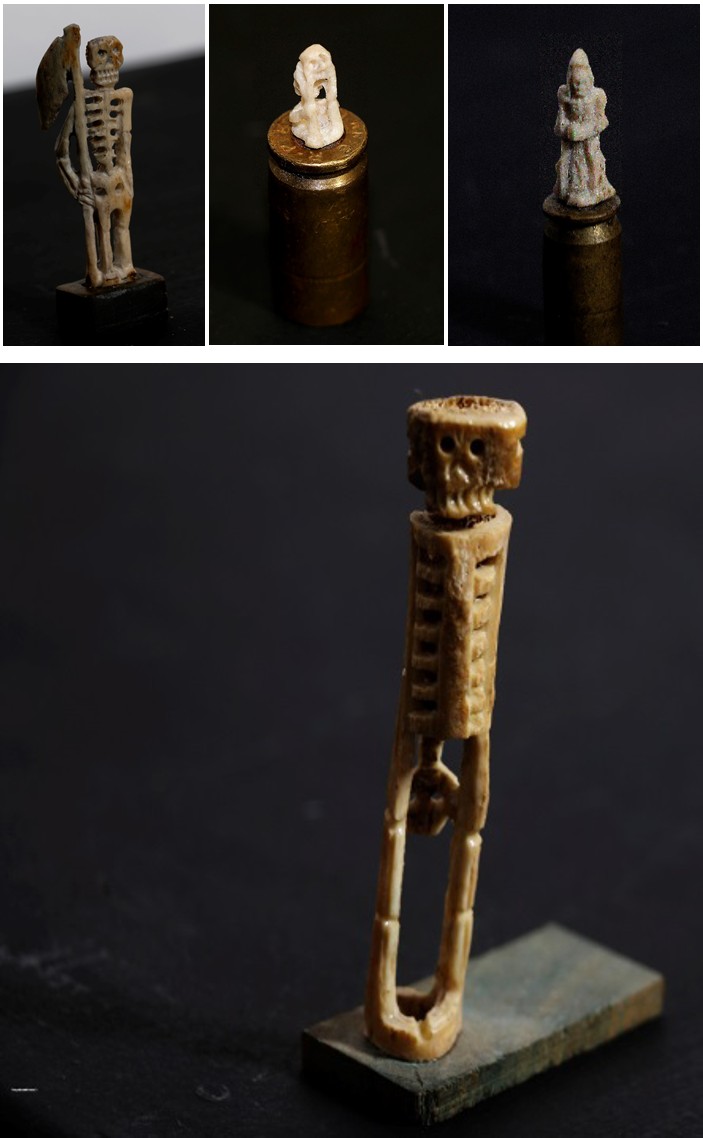
Figure 2,3,4: Coppini Aquiles carvings. Photographs by Sandra Nicosia 2022.
In this sense the work of the santeros constitutes a reservoir of artistic, ethnographic and historical relevance; intimately related to the world of devotees allows access to various forms of relationship with San La Muerte, their various forms of worship and passionate states of faith. It is necessary to add that, as a first point of continuity, we highlight that one could talk about various hierarchies (within this hagiographic tradition in particular) but in the case that we are called postulate the readings around the cult of San La Muerte in the proposed cut, Reserving this interest for other future approaches. Clearly, working on these differential hierarchies would significantly broaden the scope of the study. Similarly, the ability to delve into the social and cultural components that influence changes in hagiographic tradition will be a line we will include in further research.
Concluding Remarks
In this instance we can point out, following Cervelló J [12], that we are faced with a hierophy: a manifestation of the sacred, “... hierophanias can be extraordinarily diverse and go from the manifestation of the sacred in any object, such as a stone or a tree, to a theophany (manifestation of a god)...” [12]. But we must understand that it is not a question of venerating these objects as such; in this case the bone has the faculty to be a hierophany, since it embodies, “shows” something that is no longer just bone, but a sacred object. As Eliade M [13] has pointed out”... the object then appears as a receptacle of a strange force that differentiates it from its environment and gives it meaning and value...” Cervelló J [12] adds that the paradox of hierophany consists in the fact that the object becomes something else, transcending its natural materiality and responding to an archetype, transmutes into something new -but it does not cease being “himself”. The Saint Death carved in the bone of the angel is constituted in hierophany since the angel has been in Heaven; in analogy to what was pointed out by Eliade when it answers to why the stone is sacred. This rock will be made sacred because its very existence is a hierophany: incomprehensible, invulnerable, it is what man is not. It resists time, its reality is doubled by perennity. Here is a stone of the most vulgar: it will be converted into “precious”, that is, it will be impregnated with a magical or religious force by virtue of its only symbolic form or origin: “lightning stone” which is supposed to fall from heaven [13].
The image of Saint La Muerte carved in bone (of angel) would condense a double archetype: a) the supremacy of the irrecusable, death, his holiness, and b) the purity, the direct contact that has the angel with divinity. These cases, part of what we have termed a regionalized thanatoculture, challenge perceptions about the conceivable as possible; at the same time as reinstalling dialogues with archaic traditions that are lost in the depth of socio-historical processes that have shaped the region: our thanatoregion, a region founded on sharing specific conceptions linked to the processes of death and dying. Likewise, the brief readings outlined around a partiality of the universe of the devotees and the Holy have intended to promote deconstruction, by hand of a situated knowledge, of postulates that aim to divide human life into immeasurable polarities or strict divisions between ordinary and extraordinary spaces. Without denying this human particularity, we suggest that in certain hemispheres of meaning this distinction is not tacit, manifest or obvious. Separating the relationships with the Saint, his memory, history and meaning from everyday life reduces, if not negates, the holistic complexity of life [14, 15].
The Saint is not kept in a cubicle that is visited on certain days when mediation with the sacred is envied inviolable steps [16]. On the contrary, the Saint is daily and is the “Saint of”, as it happens in the various manifestations of faith without distinction between official or “pagan” practices of religiosity. The category of believers aligned to the magical-religious world, demonstrate in their daily tasks a practical and discursive consciousness that involves and calls to the sacred power for the minimum requirements of their daily lives Superstitions, survivals of the distant past, remote? Perhaps yes but updated day by day in the time of late modernity. Recalling the above illustrations, we can give an account of the coexistence of heterogeneous schemes of religious imagination. Similarly, the reflections on the double invite us to perceive the negation of fixism in planes of belief, San La Muerte shares his various prints with other characters of imagery, in other “supports” that go beyond wood or bone. The flesh, the body receive it, adopt and shelter; the Holy under and on the skin: a new canvas. The updating of styles and aesthetics of veneration to the Saint of Death are visible not only in the imagination and its Holy friends, besides in the expansion of the body space, of open borders to different points of Latin America sharing the journey with others sacralized by popular decision, in street processions, large chapels, oratories on the roads. These styles and aesthetics have taken elements that were characteristic of other mythical beings enabling a greater exteriority in the calendar of hagiographic celebrations. The notion of neo-stylization that we have outlined includes the variations mentioned above which constitute features of a magical-religious worldview configured in a process filtered by inclusions and readjustments of symbols that conjure up the passionate state of faith.
References
-
Pierre B (1999) “Efectos de Jugar”. In: La Miseria del Mundo. 21st Century, Buenos Aires.
-
Breard MR (1983) Devocionario Guaraní. Ed. Colmegna. Santa Fe.
-
Krautstofl EM (2002) San la Muerte. Magical religious expression of a Missionary autochthony University. UNAM.
-
Torres DM (2012) Folklore of Paraguay. Litocolor Publishing House SRL Asunción.
-
Borelli MJ (1977) Un rasgo indicador de la cultura del noreste. San la Muerte. Suplemento Antropológico. Universidad Católica. Asunción 12(1-2): 45-148.
-
Bondar CI (2014) Uses of the angel bone. Northeast Argentina and South Paraguay; Universidad del Zulia (Luz) Journal of Human and Social Sciences Option. Journal of Anthropology, Communication and Information Sciences, Philosophy, Linguistics and Semiotics 30 (74): 37-59.
-
Krautstofl EM, Bondar CI (2013) San La Muerte. Aesthetics and styles of veneration to the Saint of Death. Conference. III Meeting on Anthroposemiotics of Death and Dying. Faculty of Humanities and Social Sciences. Universidad Nacional de Misiones. Posadas, Misiones, Argentina.
-
Granada D (1897) Old and modern superstitions of the Río de la Plata. In: Ramos B (Eds.), Montevideo.
-
Ambrosetti JB (2008) Superstitions and legends in Argentina. Jorge Sarmiento Editor. Vniversitas. Córdoba, Argentina.
-
Gentile ME (2023) Two popular Argentine devotions: Difunta Correa and San La Muerte. In Popular Argentinean Devotions. General Coordination Emiliano Ruiz Díaz; María Redondo. Ciudad Autónoma de Buenos Aires: National Library.
-
Kartun M (1975) San La Muerte and San Son. Crisis Magazine N32.
-
Cervello J (2003) Chapter II: Air. Religious beliefs in context. In: Anthropology of Religion. An inter-disci- plinary approach to ancient and contemporary religions. In: Piera EA, et al. (Eds.), Barcelona (Spain). pp: 71-179.
-
Eliade M (2001) The myth of eternal return. Emecé Editores. Buenos Aires.
-
Miranda J (1963) San La Muerte. Cuadernos del Instituto Nacional de Antropología, Instituto Nacional de Antropología. Buenos Aires.
-
Hidalgo PG (1963) Legends and Superstitions of the Iberá. Notebooks of the National Institute of Anthropology.
-
(2024) Analysis of Diagnosis Trends in Gynecology and Obstetrics: Bandaranayake Memorial Ayurveda Research Institute- Bmari Srpt Unit.
- The Indispensable Role of Informal Caregivers in Supporting the Aging Population
- Socio-Religious Significance of Kamakhya Temple in Guwahati, Assam
- Is Anthropology Possible?
- A Contribution to the History and Paleobiology of Harput/Elazığ Türkiye and Its Surroundings
- A Study on the Cowrie Shells of the Dimasas in Assam
- The Significance of International Organizations Cooperation in the Efficient Resolution of Global Conflict