
Recommendations of Polarized Polychromatic Non-Coherent Light (Bioptron Light) in the Management of Musculoskeletal Conditions
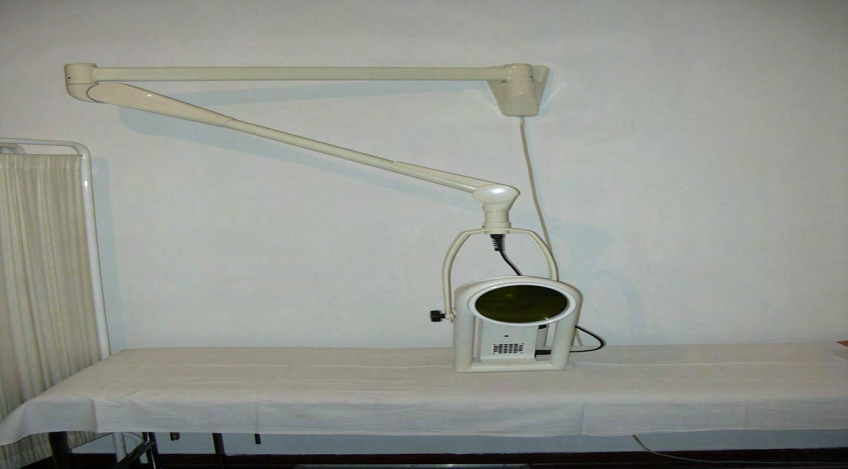
Polarised polychromatic non-coherent light (Bioptron light) (Figure 1) is a form of light therapy that is used to treat common musculoskeletal disorders. Polarisation seems to be the most important characteristic of Bioptron light (Table 1) because the Bioptron light owes its proposed mode of action in this characteristic.
Editorial
Polarised polychromatic non-coherent light (Bioptron light) (Figure 1) is a form of light therapy that is used to treat common musculoskeletal disorders. Polarisation seems to be the most important characteristic of Bioptron light (Table 1) because the Bioptron light owes its proposed mode of action in this characteristic.
In addition, polarisation appears to be the key factor in biostimulation [1, 2]. The Bioptron light is a truly polarised light that could induce biostimulative effects in living cells. The way that Bioptron light obtains biostimulative effects is not known and is based on a variety of proposed mechanisms. Both parts, visible and infrared, of the electromagnetic spectrum of Bioptron light, can explain these mechanisms. These lead to the same final photoresponse, but start the cascade of metabolic events at different cellular levels that assist tissue healing.
One proposed mechanism of action of bio stimulation is the absorption of visible light energy by the mitochondria [3]. This may cause a chain of molecular events leading to an increase in cell energy and activation of nucleic acid synthesis, which is essential for tissue repair [4]. The second mechanism is obtained by the infrared portion of the light spectrum [4]. In a hypothetical physical model for bio stimulation, the cell membrane was stated to be the site of stimulation [2]. In this hypothesis the Bioptron light interacts with the polar heads of the lipid double layer of the cell membrane in which the biologically active proteins are incorporated. Due to the interaction with Bioptron light, structural changes may occur to give the membrane a reordered distribution of the surface changes and to modify the lipid protein connections. This conformation change may influence the cellural processes connected with the cell membrane: receptor function, energy production, immune responses and enzyme reactions [2]. Different biological effects have been reported after polarised light radiation, including the stimulation of cell proliferation (especially in fibroblasts), the release of growth factors and the enhancement of collagen synthesis [1, 2, 5, 6]. It can be suggested that the tensile strength of tendons can be improved indirectly through the previously reported observations. Finally, another mechanism that might be responsible for Bioptron light therapy’s therapeutic effect is the local peripheral vasodilation, which improve blood flow and the delivery of oxygen to the soft tissue area, facilitating the transport of nutrients needed for soft tissue healing [4].
According to the findings of Dr Stasinopoulos and his colleagues research, a course of Bioptron light treatment reduces the pain and improves the function in an acute condition such as ankle sprain [7] and tendinopathy [8, 9, 10] [Lateral Elbow Tendinopathy (LET) and Patellar Tendinopathy (PT)]. Moreover, Bioptron light as a supplement to an exercise program reduced pain and improved function in patients with chronic conditions better than an exercise program alone [11]. On the other hand, Bioptron light as monotherapy is less effective reducing pain and improving function than exercise program in the management of chronic conditions such as LET [12]. Positive results were found when the Bioptron light was applied as monotherapy in idiopathic Carpal Tunnel Syndrome (CTS) [13]. However, the absence of a no-treatment control group in that study means that we cannot be certain that these findings were due to the Bioptron light treatment intervention itself rather than to natural fluctuations in symptoms, resolution of the CTS, or expectation of treatment success associated with receiving a medical intervention. We also cannot discount the possibility that patients reported prolonged improvement at the 6-month follow-up to please the investigator, as there was no placebo control. In addition, the efficacy of Bioptron light applied as monotherapy in a preliminary, prospective, open clinical trial indicated a positive clinical effect on nocturnal pain relief, paraesthesia and finger pinch strength from carpal tunnel syndrome in pregnancy in the third trimester [14]. However, future placebo controlled studies with adequate sample size and outcome measures of known validity are required to investigate the absolute and relative effectiveness of Bioptron light in CTS in the above condition. The findings of a trial indicate that both Low Level Laser Therapy (LLLT) and Bioptron light used as a supplement to an exercise program both reduced pain and improved function in patients with LET [15]. However, it is difficult to ascertain which of these two modalities is the best supplement for an exercise program, because no significant differences were found between the two treatment approaches at the end of treatment and at follow-up. Our research team recommends Bioptron as a supplement to an exercise program, because it can be easily used in practice without the manipulations necessary with LLLT.
Based on the above findings, Dr Stasinopoulos and his colleagues recommend the following about the use of Bioptron light:
- It is more effective in acute than in chronic condition
- It is more effective when it is used twice daily in acute condition than once
- It is an effective treatment approach as a supplement to an exercise program in chronic tendinopathies [16]
- It is more effective when it is used twice in the treatment session in chronic conditions, before and after the exercise program [17]
- It is more effective when it is applied for at least 10 minutes
- It can be easily used in practice without the manipulations necessary with LLLT
- No prophylactic measures for both, therapists and patients, are needed
- It has no contraindications and side effects
- It can radiate a large surface of the body due to large diameter of the beam
- Polarisation
- Its waves move on parallel planes. In this device polarization reaches a degree of approximately 95%, which narrows and concentrates the beam.
- Polychromy
- Polychromatic light contains a wide range of wavelengths, including visible light and a part of infrared range. The wavelength of this device’s light ranges from 480nm to 3400nm. This electromagnetic spectrum does not contain ultraviolet radiation.
- Incoherency
- This device’s light is incoherent or out of phase light. This means the light waves are not synchronized.
- Low-energy
- This device light has a low-energy density (fluence) of an average 2.4 J/cm2, which has biostimulative effects. This means the light can simulate various biological processes in the body in a positive way.
Table 1: Manufacturer’s explanation in the characteristic of polarized, polychromatic non-coherent light (Bioptron light).
References
-
Fenyo M (1984) Theoretical and experimental basis of biostimulation. Optimal Laser Technology 16: 209-215.
-
Kertesz L, Fenyo M, Mester E, Bathory G (1984) Hypothetical physical model for laser biostimulation. Optimal Laser Technology 14: 31-32.
-
Karu TI (1989) Photobiology of low power level effects. Health physics 56(5): 691-704.
-
Medenica L, Lens M (2003) The use of polarised polychromatic non-coherent light alone as a therapy for venous leg ulceration. Journal of Wound Care 12: 37-40.
-
Kubasova T, Fenyo M, Somosy Z, Garzo L, Kertesz I (1988) Investigation on biological effect of polarised light. Photochemistry Photobiology 48(4): 505-509.
-
Bolton P, Dyson M, Young S (1992) The effect of polarised light on the release of growth factors from the U-937 macrophage-like cell line. Laser therapy 4(1): 33-37.
-
Stasinopoulos D, Papadopoulos K, Lamnisos D, Stasinopoulos I (2017) The use of Bioptron (polarized, polychromatic, non-coherent) light therapy for the treatment of acute ankle sprains. Disability and Rehabilitation 39(5): 450-457.
-
Stasinopoulos D (2005) The use of polarised polychromatic non-coherent light as Therapy for acute tennis elbow/lateral epicondylalgia: a pilot study. Photomedicine and Laser Surgery 23: 66-69.
-
Stasinopoulos D (2019) The effectiveness of polarized polychromatic non-coherent (BIOPTRON) light in the management of acute Lateral Elbow Tendinopathy. A case report. Biomedical Journal of Scientific & Technical Research (BJSTR) 14(3): 1-3.
-
Stasinopoulos D (2020) The effectiveness of polarized polychromatic non-coherent (BIOPTRON) light in the management of acute Patellar Tendinopathy. A case report. Annals of clinical case reports 6(2): 10-13.
-
Dimitrios S, Antonis C, Dimitrios L (2020) The Effectiveness of Polarized Polychromatic Noncoherent Light (Bioptron Light) In Patients with Chronic Rotator Cuff Tendinopathy. A Clinical sTrial. J Phy Fit Treatment & Sports 7(5): 555-724.
-
Stasinopoulos D, Stasinopoulos I (2006) Comparison of effects of Cyriax physiotherapy, a supervised exercise programme and polarised polychromatic non-coherent light (Bioptron light) for the treatment of lateral epicondylitis. Clinical Rehabilitation 20(1): 12-23.
-
Stasinopoulos D, Stasinopoulos I, Johnson MI (2005) Treatment of carpal tunnel syndrome with polarised polychromatic non-coherent light (Bioptron light). A preliminary prospective open clinical trial. Photomedicine and Laser Surgery 23(5): 225-228.
-
Dimitrios S, Stasinopoulos L (2017) Treatment of Carpal Tunnel Syndrome in pregnancy with Polarized Polychromatic Non-coherent Light (Bioptron Light): A Preliminary, Prospective, Open Clinical Trial. Laser Therapy 26(4): 289-295.
-
Stasinopoulos D, Stasinopoulos I, Manias P, Stasinopoulou K (2009) Comparing the Effects of Exercise Program and Low-Level Laser Therapy with Exercise Program and Polarized Polychromatic Non-Coherent Light (Bioptron Light) on the Treatment of Lateral Elbow Tendinopathy. Photomedicine and Laser surgery 27(3): 513-520.
-
Michos I, Talias M, Lamnisos D, Dimopoulos C, Stasinopoulos D (2016) Tendinopathy: The role of Polarised Polychromatic Non-Coherent Light commonly called Bioptron Light. J Prev Inf Cntrl 2: 2.
-
Nicolaou V, Stasinopoulos D, Lamnisos D (2020) The Effectiveness of Polarized Light in Musculoskeletal, Skin Problems and Burns. American Journal of Biomedical Science & Research 10(2): 159-167.
- Electrolyte Considerations for Athletes
- Comprehensive Rehabilitation in Adults with Diabetic Peripheral Neuropathy: A Literature Review on Frequency, Intensity, and Duration Parameters
- Exercise Duration and Its Association with ADHD Symptom Severity in Children and Adolescents: A Parent-Reported Survey Study
- Adaptation of the Adult Neurophysiology of Pain Questionnaire for Use in Pediatrics
- A Non-Pharmacological Multidisciplinary Pain Program within a Hospital Wellness Program: A Mixed Methods Study
- The Effect of Frenkel's Exercise with PNF on Functional Reach in Stroke Survivors: A Randomized Control Trial